
Home › Commercial Foodservice Equipment › Pan Racks & Transport Equipment
Pan Racks & Transport Equipment
Panco bun pan racks, sheet pan racks, universal and oven racks, nesting racks, banquet carts, heated holding cabinets and utility carts — specified, quoted and shipped by MH-USA.
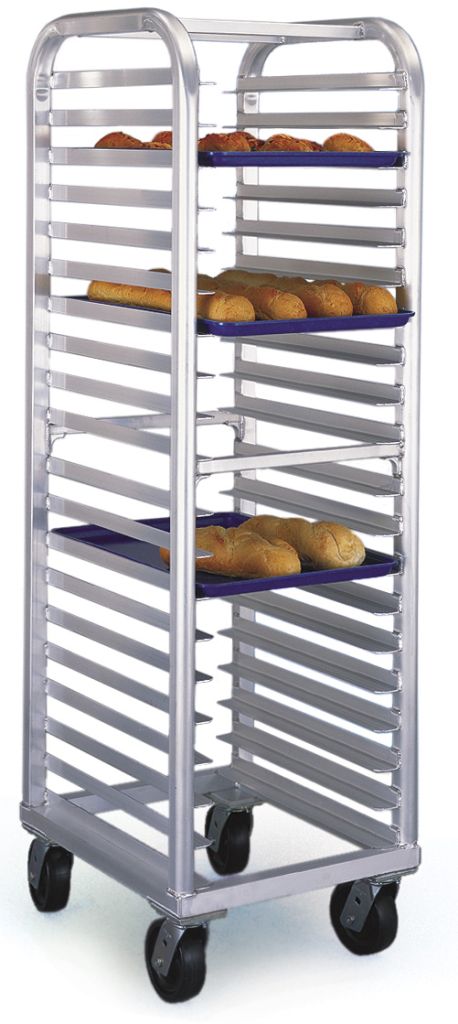
18″x26″
Standard sheet pan size
1½″–6″
Slide spacing options
40
Pans on a tight-spaced rack
1997
MH-USA serving the West
Move Pans, Not People

Every kitchen has a hidden labor number: how many trips staff make carrying pans by hand. A bakery that sheets 200 pans a day, a school kitchen that plates 900 trays in forty minutes, a catering operation loading a truck at 4 a.m. — each of them either has the right bun pan rack, sheet pan rack and commercial food transport cart fleet, or it pays for the shortfall in steps, spills and overtime.
Panco is Eagle Group’s transport line, and it is deliberately broad: bun pan and universal pan racks, enclosed racks for truck routes, oven racks, roll-in refrigerator racks, pizza pan and dough box racks, donut racks, oval tray racks for banquets, can racks, nesting racks that collapse when idle, banquet carts, insulated heated holding cabinet models, and the utility carts and dollies that fill in around them. Eagle has built foodservice equipment in Clayton, Delaware since 1947 and lists more than 17,000 standard models, so the transport fleet comes from the same catalog as the worktables and sinks around it.
MH-USA has specified this equipment out of Salt Lake City since 1997 and ships nationwide. What we add is the part that goes wrong on paper: matching pan size to slide spacing, checking the rack against the doorway and elevator it has to pass, picking a caster that survives your floor, and deciding where welded construction is worth the freight and where a knock-down rack saves real money.
The Panco Transport Line at a Glance
Nine families cover most kitchens. Everything below is quoted as part of a single foodservice package alongside the rest of the Eagle foodservice catalog.
 Pizza, Dough Box & Donut RacksAll-welded aluminum specialty racks: 2″ adjustable pizza pan spacing, 3½″ spacing for seven 18″ x 26″ dough boxes, and 3″ spacing for twenty 23″ x 23″ donut screens.
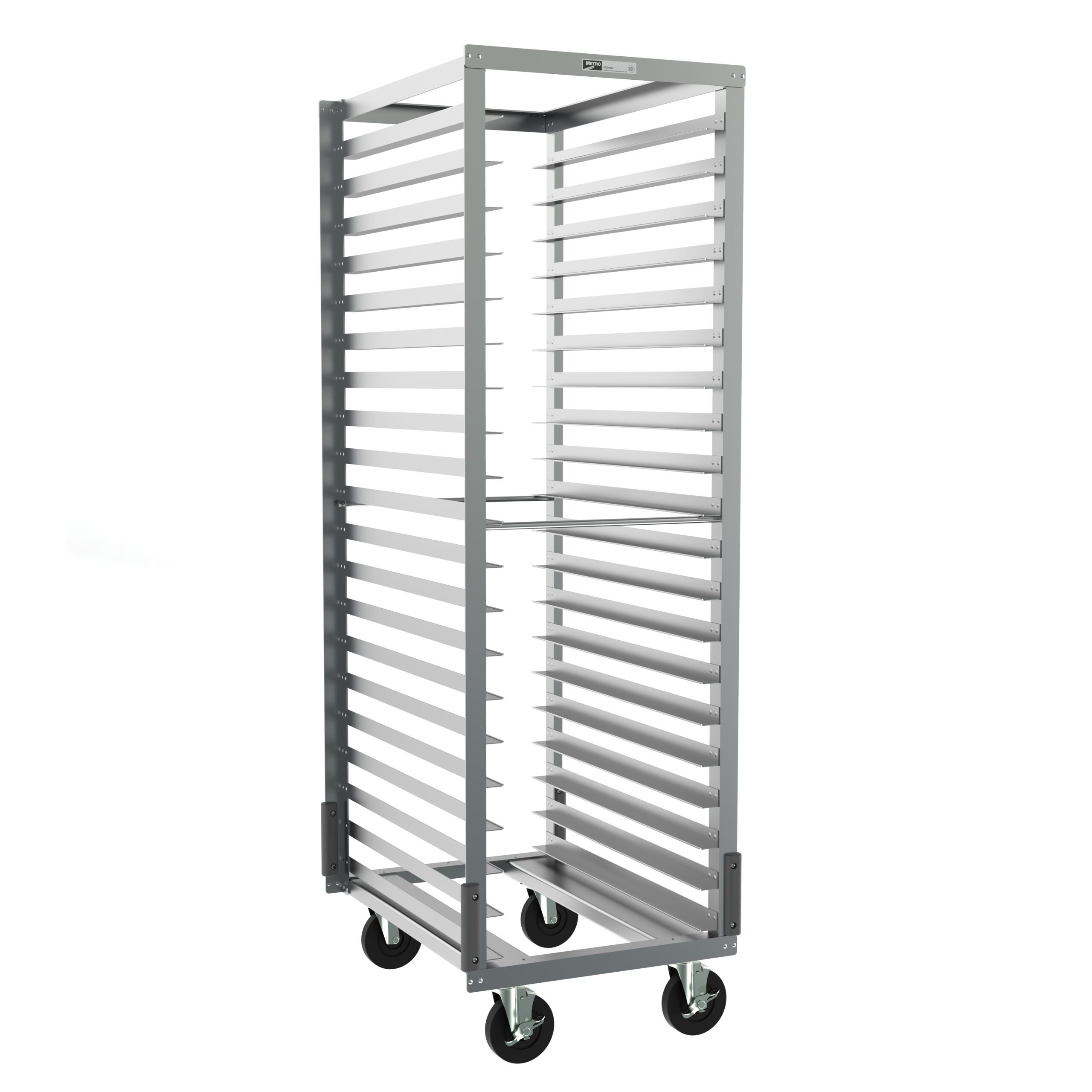
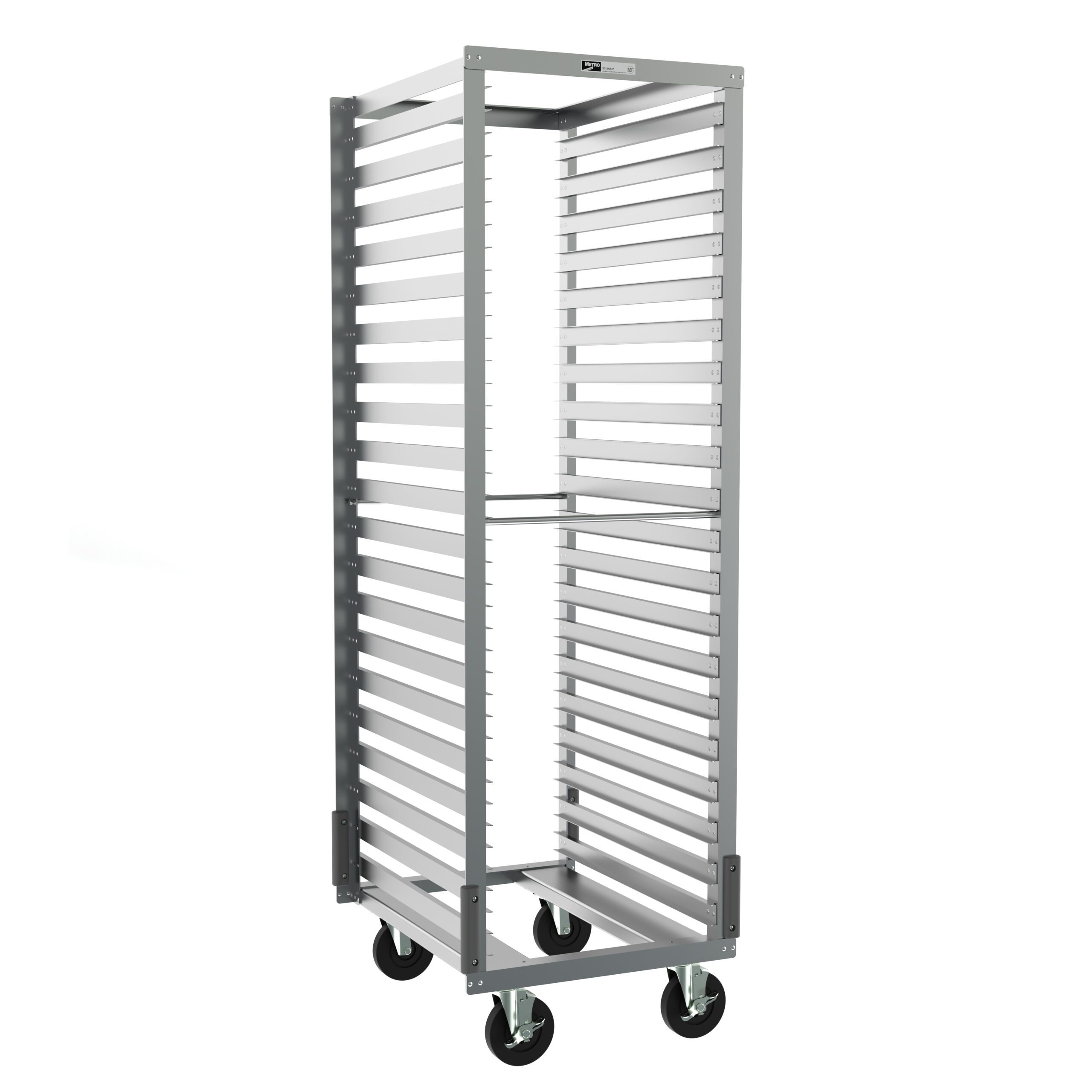
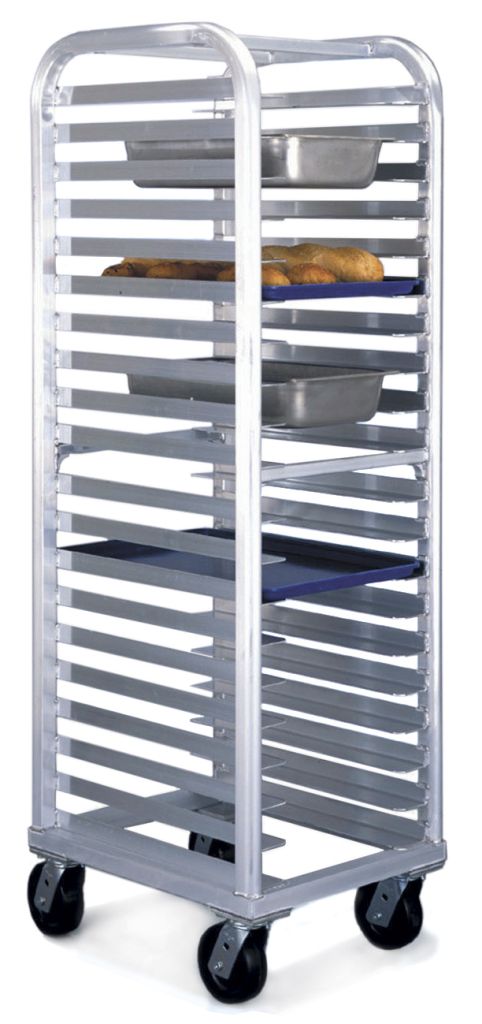 Universal Pan RacksSame 6063-T5 aluminum construction with slides that accept a variety of sheet pan sizes, on heavy-duty 6″ x 2″ non-marking swivel plate casters.
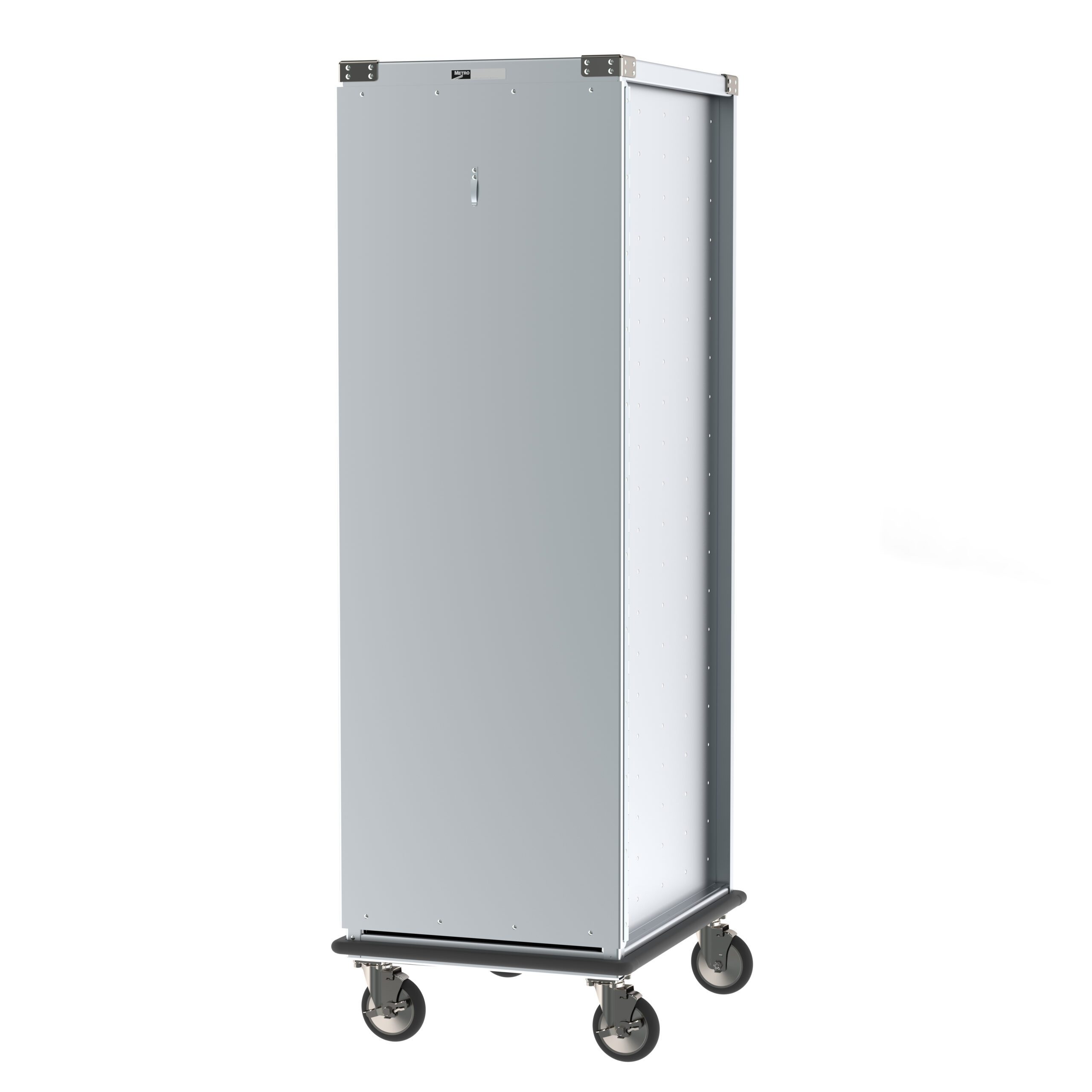
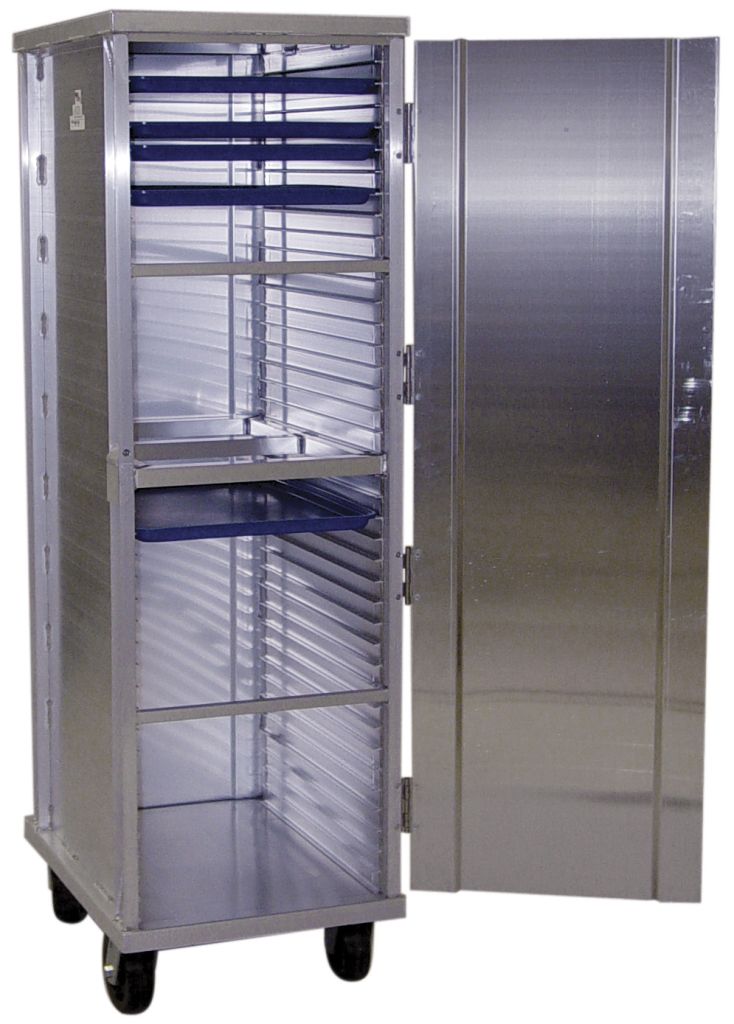 Enclosed Pan RacksFully welded with top and interior bracing, bottom frame, and side panels welded to the uprights — built for truck and transport abuse. Takes full or half-size bun pans.
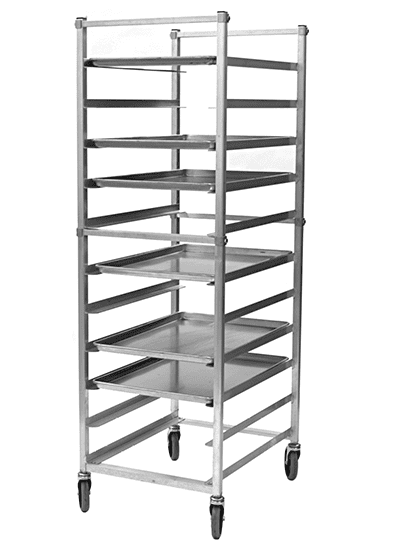 Panco 18 Series Deluxe RacksAluminum frames joined with extruded aluminum junctions and welded tray slides, or all-welded stainless with 1″ square heavy-gauge tubing and 16-gauge stainless slides.
 Panco 26 Series RacksDie-stamped aluminum gussets riveted to frame and cross supports, 5″/3″/2¼″ spacing; stainless models offer 5″/3″/2″ spacing for up to 30 full-size pans.
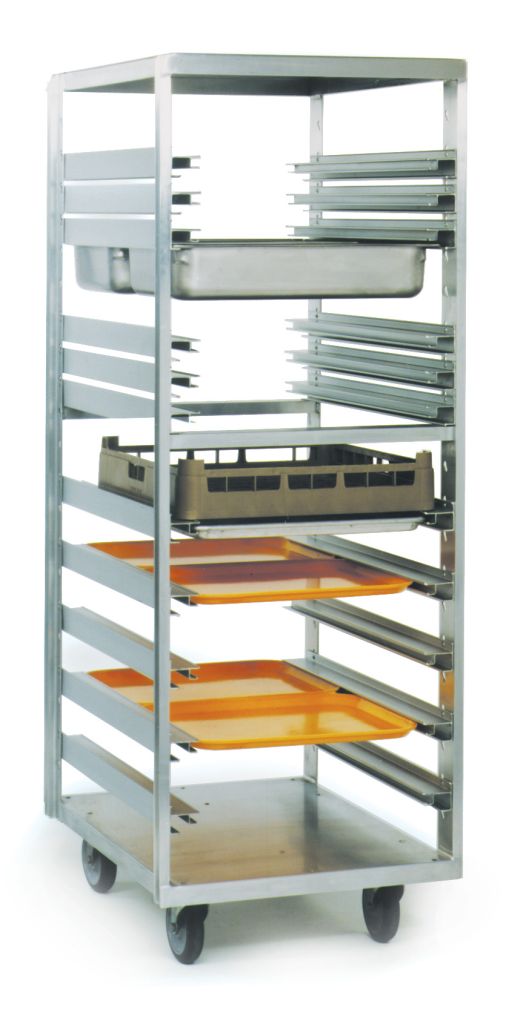 Universal Angle RacksExtruded aluminum uprights with angular keyhole slots on 2½″ centers so slides move as your pan mix changes; reinforcing channel welded between uprights.
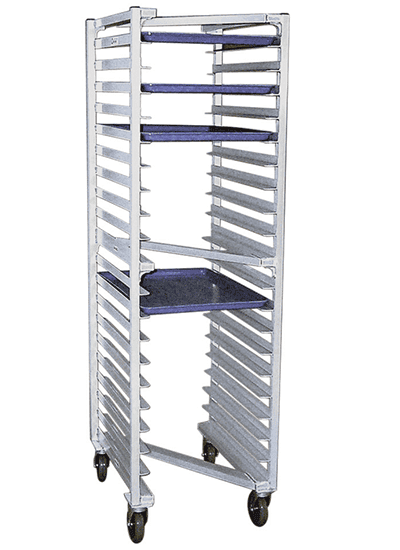 “Z” Type Nesting RacksAll-welded aluminum with Z-shaped horizontal supports and base so idle racks nest inside each other; 2″ or 3″ spacing for 20 or 30 sheet pans.
 Oven RacksAll-welded aluminum, 1″ square tubular frame, slides with two raised beads to minimize friction, front-load or side-load, 6″ down to 2″ spacing.
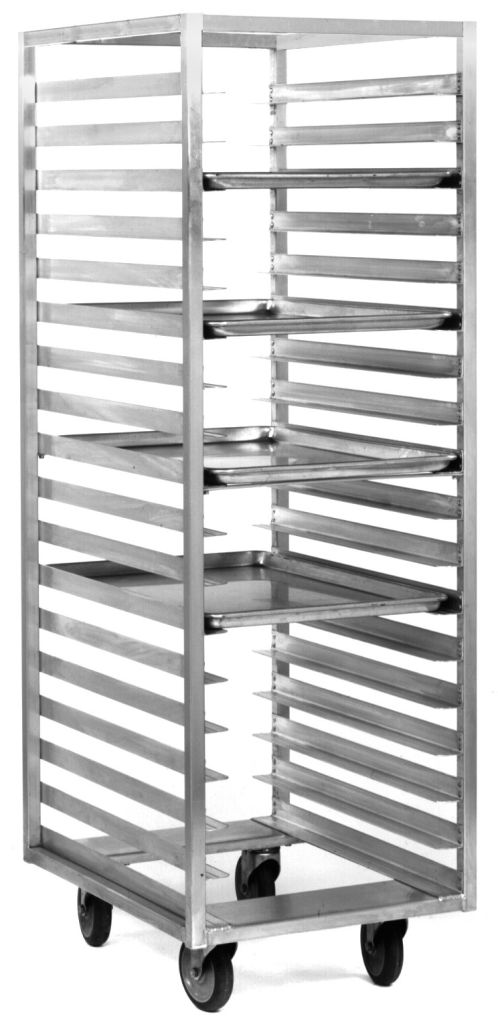 Roll-In Refrigerator RacksAluminum or stainless models sized to roll straight into a roll-in cooler cavity; 2¼″, 3″ or 5″ spacing for 11 to 36 trays.
Aluminum vs Stainless Steel: Where Each One Belongs
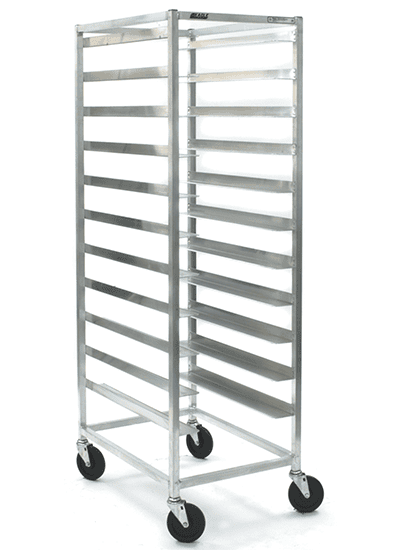
The single most common specification argument on a rack package is material, and it is usually decided on price when it should be decided on environment and handling.
Aluminum — typically 6063-T5 alloy on the LIFETIME Series — is light enough that one person can push a fully loaded rack up a truck ramp, cheap to freight, and does not rust. It is the right default for bakeries, bun pan and oven racks, catering routes, and any rack that staff move dozens of times a day. Aluminum will oxidize dull and it will dent if a forklift finds it, but it does not corrode away.
Stainless steel — 1″ square tubular frames with all-welded construction, 14-gauge and 16-gauge components depending on family — costs more and weighs more, and earns it in three places: roll-in refrigeration where condensation is constant, wet washdown and rack-washer environments, and specification-grade jobs (healthcare, correctional, institutional) where the schedule simply calls out stainless. Note that even on stainless roll-in racks, tray slides are often extruded aluminum with raised beads, because aluminum slides are slicker under a loaded pan.
The second material decision is all-welded versus knock-down. All-welded racks resist racking forces from truck movement and rough thresholds and arrive ready to load. Knock-down racks ship flat — lower freight, and they can be carried through a narrow door or up a service elevator in pieces. Several families, including pizza pan racks and racks with side panels, ship knocked down by design.
Specialty Racks: Match the Rack to the Product
A general-purpose rack handles most of a kitchen. The exceptions are where product shape, screen size or rotation rules force a purpose-built frame — and where using the wrong rack quietly costs you capacity every single service.

Pizza pan racks use aluminum angle tray slides with raised beads and adjustable 2″ spacing for roughly 13 pans; the OUR-PZA-12A ships knocked down while the fully crossbraced OUR-PZ-12A version is braced side-to-side and front-to-back. Pizza dough box racks (OUR-DB-7A) run 3½″ spacing for seven 18″ x 26″ dough boxes so lidded boxes stack without crushing the dough.
Donut racks (ODR-2320-3) carry twenty 23″ x 23″ donut screens on 3″ spacing with six cross supports — screens need clearance that a bun pan rack does not give. Oval tray racks store 40 or 80 23″ x 28″ oval trays vertically, which is the difference between a banquet floor that can plate 400 covers and one that runs out of staging space; stainless models add a welded stainless top and shelves angled toward the center.
Can racks in full size are stationary (adjustable feet) or mobile (4″ non-marking swivel plate casters with polymer tread, two with brake), all-welded from high-strength aluminum sections and crossbraced top and bottom. Loaded from the rear, they rotate stock automatically — FIFO enforced by gravity rather than by training.
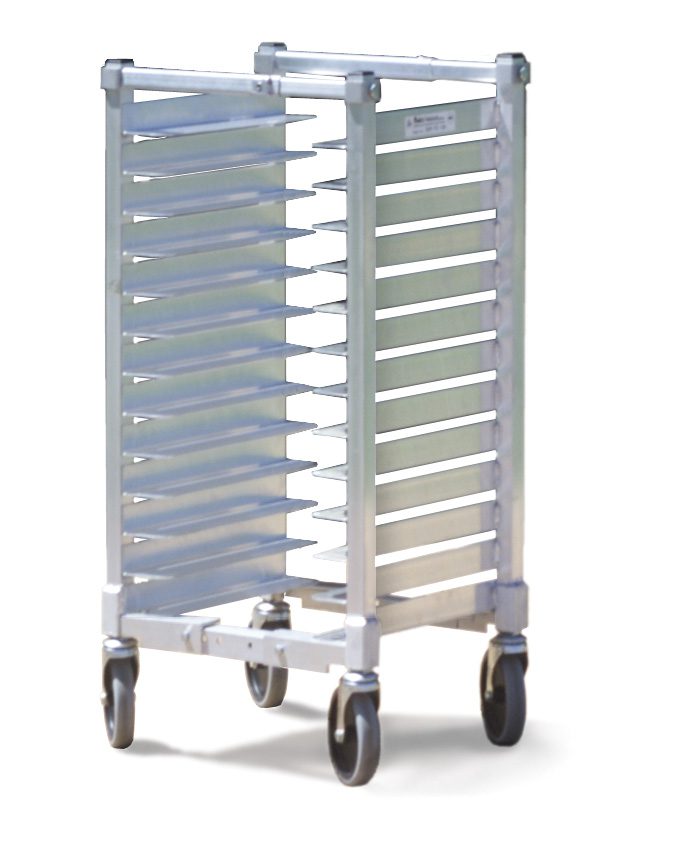
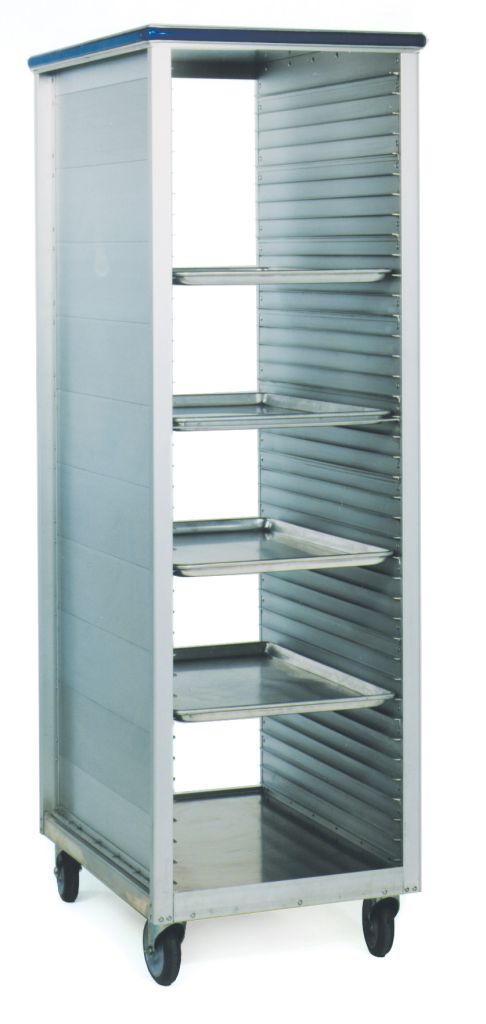
Multiple purpose racks use extruded aluminum uprights with keyhole slots on 2½″ centers and adjustable universal slides with a wide lip — top and bottom slides welded, everything between adjustable. If your pan mix changes by season or by menu cycle, this is the rack that adapts instead of being replaced.
Combination racks pair 1″ square tubular aluminum frames with two-piece riveted gussets and 3″ or 5″ spacing so one rack takes trays and pans of several sizes at once — useful in tray-line kitchens where hot pans and plated trays travel together.
Racks with side panels tighten spacing to 1½″ for 40 full-size sheet pans and add panels that keep pans from being knocked out sideways. The standard ORO-1840 uses riveted gusset construction; the heavy-duty OR-1840 uses 0.100″-thick die-formed aluminum top and bottom. Both ship knocked down. Z-type nesting racks solve the opposite problem — racks that are only in use half the week and otherwise eat aisle space. Their Z-shaped supports and base let empty racks nest into each other, often recovering half the parking footprint.
Heated Holding and Proofing Transport Cabinets
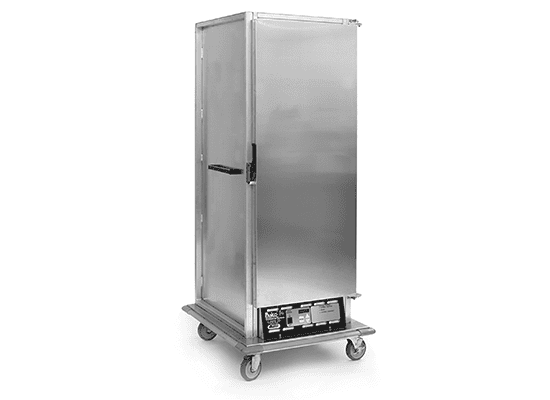
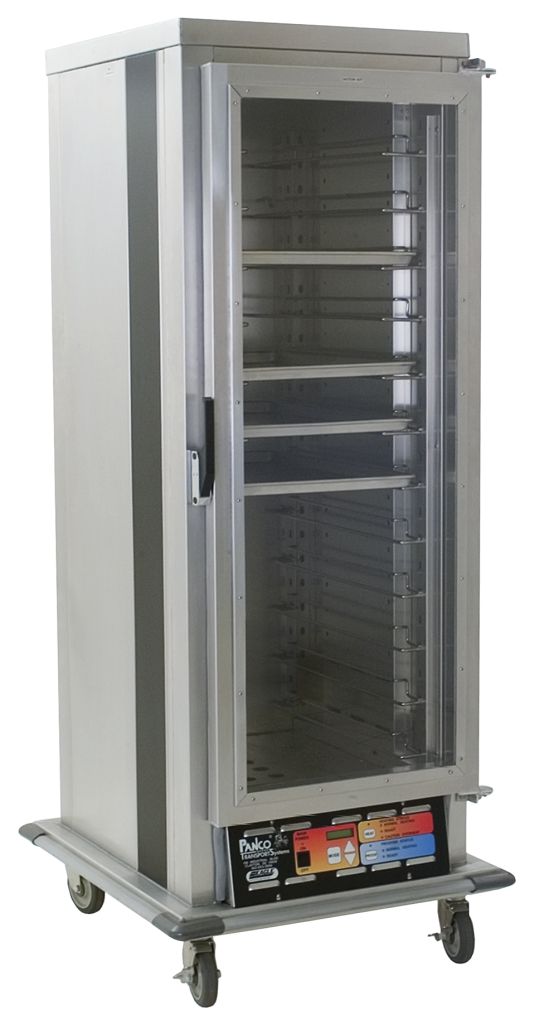
Once food leaves the kitchen — to a satellite pantry, a school across town, a banquet floor two elevators away — an open rack stops being enough. Panco insulated transport cabinets are aluminum inside and out with a patented TEMP-GARD® air flow design, a bottom-mounted control panel, and an adjustable digital temperature control system with LCD readout. Doors are solid or fitted with a polycarbonate window, slides are removable wire or universal wire on 2¼″ standard spacing, and every unit gets a full perimeter bumper, an 8-foot cord and plug, and 5″ heavy-duty polymer swivel casters with brakes on two.
Full-size cabinets take full sheet pans and the largest hold counts; half-size cabinets exist for a specific reason — they fit through residential-width doors, into elevators and into vans that a full-size cabinet cannot enter. If your route includes any of those, spec half-size before you spec capacity.
Heated/proofing cabinets add adjustable humidity control plus high-temperature protection with alarm and auto reset. That combination lets one cabinet proof dough in the morning and hold plated food at service, which is why bakeries and hotel banquet kitchens tend to buy the proofing version even when they only think they need heat. Insulated and non-insulated builds are both offered — insulated is what you want the moment the cabinet is unplugged for any part of the trip.

Banquet carts are the other half of event service. Available in all-welded aluminum, or as an all-welded aluminum frame with stainless steel shelves, they carry solid shelves with a marine edge to keep liquids on the shelf, a perimeter bumper to protect walls and door frames, a handle at each end so two people can maneuver a loaded cart, and heavy-duty 8″ x 2″ platform casters — two swivel, two rigid. That caster package is what makes a long push down a carpeted corridor or up a ramp possible.
Between the racks, the cabinets and the carts, a catering or banquet operation can build a route that never requires hand-carrying a pan: load racks in the kitchen, roll into a heated cabinet or onto a truck, roll out at the destination, and plate from a banquet cart on the floor.
Utility Carts, Dollies and Covers
Not everything that moves in a kitchen is a pan. Utility carts handle the small, awkward, constant loads — dish tubs, cases, chemicals, small equipment — and they wear out fastest when they are under-specified.
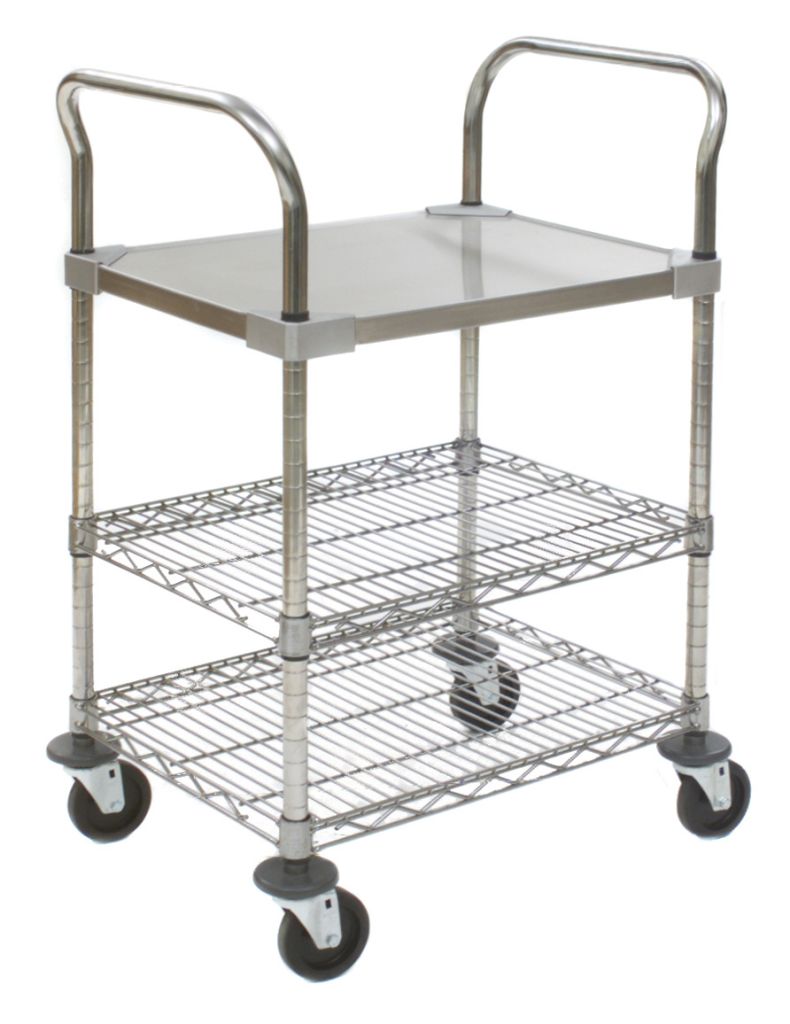 Utility Carts & RediPak® CartsShelves use the patented QuadTruss® design — up to 25% stronger with a retaining ledge for product stability. Two or three shelves, two handles, two posts, four casters; optional four-post configuration with push or extended handle.
 Stainless Steel Utility CartsThree stainless shelves welded to angle legs on a galvanized caster channel frame, with 1″ upturn on ends and rear or on all sides, four 4″ swivel plate casters and a 1″ handle.
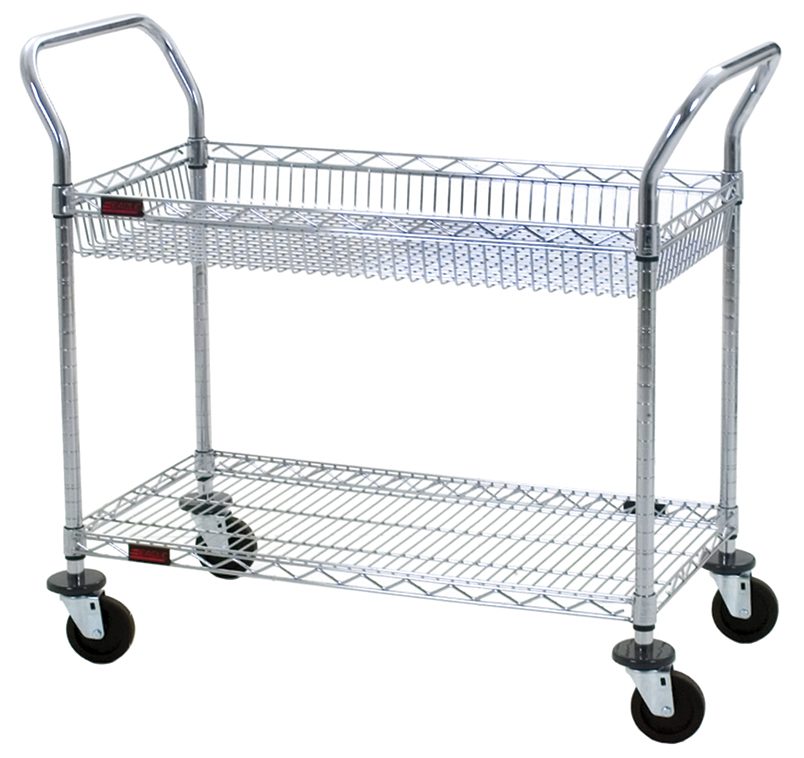 Wire Basket & Stem Caster CartsChrome-plated wire basket carts keep air moving and product visible for light-duty runs; four-shelf stem caster carts on 63″ posts ship knocked down in Eaglebrite® zinc or chrome with 5″ caster choices.
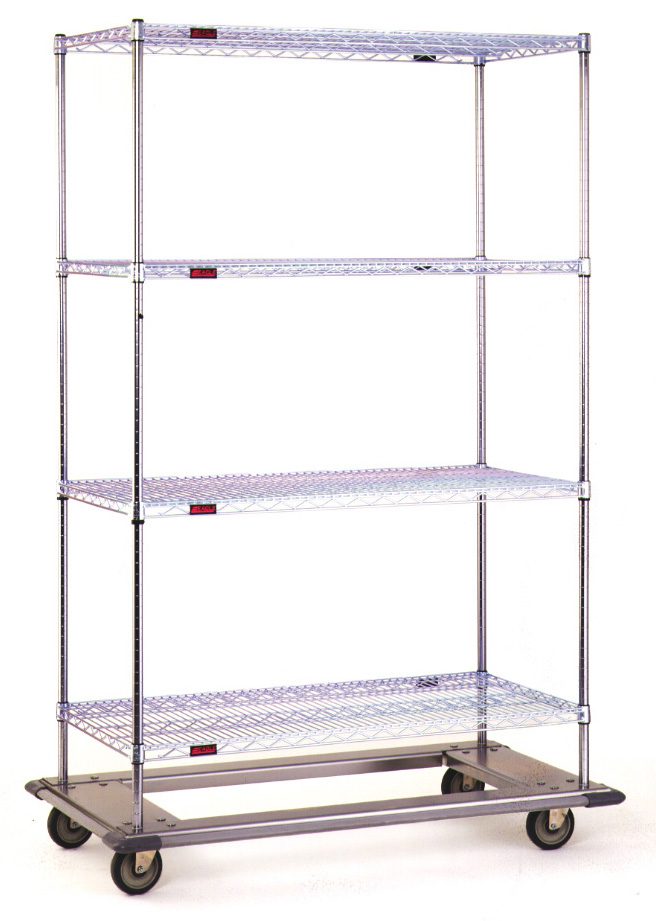 Dolly Trucks & Cart CoversFour wire shelves on an aluminum truck dolly with wrap-around bumper, shipped knocked down to cut freight. Cart covers in machine-washable polyester or coated vinyl nylon block airborne contaminants and deter pilferage.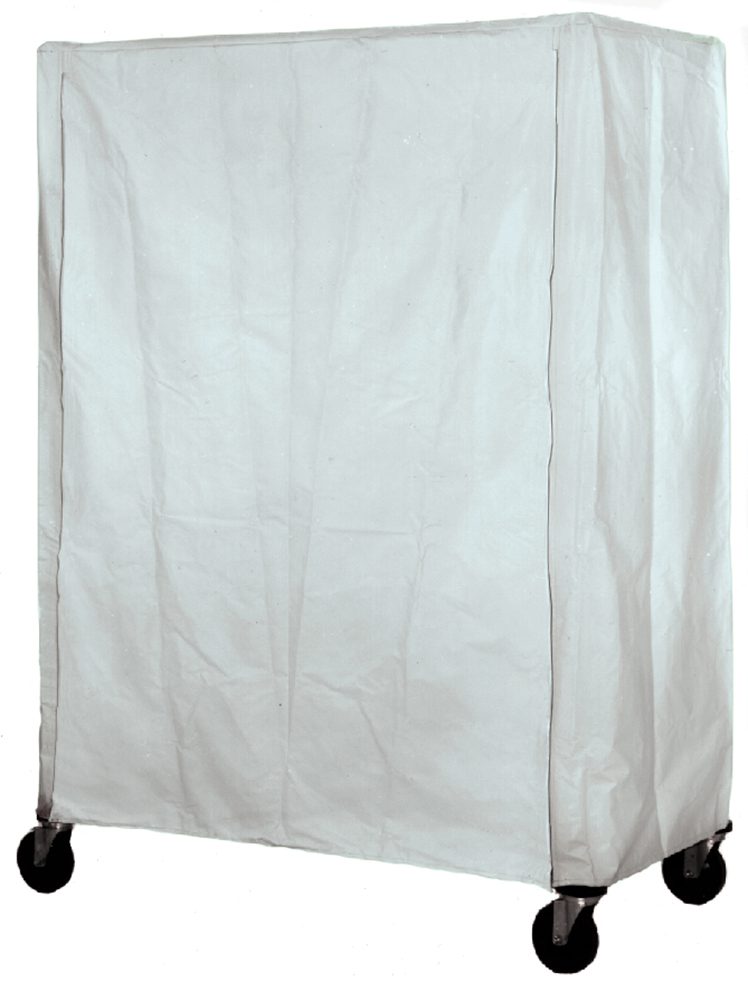
Covers are a sanitation tool, not just a dust cover
Coated cart covers are waterproof, fire-retardant and tear-resistant, with velcro closures or extra-strength poly zippers and reinforced corners. In a facility that gets audited, a covered cart of clean pans is a much easier conversation than an open one parked next to a dish room.
How to Size and Select a Rack Fleet
Six questions decide almost every rack order. Answer them before you look at a model number and the quote comes back right the first time.
- What pan size is standard in your kitchen? Full-size 18″ x 26″, half-size 13″ x 18″, steam table pans, oval trays, pizza pans, donut screens or dough boxes. If the answer is “all of them,” you want universal angle or multiple purpose racks with adjustable keyhole slides on 2½″ centers rather than fixed-slide racks.
- How many pans does one service actually require? Count peak, not average. Then decide whether that is one deep rack or two shallow racks — two racks let two people work at once and let one go to the cooler while the other stays on the line.
- What is the narrowest opening the rack must pass? Measure the door leaf clear width, the elevator cab and door, the truck opening and any corridor turn. This single dimension eliminates more models than any other, and it is the one most often measured after delivery.
- Do the racks have to nest when idle? If racks are only in use for a shift or a season, Z-type nesting racks give the floor space back. If they are loaded around the clock, nesting is a feature you will never use — spend the money on welded rigidity instead.
- What does the floor look like? Quarry tile with grout lines, expansion joints, drains, thresholds and ramps all argue for 5″ casters; smooth sealed concrete tolerates 4″. Long pushes, docks and truck ramps want 8″ platform casters. Non-marking polymer tread protects finished floors, and brakes on two casters are standard on anything that gets parked loaded.
- How much weight, and how far apart? Slide spacing sets both capacity and clearance: 1½″ for 40 pans of flat product, 2″–2¼″ for 24–30, 3″ for 18–20, 5″–6″ for 10–11 when product has height or needs airflow. Loading a tight-spaced rack with tall product is the fastest way to make a rack useless.
Roll-in racks are sized to the refrigerator, not to the kitchen
If you are buying roll-in refrigerator racks, send us the cooler or blast chiller model number first. Cavity width, depth, floor ramp height and door swing determine the rack, and a rack that is an inch too wide is a rack that never gets used.
Rack Type vs Best Use
| Rack type | Typical construction | Capacity / spacing | Best use |
|---|---|---|---|
| LIFETIME bun pan rack | 6063-T5 aluminum, lifetime guarantee against rust and defects | Built around 18″ x 26″ sheet pans | Bakery and general kitchen sheet pan handling |
| Universal pan rack | 6063-T5 aluminum, 6″ x 2″ non-marking swivel plate casters | Accepts several sheet pan sizes | Kitchens running a mixed pan inventory |
| Enclosed pan rack | Fully welded aluminum, side panels welded to uprights and bottom frame | Full-size or half-size bun pans | Truck routes, catering and delivery abuse |
| 18 Series deluxe | Extruded aluminum junctions, or all-welded stainless with 16-ga slides | Side-to-side (aluminum) or full crossbracing (stainless) | Specification-grade daily production |
| 26 Series | Die-stamped riveted gussets (alum.) or 1″ square stainless tube | 11, 18, 20, 24 or 30 full-size pans | High-count staging and cooler storage |
| Universal angle rack | Extruded aluminum, keyhole slots on 2½″ centers, 5″ casters | Slides reposition to the pan | Menus and pan sizes that change often |
| Z-type nesting rack | All-welded aluminum, Z-shaped supports and base, 5″ casters | 20 or 30 pans at 3″ or 2″ | Seasonal or peak-only racks that must store compactly |
| Oven rack | All-welded aluminum, beaded low-friction slides, 4″ casters | 10–30 pans at 6″ to 2″, front or side load | Loading and unloading rack ovens |
| Roll-in refrigerator rack | 1″ square aluminum or stainless tube, aluminum beaded slides | 11–36 trays at 5″, 3″ or 2¼″ | Roll-in coolers, blast chillers, holding cabinets |
| Pizza pan / dough box rack | All-welded aluminum, crossbraced, 5″ casters | ~13 pizza pans at 2″; 7 dough boxes at 3½″ | Pizza production and dough staging |
| Oval tray rack | Aluminum or stainless tube, shelves angled toward center | 40 or 80 23″ x 28″ oval trays | Banquet plating and vertical tray storage |
| Can rack (full size) | All-welded high-strength aluminum, stationary or mobile | Rear-loaded for automatic rotation | Dry storage with FIFO discipline |
| Rack with side panels | Riveted gusset or 0.100″ die-formed aluminum, ships knocked down | 40 pans at 1½″ | Maximum pan count in minimum footprint |
| Banquet cart | All-welded aluminum, or aluminum frame with stainless shelves | Solid marine-edge shelves, 8″ x 2″ platform casters | Event floors, long pushes, ramps |
| Transport heated cabinet | Aluminum interior/exterior, TEMP-GARD® air flow, digital control | Wire slides on 2¼″ spacing, full or half size | Holding and off-site food transport |
| Heated/proofing cabinet | As above plus adjustable humidity and high-temp alarm | Full or half size, insulated or non-insulated | Dough proofing plus hot holding in one unit |
Tell us your pan size and your narrowest door
Send the pan sizes you stock, the peak pan count per service, the tightest opening the rack must clear and what your floor is made of. We will come back with model numbers, slide spacing, caster recommendations, lead times and freight — and flag anything that will not fit before it is built.
Shop Pan Racks & Transport Carts Online
Buy select items directly from our online store, or request a quote for volume, custom sizes and freight-rated orders.

Frequently Asked Questions
What size pans does a standard bun pan rack hold?
How many pans should a rack hold?
Aluminum or stainless steel pan racks — which should I buy?
What is the difference between all-welded and knock-down racks?
Will a pan rack fit through my doors and elevator?
What caster size should I specify?
Do heated transport cabinets hold food safely between locations?
Do these racks carry sanitation listings?
Get Your Pan Rack & Transport Quote
Send the pan sizes, the counts and the doorway dimensions. We will spec the racks, carts and cabinets and get them to your kitchen.