
Home › Commercial Foodservice Equipment › Hot Food Tables & Serving Lines
Hot Food Tables & Cafeteria Serving Lines
Commercial hot food tables, steam tables, cold pan units, Director’s Choice modular serving lines, tray slides and breath shields from Eagle Group — specified, quoted and shipped nationwide by MH-USA.

12″×20″
Standard pan opening
3,500
BTU per gas well burner
1947
Eagle founded
1997
MH-USA serving the West
A Serving Line Is a System, Not a Pile of Tables

Most hot food table problems are not table problems. They are line problems. The wells hold temperature fine, but the tray slide is two feet short of where guests actually queue, the cashier stand ended up on the wrong end, the salad pan drains onto the floor because nobody ran a drain to it, and the health inspector wants a shield geometry that the counter cannot accept without drilling into a finished top. Every one of those is cheaper to fix on paper than after the freight arrives.
MH-USA represents Eagle Group, the Clayton, Delaware manufacturer building stainless foodservice equipment since 1947 with more than 17,000 standard models, including sealed-well and open-well hot food tables, electric water bath steam tables, iced and refrigerated cold pan units, the Director’s Choice modular mobile serving line, tray stands, urn stands, breath shields and SpecFAB custom fabrication when the catalog does not have your dimension.
This page is the specification walkthrough we use with school nutrition directors, senior living dining managers, kitchen consultants and facility teams: how to choose well construction, how to lay a line out end to end, what the shields depend on, and which utility details to hand the electrician and plumber before anything ships.
Sealed-Well vs. Open-Well Hot Food Tables
This is the first real decision and the one that determines how the line ages. Both styles hold standard 12″ × 20″ pans and both use heavy-gauge type 430 stainless for the top and body. What differs is the compartment itself.
| Sealed well | Open (dry) well | |
|---|---|---|
| Compartment | One-piece deep-drawn type 304 stainless, all corners fully coved | 8″-deep galvanized compartment |
| Insulation | Insulated on all sides with 1″ fiberglass or equal | Insulated on all four sides and bottom with 1″ fiberglass or equal |
| Wet or dry use | Both — wells can be run with water or dry | Dry heat, pans in place |
| Drainage | 3/4″-diameter drain with strainer in each well, tied to a common copper manifold | None — nothing to drain |
| Element rating | 750W at 120V, 713W at 208V, 950W at 240V under each well | 500W at 120V; 750W at 208V and 240V |
| Controls | Recessed panel, individual infinite controls with high and low settings | Recessed panel, individual infinite controls with high and low settings |
| Typical fit | Schools, senior living, hospitals, correctional — anywhere the line gets washed daily | Budget-sensitive lines, occasional use, dry-hold menus |
Why sealed wells win in schools and senior living
Two reasons, and neither is on the spec sheet. First, cleanability: a deep-drawn well with fully coved corners and its own strainer drain can be flooded, washed and drained by a crew working fast at the end of a lunch period — there is no seam or square corner collecting debris where nobody looks. Second, menu flexibility: because sealed wells run wet or dry, the same table holds delicate vegetables in a water bath at breakfast and dry-holds a casserole at lunch without buying a second unit. In an operation with a state-audited sanitation routine and a fixed 20-minute changeover, both of those matter more than the price difference.
Sealed Well Hot Food Tables, Open BaseSealed deep-drawn 304 wells, drains manifolded together, recessed individual infinite controls, 6″ cord and plug from the lower right, and furnished with a polyethylene cutting board, stainless dish shelf and stainless adjustable undershelf. Sealed Well Hot Food Tables, Enclosed BaseThe same sealed wells in a heavy-gauge type 430 cabinet with open front or sliding doors, insulated on the bottom with 1″ fiberglass or equal, furnished with poly cutting board and stainless dish shelf, and available stationary or portable.
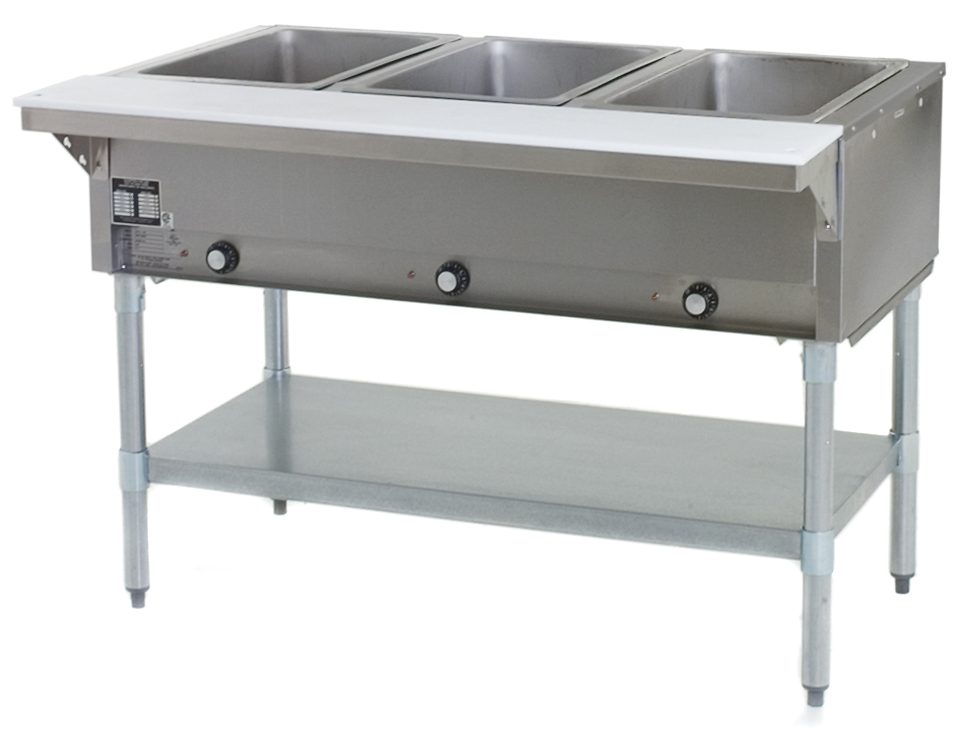 Electric Hot Food Tables, Open BaseBeaded top openings at 12-3/32″ × 20-3/32″, 8″-deep galvanized compartments, 1-5/8″ O.D. tubular legs with an adjustable undershelf and adjustable bullet feet — the workhorse budget line.
Open base or enclosed base?
An open base with an adjustable undershelf gives you pan storage right at the station and it is easy to clean under — the mop goes through. An enclosed base with open front or sliding doors keeps the guest-facing side of the line looking finished, protects stored pans from the traffic aisle, and gives you a warm, closed cavity instead of an exposed shelf. In a public-facing cafeteria line, enclosed usually wins on appearance and on keeping stored product out of reach. In a back-of-house or staff line where speed matters more than looks, the open base with an undershelf is faster to work out of. Sliding doors are worth specifying anywhere the aisle is narrow, because a hinged door swinging into a serving aisle is a collision waiting to happen.
Electric vs. Gas, and Why Individually Controlled Wells Are Not Optional
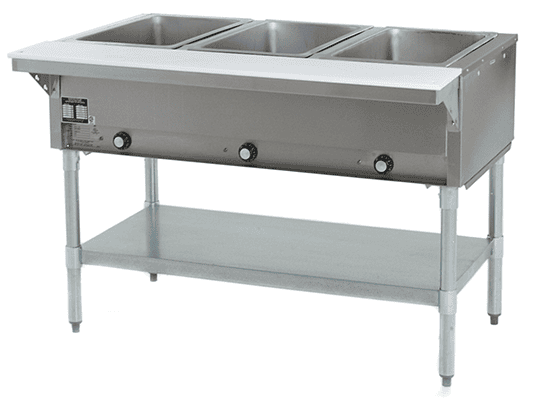
Electric hot food tables are the default because they are flexible. Wells are individually controlled from a recessed panel, elements are rated per voltage (750W at 120V, 713W at 208V, 950W at 240V on sealed-well tables), and many models arrive with a 6′ cord and plug so the unit can be repositioned without a trade call. If the line might ever be reconfigured — and in schools it always is — electric is the answer.
Gas open-base tables give each compartment its own high-output jet burner rated at 3,500 BTU, controlled by a high-medium-low adjustable gas valve with an adjustable pilot light, with a removable galvanized radiation plate in each compartment and a gas pressure regulator provided. They make sense where electrical capacity is already committed, where gas is meaningfully cheaper per BTU, or where a facility standardizes on gas hot-hold. The trade-off is permanence: a gas table is fixed where its connection is.
Either way, insist on individual well controls. A single control for a whole table forces every pan to hold at the same setting, which means the item that wants a gentle hold is drying out while the dense item is barely warm. Infinite controls with high and low settings per well solve that, and the recessed panel keeps knobs out of the path of trays and carts.
Electric Water Bath Steam Tables
When the menu is built around moist holding — vegetables, pasta, rice, sauced entrees, anything that dies under dry heat — a true water bath steam table is the right equipment rather than a hot food table run wet. The top and body are heavy-gauge type 430 stainless with the top removable for cleaning or replacement, and every opening is sized for 12″ × 20″ steam table pans. The water pan itself is all-welded 16/304 stainless with a recessed well housing a copper-sheathed immersion heater in the 3,000–5,000 watt range, draining through a 1-1/2″-diameter brass drain assembly. Control is thermostatic, with an automatic low water cutoff and a built-in manual reset button — the feature that keeps an element from being destroyed by a crew that forgot to fill the bath. Units come with an 8″-wide polyethylene cutting board and a stainless dish shelf, and are available open base or enclosed base, gas or electric.
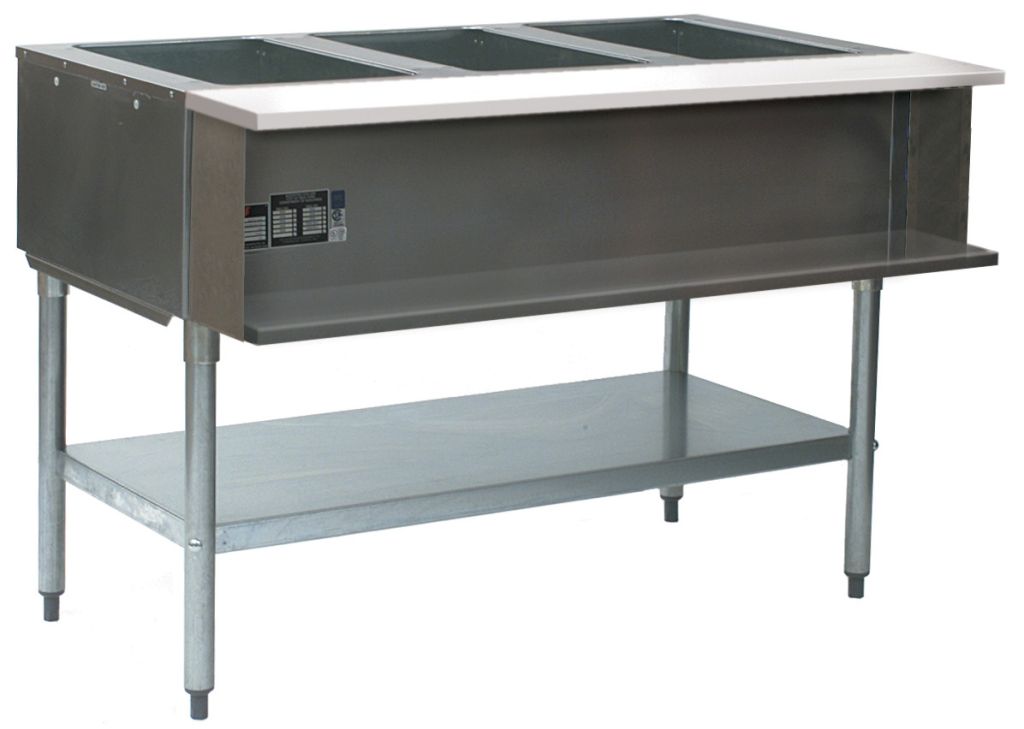
- Wiring on water bath units commonly terminates in a J-box and requires field wiring — budget the electrician, do not assume a cord and plug.
- A 1-1/2″ brass drain per bath means a plumbing rough-in at every table position, not just one at the end of the line.
- The removable top is a real maintenance advantage: a damaged or dented top can be replaced without replacing the table.
- Water baths raise humidity at the station — check that your hood or make-up air plan accounts for it.
Cold Pan Units and Frost Tops
Every hot line needs a cold counterpart, and this is where lines get under-specified. A cold pan unit is a heavy-gauge stainless table with a type 304 stainless cold pan, fully insulated, typically 20″ front-to-back and 6″ deep, with the pan sloped to a 1-1/2″ NPS drain connection. From there you choose how it gets cold.
| Iced cold pan | Mechanically refrigerated cold pan / refrigerated base | |
|---|---|---|
| How it holds | Filled with ice; meltwater drains away through the sloped pan | Self-contained condensing unit, forced air evaporator, thermostatic control |
| Utilities | Drain only — no electrical connection needed | Power plus condenser air clearance and a condensate plan |
| Labor | Someone hauls and levels ice before every service and pulls it after | None beyond cleaning |
| Temperature | Depends on ice management and ambient conditions | Refrigerated base units are factory-set between 35°F and 45°F |
| Best fit | Occasional service, banquets, satellite lines, tight electrical | Daily high-volume salad bars, grab-n-go, long service windows |
 Iced Cold Pan Units, Open BaseInsulated 304 cold pan 20″ front-to-back and 6″ deep sloped to a 1-1/2″ NPS drain, galvanized adjustable undershelf on galvanized tubular legs. Stationary units get adjustable bullet feet; portable units get a stainless push handle and 4″ casters, two with brakes.
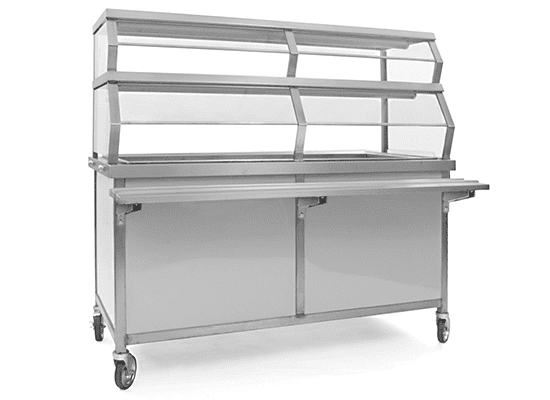 Refrigerated Cold Food UnitsMobile Director’s Choice cold food units with a fully insulated refrigerated cold pan, 16/304 top turned down on all sides, all-welded 1-1/2″ square 304 tubular base and a stainless apron on the operator’s side.
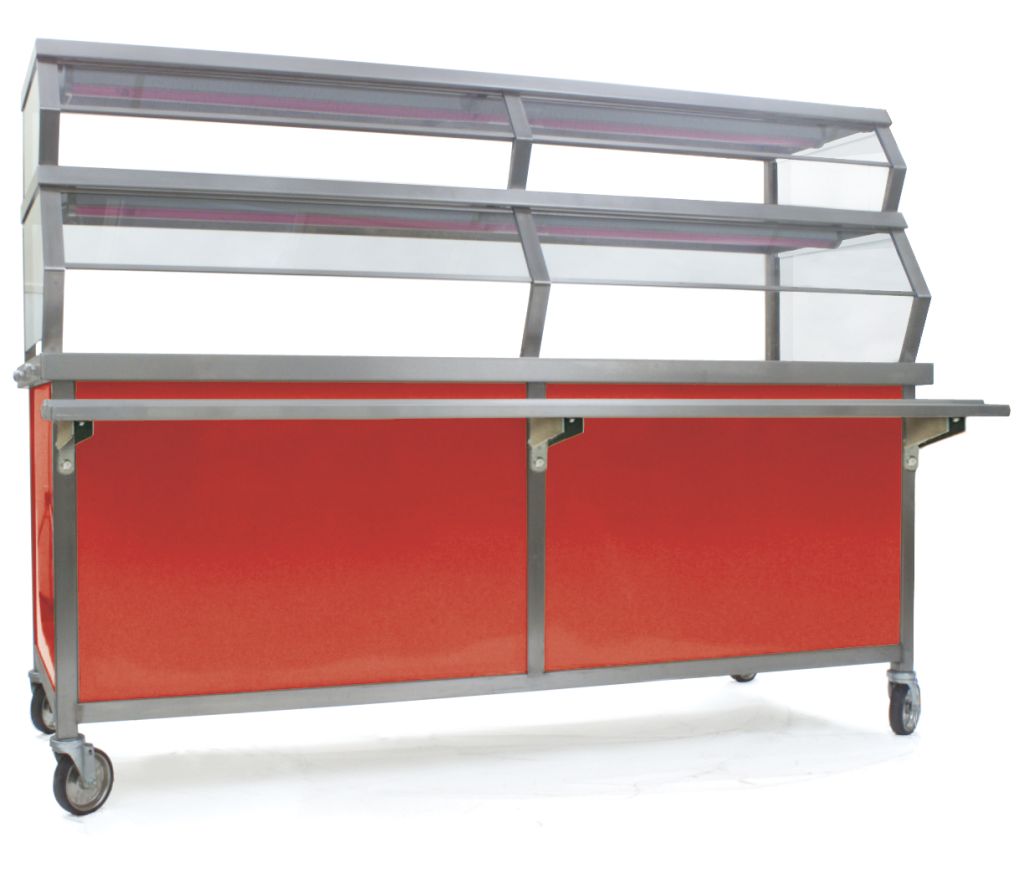 Solid Top Refrigerated Base UnitsA double-wall refrigerated cabinet under a hat-channel-reinforced stainless top: sealed compressor, forced air evaporator for even temperature, factory-set 35°F–45°F, stainless interior liner, cord and NEMA 5-15P plug.
Frost tops and iced display surfaces
A frost top is the flat cousin of the cold pan: instead of dropping pans into a well, you chill the whole work surface so plated salads, desserts, cut fruit or packaged grab-n-go sit directly on cold stainless. Frost tops shine in display merchandising — nothing blocks the sightline to the food — and in operations that change what they show daily, because there is no pan configuration to match. Cold pans win where you need depth for bulk product and portioning with a serving utensil. Many real lines use both: a frost top or refrigerated solid top for display and grab-n-go, plus a cold pan for the build-your-own station. Tell us the products and the service style and we will tell you which surface fits where.
Director’s Choice: Building a Modular Cafeteria Line End to End
Director’s Choice is Eagle’s mobile modular serving system, and it exists because the ideal serving line changes by meal, by season and by year. Every unit shares the same construction language: a 16/304 stainless top turned down on all sides, an all-welded 1-1/2″ square type 304 stainless tubular base, 5″ poly tread casters with two braked, a stainless apron on the operator’s side on the working units, and a quick-release spring-loaded docking device that locks adjoining units together so a line of separate carts behaves like one continuous counter. Front panels are laminate, standard in holly berry red (Wilsonart® #D307-60), with other finishes available.
 Hot Food UnitsFully insulated 12″ × 20″ hot food wells with individual thermostatic controls — the hot backbone of the line.
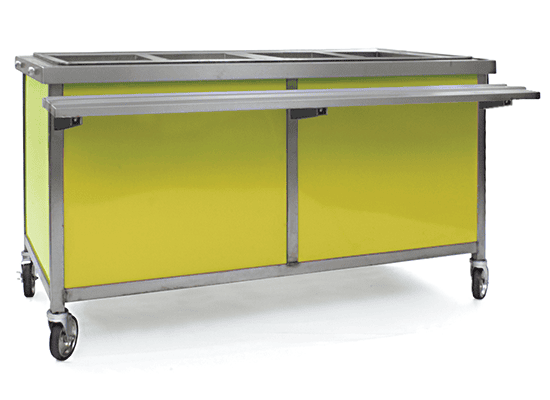 Hot/Cold Combination UnitsDual-temperature operation from one unit: pre-wired with a hot/cold selector switch, thermostatic controls and a pilot light, 16-gauge stainless 2″-tall top, predrilled for accessories.
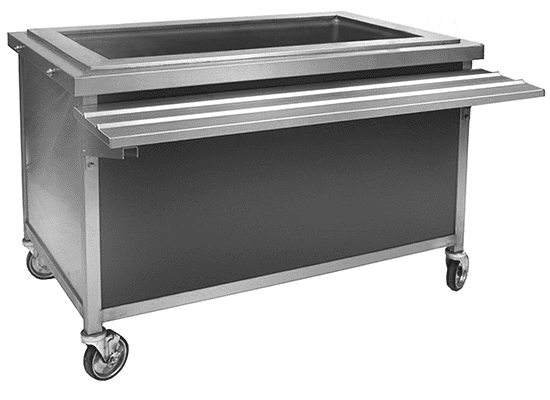 Cold Food Units, Iced PansFully insulated iced cold pan for salads, fruit and dressings with no electrical connection required at that position.
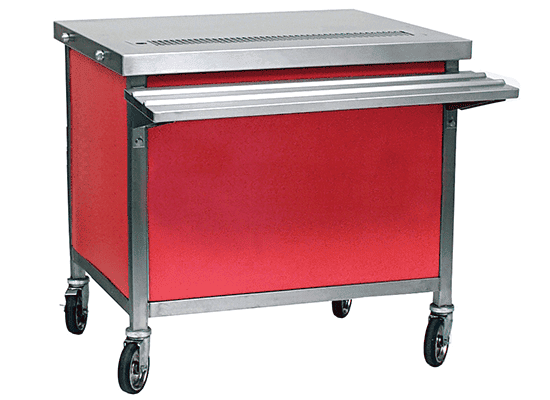 Beverage UnitsHat-channel-reinforced top with a 2″-deep × 4-1/2″-wide urn trough sloped to a 1″ drain, covered by a louvered “anti-splash” stainless trough cover.
 Ice Cream UnitsHeavy-gauge stainless liner with 2-1/2″ insulation all around, insulated hinged lift-off lid with plastic-coated pulls, −10°F to 0°F operating range, 1/4 H.P. compressor on a 6′ cord and plug.
 Rack / Tray Dispenser UnitsSelf-leveling dispensers furnished to your tray size — trays rise as guests take them, so the head of the line never stalls on restocking.
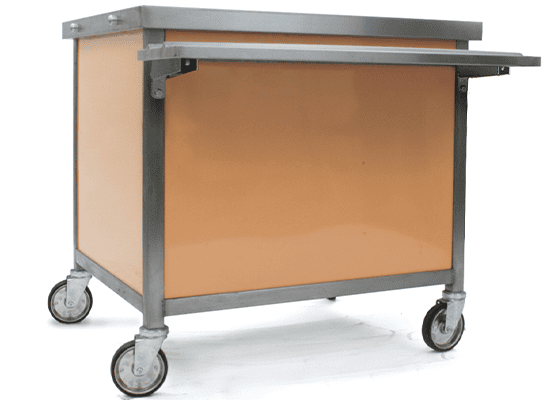 Cashier UnitsIntegrated foot rest, locking cash drawer with handle, stainless apron and a 2-1/2″-diameter grommeted hole for POS cabling.
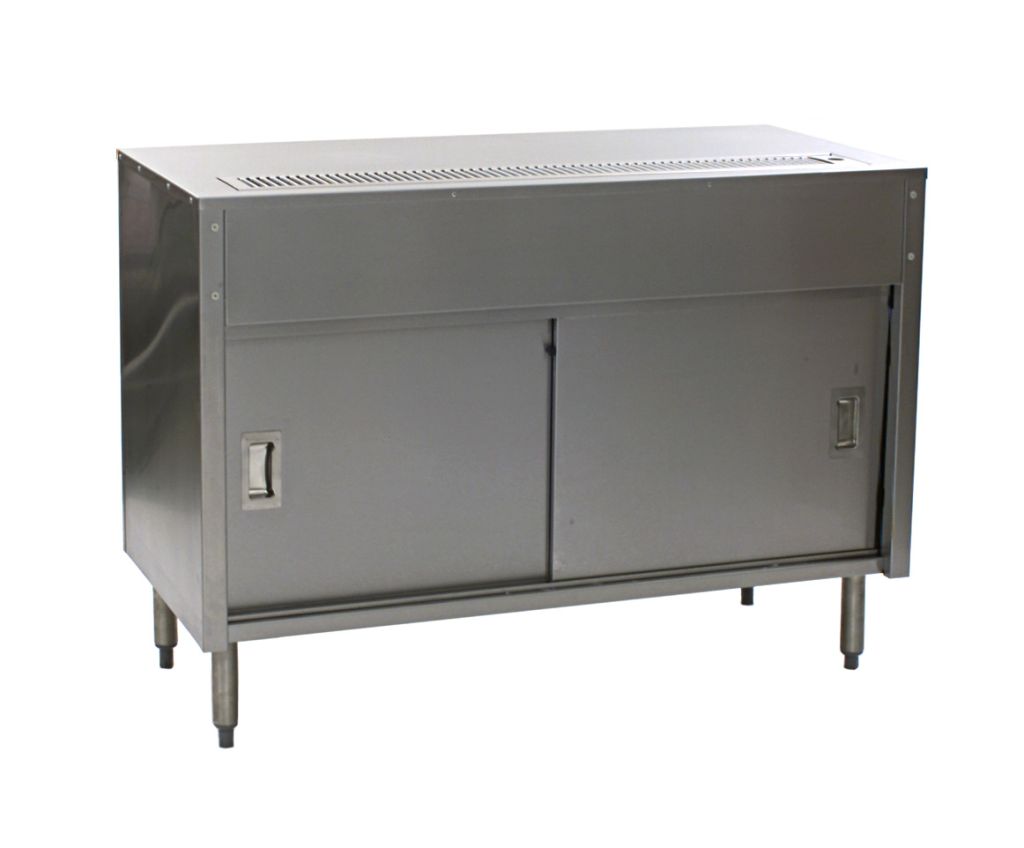
 Solid Top Utility CartsThe filler piece: plain 16/304 solid top on the same base and docking hardware, used for staging, condiments, utensils or closing a dimensional gap in the run.
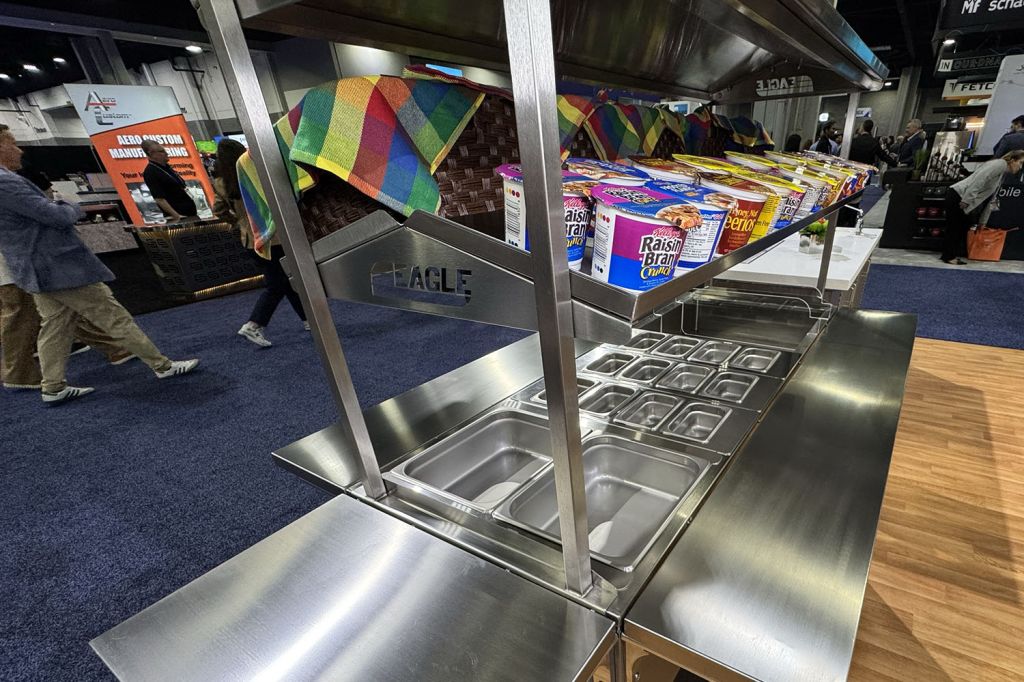 Grab-N-Go CartsStainless open-base body with a 6″-deep insulated pan, POS shelf on drop brackets, standard push handle, optional solid or tubular tray slide, single or double-sided shields or shelves, and custom branding available.
How a line actually gets assembled
Lay it out in guest order, not equipment order. A typical single-sided school or senior living line reads: tray/rack dispenser at the head so every guest starts with a tray → hot food units for entrees and hot sides, ordered so the slowest-to-serve item is not first → a hot/cold combination unit where the menu flips between seasons → cold food units for salads, fruit and dressings → a utility cart for condiments, utensils and napkins so those decisions happen off the hot line → beverage unit → ice cream or dessert unit → cashier stand at the exit with the drawer on the side away from the queue. Where the room forces a turn, a corner transition unit takes the 90° so you are not paying for custom millwork or leaving a triangular dead spot. Add a grab-n-go cart off the main line, near the exit or in a second location entirely, to bleed off the guests who only want a packaged item — that single move often does more for throughput than another hot well.
Because every unit is mobile and docks to its neighbor, the same inventory becomes a different line for breakfast, a shorter line for summer feeding, and two satellite lines for a special event. That is the actual argument for modular over a built-in counter: you are buying the ability to change the layout without a construction project.
Tray Slides, Utensil and Plate Staging

The tray slide is the part of the line guests physically touch the entire time, and it is the part most often left to the end of the budget. Specify it deliberately. Solid tray slides give a continuous surface, look finished on a public line and are easy to wipe down; tubular tray slides weigh less, cost less and drain, which matters on a wet line. Either way the slide must run the full length of the counter run with no gap at unit joints — a gap is where a tray corner catches and a plate goes over. Where units dock and undock, verify the slide sections meet cleanly in the docked position, and where a corner transition unit turns the line, confirm the slide geometry carries around the turn.
Staging is the other half. Trays belong on a self-leveling rack/tray dispenser at the head of the line, not stacked on the first hot unit where the stack shrinks unevenly and someone has to lean across food to restock. A tray stand — 16/430 stainless top on a heavy-gauge stainless cabinet base with 1-5/8″ O.D. stainless tubular legs and adjustable bullet feet — gives you a landing surface for trays, plate stacks or bussing at the end of the run. Plates and bowls that must be pulled from inside the line belong in an enclosed base beneath the hot units so they stay clean and out of the guest reach zone. Utensils, napkins and condiments belong on a solid top utility cart placed after the last food unit, because a guest stopping to grab three condiments in the middle of the hot line is the single most common self-inflicted throughput problem in a cafeteria.
Coffee and tea deserve their own position. An urn stand with a 16/430 stainless top, full-depth stainless undershelf and an urn trough sloped to a 1″ drain under a removable louvered grate keeps drips off the floor and gets the urns out of the serving path entirely.
Breath Shields and Sneeze Guards
Here is the part worth reading twice: shield configuration is very often set by your local jurisdiction, not by a single national rule. Required height, the amount of overhang toward the guest, whether the server side must also be covered, and whether a pass-through opening is acceptable can all differ between two health departments an hour apart. Get the requirement from your inspector in writing before you buy, because a shield that does not satisfy the plan review is a shield you buy twice. Eagle’s shields are 7/32″-thick plexiglass unless noted, and the mounting method — not the panel — is what you are really choosing.
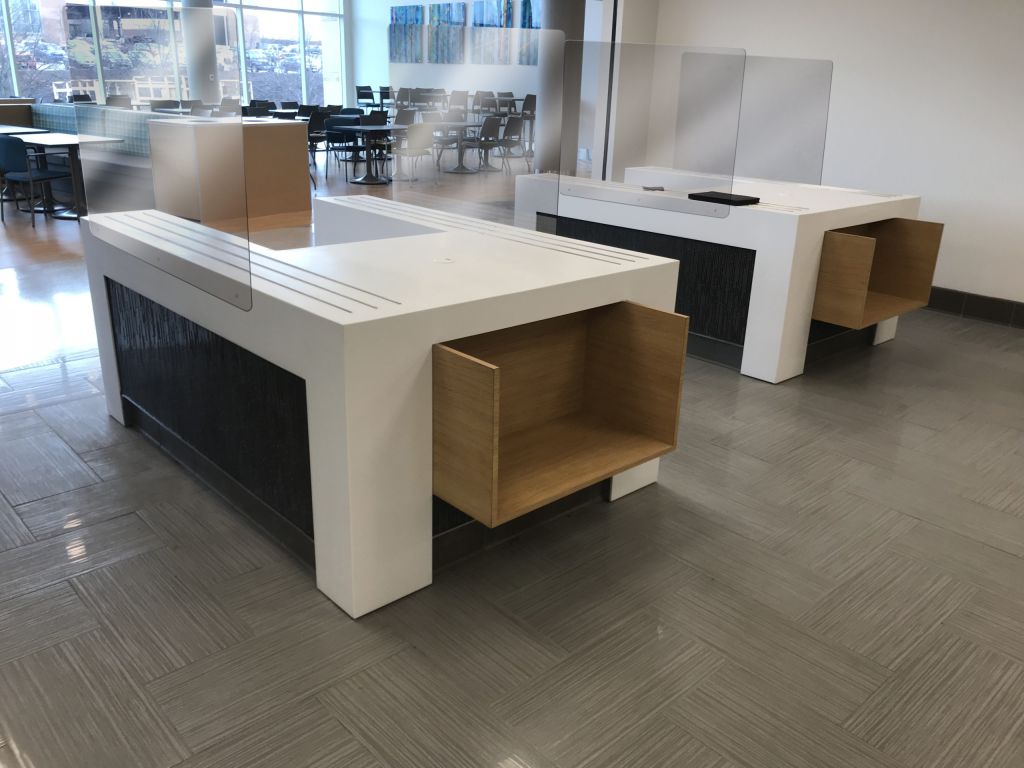 Bolt-On ShieldsThe permanent answer where the layout is fixed: mounts to the front of the counter with flexible mounting options, 29-1/4″-long × 30″-tall panels with 1″ radius corners, sold in packs of two.
 Ceiling-Mount ShieldsHung on three 60″ chains with six S-hooks so the countertop stays completely clear, protecting both sides of the counter; also usable as a partition divider.
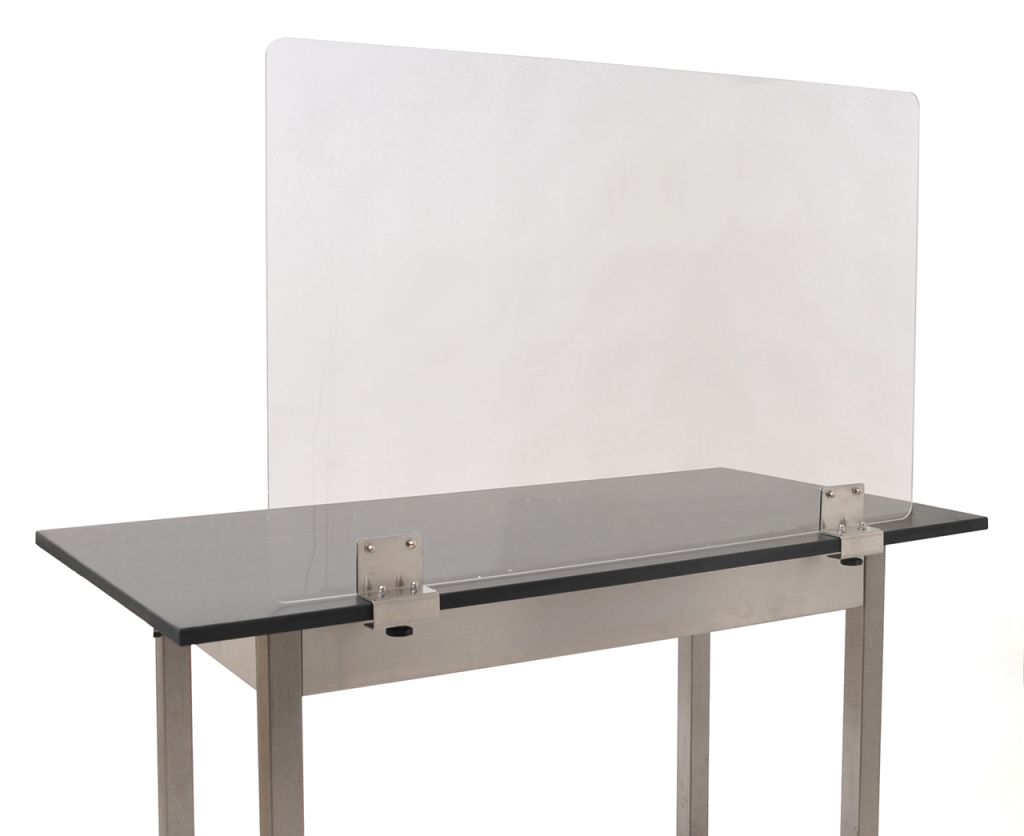 Clamp-On Shields, Overhanging ClampClamps to a table edge from 1″ to 1-1/2″ thick (customizable), with rubber-lined stainless clamps to protect the surface. Individual shields configure to the layout you actually have.
 Free-Standing Countertop ShieldsLightweight portable barriers that reposition as needs change, vertical or horizontal, with or without a pass-through, no tools to assemble, locking into two 8″ × 14″ stands and knocking down flat for storage.
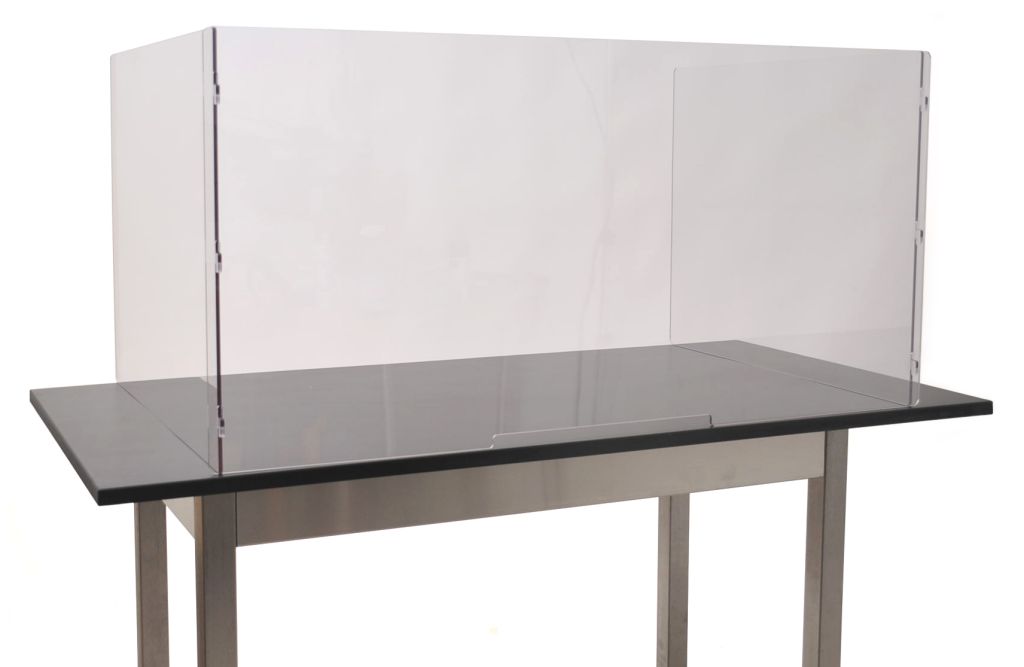 Knock-Down 3-Sided ShieldsIndividual barriers for dining tables or single-station service, tab-and-slot assembly with no tools, a paper pass-thru slot, and flat knock-down storage between uses.
 Divider Wall Extension ShieldsClamps onto an existing divider wall to extend protection upward, in multiple sizes to match divider wall lengths, with custom sizes available.
 Dividers for Oval & Rectangular TablesInterlocking panels that section off a long table into separate spaces, knocking down flat for storage, with an optional drop edge to keep panels from sliding.
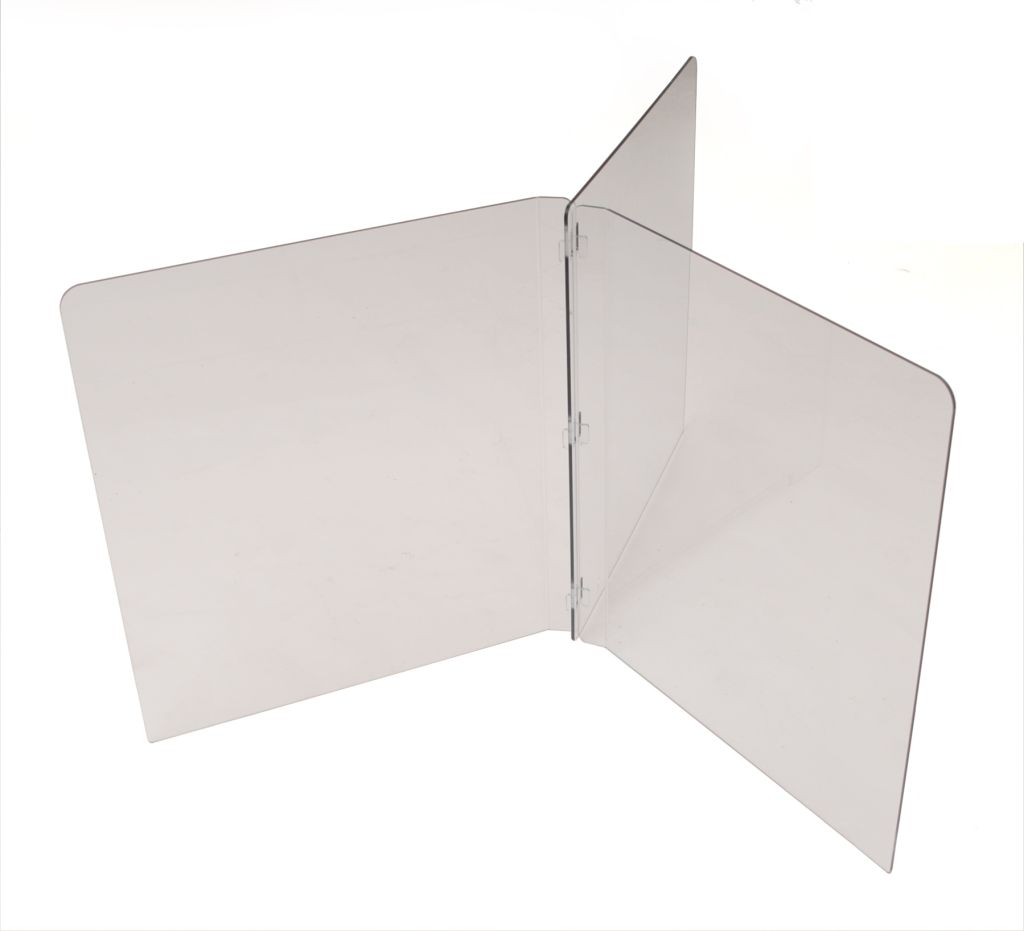 3-Way & 4-Way Dividers, Square or Round TablesTwo interlocking panels form a four-way “X” divider; the 3-way uses a curved 3/16″ polycarbonate design, no tools required, optional drop edge.
Choosing a mounting method
Fixed line, unchanging layout, public-facing: bolt-on. Layout you re-arrange for events or seasons: clamp-on or free-standing. Need the counter surface completely unobstructed for pan changes and heavy service: ceiling-mount. Dining room seating rather than a serving counter: knock-down 3-sided shields and table dividers. If you are not sure what the inspector will accept, we will quote two options so the decision is a five-minute swap instead of a reorder.
Throughput, Power and Drain Planning
Sizing the line to the meal period
Throughput, not well count, is what makes or breaks a cafeteria. Start with three numbers: guests to feed, minutes in the serving period, and how many of those guests take a full hot plate versus a packaged item. A served single-sided line generally moves on the order of 8–12 guests per minute when a server plates each item and the queue is orderly; self-service can run faster per guest but is far less predictable because each decision point adds dwell. Divide guests by minutes to get the rate you need, and if the required rate exceeds what one line can do, the fix is another serving position — a second line, a double-sided arrangement, or a grab-n-go cart pulled off to the side — not more wells on the same counter.
- Count simultaneous hot menu items to set your minimum well count, then add a well for overflow and a well for the pan waiting to go in.
- Every decision point (condiments, dressings, made-to-order) slows the line more than any equipment choice; move those stations off the hot run.
- Put the cashier where the queue exits the room, not where it enters, and keep the drawer side away from the guest flow.
- Plan an aisle wide enough for a mobile unit to be pulled out of the line during service — on a Director’s Choice line, that is how a failed unit gets swapped instead of shutting the line down.
- For schools with staggered lunches, size to the busiest period, not the average one.
What the electrician and plumber need
Hand both trades the actual cut sheets early. The details that generate change orders are always the same ones.
| Trade | What to coordinate |
|---|---|
| Electrician | Voltage and phase per unit; whether wells are 120V, 208V or 240V; total connected load for the run; which units ship with a 6′ cord and plug versus terminating in a J-box for field wiring (water bath steam tables commonly require field wiring); receptacle locations that do not force cords across a traffic aisle; dedicated circuits for refrigerated bases, ice cream units and compressors. |
| Plumber | Hot well drain manifolds — sealed-well tables use a 3/4″ drain and strainer per well tied to a common copper manifold; 1-1/2″ NPS drain connections for iced cold pans; 1-1/2″ brass drain assemblies on water bath steam tables; 1″ drains under urn troughs; condensate routing for refrigerated units; fill access for water baths so staff are not carrying pitchers. |
| Gas fitter | Line size to each gas table, regulator location, and confirmation that the 3,500 BTU-per-burner load is within the branch capacity. |
| Mechanical | Added humidity from water baths, condenser air clearance around refrigerated bases, and heat rejection into the serving space. |
Send us your serving line layout or menu
Email the kitchen plan, the equipment schedule, or just the room dimensions plus your menu and guest count. We come back with a unit-by-unit line layout, model numbers, spec sheets for your trades, lead times and freight — and we flag the drain, power and shield issues we find while we are in the drawing. Call (800) 326-4403 if it is faster to talk it through.
Shop Hot Food & Serving Equipment Online
Buy select items directly from our online store, or request a quote for volume, custom sizes and freight-rated orders.


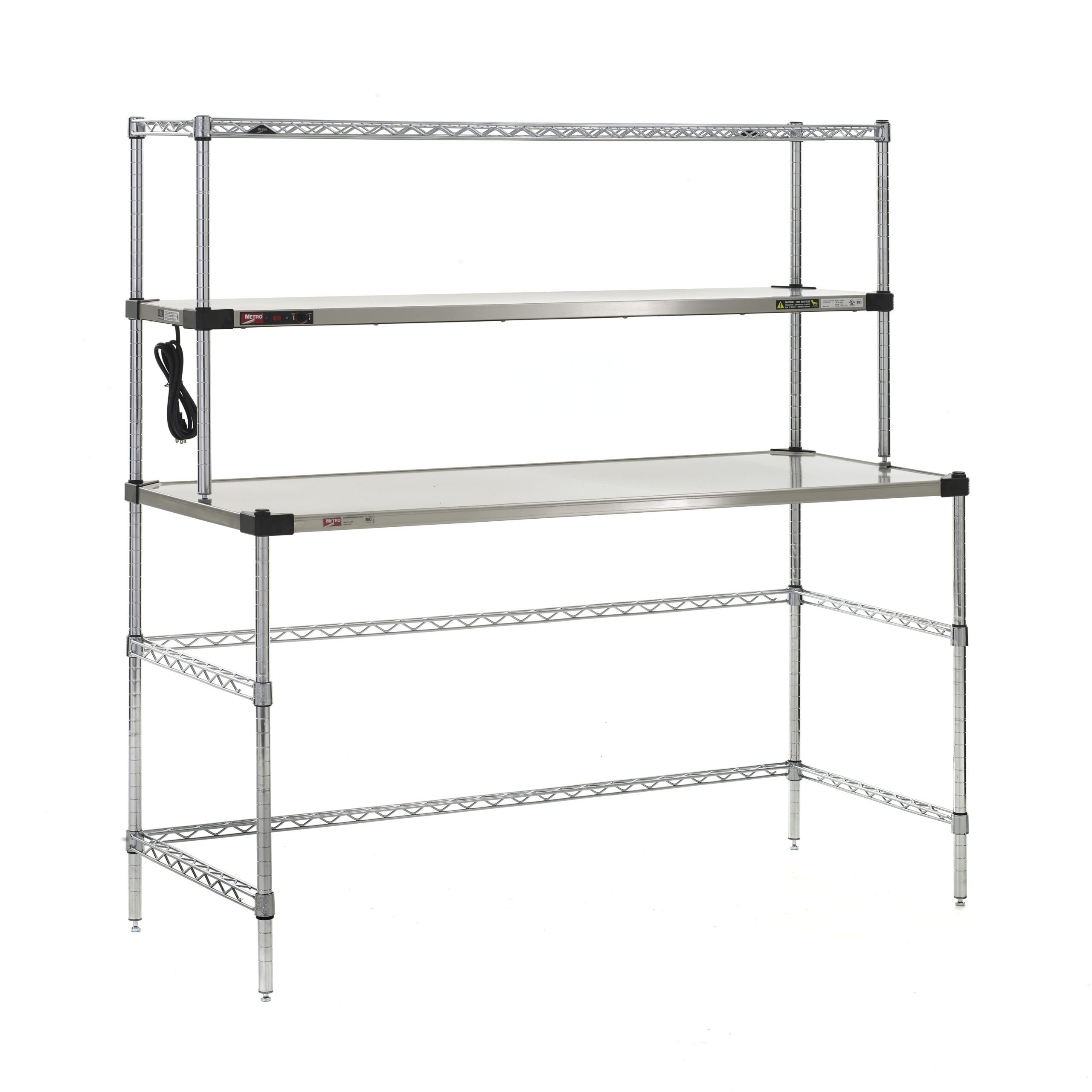
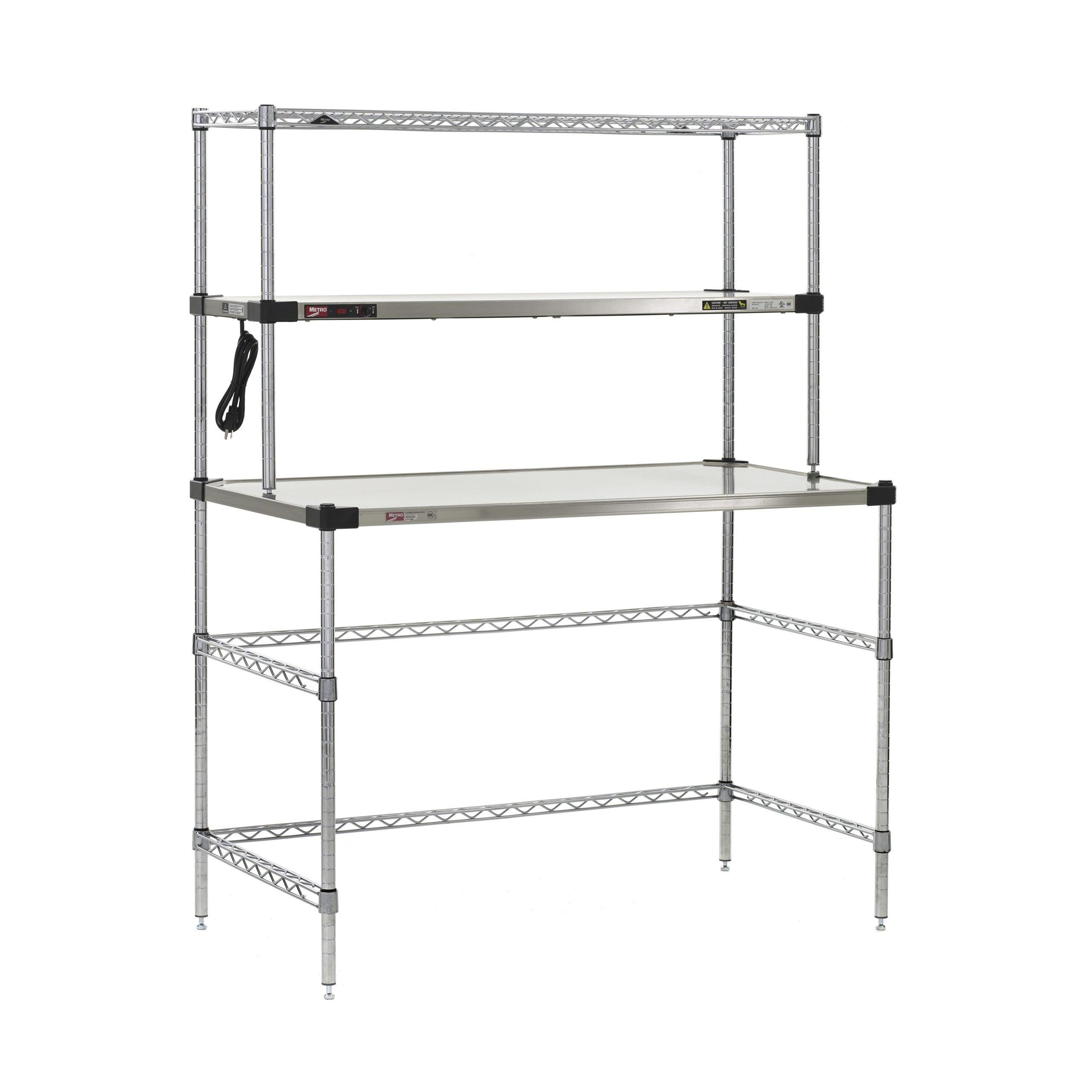
Design & price it online: Metro Heated Holding & Proofing Cabinets Configurator
Configure C5 heated holding and proofing cabinets in our free Metro Heated Holding & Proofing Cabinets configurator — build the layout, see a full bill of materials and save or send the quote in minutes. Need a different Metro product? Browse all 17 tools in the Metro configurator hub.
Get a free quote
Tell us what you are storing, the room size and your timeline. A project specialist will follow up with layout options and pricing. Prefer to talk? Call (800) 326-4403.
Frequently Asked Questions
What is the difference between a sealed-well and an open-well hot food table?
How many wells do I need for my serving line?
Should I specify electric or gas hot food tables?
Do individually controlled wells actually matter?
What is the difference between an iced cold pan and a mechanically refrigerated cold pan?
How do I know which breath shield configuration my project needs?
What do I need to tell my electrician and plumber before the equipment ships?
Is this equipment certified for foodservice sanitation?
Get Your Hot Food Table & Serving Line Quote
Tell us the menu, the guest count and the room. We will lay out the line unit by unit, confirm the utility requirements for your trades and get the equipment to your site.