
Home › Medical Carts
Medical Carts
Crash carts, procedure and treatment carts, isolation and anesthesia carts, endoscopy and scope transport carts, medication carts, linen exchange and hospital supply carts — specified, quoted and delivered by MH-USA.
1997
Serving the West Related: Borroughs medical and laboratory storage solutions.
10+
Cart families quoted
50
States shipped
Multi-brand
Metro & more
Choosing the Right Medical Cart for the Job

Most hospitals end up with a cart fleet nobody planned: a code cart bought as an emergency replacement, a procedure cart inherited from a closed unit, a supply cart off a rep’s truck — and five years later nursing works around a dozen carts that share no drawers, keys or cleaning routine. The fix is deciding what each cart family is for before buying the next one.
This is the generic guide: the cart families and when each is right, how materials change cost of ownership, which accessories matter, how security works, and how to size a cart so it fits the room, aisle and elevator. We represent Metro and other healthcare cart manufacturers, so the guidance is application first, brand second.
MH-USA has specified healthcare storage and transport equipment from Salt Lake City since 1997, quoting single carts through full unit rollouts and shipping nationwide.
Medical Cart Families at a Glance
Clinical carts share the same chassis logic — frame, drawer bank, worksurface, casters, rail system — and differ in drawer layout, security and accessories.
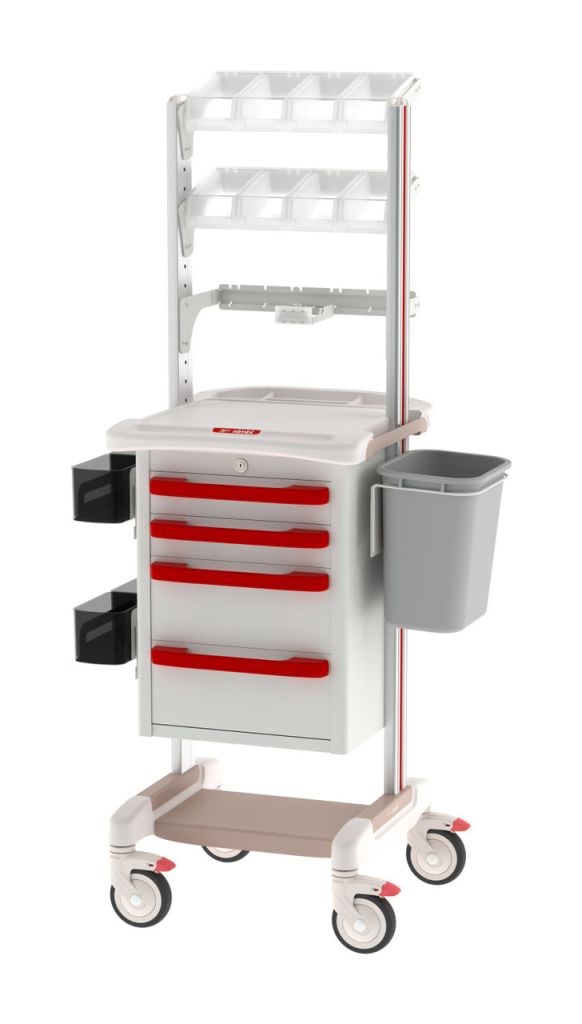
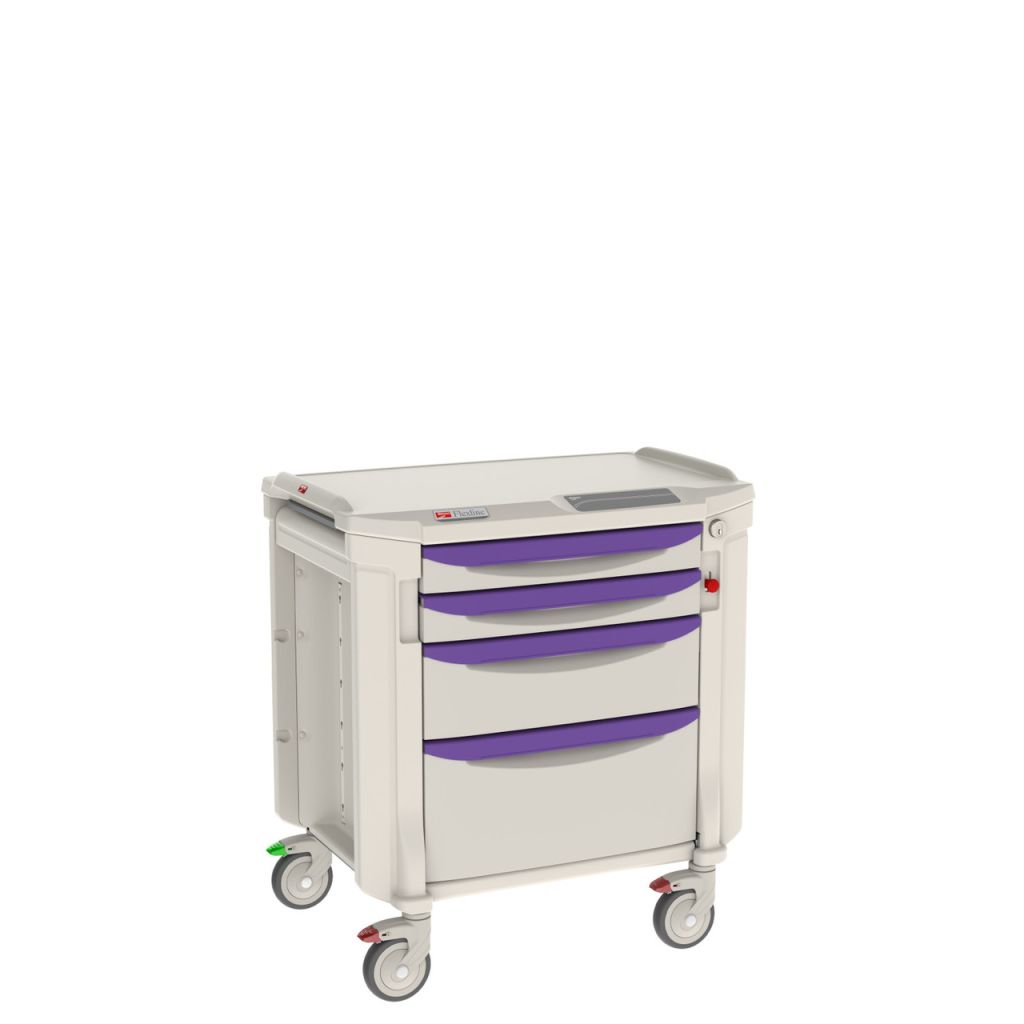 Crash / Code CartsStandardized drawer order, breakaway seal lock, defibrillator worksurface, backboard bracket and oxygen tank holder, adult or pediatric.
 Procedure & Treatment CartsShallow and deep drawers for wound care, IV starts and clinic procedures; keyed or keyless locking.
 Isolation CartsGown, glove, mask and shield storage staged outside a patient room, with a wipeable top.
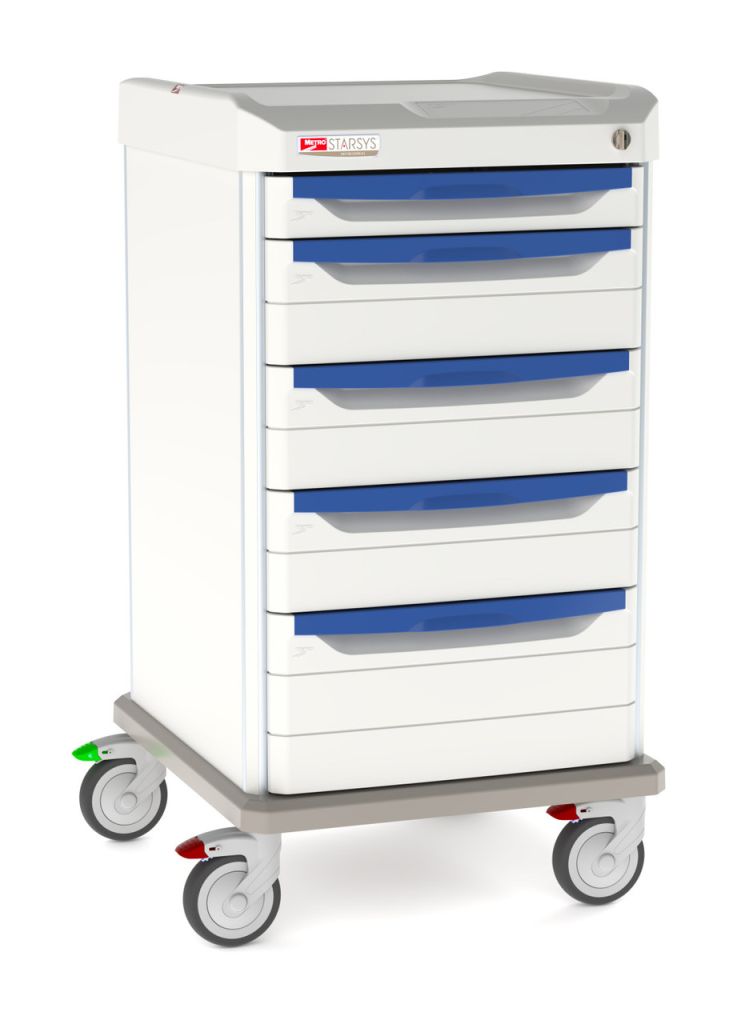 Anesthesia CartsOR carts with a secure narcotic drawer, deep airway drawers and a stable top for monitors.
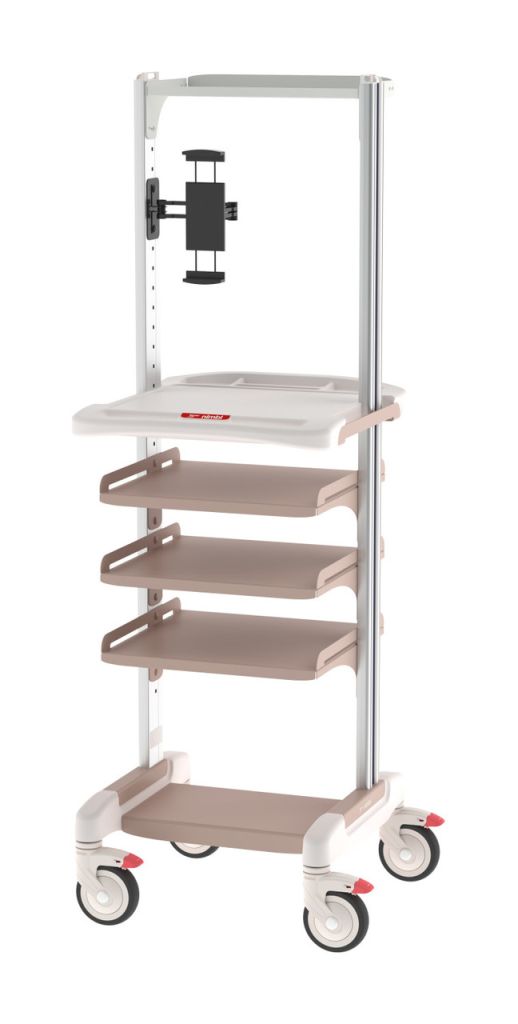 Endoscopy / Scope TransportCovered transport between the procedure room and reprocessing, with clean-versus-soiled designation.
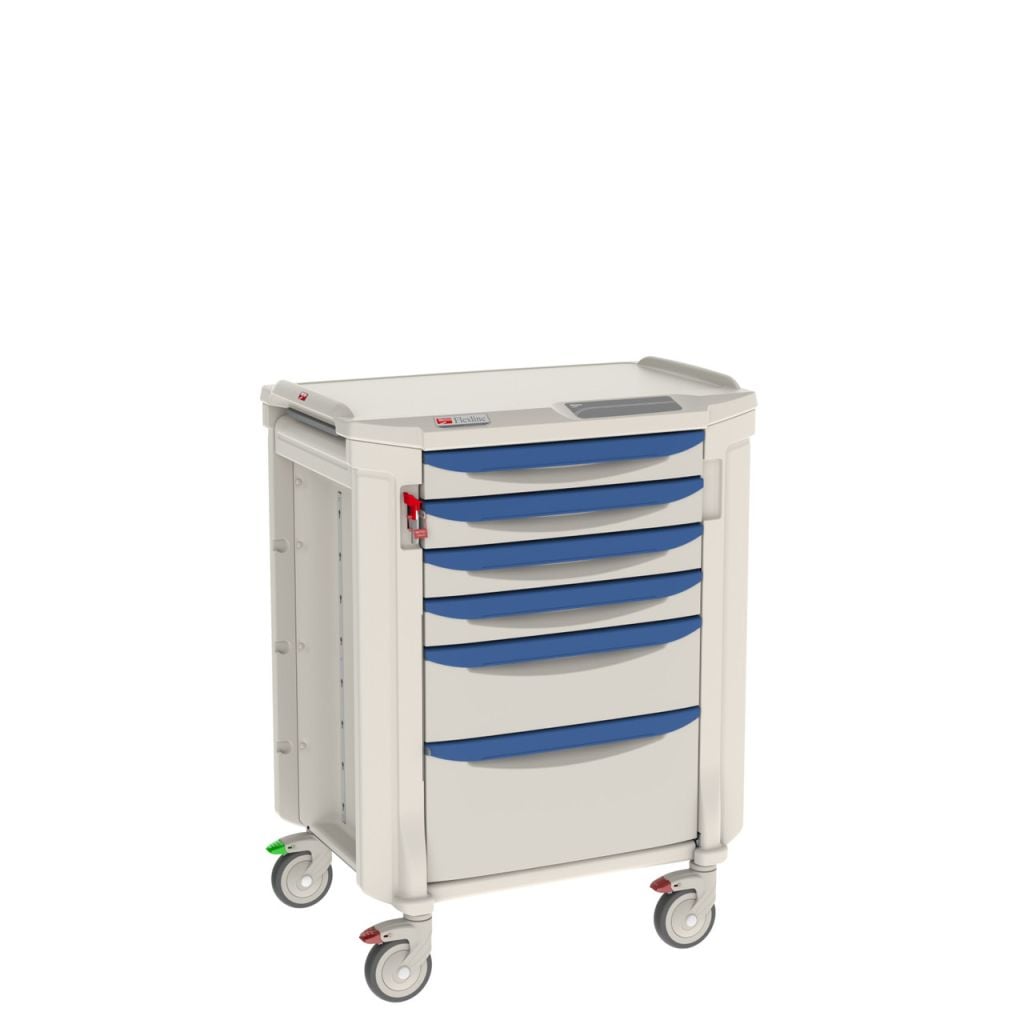 Medication / Med CartsPunch-card or unit-dose drawer layouts with individual locking drawers or electronic access.
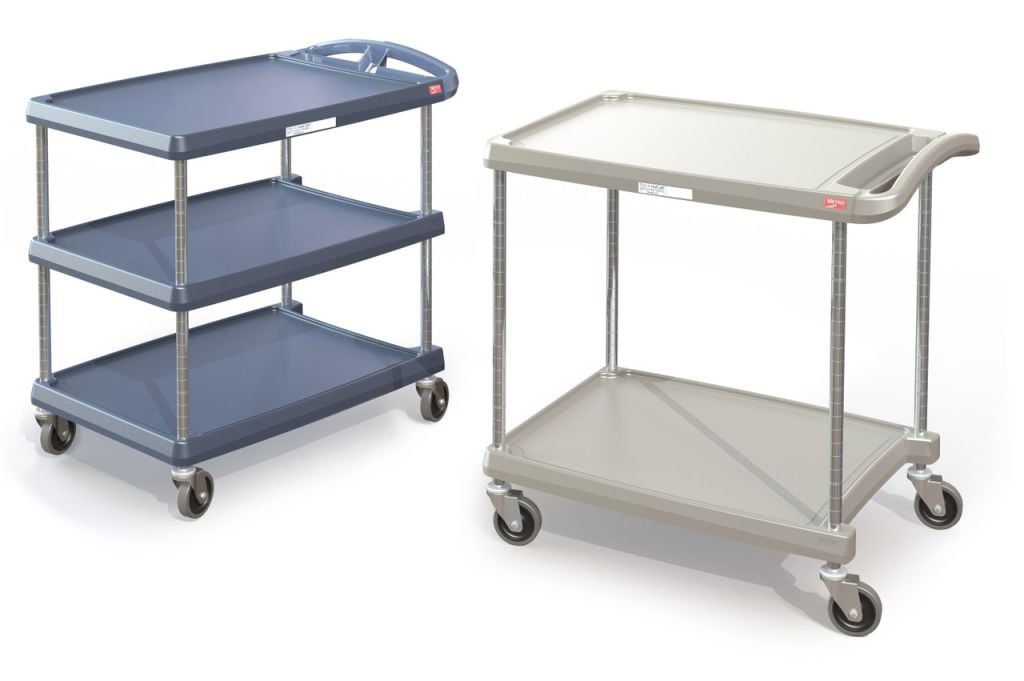 Linen Exchange & TransportHigh-capacity carts for clean linen delivery and soiled return on scheduled routes.
 Case Carts & Supply TransportOpen or closed stainless carts moving instrument sets between central sterile and the OR.
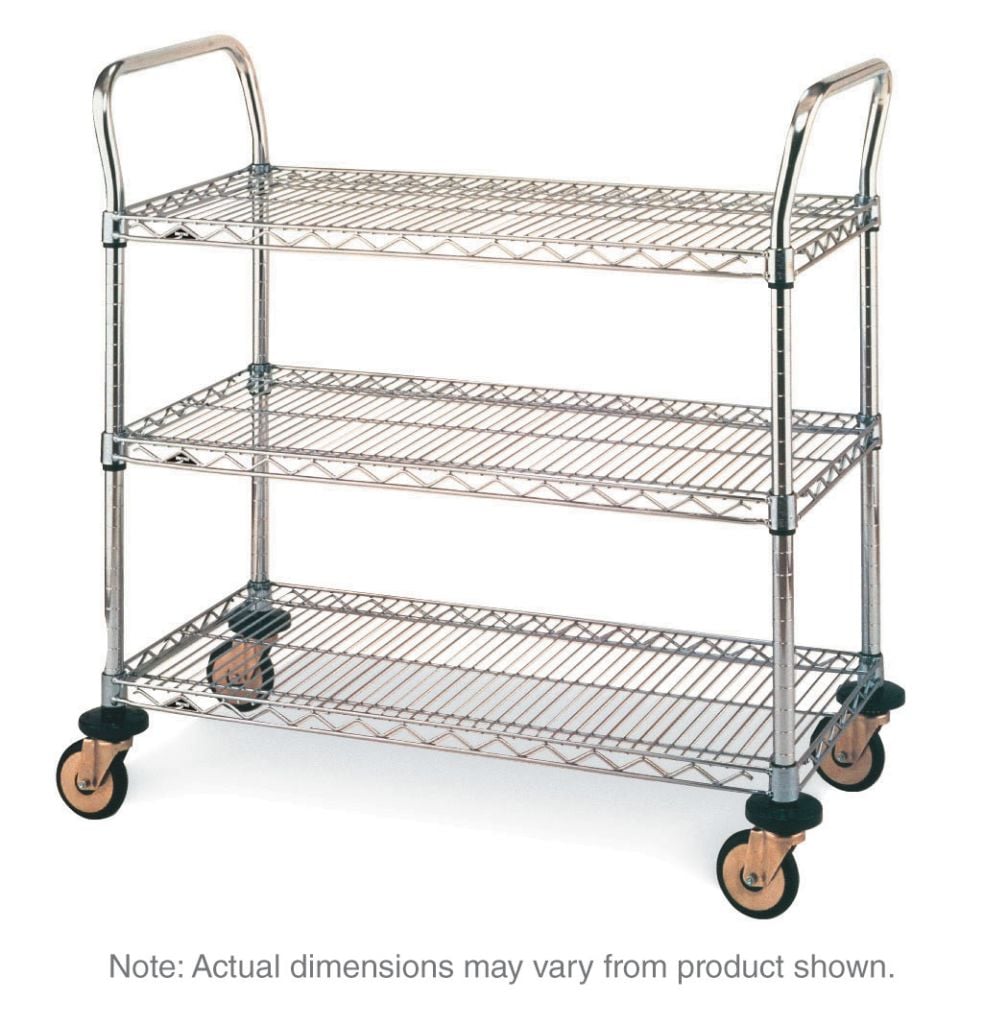 Hospital Supply & Utility CartsWire and polymer carts for par restocking, housekeeping and biomed — see our utility carts page.
Crash Carts and Code Carts
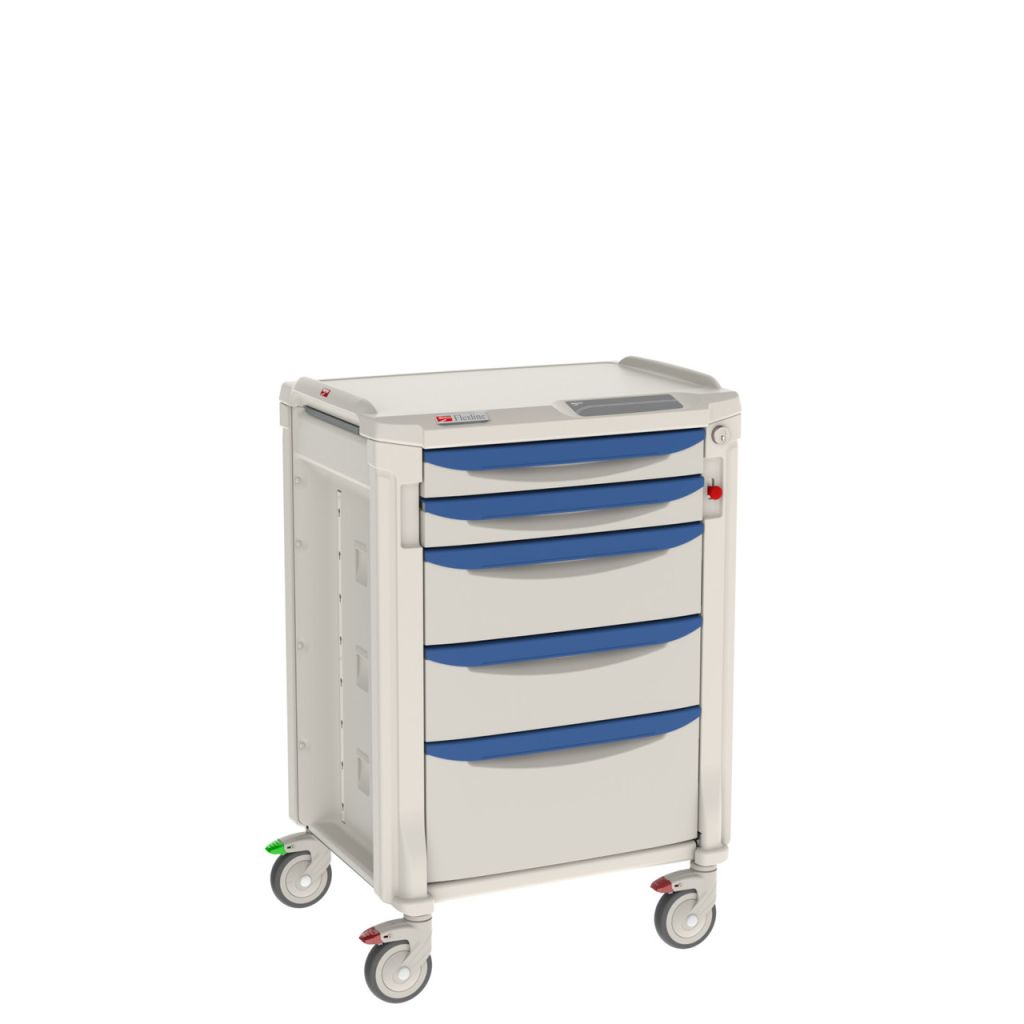
A crash cart is the one cart where standardization beats preference. During a code nobody reads labels — they pull the drawer they have pulled a hundred times in training. Every crash cart in a facility should share the same drawer order, accessory positions and seal procedure, even if the units were bought years apart.
The typical build: a worksurface sized for a defibrillator; 3" and 6" drawers in fixed clinical order (airway, medications, IV and circulation, procedure supplies, miscellaneous); a backboard or cardiac board bracket on one side; an oxygen tank holder on the other; an IV pole socket, sharps bracket and glove box holder within reach.
Security on a code cart proves the cart is complete rather than keeping people out: a numbered breakaway seal through the drawer lock bar lets a nurse confirm readiness without opening a drawer. After use the cart is restocked, a new seal goes on and the number is logged.
Pediatric Crash Carts

Pediatric resuscitation is dosed by weight or length, so the cart is organized by color instead of category. Drawers match a length-based resuscitation tape: measure the child, read the color, open that drawer for the airway, IV and supply sizes in that band. Color-coded drawer pull kits convert a standard cart body to the scheme.
Keep the chassis and drawer bank identical to your adult carts so keys, accessories and cleaning stay common; use shallower drawers with more dividers, because pediatric supplies get lost in deep drawers; mount the tape and reference card where the responder sees them first; and place a pediatric cart anywhere a child may arrive, not only the pediatric unit — in general hospitals most pediatric codes happen in the ED. Adult and pediatric carts must be distinguishable from across a hallway: different body color or a full color-coded drawer set, not a small printed label.
Daily checks are a cart design problem
If the daily code-cart check requires opening drawers, staff will skip it. A single seal-locked drawer bar plus an exterior log holder turns the check into a glance at a seal number. Specify both with the cart.
Procedure, Treatment, Isolation and Anesthesia Carts
These are the working carts of a unit. They are opened constantly, restocked locally and reconfigured as practice changes, so drawer flexibility and cleanability matter more than a frozen configuration.
| Cart type | Typical drawer mix | Security | What gets missed |
|---|---|---|---|
| Procedure / treatment | Two to four 3" drawers over one or two 6"–9" drawers | Keyed central lock or keyless touchpad | No worksurface left once a supply bin and sharps container are mounted |
| Isolation | Open shelves or bin rails, one shallow drawer | Usually none — access speed matters | Parked cart narrows the corridor outside the patient room |
| Anesthesia | Deep lower drawers for airway, internal locking narcotic drawer | Keyed or electronic, plus a separate internal lock | Top not rated for the monitor and pumps that end up on it |
| Phlebotomy / IV team | Shallow drawers plus tube racks and bin rails | Keyless touchpad for a shared cart | Too heavy to push for a full round on an eight-hour shift |
| Mobile workstation | One or two shallow drawers under a keyboard tray | Keyless or badge access if it carries meds | Battery, power management and cable routing left as an afterthought |

Isolation carts are the cheapest cart to get wrong. They live in a corridor, so clearance is as much the question as storage: specify the narrowest cart that still holds a shift of PPE, with gowns and gloves at reach height.
Anesthesia carts need the narcotic drawer decided up front — an internal locking drawer inside an already-locked cart, since retrofitting costs drawer height. On phlebotomy and IV-team carts, loaded push weight is the spec nobody writes down; larger casters and a full-width handle do more for staff than any drawer feature.
Transport Carts: Endoscopy, Chemical, Linen, Case and Supply
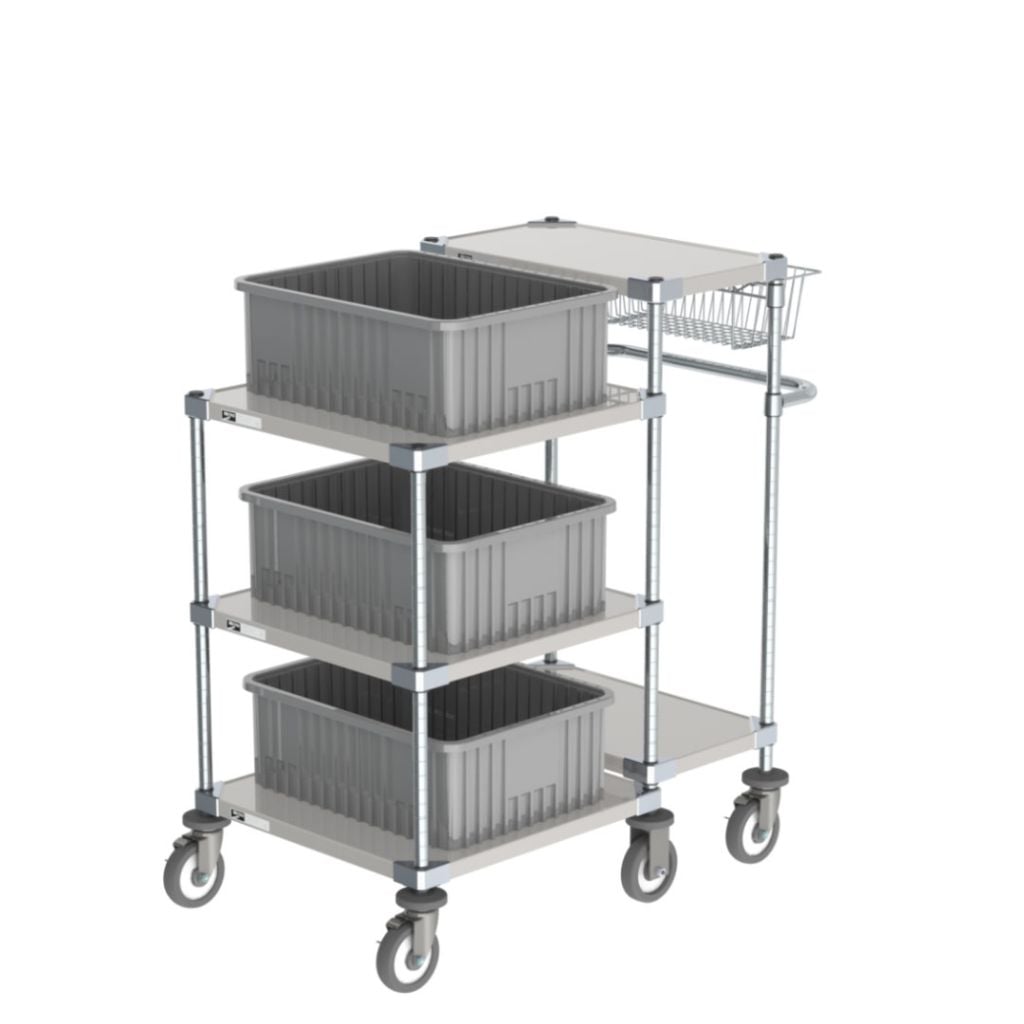
Endoscopy and scope transport carts solve one problem: a flexible endoscope must travel between the procedure room and reprocessing without a soiled scope touching a surface a clean scope will touch. Generally that means designated clean and soiled transport — separate carts, separate covered compartments, or a covered cart reprocessed between trips — plus labeling clear enough that nobody has to guess. Interiors must be smooth and wipeable, and the cart has to fit the doors on the real route. Follow your facility’s reprocessing policy and the scope manufacturer’s instructions for use; we quote the cart, you define the workflow.
Chemical transport carts move cleaning chemicals, reagents and lab consumables, so containment rules: deep-ledge shelves that keep a tipped bottle on the cart, polymer or stainless rather than painted steel, brakes that hold on your grades, and a look distinct enough that nobody repurposes them for patient supplies.
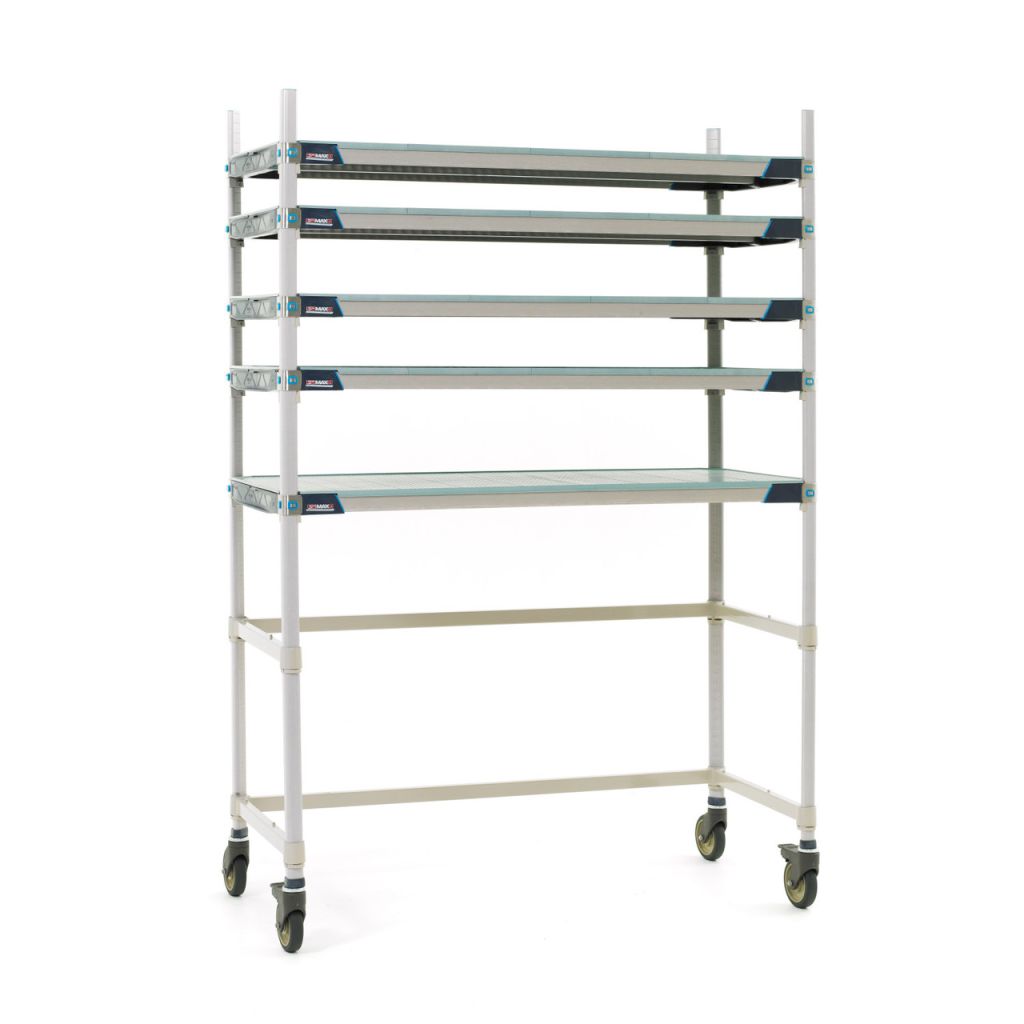
Linen exchange carts run scheduled routes, so capacity per trip is the whole game: size to a full par level for the route, and confirm the loaded cart turns in your tightest corridor and fits an elevator with a person in it. Clean and soiled linen belong on different, obviously marked carts, with covers on the clean side.
Case carts move instrument sets from central sterile to the OR: open stainless carts load and clean easily, closed carts protect the load through public corridors. Specify push handles at both ends and casters rated for loaded weight over distance. Hospital supply carts and picking carts cover par restocking, receiving and stockroom picking — an enclosed picking cart lets a tech run a floor’s replenishment in one trip. For the storeroom feeding them, see hospital stock room design.
Medication Carts, Punch-Card and Unit-Dose Configurations
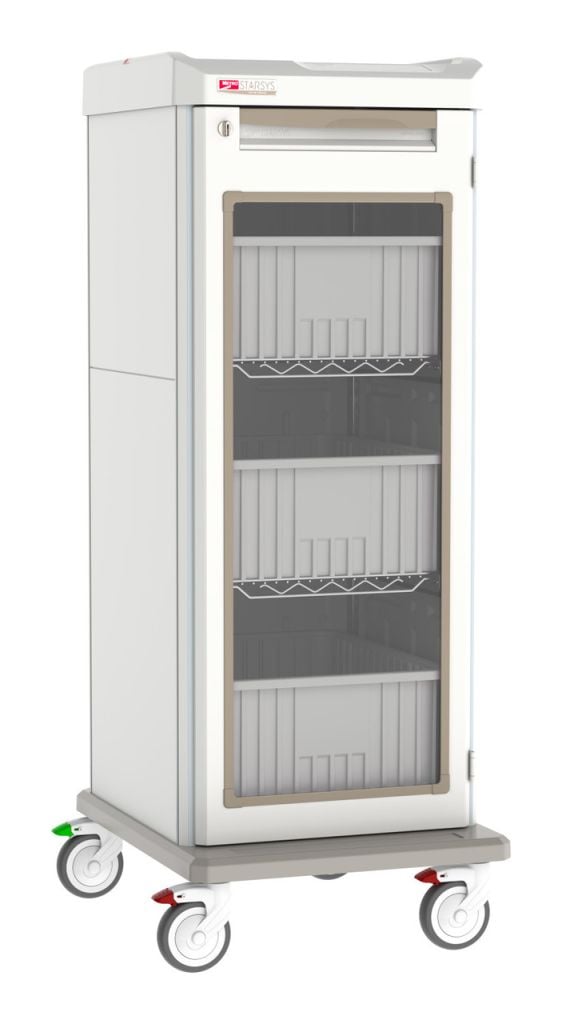
Med carts are specified backwards from the dispensing system. If pharmacy fills 30-day punch cards — common in long-term care — the cart must hold that exact card format in drawers indexed by resident, with enough drawers for the largest hall plus a margin for admissions. If pharmacy sends unit-dose bins or envelopes, the drawers need dividers and bin sets sized to the bin, usually fewer and deeper.
Before picking a med cart, settle five things: patients on the largest med pass, the format pharmacy delivers, where controlled substances live, how documentation happens, and who pushes the cart and how far.
Controlled substances almost always want an individually locking internal drawer with its own key or code. On electronically locked carts the access log is often the real reason for the upgrade — knowing who opened the cart and when is worth more than the lock.
 Individually Locking DrawersA separately keyed or coded drawer inside a locked cart for controlled substances.
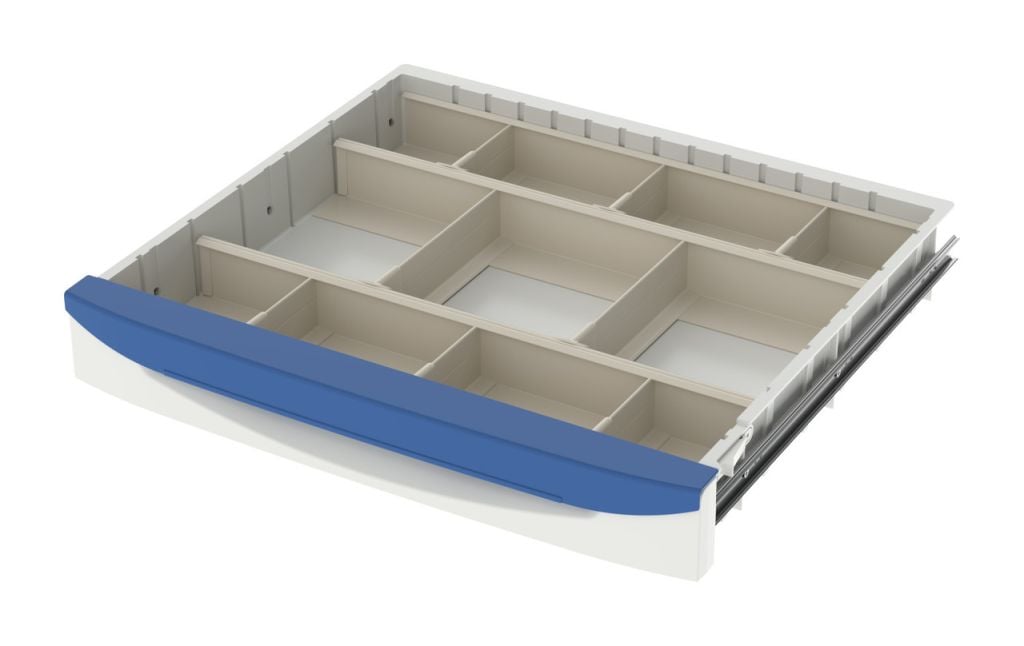 Drawer Divider KitsAdjustable dividers that stop small items migrating between compartments.
 Compartment InsertsFour-compartment and egg-crate inserts that make a drawer auditable at a glance.
Materials, Construction and Cleanability
Material choice decides how long a cart survives your cleaning protocol — and the cleaning protocol is the harshest thing that happens to a cart.
| Construction | Strengths | Trade-offs | Best fit |
|---|---|---|---|
| Molded polymer body | Seamless surfaces, radiused corners, no rust, quiet, integral bumpers, lighter to push | Higher initial cost than painted steel; heat and solvent limits; colors set at manufacture | Patient-facing carts — crash, procedure, isolation, med, workstation |
| Stainless steel | Most durable, tolerates washdown and cart-wash areas, easy to verify as clean | Heavier, louder, shows scratches and fingerprints, higher cost | Central sterile, case carts, OR, lab and washdown areas |
| Painted / powder-coated steel | Lowest initial cost, many stock configurations, strong frames | Chips at corners then corrodes; seams and fasteners trap soil | Back-of-house, biomed, maintenance and low-exposure roles |
| Wire shelf carts | Airflow, light, adjustable shelves, contents visible | Items tip or fall through; no enclosed wipeable surface | Supply transport, stockroom, housekeeping, non-clinical use |
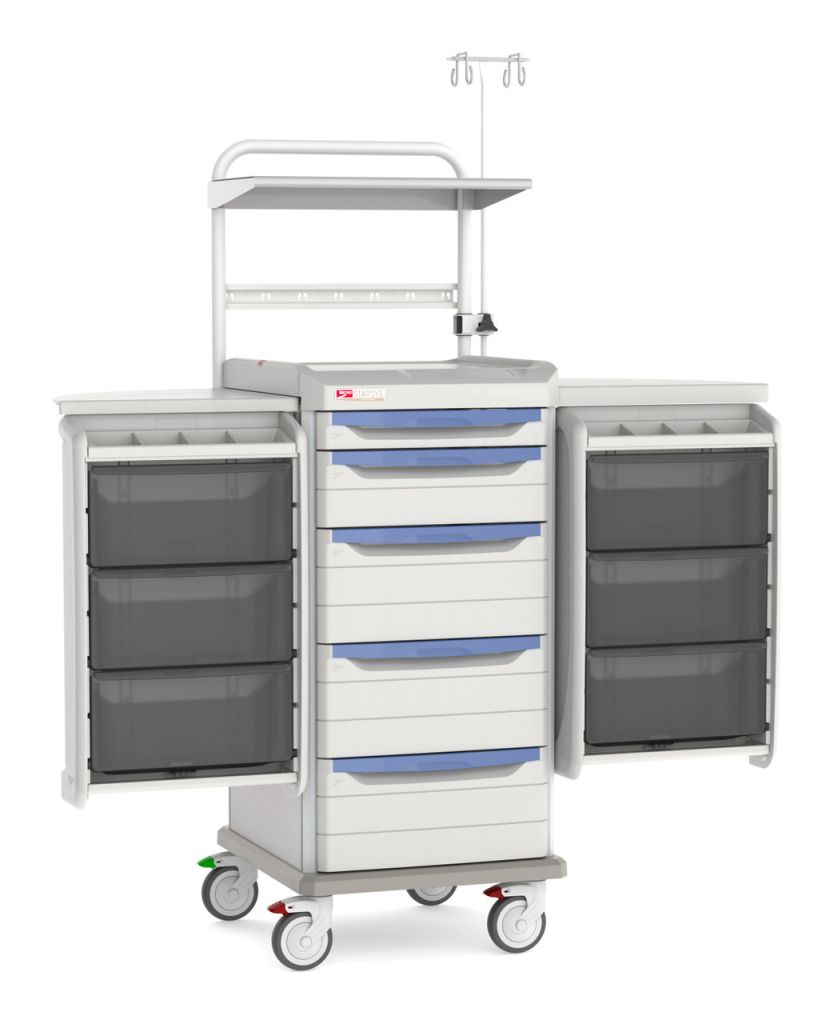
Five details separate a ten-year cart from a three-year cart. Seamless surfaces: weld lines, exposed fasteners and drawer gaps collect soil a wipe cannot reach. Corner bumpers: full-height wrap bumpers protect the cart and your door frames. Casters: larger diameters roll over thresholds, non-marking treads protect floors, and two brake casters belong on anything that parks on a slope. Push handles: a full-width handle beats a corner grab handle. Drawer glides: full extension makes the back of the drawer usable.
If carts go through a cart wash or high-temperature area, say so before quoting — electronics, labels, some drawer materials and some caster bearings are not compatible, and the fix is component selection up front.
Some lines are available with listed options — for example, models are available with NSF-listed options, and Metro offers Microban product protection on selected lines. These are model-specific, so we confirm the exact configuration in writing rather than making a blanket claim. Metro’s clinical storage range is covered on our Metro healthcare storage page.
Drawer Configurations and Cart Accessories
Two carts with the same body behave completely differently depending on drawers and accessories — and accessories are the cheapest thing to change later, provided the cart uses a standard rail and drawer system.
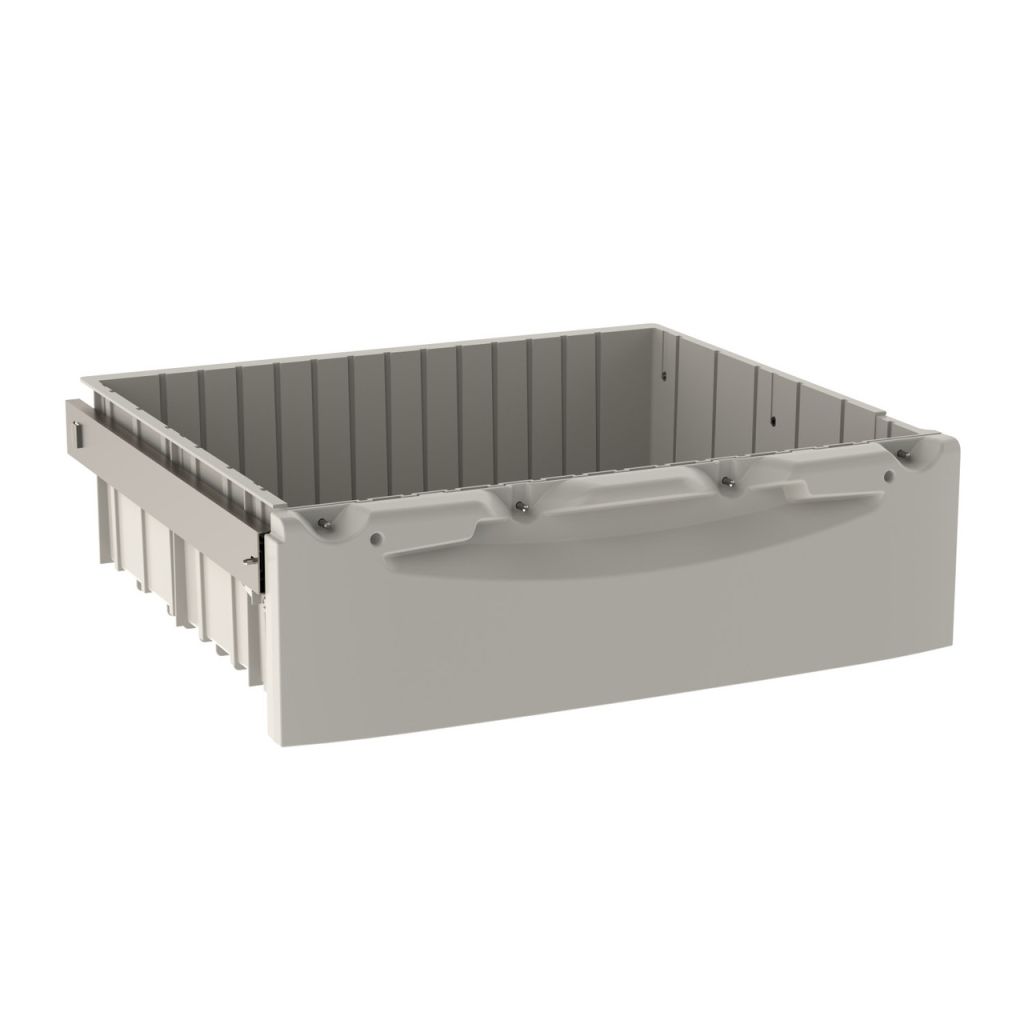 Drawer ModulesMix 3", 6" and 9" drawers to the supply profile; removable drawers let a unit restock at a counter.
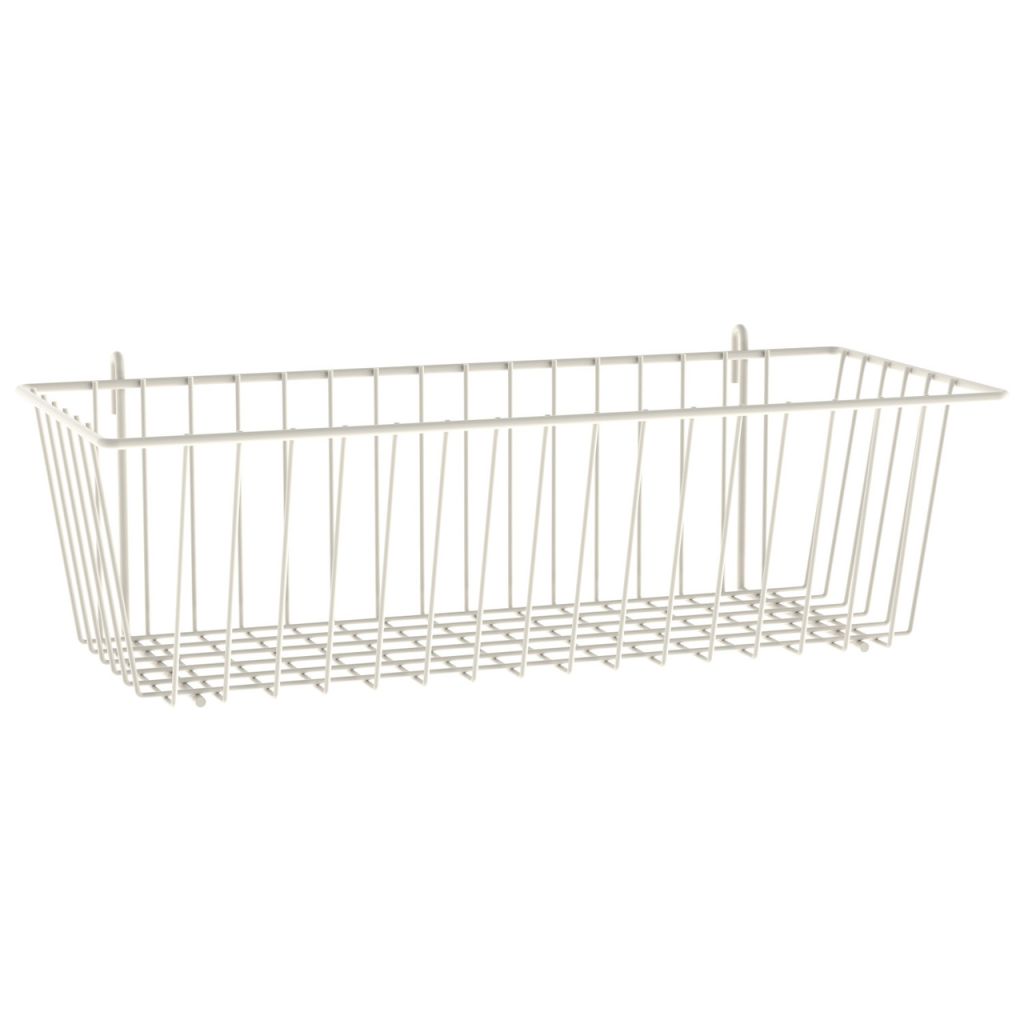 Side Rails & BasketsRail-mounted baskets, bins and label holders add capacity without adding footprint.
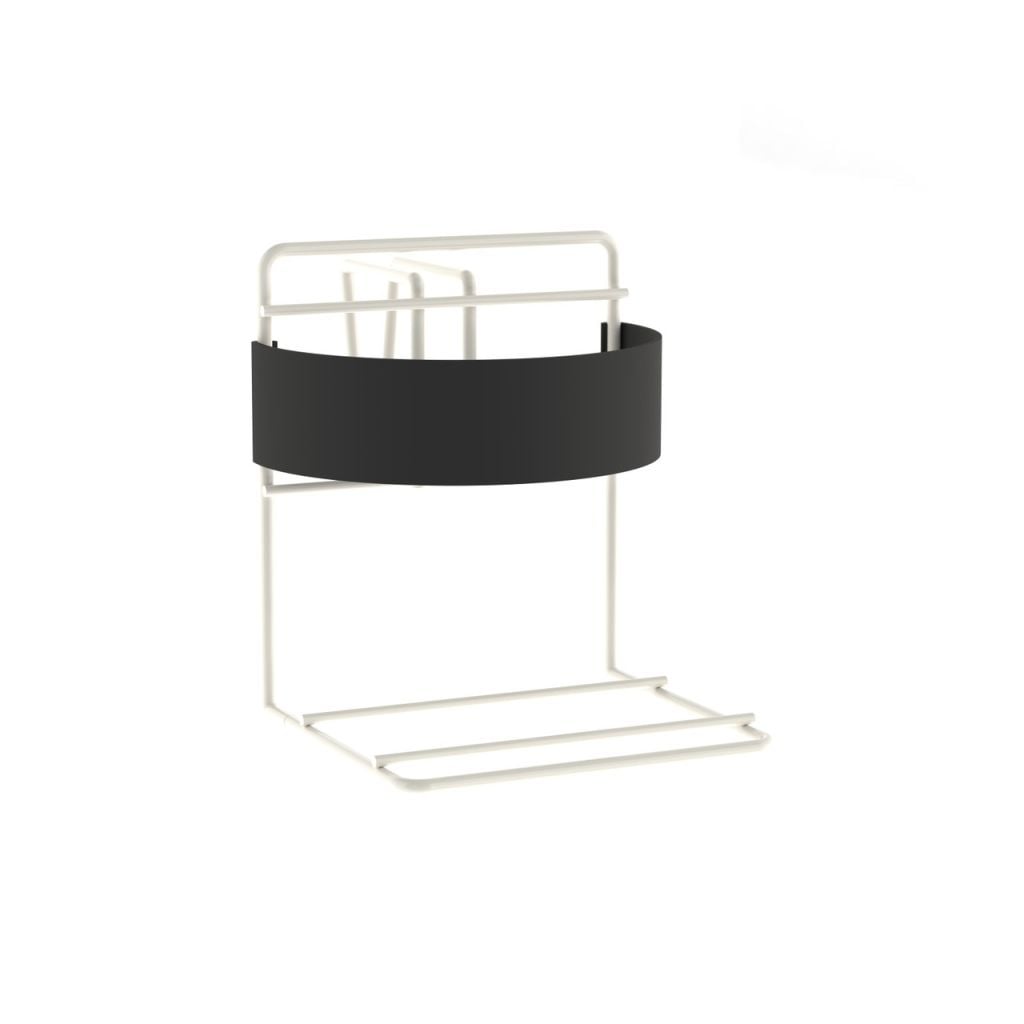 Sharps & Glove HoldersSharps brackets, glove box holders and catheter holders keep disposal and PPE in reach.
 Pull-Out WorksurfacesPull-out shelves add a writing or set-up surface without widening the parked cart.
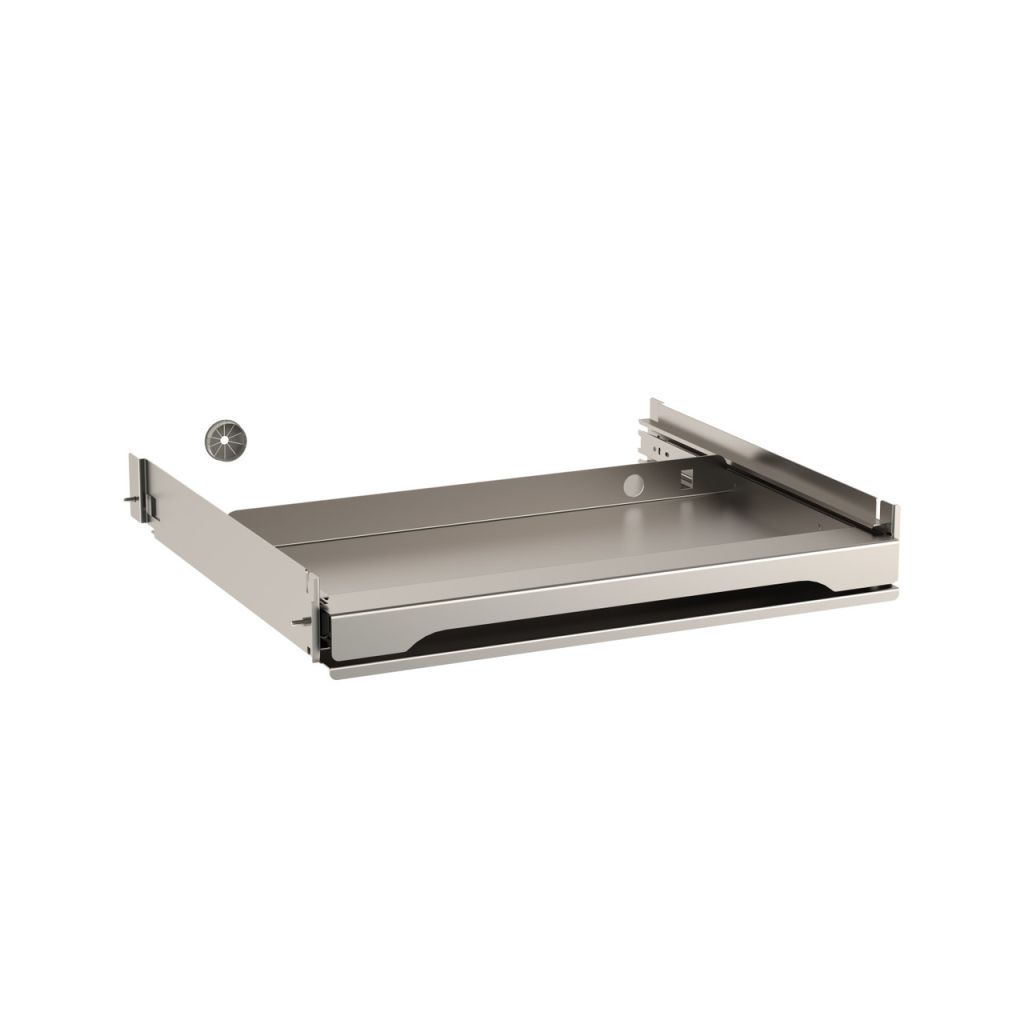 Keyboard Trays & Monitor MountsDocumentation hardware that turns a cart into a point-of-care charting station.
 Power for Mobile CartsHospital-grade power strips and cord management for carts carrying powered equipment.
Accessory collisions cause most reconfiguration calls
An IV pole, oxygen tank holder, sharps bracket and backboard all want a corner. Sketch the cart from above, assign every accessory a side before ordering, and leave one side clear for the person pushing it.
Security: Seals, Keys, Keyless and Electronic Locks

Breakaway seals answer readiness, not security. A numbered plastic seal through the drawer lock bar will not stop a determined person, but it proves no drawer has been opened since the last restock. Buy seals in numbered sequence, log the number at each check, and keep spares on the unit.
Keyed locks are simple and cheap, and they fail the same way everywhere: keys get copied, shared and lost until one key opens every cart in the building. Key by unit, not facility-wide, and keep a real key control log.
Keyless touchpads remove the key problem — codes change with staff turnover and auto-lock closes the cart if someone walks away, at the cost of battery maintenance and code discipline. Electronic locks and cart management systems add access logging, permissions and reporting; for controlled substances the audit trail is usually the deliverable.
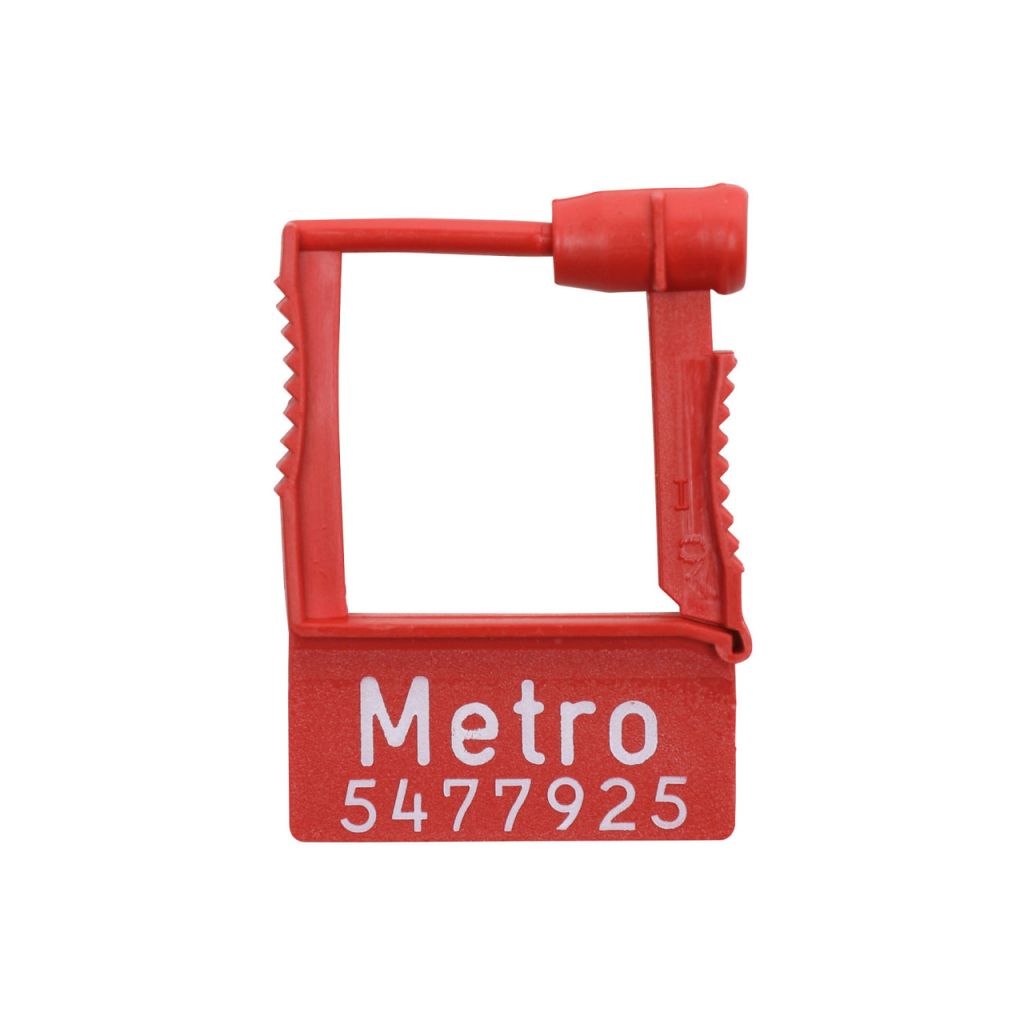 Numbered Breakaway SealsSingle-use seals for code-cart readiness checks; log the number and replace after every use.
 Electronic PIN LocksCoded access with logging for carts holding medications or high-value supplies.
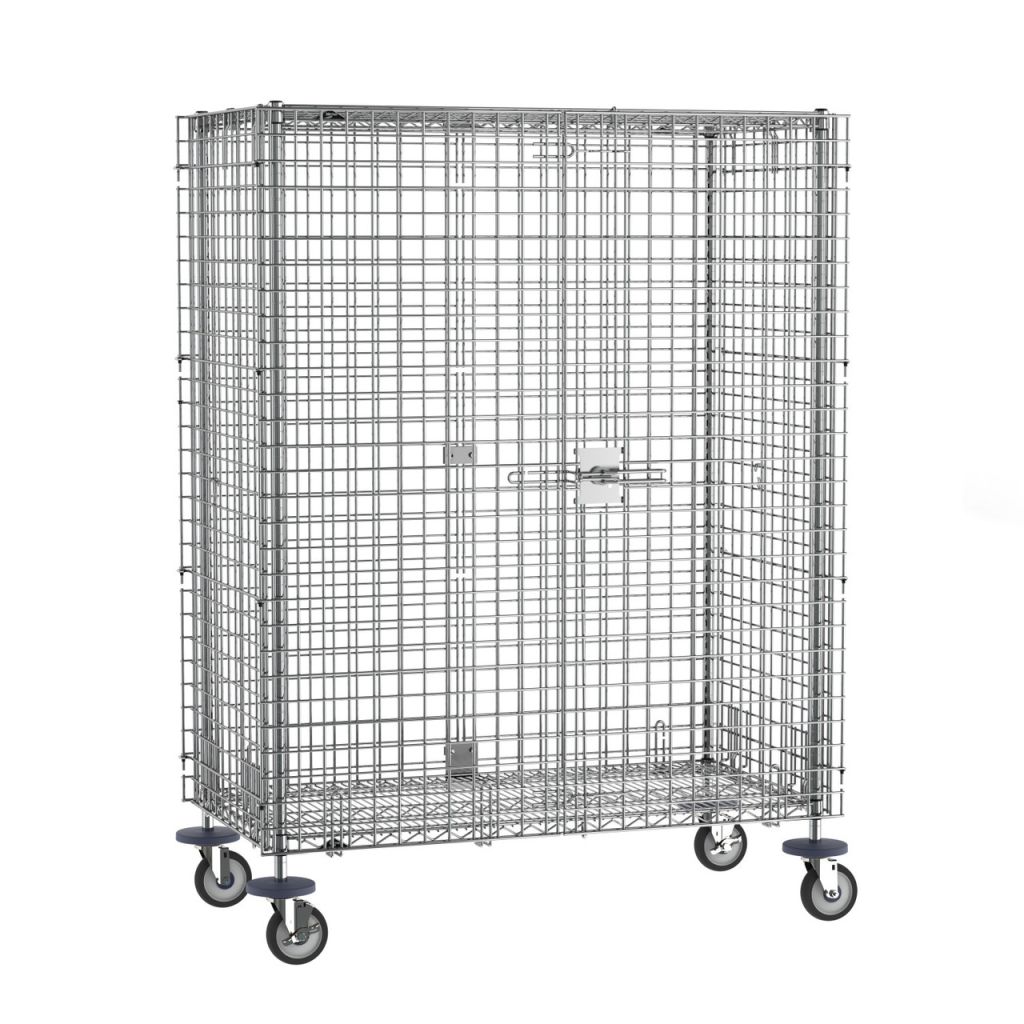 Secure Storage Beyond CartsWhere cart security is not enough, locking mobile shelving closes off a whole storage bay.
Sizing, Clearances and Capacity
The most expensive cart mistake is dimensional, and it is always found after delivery. Measure the route, not the room.
- Doorways on the actual route — narrowest clear opening with the door where it really stops.
- Elevator car and door — the cart must enter, turn and still leave room for a person.
- Corridor turns — check the tightest 90-degree turn with the cart loaded.
- Parked footprint — a cart parked in a corridor must not reduce required clearance.
- Loaded height — a defibrillator or monitor on top has to clear soffits and headwall equipment.
- Drawer pull-out space — full-extension drawers need floor space the room may not have.
- Total and per-drawer capacity — distributed loads, and top-mounted equipment counts against the total.
- Push force — loaded weight, caster size and floor surface decide whether staff can move it all shift.
Cart Selection by Department
| Department | Primary carts | Key specification driver |
|---|---|---|
| Emergency department | Adult crash cart, pediatric crash cart, procedure cart, isolation cart | Identical drawer order across carts; pediatric cart visually distinct and instantly reachable |
| ICU / critical care | Crash cart, procedure cart, mobile workstation, IV supply cart | Bedside space is scarce — narrow footprint, full-extension drawers, top rated for monitors |
| Med-surg / general floors | Medication cart, supply cart, isolation cart, linen exchange cart | Med pass count per hall and par restock volume; push comfort over long corridors |
| Operating room | Anesthesia cart, case carts, procedure carts | Narcotic drawer security, stainless where cleaning is aggressive, quiet casters that hold on brakes |
| Endoscopy | Clean and soiled scope transport carts, procedure cart, supply cart | Clean/soiled separation and labeling; the cart must fit the route to reprocessing |
| Pharmacy | Med carts, secure delivery carts, locking mobile shelving | Access control and audit logging; delivery cart sized to the largest scheduled fill |
| Central sterile / SPD | Case carts, transport carts, mobile sterile-processing shelving | Washdown-tolerant materials, full instrument set capacity, OR corridor clearance |
| Long-term care | Punch-card medication carts, treatment carts, linen and housekeeping carts | Card format and resident count per hall; light push force over varied flooring |
| Clinics & ambulatory | Treatment carts, phlebotomy carts, mobile workstations | Compact footprint, keyless access for shared staff, easy reconfiguration between rooms |
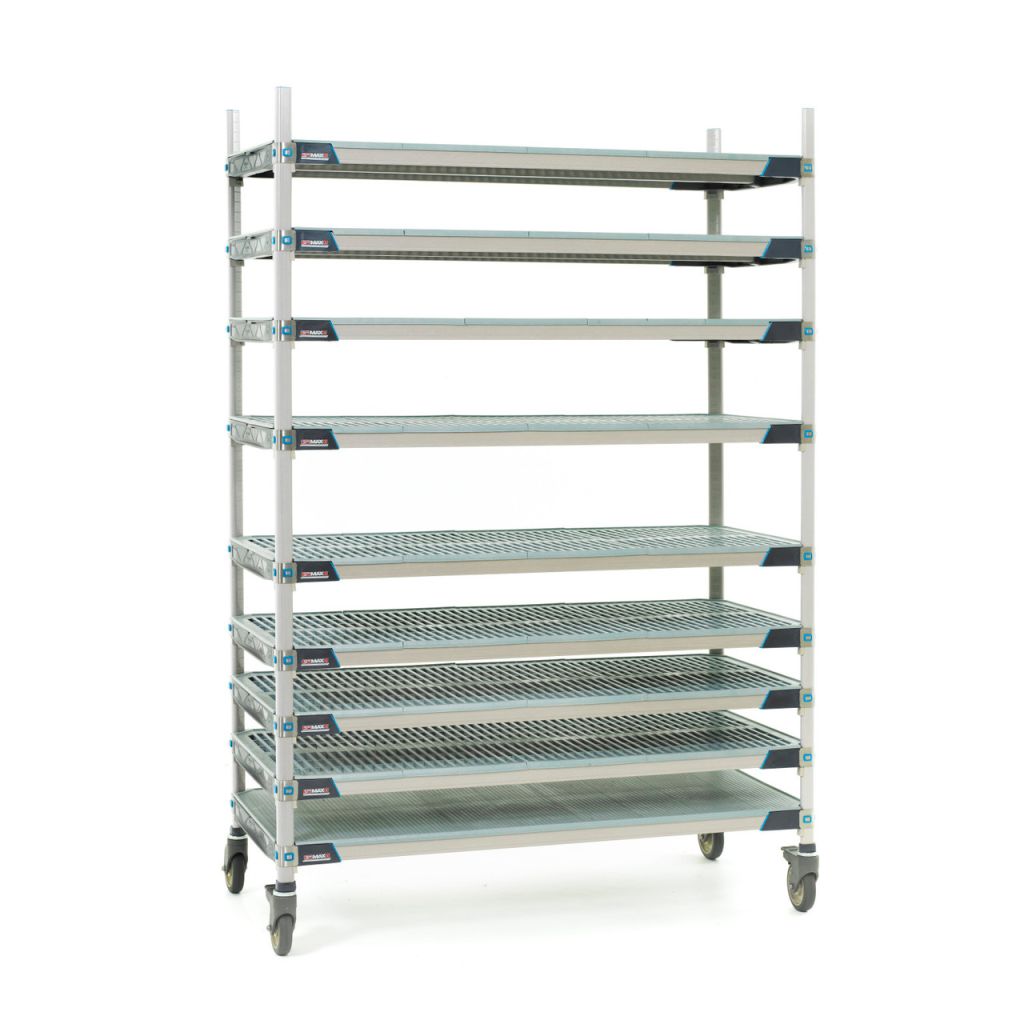
Buy carts by fleet, not by unit. When every floor orders its own, you get incompatible drawers, four key systems and no shared spares. Standardizing on one or two chassis families means broken drawers are swapped from stock and accessories stay interchangeable for a decade.
The same logic applies upstream: carts are the last hundred feet of a supply chain that starts at a dock. If the shelving feeding them is not organized to par levels, carts will not fix it. See healthcare material handling solutions for the facility-wide view and healthcare high-density shelving when the storeroom itself is out of room.
Medical Cart Specification Checklist
Send this filled in and we can quote accurately the first time.
- Cart family and quantity — crash, procedure, isolation, anesthesia, med, scope transport, linen, supply, utility
- Adult or pediatric configuration, and how the two will be visually distinguished
- Drawer schedule — how many 3", 6" and 9" drawers, and what goes in each
- Dividers, bins, trays or punch-card format required inside the drawers
- Security — breakaway seal, keyed, keyless touchpad or electronic with logging; internal narcotic drawer or not
- Accessories by side — IV pole, oxygen tank holder, sharps bracket, glove holder, catheter holder, waste bin, backboard bracket
- Worksurface needs — equipment weight on top, pull-out shelf, keyboard tray, monitor mount, power
- Body material and color scheme, including color-coding by function
- Cleaning protocol — disinfectant wipes only, or cart wash / high-temperature exposure
- Tightest door, turn and elevator on the route, measured loaded
- Delivery details — dock, elevator access, assembly and staging on arrival
Tell us what the cart has to do
Send your drawer schedule, unit count and route dimensions — or just describe the workflow and we will build the configuration. You get model options across the manufacturers we represent, accessory lists, lead times and freight. Call (800) 326-4403 to talk it through.
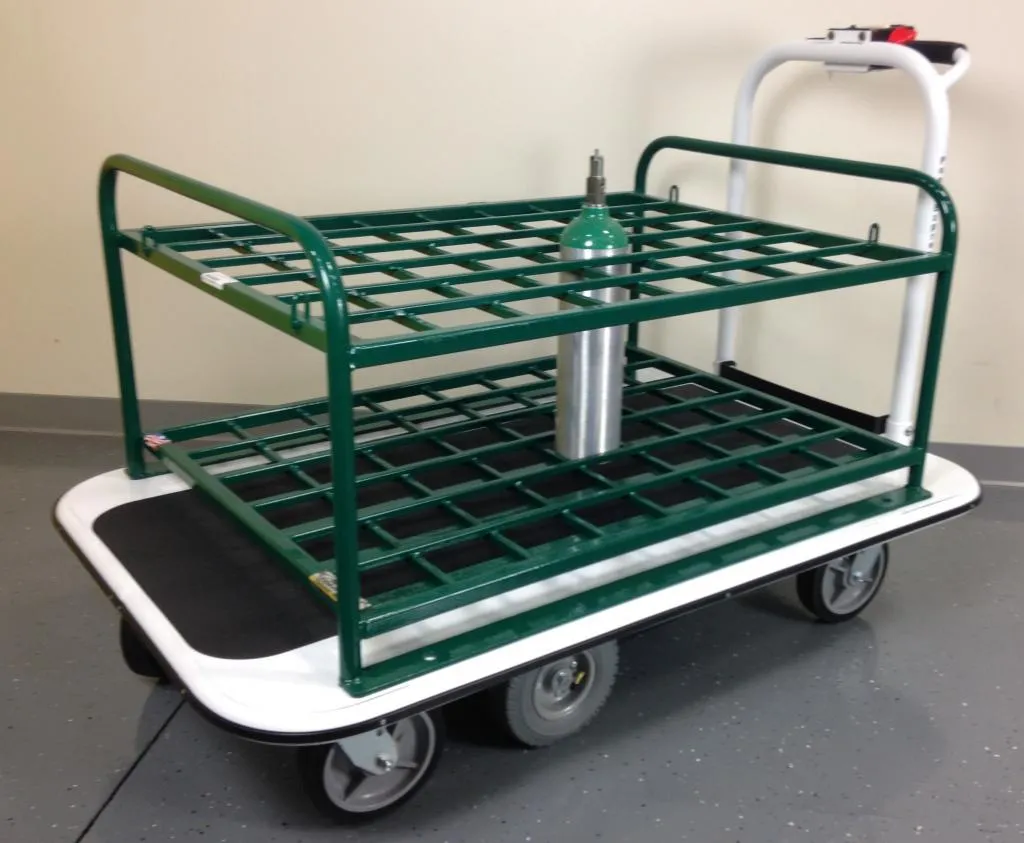
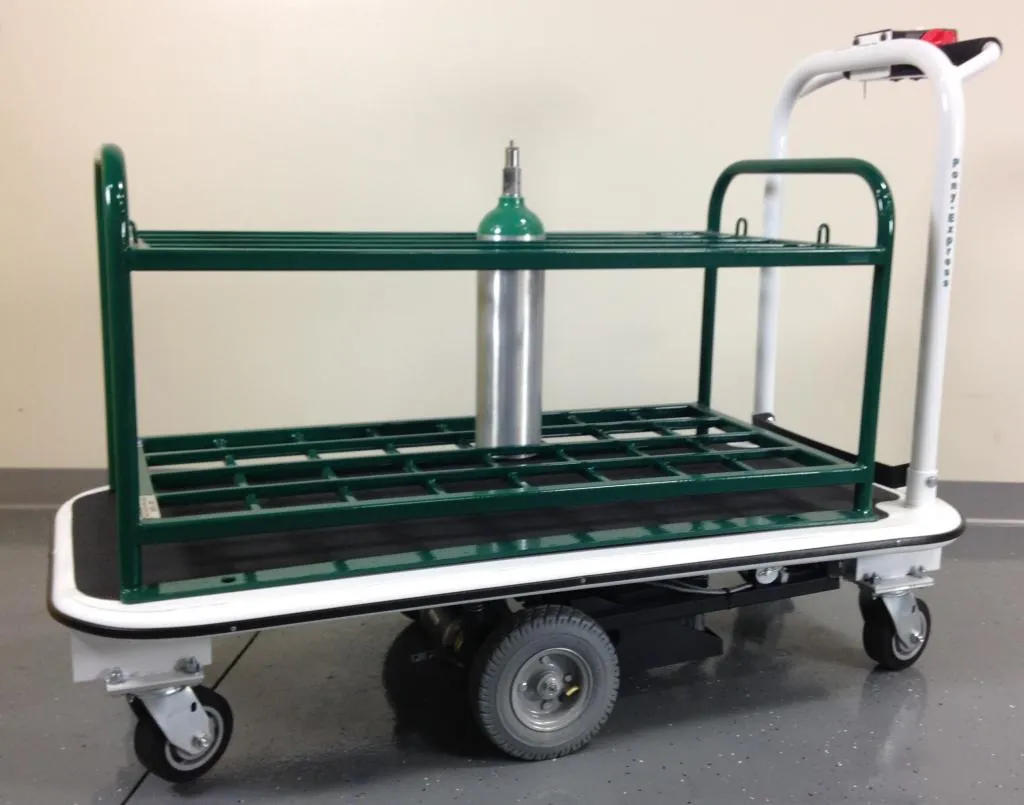
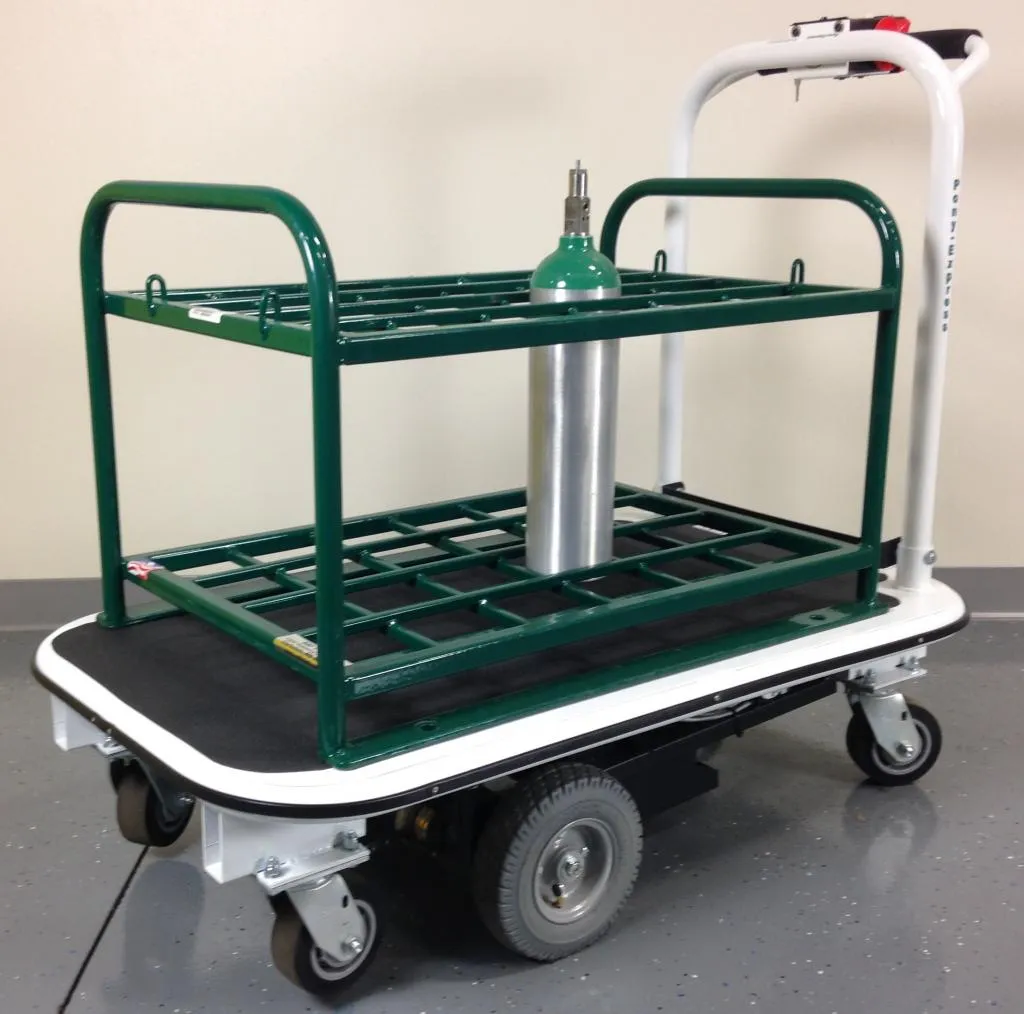
Shop Medical Cylinder Carts Online
Buy select items directly from our online store, or request a quote for volume, custom sizes and freight-rated orders.

Medical Cart FAQ
What is a crash cart?
How is a pediatric crash cart different from an adult crash cart?
How are medical carts cleaned and disinfected?
What accessories can be added to a medical cart?
What is an endoscopy or scope transport cart?
Do you stock carts in Utah, and do you ship outside the region?
Get a Medical Cart Quote
Crash carts, procedure carts, transport carts and full unit rollouts — specified, quoted and shipped nationwide. Call (800) 326-4403 or request a quote online.