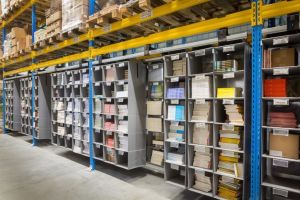
Strains, overreaches, and repetitive lifting injuries account for a large share of recordable incidents in U.S. operations. In a warehouse, lab, or secure-storage facility, those injuries usually trace back to ordinary decisions: where inventory sits, how often people twist, how far they carry, and whether the workstation matches the task.
That is why warehouse ergonomics belongs in the same conversation as throughput, labor planning, and capital spending. Good ergonomic design cuts wasted motion, reduces fatigue across the shift, and lowers the chance that a minor discomfort turns into restricted duty or lost time.
The practical value is straightforward. Better slotting reduces bending and overhead reaches. Better lift assistance reduces manual handling. Better workstation design keeps packing, kitting, and inspection work at usable heights. Those changes improve safety, but they also help crews maintain pace with fewer slowdowns and fewer workarounds.
For operations managers, the goal is not theory. The goal is a facility people can run safely at production pace, with changes that pay back in labor stability, injury reduction, and cleaner process flow. If you are reviewing broader facility improvements, this guide on improving warehouse safety and productivity connects those design choices to day-to-day performance.
What Is Warehouse Ergonomics and Why It Matters Now
Warehouse ergonomics is the practical discipline of designing tasks, equipment, and work areas so employees can move, lift, reach, push, and stand with less strain. The simplest rule is this: the job should fit the person, not force the person to adapt to the job.
That sounds basic, but many facilities still rely on layouts that require floor-level picks, overhead reaches, long walks, awkward turns at pack stations, and carts that fight the operator. Those choices create wear on backs, shoulders, wrists, and knees. They also create avoidable friction in the workday.
What good ergonomics looks like
A well-designed operation usually shares a few traits:
- Frequent items stay within reach. Workers don't need to bend low or reach high for the products they touch most.
- Loads are supported mechanically. Pallet positioners, lifts, and conveyors reduce manual handling.
- Travel is controlled. Layouts reduce unnecessary walking and crossing traffic.
- Workstations fit the task. Heights, clearances, and tool placement support neutral postures.
Practical rule: If a process depends on employees repeating awkward motions all shift, it isn't efficient. It's just familiar.
Why timing matters
Ergonomic fixes are easiest to implement during a layout change, a racking update, a workstation refresh, or a product handling redesign. Waiting usually means the same bad reach zones and lifting patterns get built into the next phase of the operation too.
Managers who address ergonomics early usually get cleaner installation schedules, fewer last-minute adjustments, and better use of the capital they already planned to spend.
Understanding Common Ergonomic Risk Factors and Injuries
Warehouse injury rates are unusually high. The sector reported 5.5 cases per 100 employees in 2021, compared with 2.7 per 100 across all industries, according to this summary of warehouse safety statistics. That gap is one reason warehouse ergonomics deserves direct attention from operations managers and buyers.

The motions that cause most problems
Most warehouse ergonomic issues come from a short list of physical demands.
- Awkward postures happen when employees bend to bottom pallets, twist to place cartons on conveyors, or reach above shoulder height into shelving.
- Repetitive tasks show up in picking, packing, scanning, labeling, and small-parts handling where the same motion happens all shift.
- Forceful exertion appears when workers lift heavy products, push overloaded carts, pull pallet jacks in tight spaces, or handle unstable loads.
These risks can exist in receiving, replenishment, order picking, packing, shipping, returns, and kitting. They often stack together. A worker might bend, twist, and lift in one motion. That combination is where strain builds quickly.
Acute injury versus cumulative damage
Some injuries are immediate. A strained back from lifting a case off the floor is easy to recognize.
Others build slowly. Reaching to the wrong shelf height or working at a fixed bench that's too high may not cause instant pain, but repeated exposure can lead to musculoskeletal disorders over time. Those are often harder to catch because the job has “always been done that way.”
The most expensive ergonomic problems are often the ones no one flags until discomfort becomes normal.
Common warehouse hot spots
A quick risk scan usually starts with these areas:
- Pallet breakdown zones where workers access loads at poor heights
- Pick modules with high-frequency SKUs stored too low or too high
- Packing stations with fixed surfaces and poor tool placement
- Cart-based transport that requires pulling or excessive push force
- Forklift and pedestrian crossings where workers make hurried or awkward moves
When managers learn to see those patterns, ergonomic improvements stop looking like isolated fixes and start looking like system design.
Repetitive Warehouse Handling Tasks and How to Reduce Them
Repetitive warehouse handling tasks are the picking, packing, scanning, labeling, and small-parts work that repeats the same motion hundreds of times in a shift. On their own, none of those motions look dangerous. The risk builds from repetition, not force, which is why repetitive warehouse handling often gets overlooked until a worker reports ongoing soreness.
A few changes usually cut the exposure without slowing the line down:
- Rotate tasks across a shift. Moving a worker between picking, packing, and receiving spreads the load across different muscle groups instead of repeating one motion all day.
- Slot high-frequency SKUs in the golden zone. Items touched most often should sit between waist and shoulder height so the repetitive motion itself is smaller and less awkward.
- Add short micro-breaks at defined intervals. Brief pauses let muscles recover between repetitions, which matters more for repetitive tasks than for one-time heavy lifts.
- Check tool and scanner placement. A scanner or label printer positioned a few inches out of easy reach turns a simple repetitive task into a repeated small reach or twist.
Repetitive warehouse handling tasks are also the easiest category to measure. Because the same motion repeats constantly, a supervisor can time it, count touches per hour, and test a layout or tooling change against a clear before-and-after baseline.
How to Conduct a Practical Ergonomic Assessment
An ergonomic assessment works best when it's simple, repeatable, and tied to daily operations. OSHA frames the process around four core elements: Management Support, Worker Involvement, Training, and Problem Identification, outlined on OSHA's ergonomics guidance. That structure keeps the effort from turning into a one-time walkthrough with no follow-up.
Start with ownership and input
Management support matters because teams need permission to flag bad tasks, test alternatives, and adjust workflows. Without that backing, employees often work around the problem instead of solving it.
Worker involvement matters just as much. The people who unload trailers, pick cases, or stand at benches all day know where the strain sits. Their feedback often reveals issues a layout drawing won't show, such as a scanner mounted a few inches too far away or a cart that rolls poorly after debris builds up in the aisle.
Use a walkthrough that forces observation
A practical assessment should look at tasks, not just areas. Watch what the operator does, where the hands go, how often the motion repeats, and whether the load changes shape or weight during the task.
Here's a simple walkthrough format managers can use on the floor:
| Area / Task | Observation Point | Finding (Yes/No/NA) | Notes |
|---|---|---|---|
| Receiving | Are pallets positioned to avoid floor-level lifting? | ||
| Putaway | Are frequent hand touches stored between waist and shoulder height? | ||
| Picking | Do workers twist while retrieving or placing items? | ||
| Packing | Is bench height suitable for the task and the operator? | ||
| Cart movement | Are operators pushing rather than pulling? | ||
| Shipping | Are loads stabilized before manual handling? | ||
| Replenishment | Are heavy items kept close to the body during lift and set-down? | ||
| Housekeeping | Are floors clear, lit, and free of obstructions that change posture or force? |
What to document during the review
Keep the notes focused on action.
- Posture issues: bending, reaching, twisting, kneeling, or shrugging
- Load issues: heavy, bulky, unstable, or hard-to-grip products
- Frequency issues: motions repeated constantly with little variation
- Layout issues: long walks, cross traffic, congestion, poor access
- Equipment issues: wrong cart wheels, fixed heights, poor handle positions
A strong assessment doesn't need fancy software to start. It needs honest observation, operator feedback, and a willingness to fix the root cause instead of telling people to “be careful.”
Warehouse Picking Ergonomics: Repetitive Handling Tasks
Repetitive Warehouse Handling Tasks: Find and Fix the Strain
Repetitive warehouse handling includes any job where an employee handles, scans, moves, or presents product through the same motion many times. The risk comes from the combination of posture, force, reach, pace, and recovery time. A task can look light but still deserve review when it repeats across a shift.
Common repetitive warehouse handling tasks
- Warehouse picking: reaching into bins, shelves, carton-flow lanes, or pallet positions to retrieve each order line.
- Packing and labeling: turning cartons, applying labels, taping packages, and placing completed orders onto a conveyor or cart.
- Scanning and sorting: rotating a product toward a scanner, sorting items into containers, or presenting totes at a fixed station.
- Replenishment: carrying cases, opening cartons, and restocking a pick face while working around other traffic.
- Returns, kitting, and inspection: opening, checking, recording, and repacking items at a bench or table.
Warehouse ergonomics safety tips for daily work
- Keep frequently handled items in a reach area that limits repeated bending and overhead reaching.
- Present the product in the direction of the next motion so employees do not twist at every handoff.
- Push a cart when the route, load, and equipment allow it, and check the handle, casters, floor, and traffic path together.
- Keep aisles, staging areas, and handoff points clear so workers do not make sudden turns or carry around obstructions.
- Vary repetitive work where the operation allows it, and give workers a clear way to report discomfort or a task that does not fit.
- Use mechanical assistance and follow the equipment instructions when a load is heavy, bulky, unstable, or hard to grip.
Use a decision table before buying an ergonomic warehouse solution
| Observed problem | First control to test | Verify before buying |
|---|---|---|
| Frequent floor-level picks | Re-slot the pick face or raise the load presentation | Item size, weight, velocity, replenishment path, and available clearance |
| Repeated long carries | Re-zone inventory, add a cart, or provide conveyor support | Travel route, floor condition, traffic, handoff points, and cart fit |
| High push or pull effort | Review casters, cart load, route, and powered assistance options | Surface, grades, load stability, handle position, maintenance, and pedestrian interaction |
| Overhead reaches | Move high-frequency items down or provide a controlled access method | SKU frequency, safe access, clear height, and what happens during replenishment |
| Twisting at a pack or inspection bench | Reorient the station and bring tools or containers into the work zone | Handoff direction, bench fit, worker position, tool reach, and downstream flow |
| People and vehicles crossing | Separate routes, mark crossings, and improve visibility | Actual traffic, doorways, blind corners, emergency access, and local requirements |
Order picking is usually the most repeated task in a warehouse, which makes ergonomics in warehouse picking one of the highest-value places to focus a review. A single picker can make thousands of reaches and bends in a shift, so small posture problems multiply quickly.
Facilities asking how to improve ergonomics in a warehouse picking operation usually start with three questions:
- Are the fastest-moving items in the golden zone? Placing high-frequency SKUs between waist and shoulder height removes the deepest bends and highest reaches from the pick path.
- Does the picking method fit the task? Goods-to-person systems reduce travel and carrying for high-volume picking, while person-to-goods picking may still be practical for slower-moving or bulky items.
- Are carts and totes sized for the task? A cart that is too deep forces a reach and bend at every drop-off point, even if the shelving itself is well slotted.
Because picking repeats constantly, it is also one of the easiest places to test a change. Re-slotting a single pick zone or adjusting cart height for a two-week trial gives a fast read on whether a bigger rollout is worth the investment.
Ergonomic Warehouse Design: Layout, Storage, and Traffic
The best ergonomic improvement is often the one you build into the layout before the first shift uses it. A good plan removes bad motions instead of asking employees to manage around them.

Ergonomic Warehouse Storage Starts With Reach and Frequency
Ergonomic warehouse storage keeps high-frequency items in a comfortable reach area and reserves lower, higher, or deeper positions for items touched less often. Review item size, weight, packaging, replenishment pattern, and worker access before choosing shelves, bins, carton flow, pallet positions, or an automated solution. The right storage medium limits force and awkward posture without creating a new traffic problem.
Keep work in the golden zone
One of the most useful concepts in warehouse ergonomics is the ergonomic golden zone. A warehouse management system can support this by keeping frequently accessed SKUs between the waist and shoulders, reducing awkward reaching, bending, and twisting, as described in this overview of warehouse ergonomics and slotting strategy.
That principle affects more than shelf height. It should guide slotting, replenishment logic, and where fast-moving items sit inside each zone.
Design for flow, not just storage density
Layouts often fail ergonomically when planners chase maximum storage without thinking through touches. Narrow access, deep bends into shelving, long hand-carry distances, and cluttered staging areas all shift effort onto the employee.
A better design asks a different set of questions:
- Where does the operator stop and touch product most often
- Which tasks force reaching beyond a neutral posture
- Can travel be reduced through zoning or conveyor support
- Are carts, ladders, and lift devices able to move cleanly through the space
Goods-to-person strategies are especially effective where repetitive picking dominates. By bringing inventory to the worker, they reduce travel, carrying, and repeated manual handling compared with person-to-goods methods.
Layout decisions that pay off later
A layout should support the task at the point of use.
| Layout choice | What it helps prevent | Operational effect |
|---|---|---|
| Fast movers in mid-level storage | Reaching and bending | Faster picks |
| Clear travel lanes | Awkward rerouting and congestion | Smoother traffic |
| Dedicated staging zones | Random floor storage | Better housekeeping |
| Space for lift devices | Manual overhandling | Safer load transfer |
For facilities planning a redesign, expansion, or retrofit, professional layout support usually prevents expensive corrections later. A free, no-obligation review of warehouse design and layout solutions can help teams pressure-test flow, storage, and ergonomic access before equipment is ordered.
A layout that looks efficient on paper can still create strain if the worker has to bend, twist, and reach at every touchpoint.
Ergonomic Warehouse Equipment and Material Handling Solutions
Equipment doesn't fix a poor process by itself, but the right equipment removes a lot of avoidable strain. The most useful approach is to match the solution to the task: handling, storage, or workstation support.
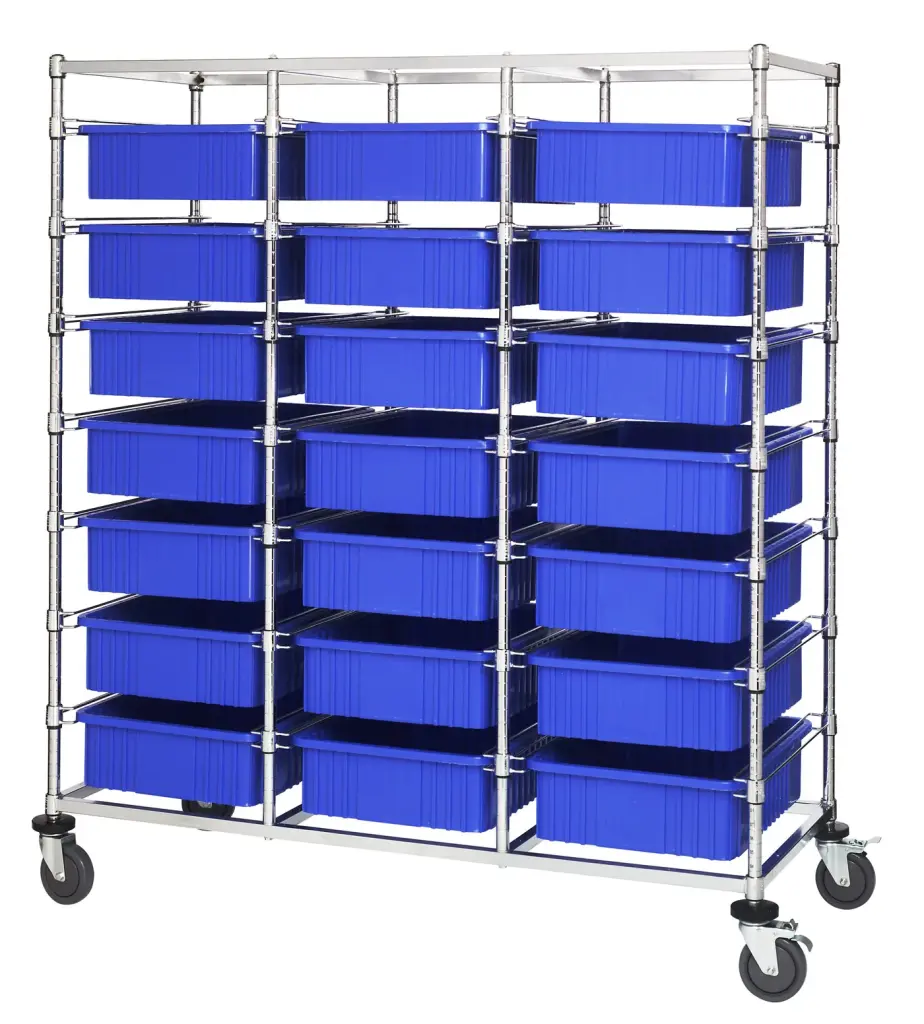
Ergonomics of Material Handling Equipment
Ergonomics of material handling equipment is not only about the equipment name. Review how the operator approaches the load, starts and stops the move, changes direction, and hands the item to the next process. A useful equipment choice reduces a specific force, reach, or carry while preserving visibility and a clear route.
- Fit: Check the load footprint, grip, stability, equipment dimensions, and the space available at the handoff.
- Movement: Check push or pull effort, turning, floor transitions, visibility, and interaction with pedestrians or lift trucks.
- Work pattern: Check how often the move occurs, whether the load varies, and how the equipment will be stored, charged, inspected, or maintained.
Material handling equipment
Carts, lift tables, pallet positioners, hoists, and vacuum lifts all reduce manual effort in different ways. The key is choosing equipment that supports neutral posture and predictable movement.
A basic but important rule applies to cart handling: operators should push rather than pull. Pulling places the body in a compromised posture and increases strain on the lower back and shoulders, while pushing helps the worker keep a straighter back and use body weight more effectively, as noted in this article on warehouse ergonomics and productivity.
Cart details matter too. Handle height should sit just above waist level, and wheel type should match the floor surface and the debris conditions in the area. A good cart on the wrong caster can still create bad push force.
For facilities comparing vertical transport and access options as part of a broader ergonomic plan, this guide to industrial lifts gives useful context on where lift systems fit within industrial workflows.
Ergonomics of Material Handling Equipment
The ergonomics of material handling equipment comes down to whether a tool supports a neutral posture or forces the operator to compensate for it. Two carts can move the same load and still create very different strain, depending on handle height, wheel type, and how much force is needed to start and stop the load.
When comparing ergonomic warehouse equipment, look past the spec sheet and check these points on the floor:
- Handle height: should sit close to waist level for the average operator using the equipment, not just the tallest or shortest person on the team.
- Push versus pull design: equipment that lets the operator push rather than pull keeps the back straighter and uses body weight more effectively.
- Wheel and caster match: the caster type should match the floor surface and debris conditions in that area, since a mismatch increases the force needed to move the same load.
- Grip and control placement: controls and handles should be reachable without a shoulder reach or a wrist twist.
Buying decisions built around these criteria age better than decisions built around price alone, because equipment that fights the operator quietly adds labor time and injury exposure to every shift it is used.
Ergonomic lifting for warehouses
Ergonomic lifting for warehouses starts by removing lifts that do not need to happen. Re-slot product, bring the load closer to the point of use, and use a stable presentation surface where possible. When a lift remains, review the load shape, grip, height, distance from the body, path, and set-down point. Use a lift assist or other mechanical aid when it addresses the actual task and can move safely through the route.
Do not solve a lifting problem by moving it to another worker or another step. Review receiving, storage, picking, replenishment, packing, and shipping as one material-handling chain.
Storage solutions
Storage affects ergonomics every day because it controls where the hands go. Gravity flow racks, carton flow systems, mobile shelving, and properly slotted shelving can keep inventory accessible without forcing deep bends or overhead reaches.
Cal/OSHA guidance commonly cited in warehouse ergonomics recommends keeping pallet handling within the power zone, above the knees, below the shoulders, and close to the body. That's a practical buying rule for shelving, pallet access, and replenishment design.
A storage system should also support visibility and order. If workers have to dig through mixed product or reach around obstructions, retrieval gets slower and body mechanics get worse.
Workstations and lift assist
Fixed-height benches are one of the most common causes of quiet ergonomic failure. They may work for one employee and fit no one else. Adjustable workstations are better because tasks change, products change, and people aren't all the same height.
For seated work, proper clearances matter. Workstations should provide at least 30 inches of width, 20 inches of depth, and 27 inches of height for legroom. For standing work, anti-fatigue mats and tool placement inside easy reach help reduce discomfort over long shifts.
Lift-assist devices are often the clearest engineering fix when products are heavy or awkward. Hoists, pallet lifters, vacuum lifts, and scissor lifts support the load mechanically instead of asking the operator to absorb it physically.
Ergonomic Lifting for Warehouses
Ergonomic lifting for warehouses combines technique with the right support equipment. Technique alone cannot fix a task that forces a worker to lift from the floor or reach overhead every cycle, but it does reduce strain on the lifts that still need to happen by hand.
A practical lifting checklist for supervisors to reinforce on the floor:
- Get close to the load before lifting instead of reaching out with straight arms.
- Bend at the knees and hips, not the back, and keep the spine in a neutral position.
- Keep the load close to the body through the entire lift, not just at the start.
- Avoid twisting while holding a load; turn the feet instead of rotating the torso.
- Set the load down with the same control used to pick it up, rather than dropping it the last few inches.
When a task cannot be reshaped to fit that checklist, that is the signal to bring in mechanical help. A practical starting point for buyers looking at purpose-built ergonomic products is this collection of Vestil ergonomic solutions. It's useful when the problem is clear, such as repeated lifting, poor pallet access height, or cart handling strain.
Distribution Center Ergonomics: Apply the Same Controls at Scale
Distribution center ergonomics requires the same task-level observation as a small warehouse, but the review must follow the full flow across zones. A change that helps picking can create a replenishment or shipping problem if the handoff, traffic, or staging space is not included.
Receiving and putaway
Review how pallets, cases, and containers are opened, checked, and moved from the dock to storage. Look for floor-level handling, unstable loads, blocked staging, and turns made around equipment. Keep the receiving plan connected to the storage and replenishment plan.
Picking, packing, and shipping
Observe the order path from pick face to pack station and then to shipping. Check whether workers carry product too far, twist to place it on a conveyor, reach across a station, or work around a queue of carts or pallets. A clear handoff is part of the ergonomic design.
Review the route after each change
Walk the complete route after you move storage, add a cart, change a station, or introduce lift assistance. Confirm that the change improves the task without blocking egress, narrowing a travel path, or shifting force to the next operator.
The Role of Training and Behavioral Interventions
Even a well-designed operation needs training. Equipment only helps when employees know how to use it and supervisors reinforce the right habits.
Use training to support the design
Training should focus on the motions workers perform. That includes safe lifting technique, proper cart handling, how to use lift assists, and how to adjust workstations for the person and the task.
Task rotation is one of the most practical administrative controls. Rotating workstations and duties helps reduce repetitive strain and muscle fatigue because it prevents overuse of the same muscle groups and promotes circulation through rest and stretching, as explained in this review of ergonomics and safety practices.
What works better than posters
Posters have limited value if the bench is still too high and the load is still on the floor. Training is most effective when it complements engineering controls.
- Teach the specific task: Show the actual lift, reach, push, or pack motion employees perform.
- Reset bad habits early: Supervisors should correct pulling, twisting, and overreaching before they become normal.
- Build variation into the day: Rotate duties where possible so one motion doesn't dominate the whole shift.
Good ergonomics is a partnership. Management provides the right layout and tools. Employees use them the right way.
Measuring the Return on Investment of Ergonomics
Ergonomics gets funded faster when the case is tied to numbers leadership already tracks. The strongest ROI case usually comes from a mix of lower injury costs, steadier output, and fewer disruptions to staffing.
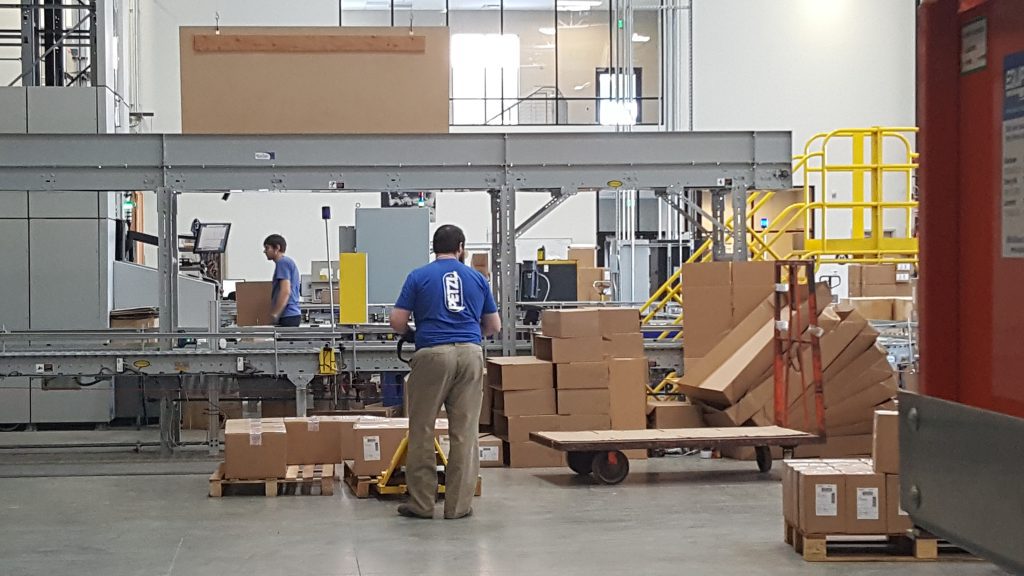
Track the right before and after measures
Start with a baseline. If a facility installs lift assists, re-slots fast movers, or replaces fixed-height pack stations, measure performance before the change and again after the process stabilizes. Without that baseline, the discussion turns into opinion.
Use a short scorecard that covers three areas:
- Safety outcomes: OSHA recordables, strain complaints, restricted duty cases, and workers' compensation activity
- Operational results: pick rate, touches per order, travel time, labor efficiency, and flow through the work area
- Workforce signals: absenteeism, turnover, temporary reassignments, and recurring discomfort reports
That mix matters because ergonomics rarely pays back through one line item alone. In practice, the return often shows up as fewer fatigue-related slowdowns, less retraining after injuries, and better consistency across a full shift.
Separate purchase price from operating cost
A low purchase price can hide an expensive workflow. I see this often with fixed benches, poor slotting, and carts that require too much push force. The equipment itself looks affordable, but the task still burns labor time and exposes the operator to the same risk.
A better setup costs more up front and less to run. Adjustable stations fit more than one operator. Lift devices reduce manual handling exposure. Better slotting cuts awkward reaches and wasted motion at the same time. That is the gap between buying equipment and solving the task.
| Investment area | Short-term effect | Long-term value |
|---|---|---|
| Better slotting | Less awkward access | More consistent picking |
| Lift assist | Less manual strain | Lower exposure to lifting risk |
| Adjustable bench | Better operator fit | More flexible task support |
| Task rotation | Less repetition | Better endurance across shifts |
Build the ROI case around real operating conditions
The cleanest business case uses the conditions already present in the building. If a secure-storage room has frequent hand-stacking from floor level, calculate the time spent bending, the injury exposure, and the impact of delayed work when someone is put on restricted duty. If a lab support area has technicians sharing a nonadjustable bench, look at setup time, reach distance, and how often work slows during long handling cycles.
That approach works better than generic safety language because it ties the recommendation to throughput, labor stability, and claims exposure in one package. It also gives operations managers a practical roadmap for phased improvements instead of an all-at-once capital request.
Facilities that address these issues early usually have more flexibility in quoting, layout coordination, and installation timing. That matters when product lead times tighten or when a redesign has to fit around active operations.
Frequently Asked Questions About Warehouse Ergonomics
What is warehouse ergonomics?
Warehouse ergonomics is the practice of fitting tasks, storage, equipment, and work areas to the people who use them. It focuses on reducing unnecessary bending, reaching, twisting, lifting, pushing, pulling, carrying, and repetition while supporting a clear work flow.
How do you improve ergonomics in a warehouse?
Start by observing one complete task and asking the operator where effort builds up. Record posture, force, frequency, and travel. Then re-slot product, adjust the work area, or select equipment that removes the specific problem. Test the change, train the team, and compare results with the baseline.
What are repetitive warehouse handling tasks?
Common repetitive warehouse handling tasks include order picking, scanning, sorting, packing, labeling, replenishment, returns, kitting, and inspection. Review the motion and the pace together because repeated light handling can still create a problem when the reach, posture, force, or recovery pattern does not fit the task.
What equipment supports ergonomic lifting for warehouses?
Depending on the load and route, options may include lift tables, pallet positioners, carts, conveyors, hoists, vacuum lifts, or other mechanical assistance. Choose by the actual load, grip, height, travel path, floor, traffic, and handoff. Confirm the equipment instructions and operating requirements before use.
What makes ergonomic warehouse storage effective?
Effective ergonomic warehouse storage places frequently handled items where workers can reach them without repeated bending or overhead reaching. It also considers item size, weight, packaging, replenishment, visibility, traffic, and the set-down point. Shelving, bins, carton flow, pallet positions, and automated storage may each fit different tasks.
How does ergonomics apply to material handling equipment?
Ergonomics of material handling equipment means reviewing the whole move, not just the product label. Check how the operator approaches, grips, starts, turns, stops, and hands off the load. Equipment should reduce a specific force or reach problem without creating a new traffic, visibility, clearance, or maintenance issue.
What are warehouse ergonomics safety tips for a daily operation?
Keep frequent work within a comfortable reach, present items in the direction of the next motion, keep routes clear, use carts and lift assistance as intended, vary repetitive work where practical, and give workers a clear way to report discomfort or a task that does not fit. Review the design instead of relying on reminders alone.
When should a distribution center review ergonomics?
Review distribution center ergonomics before a layout change, storage project, equipment purchase, or process rollout, and revisit it when inventory, staffing, routes, or work methods change. A repeatable task review can also identify problems in receiving, picking, packing, replenishment, returns, and shipping before they become normal workarounds.
What is warehouse ergonomics?
Warehouse ergonomics is the practice of designing tasks, equipment, and work areas so employees can move, lift, reach, and stand with less strain. The goal is to fit the job to the person instead of asking the person to adapt to the job.
What does ergonomic warehouse design actually change?
Ergonomic warehouse design changes where inventory sits, how far people travel, and how equipment supports the body during a task. In practice that means slotting fast movers in the golden zone, keeping travel lanes clear, and choosing carts, benches, and lift devices that match the work being done.
How is ergonomics in the warehouse different from general workplace safety?
General workplace safety covers hazards like falls, chemical exposure, and equipment guarding. Ergonomics in the warehouse focuses specifically on musculoskeletal strain from posture, repetition, and force, which is why it needs its own assessment rather than a standard safety checklist.
Do distribution center ergonomics differ from warehouse ergonomics?
The core principles are the same. Distribution center ergonomics apply the golden zone, push-over-pull cart handling, and task rotation just like a warehouse does. The main difference is usually scale and pick frequency, since distribution centers often run higher order volumes through the same picking and packing tasks.
What is an ergonomic warehouse solution for a facility with limited budget?
Start with no-cost and low-cost changes before buying new equipment. Re-slotting fast movers into the golden zone, adjusting cart handle height, and rotating tasks between workers can reduce strain without a large capital purchase. Equipment upgrades then target the highest-risk tasks that remain.
What counts as ergonomic warehouse storage?
Ergonomic warehouse storage keeps frequently handled items between waist and shoulder height, avoids floor-level pallet breakdown where possible, and gives workers clear access without reaching around obstructions. Gravity flow racks, carton flow systems, and properly slotted shelving all support this.
What are some practical ergonomics safety tips for a warehouse?
Keep frequent items in the golden zone, teach workers to push carts rather than pull them, bend at the knees instead of the back, rotate repetitive tasks across a shift, and use lift-assist equipment for heavy or awkward loads instead of relying on manual handling alone.
How do I start improving ergonomics in a warehouse that has never done a review?
Begin with a simple walkthrough that observes actual tasks: where hands go, how often a motion repeats, and whether the load changes shape or weight during handling. Involve the workers doing the task, document posture, load, frequency, and layout issues, then prioritize fixes by injury risk and ease of implementation.
Related Warehouse Planning Resources
- Warehouse design tools for a starting point on slotting and flow.
- Warehouse optimization planning for replenishment and flow decisions.
- Step-by-step warehouse layout guide for zones and aisles.
- Industrial shelving systems for hand-stacked inventory and pick areas.
- Pallet rack designer for an initial rack layout.
Build a Safer and More Productive Warehouse Today
Warehouse ergonomics works best when it's treated as part of operations, not a side program. The biggest gains come from matching layout, slotting, equipment, and training to the way employees handle product. That means identifying risk points, designing around the golden zone, choosing tools that reduce force and awkward posture, and tracking results after the change.
The payoff is broader than injury prevention. Better ergonomics supports cleaner workflows, steadier output, and a workplace people can handle day after day with less strain. Teams that plan these updates earlier often avoid redesign delays and have more flexibility in scheduling installs and equipment purchases.
If you're planning a facility upgrade, new storage layout, or ergonomic equipment purchase, Material Handling USA can help with free, no-obligation layouts and designs, competitive pricing, fast shipping, and free quotes. To discuss your project, Contact Us or call (800) 326-4403. If you already know what you need, browse available solutions and Buy Online to keep your project moving without unnecessary delays.