
Laboratory Solutions / Lab Snorkels for IVF Applications
Lab Snorkels for IVF & ART Laboratories
Articulated exhaust snorkels that capture alcohol, fixative and solvent vapor at the bench — before it reaches your embryology suite. Nederman BenchTop arms in 2″, 3″ and 4″ diameters, with the hoods, mounting kits and bench top fume hoods to match. Specified, supplied and installed by Material Handling USA.

30–265
CFM capacity range
3
Arm diameters (2″, 3″, 4″)
360°
Swivel on the outer joints
57″
Max working radius, 3″ arm
Source Capture Is the Cheapest Air-Quality Win in a Fertility Clinic

An assisted reproductive technology laboratory is one of the very few environments where the product being handled has no protection of its own. Gametes and embryos sit in open dishes under oil, in an incubator that breathes the room, for days at a time. Airborne volatile organic compounds do not need to be at an occupational-exposure concentration to matter here — the published thresholds discussed for IVF suites are in micrograms per cubic meter, orders of magnitude below anything an industrial hygienist would flag.
Most of that contaminant load is generated inside the clinic, not outside it: alcohol used to wipe benches and equipment, fixatives and stains on the andrology bench, solvents from adhesives and flooring, aerosol cleaners, and off-gassing casework. A lab snorkel — an articulated extraction arm you position an inch or two above the release — removes that contaminant at the point it is created, using a fraction of the air a fume hood or a room-air change would need.
That is the honest role of a snorkel in an IVF clinic. It is not a substitute for HEPA and carbon filtration, positive pressure or a properly designed pressure cascade. It is the layer that stops solvent vapor from ever entering the air path those systems have to clean.
Where the VOCs in an ART Laboratory Actually Come From
Air-quality work in a fertility clinic goes wrong when it is treated as a filter purchase. The published reviews of embryology-laboratory air quality consistently trace measurable VOC load back to building materials, furniture, cleaning practice and adjacent processes. Each of those needs a different control — and only some of them are solved at the bench.
| Contaminant | Typical source in a clinic | Control that actually works |
|---|---|---|
| Alcohols (isopropanol, ethanol) | Bench and equipment disinfection, sample handling | Capture at the bench with an extraction arm; switch to lower-emission wipe protocols |
| Formaldehyde | Wood-based casework and furniture, adhesives, fixatives | Specify low-emission casework; capture fixative work under a CHEM arm or hood |
| Solvents from flooring and adhesives | PVC flooring, carpet, vinyl floor adhesive, paints | Low-VOC materials plus a documented off-gassing period before the lab is commissioned |
| Cleaning-product volatiles | Waxes, ammonia-based and aerosol cleaners | Approved cleaning list for the clean suite; do the aggressive cleaning under capture |
| Refrigerant and combustion products | HVAC equipment, loading docks, generator exhaust | Fresh-air intake siting and pressurization — an HVAC design issue, not a bench issue |
| Particulates and microbial contamination | Personnel, corridors, positive-pressure failures | HEPA filtration and a positive-pressure cascade into the culture room |
What the guidance says
The ESHRE revised guidelines for good practice in IVF laboratories call for laboratory air to be subjected to high-efficiency particulate (HEPA) and VOC control, with positive pressure recommended to minimize air contamination. The Cairo consensus on the IVF laboratory environment and air quality treats facility design, the HVAC system, particulates, microbial contamination and VOCs as one linked problem, and published clinical work has reported improved outcomes after laboratory air quality was improved. Use those documents with your embryology director — no equipment purchase, including ours, delivers compliance on its own.
Planning a new lab or a clinic remodel?
Lay the room out first and the ventilation will be far cheaper. Our free Lab Layout Configurator lets you position benches, hoods and extraction points and send the plan straight to our team.
Open the Lab Layout Configurator Request a Quote Call (800) 326-4403
Where Lab Snorkels Belong in an IVF Clinic
The rule is simple: put the arm where the contaminant is created, and keep it out of the culture room. These are the placements we specify most often in fertility and reproductive medicine laboratories.
 Andrology & Semen ProcessingSperm wash and preparation stations use fixatives, stains and alcohol. A 2″ or 3″ arm over the bench pulls those vapors away before they can migrate toward the embryology suite next door — the single most common lab snorkel placement in an ART clinic.
 Media Preparation & Bench DisinfectionIsopropyl alcohol from routine wipe-down is one of the most persistent airborne contaminants measured in IVF laboratories. A dome hood over the prep bench captures the vapor at release instead of letting the room air handler dilute it.
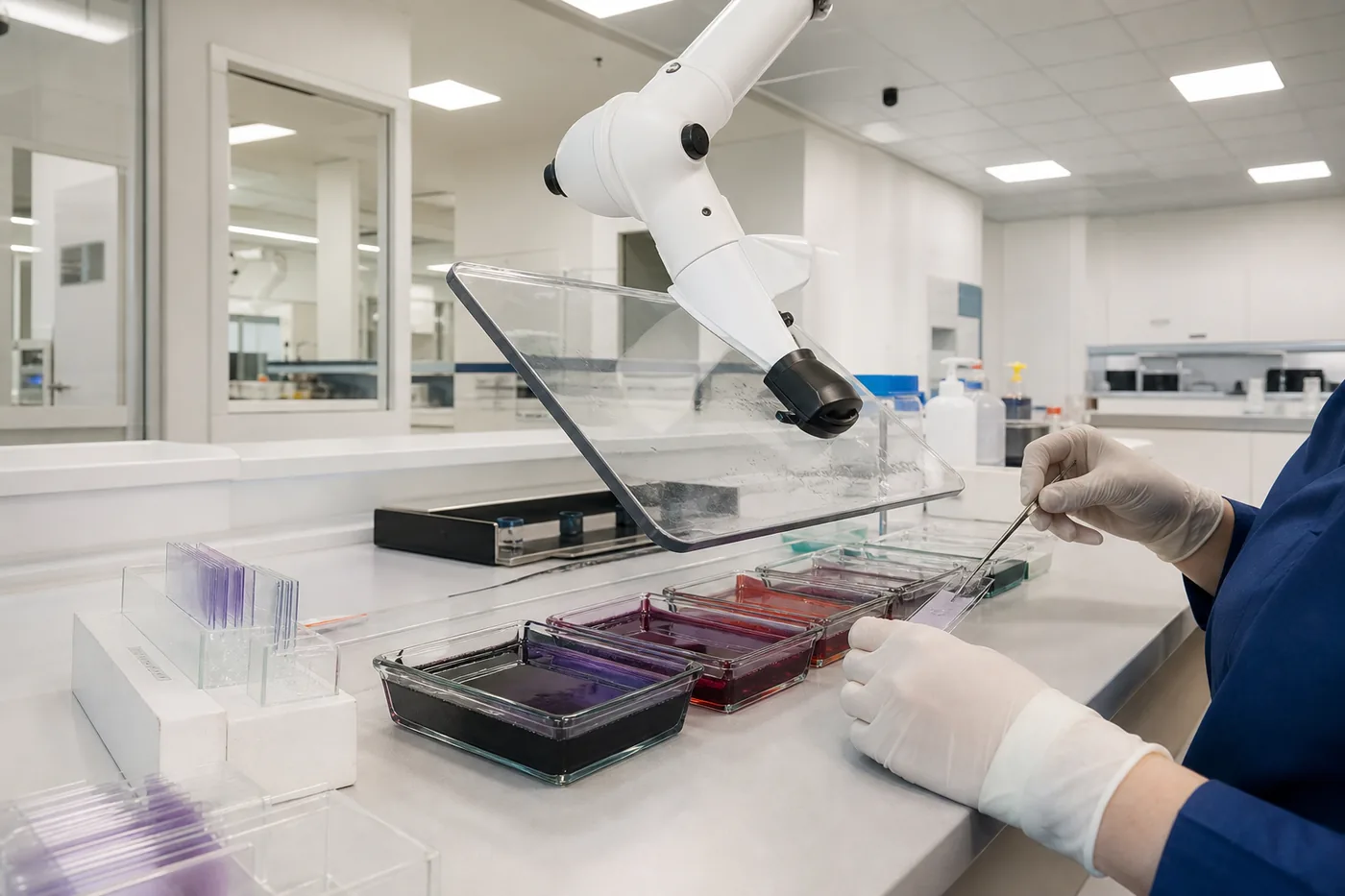 Staining, Fixing & HistologyOpen staining dishes and fixatives are a point source of formaldehyde and solvent vapor. A CHEM arm with a metal hood is the right specification here; an ORIGINAL arm will corrode.
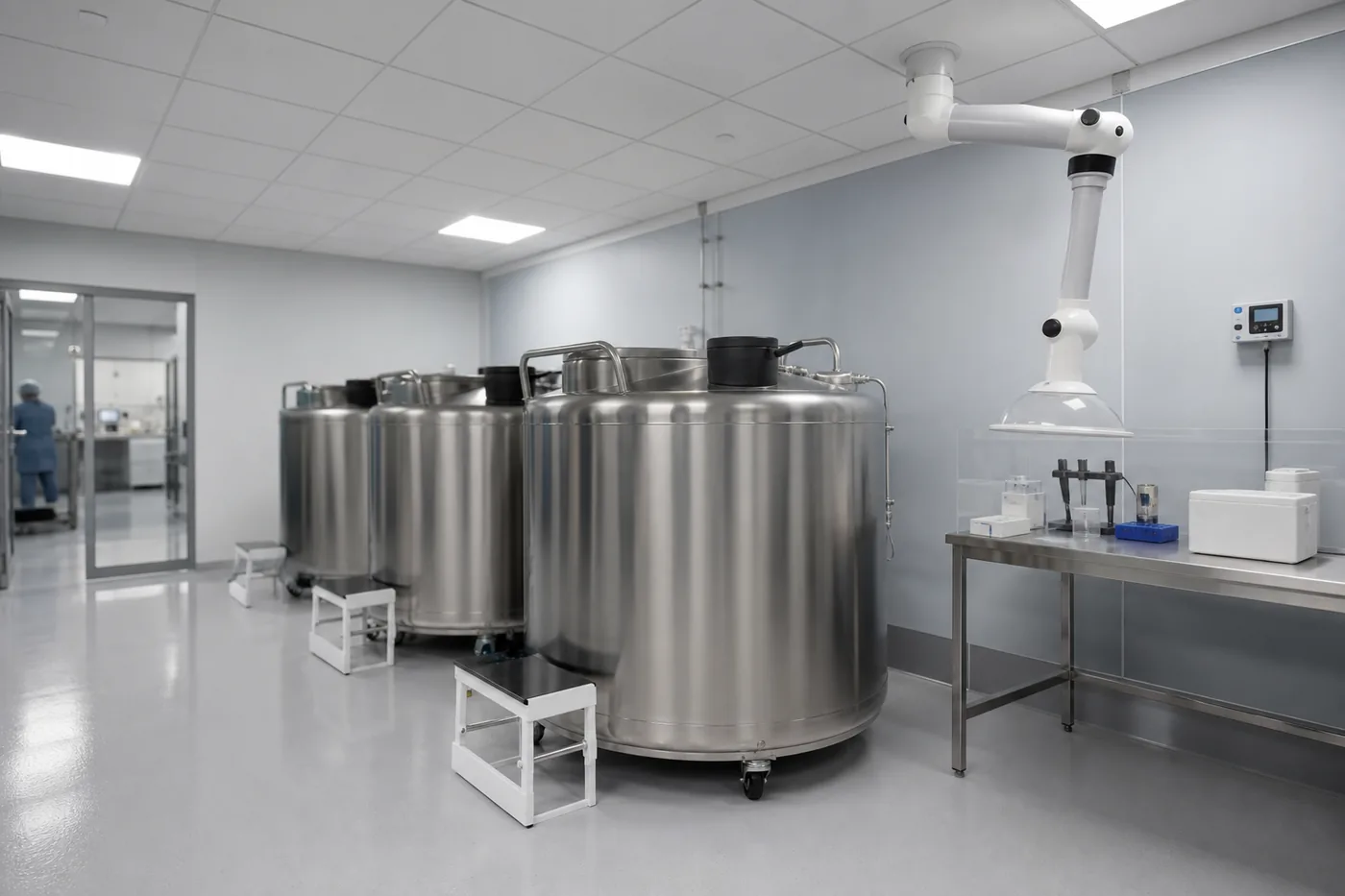 Cryostorage & Transfer StationsExtraction arms are used over cryo transfer and thaw workstations to carry off vapor and solvent fumes. Important: an extraction arm is not oxygen-deficiency protection — liquid nitrogen rooms still need dedicated room ventilation and an O₂ monitor.
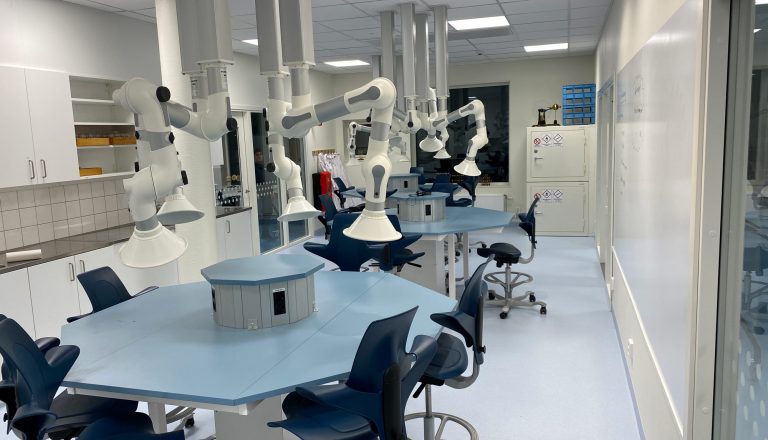 Adjacent Analytical & QC BenchesClinics that run their own hormone assays, water testing or QC chemistry install arms along the analytical bench line so one duct run serves several stations.
 Instrument & Maintenance AreasAdhesives, sealants and cleaning solvents used during instrument service produce short, intense releases. A single arm over the service bench keeps those out of the shared air path.
One placement to avoid
Do not install an extraction arm over an open embryo culture or micromanipulation station. Those areas are designed for stable, HEPA- and VOC-filtered, positive-pressure air with minimal turbulence; a local exhaust point works against that design and can draw room air across the work. Capture upstream instead.
Three Arm Models — ORIGINAL, ESD/EX and CHEM
All three share the same geometry, the same mounting brackets and the same optional hoods. What changes is the material set, and that is driven by the chemistry on the bench.
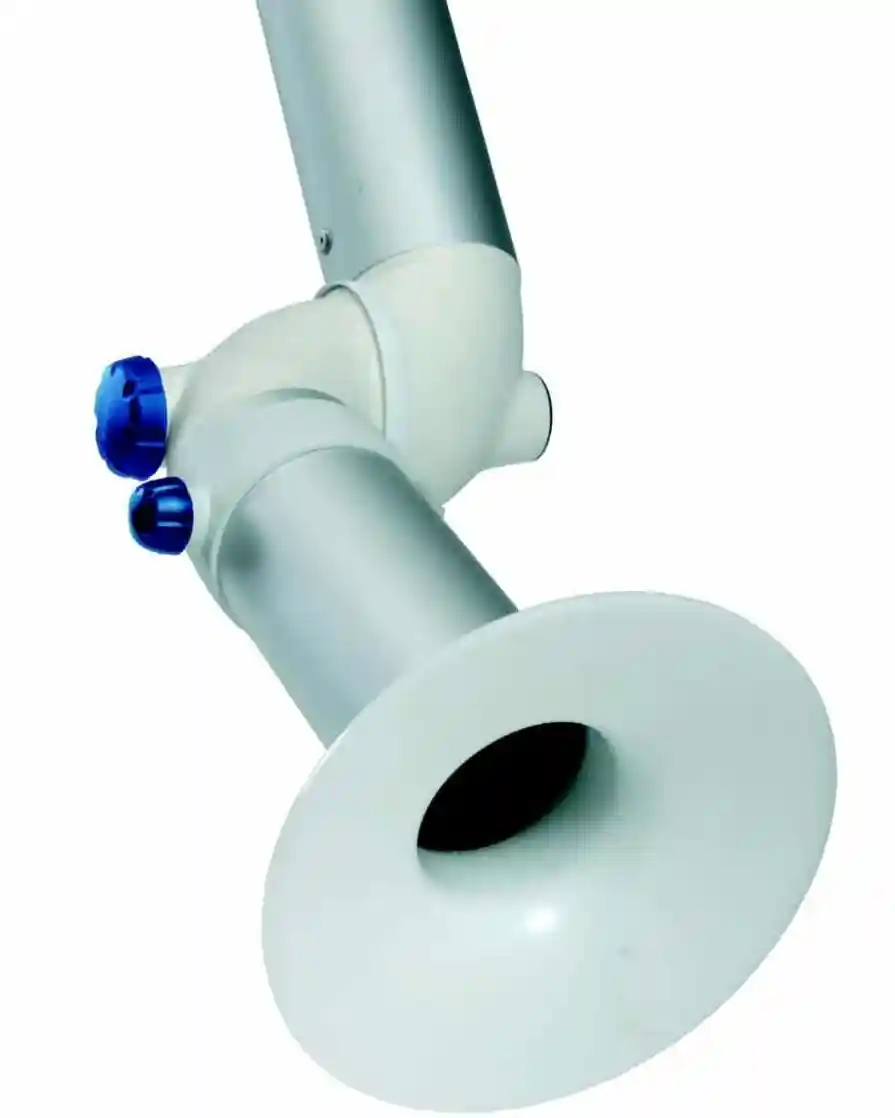 ORIGINAL ModelThe all-round arm for general laboratory work where there is little risk of electrostatic discharge or attack by aggressive chemicals. Anodized aluminum tubes, polypropylene joints and a transparent combi hood. This is the model most fertility clinics use over andrology and media-prep benches.
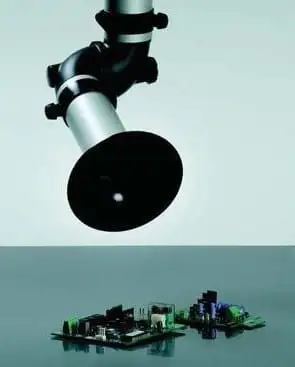 ESD/EX ModelBuilt from conductive materials — conductive polypropylene joints, conductive EPDM duct connector and a conductive mini hood — so static electricity and sparks cannot build up. Specified for static-sensitive instrumentation areas and, after a formal risk assessment, for certain flammable-vapor applications. Carries ESD, CE and EX certifications.
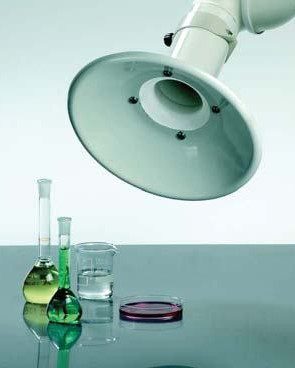 CHEM ModelProfiles are double-anodized aluminum and the hood is a painted, corrosion-resistant metal hood. This is the arm for aggressive chemistry: fixatives, acids, strong solvents and staining lines where an ORIGINAL arm would not last.
Lab Snorkel Specifications
Capacity by arm diameter
Pick the diameter from the release you are capturing, not from the duct you happen to have. Undersizing shows up as fume escaping around the edge of the hood.
| Arm | Diameter | Airflow range | Typical laboratory use |
|---|---|---|---|
| FX32 | 1-1/4″ (32 mm) | — | One-piece self-supporting flexible arm for very low-volume capture |
| FX50 | 2″ (50 mm) | 30–65 CFM (50–110 m³/h) | Single-point capture at a microscope or prep station |
| FX75 | 3″ (75 mm) | 65–140 CFM (110–240 m³/h) | The standard laboratory size — open dishes, staining, general bench work |
| FX100 | 4″ (100 mm) | 120–265 CFM (200–450 m³/h) | Larger releases, higher heat, or a hood shared by two adjacent stations |
3″ arm dimensions and reach
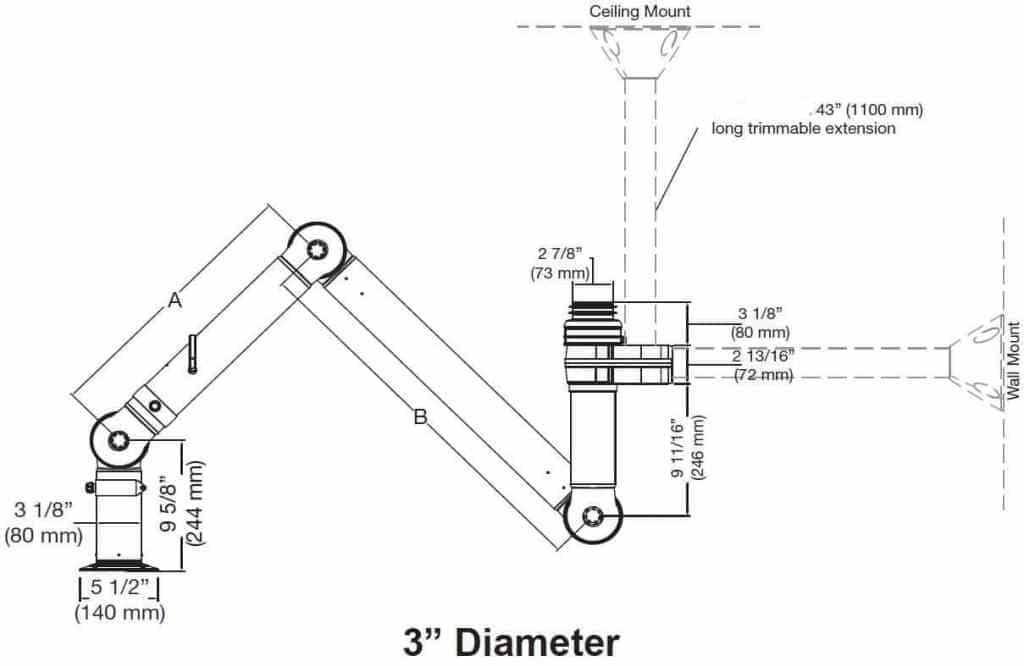
The 3″ (FX75) arm is the laboratory standard. Two arm lengths are stocked; both take the same hoods and the same bracket.
| Part number | Model | Diameter | Section A | Section B | Max working radius |
|---|---|---|---|---|---|
| OES-3 | ORIGINAL | 3″ (75 mm) | 16.5″ (42 cm) | 16.5″ (42 cm) | 42.9″ (109 cm) |
| OES-3L | ORIGINAL | 3″ (75 mm) | 19.7″ (50 cm) | 27.5″ (70 cm) | 57.1″ (145 cm) |
| CES-3 | CHEM | 3″ (75 mm) | 16.5″ (42 cm) | 16.5″ (42 cm) | 42.9″ (109 cm) |
| CES-3L | CHEM | 3″ (75 mm) | 19.7″ (50 cm) | 27.5″ (70 cm) | 57.1″ (145 cm) |
Materials and limits
| Component | Material | Why it matters |
|---|---|---|
| Tubes | Anodized aluminum (double-anodized on the CHEM model) | Light enough to reposition one-handed; the CHEM finish resists corrosive vapor |
| Joints | Polypropylene (conductive PP on ESD/EX) | Ball-bearing-supported friction joints hold position without drifting |
| Duct connector | EPDM rubber (conductive EPDM on ESD/EX) | Flexible, chemical-resistant transition to your duct |
| Mini hood | Polypropylene (conductive PP on ESD/EX; metal on CHEM) | Universal interface for all optional hoods |
| Max fume temperature | 158°F (70°C) | Above that temperature you need a metal hood and a different arm family |
| Installation | Indoor, wall / ceiling / floor / bench mount | One bracket family covers every mounting position |
Reach one arm, serve two benches
An extension profile increases the arm’s reach so a single arm can serve two adjoining workstations. In a small clinic that is often the difference between one duct penetration and three. Send us the bench layout and we will show you where the shared positions work.
Hoods: The Part That Decides Capture Efficiency
Every BenchTop arm arrives with a 5.5″ universal mini hood, and any of the optional hoods below attaches directly to it regardless of arm diameter. Choosing the right hood shape matters more than adding airflow.
 Combi HoodTransparent PET-G hood that works as both a dome and a screen hood, angled to suit the task. Fully transparent with no optical distortion, so a technician can watch the work while it is being captured. Part 70500144 (ORIGINAL) / 70500344 (CHEM).
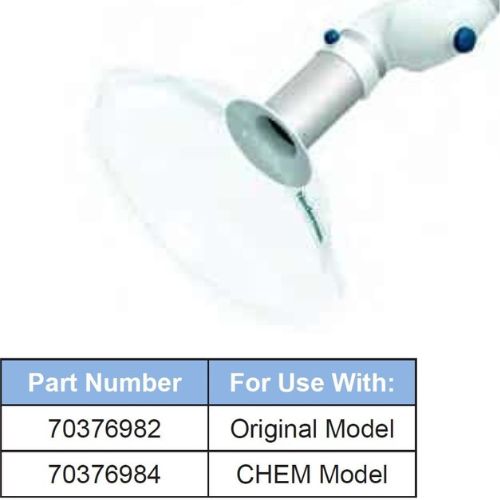 Dome HoodThe transparent dome hood suits high-dispersion contaminants — vapor coming off an open dish or tube rack rather than a single point. Clips straight onto the universal mini hood. Part 70376982 (ORIGINAL) / 70376984 (CHEM).
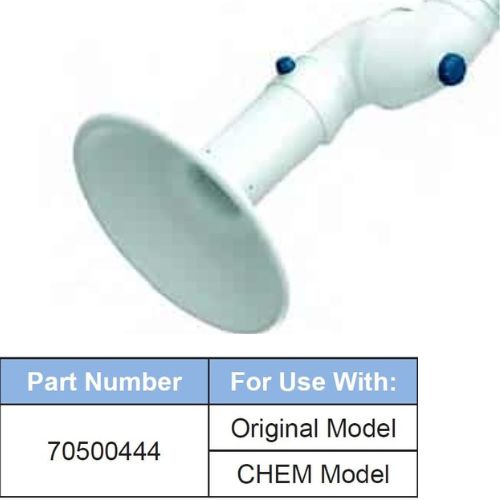 Metal HoodPowder-coated aluminum for aggressive fumes, higher temperatures and dust, with excellent corrosion resistance. Standard on the CHEM arm. Part 70500444.
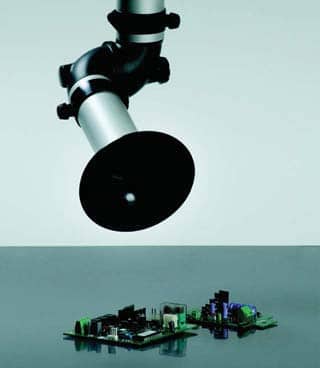 Universal Mini Hood (standard)Every BenchTop arm ships with a 5.5″ mini hood, so no extra extraction nozzle is required. It is also the universal interface — combi, dome and metal hoods all attach directly to it, regardless of arm diameter.
 Screen Position for PowdersAngled as a screen, the combi hood pulls dry powder and particulate away from the operator instead of over the bench. Useful anywhere a clinic weighs out media components or reagents.
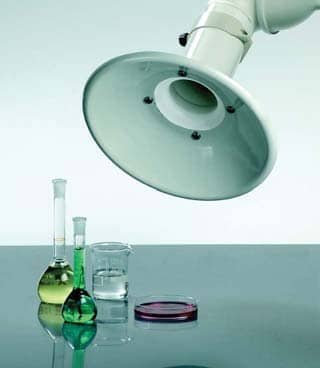 Dome Position for Open GlasswareSet as a dome directly above open glassware, the hood captures solvent vapor at the point of release — the only place capture is genuinely efficient.
Not sure which hood suits your protocol?
Tell us what is on the bench — the reagent, the vessel, whether the technician has to see into it — and we will specify the arm, the hood and the mounting kit together.
Mounting, Ductwork and Installation
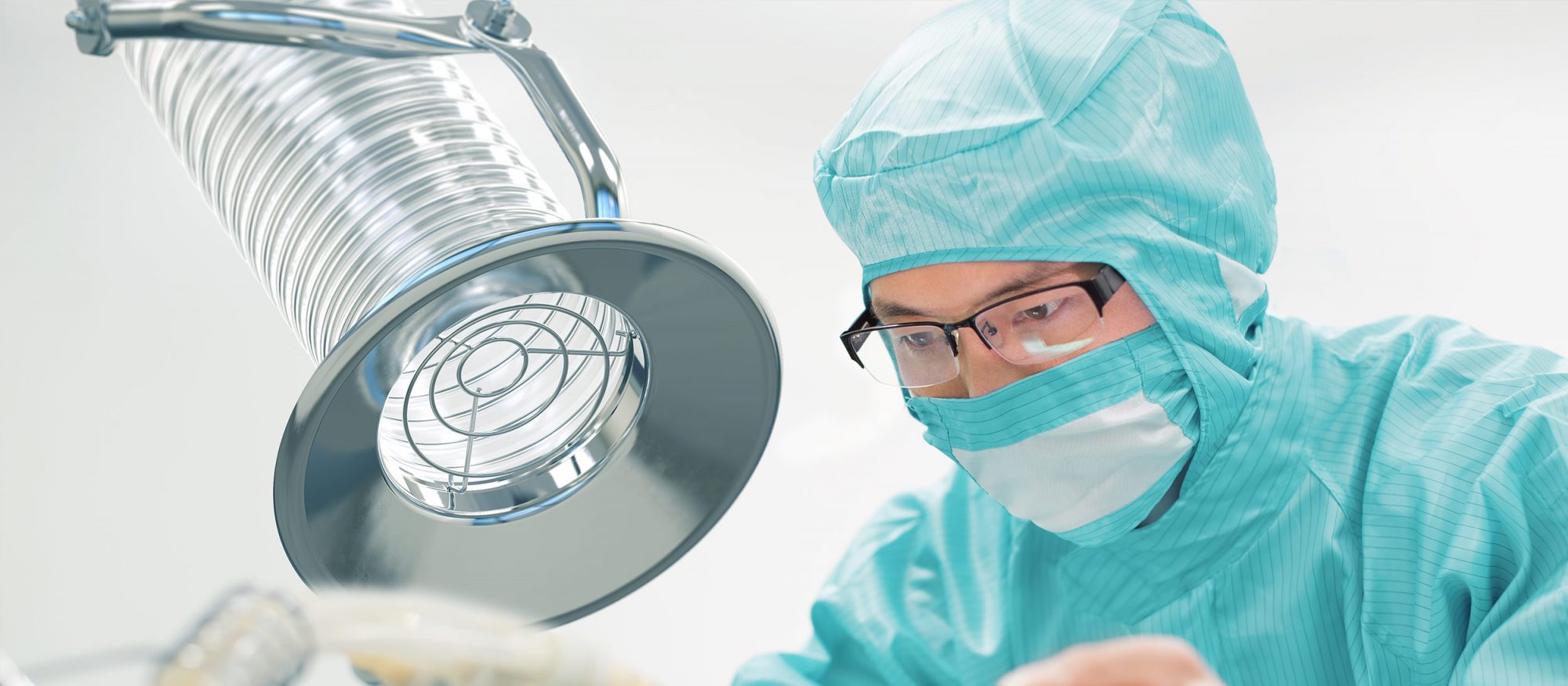
The multi-purpose bracket lets the same arm be mounted to a ceiling, a wall, the floor or directly to a bench top, with the duct connection running up or down to suit. That flexibility is what makes arms practical in a finished clinic where the ceiling grid and the casework are already in place.
Drop ceilings
Run the arm up through the grid using the 43″ (1,100 mm) trimmable extension tube, cut to the height you need, and finish the penetration with the optional ceiling cover plate. No custom fabrication is required.
Fans, filters and ducting
An arm is a capture device, not a complete exhaust system. It has to be connected to a fan and discharge — either a self-assembly kit with its own fan, filter, speed controller and hoses for a single station, or a tie-in to the building exhaust. That work belongs to a mechanical contractor, and in a fertility clinic the tie-in has to be reviewed against the room pressure cascade before anything is cut in. We coordinate that review; we do not guess at it.
Walk the workflow
We map every place a volatile is opened, poured, wiped or fixed, and how air currently moves between those rooms and the culture suite.
Size and site each arm
Diameter and hood come from the release; position comes from reach, sight lines and the bench the technician actually uses.
Coordinate the mechanical scope
Fan, duct route, discharge and the effect on room pressurization — agreed with your engineer or contractor before release.
Install and commission
Arms, brackets, extensions and hoods installed, dampers balanced, and capture verified at each station with the technicians who will use it.
When You Need a Bench Top Fume Hood Instead

An extraction arm is the right answer for a small, identifiable point source. Once the work itself needs to be enclosed — larger solvent volumes, splash risk, continuous use, or a protocol that calls for a certified containment device — you want a bench top fume hood on the same bench instead.
The ICI-JMP Isolator³ is the bench top hood we specify most often for research and healthcare laboratories. It achieves capture and containment at a 60 FPM face velocity with a 24″ (61 cm) sash opening by controlling baffle pressurization, rather than by adding air into the hood chamber. It is UL/CSA 1805 listed, tested in accordance with ASHRAE 110, SEFA 1 certified, and meets or exceeds SEFA 8 chemical resistance. The liner is chemically resistant Polyglass and the sash is tempered glass with a full-length formed steel handle. Lower face velocity means less conditioned air exhausted from the building, which matters in a clinic already paying for HEPA and carbon filtration.
Explore the full range on our laboratory fume hoods page, or compare it against the ESD-safe arm range on our Movex ESD snorkels page.
- Point source you can put a hood over, seen by the operator → extraction arm
- Work that must be enclosed, or a certified containment device required → bench top fume hood
- Corrosive fixatives, acids or aggressive solvents → CHEM arm or a hood, never an ORIGINAL arm
- Static-sensitive or flammable-vapor area → ESD/EX arm after a documented risk assessment
- Liquid nitrogen storage → room ventilation plus an oxygen monitor, not an extraction arm
- Open embryo culture and micromanipulation → filtered positive-pressure supply air, no local exhaust
What We Need to Quote Your Lab
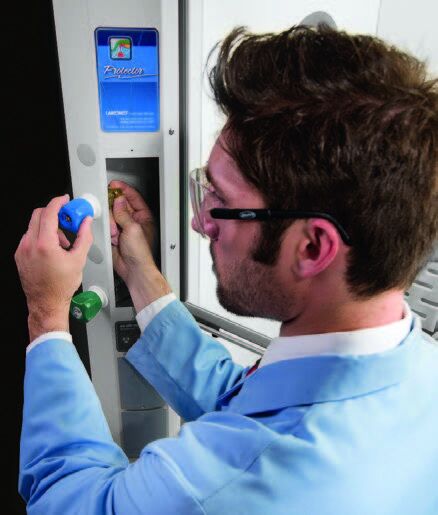
Quoting extraction arms is quick once we know the work. Send us the following and we will come back with arm models, hoods, mounting kits and, if you want it, the installed price:
A floor plan or sketch with the benches marked; what is opened or wiped at each station and roughly how often; the bench and ceiling heights; whether there is an existing exhaust duct or fan nearby; whether the room is part of a pressurized clean suite; and whether the finish has to match existing casework.
We supply laboratory ventilation alongside the casework, shelving, storage and layout work we do for hospital, university and clinical laboratories across the Mountain West, so an arm can be quoted as part of a bench package rather than as an orphan line item.
Shop Online at MaterialHandling-USA.com
Some laboratory supplies and equipment can be bought online today with published pricing on our e-commerce store.
Lab Snorkel FAQs
What is a lab snorkel?
Should a lab snorkel be installed inside an embryology culture room?
What sizes and airflows are available?
Which model do we need — ORIGINAL, ESD/EX or CHEM?
Do lab snorkels include a fan and ductwork?
Can an arm be installed into a drop ceiling?
When should we use a bench top fume hood instead?
Do extraction arms replace VOC filtration in an IVF lab?
Related Products & Resources
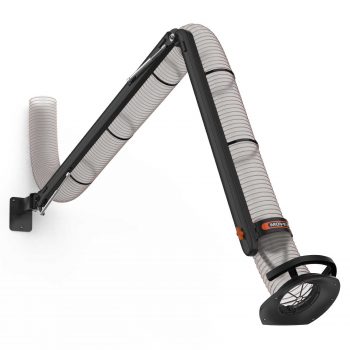 Movex ESD SnorkelsESD-safe extraction arms and stainless options for static-sensitive and cleanroom work.
 Lab Layout ConfiguratorFree online tool: position benches, hoods and extraction points, then send us the plan.
 Laboratory DesignCasework, benches, hoods and full lab layout design and installation.
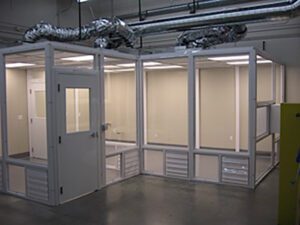 Modular Clean RoomsModular cleanroom enclosures with controlled air handling for clinical and production work.
 Laboratory Shelving & StorageChemical-resistant shelving, wire shelving and secure storage for lab consumables.
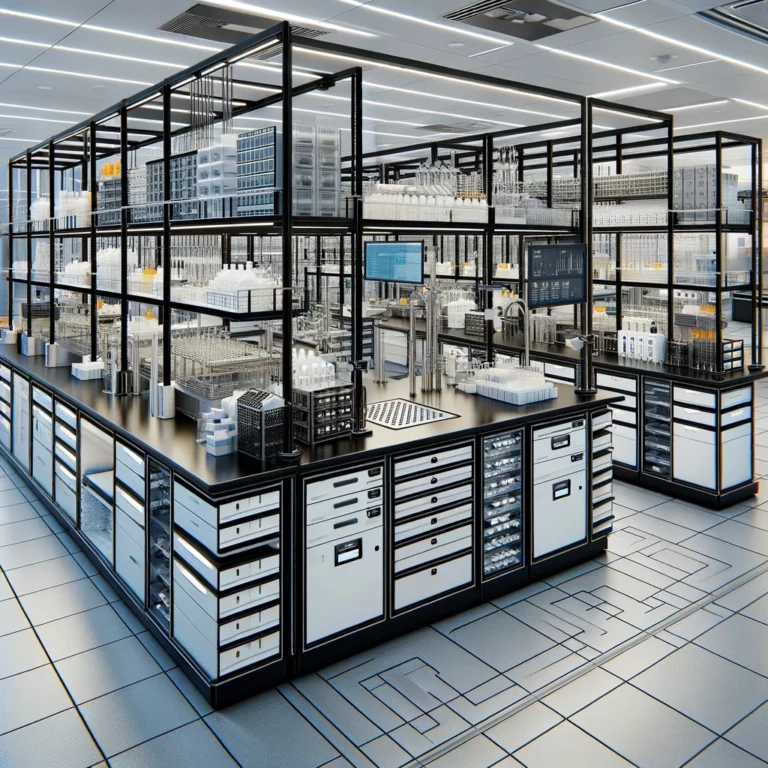 Optimizing Laboratory EfficiencyHow bench layout, storage and workflow changes free up usable lab space.
Get Your Lab Snorkels Specified Correctly
Send us your bench layout and what is on it. We will specify the arms, hoods and mounting kits, flag anything that belongs to your mechanical contractor, and quote it as a package.