
Home › Heated Holding Cabinets
Heated Holding Cabinets
Hot holding, proofing, banquet and insulated transport cabinets — how to choose humidity, insulation, height, doors and pan capacity. Specified, quoted and shipped by MH-USA.
1997
Serving the Intermountain West
50
States shipped
4
Cabinet heights
1-Day
Typical quote turnaround
Holding Is Not Cooking, and It Is Not Reheating
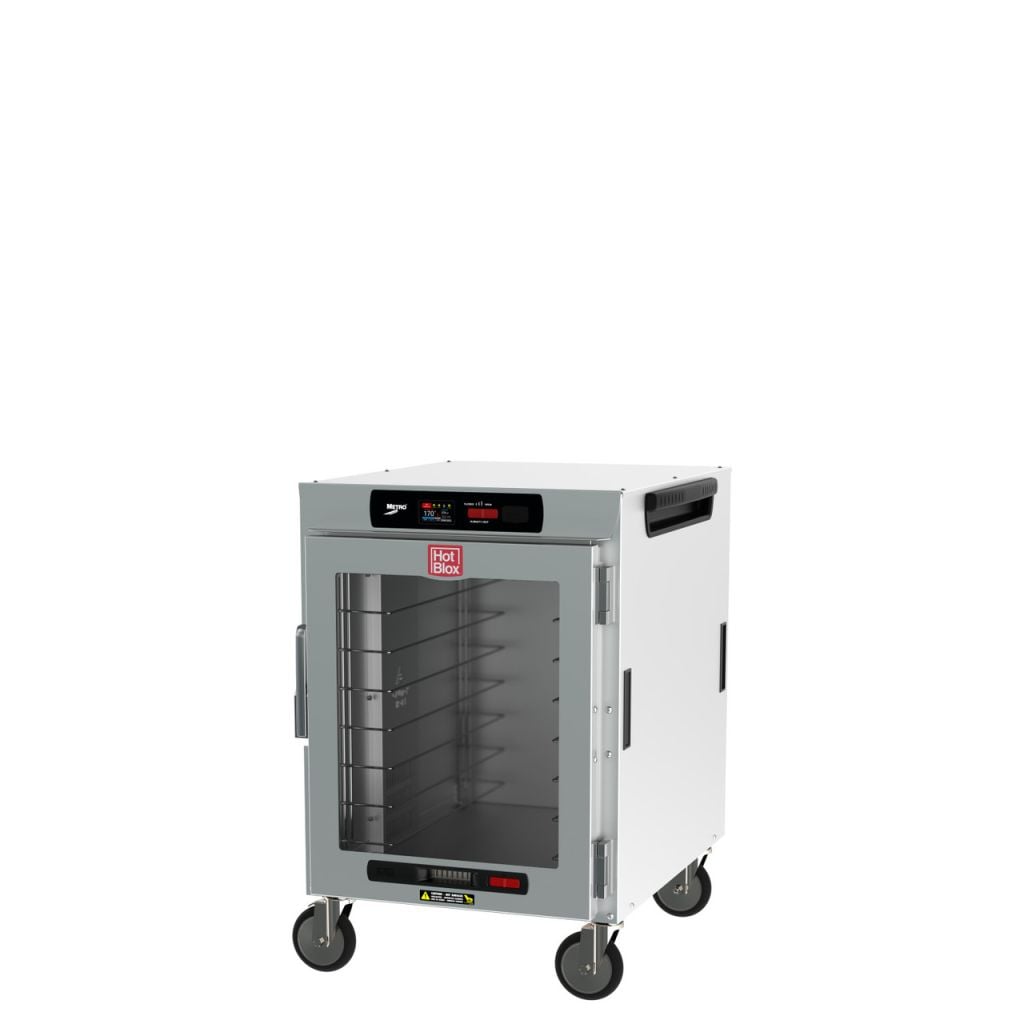
A heated holding cabinet has one job: keep already-cooked, hot food at serving temperature — texture, color and moisture intact — until somebody plates it, serves it or wheels it out the door. It is a holding appliance, not an oven and not a reheating device. Its heater replaces the heat lost through the walls and door gasket; it will not push a cold pan of lasagna up through the danger zone.
That drives the decisions below. Insulation matters more than wattage; even airflow and humidity matter more than peak output. Everything the cabinet does from there is preservation or damage — dry heat costs yield on a roast, humidity kills a fried coating, and a cabinet sized on a catalog pan count runs out of slides on the first banquet.
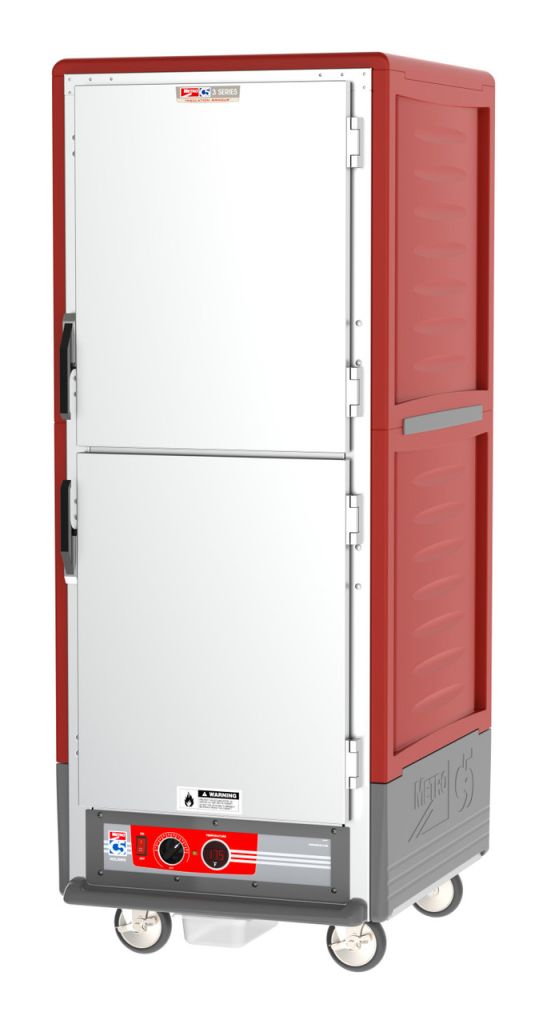
MH-USA has specified foodservice storage and handling equipment from Salt Lake City since 1997. We represent Metro, whose C5 holding, proofing and transport cabinets, HotBlox cabinets and Mightylite carriers cover much of this category. This page is the buying guide; for series and model detail on the C5 line see Metro heated holding cabinets.
Holding vs. Cooking vs. Reheating
Operators often ask one box to do all of these. Here is why it does not work.
| Function | What the equipment is doing | Right tool | What goes wrong if you substitute a holding cabinet |
|---|---|---|---|
| Cooking | Adding energy to change the product | Oven, combi, fryer, range | A holding cabinet cannot deliver that energy |
| Reheating | Driving chilled cooked product back up quickly | Combi, convection oven, retherm cart | Recovery is slow and uneven |
| Holding | Replacing heat lost through walls and door | Holding cabinet, hot food table, heated well | Nothing — provided the product goes in hot |
| Proofing | Gentle warmth plus high humidity for dough | Proofing or holding/proofing cabinet | Without humidity the dough skins and the crust tears |
| Transport | Holding while the food moves, often unplugged | Insulated transport cabinet or carrier | An uninsulated cabinet loses temperature fast once unplugged |
The rule that prevents most complaints
Load hot product into a preheated cabinet. If food goes in below serving temperature, no holding cabinet will fix it.
Controlled Humidity vs. Dry Heat
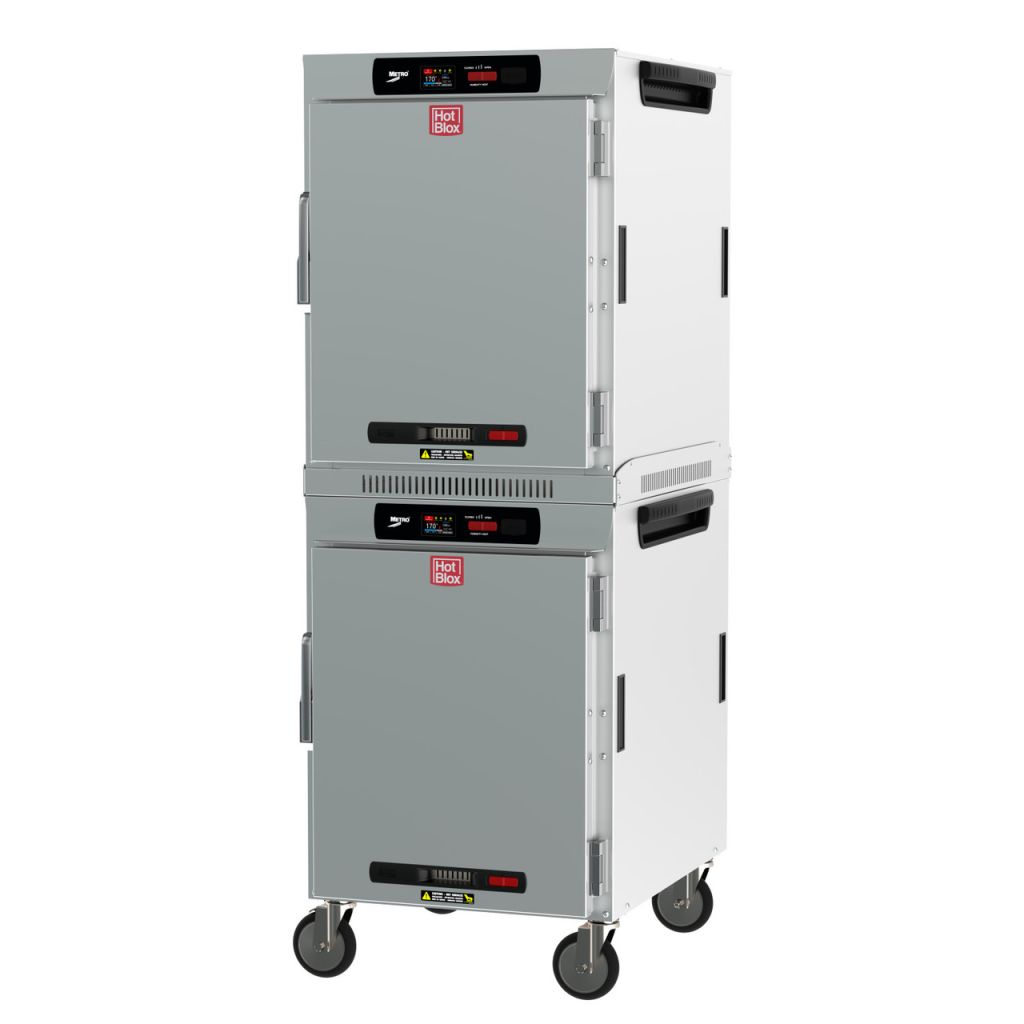
Humidity decides whether product looks freshly cooked an hour later or looks like it has been sitting. Cabinets come dry-heat, humidity-capable with a water reservoir, or adjustable.
Dry or low humidity suits anything with a crust or coating — fried chicken, breaded cutlets, fries, pizza, pastry — because moisture condenses on the coating and softens it. Controlled humidity suits roasted and braised meats, casseroles, rice, pasta, vegetables and plated meals under covers: moist air slows surface evaporation and protects yield and appearance. Over a two-hour hold the difference on a large roast is measurable on the scale.
For a mixed menu, the answers are adjustable humidity or a dual-cavity cabinet — dry on one side for fried items, humidified on the other for entrées, with two setpoints in one footprint.
Insulated vs. Uninsulated Construction
Insulation is the least glamorous line on a spec sheet and the one that changes the most in daily use. An insulated cabinet has a filled wall cavity between liner and outer skin; an uninsulated one does not.
| Behavior | Insulated cabinet | Uninsulated cabinet |
|---|---|---|
| Energy to hold temperature | Lower — the heater cycles less | Higher — the heater runs more |
| Exterior surface | Cooler to the touch | Runs warm; a burn risk in a tight aisle |
| Recovery after a door opening | Faster | Slower, and every opening costs more |
| Hold time when unplugged | Usable for a defined window | Drops quickly; not for transport |
| Heat added to the kitchen | Minimal | Measurable load on the room and HVAC |
| Best use | Mobile, transport, banquet, service lines | Stationary units that stay plugged in |
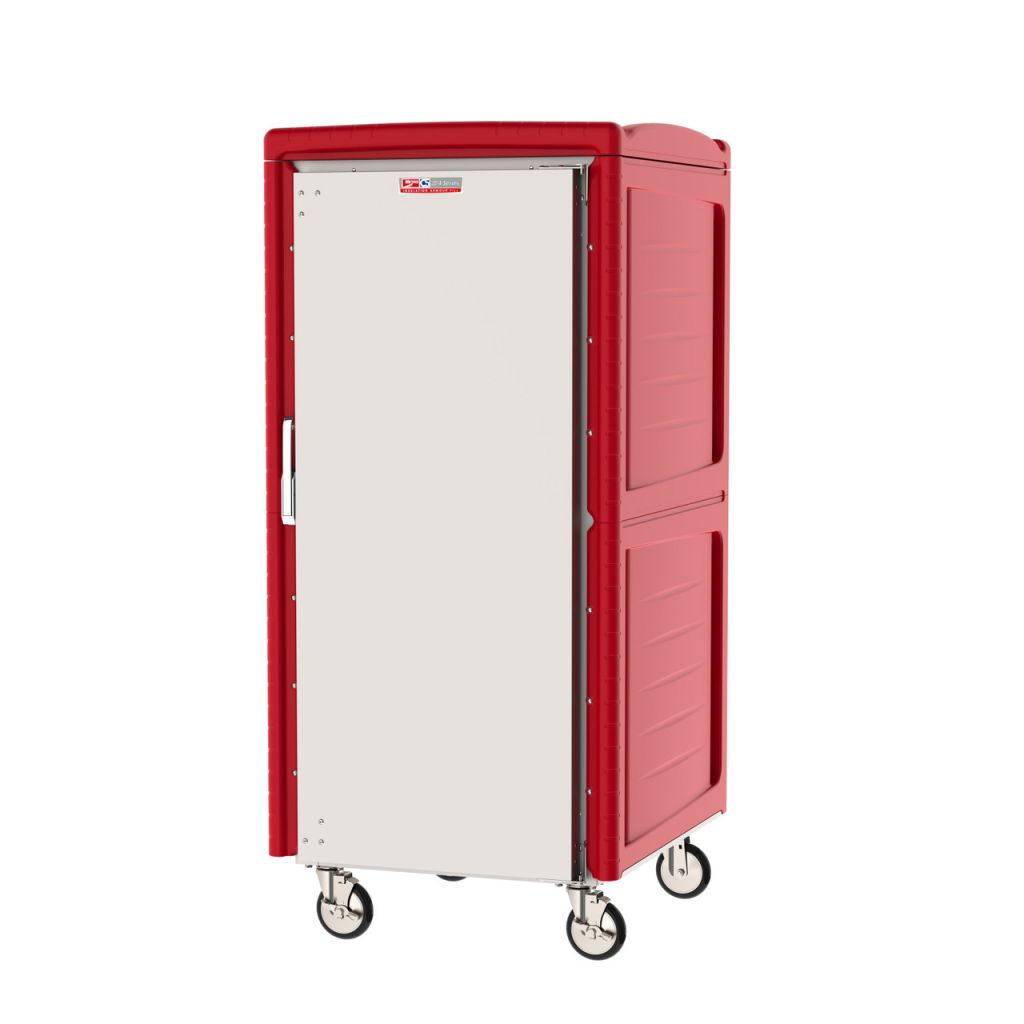
The rule: if the cabinet moves, unplugs, or sits where people walk past it, specify insulated. Non-powered transport cabinets take the idea further — no heater, just a very well insulated box, preheated, loaded hot and latched.
Full, Three-Quarter, Half and Undercounter Heights
Height is set by pan count, clearances and where the cabinet lives. Do not pick the tallest unit that fits — pick the one that matches a real service load and still rolls through the narrowest door on its route.
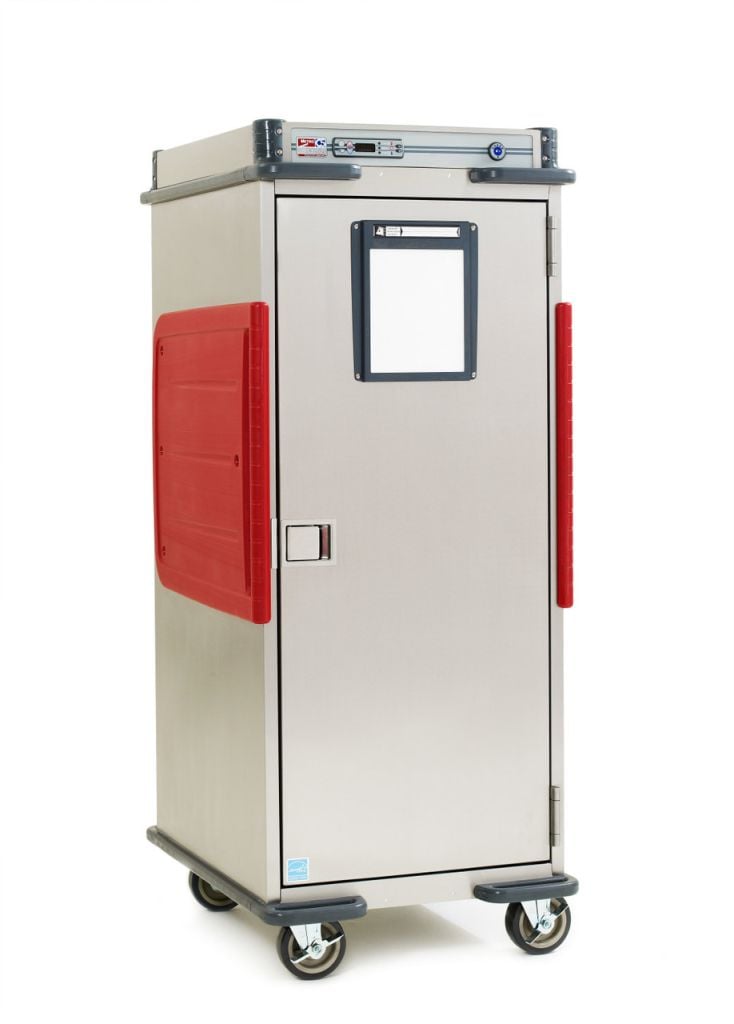 Full HeightMaximum pan capacity in one footprint. Confirm doorway and elevator clearance first.
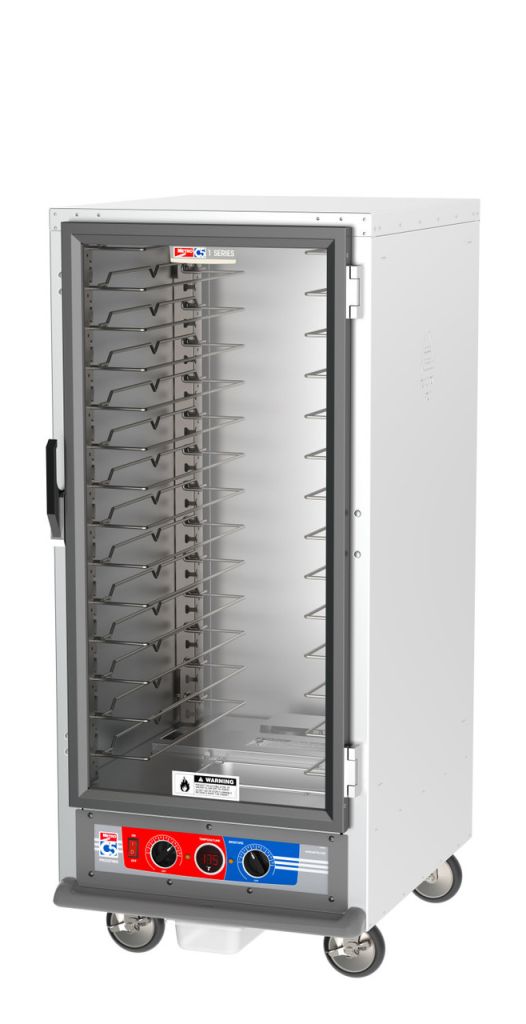
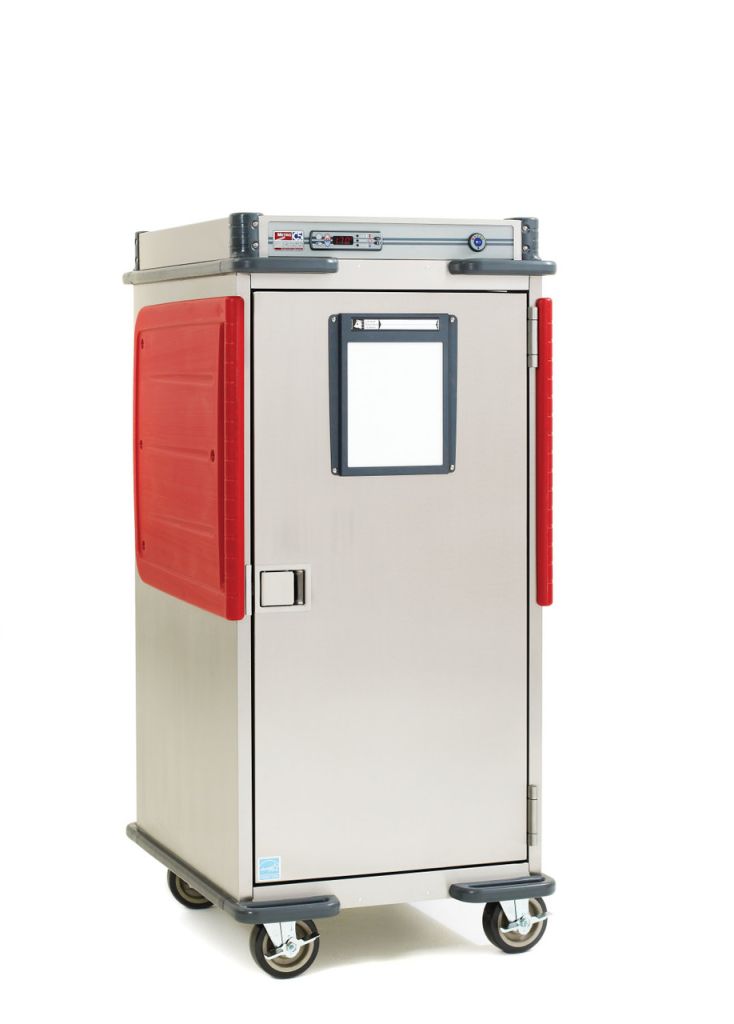 Five-Sixths & Three-Quarter HeightNearly full capacity at a lower height for low ceilings, headers or a lift-gate.
 Three-Quarter HeightStaff reach the top slide comfortably and the cabinet does not block a sight line.
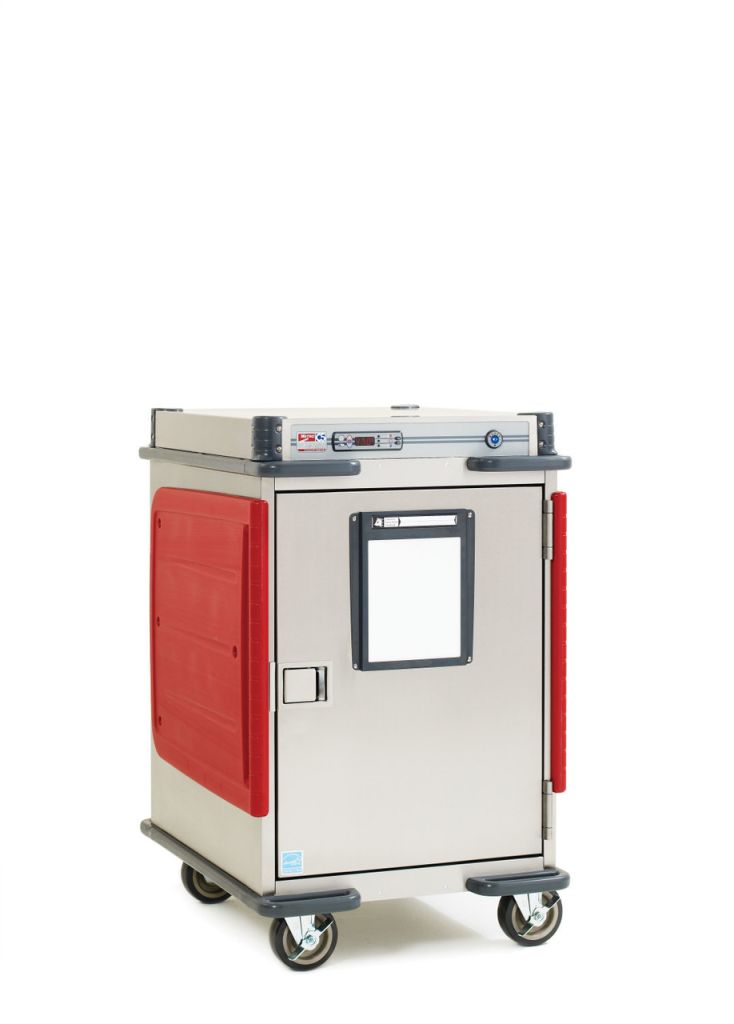 Half HeightSmall-batch holding at the point of service, or a second temperature zone.
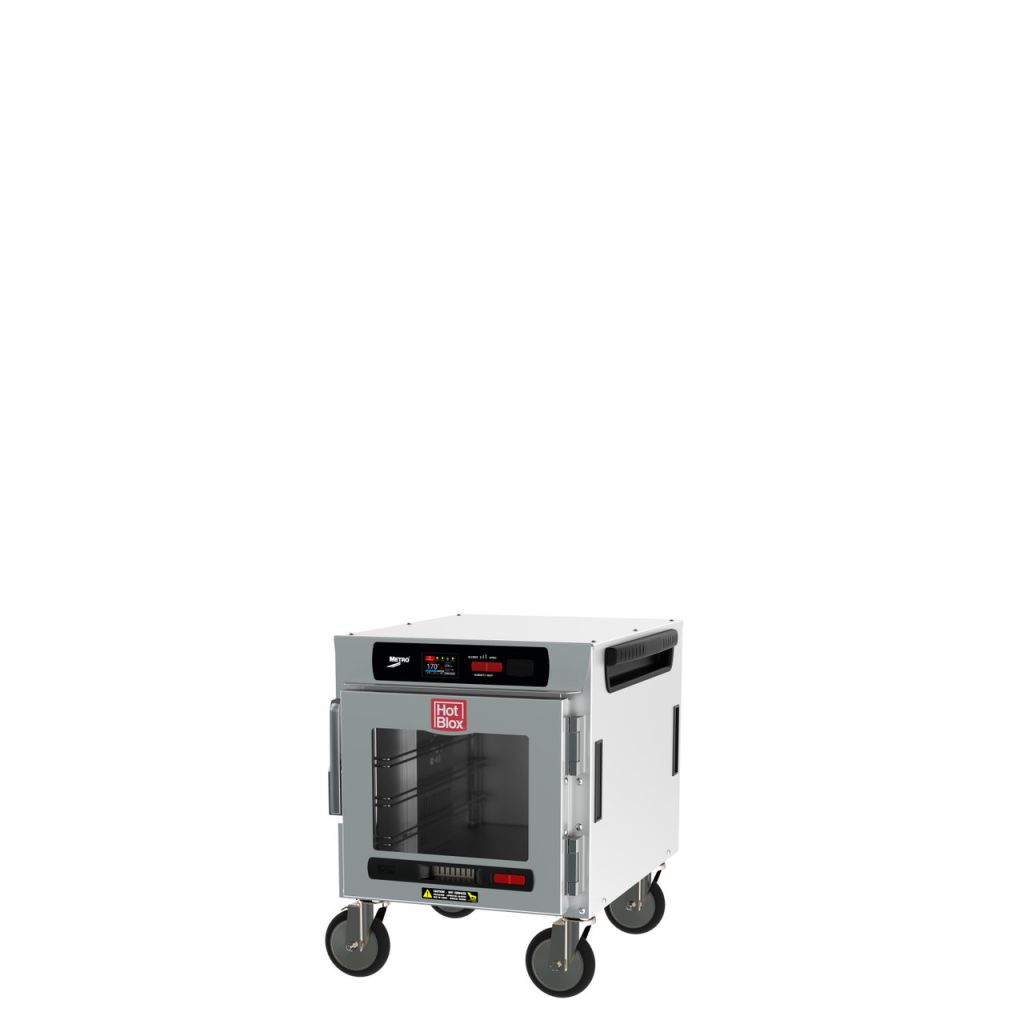 UndercounterSlides under a prep or service counter to recover floor space. Common in QSR and c-store.
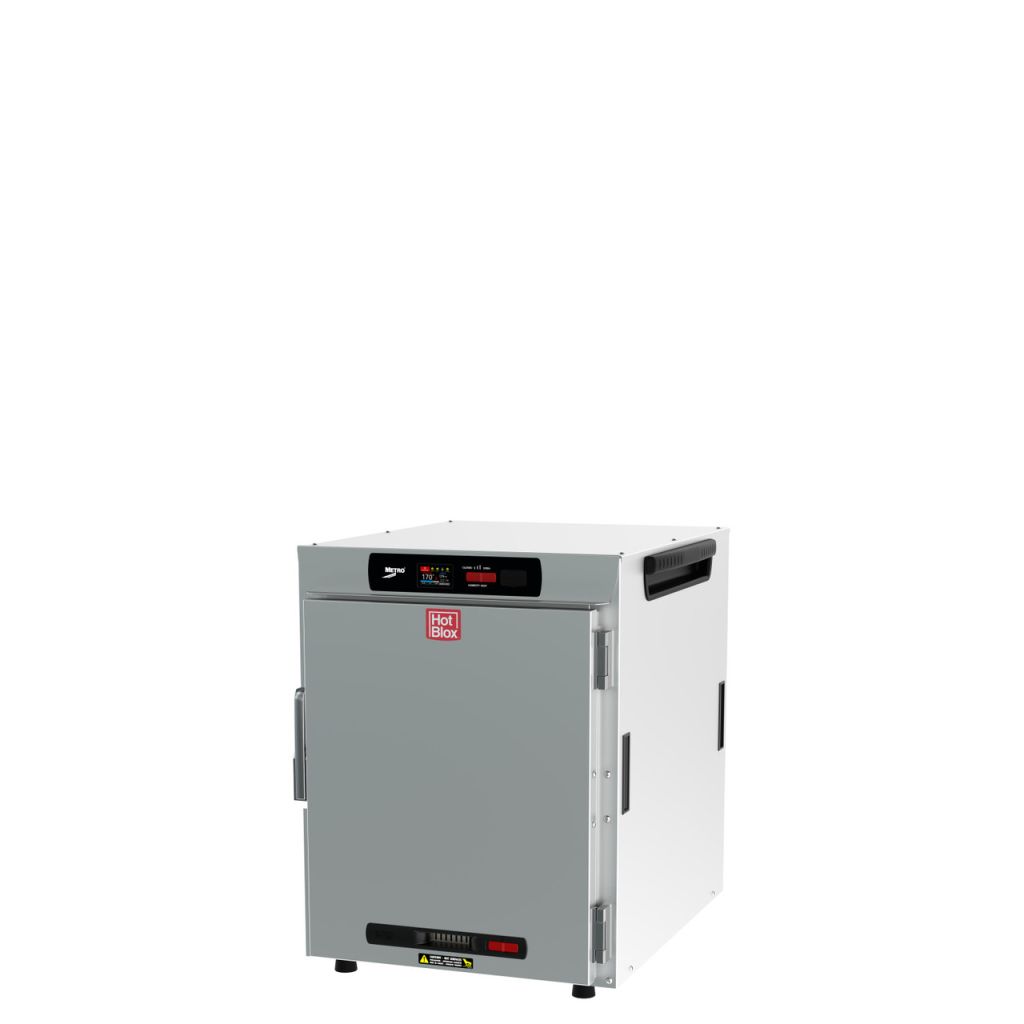 Countertop & StackingSits at the pass or service window; stacking versions add a second cavity without taking more counter.
Measure the route, not just the room
The dimension that kills a delivery is a door frame, elevator, ramp or lift-gate between the dock and the kitchen. Send us the tightest clearance on the route.
Mobile, Stationary, Pass-Thru and Roll-In
Mobile cabinets ride on casters and are the default, because the cabinet follows the work. Specify swivel casters with at least two brakes and check the diameter against your floor.
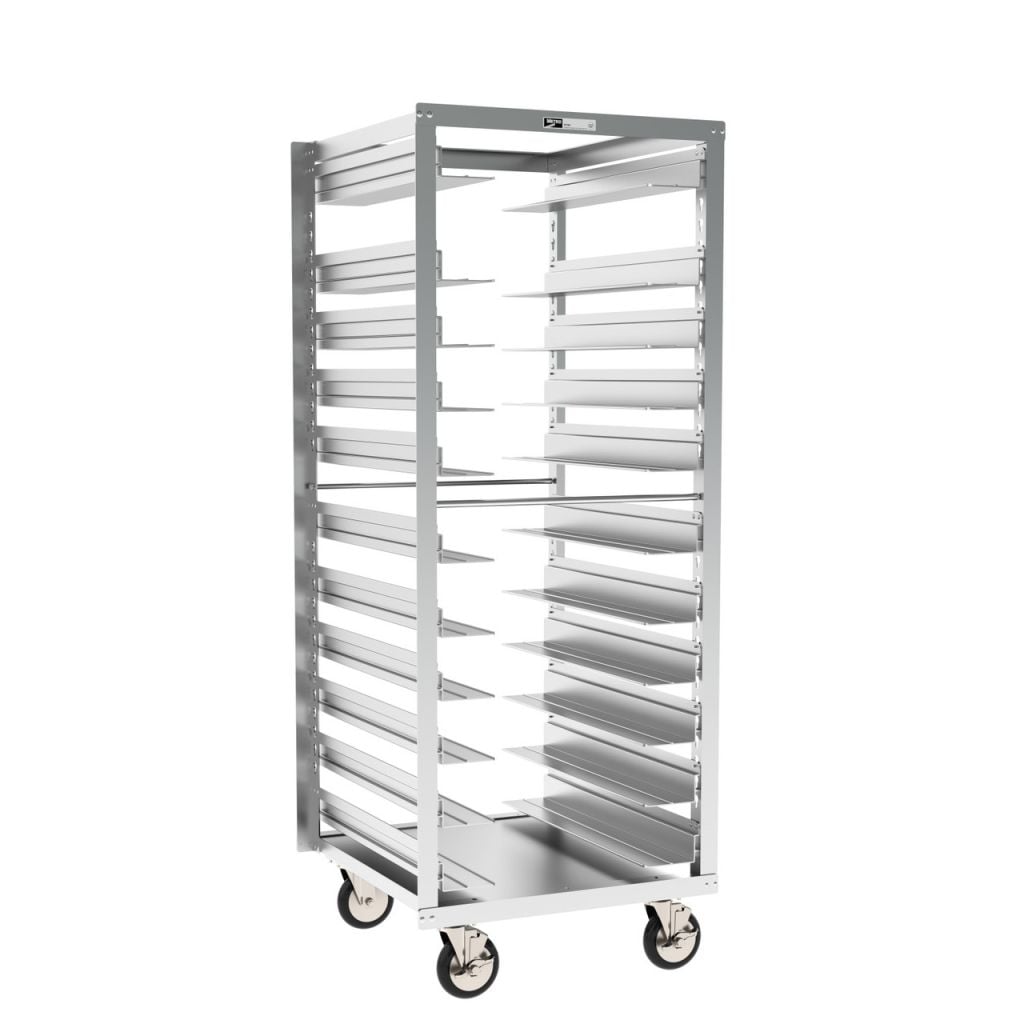
Stationary cabinets sit on legs, cost less and suit a fixed line. Pass-thru cabinets have doors on both faces, so the kitchen loads from one side and service pulls from the other. Roll-in cabinets have no fixed slides, so a loaded pan rack rolls straight in — the difference between moving 40 pans by hand and pushing one rack.
Doors: Clear, Solid and Dutch
| Door type | What it does well | Trade-off | Typical fit |
|---|---|---|---|
| Solid insulated | Best thermal performance, lowest energy loss | Staff must open it to see inside | Back-of-house, transport, banquet staging |
| Clear | Product visible without opening; helps rotation | Slightly higher heat loss; glass needs cleaning | Front-of-house, QSR, c-store |
| Dutch (split) | Only half the cavity is exposed per opening | Two sets of gaskets and latches | Full-height cabinets on a busy line |
| Pass-thru | Separates loading from service | Clearance and gaskets on both faces | Cafeterias, tray lines, banquet corridors |

Dutch doors are underused: on a cabinet opened forty times a service, splitting the opening roughly halves the hot air lost each time. Whatever door you pick, the gasket and latch decide whether it still performs in year three.
Pan Capacity and Slide Spacing: How to Size It Honestly
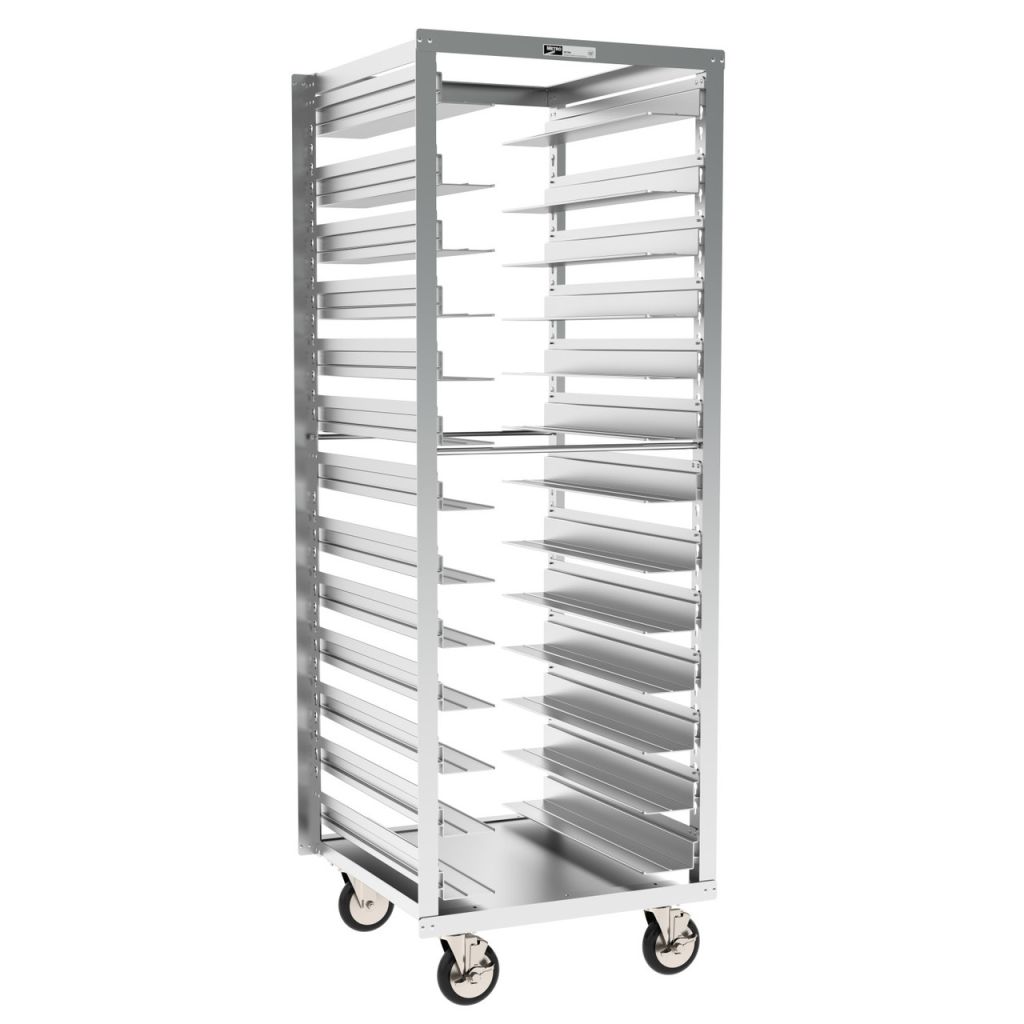
Every cabinet publishes a pan count measured at the tightest slide spacing with the shallowest pan, and it is almost never your number. Sizing starts with two questions: which pan is standard in your kitchen, and how tall is the loaded product including its cover? Sheet pans use every slide; a covered hotel pan or a plated meal under a dome uses every second or third — so a sixteen-pan cabinet may give eight usable positions.
The catalog number says nothing about airflow either: packing every slide with covered pans blocks circulation and the cavity drifts top to bottom. Leave an air channel and check with a probe.
| Pan you hold | Typical product | Realistic slide usage | Sizing note |
|---|---|---|---|
| Sheet pan, uncovered | Cookies, breaded product | Every slide | Closest to the published count |
| Sheet pan, covered | Roasted proteins under foil | Every other slide | Plan on about half the published count |
| Hotel pan, 2.5 in | Rice, pasta, vegetables | Every slide or every other | Humidified; watch condensate |
| Hotel pan, 4-6 in | Braises, casseroles, bulk entrées | Every second or third | Confirm the slide load rating |
| Plated meals under covers | Banquet service | Every second or third | Count plates, not pans |
| Sheet pans on a roll-in rack | Bakery volume | Rack pitch, not cabinet pitch | Needs a roll-in model |
Proofing Cabinets and Combined Holding/Proofing
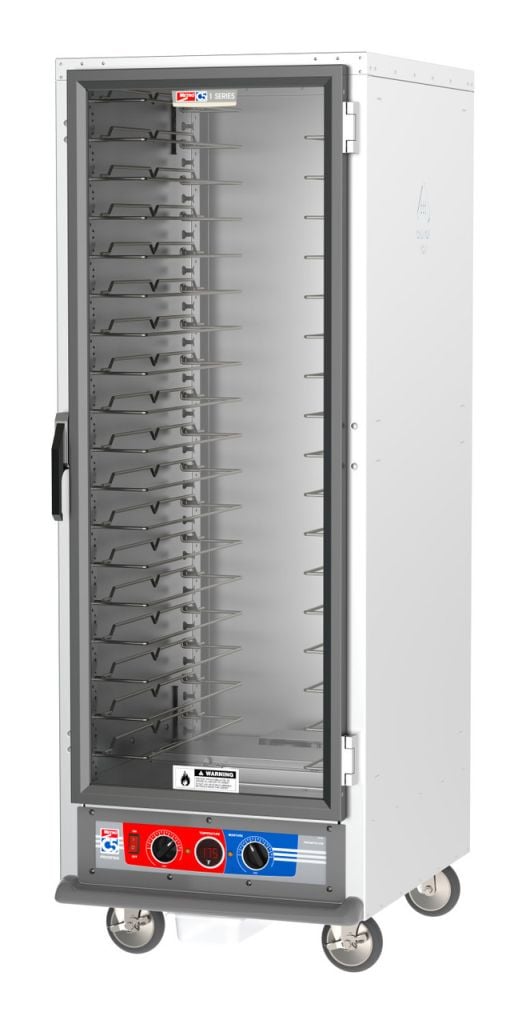
A proofing cabinet is a humidity-first appliance. Dough needs gentle warmth and high moisture so the surface stays supple while it rises; if it skins, the crust tears. Proofers use a water reservoir and low, evenly distributed heat, and the good ones control heat and humidity separately. Combination holding and proofing cabinets cover both ranges — proof in the morning, hold through lunch — in full, three-quarter and half heights.
Three notes: confirm how the reservoir fills and drains, site the cabinet where condensate is not a slip hazard, and decide whether you need a retarder-proofer — a different appliance.
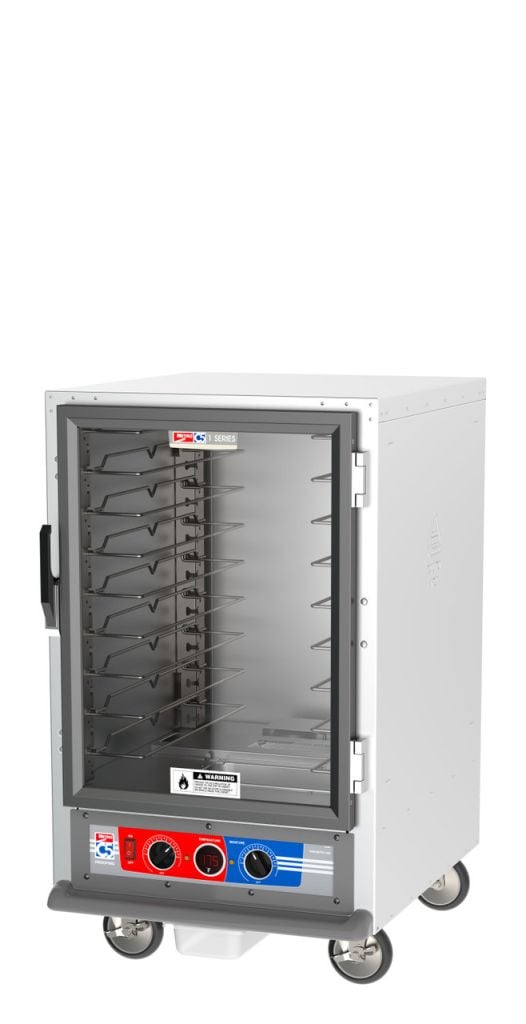
Half- and three-quarter-height proofers make a good dedicated bakery station. Size against your peak dough day — proofing is time-bound and you cannot make it up later in the shift.
Banquet Cabinets and Plated-Meal Service
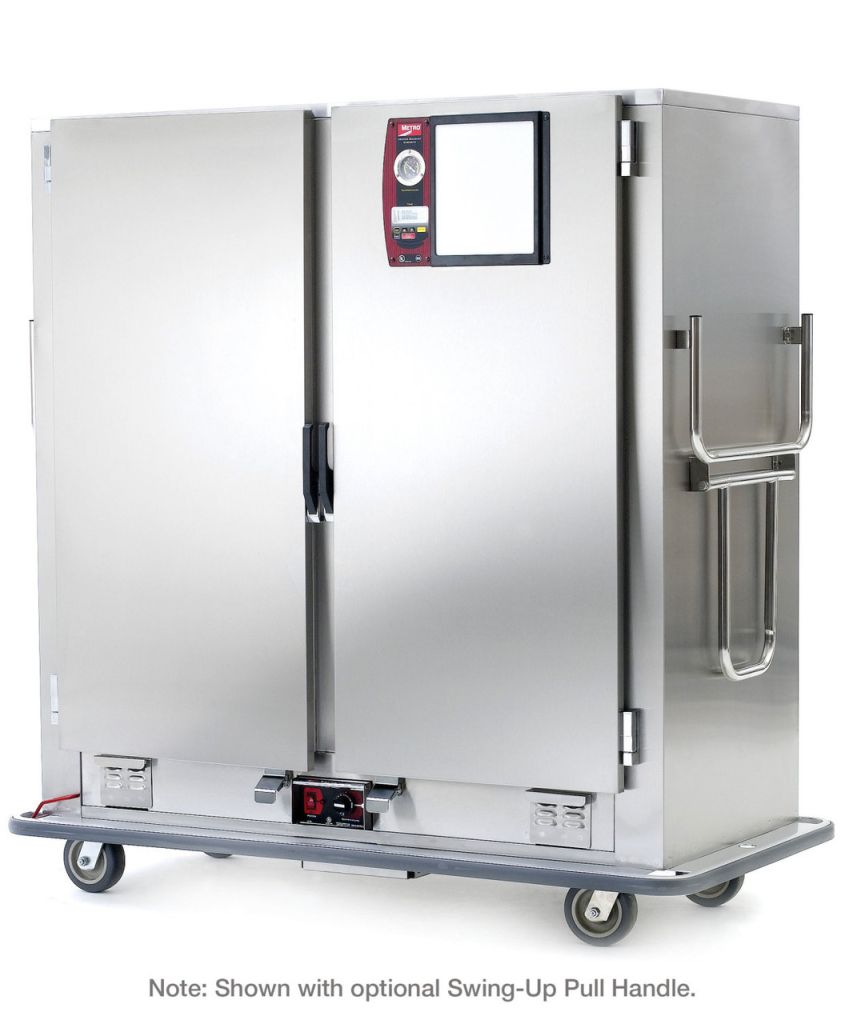
Banquet service is a different problem: hundreds of plated meals under covers, each of which has to reach the table looking freshly plated. Banquet cabinets are built for it — high plate capacity, slides pitched for domes, gentle heat that will not overcook a finished entrée, and insulation for a long push. Two-door units hold more; one-door units maneuver better in tight corridors.
From the field: preheat before plate-up, load in service order, hold for the shortest window you can, and count your covers — plate capacity assumes a dome height.
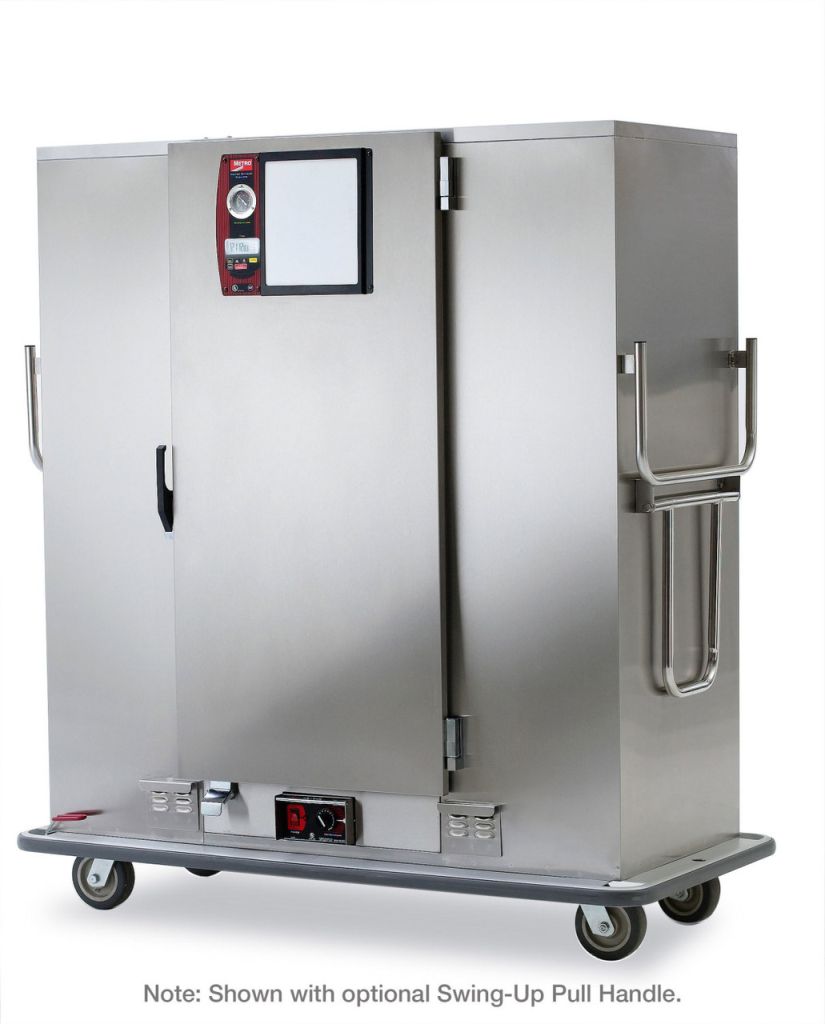
Cabinets need not be single-purpose: a banquet cabinet holds bulk pans between events, and a full-height cabinet with the right pitch handles plated meals for a smaller room. Tell us both jobs and we will spec for the harder one.
For the serving line side of the same event — hot wells, carving stations and cafeteria lines — see our hot food tables and serving lines page.
Insulated Transport Cabinets, Carriers and Heated Wells
Off-site catering, satellite kitchens, hospital pantries and stadium concessions share one problem: food is cooked in one place and served in another.
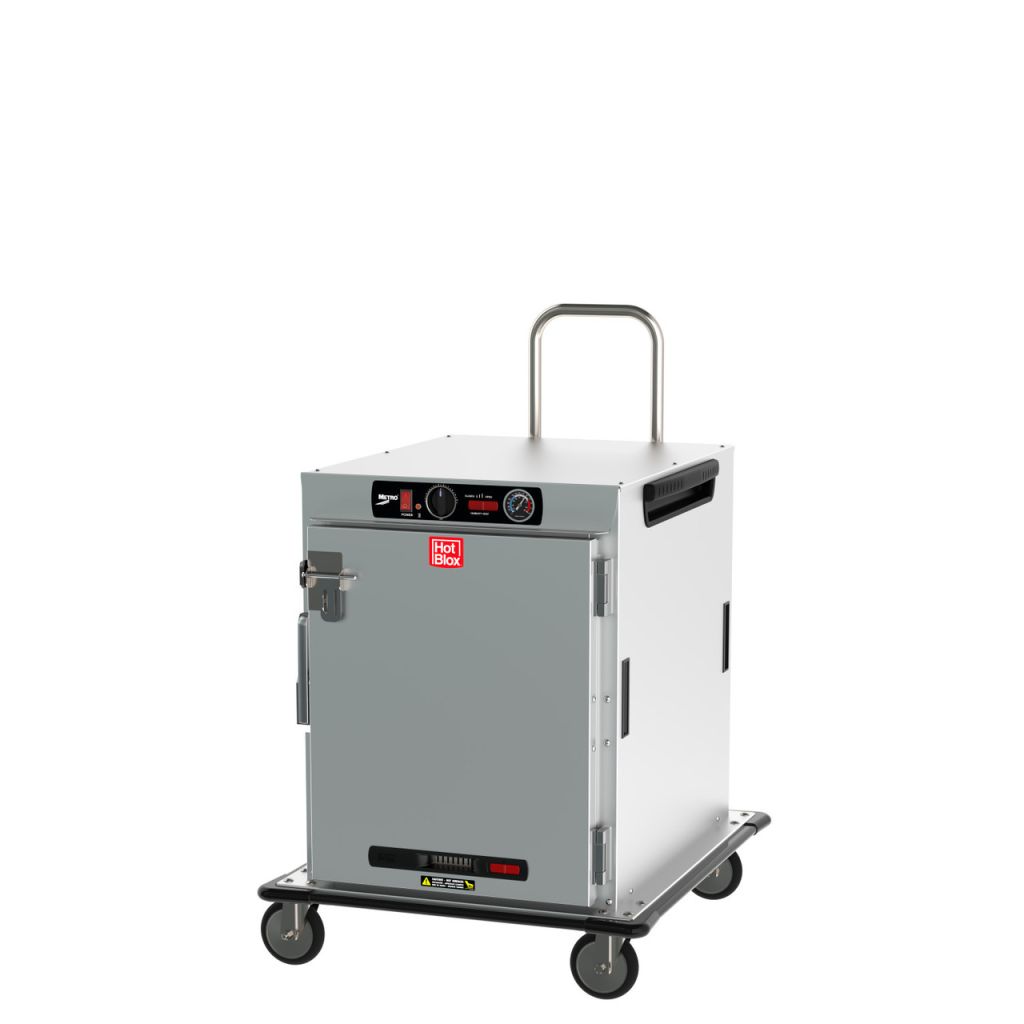 Powered Transport CabinetsInsulated and cord-connected: hold, unplug for the drive, plug in at the destination.
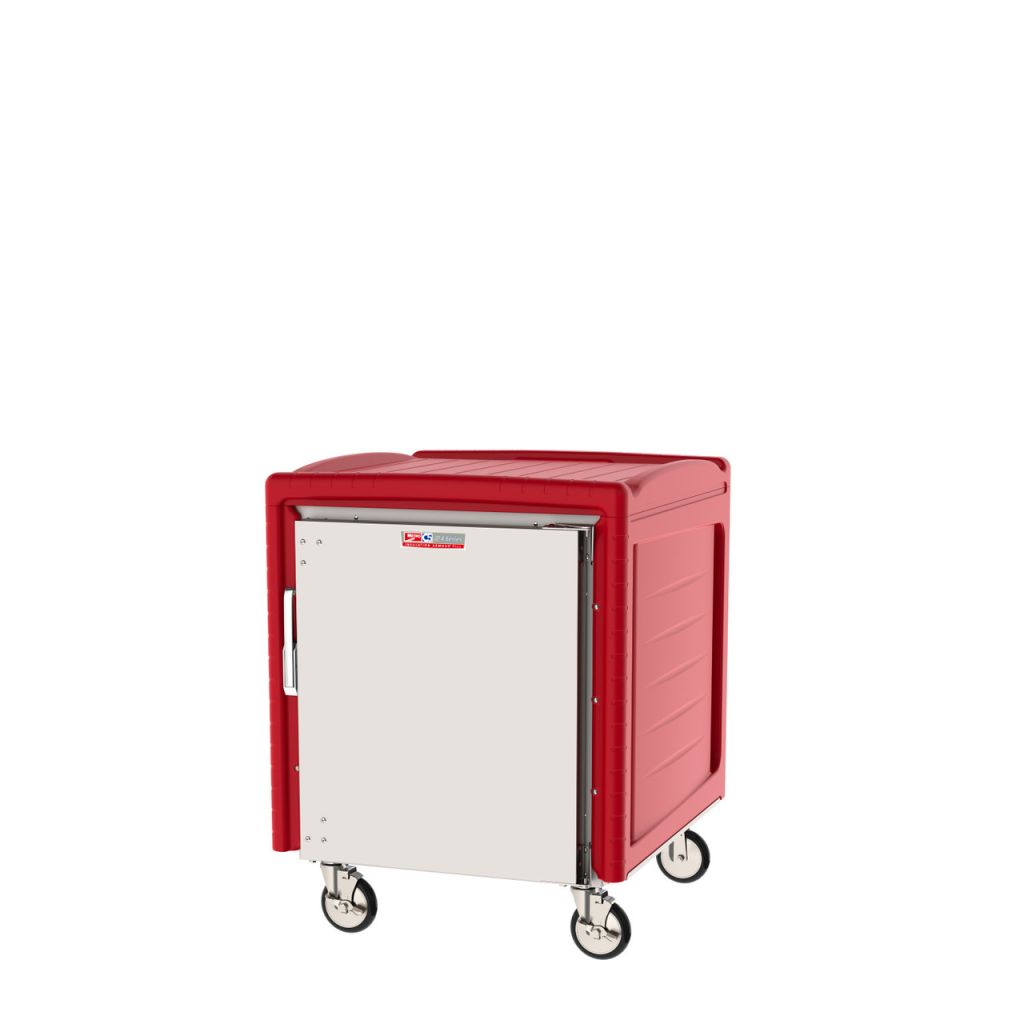 Non-Powered Insulated CabinetsNo heater — preheat, load hot, latch, and rely on insulation. Ideal where there is no outlet.
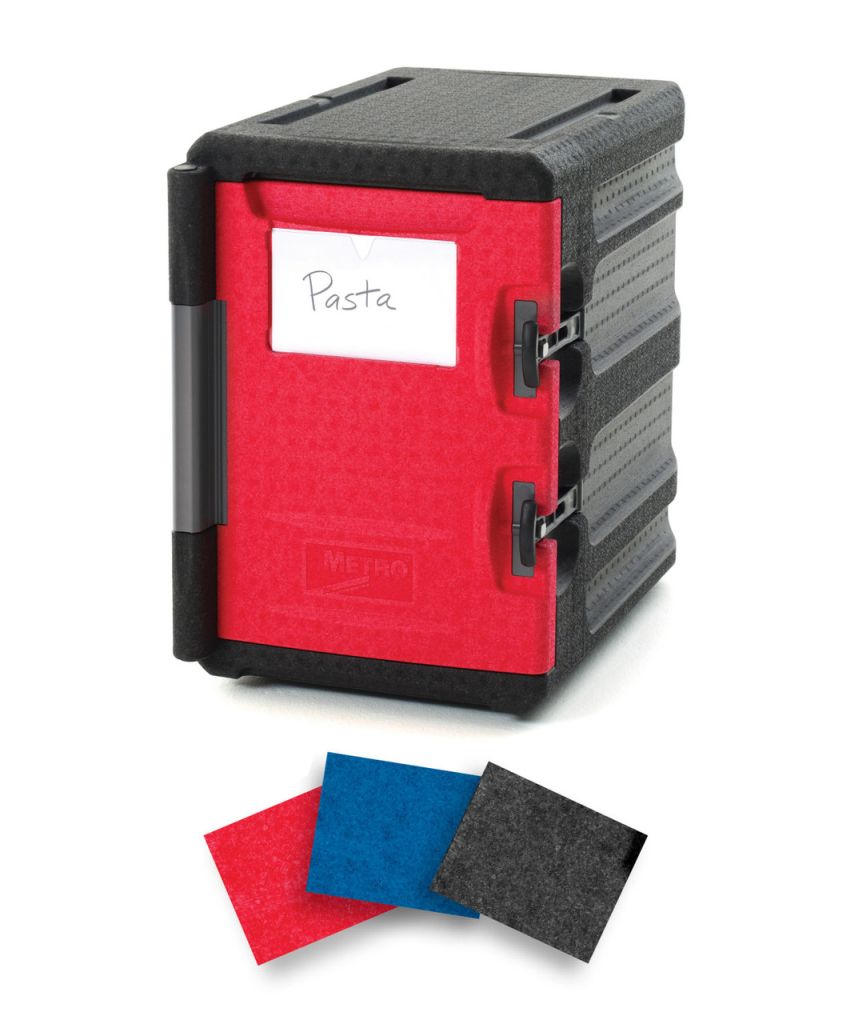 Front-Load Pan CarriersLightweight carriers for front-loaded hotel pans — easy to lift, stack and clean.
 Carrier Delivery SystemsCarriers on a cart, so a full load rolls from kitchen to venue.
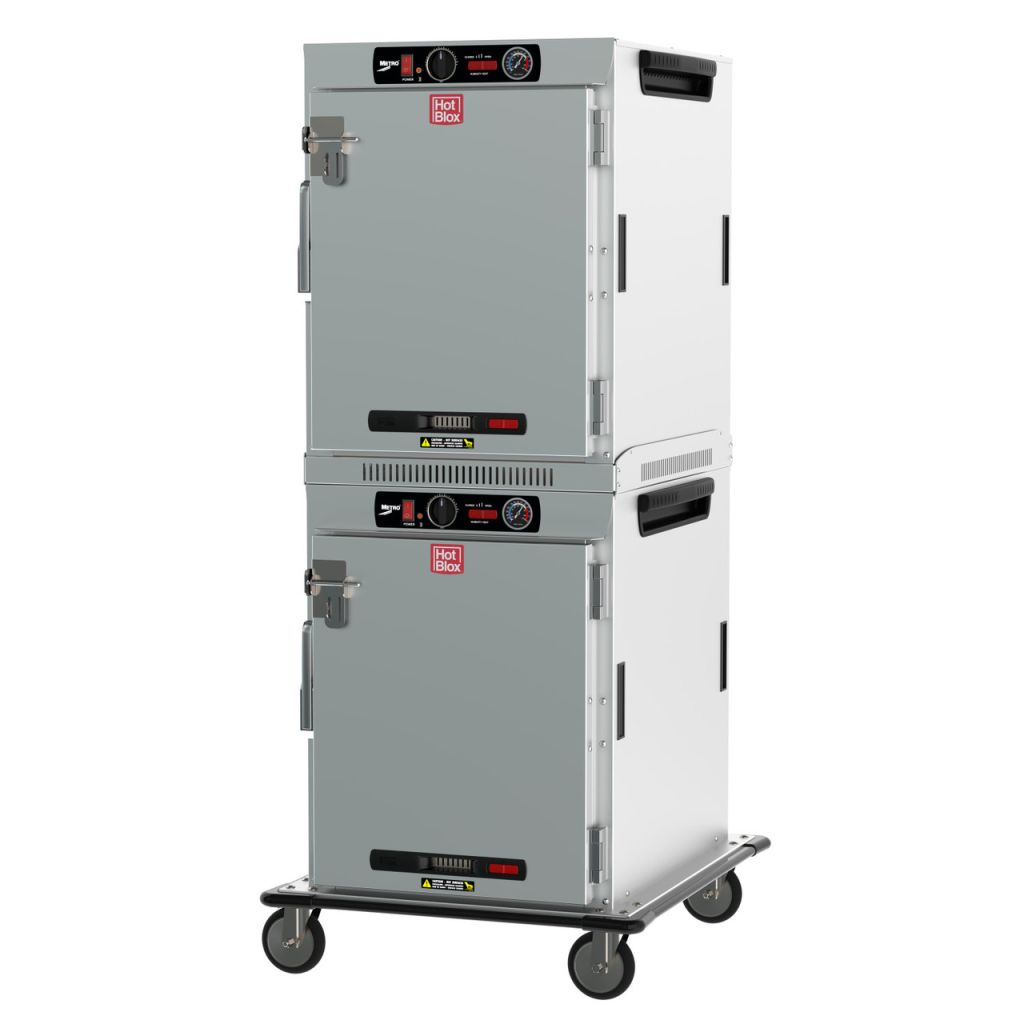 Dual-Cavity TransportTwo independent compartments, so an entrée and a crisp side travel at different settings.
Heated Wells and Point-of-Service Warming
At the destination, food usually moves into a heated well or hot food table. Wells are a serving appliance, not bulk holding — open to the room, so they lose heat faster. The normal pattern is bulk holding behind the line, transferring pans forward as the line runs down.
Not sure which combination you need?
Send your menu, peak service count and the route the food travels. We will size cabinets and carriers to a real load — pan counts, slide pitch, clearances, plug and freight.
Power, Plugs, Cords, Casters and Cleaning

Power. Voltage and amperage vary by model, cavity count and heating system, and must be confirmed on the model-specific spec sheet. Broadly, countertop, undercounter and half-height units are cord-connected single-phase; full-height and dual-cavity units draw more and may need a dedicated circuit or a different voltage. Never rough in a receptacle from a category assumption.
Plugs and cords. Plug configuration is part of the model number on most lines, and the wrong one is the most avoidable install problem here. Tell us the receptacle that exists and we will match the cabinet to it; a rolling cabinet also needs a cord wrap, reel or hook.
Casters, bumpers, latches. Larger casters roll better over thresholds; two braked swivel casters rated to the loaded weight are the minimum. Bumpers protect the cabinet and your door frames. Mechanical latches hold a seal magnetic catches will not, and gaskets are wear parts.
Cleaning. Specify removable slides — the ones you cannot get out do not get cleaned. Coved corners and a drained cavity floor shorten the routine; avoid chlorides on stainless.
Food safety is an operating discipline
Equipment can hold a temperature; it cannot manage your process. Preheat, load only hot product, keep door openings short, verify with a calibrated probe rather than the display, and set holding-time policies with your own operation and local health authority.
Selection by Operation Type
Two kitchens with the same cover count often need different cabinets. These are the patterns we see across the Intermountain West.
| Operation | The holding problem | Typical specification | Watch out for |
|---|---|---|---|
| Restaurant & QSR | Short holds, constant door openings, fried product at the window | Countertop or undercounter dry-heat cabinets with clear doors | Humidity that softens coatings; cabinets too deep for a narrow line |
| Banquet & catering | Hundreds of plated meals under covers, then a corridor or a truck | One- and two-door banquet cabinets plus insulated transport cabinets and carriers | Plate count assumes a dome height; corridor and elevator clearances |
| K-12 school kitchen | One compressed lunch period, often with satellite sites | Full-height humidified cabinets; transport cabinets to satellites | Lift-gate and doorway clearance; staffing for loading |
| Hospital & senior living | Tray line service, pantry holding, 365-day operation | Insulated mobile cabinets and carrier systems; pass-thru where flows must not cross | Elevator size, corridor traffic, exterior temperature in resident areas |
| Convenience store | Small footprint, self-service visibility, long hold windows | Countertop clear-door dry holding; undercounter units to recover floor space | Exterior temperature in a customer-accessible area |
| Stadium & concessions | Huge peaks, long pushes to stands, often no power | Non-powered cabinets and carriers, powered cabinets in the commissary | Ramp grades, caster size, event-day handling |
| Central production | Meal periods produced ahead for multiple sites | Roll-in cabinets sized to your pan racks | Racks and cabinets that do not match |
Sizing Worksheet
Answer these six before you look at a model number — it is what we need to quote accurately.
- 1. Pan standard. Which pan does your kitchen run, and at what depth?
- 2. Peak pan count. How many held at once at peak, plus 20-25% for staged pans?
- 3. Loaded height. Measure the tallest loaded pan including its lid or cover.
- 4. Humidity. Crisp items dry, roasted and plated humidified — if both, two settings.
- 5. Route clearance. The narrowest door, elevator, ramp grade and lift-gate on the route.
- 6. Power and destination. Existing receptacle and circuit, and whether power exists at the far end.
Specification Checklist
Run this list against any quote — ours or anyone’s — before you sign it.
- Height and overall dimensions vs. the tightest clearance on the route
- Pan size, slide pitch and usable pan count at your real loaded height
- Humidity: dry, humidified or adjustable — and dual-cavity if the menu is mixed
- Insulated construction wherever the unit moves or unplugs
- Mobility: mobile, stationary, pass-thru or roll-in; casters rated to loaded weight
- Door style (solid, clear, dutch, pass-thru) with gasket part numbers recorded
- Voltage, amperage, phase and plug verified on the model-specific spec sheet
- Cleaning: removable slides, coved corners, cavity drain, wash-down route
- Any required listings confirmed in writing for the specific model
- Warranty, parts availability, freight and who unloads
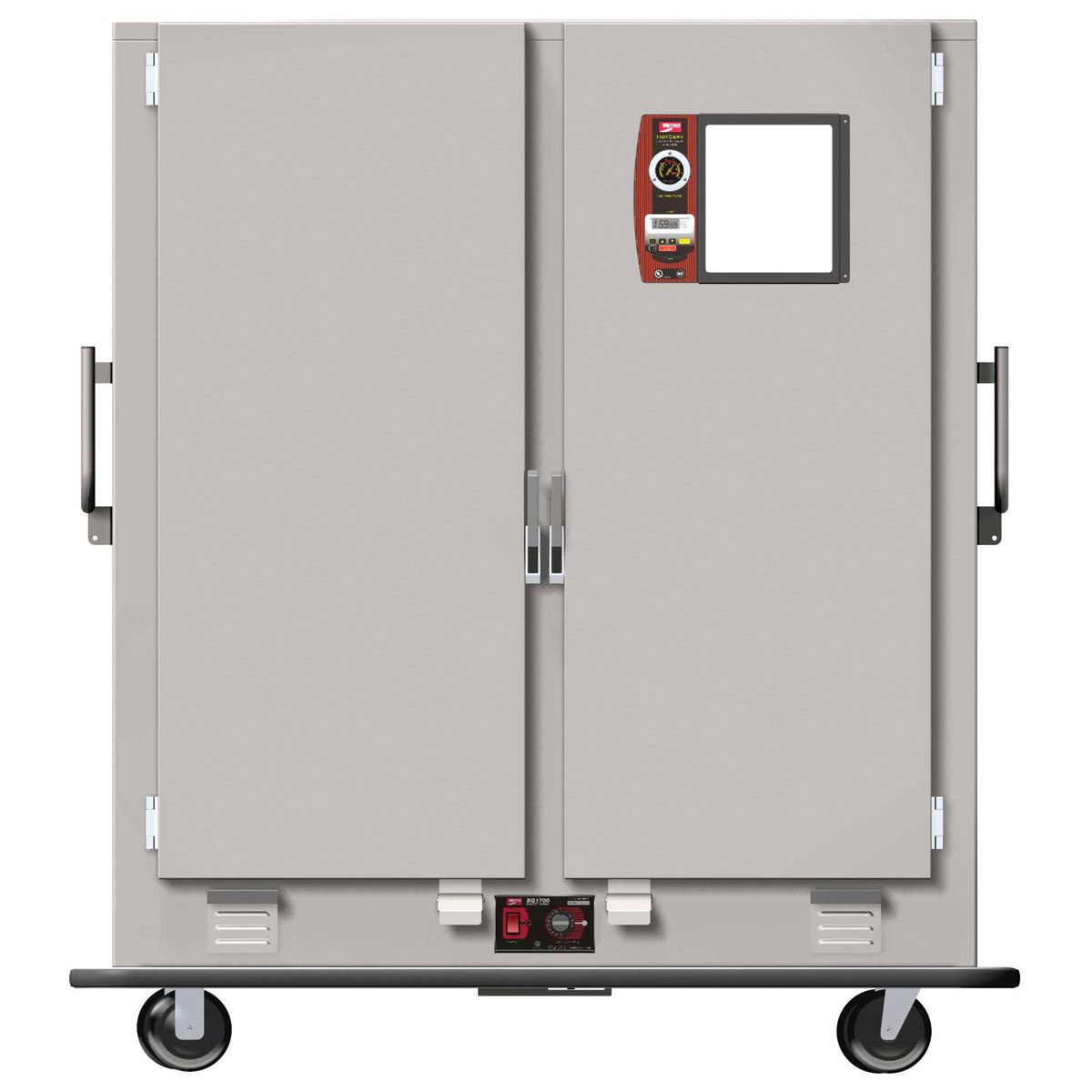
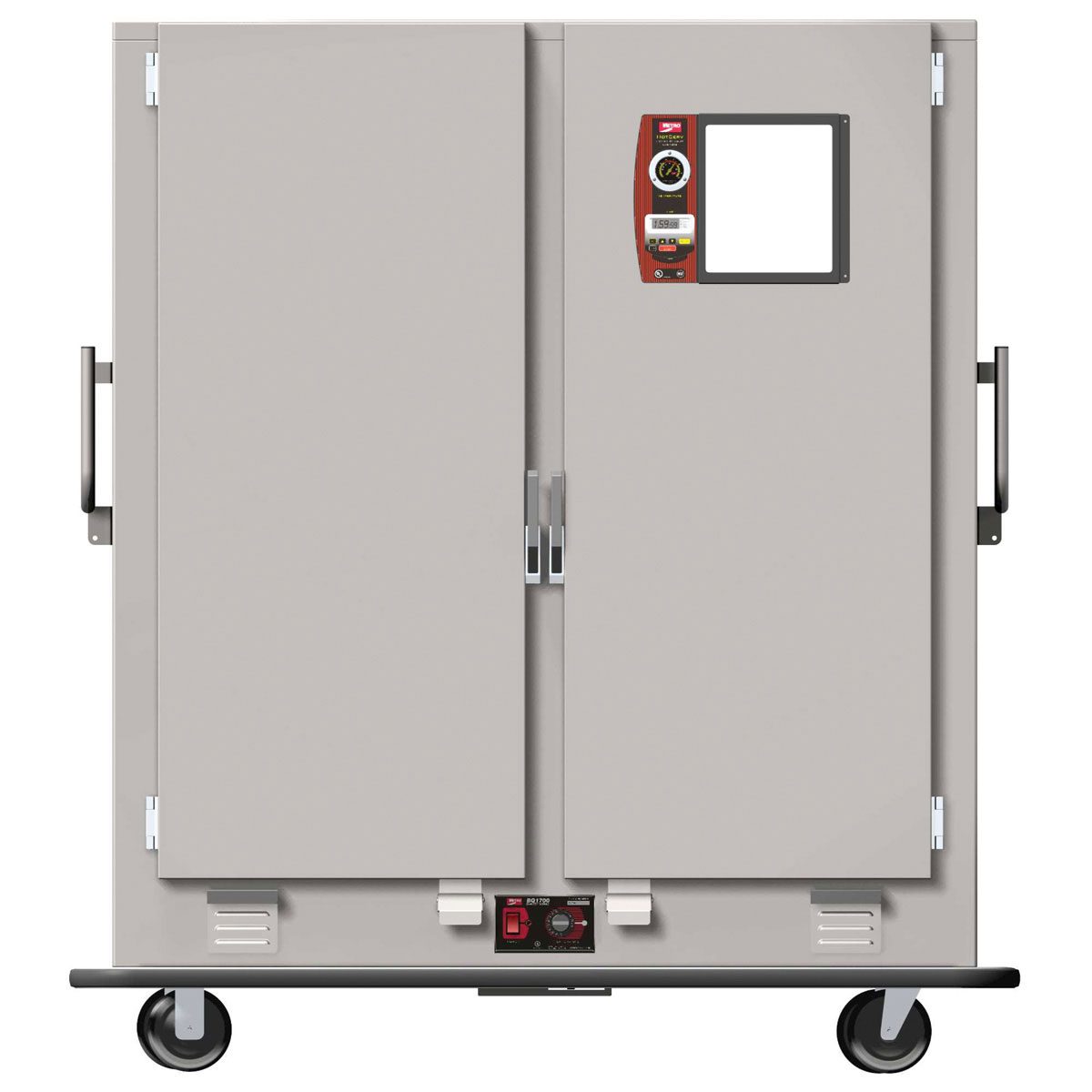
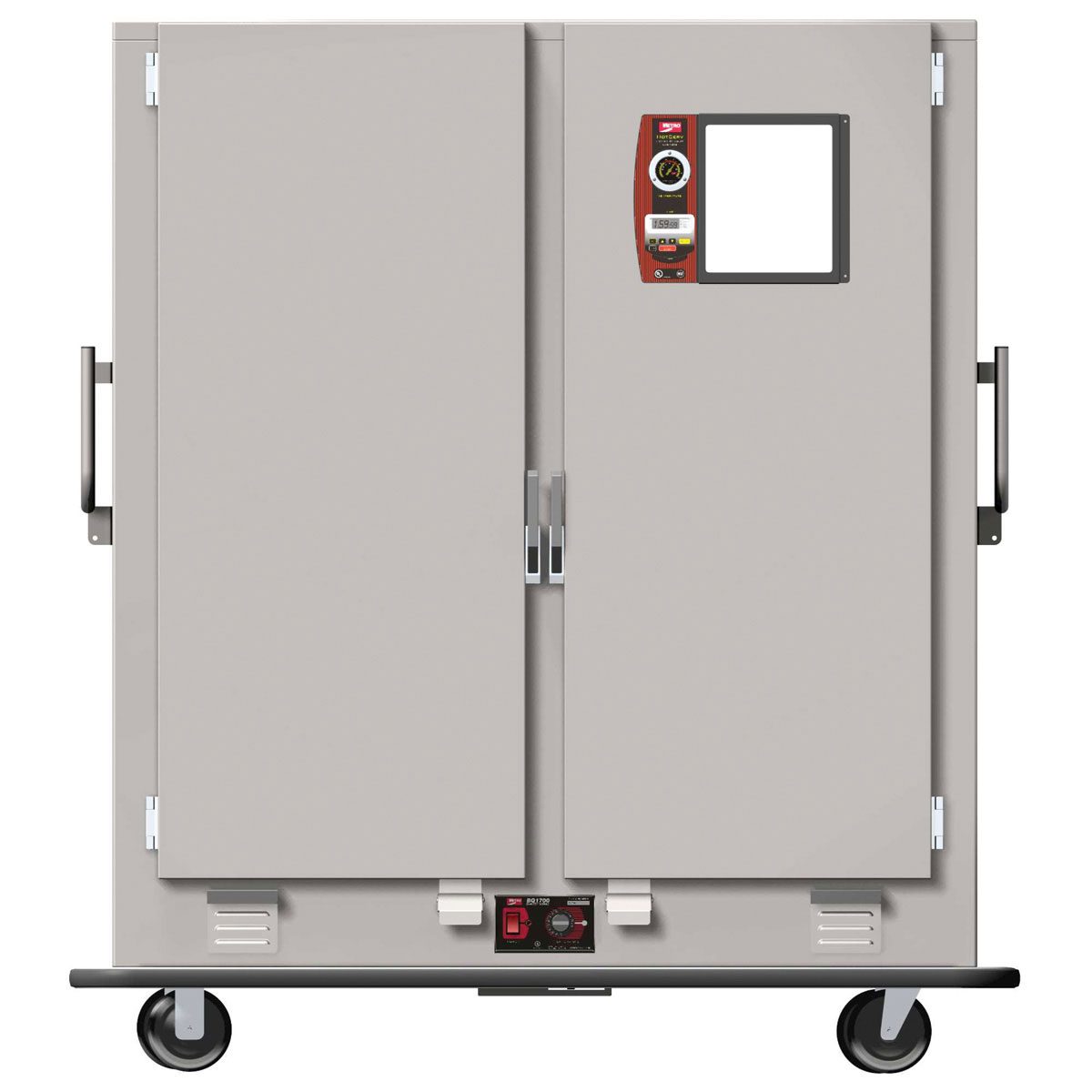
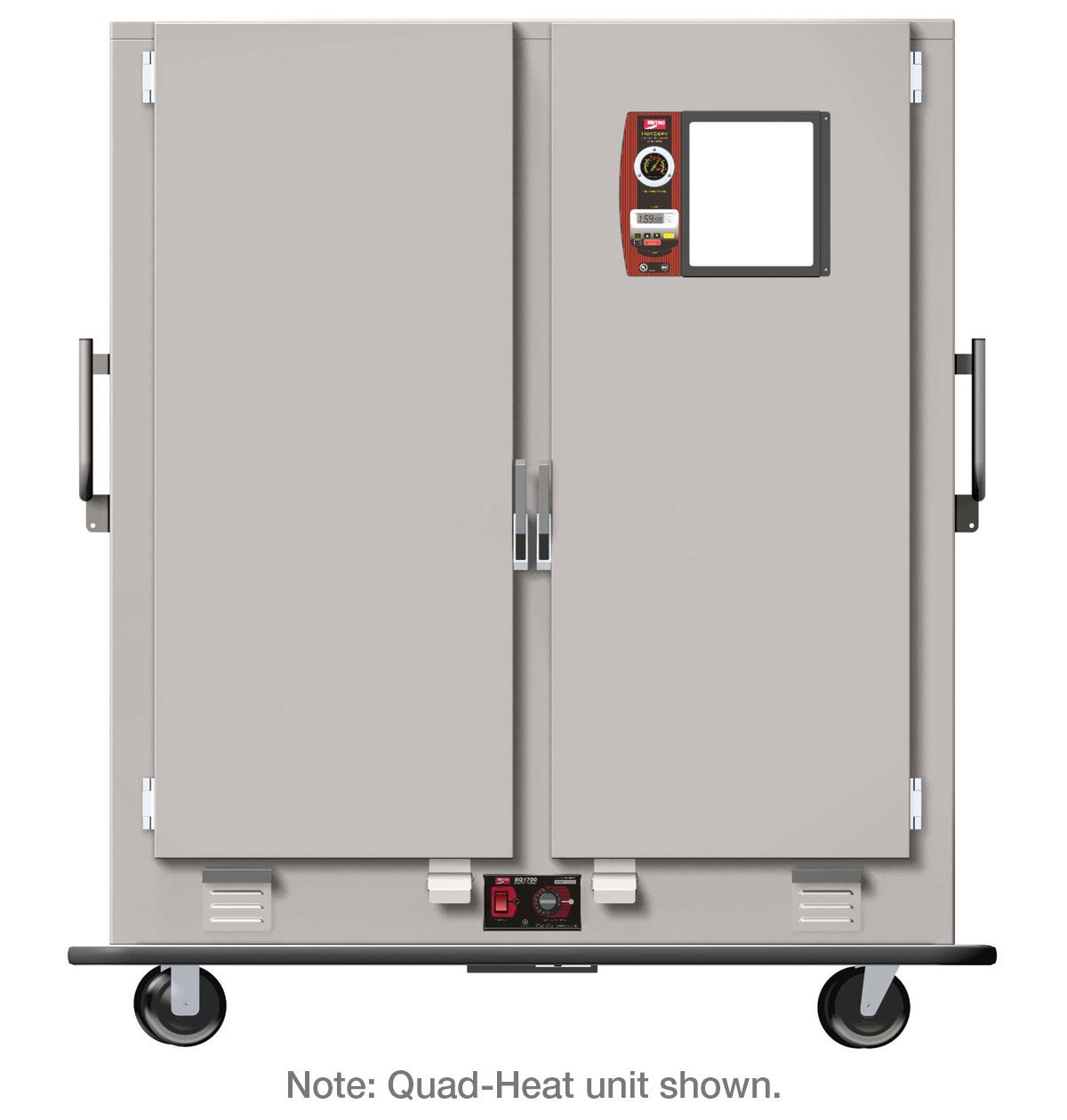
Shop Heated Holding & Banquet Cabinets Online
Buy select items directly from our online store, or request a quote for volume, custom sizes and freight-rated orders.
Related Pages
- Metro heated holding cabinets — the C5 line, series by series
- Commercial foodservice equipment — the full kitchen equipment catalog
- Hot food tables & serving lines — heated wells and serving systems
- Pan racks & transport carts — racks that feed roll-in cabinets
- Food service material handling solutions — back-of-house storage and handling
- K-12 school kitchen equipment — central production and satellites
- Hospital & senior living foodservice equipment — tray line and pantry holding
- Metro products — shelving, carts and holding equipment
- Contact MH-USA — talk to a specifier in Salt Lake City
- Metro C5 1 vs 3 vs 9 Series — which heated holding or proofing cabinet series fits your hold times
- Metro MBQ banquet cabinets & Mightylite carriers — plated banquet holding and insulated food transport
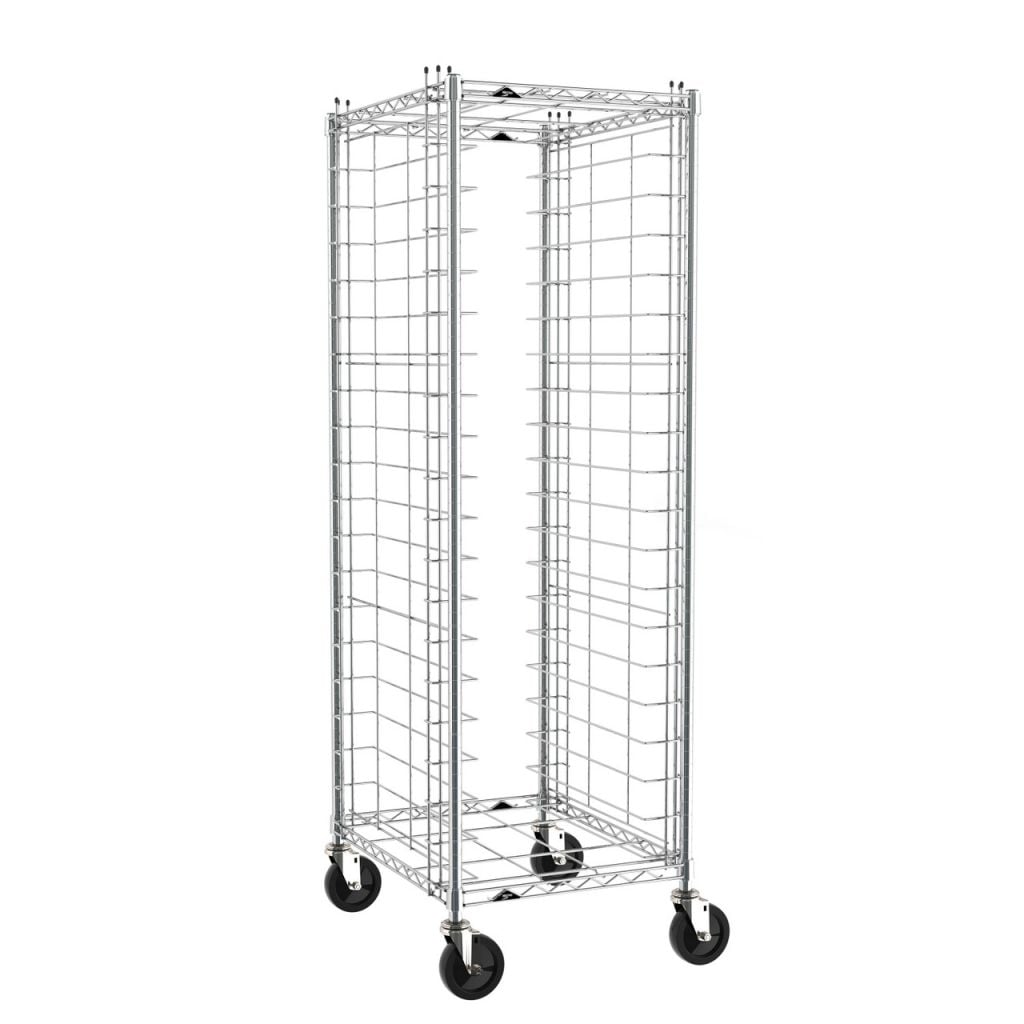
Pan racks and holding cabinets are a matched pair. If you are moving to roll-in cabinets, standardize the rack first — width, pan pitch and caster height must agree with the cavity.
Design & price it online: Metro Heated Holding & Proofing Cabinets BuildQuote
Configure C5 heated holding and proofing cabinets in our free Metro Heated Holding & Proofing Cabinets designer — build the layout, see a full bill of materials and save or send the quote in minutes. Need a different Metro product? Browse all 17 tools in the Metro designer hub.
Frequently Asked Questions
What does a heated holding cabinet actually do?
What is the difference between a heated holding cabinet and a proofing cabinet?
Do I need a humidity-controlled cabinet or is dry heat enough?
How do I size a holding cabinet by pan capacity?
What power does a heated holding cabinet need?
Do these cabinets carry sanitation or safety listings?
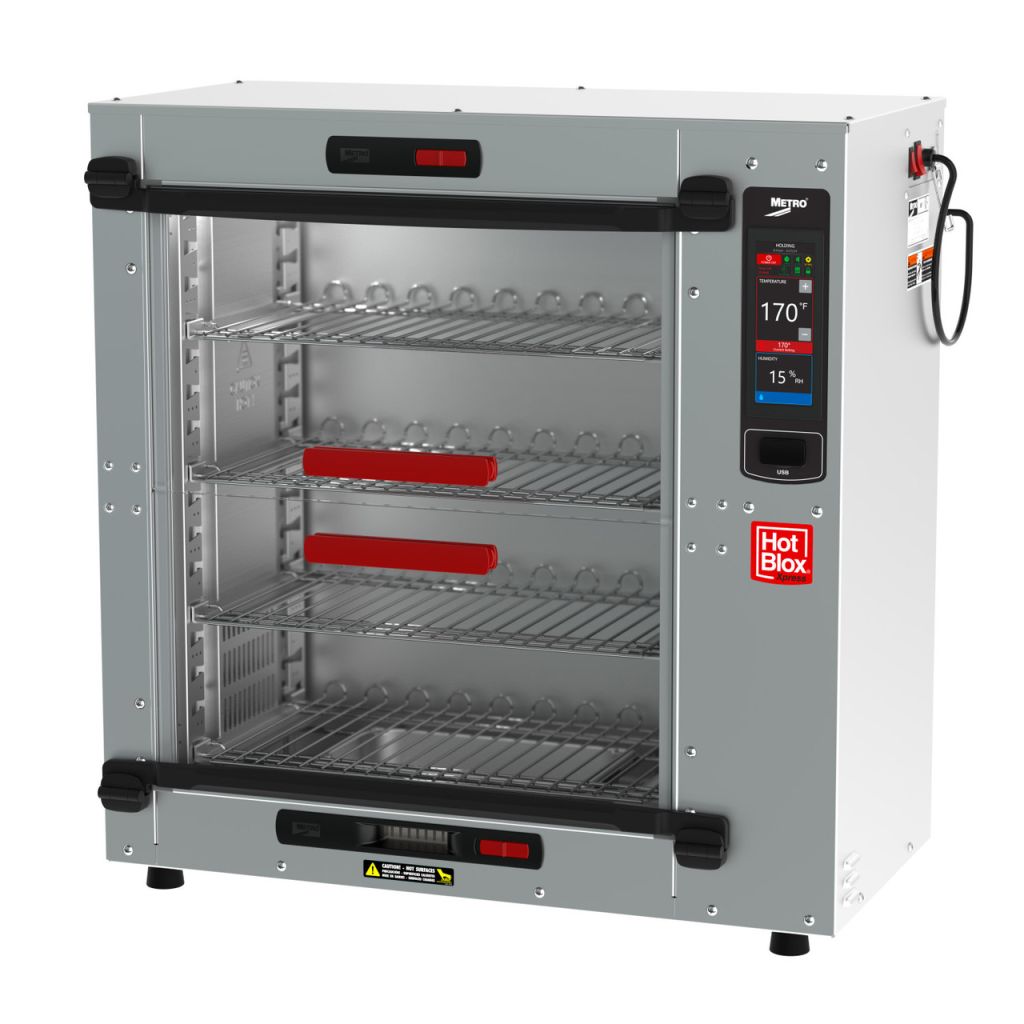
MH-USA has supplied foodservice storage and holding equipment from Salt Lake City since 1997 and ships nationwide. We represent Metro, and we quote holding, proofing, banquet and transport cabinets alongside the racks and shelving around them, so the pan standard, the rack, the cabinet and the route all agree. Call (800) 326-4403.
Get Your Heated Holding Cabinet Quote
Send us your pan standard, peak service count and delivery route. We will size the cabinet, confirm the power and plug, and quote it with freight.