
Metro C5 1 vs 3 vs 9 Series: Which Heated Cabinet?
A plain-English comparison of Metro C5 heated holding and proofing cabinets — insulation, controls, humidity, sizes and pass-thru doors — so you can match the series to the job, then design and price it in the Metro Heated Holding BuildQuote.
3
Core C5 tiers compared
3
Cabinet heights
2
Jobs: hold & proof
17
Metro online designers
One Cabinet Family, Three Levels of Performance
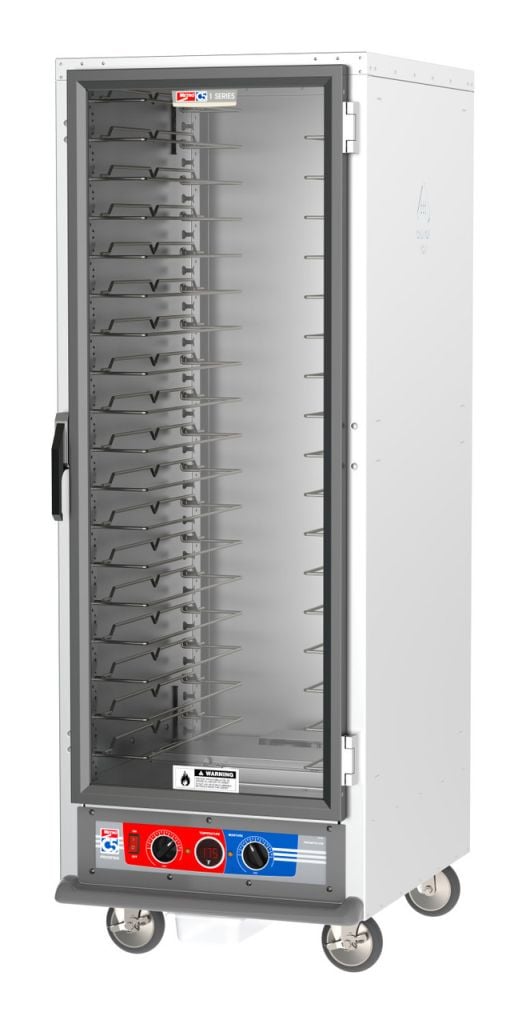
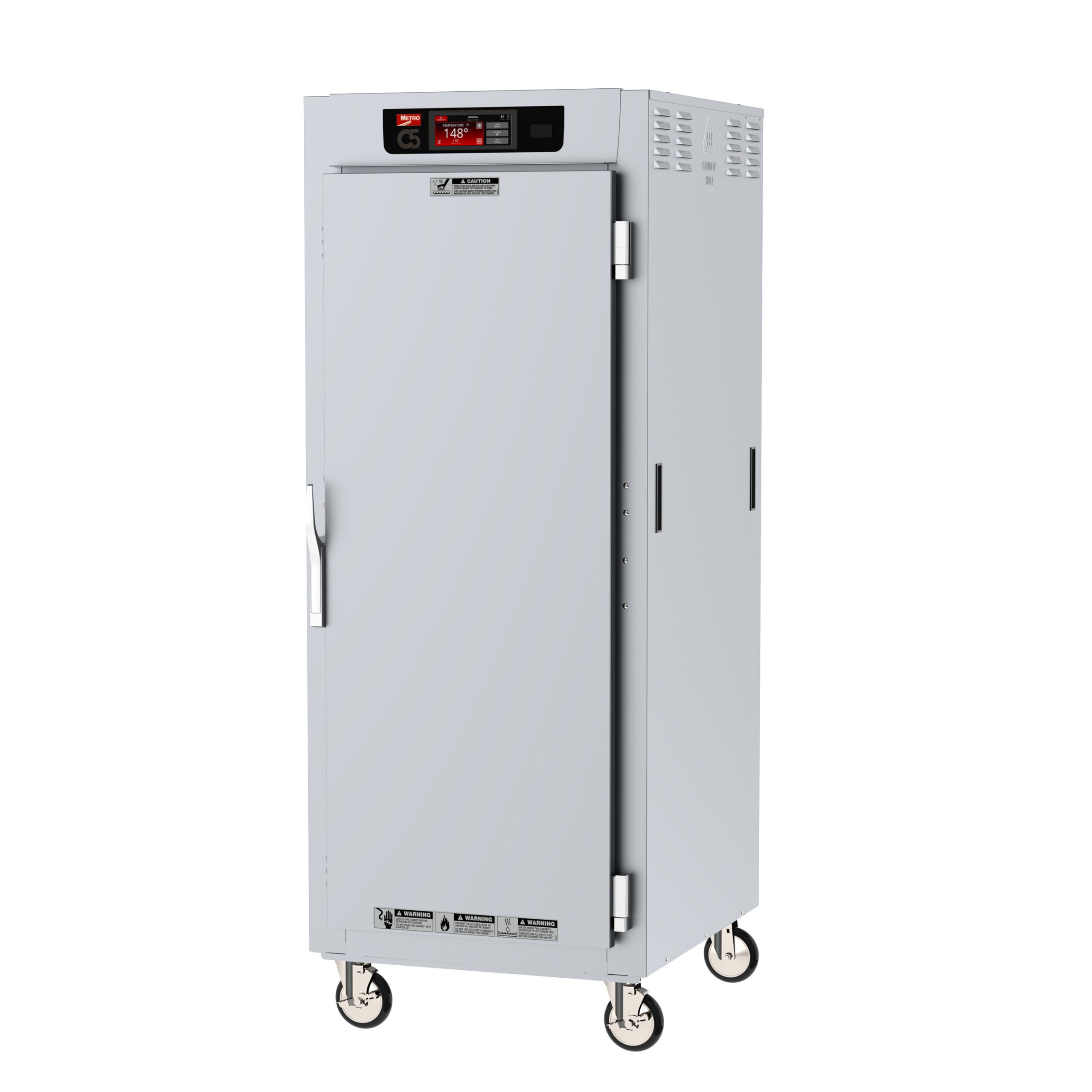
Metro’s C5 line covers almost every heated cabinet a kitchen buys: holding cabinets that keep cooked food at serving temperature, proofing cabinets that raise dough in warm humid air, and combination cabinets that do both. The series number is the quickest guide to performance. Lower numbers are lighter, simpler and less expensive; higher numbers add insulation, tighter control, better humidity management and, on the 9 Series, stainless construction with controlled humidity.
The question is never which series is best in the abstract. It is how long food is held, how often the doors open, whether you proof, and how hard the cabinet is used. A school kitchen that holds pizza for 20 minutes twice a day has different needs from a hospital tray line or a hotel banquet kitchen that holds proteins for hours.
We have supplied Metro food service equipment across the West from Salt Lake City since 1997. When you know what you need, the Metro Heated Holding & Proofing BuildQuote builds a valid configuration with freight to your dock.
C5 1 Series vs 3 Series vs 9 Series
| Feature | C5 1 Series | C5 3 Series | C5 9 Series |
|---|---|---|---|
| Positioning | Entry level, light to moderate use | Mid-range workhorse | Premium, heavy use and long holds |
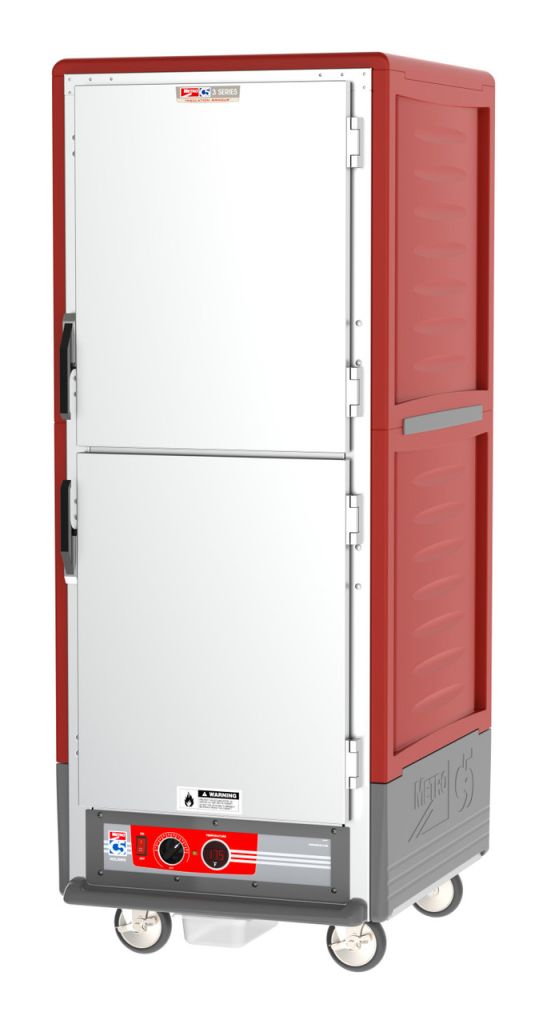
| Cabinet walls | Non-insulated aluminum | Insulated (Insulation Armour polymer) | Insulated stainless, controlled humidity |
| Typical jobs | Short holds, proofing in a bakery corner, school service | Daily holding and heat/proof combination use | Long holds of proteins, banquets, hospital and high-volume service |
| Temperature stability | Good with doors closed; drifts more with frequent opening | Steadier, faster recovery | Most even top to bottom and fastest recovery |
| Humidity | Proofing models use a water pan and heater | Moisture control on heat/proof models | Controlled-humidity holding and proofing |
| Energy use | Higher heat loss through walls | Lower, thanks to insulation | Lowest heat loss per hour of holding |
| Exterior temperature | Outside gets warm | Cooler to the touch | Cooler to the touch (confirm current spec sheet) |
Insulation is the line that matters most. A non-insulated 1 Series cabinet is perfectly good for short holds and for proofing, where gentle warmth and humidity are the goal and the doors are opened often anyway. Once food is held for longer than about an hour, or the cabinet sits next to a cold dish room or loading dock, the insulated 3 Series pays for itself in steadier temperature, lower energy use and food that does not dry out. The 9 Series is for operations where a cabinet runs all day, every day, and holding quality is part of the menu.
Between those three, Metro also builds other C5 series — for example insulated holding cabinets, transport cabinets and refrigerated cabinets — and the BuildQuote shows every current option. Exact features, controls and model numbers change over time, so we confirm the current spec sheet with every quote.
Holding, Proofing or Both?
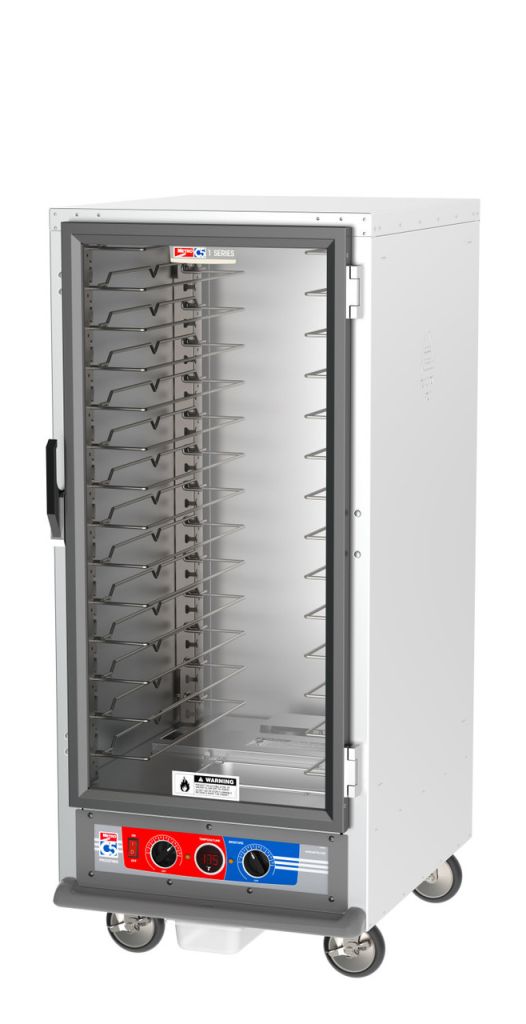
Holding needs dry or lightly humid heat at a safe hot-holding temperature. Proofing needs much lower heat and high humidity so yeast dough rises without a skin. A heat-only cabinet cannot proof well, and a proofing cabinet cannot hold hot food safely, so the choice is about your menu.
Combination heat/proof cabinets switch between the two. They suit kitchens that bake in the morning and hold in the afternoon, such as schools, cafeterias and in-store bakeries. If you proof all day and hold all day, two dedicated cabinets are more practical than one combination unit swapping modes.
Holding is not cooking
Heated cabinets hold food that is already cooked to temperature. Load food hot, keep doors closed between pulls and follow your local health code for minimum hot-holding temperatures and maximum hold times.
Pass-Thru Proofing and Holding Cabinets
A pass-thru cabinet has doors on both the front and the back. Cooks load from the kitchen side and servers or bakers unload from the other side, so the two teams never cross paths and the cabinet acts as a wall between back of house and the serving line. Pass-thru doors are offered on selected C5 models and sizes; the BuildQuote only shows door options that are valid for the cabinet you choose.
- Use pass-thru where a cabinet sits in an opening between kitchen and servery
- Check aisle space on both sides for the door swing
- Dutch (half) doors reduce heat loss when only part of the cabinet is accessed
- Clear doors let staff see product without opening the cabinet; solid doors hold heat better
- Choose door hinging so both doors open away from the busiest traffic
Sizing: Height, Pan Capacity and Mobility
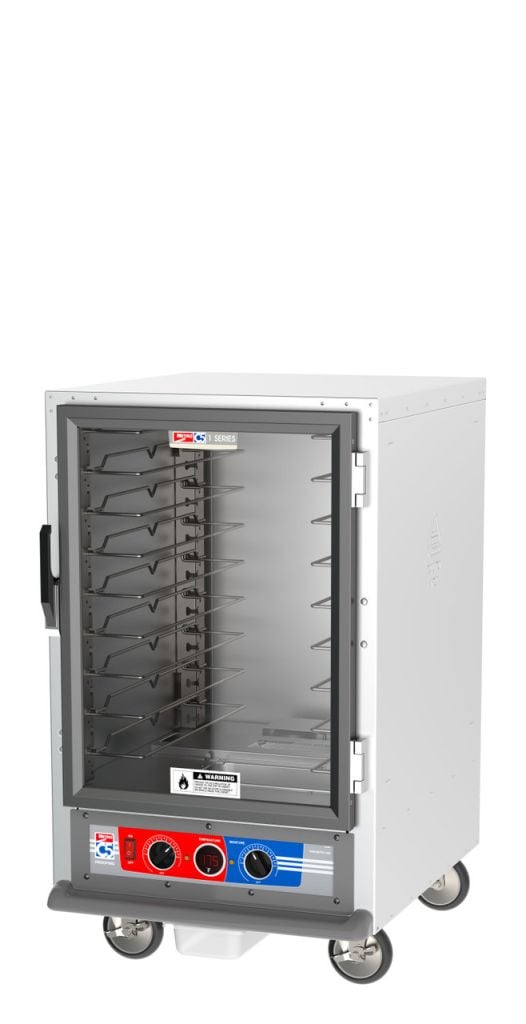 Half heightFits under a counter or on a work table; small batches.
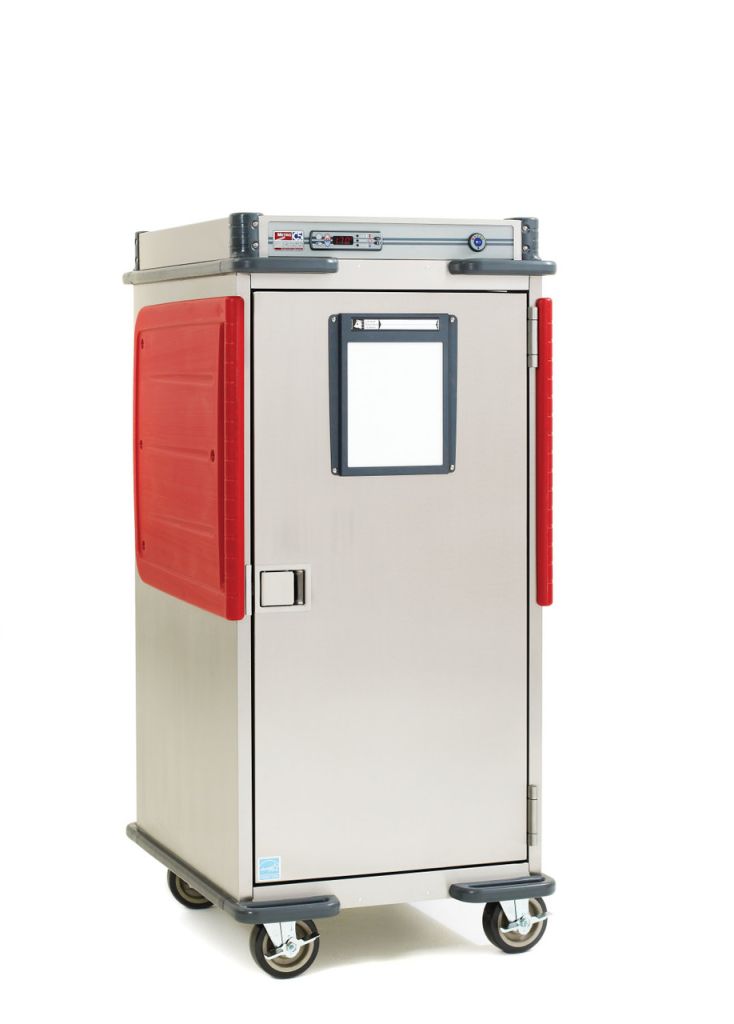 Five-sixths heightLower top for visibility while pushing.
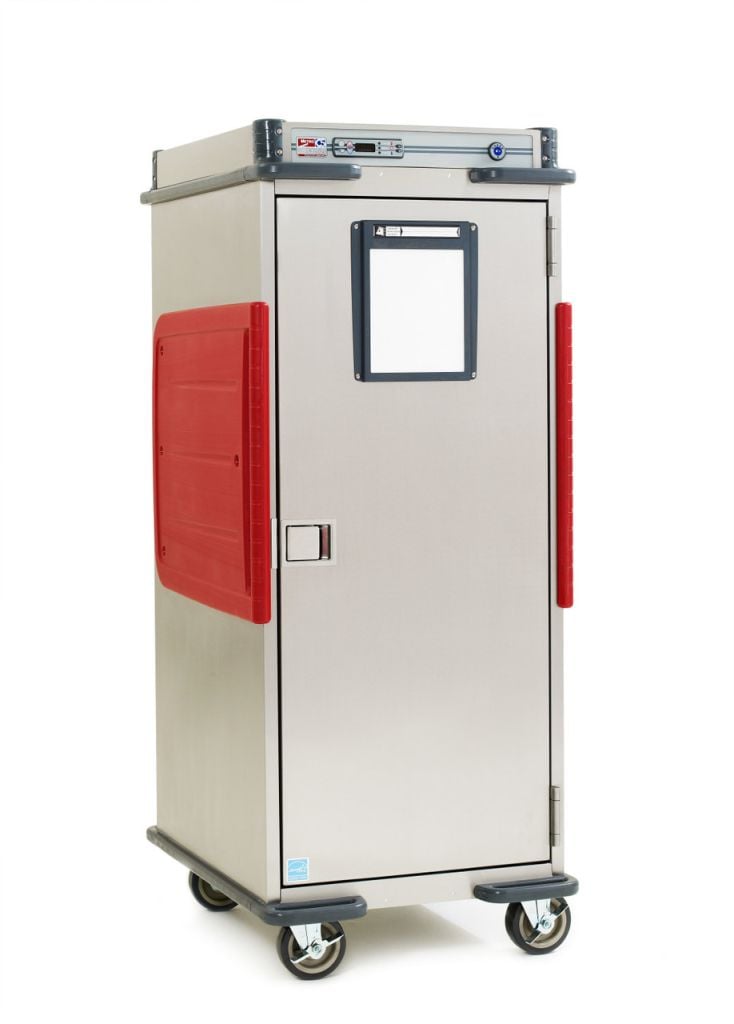 Full heightMaximum pans for tray lines and banquets.
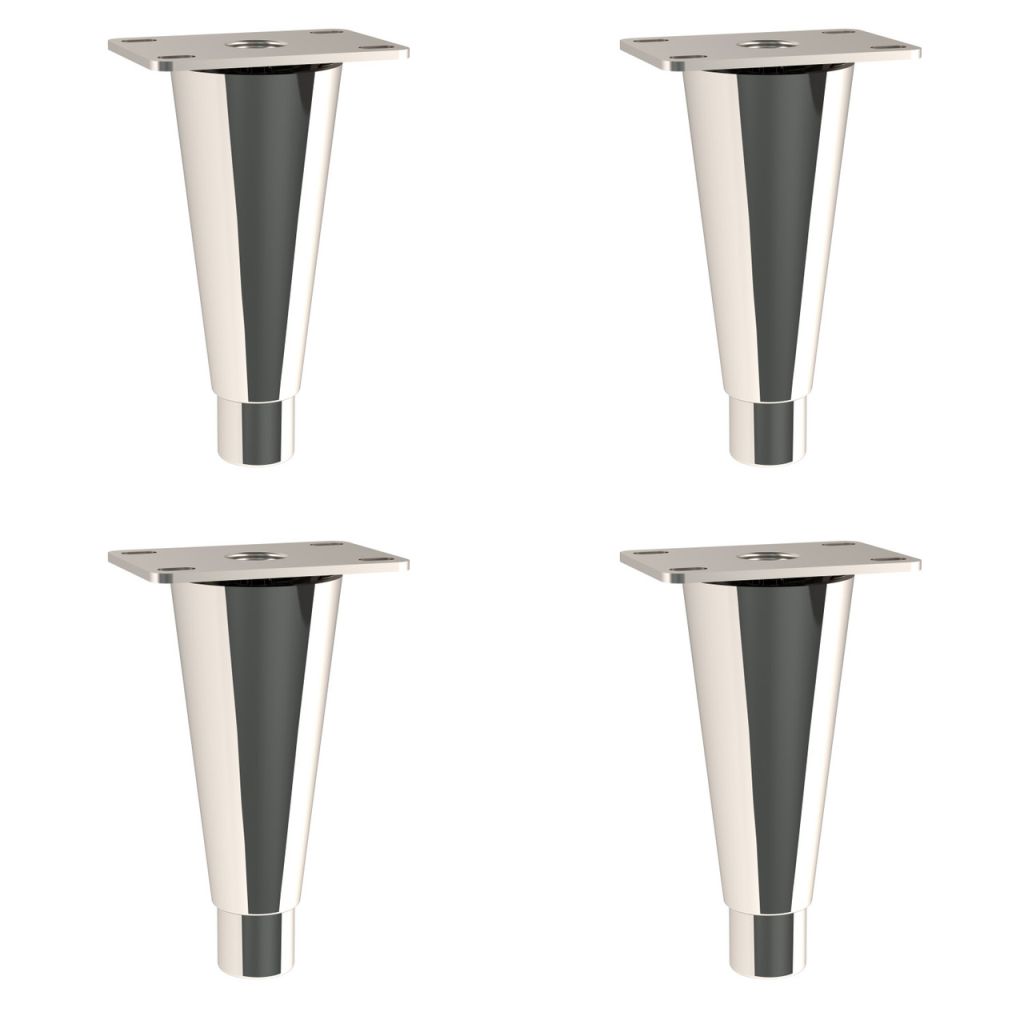
C5 cabinets are sold in half, three-quarter (or five-sixths on transport models) and full heights. Capacity is counted in sheet pans or hotel pans on universal slides, with slide spacing adjustable in small steps. Count the pans you hold at peak, not on average, then pick a height. Full-height cabinets give the most capacity per square foot of floor; half-height cabinets fit under a counter or beside the line. Casters are standard on most mobile models, and a stainless leg kit turns some cabinets into stationary units.
Electrical matters as well. Most C5 cabinets run on a standard 120 V plug, but some larger or faster-recovering models need a different supply. Check the outlet at the cabinet’s final position before ordering, and tell us if the cabinet will be plugged in at more than one location.
Design & price it online: Metro Heated Holding & Proofing Cabinets BuildQuote
Pick a C5 series, height, doors and controls, add slides, legs or casters, and the Metro Heated Holding designer validates the options, totals the order and rates freight to your ZIP. Save and share the quote with your chef or purchasing team.
Design & Price It Online All Metro Designers Call (800) 326-4403
Transport, Non-Powered and Refrigerated C5 Cabinets
When food has to travel, the C5 line adds transport cabinets: heated T-Series cabinets that can be plugged in at both ends of a route, non-powered insulated 4N cabinets for short runs, and refrigerated R-Series cabinets for cold food. For lighter, smaller loads, insulated HotBlox cabinets and countertop HotBlox Xpress quick-pick units cover the front of house. Our banquet guide covers MBQ banquet cabinets and Mightylite carriers.
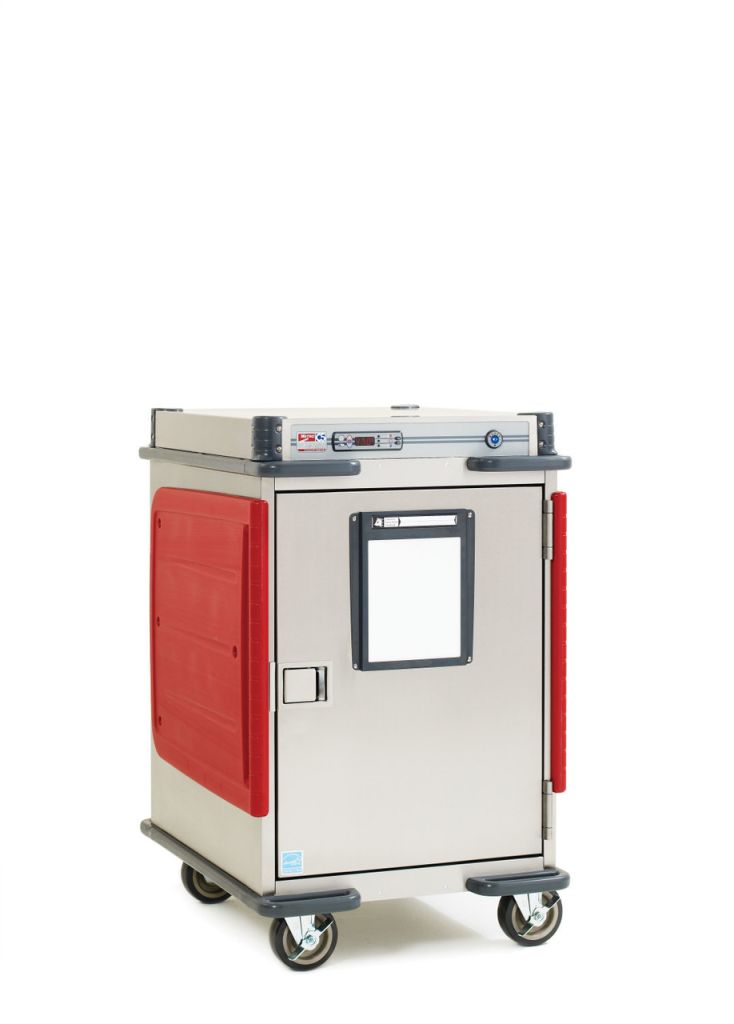 C5 T-Series half heightHeated transport for small loads.
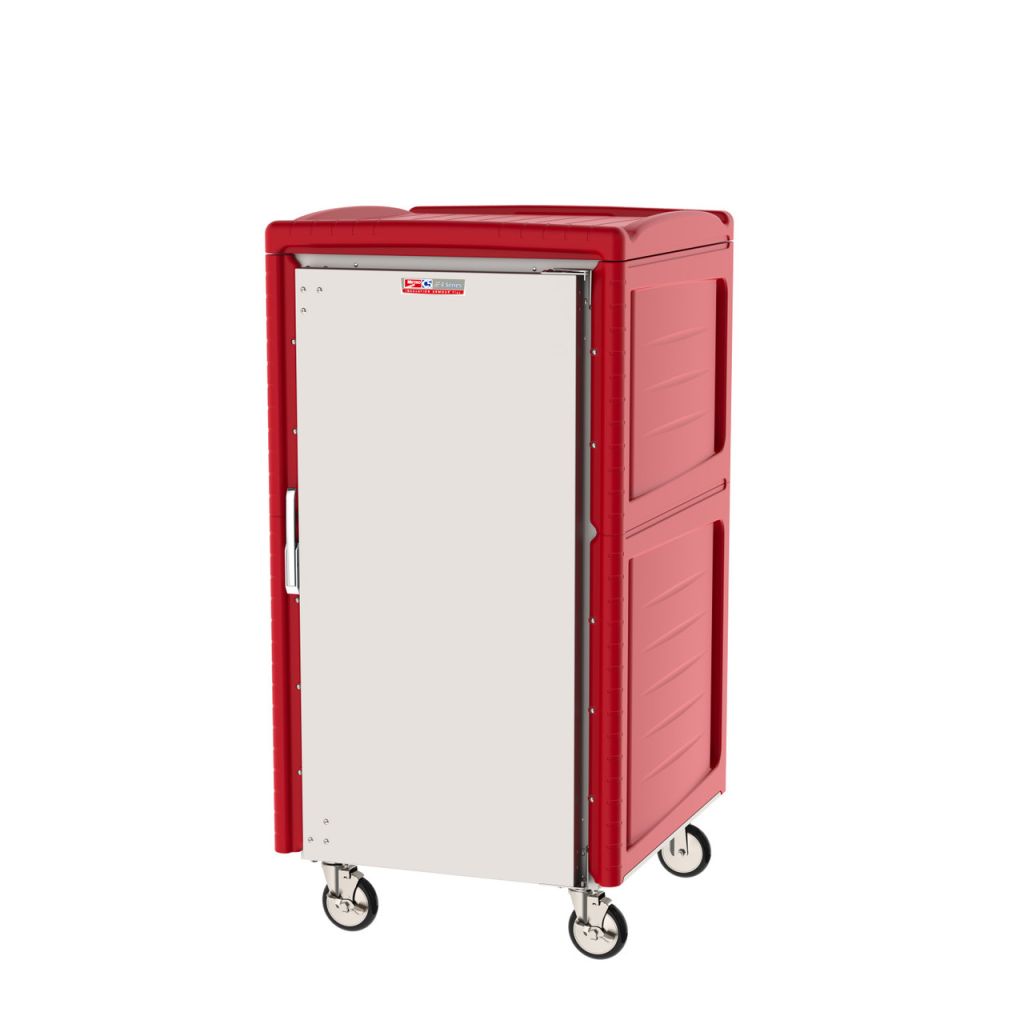 C5 4N five-sixthsNon-powered insulated transport.
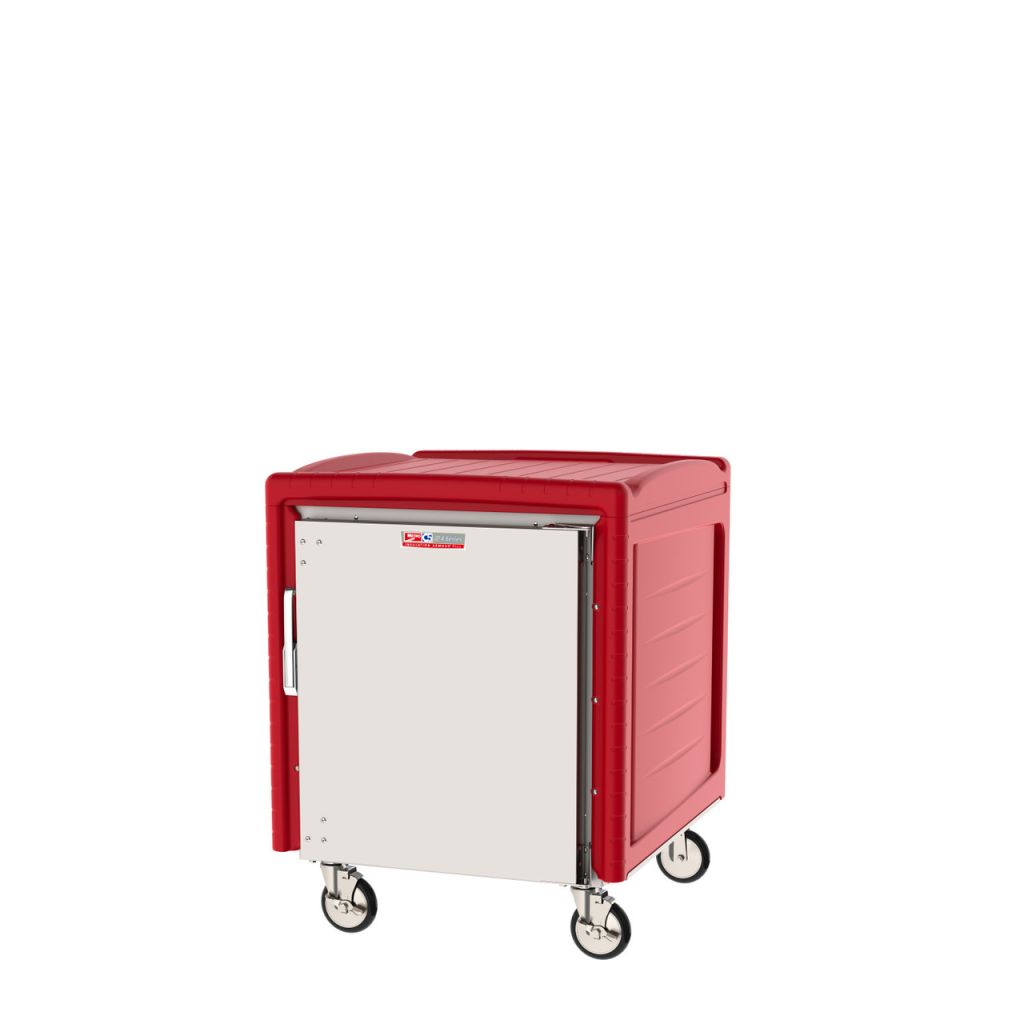 C5 4N half heightCompact non-powered cabinet.
 C5 R-SeriesRefrigerated transport cabinet.
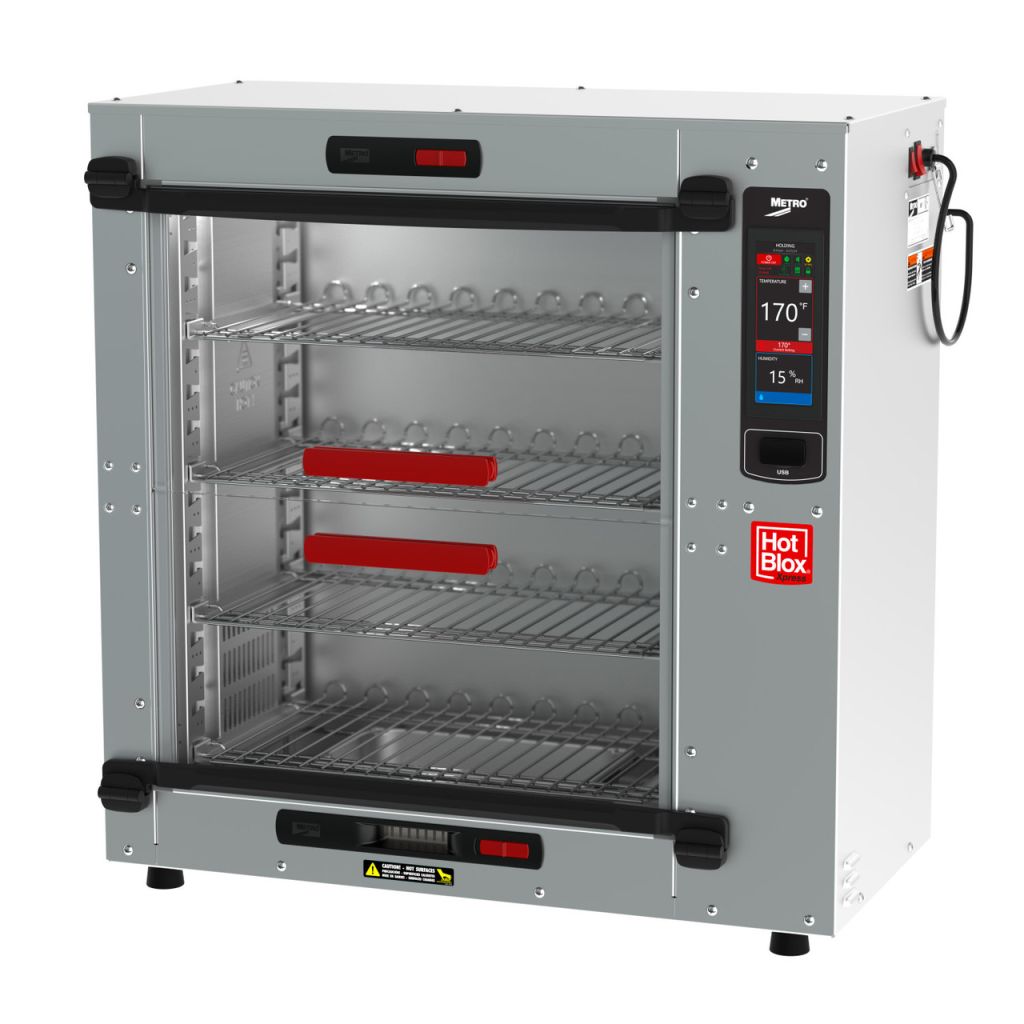 HotBlox XpressCountertop quick-pick holding.
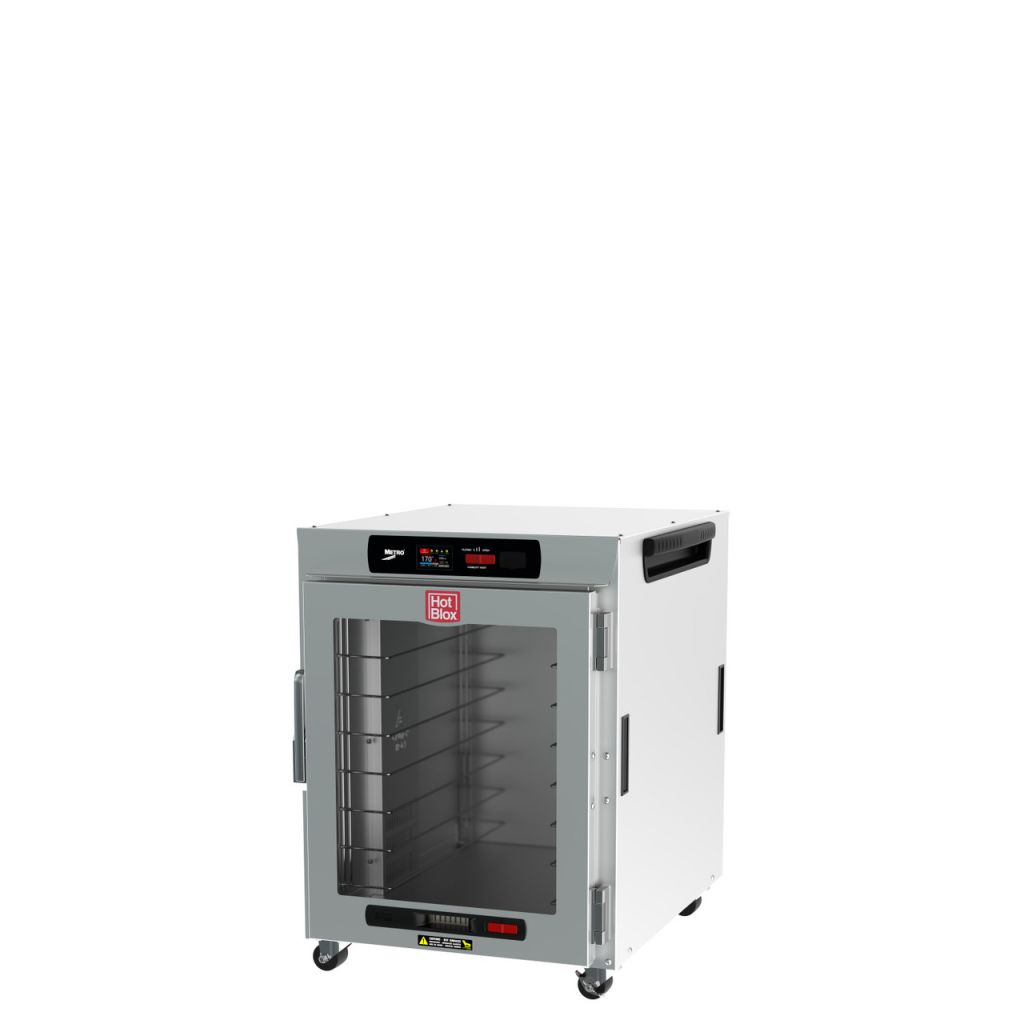 HotBlox undercounterInsulated holding under the line.
Quick Recommendations by Operation
| Operation | Usual pick | Why |
|---|---|---|
| School cafeteria, short holds | C5 1 Series or a 1 Series heat/proof cabinet | Short holds and morning proofing; budget friendly |
| Restaurant, daily holding | C5 3 Series | Insulated, steady temperature, lower running cost |
| Hotel banquet kitchen | C5 9 Series or 3 Series plus MBQ | Long holds and frequent loading |
| Hospital tray line | C5 3 or 9 Series, full height | All-day holding with consistent quality |
| In-store or wholesale bakery | Dedicated proofing cabinet, often pass-thru | High humidity and continuous proofing |
| Catering and off-site | C5 T-Series or 4N plus carriers | Food travels and may wait at the venue |
If you are torn between two series, look at the hold time and the number of door openings per hour. Long holds and frequent openings both favour insulation and faster recovery. Short holds with doors closed most of the time rarely justify the step up.
Getting the Best Results From Any C5 Cabinet
- Pre-heat. Turn the cabinet on 30 to 45 minutes before loading so the walls and slides are up to temperature.
- Load hot, load full. Food should already be at serving temperature; a full cabinet recovers faster than a half-empty one.
- Keep the water pan topped up on humidity and proofing models, and use the humidity setting to stop food drying out on long holds.
- Space the pans. Leave a slide gap between pans so warm air circulates, especially with covered hotel pans.
- Limit door openings. Pull in batches and use Dutch doors where only part of the cabinet is accessed.
- Clean daily. Remove slides, wipe the interior with mild detergent, drain and dry the water pan, and check door gaskets for tears.
Most complaints about a heated cabinet are really about how it is used. Dry, tough food usually means humidity is off or the hold is too long; uneven temperature usually means the cabinet is overloaded or the doors are open for long periods. If those habits are in place and a lower-tier cabinet still cannot keep up, that is the clearest signal to step up a series. A worn door gasket or a scaled-up water pan heater will also slow recovery, so add both to your weekly checks.
Shop Metro Heated Cabinets Online
Buy select items directly from our online store, or request a quote for volume, custom sizes and freight-rated orders.



Metro C5 Series FAQ
What is the difference between Metro C5 1, 3 and 9 Series?
Is an insulated C5 cabinet worth it?
Can a C5 cabinet both hold and proof?
What is a pass-thru proofing cabinet?
What sizes do C5 cabinets come in?
What power do C5 cabinets need?
How long can food be held in a C5 cabinet?
Can I price C5 cabinets online?
Choose Your C5 Cabinet
Design it in the Metro Heated Holding BuildQuote or ask a specialist to match a series to your menu and hold times. Call (800) 326-4403 or request a quote online.