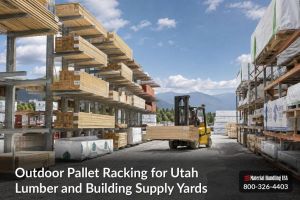
Utah requires site-specific snow load engineering for outdoor racks. At or below 4,239 feet mean sea level, the minimum ground snow load is 28 psf, and higher sites need local values, not a generic rack rating.
That matters in a rental yard because a rack that looks fine on paper can still fail the test, which is winter accumulation, drift, access traffic, and the way your site is built. For Utah equipment rental yards, the right choice starts with the yard, not the catalog.
Understanding Utah Outdoor Storage Needs
A Utah rental yard in January can change fast. A bay that was open in the morning can be packed with crusted snow by afternoon, and a rack that handled summer traffic can become harder to use once plows, forklifts, and rental returns all share the same aisle. That is why a snow load rated outdoor rack for Utah equipment rental yards has to be treated as a site system, not just a piece of steel.

Rental operators in Salt Lake County, Utah County, and the Wasatch Front often need outdoor storage that can handle quick turnarounds. That usually means machines coming in dirty, wet, and oversized, then leaving again with little staging time. A yard like that needs strong access, clear load paths, and a rack that still performs when snow sits on every horizontal surface.
What fails first in winter
The weak point is rarely the product brochure. The main problem is that many buyers focus on stored weight and ignore the weather load sitting on the frame itself. If the structure isn't designed for the site, the rack can become the bottleneck even when the equipment itself is easy to store.
A practical yard manager looks at three things before buying. First, what comes through the gate every day. Second, how often the team needs to move it. Third, whether the structure can stay stable when snow and freeze cycles hit at the same time.
Practical rule: If a rack will sit outdoors in Utah, assume the site conditions matter as much as the machine weight.
For buyers comparing options near Salt Lake City, the Salt Lake pallet rack hub is a useful starting point for broader storage planning, especially when outdoor and indoor zones need to work together.
What Utah Rental Yards Typically Store and Handle
Most rental yards don't store one type of item. They handle a mix of compact machines, attachments, palletized parts, fuel-related accessories, and long materials that don't fit neatly on standard shelving. That mix is what makes a Utah yard harder to design than a simple warehouse row.
The inventory mix changes the rack choice
Skid steers, mini excavators, generators, attachments, hoses, pipe, and bundled materials all create different load shapes. Some items sit low and dense. Others need long open arms or wider bays so operators can stage them without forcing a second move. If the yard also handles seasonal return traffic, the storage system has to stay readable even when snow, mud, and ice make the floor less forgiving.
A good yard plan separates fast-moving rental assets from slower storage. That keeps the most requested units near the gate and leaves deeper bays for items that don't turn as often. It also helps reduce the kind of cross-traffic that slows a crew down during morning rush periods.
What the team needs from the rack
The rack should do more than hold steel upright. It should help crews see what's available, load faster, and avoid the pileup that happens when outdoor storage turns into informal stacking. In practice, that means choosing a layout that supports the exact mix on hand, not the mix a catalog photo shows.
For long materials, the cantilever rack designer is often the right planning tool because it helps match open-arm storage to real yard inventory. For mixed rental operations, that same logic applies to attachments and irregular loads that need side access.
A rental yard works best when the storage system matches how the crew moves. If the team handles machines with forks in the morning and long stock in the afternoon, the layout has to support both without forcing constant reshuffling.
Comparing Outdoor Racking Configurations
A rack can carry its listed load and still be wrong for a Utah rental yard. Product ratings describe the rack under defined conditions. They do not replace site-specific snow-load engineering, especially when elevation, exposure, drainage, and anchorage change the demand on the structure.
| Racking Type | Best For | Load Capacity | Weather Resistance |
|---|---|---|---|
| Outdoor pallet racking | Mixed rental parts, boxed items, and palletized accessories | Suitable for organized loads when engineered correctly | Performs outdoors when drainage and site exposure are addressed |
| Cantilever racking | Pipe, lumber, conduit, and other long stock | Handles awkward lengths, depending on arm and base design | Performs well with suitable finish and anchorage |
| Heavy-duty custom outdoor rack | Large machines, mixed equipment bays, and unusual layouts | Suited to irregular loads and higher structural demand | Provides the most site-specific control when engineered correctly |
Pallet-style systems keep smaller, structured inventory orderly. Cantilever gives operators open access to long stock. Custom frames make sense when equipment dimensions, snow exposure, or handling methods fall outside standard configurations. Each option has a cost and access trade-off, so choose around the yard's actual work rather than a catalog label.
Elevation-based Utah snow requirements should guide the comparison from the start. A rack rated for a stated product load may still need different framing, bracing, anchorage, or bay spacing for its specific site. The structural pallet rack category can help buyers understand heavier framing, while the cantilever rack designer helps match arm storage to long or irregular inventory.
Confirm the site design with the applicable engineering requirements before ordering. A strong outdoor rack fits both the stored load and the snow demand.
Planning Layouts, Access, and Sizing
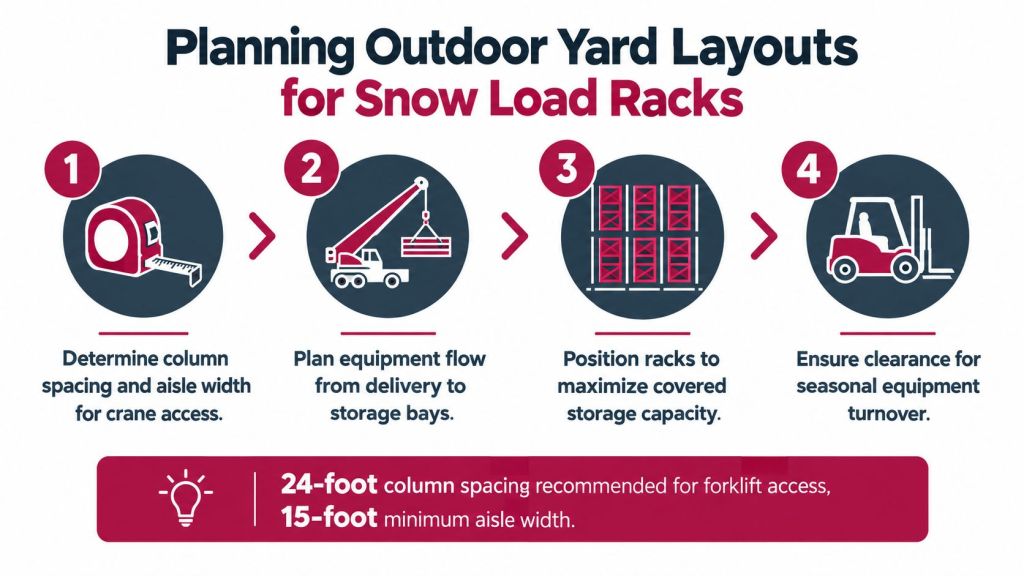
Good rack selection gets wasted if the layout fights daily movement. In a Utah rental yard, the aisle plan has to work for forklifts, service trucks, seasonal returns, and whatever else shows up during a storm. If the rack blocks turning or forces a machine to back out awkwardly, the yard slows down fast.
Measure the flow before you order
Start with the biggest item you plan to store, then trace how it enters, turns, and exits. That often reveals where the rack can sit and where it can't. A bay that looks large enough on paper may become too tight once you account for poles, snow piles, and turning room.
The cleanest layouts usually keep the most active items closest to the working lane. That shortens travel time and cuts the chance of operators weaving through parked inventory. It also makes winter cleanup easier because the crew doesn't have to move everything just to clear a path.
Keep access simple
If the yard relies on forklift access, the spacing has to support the machine, not just the product. Tight layouts may look efficient, but they often make the yard harder to run in cold weather. Wider paths are usually easier to manage because they leave room for slow movement, visibility, and snow buildup.
The best layouts also separate receiving from long-term storage. That avoids the common problem where returned equipment blocks new outgoing rentals. When the site is busy, that separation saves more time than squeezing in one extra bay.
A good rule for quote requests is to send a site sketch, the largest item dimensions, and the daily access pattern. That gives the supplier enough detail to shape the rack around the workflow instead of guessing at it.
Utah Code, Snow Loads, and Safety Requirements
A rack can meet its catalog load rating and still be wrong for a Utah rental yard. The deciding question is whether the complete installation, including its frame, bracing, anchors, foundations, and connections, has been evaluated for the site's snow exposure and elevation.
Utah's code framework treats snow as a structural design condition. Projects at or below 4,239 feet mean sea level use a minimum ground snow load of 28 psf, while higher sites require location-specific values from the Utah Snow Load map or the ASCE Hazard Tool. The state's design criteria also identify IBC 2024/ASCE 7-22 on July 1, 2026 for adopted commercial construction provisions. The snow load program uses 50-year ground snow load estimates with a 2% probability of exceedance. Review the official code and design criteria page for the governing framework.

Why site engineering beats generic ratings
A vendor's arm-strength or product-capacity figure describes a component or configuration. It does not establish that the installed rack can handle drifting snow, wind, seismic forces, anchorage demands, or winter accumulation at a specific yard. A snow-load-rated label is only a starting point.
Utah also connects roof snow design with ASCE 7 Chapter 7. If the rack functions as a roofed or snow-supporting structure, the review should cover the full load path. For rental operators, that means checking the steel, base connections, bracing, concrete, and foundations together rather than approving a frame from its product rating alone.
What to review before you approve a quote
Ask the quote to identify the site location, intended equipment loads, snow-load basis, anchorage method, and required clearances. It should state whether elevation or exposure calls for added bracing, deeper footings, stronger connections, or a different bay arrangement. Missing engineering assumptions leave the buyer with an incomplete design.
Use this Utah construction code overview to check broader local-code considerations that may affect an outdoor storage project. For frame comparisons, review the structural rack category alongside the project's engineering requirements. Structural-duty construction may suit demanding equipment, but the category itself does not replace site-specific calculations.
The approval standard is straightforward: match the rack and foundation to the actual Utah site before fabrication or installation. Snow and seismic requirements must be addressed together, with the elevation-based code value and the complete load path documented in the quote.
Installation, Lead Times, and Service Support
Outdoor rack projects move faster when the site is ready before the order is placed. Clear photos, a simple sketch, and the intended storage mix help narrow the design early. That reduces the back-and-forth that usually slows down purchase approval.
What happens before delivery
A solid project starts with layout review. The buyer should confirm where the rack will sit, how the equipment will enter, and what clearances are needed for daily use. The supplier then matches the configuration to the site instead of pushing a one-size-fits-all setup.
Delivery timing can vary by size and design, so common sizes may be available at select manufacturers subject to confirmation. That's why it helps to settle the layout first. If the rack needs custom engineering, the project takes a more deliberate path than a simple catalog order.
What support actually helps
The most useful support is practical, not promotional. It includes a layout review, a clear bill of materials, and engineering coordination where needed. It also includes site questions about drainage, anchorage, and access paths before installation day.
Material Handling USA can help with layout review, quote support, and product selection for outdoor yard projects, but the buyer still needs to confirm site conditions and final engineering requirements. That keeps the process grounded in the actual yard rather than a generic product page.
Best practice: Ask who is checking the site conditions before the rack is released for fabrication.
A clean installation also depends on the yard crew. If the surface isn't ready or the access path is blocked, even a well-built system can sit in limbo. The better the prep, the fewer surprises after delivery.
How to Choose the Right Rack for Your Utah Yard
The right answer depends on who is buying and what the yard does every day. A seasonal rental yard doesn't need the same setup as a year-round operation serving multiple crews and equipment classes. The decision should follow the work, not the other way around.

Match the rack to the scenario
A smaller seasonal yard often benefits from a simpler layout with open access and room to expand later. A larger year-round facility usually needs a stronger engineered frame, more defined bays, and a clearer separation between receiving and storage. If the operation handles long materials, cantilever-style storage usually makes more sense than forcing those items onto pallet positions.
Budget also matters, but it should not override code and access. A lower-cost layout that slows the yard down can cost more in labor and rework than a better planned system. That's especially true when winter weather makes every mistake harder to fix.
Ask the right questions before you request a quote
The buyer should know the equipment mix, the largest load, the site elevation, and the daily access pattern. They should also know whether the storage area is exposed or partially shielded. Those details drive the engineering and help the supplier recommend the right configuration.
If you're comparing designs for a rental yard, think in terms of workflow first. The best rack is the one that keeps equipment visible, protected, and easy to move in bad weather. That is what keeps the yard productive through the season.
Frequently Asked Questions About Outdoor Racking
Can standard indoor rack be used outdoors in Utah?
Usually not without major design changes. Indoor rack isn't built for the same combination of snow, wind, temperature swings, and exposure that Utah yards face. Outdoor use needs a structure designed for site conditions, anchorage, and drainage.
Is a snow-load rated label enough by itself?
No. The label only tells part of the story. The decision depends on elevation, exposure, framing, anchorage, and how the rack is used on site. Utah code makes the site matter, not just the product name.
What should I send when I request a quote?
Send the site location, the type of equipment you store, the largest load, and a simple sketch of the yard. Add any access limits, like tight turns, one-way traffic, or seasonal plowing routes. That gives the supplier a real starting point.
Do outdoor racks need special foundations?
Often, yes. The base has to match the load, the soil, and the site conditions. A strong frame on the wrong footing is still a weak system, especially outdoors.
How do I know if cantilever is better than pallet rack?
Use cantilever when the load is long, awkward, or better handled from the side. Use pallet-style storage when the inventory is more regular and easier to stack. Mixed rental yards often need both in different zones.
What about permits and code review?
Don't assume the yard is exempt because it's outdoors. A structural rack can still trigger code review, especially when snow load and seismic requirements affect the design. That's why the project should be reviewed before fabrication starts.
Can I get a layout review before I buy?
Yes, and that's the smartest way to start. A layout review helps spot access problems, spacing issues, and load mismatches before the order is set. It also helps avoid expensive changes later.
Material Handling USA helps buyers compare outdoor rack options, request a layout review, and move from rough ideas to a usable plan for Utah yards. If you're sizing a snow load rated outdoor rack for Utah equipment rental yards, start with the site, the load, and the workflow, then request a quote that reflects all three. Visit Material Handling USA to connect the project details with a practical layout and get the next step moving.