If you run a Utah lumber yard or building supply yard, the bottleneck is usually not inside the building. It is outside, where pallets of shingles soften in wet weather, long bundles wander on uneven ground, and the loader spends half its shift working around product instead of moving it. Outdoor pallet racking for Utah lumber and building supply yards fixes that only when it is treated as a complete yard system. The rack, the footings, the drainage, the wind load, and the traffic pattern all have to be designed together.
That matters in Utah because the yard has to work in dry heat, heavy snow, freeze-thaw cycles, road salt, and strong open-site wind. A galvanized frame will not fix a bad layout, and a clean layout will not stay safe if the anchors, slab, or footings are undersized. This guide walks through what to store on which rack, how to size the yard for your equipment, what Utah code and weather demand, and what to ask before you sign a purchase order.
Why Utah Lumber and Building Supply Yards Need Outdoor Pallet Racking
Most yards start with ground stacking because it costs nothing. It works until the yard fills up. Ground piles eat space fast, hide inventory, and put every bundle in the path of the forklift. When the same yard has to handle framing lumber, palletized building materials, and contractor pickups at 7 a.m., loose piles turn the site into a maze.
Outdoor racking gives the yard a fixed structure. It separates stock by product family, keeps forklift traffic out of the piles, and frees up footprint for loader turns and truck staging. It also gets product off the ground, where standing water and mud do the most damage.
What changes when the rack goes outside
Indoor rack is mostly about density and pick speed. Outdoor rack in Utah is about keeping product accessible while resisting moisture, wind, and ground movement. That means the steel finish, the anchors, and the base all have to be planned as one system, not one at a time. For the racks inside your warehouse or store, see our guide to indoor lumber and building materials storage racks.
Practical rule: if the yard surface moves, drains poorly, or freezes hard, the rack design has to account for that before the first bay is set.
A fixed home for each product also gives the crew a visible inventory map. Once long stock, pallet loads, and mixed goods each have a bay, the team spends less time hunting and more time loading. That is where a good rack plan pays back in daily flow, not just in storage capacity. Our outdoor pallet racking in Utah page covers snow load, roof canopies, and galvanized finish options in more depth.
What a Utah Lumber and Building Supply Yard Actually Stores
Utah yards rarely store one product type. A real mix often includes dimensional lumber, LVL and I-joists, plywood and OSB bundles, PVC and steel pipe, rebar, insulation, shingles, siding, trim packs, bagged cement, and bagged landscape products. Some items are long and awkward. Others arrive as square, wrapped unit loads.
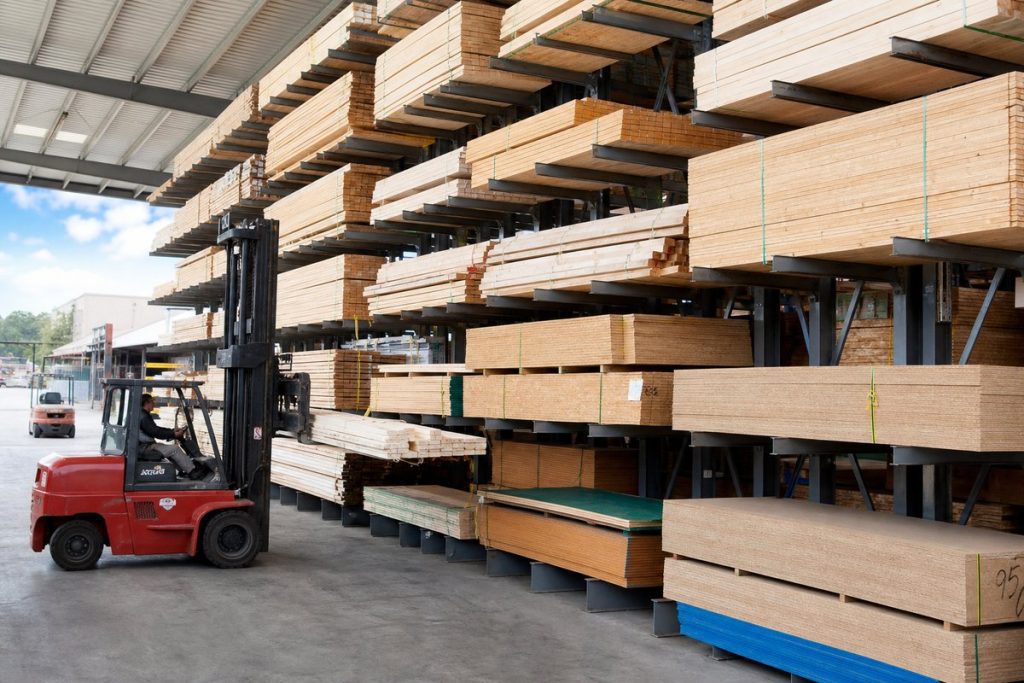
Match the product shape to the storage method
Long stock drives the need for cantilever rack. Boards, beams, and pipe do not fit cleanly between pallet rack uprights, and the front column gets in the way of the forks. Palletized goods are different. Shingles, cement, siding, and bagged materials sit square on a pallet and belong on selective pallet rack beams. That split is the first decision point for most Utah yards.
Weight matters too. Engineered wood and dense masonry products load the rack very differently than trim or insulation. A good layout separates the heavy, frequent movers from the lighter overflow stock so the equipment is not forced to do every job in the same aisle.
Here is the short version for the buying team:
- Dimensional lumber, beams, and sheet goods need open-front access and arms long enough for the bundle width.
- Palletized shingles, cement, and bagged product belong on pallet rack beam levels, often with wire decks or pallet supports.
- Pipe, rebar, and conduit need arms with pipe stops or lips so round stock cannot roll off.
- Mixed retail product usually needs both systems in one yard, not one system trying to do everything.
Two Utah projects show how this plays out. An Ogden builder set double-sided cantilever rack on poured concrete footings for long material and paired it with selective pallet rack for unit loads. A regional building products distributor in Boise moved doors, millwork, and long bundles off the ground onto a single continuous line of 16-foot single-sided cantilever rack. The logic is the same for any Utah yard, only the wind, snow, and drainage demands are higher.
Outdoor Rack Options for Utah Lumber and Building Supply Yards
The right rack depends on load shape first, then on how often the yard needs to reach it. The most common mistake is choosing from a catalog picture instead of from product geometry. Long bundles and palletized goods behave very differently in an exposed yard.
Comparing the main choices
| Rack Type | Best For | Watch Out For in Utah Yards |
|---|---|---|
| Structural cantilever rack | Long lumber, beams, pipe, and mixed-length stock with forklift or loader access | Needs engineered footings or a thick slab and enough aisle width for the machine and the load |
| Roll-formed cantilever rack | Lighter lumber, trim, and moderate loads | Less forgiving of forklift impacts and heavy bundles in a rough yard |
| Galvanized selective pallet rack | Palletized shingles, bags, block, siding, and boxed goods | Wastes space on long or irregular material; needs wire decks or supports for bags |
| Covered rack with roof canopy | Product that must stay dry, such as drywall, cement, and treated trim | Adds snow and wind load to the structure, so the engineering changes |
Where cantilever wins, and where it does not
Cantilever is the first choice for long building products because it has no front column. The forklift approaches straight on, lifts one bundle, and backs out. It also makes mixed-length stock easier to sort by arm level instead of by pile. If you want to size arms and columns for your actual bundles, start with the cantilever rack configurator.

Selective pallet rack still earns its place outdoors, especially for goods that arrive wrapped on a pallet and leave the same way. The trade-off is simple. It stores square loads well and wastes space on lumber bundles. Wire decking or pallet support bars matter more outside, because bags and broken pallets need a surface to sit on.
A hybrid yard is normal. Cantilever handles the long product, and a galvanized pallet rack section takes the unitized goods. Just make sure the foundation and anchor plan reflects the heaviest side of the mix, not the lightest item you expect to store. For a deeper comparison, read cantilever rack vs pallet rack, or browse the cantilever rack and pallet rack product pages.
How to Size and Lay Out the Yard for Real Equipment
Measure the yard from the property line inward, not from the clean rectangle on a drawing. These six steps produce a layout your crew can actually use.
- Find the real footprint. Start with total usable square footage, then subtract setbacks, fire access lanes, drainage swales, snow storage, and any ground that cannot carry rack.
- Measure the machine that works there. Record the loader or forklift reach, mast height, turning radius, and fork carriage width of the equipment you actually own. If the bay geometry is based on a brochure machine, the first delivery rush exposes the mistake.
- Set aisle widths from the widest load. The aisle has to fit the longest bundle turning into the bay with room to spare. Cross aisles need to fit the longest truck or trailer that will pull through.
- Mark drainage before you place rack. Water has to move away from columns and base plates. Rack sitting in a low spot will loosen at the base long before the steel looks bad.
- Keep snow storage out of rack aisles. Plowed piles that block an aisle in January cost you a bay all winter.
- Leave one future bay line open. If the yard is expected to grow, reserve the long axis now. Adding rows later often means re-grading or tearing up a layout.
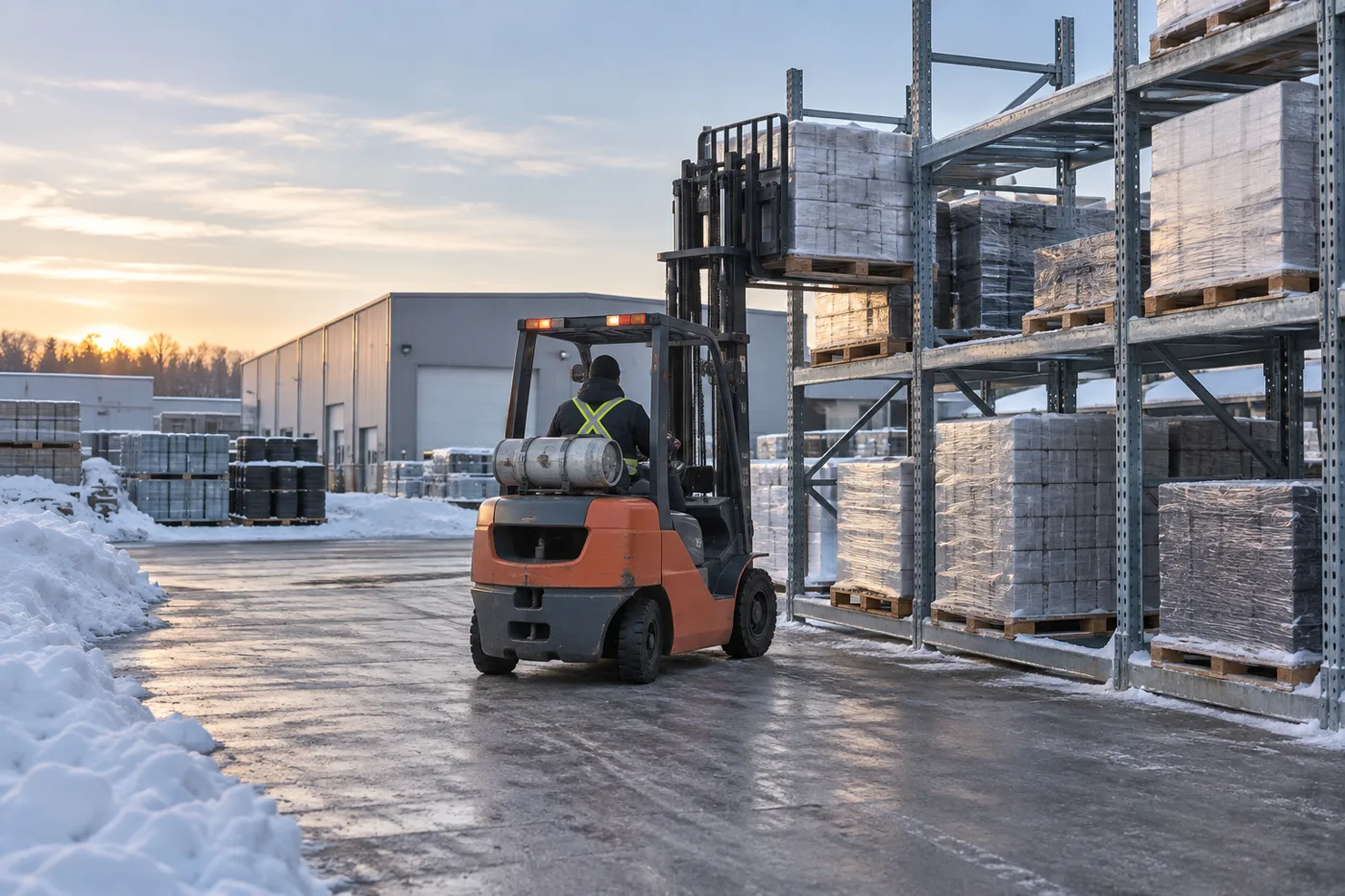
Also note overhead obstructions such as light poles, power lines, and building edges before the rack height is set. If you are sketching a row count or comparing options, the pallet rack configurator and cantilever rack configurator turn rough yard measurements into a layout our team can quote. It is much easier to price a project when the dimensions already reflect how your crew works.
Want a second set of eyes on your yard? Send us a site plan or a few photos and we will help you map the zones before you order steel. Call (800) 326-4403 or request a quote.
Wind, Snow, Salt and Code for Outdoor Pallet Racking in Utah
Outdoor rack in Utah is a structural system, not just a coated product. The rack has to carry wind load even when the bays are empty, because an empty rack has no product weight holding it down. That is why engineered anchorage and footings matter so much in open yards.
The standards and codes that apply
- ANSI MH16.1, the Rack Manufacturers Institute design standard, governs steel storage rack. Racks installed outdoors have to be designed for wind loads in addition to the product load, and seismic design follows ASCE 7.
- Utah building permits. Salt Lake City and the Greater Salt Lake Municipal Services District require a building permit for racking taller than 5 feet 9 inches, with structural plans and calculations stamped by a Utah-licensed engineer. Other cities have similar rules, so check with your local building department early.
- Seismic category. All of Salt Lake City falls in Seismic Design Category D or E, and much of the Wasatch Front is similar. Under the Utah building code, racks 8 feet or taller to the top load level in those categories need a certificate of compliance when the installation is finished, and special inspection of anchors is common.
- Fire code. Lumber is a combustible commodity. The International Fire Code has a chapter on lumber yards that addresses pile size, aisle spacing, and fire apparatus access, and the fire marshal may review your yard layout.
- OSHA. 29 CFR 1910.176 requires stored material to be stacked, blocked, or interlocked so it is stable and secure against sliding or collapse. Racking with arm stops and beam locks is the simplest way to meet that rule outdoors.
Our cantilever rack installation in Utah page and the pallet rack permits and engineering page explain what the permit package usually contains. The seismic compliance page covers anchors and bracing in more detail.
The site conditions that change the design
Snow. Snow adds weight on top of the product and on any canopy. It also piles against rows near a wall or fence. If you add a roof, the structure has to carry the snow load for your location.
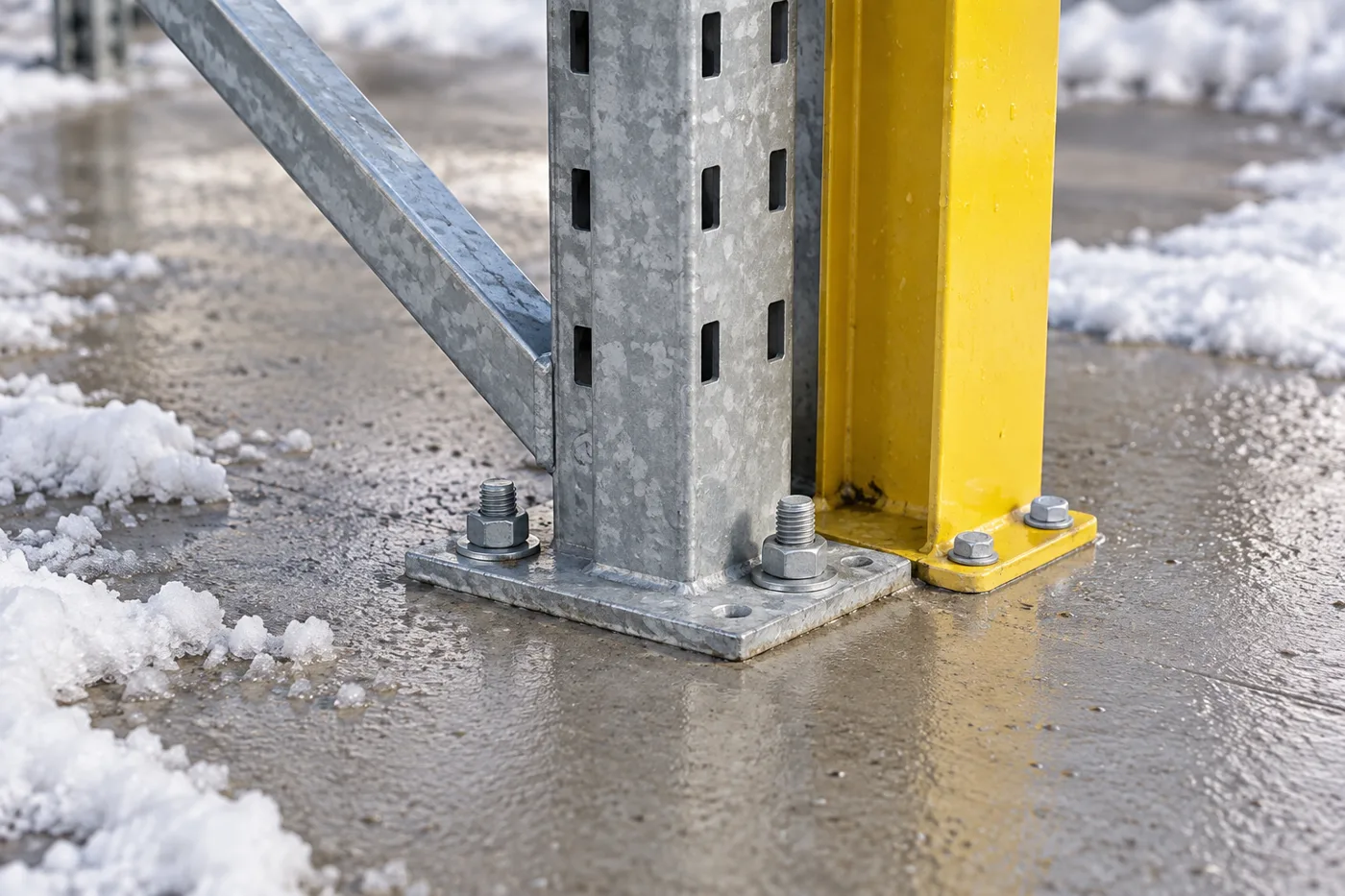
Freeze-thaw. Utah ground moves. Footings need to reach below the local frost depth, or a floating slab has to be thick enough and reinforced enough to stay flat. Ask the building department for the frost depth they enforce.
Salt and deicer. Runoff from plowed lots carries salt onto the rack base. Painted steel rusts at scratches and edges. Hot-dip galvanizing to ASTM A123 coats the steel in zinc that protects the base metal even where the surface gets scraped, which is why it is the standard finish for outdoor rack.
Wind. Open yards on the valley floor and canyon mouths see strong gusts. Wind load pushes on the frames and the product, and the anchors have to resist overturning. This is the main reason an indoor rack kit is not an outdoor rack kit.
Practical rule: if the base plate can rust, loosen, or heave, the whole outdoor system starts losing margin long before the frame looks bad.
Lead Time, Installation and Service Considerations
The best layout still fails if the schedule is handled casually. Outdoor rack projects move from approved drawing to permit to footings to delivery to install, in that order. The slab or footings have to be cured before the rack is set, and the rack has to be inspected before it is loaded. If the foundation work slips, everything behind it slips.
What to ask before the purchase order
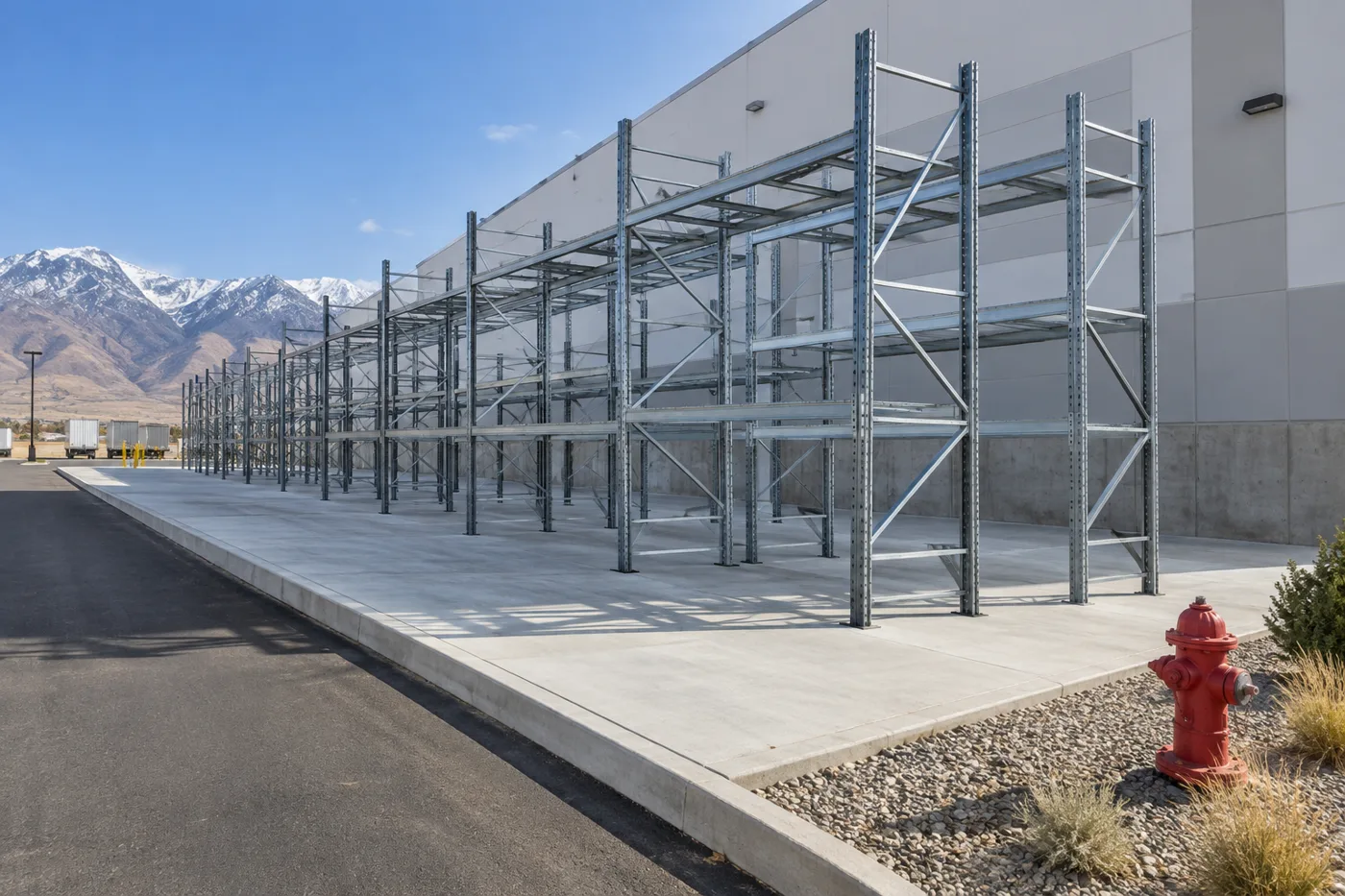
Ask how the columns are anchored, what anchor hardware is specified, and whether the installer follows the manufacturer’s pattern. Ask what field service looks like after the install, because outdoor yards take hits from forklifts, plows, and weather all year. A bent column or loose anchor is not a small issue in an exposed yard.
If you are comparing providers, the useful questions are simple:
- What foundation detail is required for this soil and frost depth.
- What anchor type is allowed in cured concrete or engineered piers.
- Who pulls the permit and who provides the stamped drawings.
- What inspection support is included after the install.
- What replacement lead time looks like if a column or arm gets damaged.
Material Handling USA handles layout, engineering coordination, permitting support, delivery, and installation for outdoor rack across Utah. The point is not just to buy steel. It is to get a system that is installed once, passes inspection, and can be serviced without turning the yard into a construction zone again six months later.
Choosing the Right Setup for Your Yard
The right starting point depends on how big the yard is and how mixed the inventory has become. A small retrofit yard needs a different answer than a high-volume distribution site.
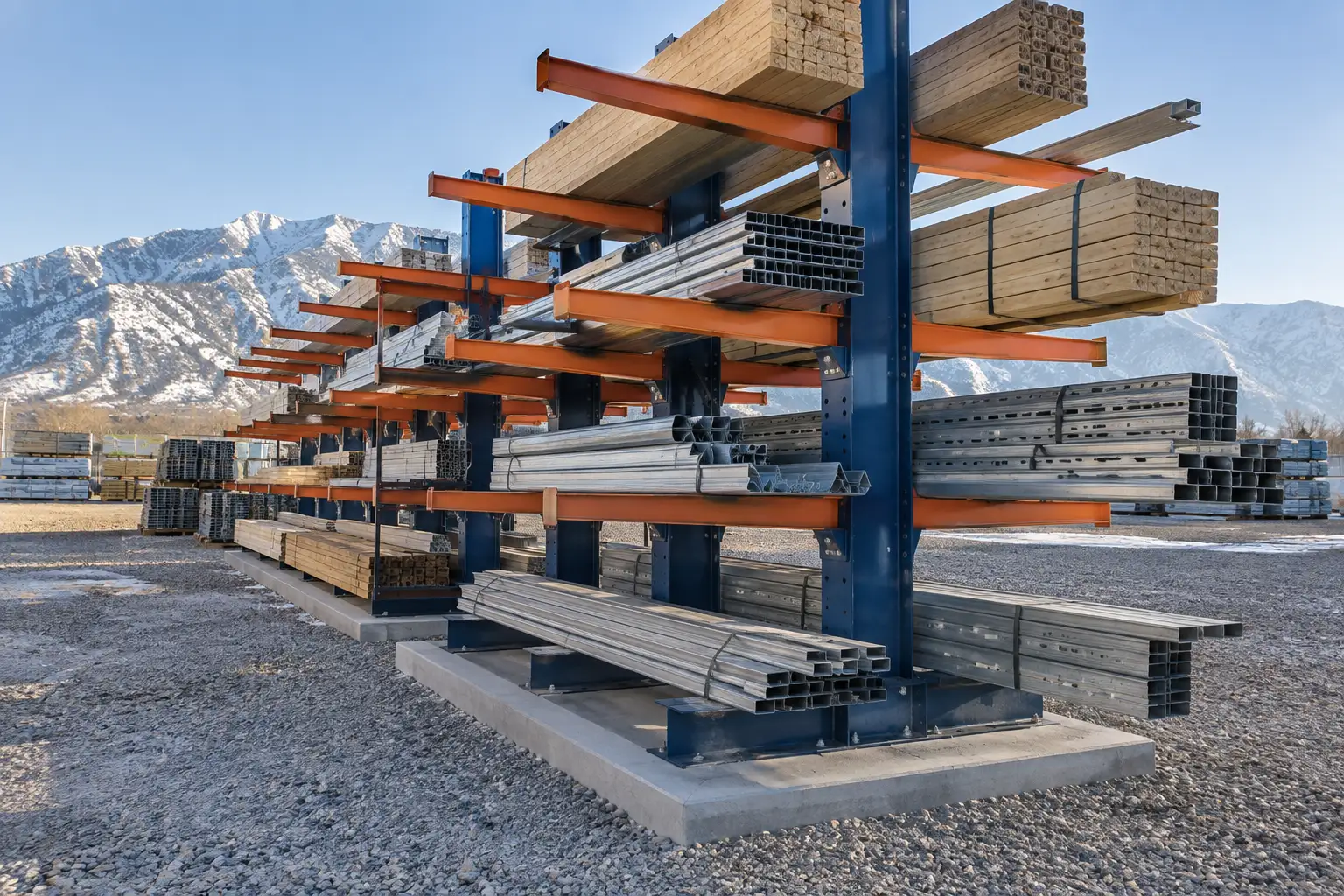
Three common Utah yard profiles
Small retrofit yard. Tight on driveway width and mixed in stock. A double-sided cantilever run along the fence line plus a short row of galvanized pallet rack for bagged goods usually fits. That limits slab work and keeps the footprint manageable.
Mid-size growth yard. Mixed retail and trade customers. This yard needs a heavier structural cantilever backbone plus a denser pallet rack area for commodity goods, laid out so contractor pickups do not cross the retail traffic.
High-volume distribution yard. Standardize the zones. Structural cantilever for long material, dedicated galvanized pallet rack zones for unit loads, and clear truck approach lanes between them. That structure makes the site easier to inspect, maintain, and expand.
For safety and layout context beyond the rack itself, Opus Safety’s builders merchant risk guidance is a useful outside reference on how open-yard movement, materials handling, and traffic control affect risk in merchant yards.
Frequently Asked Questions About Outdoor Pallet Racking in Utah
Is galvanized rack enough for an outdoor Utah yard?
Galvanizing protects the steel from rust, but it is not the whole answer. The rack still needs the right anchorage, footings, drainage, and layout for the site. If those pieces are weak, the coating only delays the problem.
Should I choose cantilever or selective pallet rack?
Use cantilever for long, irregular, or mixed-length products such as lumber, pipe, and sheet goods. Use selective pallet rack for palletized goods that stay on unit loads. Most Utah yards need both if they handle lumber and building supplies together.
Do I need a permit for outdoor rack in Utah?
In most Utah cities, yes. Salt Lake City and the Greater Salt Lake MSD require a permit for racking over 5 feet 9 inches tall, with stamped structural drawings. Your city may differ, so check before ordering. We help with the permit package on projects we install.
What drives cost the most?
Rack type comes first, then height, arm or beam capacity, anchorage, and finish. Outdoor exposure adds cost because galvanized components, engineered footings, and stamped drawings are usually required. Send us your product list and site plan for a real number.
What site information does the quote team need?
A rough site plan, your product mix with bundle lengths and weights, the equipment you use, and any known setback or access limits. Photos of the current yard help a lot. If you know where drainage runs or where snow piles collect, include that too.
How does Utah weather affect the slab or footings?
Freeze-thaw and drainage are the big issues. Water that sits near the base can lead to heave, cracking, or loose anchors over time. Footings should reach below the local frost depth, and the slab should drain away from the columns. Plan the concrete with the rack, not after it.
Can the yard be expanded later?
Yes, but expansion is much easier when the first layout leaves room for it. A reserved bay line or clear growth lane saves a lot of disruption later. A cramped first install is expensive to rework.
What if my yard carries both retail and contractor stock?
Split the storage by product type and traffic pattern. Keep the fastest-moving palletized goods near the access lanes and put the long stock where forklifts can load without crossing every aisle. That keeps the yard calmer during peak pickup times.
Design it yourself, then get a quote
Material Handling USA helps Utah buyers turn a rough yard idea into a permitted, installed outdoor rack system. Use our free design tools to lay out what this article describes, then send the configuration to our team for pricing:
- Pallet rack configurator for shingles, bags, block, and other palletized goods
- Cantilever rack configurator for lumber, pipe, and long stock
Prefer to talk it through? Call (800) 326-4403 or request a quote and we will review your site, your stock mix, and the rack setup that fits your yard. See more Utah projects on our Utah pallet rack page.