
Building Materials Yard Cantilever Rack: OrePac Building Products, Boise, ID
How a building-products distribution branch in Boise moved long, mixed-length material off the ground and onto a single continuous line of 16-ft single-sided cantilever rack with bolt-on arms.
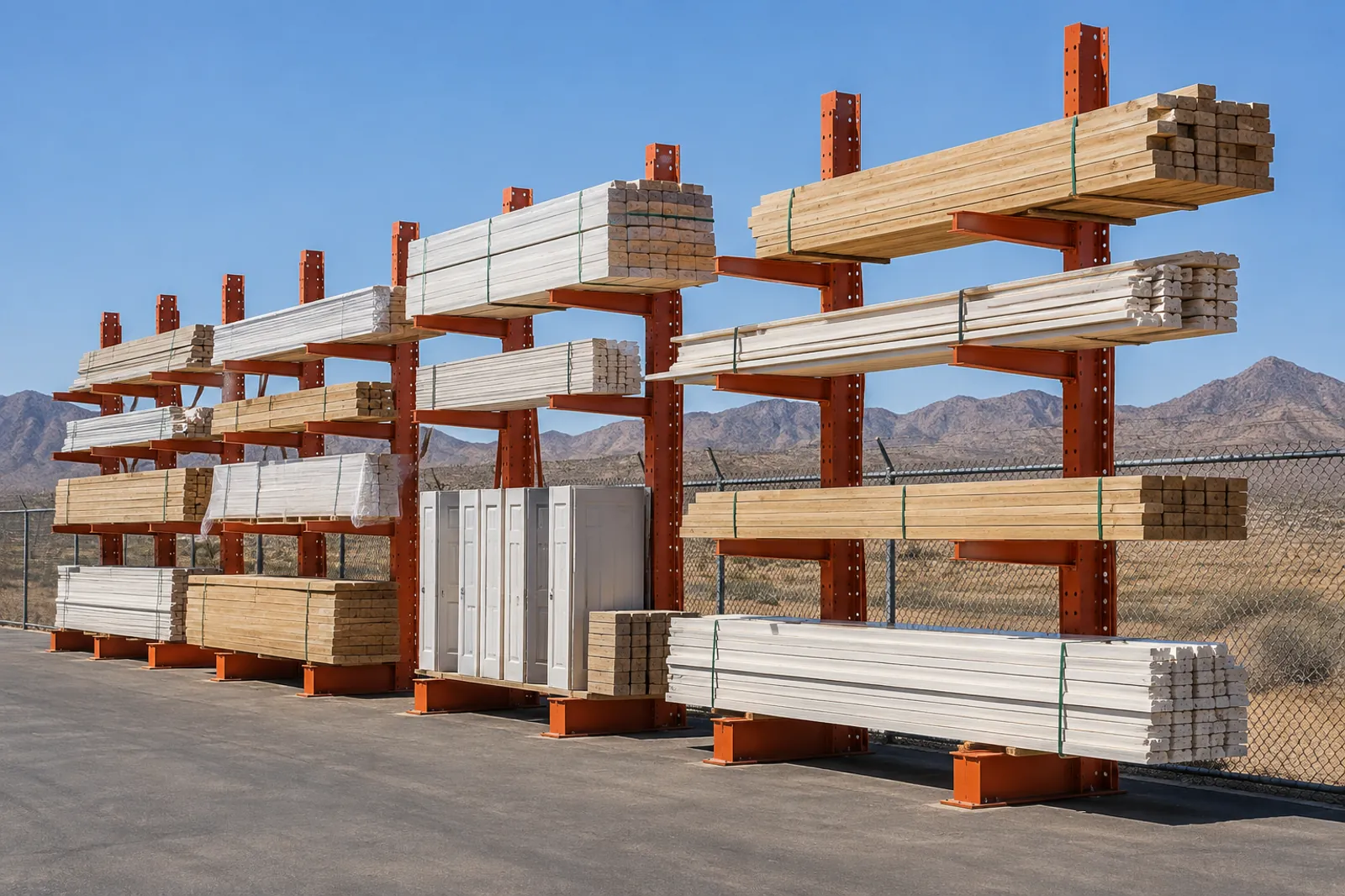
Boise, ID
Project location
2026
Completed
Single-sided
Rack configuration
16 ft
Upright height
Shop Cantilever Rack for Building-Materials Yards
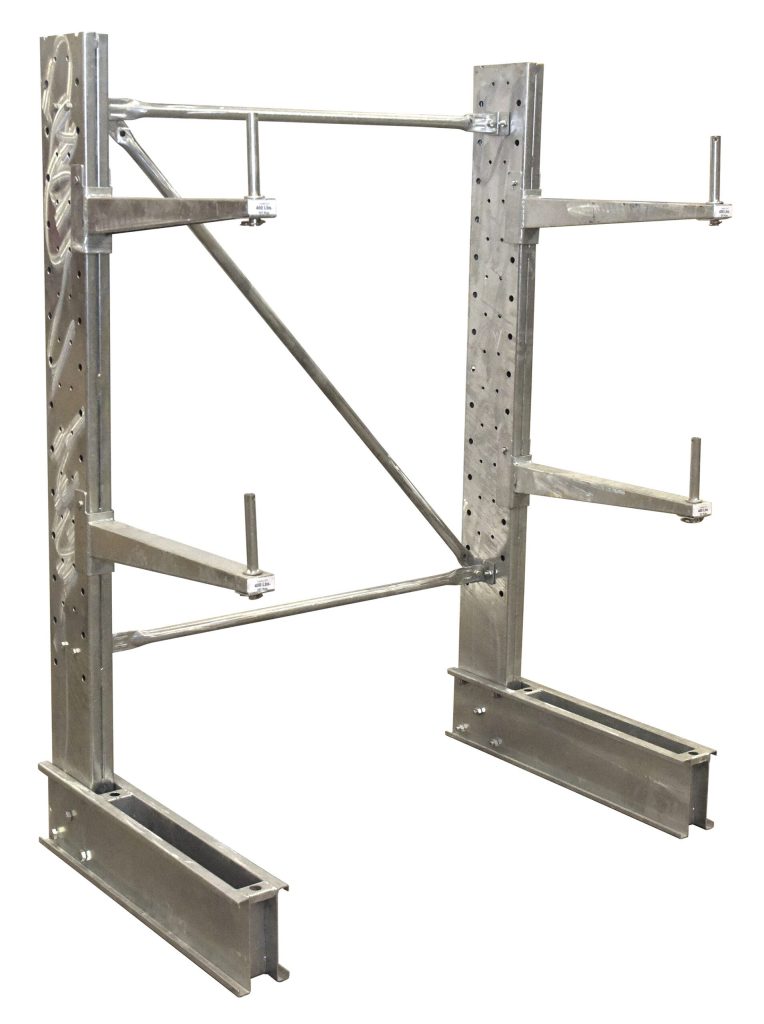
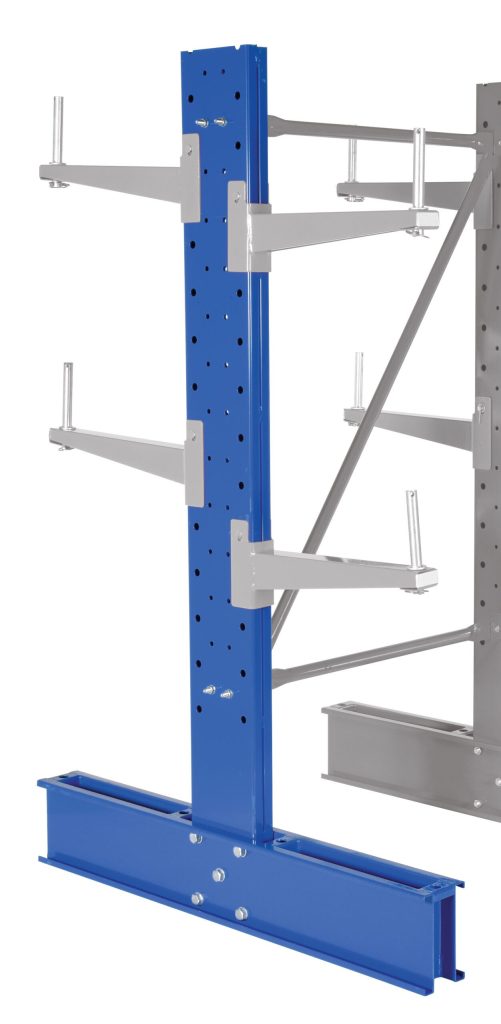
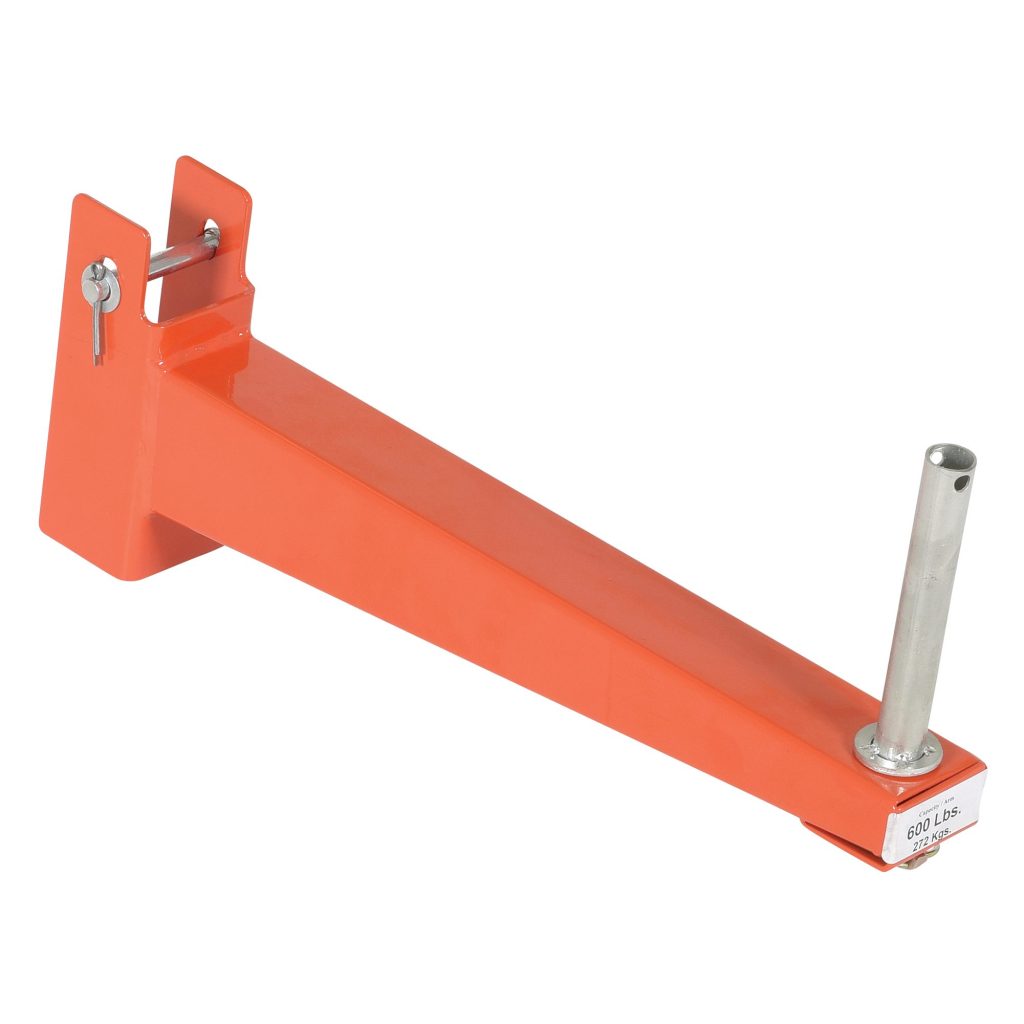
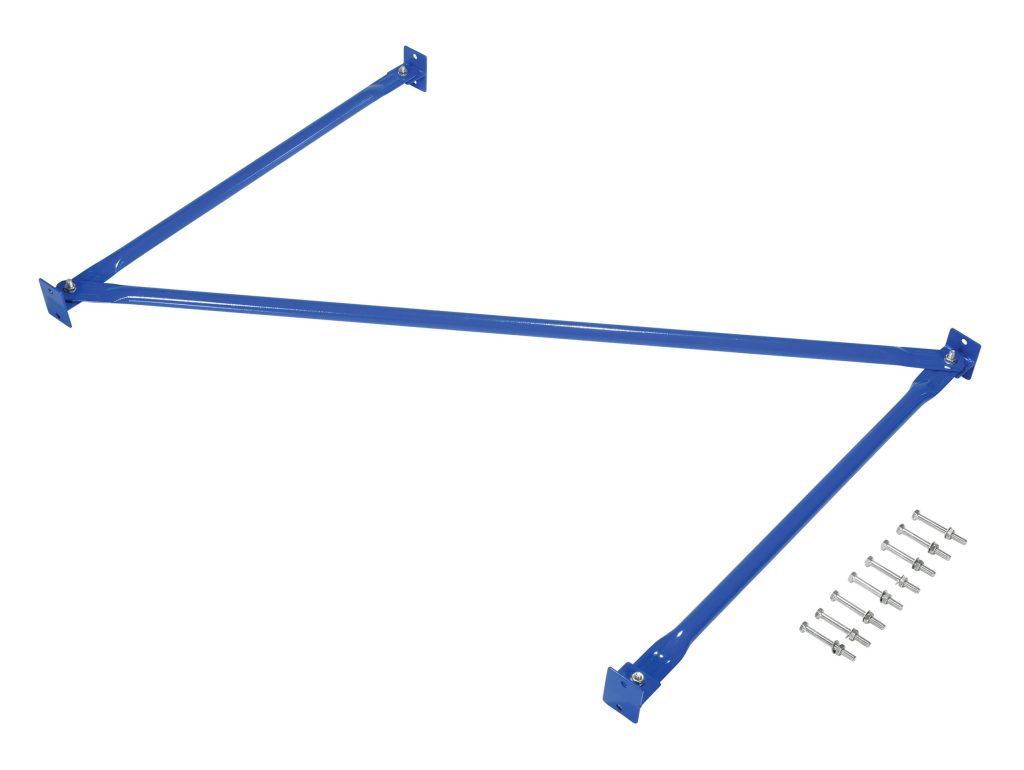
Every cantilever row, including a single-sided yard run like this one, is built from the same four part types. Each card opens a shop category; galvanized sets suit open yards. Prices are current online prices; freight is quoted by destination and some common sizes in stock at select manufacturers, subject to confirmation. For a full layout, longer arms or freight-rated orders, request a free quote or plan it in the Cantilever Rack Configurator.
The Project: A Building-Products Branch That Had Outgrown Ground Storage
OrePac Building Products distributes doors, millwork, mouldings and related building materials to dealers and builders across the West, and its Boise, Idaho branch handles a steady flow of long, bundled material. In August 2026 the branch’s continuous-improvement and safety lead contacted Material Handling USA through the mh-usa.com contact form asking for a quote on cantilever racking for storing building materials. Material Handling USA’s Director of Sales, Chris Rodgers, worked the request directly and quoted brand-new rack; the project closed the same month.
The requirement was specific and unusually well defined for an inbound request: tall single-sided uprights, bolt-on arms rather than drop-in arms, brace sets sized to the upright spacing, and anchoring hardware suited to an asphalt surface. OrePac ordered material only — its own crews handled installation. That is a common and completely workable path when a distributor has capable in-house staff, and it shifts the design work forward: every decision about arm length, bracing and anchors has to be right on the quote, because nobody from the vendor is on site to adjust it later.
If you are starting from the same place, our cantilever rack systems overview walks through the component set referenced throughout this case study.
Why Cantilever Rack Instead of Pallet Rack for Building Materials

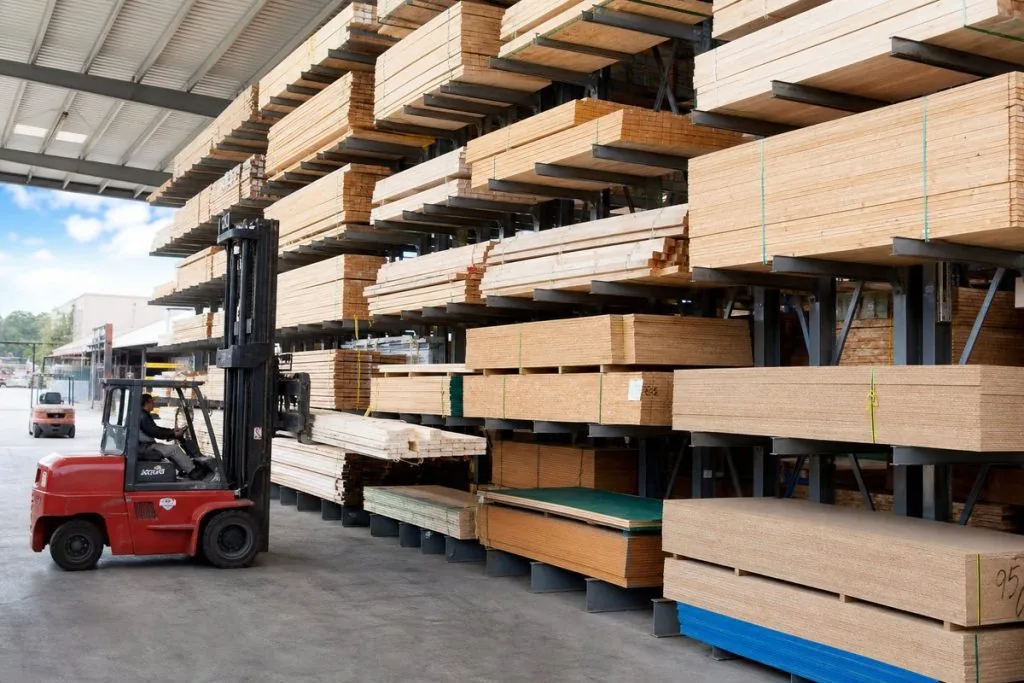
Doors, mouldings, trim, siding, panel stock and dimensional lumber share a problem: they are long, they are not always palletized, and their length rarely matches a standard pallet footprint. Loaded into selective pallet rack, long bundles overhang the beams, block flue space, and force handlers to pick from the end of a bay instead of the face of it. Front-to-back beams or pallet supports help, but they also create exactly the obstruction that makes long material awkward to load.
Cantilever rack removes the front column entirely. A row of uprights carries arms that project from one or both sides, so the entire face of the rack is open and a forklift or side-loader can set a bundle anywhere along the arms. Nothing has to be squared into a bay opening. For a building-products branch that receives mixed lengths every week, that single geometric difference is the whole argument: the rack stops dictating what length of material can be stored.
The trade is footprint efficiency. Cantilever rack uses deeper aisles for the same stored volume and needs a base that resists the overturning moment of a loaded arm, so it is the right answer for long material and the wrong answer for uniform palletized goods.
Arm Length, Bay Spacing and Load Planning
Three numbers drive a cantilever quote: arm length, arm spacing up the column, and upright spacing along the row. On this project the arm length conversation happened in the first two emails — Material Handling USA offered 3-ft, 4-ft and 5-ft arms, and OrePac selected 4-ft arms for its building-material bundles.
Arm length should be driven by the material, not by a wish for more depth. The usable depth of an arm is the arm length minus whatever clearance the load needs at the upright, and capacity falls as arm length grows because the load sits farther from the column. A 4-ft arm is a common sweet spot for building products: deep enough that a banded bundle is fully supported front to back, short enough that the rated capacity stays high and the aisle does not have to grow.
Upright spacing along the row has to respect the deflection of the material, not just the weight. Flexible profiles — vinyl trim, thin moulding, light siding — will sag between widely spaced arms even when the rack is nowhere near its rated load. Closer upright spacing, or a deck across the arms, solves sag. OrePac’s row was designed around 6-ft upright spacing with matching 6-ft brace sets between uprights.
| Design input | What it controls | How to decide it |
|---|---|---|
| Arm length | Usable depth and arm capacity | Match the widest bundle plus clearance; do not over-buy depth. |
| Arm vertical spacing | How many levels fit and the height of each opening | Tallest bundle in that level plus lift clearance. |
| Upright spacing | Sag/deflection and total row capacity | Shorter spacing for flexible profiles; verify against material length. |
| Arm style | Whether arms can be re-positioned later | Bolt-on for fixed levels and higher rigidity; drop-in for frequent changes. |
| Base length | Resistance to overturning | Longer bases for tall uprights and deep arms. |
| Bracing | Row stability along its length | Brace sets sized to actual upright spacing, top and bottom of the run. |
Bolt-On Arms vs Drop-In Arms
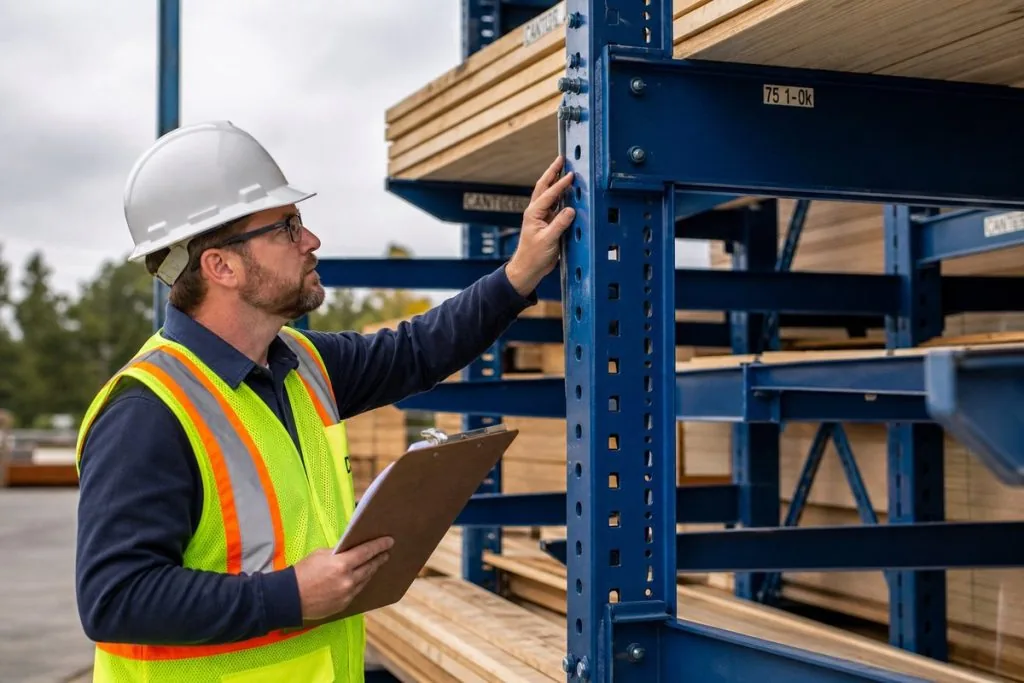
OrePac specifically asked for arms that bolt on rather than slide in. Both styles are legitimate, and the choice is about how often you expect to change the rack.
Bolt-on arms are fastened through the column. The connection is rigid, there is no wedge to work loose under repeated impact, and the arm cannot be lifted out accidentally by a fork. Re-positioning means unbolting, which is deliberate work — an advantage in a branch where levels should not drift.
Drop-in (slide-in) arms engage a slot on the column and are far faster to move. They suit operations whose product mix changes seasonally, or a yard still learning what its level heights should be.
For a distribution branch storing a stable family of building materials, the rigidity and tamper-resistance of bolt-on arms is usually the better long-term choice, which is what OrePac specified.
Published capacities always belong to a specific arm length, arm spacing and upright; never transfer a rating from one configuration to another. Structural steel cantilever design practice for industrial storage racks is covered by ANSI MH16.3, the industry standard for the design, testing and utilization of industrial steel cantilevered storage racks.
Single-Sided vs Double-Sided: Why This Row Was Single-Sided
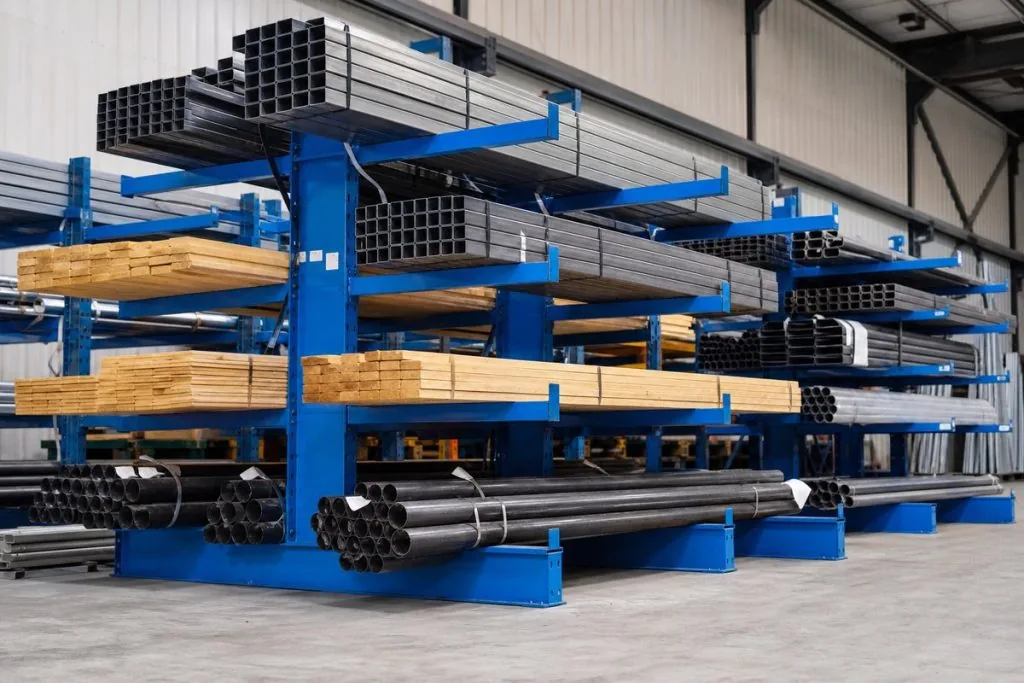
A double-sided cantilever upright carries arms on both faces off one base and one column. It is the most efficient use of steel and floor space when rack can stand free in the middle of a yard or building with an aisle on each side. A single-sided upright carries arms on one face only, with a base that extends under the load side.
OrePac’s requirement was single-sided, and the reason was placement: the branch described the layout as one long, simple line of racking rather than a grid of double-sided rows. When a run follows a building wall, a fence line or the edge of a yard, the back face of a double-sided upright is unreachable — you would be paying for arms that no forklift can ever load. Single-sided rack against a boundary puts every arm in service.
Single-sided rack also concentrates the overturning moment on one side of the column, which makes base length and anchoring more important, not less. That is the trade for the placement freedom.

| Single-sided | Double-sided | |
|---|---|---|
| Best placement | Against a wall, fence or yard boundary | Free-standing with an aisle on both faces |
| Steel per stored foot | Higher | Lower — one column serves two faces |
| Base loading | Asymmetric; base length and anchors matter more | More balanced |
| Typical use here | One long perimeter run, as at OrePac | Interior yard grids and wide buildings |
Outdoor Yards and Asphalt: Anchoring, Drainage and Finish
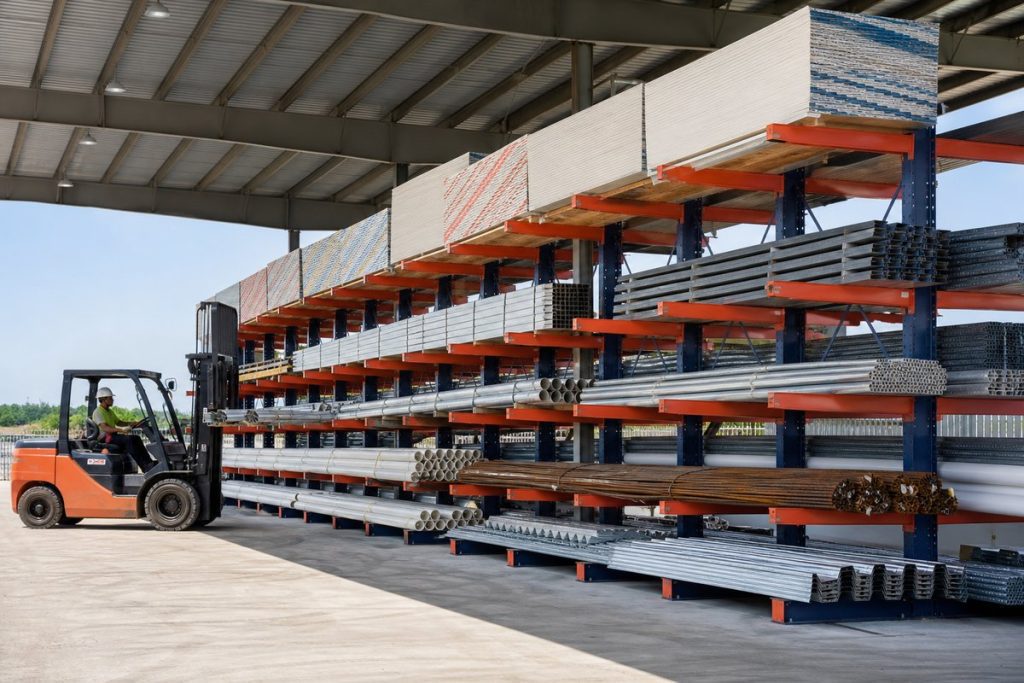
OrePac’s hardware list included asphalt anchor bolts, which tells you most of what you need to know about the setting: this rack was going onto an asphalt surface rather than an interior concrete slab. That changes three things.
Anchoring. Concrete anchors develop their capacity in a slab with known thickness and strength. Asphalt is a flexible pavement; it moves with temperature and creeps under sustained load. Asphalt anchors are designed for that substrate, and the design has to assume less restraint than a concrete slab offers. Base plates generally want to be larger, and bearing pressure lower, so the upright does not slowly press into a hot surface.
Water and ice. Long material stored outdoors should shed water, not hold it. Arms are normally installed with a slight upward incline toward the column, which resists roll-off and, outdoors, keeps a bundle from sitting in a pool. Grade and drainage under the row matter for the same reason.
Finish and inspection. Outdoor rack sees weather, road salt and UV. Painted structural steel is serviceable when it is inspected; galvanized components last longer in harsh exposure. Either way, an outdoor row needs a real inspection routine, because corrosion and pavement settlement are slow failures that no one notices until they are advanced.
Customer-Installed Rack: Getting It Right Without an Installation Crew
OrePac bought material only and installed with its own people. That is a normal choice for a distribution branch with equipment and trained staff, and it works well when the order is complete. The failure mode is a missing part — the brace sets or anchor hardware that turn a pile of columns and arms into a braced, anchored row. Note how much of the quoting conversation on this project was about exactly those items: arm length, brace-set quantity tied to actual upright spacing, and anchor bolts for the real surface.
When you install your own cantilever rack, the sequence that avoids rework is: confirm the run line and squareness before anchoring anything; set and anchor the first two uprights; install bracing as you go rather than at the end; check column plumb before loading; then install arms level by level and load from the bottom up.
Two safety points deserve emphasis. First, a cantilever row is a system: an unbraced or unanchored run is not a partially safe rack, it is an unsafe one, even at light load. Second, load the lowest arm levels with the heaviest material. Raising the center of gravity of a cantilever row is the fastest way to make it unstable. General workplace requirements for secure material storage are set out in OSHA 29 CFR 1910.176.
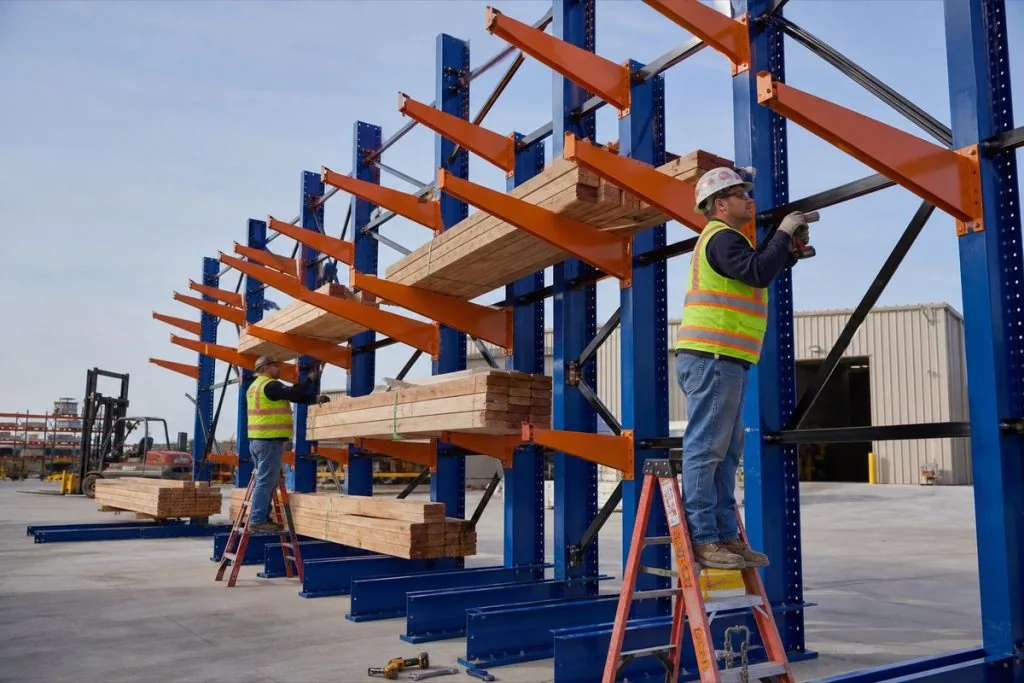
Confirm the line
Mark and square the full run before a single anchor is set.
Anchor the first uprights
Correct anchors for the real substrate; check plumb.
Brace as you go
Brace sets sized to actual upright spacing, installed with the row.
Arms and first load
Level the arms, load heaviest material low, then work upward.
What This Project Shows
A well-specified cantilever row is mostly a set of small, unglamorous decisions made in the right order. OrePac’s Boise project is a clean example: a distributor that knew its material, a sales conversation that pinned down arm length and brace quantity before quoting, single-sided uprights chosen for a perimeter run, bolt-on arms chosen for rigidity, and anchor hardware chosen for the surface the rack would actually stand on. Material-only supply worked because the configuration was settled first.
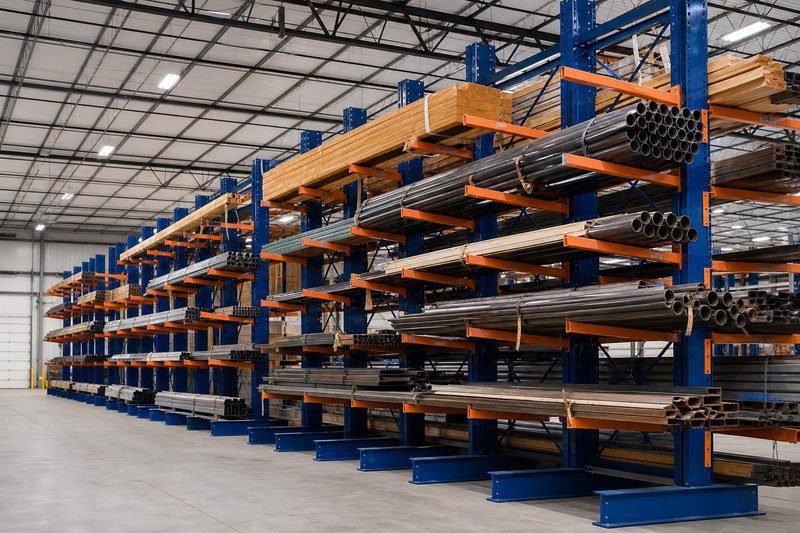 Cantilever Rack SystemsComponent set, configurations and applications for long-material storage.
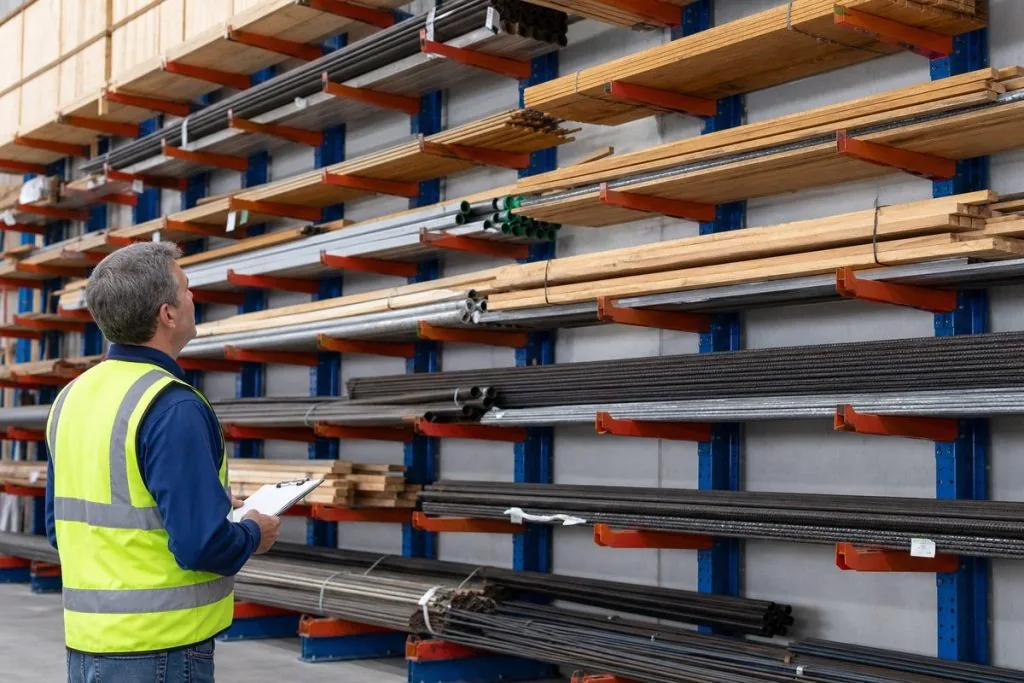 Cantilever Rack in Boise, IDLocal cantilever rack supply and service for the Treasure Valley.
 Pallet Rack SystemsWhen palletized loads belong on selective, drive-in or push-back rack instead.
Cantilever Rack FAQs
Can cantilever rack be installed outdoors on asphalt?
Should I choose bolt-on or drop-in cantilever arms?
When is single-sided cantilever rack the right choice?
How do I decide arm length?
What causes long material to sag on cantilever rack?
Can I install cantilever rack with my own crew?
Does cantilever rack need bracing if the run is short?
Planning a Cantilever Rack Row?
Tell us the material, the lengths and the surface it will stand on. We will size arms, bracing and anchors and quote the complete package.