
Warehouse Racking for Bagged Goods at a Seed & Agricultural Supply: Mountain West Seed
Bagged seed, feed and soil amendments behave nothing like cartons on a pallet. Here is how Material Handling USA plans industrial racking for bagged pallet loads, seasonal peaks and dusty buildings.
2024
Year Mountain West Seed worked with us on racking
Seed & ag supply
Agricultural seed and supply distribution
Pallet rack + cantilever
Product categories supplied
Seasonal
Storage sized for spring, not for the annual average
Plan your layout before you buy
Configure upright height, beam width, bay count, and load levels in our free 3D Pallet Rack Designer, then get an instant bill of materials and request a quote.
The project
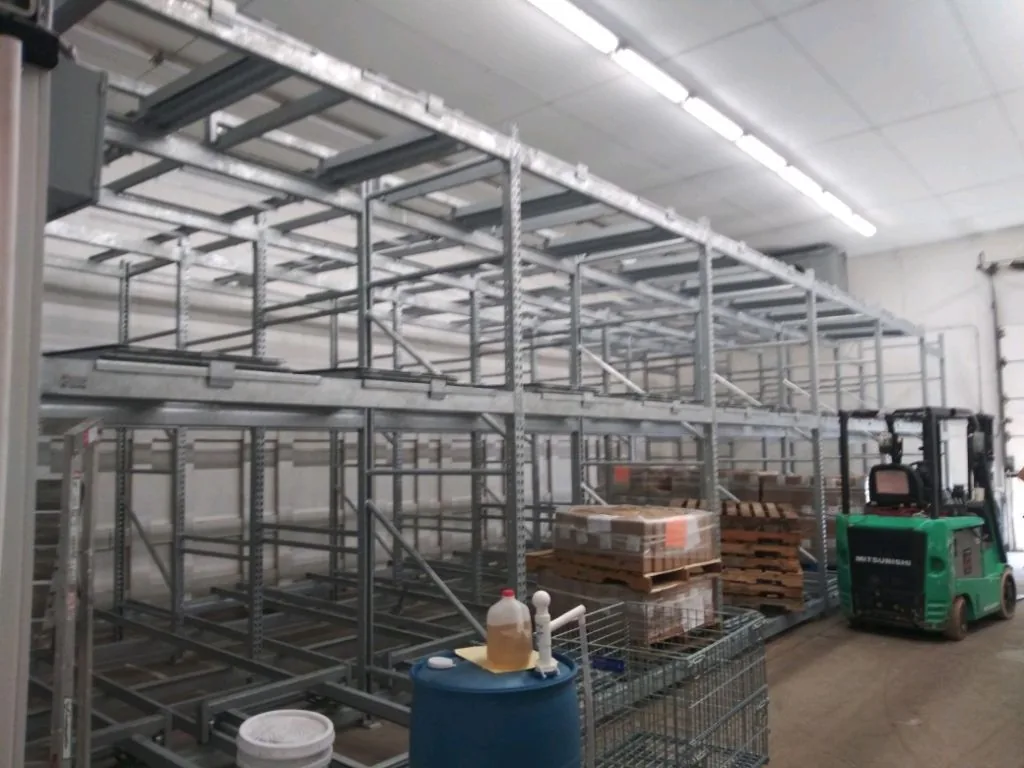
Mountain West Seed is an agricultural seed and supply business. Material Handling USA supplied pallet rack and cantilever rack for the company in 2024.
Agricultural distribution is one of the least written-about applications for industrial pallet racking, and one where a generic warehouse layout goes wrong fastest. The product is heavy, it is bagged rather than boxed, it does not hold a stable cube, it arrives and leaves in violent seasonal waves, and the building it lives in is dustier and less climate-controlled than almost any distribution centre.
This page uses that project as the starting point for how we plan racking for a seed, feed or agricultural supply warehouse. The client, the year and the product categories supplied are the only project specifics we publish; everything below is general planning and engineering guidance.
What we publish
We publish the client, the year we worked together and the product categories supplied. We never publish facility layouts, room dimensions, storage quantities, contract values or anything else specific to a customer’s site.
Bagged product is a different load
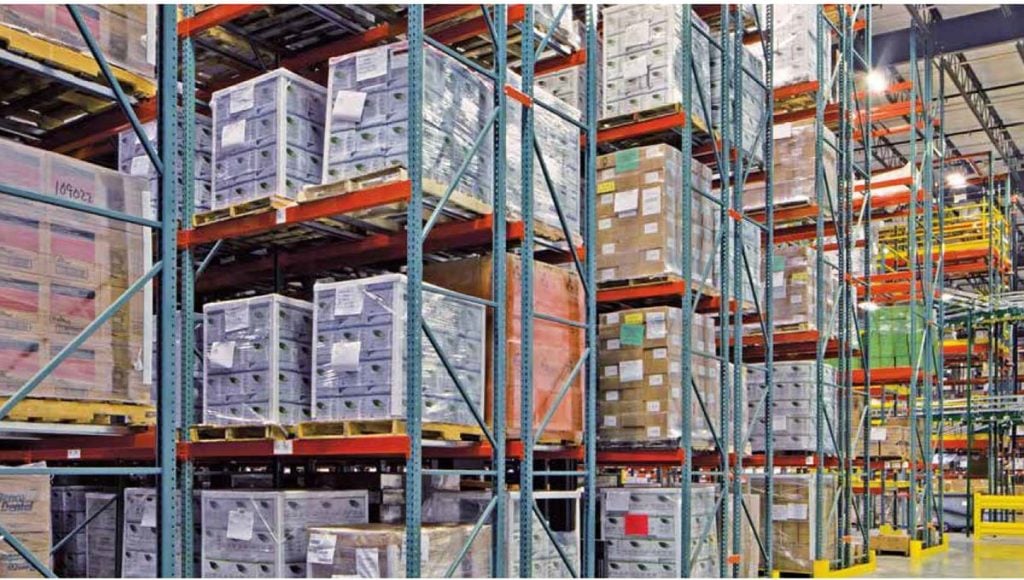
A pallet of cartons is a rigid block. A pallet of bagged seed, feed, fertiliser or soil amendment is not, and every difference matters to the rack.
It slumps. Bags settle, spread and overhang the pallet footprint as they are handled. A load that measured 48 inches square at receiving can be wider by the third move, which quietly eats the clearance between pallets and between the load and the upright.
It is dense and heavy. Bagged product is one of the heaviest things per cubic foot that a general warehouse stores. Beam capacity, upright capacity and frame spacing all have to be calculated from the real load, not from a nominal figure that came from a different product line.
It punctures and it spills. A torn bag is both a loss and a housekeeping problem, and in an aisle it becomes a slip hazard. Decking choice, beam edges and how loads are handled all affect how often it happens.
It does not stack itself. Floor-stacking bagged pallets two or three high is common practice, and it is also how crushed bags, unstable stacks and inaccessible inventory happen. Racking converts that into addressable, individually accessible positions.
Get the load profile right first
Before a bay size is chosen, four numbers decide most of the design. They are worth measuring rather than estimating, because in agricultural storage the estimate is usually low.
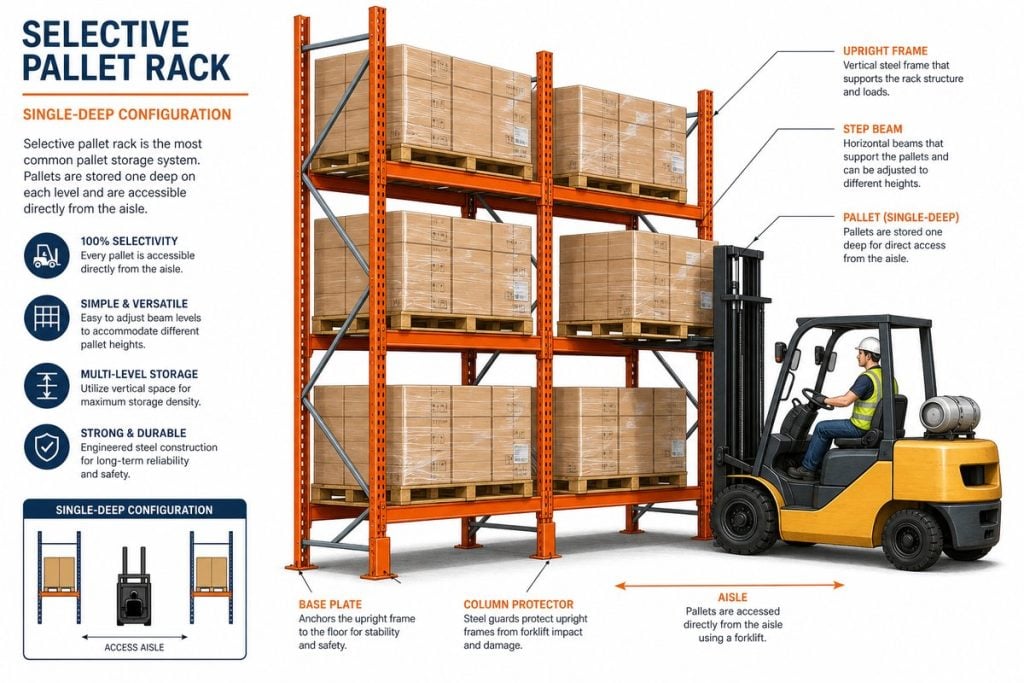
For most seed and agricultural supply warehouses the answer that follows is single-deep selective pallet racking, sized generously in bay width. Selectivity matters here because the inventory is genuinely mixed — varieties, treatments, package sizes and customer-specific products — and because seasonal picking is order-driven rather than pallet-driven. Where loads are heavy and the traffic includes rough-terrain equipment, structural pallet rack is worth pricing for the high-traffic rows.
Long, unpalletized material — irrigation pipe, posts, tubing, rolled fencing — belongs on cantilever rack, not laid across pallet beams. It is the single most common storage mistake in agricultural buildings, and it is also the easiest one to fix.

Decking: the decision that keeps bags intact
Bagged product almost always wants a deck. Bare beams are fine for a rigid, well-built pallet; they are poor for a load that sags between them, and they are unusable for the loose bags, part-pallets and returned stock every agricultural warehouse accumulates.
Welded wire decking is the default for good reasons: it supports the whole pallet footprint, lets light and sprinkler water through, does not trap spilled product where you cannot see it, and gives a safe surface if someone has to place a partial load. See pallet rack wire decking for capacity and waterfall style options.
Solid steel or timber decks keep loose material out of the aisle below, which matters where bags are opened or repacked at the rack face, but they collect debris on top and can affect sprinkler design.
Pallet supports alone are the minimum option — two crossbars per position. They suit uniform, sound pallets and nothing else.
Whatever is chosen, deck capacity is specified separately from beam capacity. A deck rated for a uniformly distributed load is not automatically rated for a narrow, concentrated load, which is exactly what a stack of bags on a broken pallet becomes.
Designing for the spring peak, not the annual average
Agricultural supply has the sharpest seasonality of any distribution business we work with. Inventory builds through winter, peaks before planting, and empties in weeks. Two design consequences follow.
The first is that capacity must be sized for peak, not average. A building planned around the annual mean will overflow into aisles, docks and the yard exactly when throughput matters most, and aisle storage during the busiest weeks of the year is both a fire code problem and an accident waiting to happen.
The second is that the layout should have a plan for the empty months. Rows that hold seasonal product can be reassigned to bulk or contract storage in the off-season if the addressing scheme allows for it, and beam levels that were set for tall bagged pallets can hold different product without modification if they were sized with some thought.

Dust, moisture, pests and the building itself
Agricultural warehouses are rarely climate-controlled, and that shapes both storage practice and rack specification.
Moisture is the enemy of bagged product. Keeping pallets off the floor is the first benefit racking delivers; keeping them away from exterior walls where condensation forms is the second. Where the building is unheated or partly open, condensation on steel and on poly-woven bags is a real consideration, and galvanized components are worth considering for exposed or open-sided areas.
Dust accumulates on everything. Open wire decking and clear floor space beneath the bottom beam make housekeeping possible. Solid decks and cluttered floors make it theoretical.
Pest control needs access. Inspectors and pest control programmes both want an inspection aisle around the perimeter and a visible gap under the lowest storage level. Racking the building right up against the walls saves a few positions and costs you that access permanently.
Some products have their own rules. Fertilisers, treated seed, crop protection chemicals and fuels can carry storage, separation and containment requirements from their safety data sheets and the fire code. Establish those before the layout is fixed, because they can determine which room a product may occupy at all.
Protection, anchorage and inspection
Agricultural buildings see a mix of equipment that most warehouses do not — rough-terrain forklifts, telehandlers, trailers backing inside, and seasonal operators who do not drive a lift truck the other ten months of the year. That combination is hard on uprights.
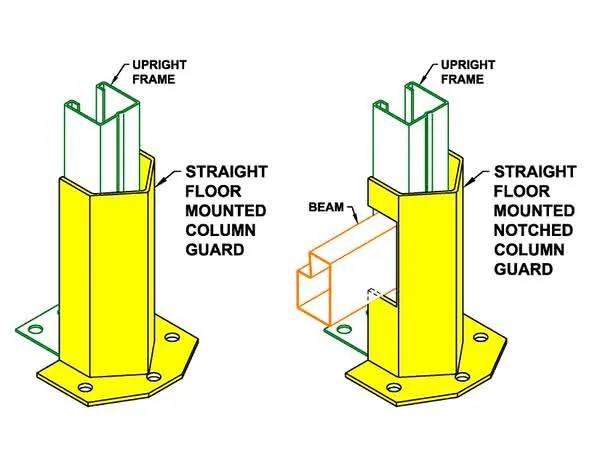
Column guards and end-of-row protection at aisle ends, doorways and corners are the cheapest insurance available. Row spacers hold back-to-back frames square, and beam safety clips stop a fork lifting a beam out of its connector.
Anchorage is not optional. Every upright is anchored through its base plate to the slab with the specified anchor type, size and embedment, and the slab itself has to be verified for thickness and condition before the layout is frozen — many agricultural buildings have thinner or patched floors than a purpose-built warehouse. Rack design follows ANSI MH16.1 from the Rack Manufacturers Institute at MHI, with seismic demands from the adopted building code, which matters throughout Utah and the Intermountain West.
Then keep it that way: scheduled walk-throughs, an immediate report-and-unload rule for any impact, a documented rack inspection and repair route, and capacity information posted where the operators can actually read it. OSHA’s materials-handling rule, 29 CFR 1910.176(b), requires stored material to be stable and secure against collapse — with heavy bagged loads, that obligation deserves to be taken literally.
Agricultural warehouse racking FAQs
What kind of racking is best for bagged seed, feed and fertiliser?
Do bagged pallet loads need wire decking?
How do you allow for bags that overhang the pallet?
How much storage capacity does a seasonal agricultural warehouse need?
Should long items such as pipe and posts go on pallet rack?
Does racking help with pest control and inspections?
Can racking be installed in an existing unheated ag building?
Storing bagged product, seed or feed?
We design, supply and install pallet rack, decking and cantilever rack for agricultural suppliers across Utah and the Intermountain West, including Logan and the northern Utah farm belt. Professional installation is available statewide.
Racking Built for Heavy, Bagged, Seasonal Product
Material Handling USA designs, supplies and installs pallet rack and cantilever rack for seed, feed and agricultural supply operations across Utah and the Intermountain West.