
Pallet Racking for a Print and Packaging Operation: Print Dropper
Paper is heavy, moisture-sensitive and stored in three completely different shapes — skids, rolls and finished cartons. Here is how we plan racking for a printing plant so the press never waits on the warehouse.
2020 – 2023
Years Print Dropper worked with us on pallet rack
Print & packaging
Paper stock, roll stock and finished goods
Three load shapes
Skids, rolls and cartons under one roof
Weight first
Paper is one of the densest loads a rack carries
Plan your layout before you buy
Configure upright height, beam width, bay count, and load levels in our free 3D Pallet Rack Designer, then get an instant bill of materials and request a quote.
The project
Print Dropper is a print and mail operation. Material Handling USA supplied pallet rack for the company in 2020, 2021 and 2023. The client, those years and the product category are the only project details we publish.
Printing is one of the few industries where the warehouse can stop production within an hour. A press that runs out of the right paper does not slow down — it stops, and the changeover cost is real. So the storage brief for a print plant is not “how many pallets fit”; it is “can the right stock reach the press in the right condition, quickly, without damaging what is around it”.
That leads to a rack design built around three separate load families that happen to share a building. Below is how we plan each of them, and what a print or packaging operation should insist on when specifying warehouse pallet racking.
What we publish
We publish the client, the years we worked together and the product category supplied. We never publish facility layouts, room dimensions, storage quantities, equipment lists or contract values.
Why paper is not a normal pallet load
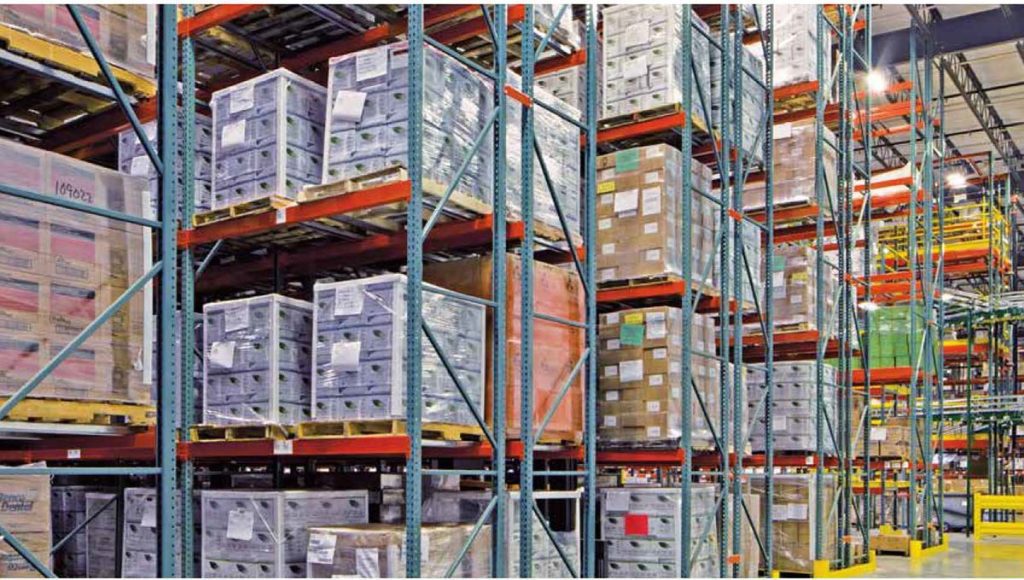
Most warehouse planning assumes a pallet of mixed cartons at a few hundred to a thousand pounds. Paper breaks that assumption in four ways at once.
It is dense. A skid of sheet stock is one of the heaviest uniform loads that moves through a general warehouse. Beam capacity, upright capacity and the number of levels have to be calculated from real weights, not from a standard bay configuration copied off a drawing.
It punishes deflection. Heavy, concentrated loads make beam deflection visible. Specifying beams by capacity alone, without checking deflection over the span, produces a rack that is technically compliant and looks alarming.
It hates moisture and handling damage. Curled edges, dented corners and damp skids become press waste. Rack design contributes by keeping stock off floors that get washed or track snowmelt, and by giving operators enough clearance to place a skid without dragging it.
It comes in three shapes. Sheet stock on skids, roll stock on cores, and finished printed goods in cartons. Each one wants a different storage system, and the mistake we see most often is forcing all three onto the same standard selective bay.
Skid stock: capacity, levels and access
Sheet and cut-size stock is the backbone of most print warehouses, and it is best served by single-deep selective pallet racking — every skid directly accessible, no digging, no honeycombing. The design work is in the numbers, not the concept.
| Design input | Why it matters in a print plant | What to specify |
|---|---|---|
| Actual skid weight | Paper is far denser than mixed cartons | Beam capacity from the heaviest real load, not an average |
| Beam span | Deflection shows up quickly under dense loads | Check deflection over the span, not capacity alone |
| Level count | Every extra level costs capacity per level | Fewer, stronger levels for heavy grades |
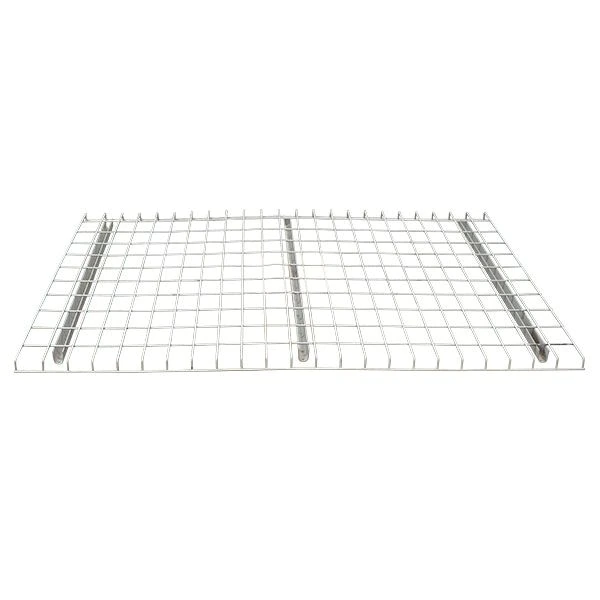
| Deck type | Partial and remnant stock is common | Full-width wire deck on levels staff reach |
| Aisle width | Skid damage happens on placement | Set from the truck’s right-angle stack plus margin |
Roll stock: the load pallet rack handles worst
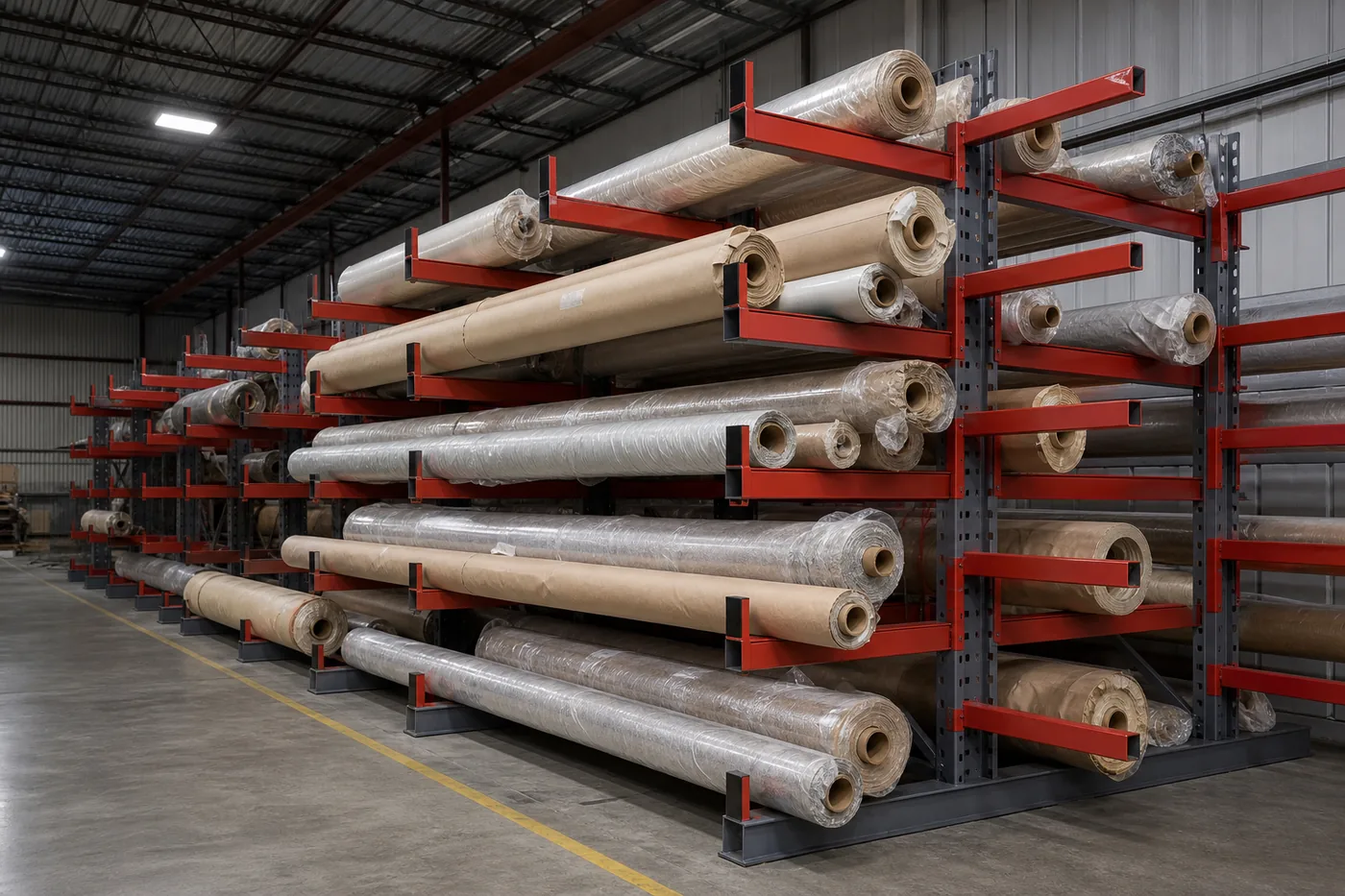
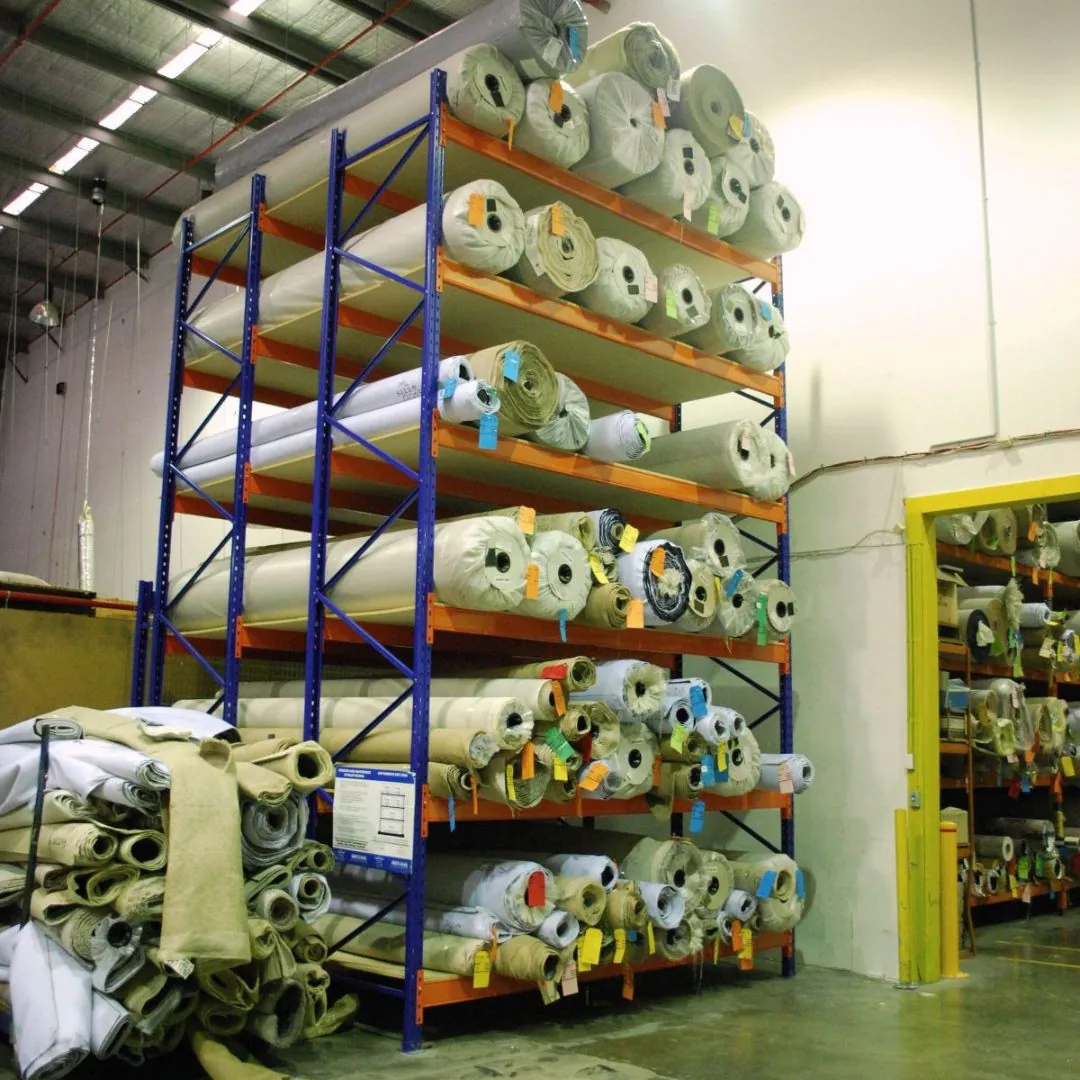
Roll stock — web paper, label stock, laminate, film — is where a print warehouse most often gets storage wrong, because a roll on a standard pallet position wastes cube, rolls out of position and is awkward to retrieve without damaging the edge.
There are three defensible answers, and the right one depends on roll diameter, weight and how often rolls are pulled.
Cradle or saddle storage on rack. Rolls are stored horizontally in formed cradles or on a decked level with chocks so they cannot move. Simple, cheap, and fine for moderate roll counts.
Cantilever racking. Cantilever rack with arms sized to the roll gives unobstructed front access with no front column to work around, which is exactly what a clamp truck or roll handler needs. It is the right call when rolls are long, heavy or frequently accessed.
Floor storage with defined footprints. Sometimes the honest answer for very large rolls is marked floor positions with proper chocking, and rack for everything else. A roll that cannot be retrieved safely from height should not be at height.
Whatever the method, two rules hold: a roll must be positively restrained against rolling, and the handling equipment has to be able to reach it without a spotter improvising.
Watch the core, not just the roll
Roll stock is damaged from the inside as often as the outside. Crushed cores and out-of-round rolls cause web breaks on press. Storage that supports a roll along its length, rather than at one point, is what protects the core.
Finished goods, kitting and mail work
The back half of a print operation looks like a fulfilment warehouse: printed cartons, kitted mail components, envelopes, inserts and job-specific staging. The storage requirements invert — loads are lighter, SKU counts are higher, and speed of picking matters more than weight.
Three things usually earn their place:
Selective rack for palletized finished jobs
Completed jobs waiting on a mail date or a customer release are stored whole, on directly accessible positions, so a release does not become a treasure hunt.
Carton flow for high-touch components
Carton flow rack presents envelopes, inserts and consumables at a fixed pick face with automatic replenishment from behind, which removes most of the walking from a kitting line.
A defined job staging area
Work in progress is the category that eats a print warehouse. Floor-marked staging with a rule about how long a job may sit there keeps WIP out of the racked positions.
Shelving and bins for small components
Small parts on pallet positions is the most expensive storage in the building. Put them on shelving planned as part of the same layout.

Design the pick face for the people, not the pallets
In the finished-goods and kitting area, the constraint is almost never cube — it is how far a person walks and how often they bend. Beam elevations that put the most-picked items between knee and shoulder height, a pick face wide enough for two people to work without colliding, and an obvious replenishment route are worth more than another level of storage above them.
Where a plant runs a mix of machine and hand work, keep the machine-fed consumables on the flow lanes closest to the equipment and the hand-picked components on the aisle side. It is a small layout decision that shows up in throughput every shift.
Moisture, dust and fire considerations
Paper storage brings environmental constraints that a general warehouse does not.
Moisture. Sheet stock takes on moisture and changes dimension, which shows up as registration problems on press. Keep stock off exterior walls where condensation forms, out of dock-door drafts, and never directly on a floor that is washed or that takes snowmelt from the dock. The bottom beam level exists for a reason.
Dust and trim. Paper dust accumulates on beams, decks and in flue spaces. It is a housekeeping issue with a fire dimension, and it is one more reason to prefer wire decking, which does not form a solid shelf for debris to collect on.
Fire protection and flue space. Racked paper is a high-challenge commodity for sprinkler design. Transverse and longitudinal flue spaces — the gaps between back-to-back rows and between pallets — are part of the fire protection design, not spare room. If your sprinkler design assumed flue spaces, blocking them with over-wide loads or solid decking quietly invalidates the assumption.
The practical rule: involve whoever designed the sprinkler system before changing rack height, deck type or aisle width. Storage arrangement is one of the inputs to that design.
Protection, capacity information and inspection
A print warehouse runs heavy loads through narrow spaces with a mix of forklifts, pallet jacks and clamp trucks. That combination puts more energy into rack uprights than most operations realise.
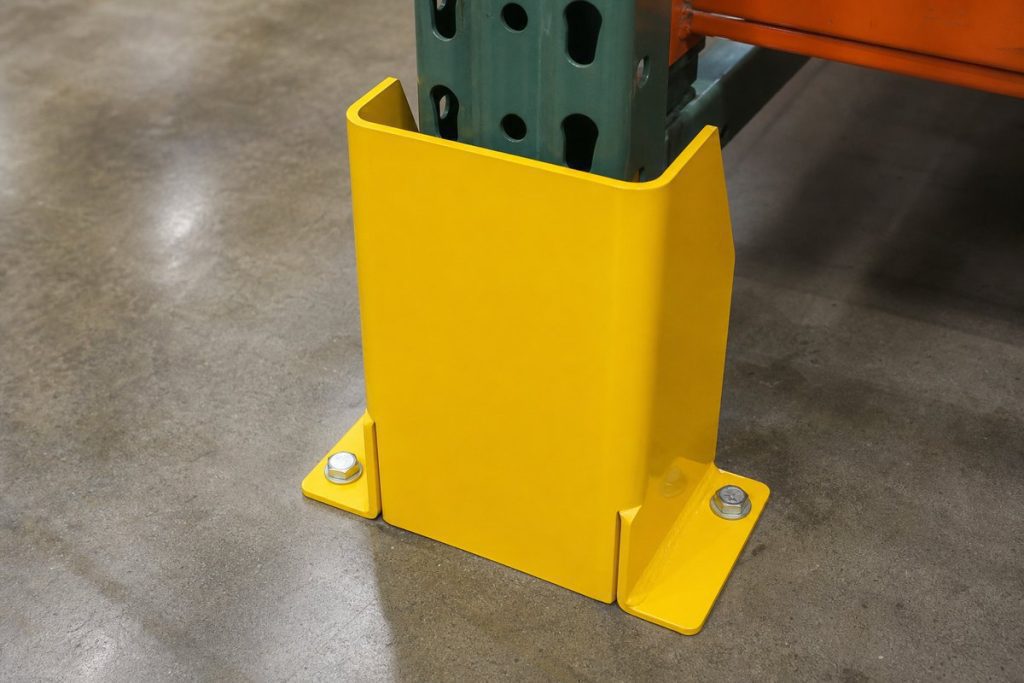
Column guards, end-of-row protectors and bollards at aisle ends, corners and dock approaches are the cheapest insurance available: a guard costs a fraction of a replaced upright plus the cost of emptying a loaded row mid-run. Row spacers keep back-to-back frames square, and beam safety clips stop a beam being lifted out of its connector by a fork.
Capacity information should be posted for the installed configuration and updated whenever beam levels move — changing elevations changes the design. OSHA’s materials-handling requirement, 29 CFR 1910.176(b), requires stored material to be stacked and secured against sliding or collapse, and rack design follows ANSI MH16.1 from the Rack Manufacturers Institute at MHI.
Finally, inspect. A documented annual rack inspection, plus an immediate report-and-unload rule for any impact, is what keeps a heavily loaded paper rack from carrying damage nobody has looked at.
- Beam and upright capacities calculated from the heaviest real skid weight, not an average.
- Full-width decking on every level staff place partial or remnant stock on.
- Rolls positively restrained and reachable by the handler that actually retrieves them.
- Flue spaces kept clear and the sprinkler designer consulted before changing rack height or decking.
- Load plaques matching the installed configuration, and updated when beams move.
- Documented annual inspection plus an immediate report-and-unload rule after any impact.
Shop Pallet Rack Accessories Online
Protect and finish your pallet rack installation with these in-stock accessories, or request a quote for custom-sized rack, freight and volume pricing.

Print and packaging warehouse racking FAQs
What kind of racking suits a printing plant?
How heavy is a skid of paper on pallet rack?
How should paper roll stock be stored?
Is structural or roll-formed pallet rack better for a print warehouse?
Does paper storage affect sprinkler design?
Why does wire decking matter for paper storage?
How do you stop skid damage in a paper warehouse?
Storing paper, roll stock or finished print work?
We design, supply and install manufacturing and plant storage rack, cantilever racking and narrow-aisle systems across Utah and the Intermountain West.
Utah pallet rack project: This case study supports our Utah pallet rack design and installation guide and, at the top level, our main pallet rack systems hub.
Racking Designed Around Paper, Not Around Averages
Material Handling USA designs, supplies and installs pallet rack for print, packaging and converting operations across Utah and the Intermountain West.
Ready to configure your pallet rack system?
Use our guided BuildQuote tool to choose the right configuration, review your parts and submit it for checkout or a formal quote.