
Home › Metro Wire Shelving
Metro Wire Shelving
Super Erecta and Super Adjustable Super Erecta wire shelving from Metro (InterMetro Industries) — chrome, Metroseal epoxy and stainless finishes, mobile conversions, accessories and seismic hardware, specified and shipped nationwide by MH-USA.
1929
InterMetro founded
30,000+
Metro products
1″
Shelf adjustment increments
1997
MH-USA serving the West
Metro Shelving: The System That Defined Wire Shelving
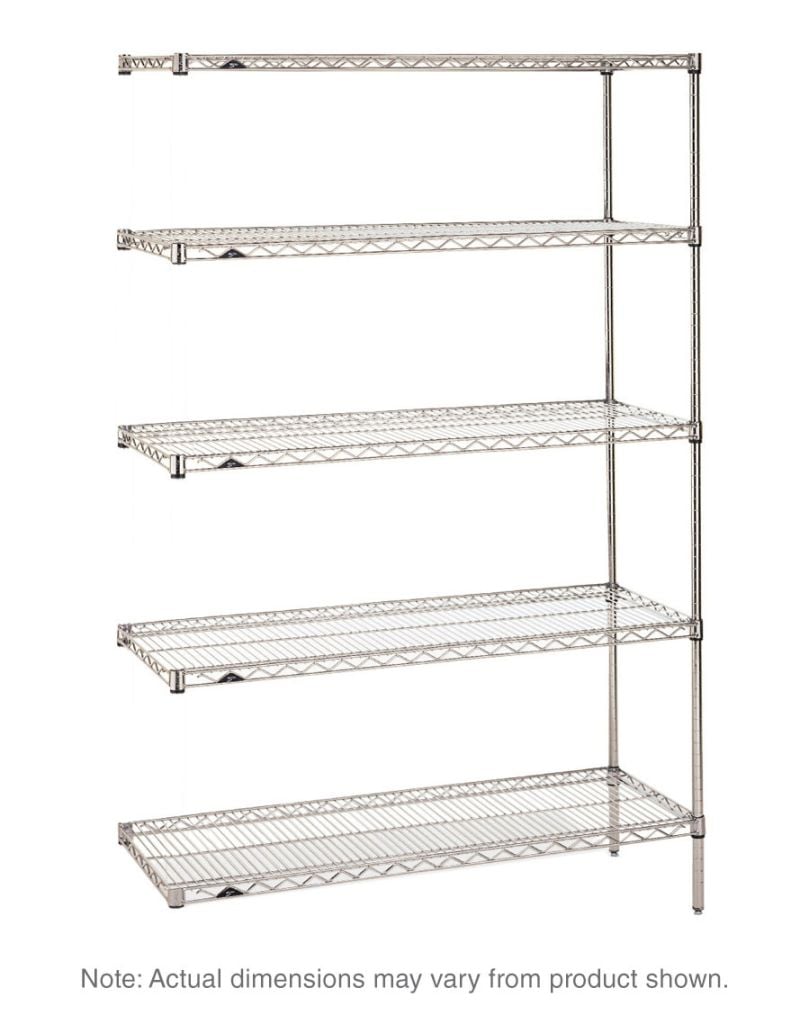
Metro is the brand of InterMetro Industries, founded in 1929 in Wilkes-Barre, Pennsylvania, and the company that created the original Super Erecta wire shelving system. That matters practically: the post-and-tapered-sleeve design Metro introduced is the pattern every other wire shelving line imitates, and a catalog of more than 30,000 products means parts, finishes, decks and accessories still interlock decades later.
MH-USA represents Metro from Salt Lake City and has supplied Metro commercial shelving to kitchens, hospitals, labs, cleanrooms and distribution centers across the West since 1997, shipping nationwide. The questions we get asked are which finish survives a walk-in, what a unit holds on casters, and what the inspector wants anchored.
Still comparing brands and constructions? Start with our industrial wire shelving category resource. This page assumes you have decided on Metro.
How the Super Erecta Wire Shelving System Works
A Super Erecta unit is four posts, four or more shelves, and a set of tapered plastic split sleeves. The posts are grooved every inch and numbered, so you read a height off the post instead of measuring. Two half-sleeves snap around the post, the shelf’s corner casting drops over them, and the load wedges the taper tight. Assembly is tool-free.
The trade-off is adjustment: moving the third shelf means lifting the fourth and fifth off first. Super Adjustable Super Erecta lets one shelf move in one-inch increments without disassembling the unit or unloading the shelves above it — worth the premium wherever the product mix changes, such as hospital supply rooms, commissaries and retail backrooms.

Two other decisions get made at order time and are painful to reverse:
Starter units versus add-on units. A starter ships with four posts; an add-on ships with two and shares the posts of the unit beside it, saving money and floor space on a continuous run. Order add-ons for straight wall runs and starters for freestanding islands and units that must move independently. All starters wastes money; all add-ons will not stand up.
Post height versus shelf count. Post heights commonly run 34″, 54″, 63″, 74″ and 86″ (plus mobile-specific heights). Taller posts do not add capacity — they add shelf positions. Pick the post height from ceiling clearance, sprinkler clearance and the tallest item you store, then set shelf count from what you actually stack.
Metro Shelving Finishes and Where Each One Belongs
Finish decides whether a unit lasts fifteen years or two, and it is the decision buyers get wrong most often — chrome looks fine on day one in every environment.
| Finish | Environment | Holds up against | Avoid it when |
|---|---|---|---|
| Chrome | Dry storage, stockrooms, retail backrooms | Dry air, light wipe-down cleaning | Humidity, condensation or daily wet cleaning |
| Metroseal (gray epoxy) | Walk-in coolers, humid and beverage storage | Condensation, damp cleaning | Chemical washdown or steam |
| Metroseal Green | Food handling rooms wanting a distinct epoxy finish | Humidity, damp environments | Continuous or chemical washdown |
| Stainless steel | Washdown, labs and pharmacies, cleanrooms, freezers | Chemicals, steam, pressure cleaning, frost cycling | Budget is tight and the room is dry |
| Brite / hammertone | Dry industrial and display use | Dry-area service, appearance | Any moisture exposure |
A walk-in cooler is not a dry room: chrome pits at the wire crossings within a couple of seasons, and Metroseal epoxy is the value answer. Stainless is the answer where a hose or chemical touches the shelf, or a lab needs a non-shedding surface.
Do not mix finishes inside one continuous run — an add-on unit should match the starter it shares posts with, or the weaker finish becomes the failure point.
Metro markets Microban product protection on selected lines; ask us and we will confirm which items carry it. We make no health claim, and sanitation listings are model-specific — we confirm them in writing per model before you order.
Metro Shelf and Post Load Ratings — and How They De-Rate
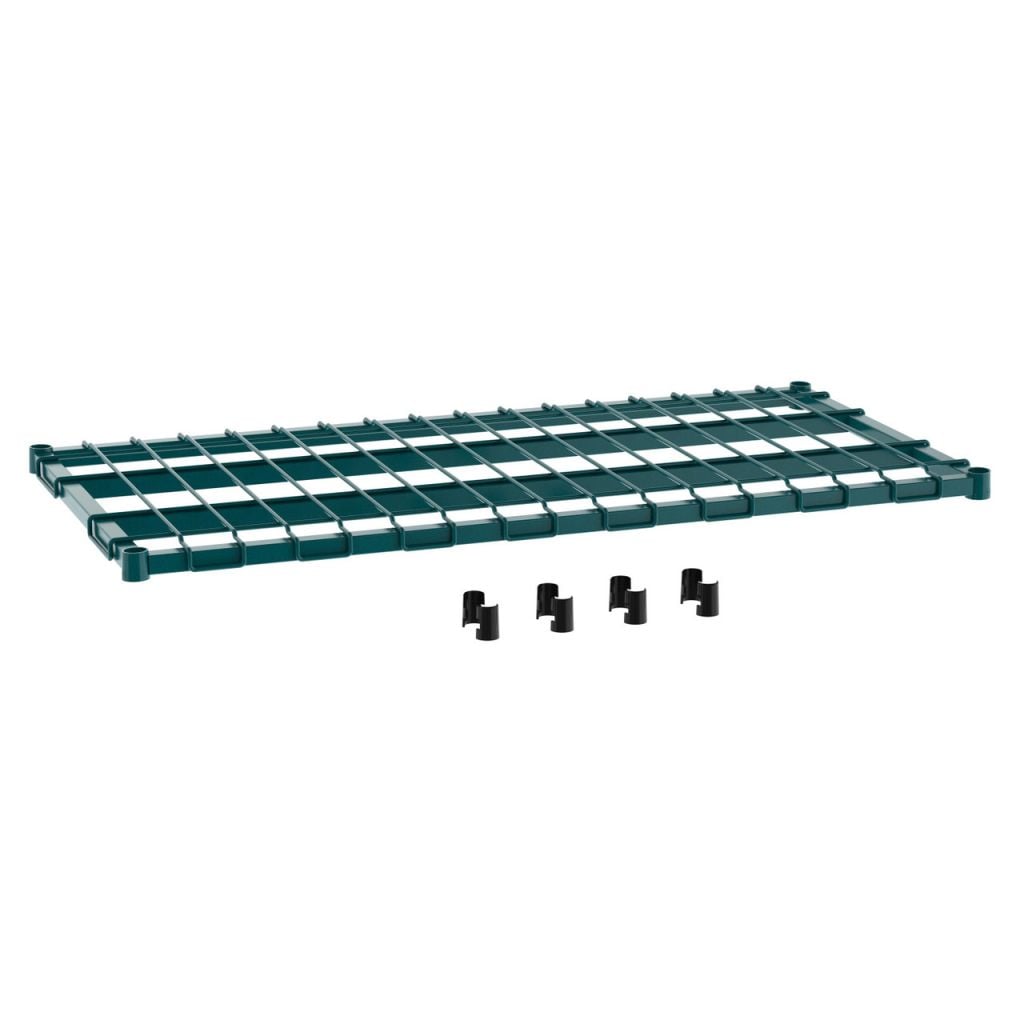
Two numbers govern a wire shelving unit and buyers usually look at one. The shelf rating is what one shelf carries on an evenly distributed static load. The post or unit rating is what the whole assembly carries, and it is always less than the shelf rating times the shelf count — five 800-lb shelves is not a 4,000-lb unit.
| Configuration | What changes | Planning rule |
|---|---|---|
| Stationary, shelves evenly spaced | Full published rating applies; common shelves fall in the 600–800 lb range | Baseline. Distribute load; never concentrate it at mid-span |
| Widely spaced shelves | Less frame bracing, more post flex | Keep four shelves per unit; add a top shelf as a brace |
| Mobile on casters | Total unit capacity drops substantially | Never size a mobile unit off stationary shelf ratings |
| Point or concentrated load | A crate on four feet loads four small areas | Spread it with an inlay or drop mat |
| Cantilever or wall-mounted shelf | Capacity is set by the bracket and its anchorage | Confirm bracket rating and wall substrate |
| Dunnage base or platform | Built for heavy floor-level bulk | Put the heaviest inventory at floor level |
Ask for the rating on your exact configuration
Capacities vary by shelf size, finish, series and mobility. Give us those four and we put the rated numbers for that configuration in writing with the quote instead of quoting a catalog maximum.
Wire, Solid and Polymer Decks: What to Put on the Metro Racks
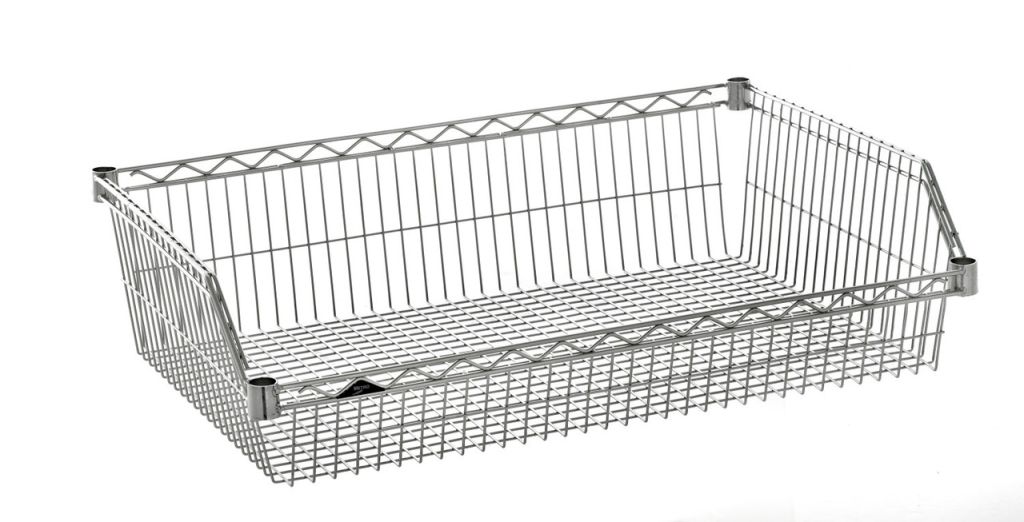
Wire is the default and the reason the system exists: air moves through it, light reaches lower shelves, sprinkler spray is not blocked, and dust does not collect. It is right for cased goods, cartons, bins and totes.
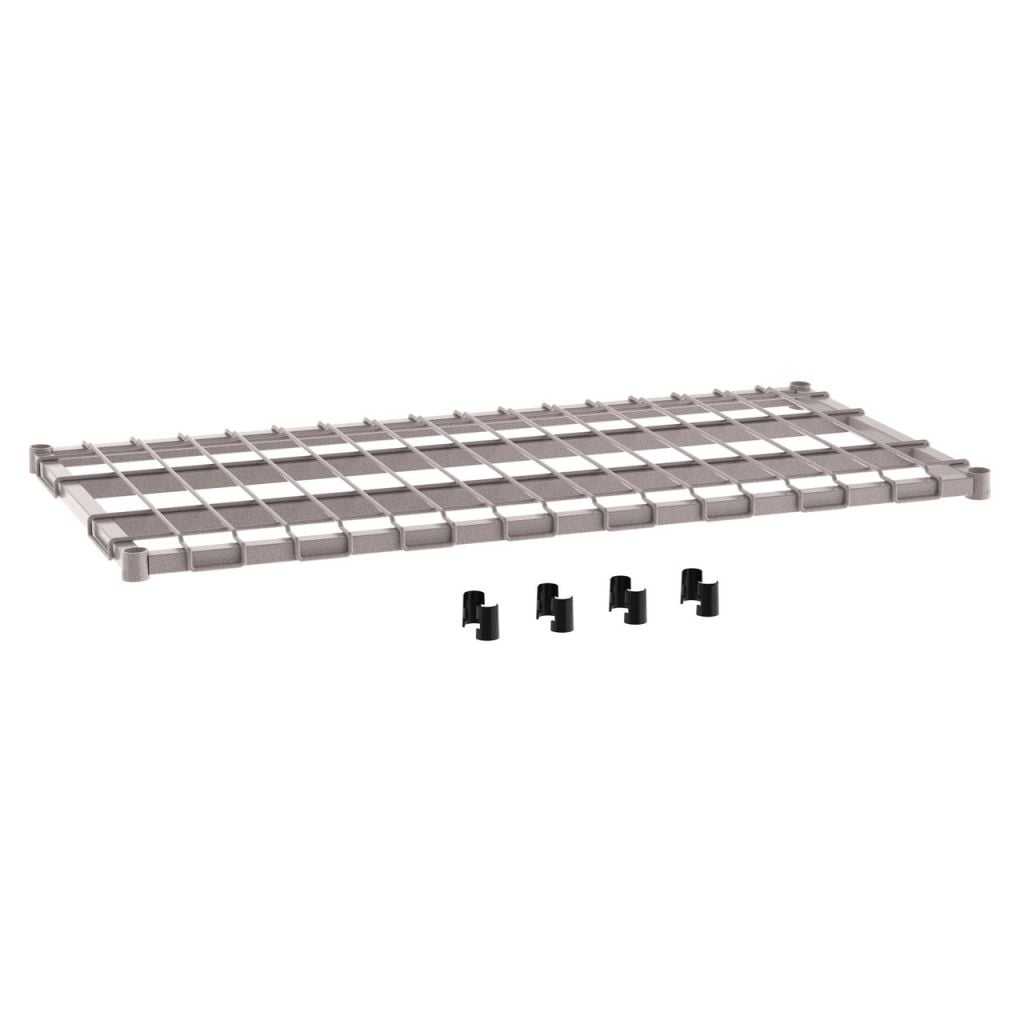
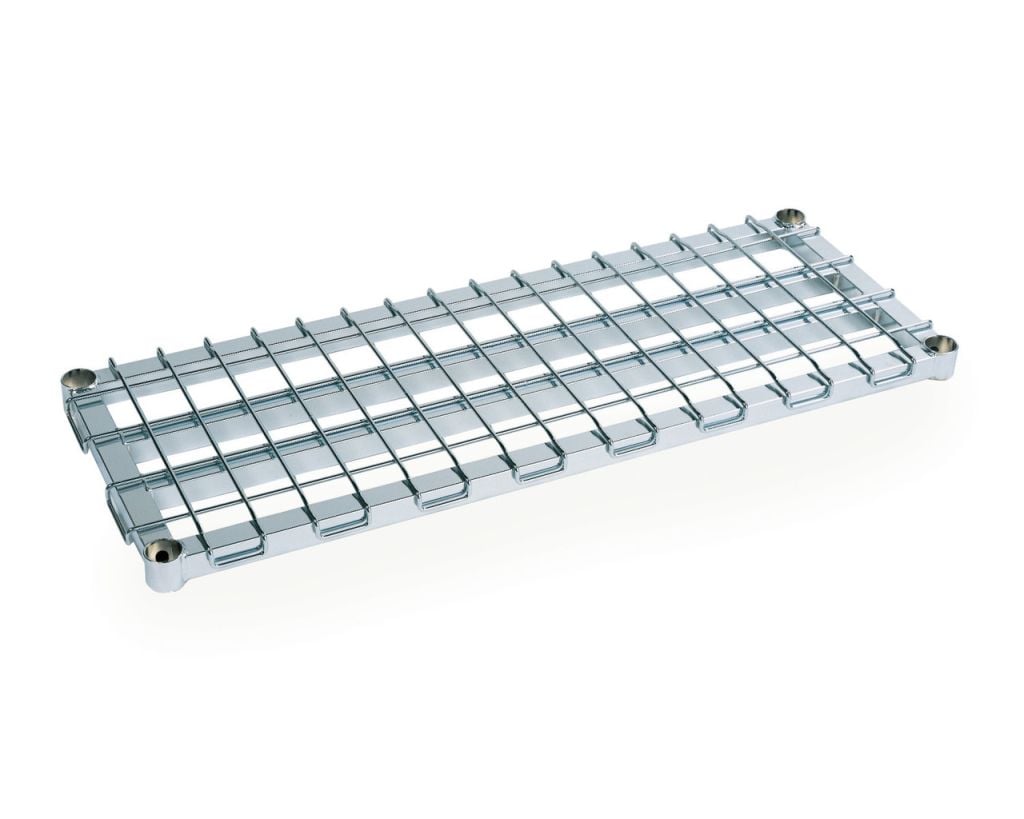
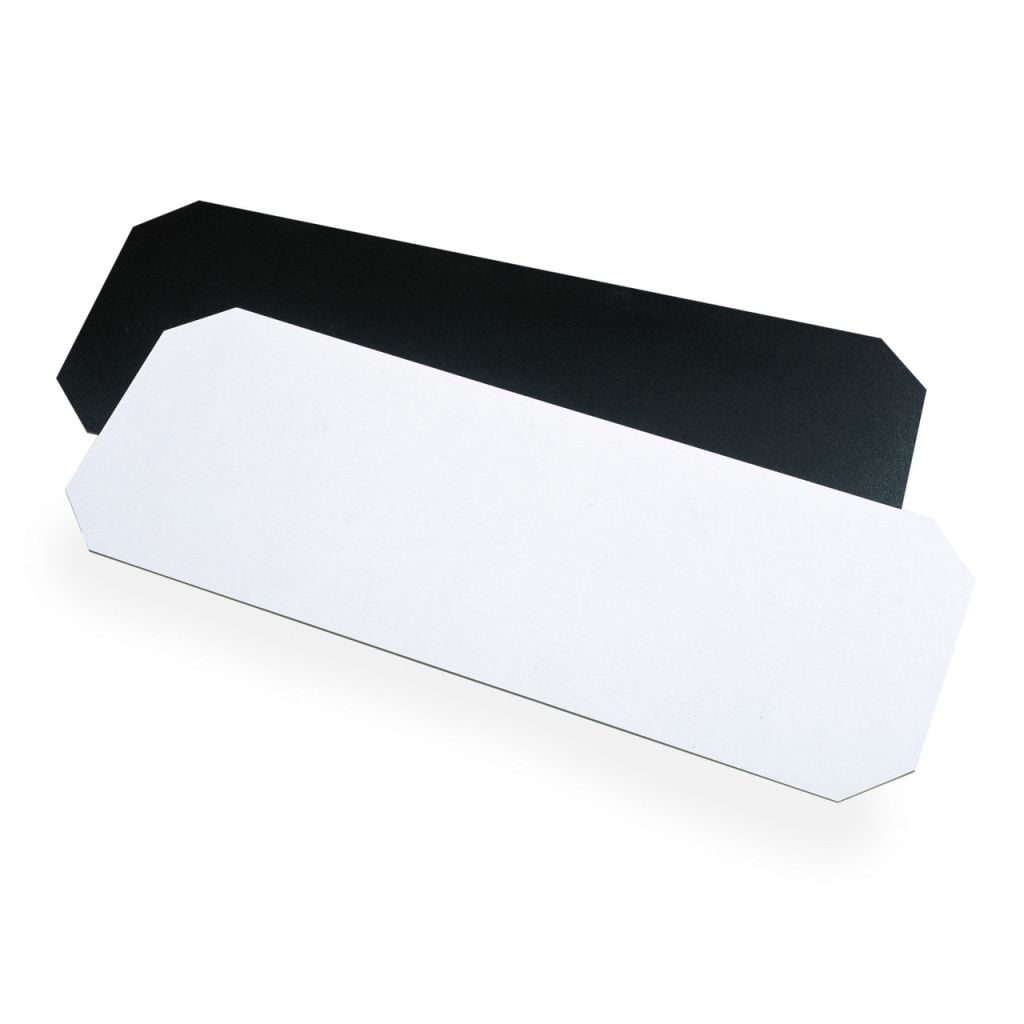
Solid decks — solid shelves, or wire shelves fitted with inlays and drop mats — stop small items falling through and give a wipeable surface. Retrofitting inlays is cheaper than replacing shelves and spreads concentrated loads.
Polymer — Metro’s MetroMax i, MetroMax Q and MetroMax 4 lines — is a separate shelving family, not a deck option on a wire unit. It suits continuously wet or corrosive rooms where even coated steel becomes a maintenance item. Ask us to price MetroMax against stainless Super Erecta rather than defaulting to one.
Making Metro Racks Mobile: Casters, Dollies and Track
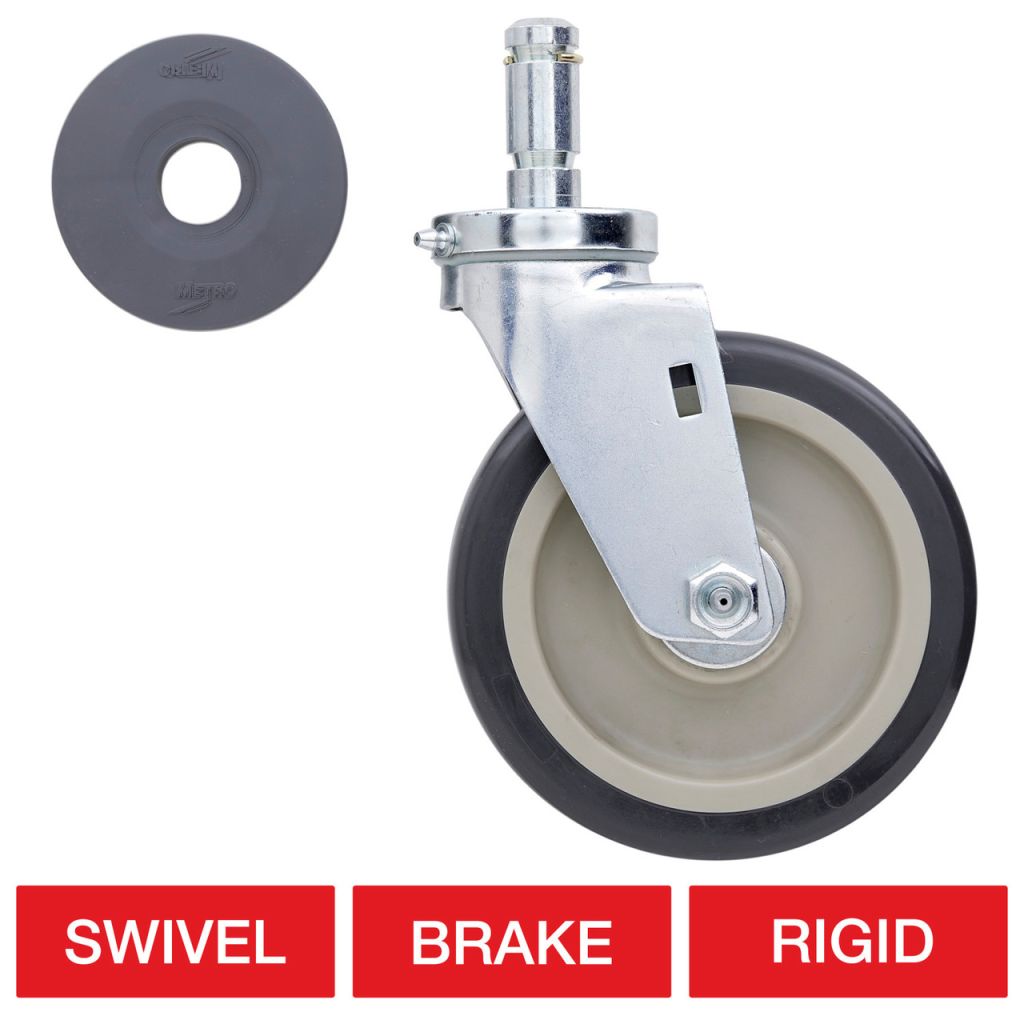
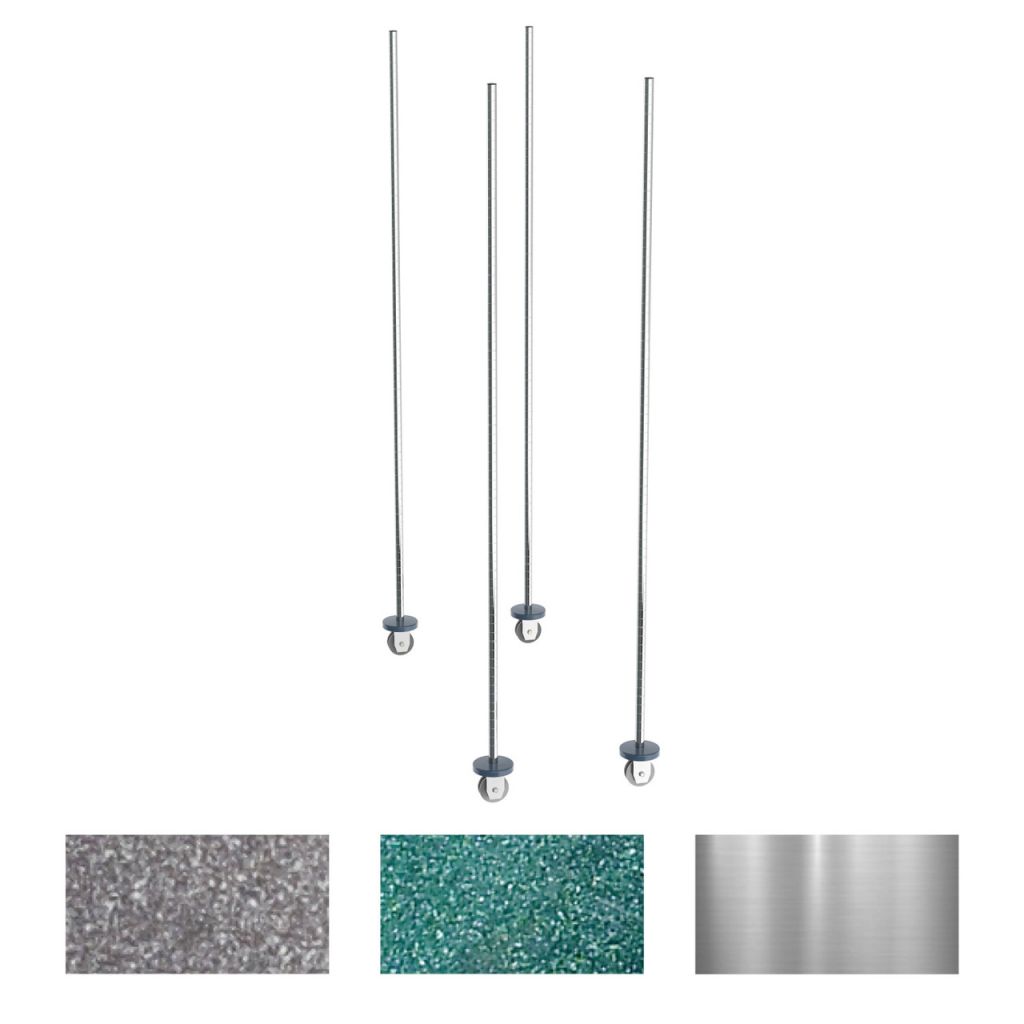
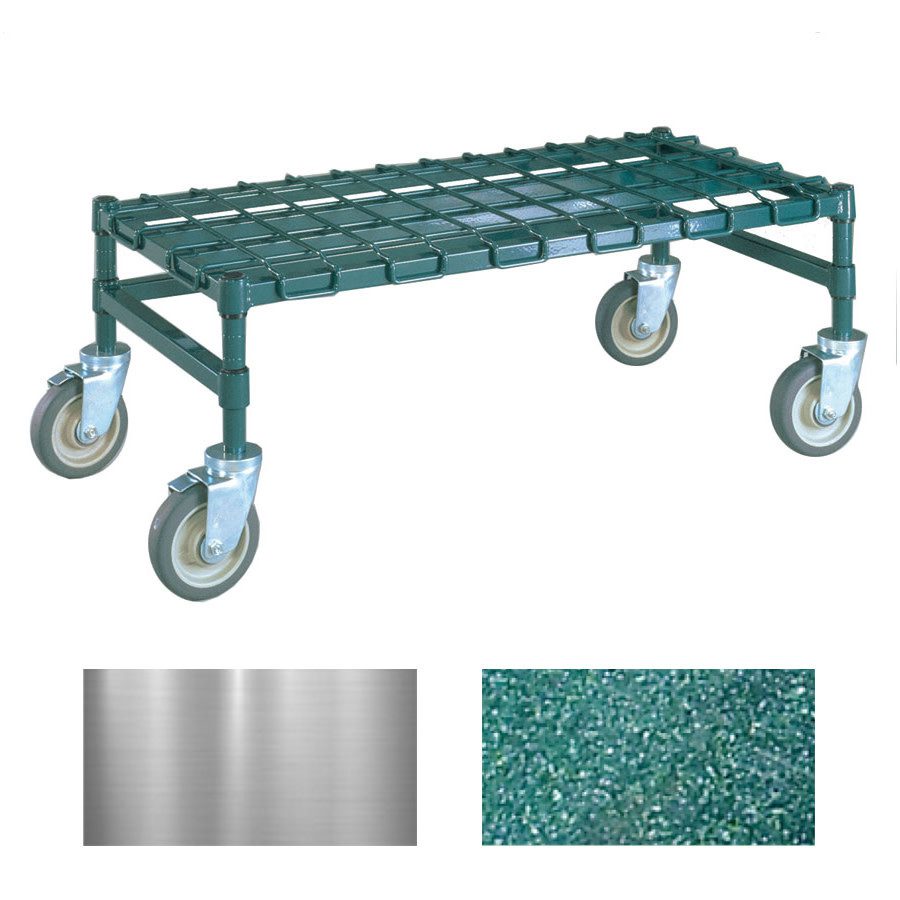
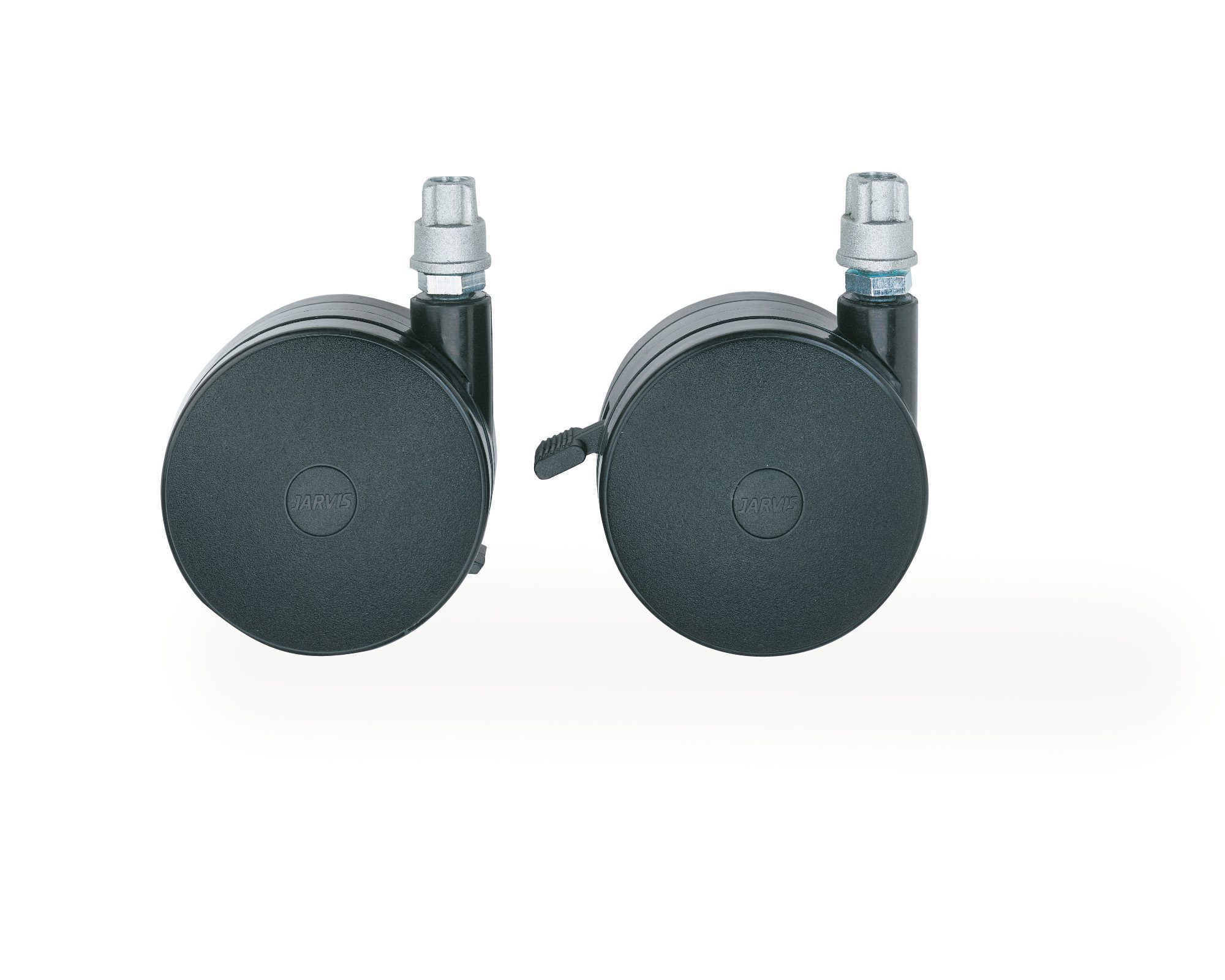
Mobility on a Super Erecta unit is a post accessory, not a different unit: stem casters thread into the post ends. That is why the capacity de-rate matters — the same shelves now load four small wheel contact patches and four swivel bearings.
Caster selection in order of importance: diameter (bigger wheels cross thresholds and floor drains; 5″ and 6″ are the workhorses), tread (polyurethane for quiet rolling, nylon where heat or chemicals rule it out), brakes (at least two), and special duty — conductive casters for static-sensitive rooms, high-temperature autoclave casters for sterile processing.
Dolly bases suit units that only move for cleaning: lower cost, lower profile, more stable. qwikTRAK floor track and Top-Track overhead track put whole units on a track so you keep one aisle instead of several — the answer for a cramped stockroom or cooler that cannot grow.

Metro Shelving Parts and Accessories That Change How a Unit Works
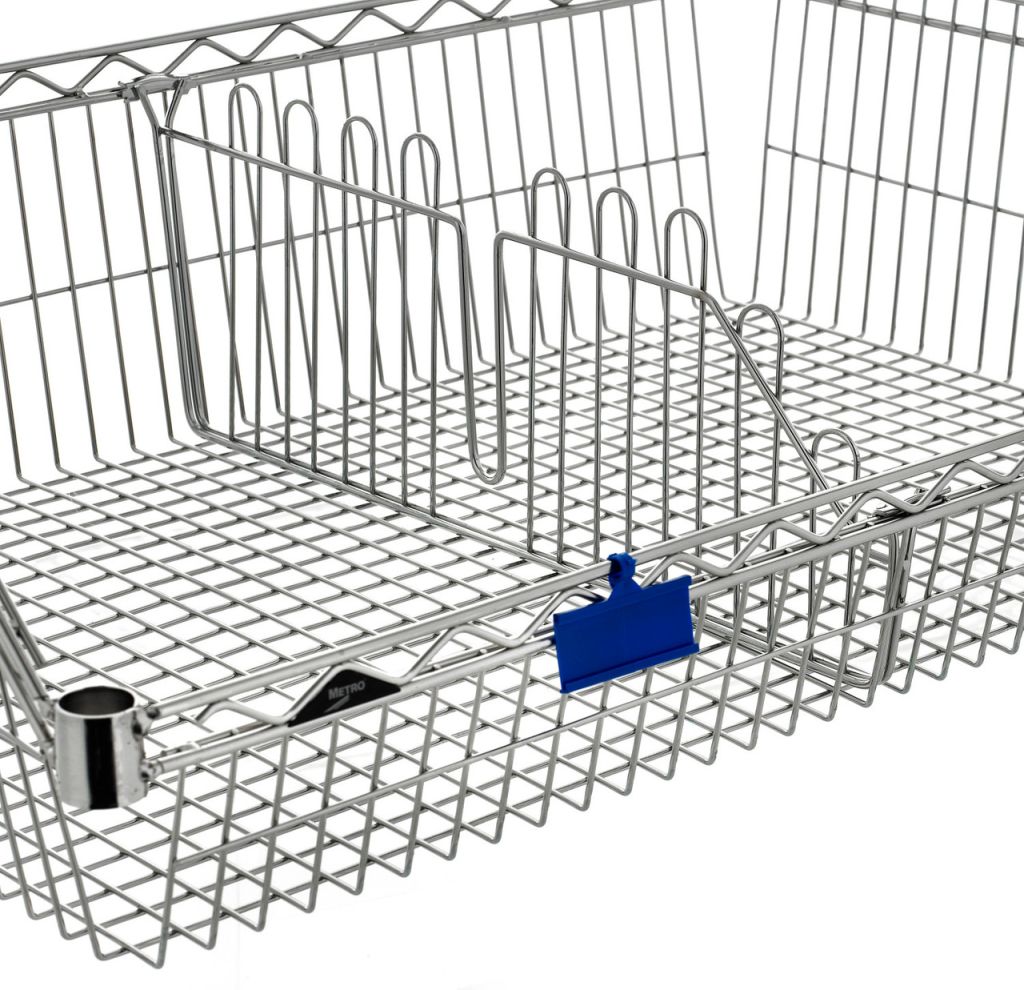
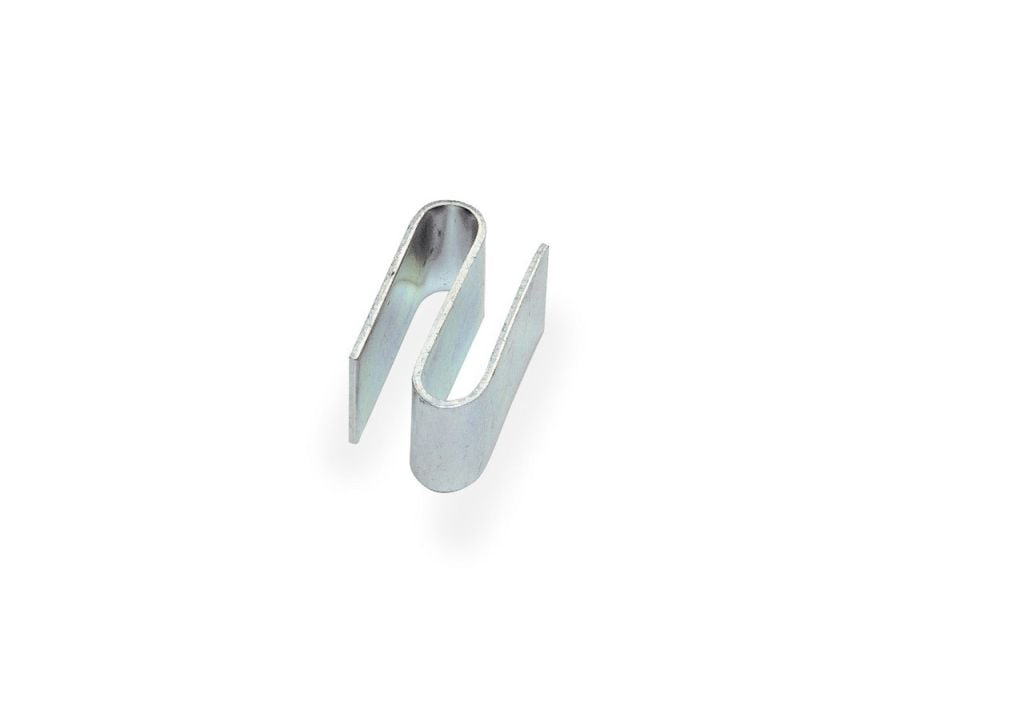
The accessory list is where a generic unit becomes purpose-built storage — and where most orders leave value on the table.


Seismic Anchoring and Wall Attachment
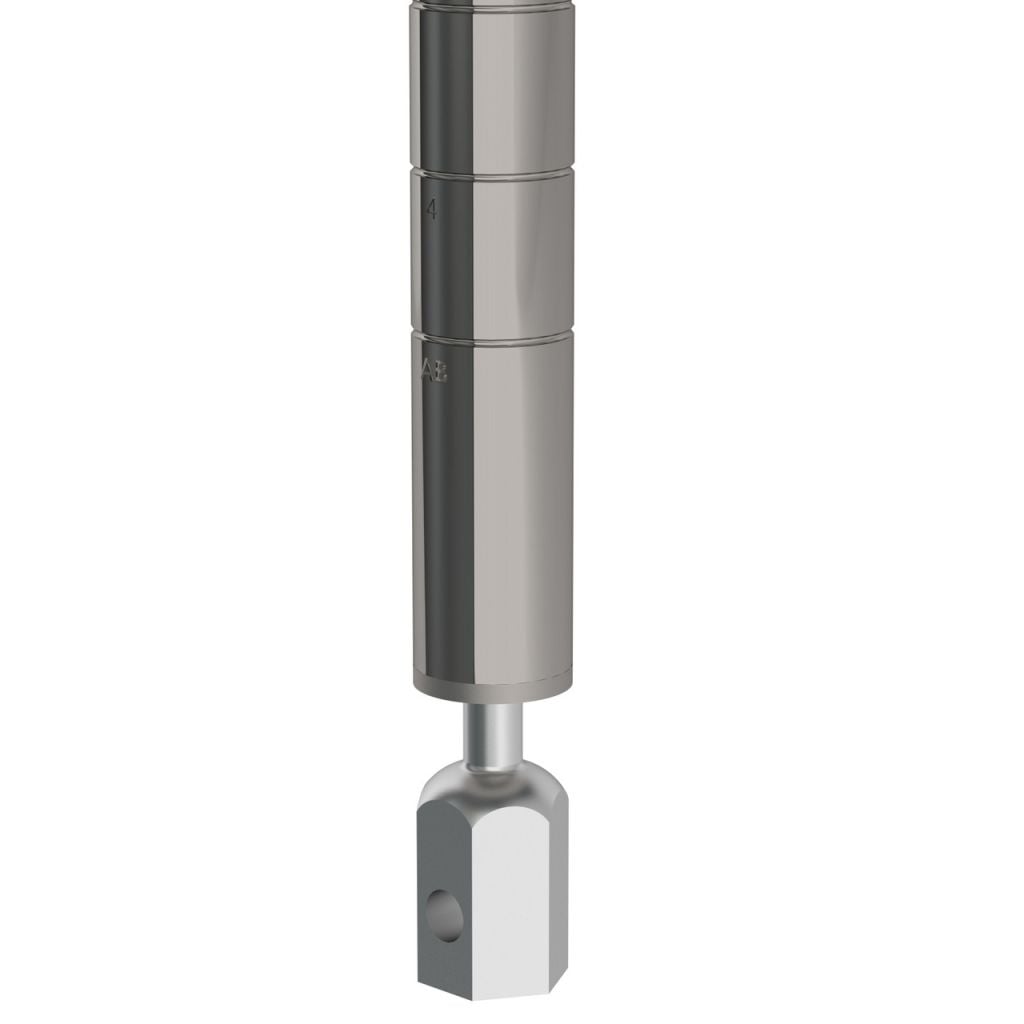
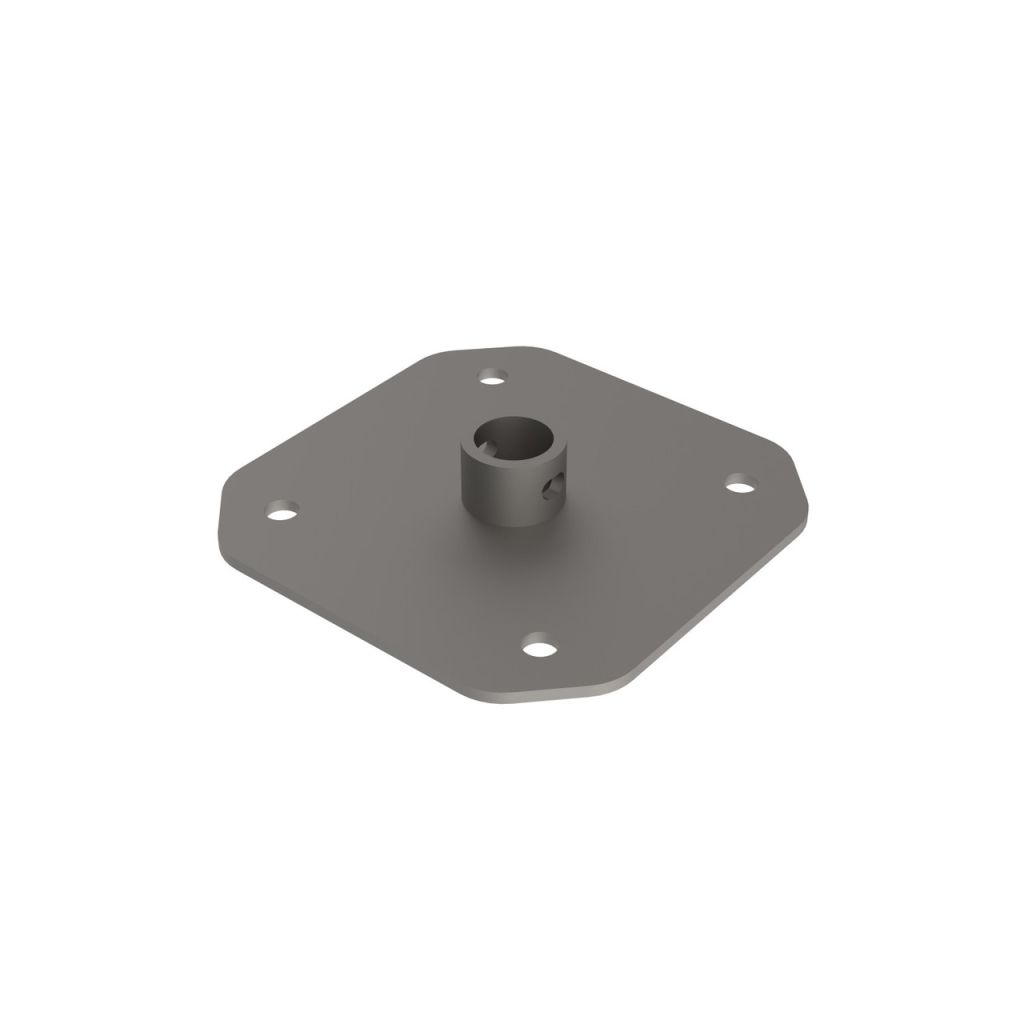
A loaded five-shelf unit is tall, narrow and top-heavy, and in the Intermountain West that puts shelving into the seismic conversation. Metro publishes hardware for it: SiteSelect seismic posts, base plate kits in one-, two- and four-post bolt patterns, plated and stainless post clamps, threaded foot plates and sway brace kits for site-specific approvals.
Whether your shelving must be anchored, and to what pattern, is determined by the local building official and the engineer of record — we do not certify compliance. We do quote the right hardware, match base plates to your posts and finishes, and supply manufacturer documentation for the submittal.
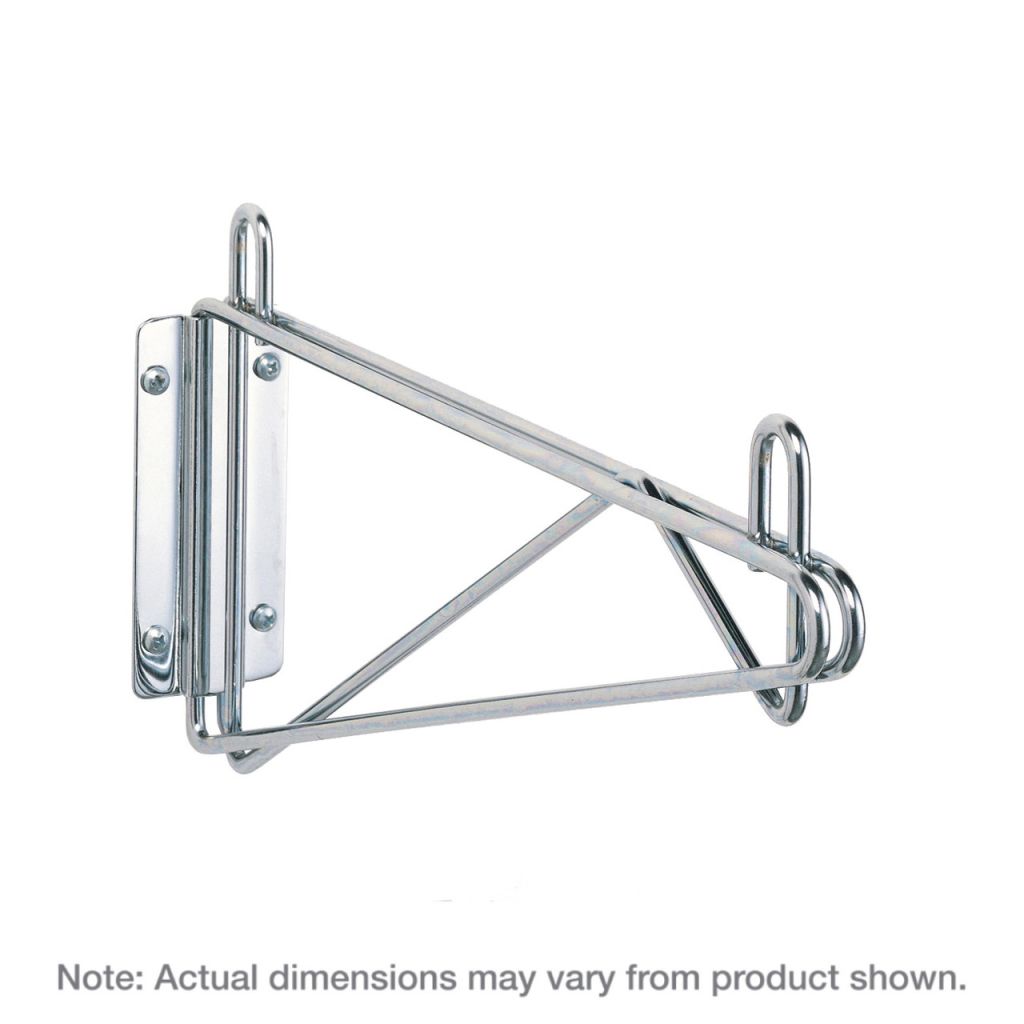
Even outside a seismic requirement, anchor tall units. Wall brackets, back-to-back post clamps on double rows and shelf ledges are cheap insurance in any stockroom where someone eventually climbs a shelf.
How to Measure and Specify Metro Wire Shelving
Every quote needs the same seven inputs. Gather them once and the order goes out clean.
- Room dimensions and obstructions — wall-to-wall, plus door swings, drains, columns and panel boxes. Size aisles for the equipment that travels them.
- Shelf depth — 18″ and 21″ are the everyday sizes, 24″ for cased goods, 14″ for narrow aisles. Depth you cannot reach across becomes dead storage.
- Shelf width and run length — divide the run into standard widths with one starter plus add-ons.
- Post height — set by ceiling and sprinkler clearance and the tallest item stored.
- Shelf count and spacing — count from your tallest carton; keep a brace shelf near the top.
- Finish — from the environment table above: chrome dry, Metroseal humid, stainless washdown and lab.
- Mobile or stationary — decided before you size the load, because mobility de-rates capacity and adds height.
Ordering mistakes we catch most often
- Ordering all starter units for a continuous wall run instead of one starter plus add-ons.
- Ordering add-on units without the starter that carries the shared posts, so the run cannot stand up.
- Chrome specified for a walk-in cooler or wet prep area — fine for a season, then it pits.
- Sizing a mobile unit from stationary shelf capacities.
- Forgetting casters add three to six inches of height, so the unit no longer clears the sprinkler line.
- No ledges or dividers, so half of every shelf goes unused.
- Seismic hardware discovered at inspection, after the run is loaded.
- Measuring the drawing instead of the room. Field-verify before you release the order.
Send us your Metro shelving list or a photo of the room
Email a shelving list, floor plan or a phone photo with rough dimensions. We come back with a Metro configuration, part numbers, rated capacities for that build, seismic hardware if the job needs it, and freight to your dock. Call (800) 326-4403.
Shop Metro Super Erecta Products Online
Buy select items directly from our online store, or request a quote for volume, custom sizes and freight-rated orders.


Metro Shelving FAQs
What is Metro shelving?
How do Metro wire shelving units assemble without tools?
What is the difference between Super Erecta and Super Adjustable Super Erecta?
Which Metro shelving finish should I choose?
How much weight will a Metro wire shelf hold?
Can Metro wire shelving be made mobile?
Do I need seismic anchoring for Metro shelving?
What Metro shelving parts and accessories can I order separately?
Get a Metro Wire Shelving Quote
Tell us the room, the finish and the load. We will configure the Metro Super Erecta units, parts and seismic hardware and ship them anywhere in the country.