
Keep Warehouse Racking Safe
A practical, OSHA-aligned guide to keeping pallet racking safe — the standards that apply, the hazards to design out, and the rack protection, inspection and training that stop a small dent from becoming a collapse. Backed by Material Handling USA in Salt Lake City.
§5(a)(1)
OSHA General Duty Clause
MH16.1-2023
Current U.S. rack standard
Annual+
Documented inspection cadence
$165,514
OSHA max per violation
Racking Safety Is a System, Not a Single Fix
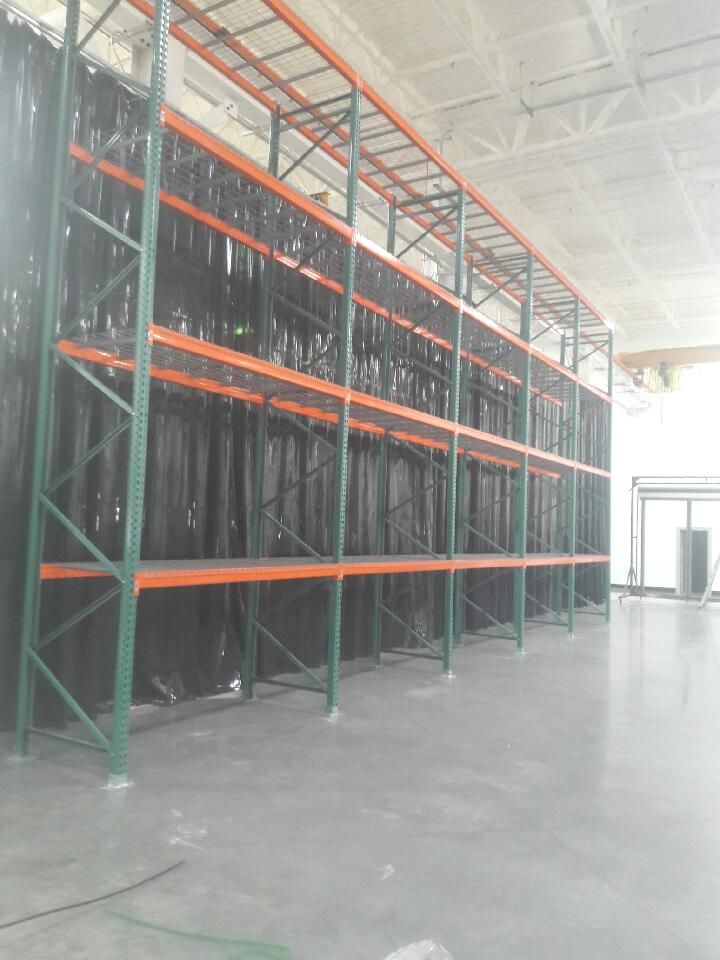
A pallet racking system holds tons of product a few feet above the people working around it. When it is installed correctly, loaded within its ratings, protected from impact and inspected on a schedule, it is one of the safest structures in the building. When any one of those breaks down, the failure mode is sudden and serious.
Keeping warehouse racking safe is not one purchase or one policy — it is a layered system: the right structure, physical protection at the points that get hit, clear and enforced load limits, a real inspection routine, trained operators and good housekeeping. This guide walks through each layer, with the standards that govern it and the products that support it.
Material Handling USA designs, supplies, installs and protects pallet rack across Utah and the Mountain West. We build to the ANSI/RMI MH16.1 standard and help you keep an existing system compliant — from a single row-end guard to a full re-engineered layout.
Want a safety-focused look at your racking?
Send us photos or drawings of your system and we will flag the risks, recommend protection and quote repairs or upgrades — no obligation.
What OSHA and ANSI Actually Require
Most operators assume there is a dedicated OSHA “racking standard.” There is not. OSHA enforces rack safety through the General Duty Clause and a handful of general industry rules, and it points to the ANSI/RMI MH16.1 consensus standard — the same one the International Building Code references — for how racks should be designed and used. Here is the framework that applies to your warehouse.
The regulatory picture
ANSI/RMI MH16.1-2023 is the current U.S. standard: the “Specification for the Design, Testing, and Utilization of Industrial Steel Storage Racks,” approved in March 2023 by the Rack Manufacturers Institute. It covers selective, movable-shelf, rack-supported and automated steel systems (plus push-back, pallet-flow, case-flow and pick modules) and sets design by Allowable Strength Design or Load and Resistance Factor Design.
OSHA can issue citations carrying penalties up to $165,514 per violation for recognized rack hazards — unanchored frames, missing load plaques, visible damage or damaged racks put back in service without evaluation. Compliance is not automatic and stays with the facility owner; we build and protect to the standard and give you the data your engineer of record needs.
| Rule / standard | Subject | What it means for your racking |
|---|---|---|
| General Duty Clause §5(a)(1) | OSH Act of 1970 | The catch-all OSHA cites for storage-rack hazards — unanchored racks, missing load plaques, visible structural damage and damaged racks returned to service without evaluation. |
| 29 CFR 1910.176(a) | Aisles & clearances | Aisles and passageways where mechanical equipment is used must be kept clear, in good repair and appropriately marked. |
| 29 CFR 1910.176(b) | Secure storage | Stored material must be stacked, blocked, interlocked and limited in height so it is stable and secure against sliding or collapse. |
| 29 CFR 1910.176(c) | Housekeeping | Storage areas must be kept free of accumulations that create tripping, fire, explosion or pest hazards. |
| 29 CFR 1910.178 | Powered industrial trucks | Forklift design, use and documented operator training — the equipment most often responsible for rack damage. |
| 29 CFR 1910.22 / 1910.28 | Surfaces & fall protection | Floors must support their maximum intended load; fall protection is required for work 4 ft or more above a lower level (relevant to rack-supported platforms and order picking). |
| ANSI/RMI MH16.1-2023 | Consensus design standard | The Specification for the Design, Testing and Utilization of Industrial Steel Storage Racks — referenced by OSHA and the ICC International Building Code as the benchmark for safe rack design and use. |
A note on compliance
Meeting ANSI MH16.1 and the OSHA rules above reduces risk and citations, but no product or vendor can promise “automatic” OSHA compliance or certification for your specific facility. Anchorage, seismic design, load limits and the final sign-off remain the owner’s responsibility, supported by a qualified engineer where the jurisdiction requires one.
The Hazards a Safe Rack Program Designs Out
Nearly every rack failure traces back to one of a short list of preventable causes. Name them, and you can design each one out with structure, protection, procedure or training.
Rack Protection Products That Prevent Damage
Physical protection is the layer you can add to almost any existing system today. The goal is simple: keep impact energy off the loaded structure and keep product from falling. These are the products we install most often, matched to where damage actually happens.
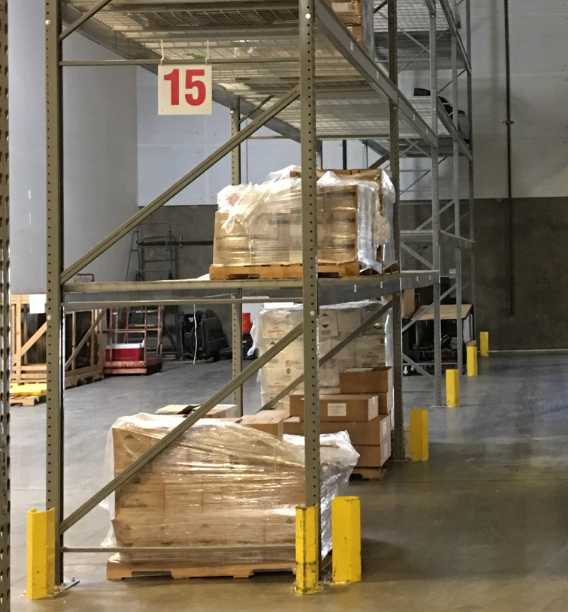 Upright & Column ProtectorsBolt-down and slide-on protectors shield the most-hit part of the frame — the bottom of the upright — from forklift and pallet-jack strikes. They absorb and spread impact energy so the column keeps its rated capacity instead of buckling.
 Row-End & End-of-Aisle GuardsHeavy steel guards anchored at aisle entrances take the hit before a forklift reaches your uprights. End rows and pass-throughs are where the most damage happens, so this is usually the highest-value protection you can add.
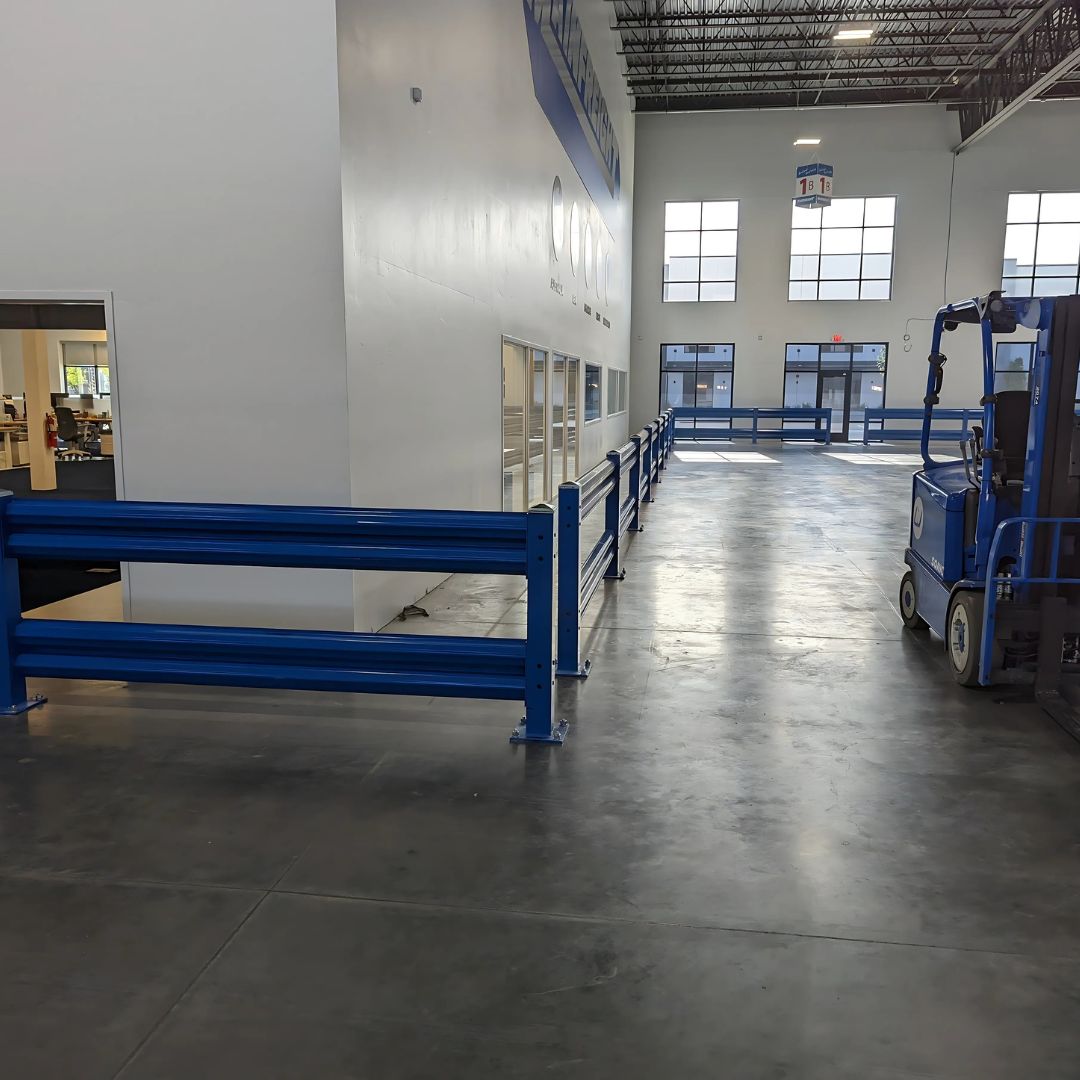 Guard Rail & Barrier SystemsBolted steel guard rail separates forklift travel lanes from racking, pedestrians and equipment. It keeps traffic off the base of your frames and defines clear, marked aisles the way OSHA 1910.176(a) expects.
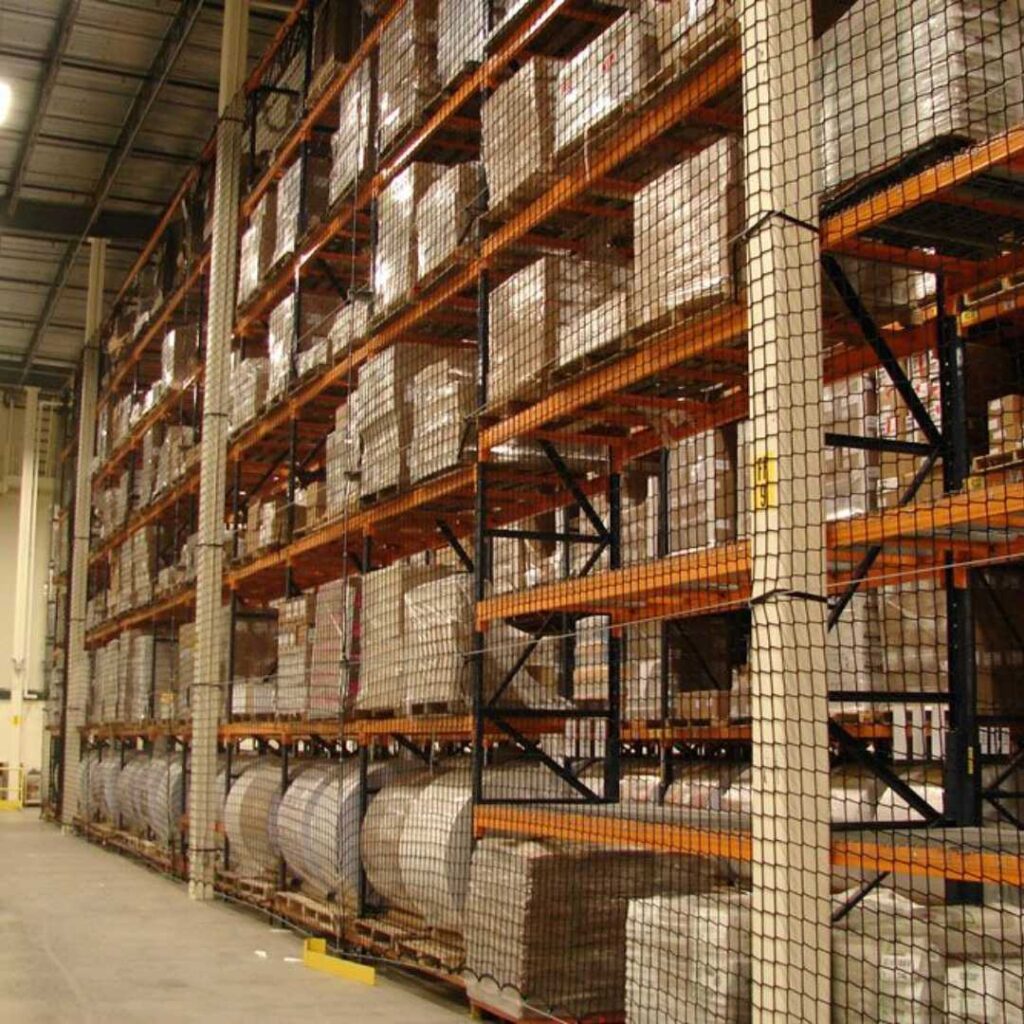 Rack Safety Netting & Back GuardsRack-back and end-of-aisle netting stops cartons, cases and loose product from falling into aisles, flue spaces and onto people below — essential over pick paths, walkways and any bay stored above head height.
 Welded Wire Mesh DeckingWire decking keeps individual cartons and hand-stacked goods from slipping between beams, improves light and sprinkler flow-through, and lets you see damage on lower levels. It also catches small items a bare-beam level would drop.
 Controlled Access: Doors & CagesSwinging security gates, sliding doors and wire enclosures limit rack access to trained, authorized staff — protecting high-value, controlled or hazardous goods and keeping untrained traffic away from loaded racking.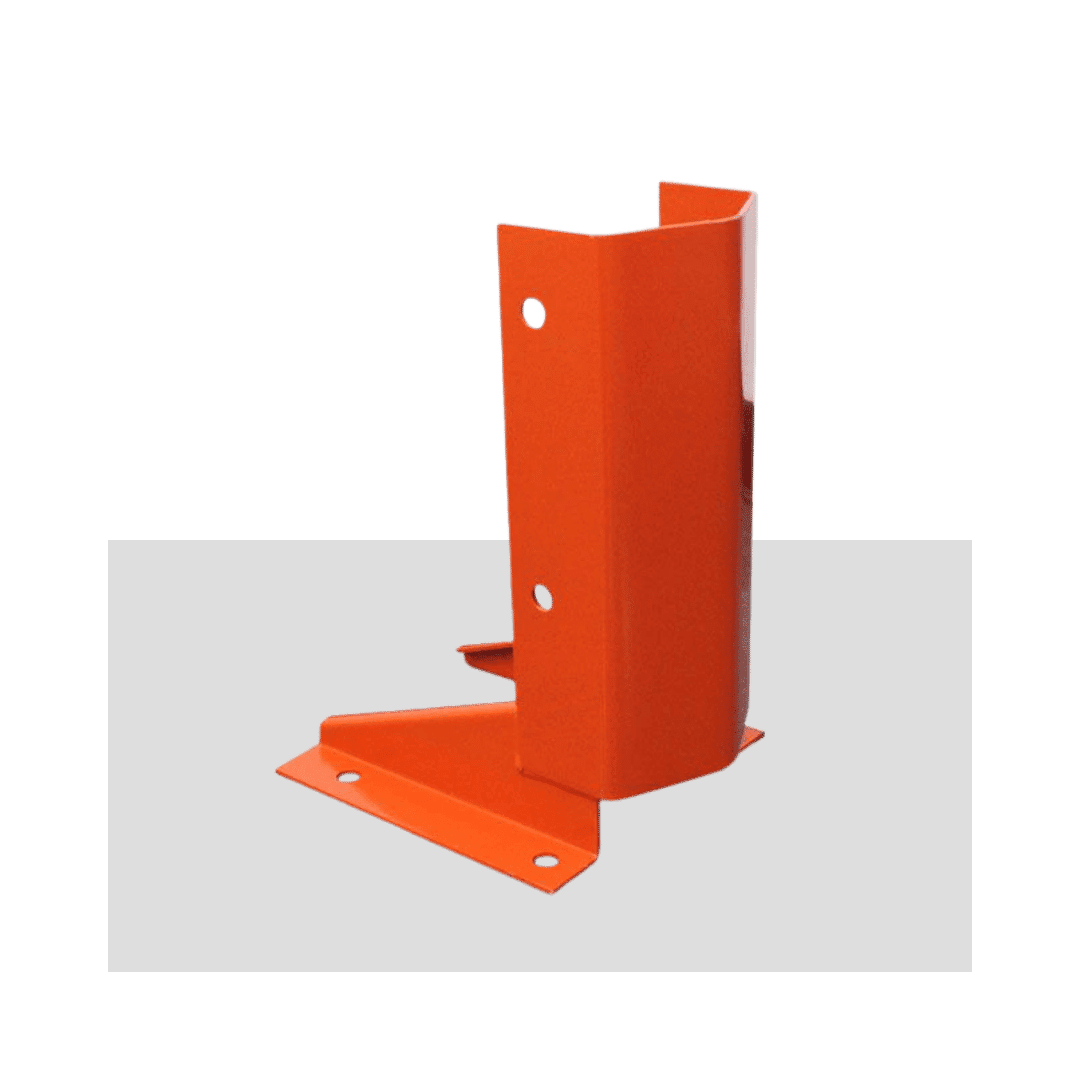
Column protectors: the highest-traffic fix
The bottom two feet of every upright is the part a forklift or pallet jack is most likely to clip. A bolt-down or slide-on column protector takes that hit and spreads the load, so the frame keeps the rated capacity it was engineered for. On busy aisles and end rows it is often the cheapest insurance in the building against an unplanned rack failure.
Protectors are not a substitute for inspection — a protected frame can still be damaged — but they dramatically cut the number and severity of impacts your structure absorbs over its life.
Add protection where it counts
Tell us your aisle layout and where you are seeing damage. We will spec column protectors, row-end guards, guard rail and netting to match — and quote it as a package.
Inspections: Find Damage Before It Finds You

Inspection is the single most important habit in a rack-safety program, because impact damage is cumulative and easy to miss. MH16.1 does not mandate a fixed interval; RMI best practice is a layered cadence:
- Daily-to-weekly visual checks by floor staff who are trained to report anything they see
- Monthly checks of high-risk areas — row ends, pass-throughs and heavy-traffic aisles
- A documented full-system inspection at least once a year by a qualified person
- An immediate inspection after any impact, overload, reconfiguration or seismic event
The rule that matters most: when a frame or beam is damaged, unload and isolate that section immediately and have it evaluated before it carries load again. A qualified person — not the operator who hit it — decides repair versus replacement.
What inspectors look for
Bent or torn uprights and braces, beams that are deflected or have disengaged safety clips, missing or loose anchor bolts, out-of-plumb frames, overloaded or unevenly loaded levels, damaged pallets, and any load stored above its rated capacity or its plaqued configuration.
Know — and Post — Your Rated Capacity
Overloading is a leading cause of rack collapse, and it is almost always avoidable. Every racking system is engineered to specific load limits, and MH16.1 section 4.5 calls for those limits to be posted on load-capacity plaques where operators can see them. Posting plaques is the owner’s responsibility, and they must be updated whenever the beam configuration changes — even removing one beam level can change what the system can safely hold.
| What the plaque states | Why it matters |
|---|---|
| Maximum permissible unit load | The combined weight of product plus its pallet or container, and/or the maximum load per beam level. |
| Average unit load | Total product weight expected across all beam levels in a row, divided by the number of levels — drives down-aisle stability and seismic design. |
| Maximum total load per bay | The ceiling for a single bay so operators never over-fill one section. |
| Storage levels & spacing | The number and elevation of levels in the original approved design — changing beam heights changes capacity. |
| Where & how to post | The owner (not the manufacturer) is responsible for posting plaques, at least ~50 sq in, where operators can see them — typically at each row end or point of entry. |

Load it right, not just light
Beyond the totals, how you distribute load matters. Store heavier products on lower levels and lighter product up high to keep the system stable, spread weight evenly across a beam pair rather than concentrating it, and never exceed the average unit load your rack was designed around — that average drives down-aisle and seismic stability for the whole row.
If your storage needs have changed and you want to move beam levels, work from the manufacturer’s Load Application and Rack Configuration (LARC) drawings and have a qualified rack professional confirm the new capacity before you reload.
Trained People, Clear Aisles, Good Light

Training and PPE
A well-informed workforce is the backbone of rack safety. Operators should be trained on safe material handling, how to spot and report early signs of damage, the load limits on the plaques, and how to keep the area around the racks clear. OSHA 1910.178 also requires documented forklift operator training — the equipment most responsible for rack damage.
Match personal protective equipment to the task: hard hats where loads are handled overhead, safety footwear against dropped product, high-visibility vests in traffic aisles, and gloves or eye protection where the work calls for it.

Housekeeping, aisles and lighting
Good housekeeping is an OSHA requirement (1910.176(c)) and a safety multiplier. Clutter and debris create trip, fire and forklift hazards and hide rack damage; keep aisles clear, marked and in good repair so mechanical equipment has safe clearance, as 1910.176(a) requires.
Lighting is the quiet enabler of all of it. Operators cannot place loads accurately or catch damage, loose clips or leaning frames in dim aisles. Even, glare-free lighting over pick faces and travel lanes reduces both impact and picking errors.
Start With Rack Built to Be Safe
Protection and inspection matter most when the structure underneath is sound. The teardrop pallet rack we supply is engineered for capacity, easy component replacement and code compliance — so a damaged frame can be swapped without tearing down the run, and the system meets the seismic and design requirements for your site.
| Component | Specification |
|---|---|
| Uprights | Regular duty 16-gauge (16,100 lb capacity per frame); heavy duty 14-gauge (23,300 lb per frame). 3″ × 3″ column with 5″ × 8″ seismic base plates; bolt-together design for fast replacement of a damaged frame. |
| Beams | Safety clip for quick beam swaps; adjustable on 2″ centers. 3.5″, 4″ and 5″ beams use 3-pin connectors; 6″ beams use 4-pin connectors. |
| Decking options | Welded wire mesh decking to reduce dropped product, improve light and sprinkler flow, and expose damage; steel safety supports add reinforcement for hand-stacking. |
| Accessories | Column and row-end protectors, guard rail, safety netting, bay dividers, frame guards, and adhesive or magnetic label holders. |
| Compatibility | Teardrop design compatible with major manufacturers including Interlake, Steel King, Husky, Lodi Metal-Tech, USP and Space Rack. |
| Shipping | Available assembled or knocked-down (K.D.) for flexible freight; high-visibility color coding available. |
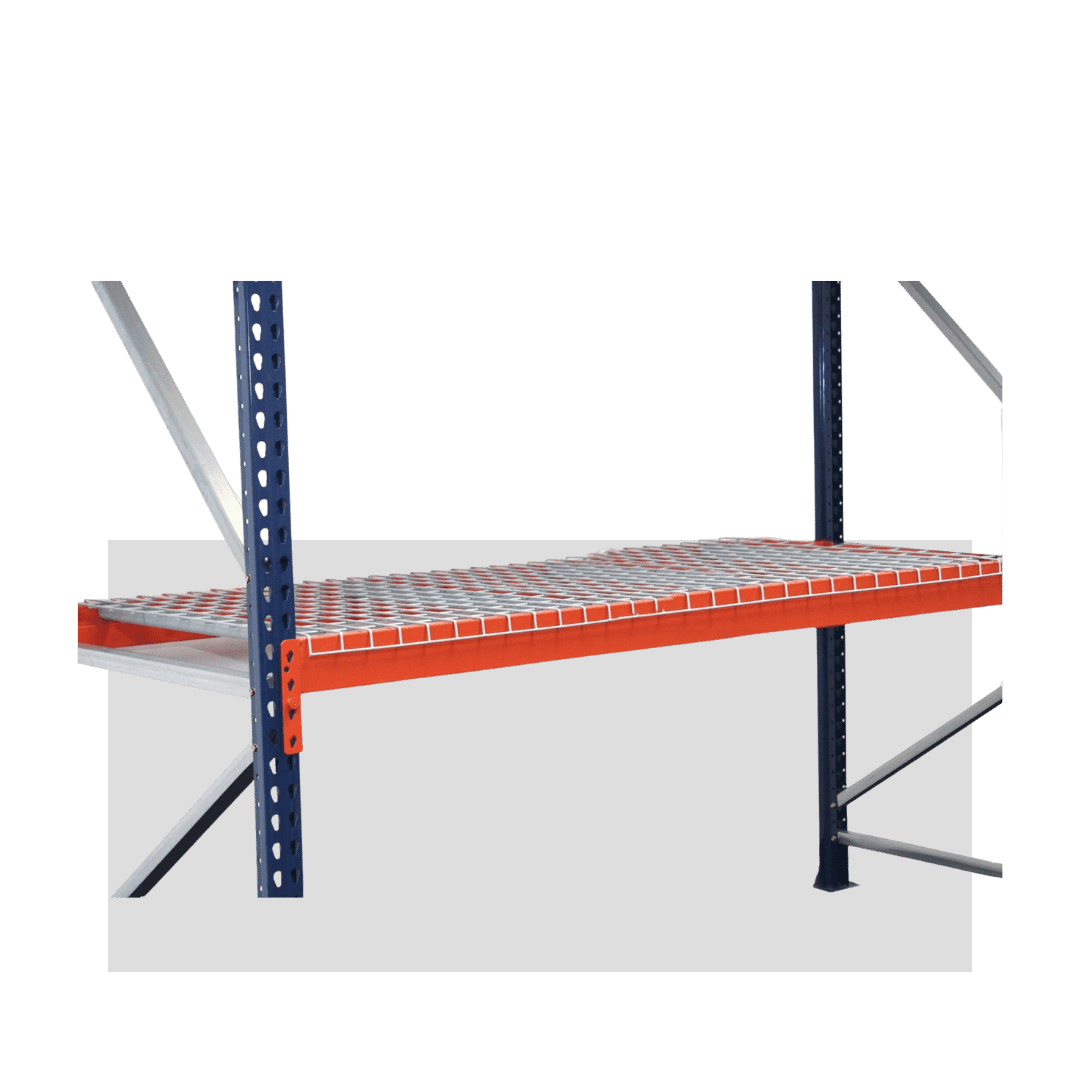
Wire decking and safe accessories
Welded wire mesh decking is one of the most cost-effective safety upgrades on any rack: it stops cartons and hand-stacked goods from slipping between beams, improves light penetration and sprinkler flow-through, and lets you see damage on lower levels. Paired with column protectors, row-end guards and netting, it turns a bare beam structure into a safe storage system.
All accessories are chosen to keep your racking within the ANSI MH16.1 design intent — we never bolt on parts that void the engineered capacity.
How Material Handling USA Helps You Stay Safe
Assess your existing racking
We walk the system with you (or review your drawings and photos): frame condition, anchorage, aisle widths, load heights, traffic patterns and where impacts are happening.
Confirm loads and the standard
We reconcile what you are actually storing against the rated capacity and the ANSI MH16.1 / IBC requirements for your jurisdiction, including seismic considerations for your location.
Specify the right protection
Column protectors, row-end guards, guard rail, netting and controlled access chosen for your real damage points — not a generic parts list.
Repair, replace or upgrade
Damaged frames and beams are isolated and repaired or replaced. Where the layout has outgrown the design, we re-engineer it with updated load plaques and drawings.
Install and post capacities
Protection and rack are installed to spec and anchored, and current load-capacity plaques are posted where operators can see them.
Train and set an inspection cadence
We help you put a documented inspection routine in place — daily visual checks, monthly checks in high-risk areas and a full annual review — so the system stays safe.
Get a rack safety assessment and quote
From a single row-end guard to a full re-engineered layout with new load plaques, we handle rack safety end to end. Talk to a specialist in Salt Lake City about your system.
Request a Quote Open the Pallet Rack Designer Call (800) 326-4403
Warehouse Racking Safety: FAQs
Is there a specific OSHA standard for pallet racking?
What is ANSI/RMI MH16.1-2023?
How often should pallet racking be inspected?
What has to be on a rack load-capacity plaque?
What is the single most effective rack protection to add first?
Can a damaged upright just be repaired, or does it need replacing?
Do you handle seismic requirements?
Can I lay out or reconfigure my rack online?
Related Products & Resources
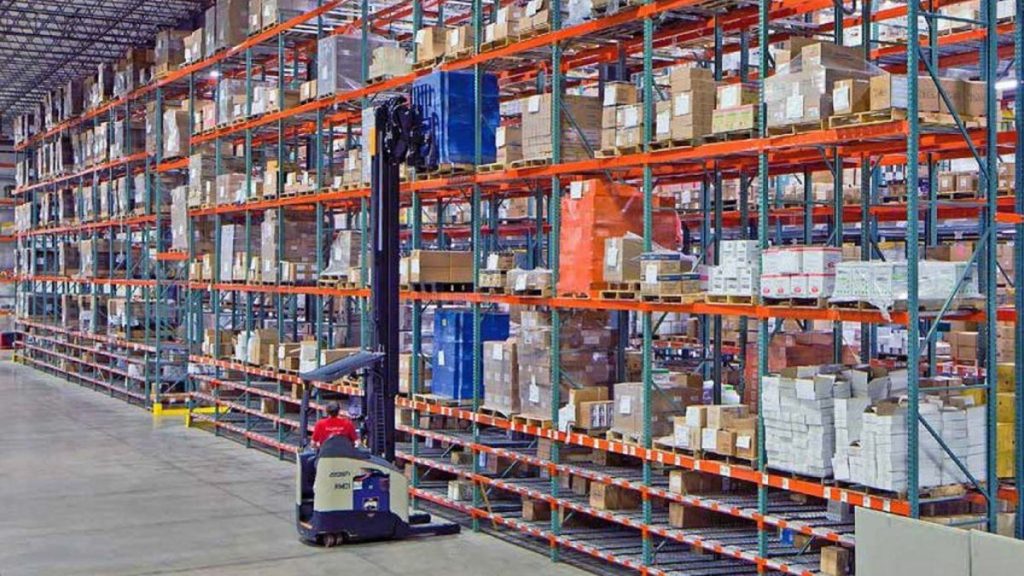 Pallet Rack SystemsSelective, drive-in, push-back, pallet-flow and cantilever rack — engineered, supplied and installed to ANSI MH16.1.
 Pallet Rack Safety NettingRack-back and end-of-aisle netting that stops product from falling into aisles and flue spaces.
 Pallet Rack Security EnclosuresWire mesh enclosures and doors that lock down high-value or controlled goods stored on racking.
 Warehouse Netting SolutionsGuard rail netting, rack netting and barrier netting for a safer facility overall.
 Security Cages & EnclosuresWelded and woven wire partitions and cages for secure storage, DEA rooms and equipment.
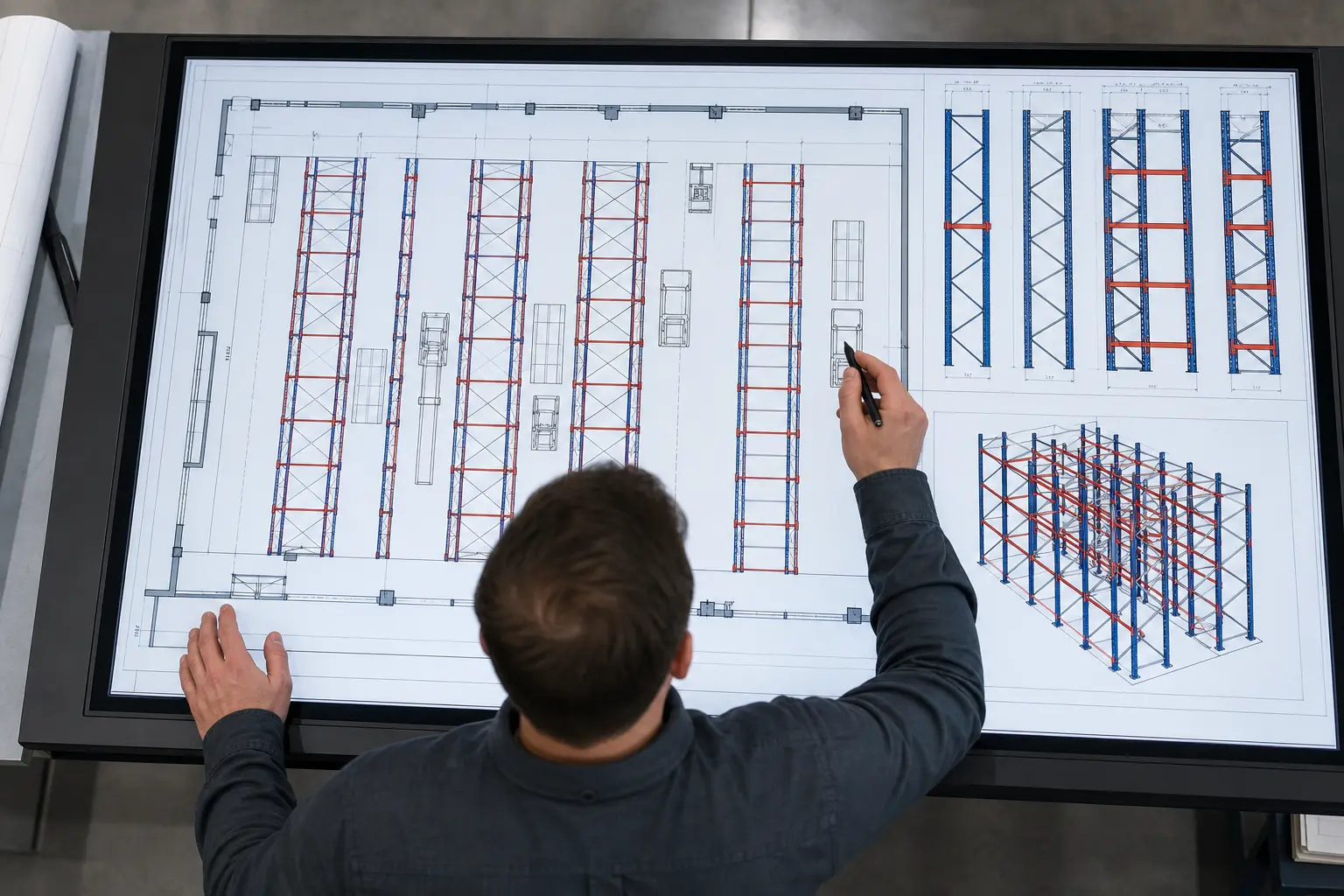 Pallet Rack DesignerFree online tool: lay out frames, beams and levels and send the configuration to our team.
Make Your Racking Safer This Quarter
Send us photos or drawings of your pallet racking and we will identify the risks, recommend the right protection and inspection routine, and quote repairs, upgrades or a new system — built to ANSI MH16.1. Free consultation with Material Handling USA in Salt Lake City.