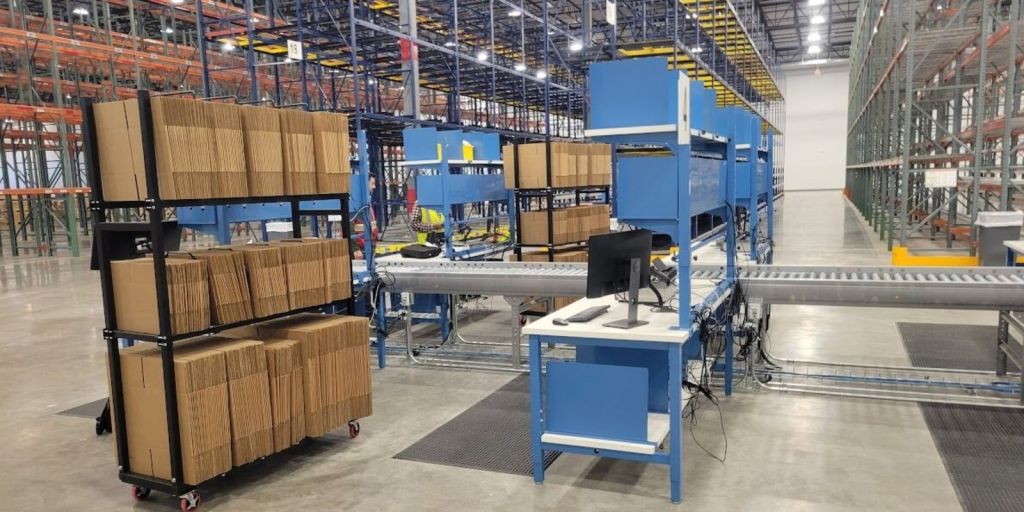
A busy Utah fulfillment floor shows weak workstation planning fast. Totes pile up beside the packer, cartons sit on the floor, and every extra reach slows the next order. Packing and assembly workbenches for Utah fulfillment centers need to support speed, accuracy and the people who stand at them all shift, across parcel packing, kitting, returns and light assembly.
This guide covers where benches fit in the flow, how to size them, what height to set, which bench type fits which job, and what to ask before you order. It is written for operations managers, 3PL owners and facility planners along the Wasatch Front who are adding or rebuilding a pack line.
Quick answer
- Pick the bench by the job: basic packing bench for steady parcel work, modular bench for mixed orders and kitting, stiff assembly bench for light assembly.
- Set the work surface near the packer’s elbow. Light work sits about 2 to 4 inches below it.
- Common sizes are 48 to 96 inches long and 30 or 36 inches deep. Size to the largest open carton plus the tote and the scale.
- Ask for the load rating of the full configuration, not just the top.
- Plan the row with the racking, conveyor and aisles in one drawing. Our free floor plan review does that for you.
Where Packing and Assembly Workbenches Fit in a Utah Fulfillment Center
The bench row sits between picking and shipping. Totes come in from the pick area, turn into packed or assembled orders at the bench, and leave toward staging or the carrier handoff. That makes the bench row a control point for the whole building. If it backs up, picking stalls behind it and shipping waits in front of it.
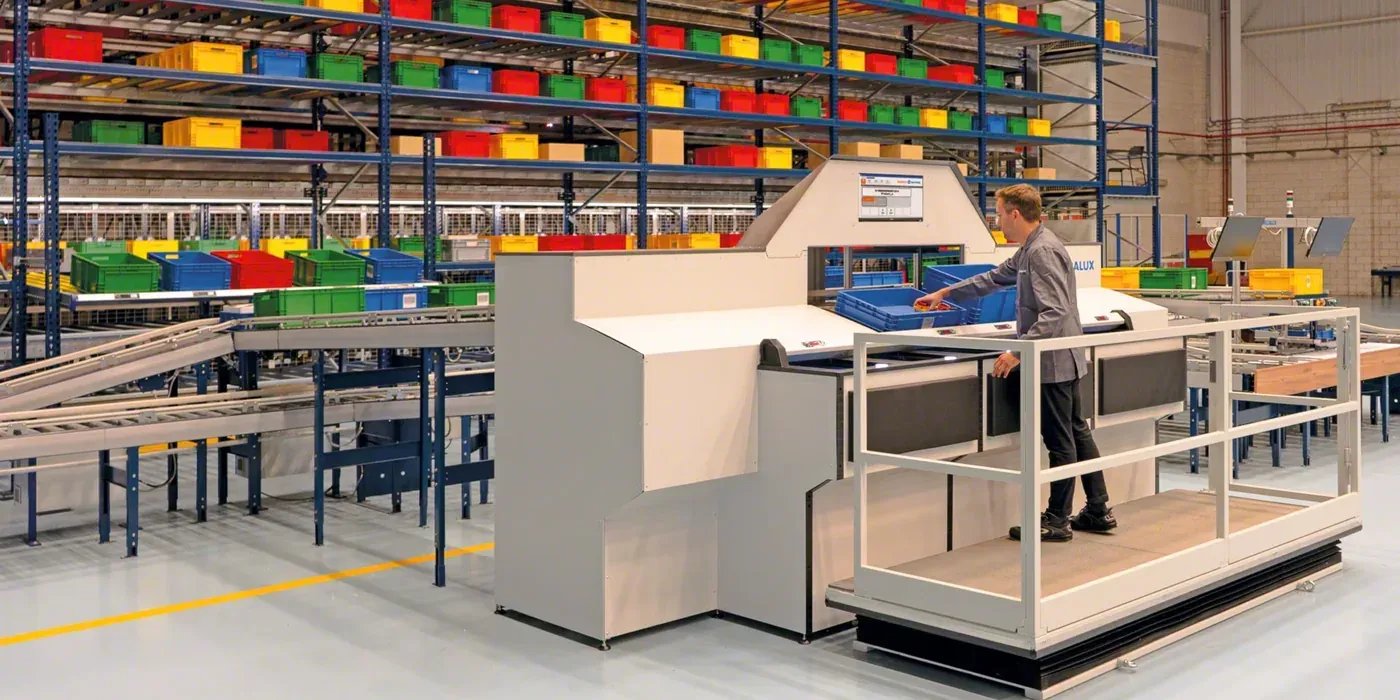
Utah has large operations built around this step. Ryder’s West Valley City site is a 400,000 square foot fulfillment center offering warehousing, pick and pack, order fulfillment, value-added services, distribution and transportation, according to its Utah e-commerce fulfillment location page. The same page lists kitting, specialized packaging, light manufacturing and returns management. That mix is the point: one building can need packing, kitting, assembly and returns benches, often side by side.
Treat the bench row as infrastructure
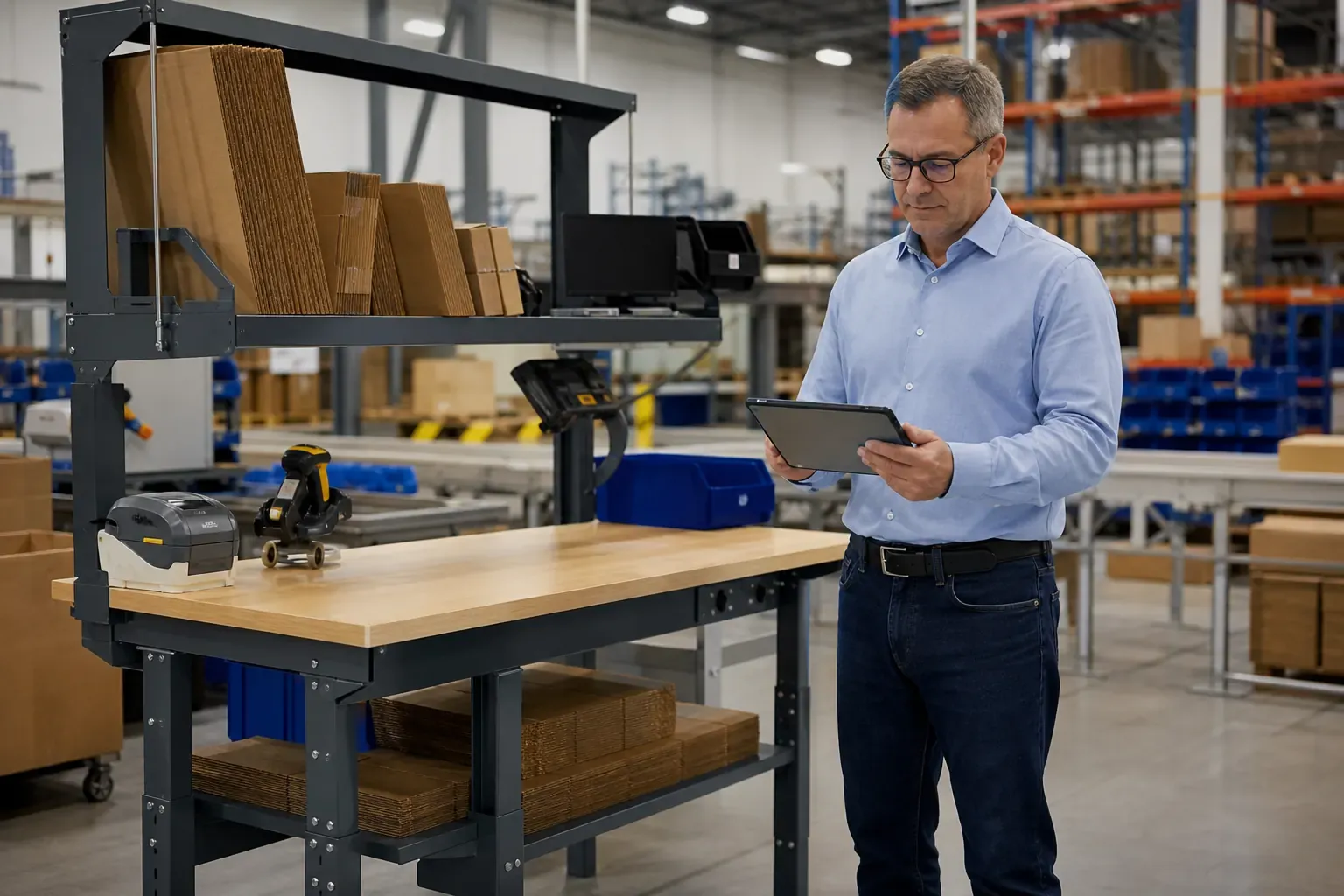
A good station takes work in from one side and sends finished cartons out the other, so packers never cross an active travel lane. The top should be stable and powered where needed, with shelves, bin rails, label holders or scanner mounts that keep common tools close.
Ergonomics deserves attention early, too. A May 2024 Washington State fact sheet found that fulfillment centers there had a work-related musculoskeletal disorder claim rate of 46.5 per 1,000 full-time workers, more than 10 times the statewide average of 4.4. Manual packers and packagers were one of the top three jobs reporting these injuries. The same fulfillment-center ergonomics fact sheet suggests using ergonomics analysis tools to set a reasonable work pace.
A clear visual review of the floor can help you spot congestion before equipment is ordered. For planning context, see this resource on how to reduce warehouse congestion using virtual tours. For the bigger picture, read our guide to e-commerce fulfillment center design built for speed and accuracy and our warehouse design and layout solutions.
What a Utah Fulfillment Bench Really Has to Handle
Start with the work, then pick the bench. Utah fulfillment centers often mix small-parcel packing, kitting, returns, labeling and light value-added assembly. Each task asks for something different from the surface, the storage above it and the access around it.
- Parcel packing needs a clear surface, a scale, a label printer and cartons within reach.
- Poly bag orders need a smooth top and edge that will not snag film.
- Kitting needs separated parts close to the operator, often in bins on a rail or shelf above the top.
- Light assembly needs a stiff top, task lighting, power and room for small tools.
- Returns needs inspection space, good light and sorted totes for restock, refurbish and scrap.

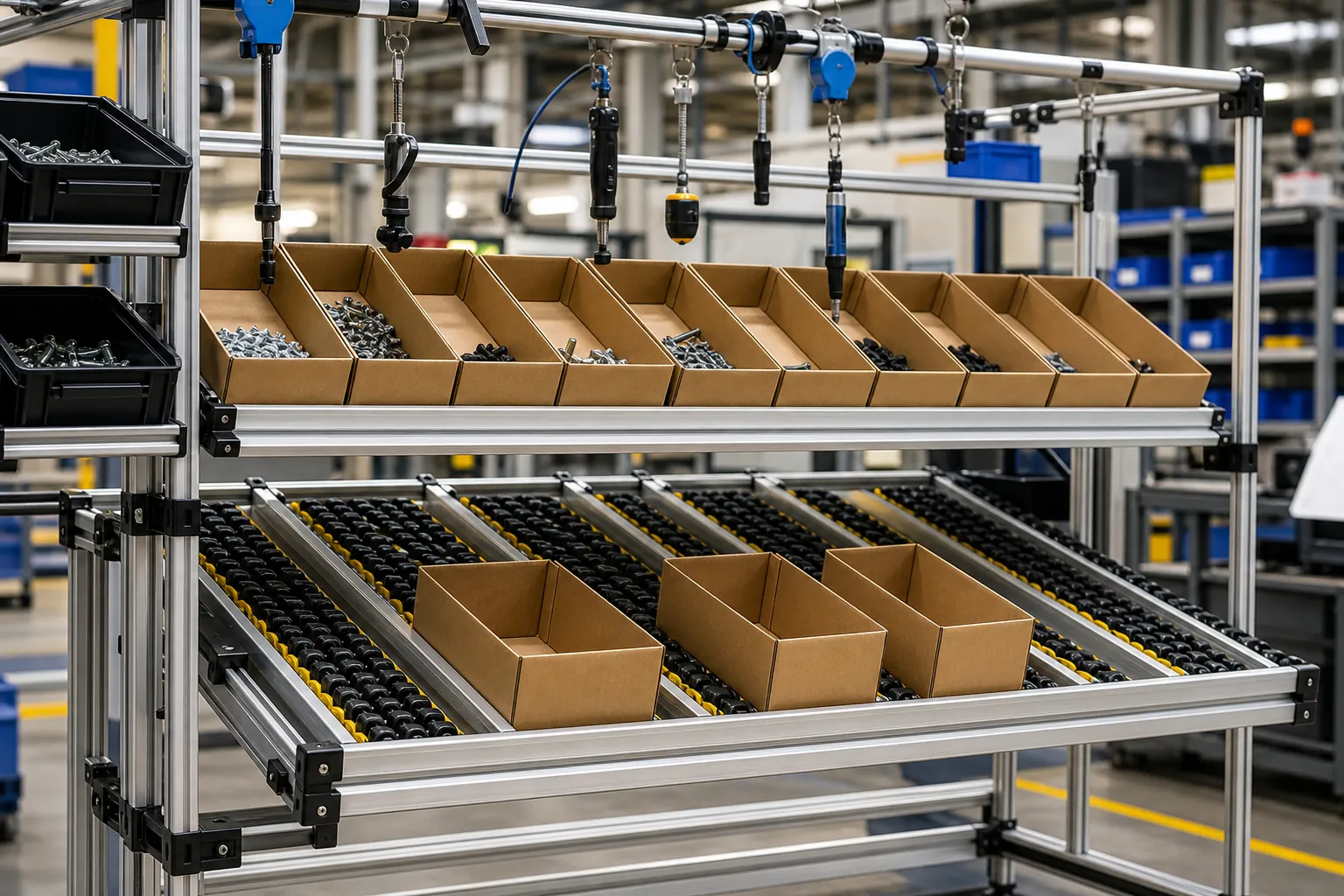
Kitting changes the bench more than most buyers expect. The operator pulls from several parts at once, so parts need to be in front of them, not behind them or on a cart across the aisle. Gravity lanes such as UNEX FlowCell flow racks or carton flow rack can feed parts to the front of the bench while restocking happens from the back. Our Parts & Kitting Storage Planner helps you size that storage before you pick the bench.
Load is more than the product
A packing bench may carry corrugate, finished cartons, a printer, a scale and kit parts at the same time. One workstation maker tells buyers to add up the shelving, equipment and product, check whether the weight is spread evenly, and move to a stronger frame if too much sits in one spot. It offers frames rated at 500 pounds for medium duty and 1,200 pounds for heavy duty, and notes that lag plates can bolt a station to the floor, per its fulfillment application guidance. Use numbers like these as a check, and ask any supplier for the rating of the full configuration you are buying.
| Workload type | What the top needs | Storage above the top | Key accessories |
|---|---|---|---|
| Parcel packing | Clear, durable surface sized to the largest open carton | Carton slots, tape and label shelf | Scale, label printer, scanner mount |
| Poly bag orders | Smooth top and edge that will not snag film | Bag rack or dispenser | Label printer, sealer if used |
| Kitting | Staging area for the kit being built | Bin rail or divided shelf | Flow lanes or bins at the front |
| Light assembly | Stiff, stable top | Tool and part storage | Task light, power strip, monitor arm |
| Returns processing | Room to open and inspect items | Under-shelf totes for sorting | Task light, scanner, label printer |
A good picking and packing solution also plans for packaging waste, tote return paths, supply refills and the handoff to shipping. Do not size the top only for the product. Size the full work envelope. Our packing station design guide goes deeper on station layout.
Workbench Configurations That Match the Application
Most stations fall into a few bench families. The right choice depends on order complexity, how much the operator moves, and how often the work will change.
| Bench family | Best fit | Strength | Watch out for |
|---|---|---|---|
| Basic packing bench | Steady single-item parcel orders | Low cost, simple to repeat across a row | Gets cramped as the SKU mix grows |
| Modular pack and ship bench | Mixed orders, kitting, multi-client 3PL work | Shelves, bin rails and printer shelves can move as work changes | Accessories must fit the frame you choose |
| Assembly bench | Light assembly, labeling, inspection, test | Stiff top, task light and power | Can slow carton flow if it is not planned for packing too |
| Integrated packing station | Dedicated, high-volume pack lines | Scale, printer, carton storage and supplies all built in | Larger footprint, harder to change later |
| Boltless or mobile bench | Overflow, peak season, back-room packing | Fast to set up and move | Lower capacity and fewer accessories |
A basic packing bench gives one main surface to place the item in a carton, add void fill, weigh it and seal it. It is the lowest cost choice, but it gets tight once orders include several items or inserts.
A modular pack and ship bench adds an upper shelf, bin rail, printer shelf or monitor arm. It suits kitting and multi-line orders because the operator can stage parts without crowding the main surface. When the work changes, you move the accessories instead of replacing the bench. See our adjustable workstations for frames built this way.

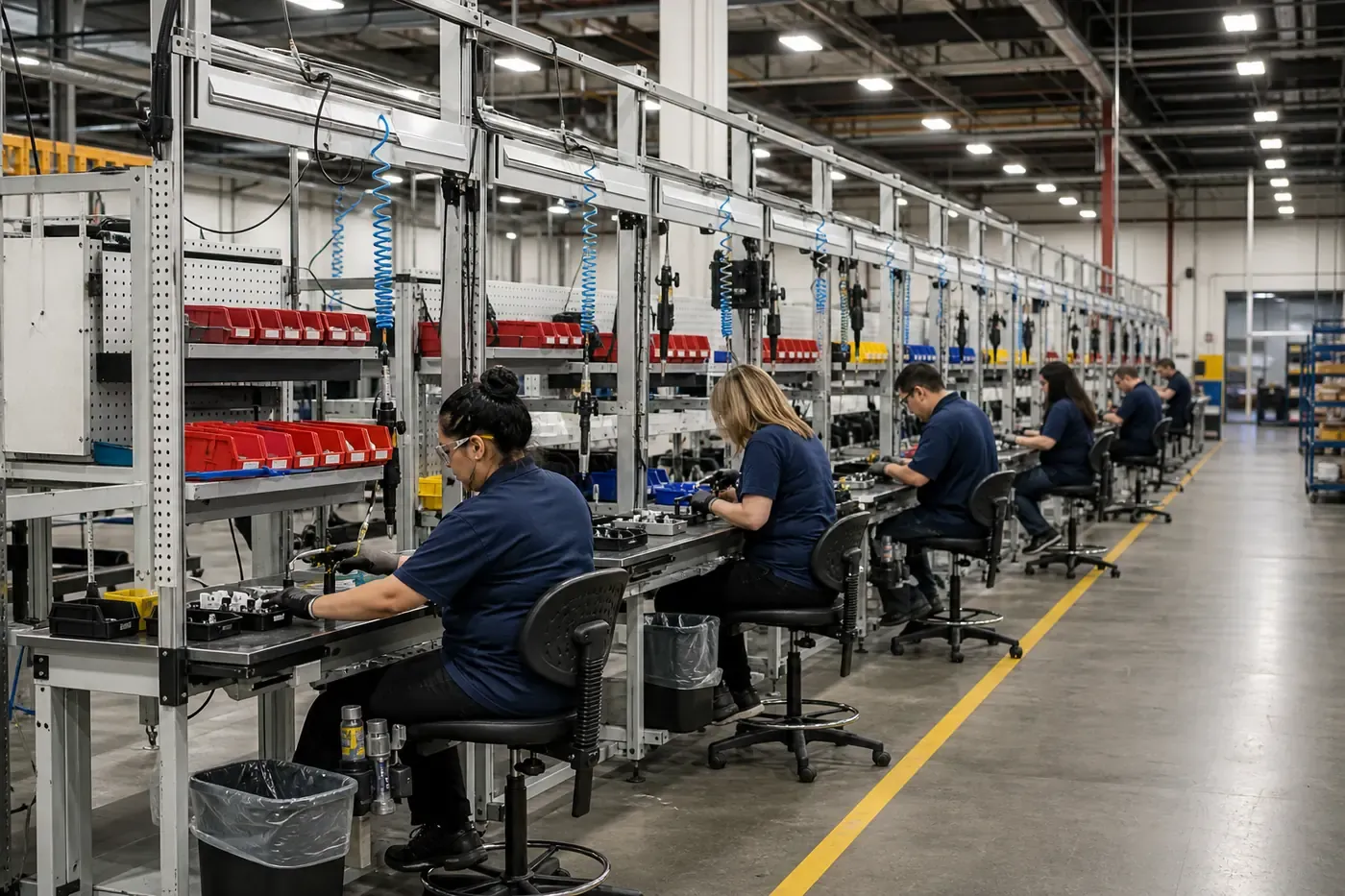
An assembly bench puts stiffness first. It fits labeling, light product assembly, inspection and test work inside a fulfillment building. Our assembly workstations and industrial workbenches pages cover these options. The trade-off is that a heavy assembly top will not speed up carton flow unless the station is planned for both jobs.
An integrated packing station combines the bench with a scale area, printer shelf, scanner holder and carton or bag storage. It keeps a dedicated process tidy, but check the footprint and service access before you buy. A boltless bench is a simple, low-cost way to add overflow packing for peak season. Our boltless workbenches in Utah page lists sizes, tops and shelf options.

Not sure which bench family fits your pack line?
Send us your floor plan and order mix for a free floor plan review, or call (800) 326-4403. We will lay out the bench row with your racking, shelving and conveyor and quote the full package.
Working Height: Fixed or Adjustable
Height is the setting that most affects comfort over a full shift. Canadian workplace safety guidance uses elbow height as the guide. It suggests precision work about 2 inches above the elbow, light work such as assembly line jobs about 2 to 4 inches below the elbow, and heavy work that needs downward force about 8 to 16 inches below, per CCOHS guidance on working while standing. Most packing and light assembly fall in the light work range.
One packing station article says many ergonomic guidelines suggest adjustable tables in the 36 to 44 inch range, and that each worker’s elbow height is the best reference point, according to NASSCO’s packing station guidance. A standard industrial bench may run lower. One maker lists material handling benches fixed at 36 inches or adjustable from 30 to 36 inches in 2 inch steps, as shown in this material handling workbench specification. That gap matters. A tall packer bending over a 34 inch top all day is a common, avoidable problem.
Choose adjustable frames when operators rotate between stations, when a bench is shared across shifts, or when work moves between sitting and standing. A fixed bench is fine for a dedicated station run by the same people, as long as the height fits them. Our warehouse ergonomics guide covers mats, reach zones and lifting at the station.
Sizing, Layout and Access Around the Bench
Start with the operator, not the wall. Tape, labels, scanners and small tools belong in the near reach zone. If the packer keeps turning or stepping to reach them, the station is too big or set up wrong.
Common industrial bench sizes are 48, 60, 72 or 96 inches long and 30 or 36 inches deep, per the same workbench specification. Treat those as starting points. Carton size, tote placement, conveyor height and aisle traffic decide the final fit.
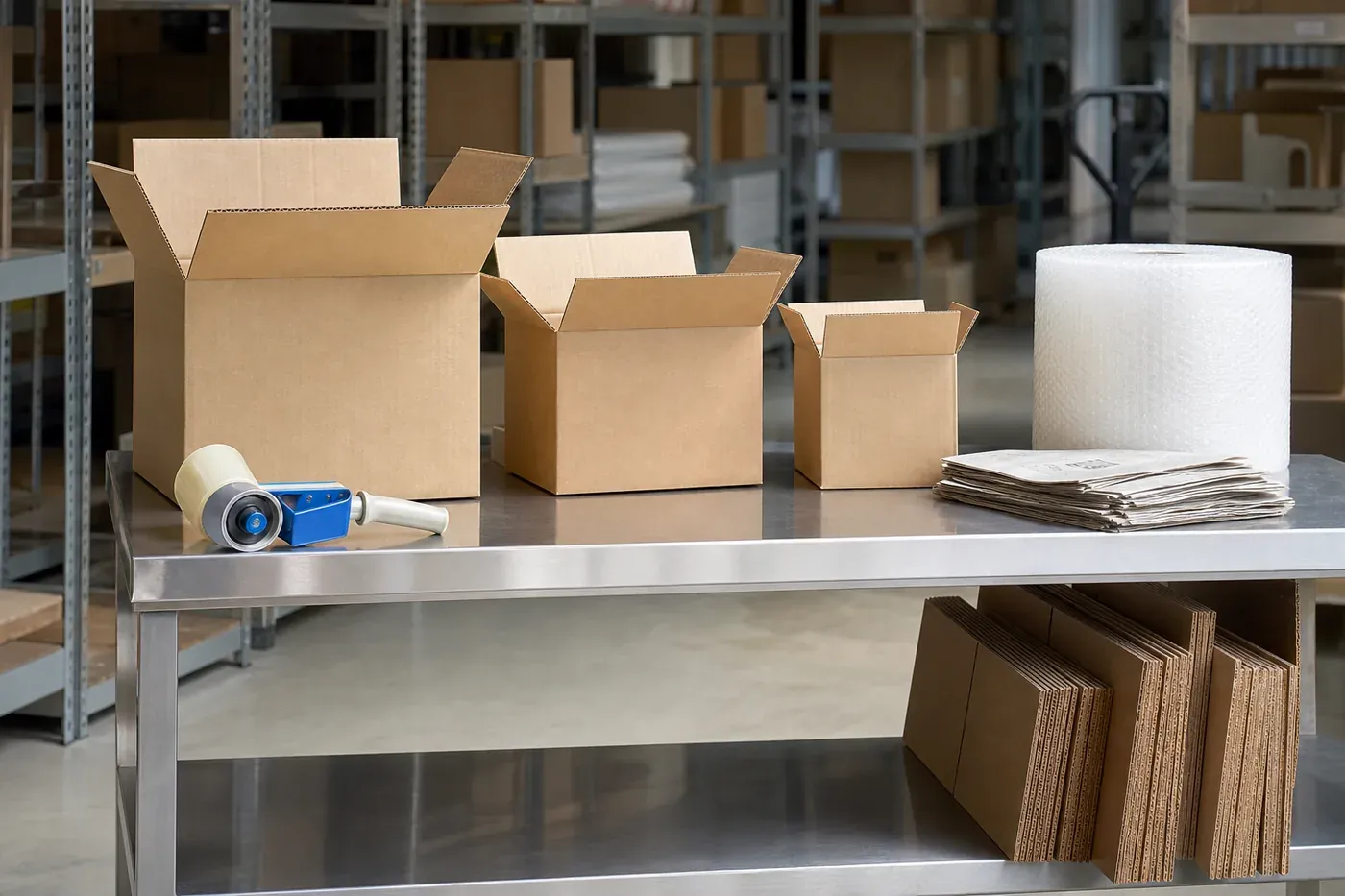
Measure the full operating envelope
Record these before you ask for a quote:
- Product footprint: the largest item, the largest open carton and the finished package.
- Supply spots: where corrugate, void fill, labels, tape and printers will sit.
- Travel paths: tote infeed, carton removal, supply refills and returns traffic.
- Service access: room for electrical work, repairs, cleaning and accessory changes.
- Nearby equipment: rack uprights, conveyors, sprinkler heads, dock doors and forklift routes.
A compact bench wastes space if packers must step around it. A large bench does the same by narrowing the aisle. Draw the station with the person, carton, tote and cart shown at the same time. Supplies for the row usually live on nearby shelving. Our shelving designer and fulfillment center shelving page help plan that storage, and our Utah packaging and shipping supplies keep it stocked.
Safety, Power and Site Considerations in Utah
The bench is only one part of the work cell. Check the floor, anchoring, electrical service, walkways and connections to other equipment before you approve a quote. A station on a mezzanine, near powered equipment or beside forklift traffic needs a different review than a wall-run bench on the main floor.
OSHA’s ergonomics guidance says workbench setups that force people to bend should be corrected so workers stay upright or fully supported while seated. It calls bending to reach into a bin highly undesirable and suggests raising, tilting or opening the sides of bins. For long standing, it lists a footrest or rail, resilient floor mats, adjustable stools and chances to change position, in its ergonomics overview. CCOHS adds that mats should have slanted edges and that thick foam mats can cause fatigue and trips. Where benches sit near vehicle routes, mark the walkway between packers and forklifts before installation.
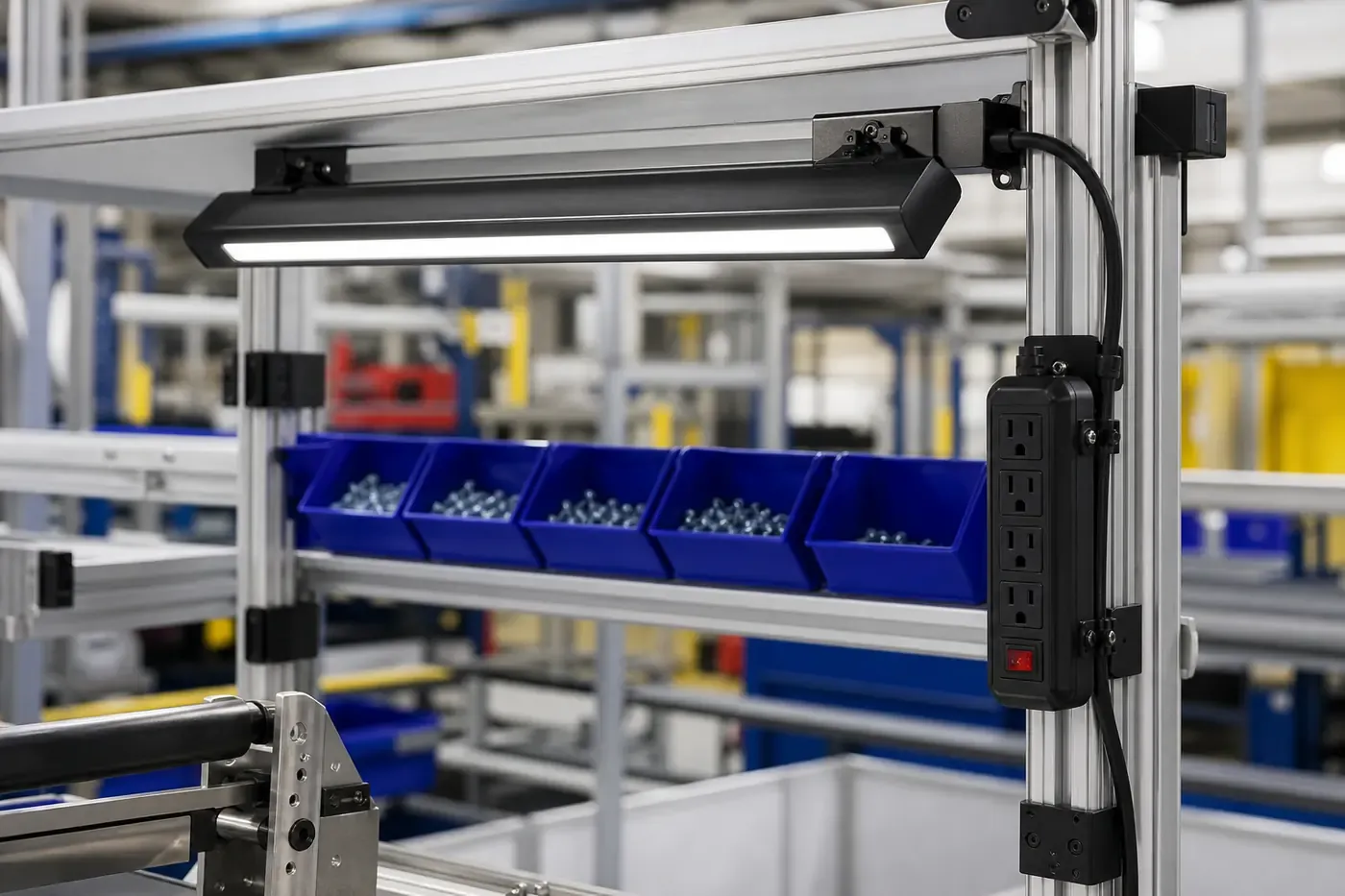
Most pack lines need power for printers, scales, scanners, monitors and lights. Plan the drops with the bench row, not after it. If a new bench needs a circuit, repair or relocated outlet, bring in a licensed electrician. This Northern Utah resource on commercial electrical repair can help frame that conversation, but your site electrician must verify the actual installation.
Ask for documentation
Your workbench supplier should provide:
- Load ratings: for the complete configuration, not only the top.
- Finish details: top material, frame finish, edge treatment and cleaning needs.
- Anchoring details: drawings when the station must be secured to the floor or structure.
- Electrical details: power strips, cord lengths, grounding and any ESD needs.
- Accessory fit: confirmation that shelves, scanner mounts, lights and bins fit the chosen frame.
- Listings: any third-party listings your site or insurer requires, in writing.
How to Plan a Packing and Assembly Bench Row in 7 Steps
- List the work at each station: Write down what happens at each bench: parcel packing, kitting, light assembly, labeling or returns. Note the largest item and the largest carton.
- Count stations from your peak: Use your peak order volume and the time per order to set the number of stations. Add one spare station if peaks are sharp.
- Map the flow in and out: Mark where totes arrive, where cartons and dunnage are stored, and where finished orders leave. Keep packers out of forklift lanes.
- Set the working height: Use the operators’ elbow height as the guide. Pick fixed height for dedicated stations or adjustable frames for shared ones.
- Size the top and the aisle: Lay out the open carton, tote, scale and printer at full size on the top. Then check the aisle behind the packer for carts and replenishment.
- Choose accessories and power: Add upper shelves, bin rails, carton slots, task lights, power strips and monitor arms only where the task needs them.
- Get a layout review and quote: Send the plan, station count and accessory list for a layout review, then approve a drawing before anything ships.
If the bench row is part of a bigger change, plan it with the racking and shelving that feed it. Our pallet rack designer and the rest of our free design tools let you sketch the whole area first.
Lead Time, Installation and Service Planning
A bench project can disrupt production when drawings are released late. Start with a floor plan, station count, accessories, power needs and delivery limits. Some common sizes ship faster than others, but custom finishes and built-in features take more planning. Ask your supplier for current lead times before you set a go-live date.
Ask for a drawing that shows the bench, shelf positions, accessory locations and nearby clearances. Confirm whether installation happens during a shift, after hours or over a planned weekend. Boltless and modular benches go together inside an aisle easily, but the crew still needs a clear work area and a safe path for parts.
Freight planning matters along the Wasatch Front, from Ogden to Salt Lake City to Provo. Confirm dock access, liftgate needs, inside delivery, staging space and who moves the equipment from receiving to the install area.
Practical rule: A low bench price does not help if the delivery crew cannot reach the install area, or the station arrives without the power and accessory details it needs.
Service terms should cover warranty support, replacement tops, hardware and accessory availability. Ask how the supplier handles a damaged top, a failed lift mechanism or a missing part during peak season.
Matching the Right Workbench to Common Utah Buyer Scenarios
These examples show how the same planning steps lead to different benches. They are planning matches, not fixed product picks. Your floor plan and a sample of real orders should make the final call.
A Salt Lake City 3PL serving several clients needs flexibility first. Modular, adjustable stations with bin rails and power can handle changing carton sizes, client-specific labels and mixed work without rebuilding the row. Our 3PL storage solutions and Salt Lake City 3PL racking layout guide cover the storage side.
A Wasatch Front e-commerce shipper with fast parcels may prefer a longer station, such as 72 or 96 inches, with a conveyor infeed, printer shelf and a dedicated scale area. The longer top only helps if the aisle behind it still has room for refills and carton removal. Our warehouse conveyor systems page covers the infeed side.
An outdoor gear brand that kits and assembles may need a deeper top, a riser shelf and tool storage. Soft goods, boxed kits and accessories usually need more staging space than a simple one-carton packing task.
A returns processor should put a durable top, a good task light and under-shelf totes first. Returns work means inspecting, relabeling, repacking and sorting items in unknown condition, so the station has to handle variety, not just a repeatable outbound task. Our warehouse return processing guide covers the full reverse logistics flow.
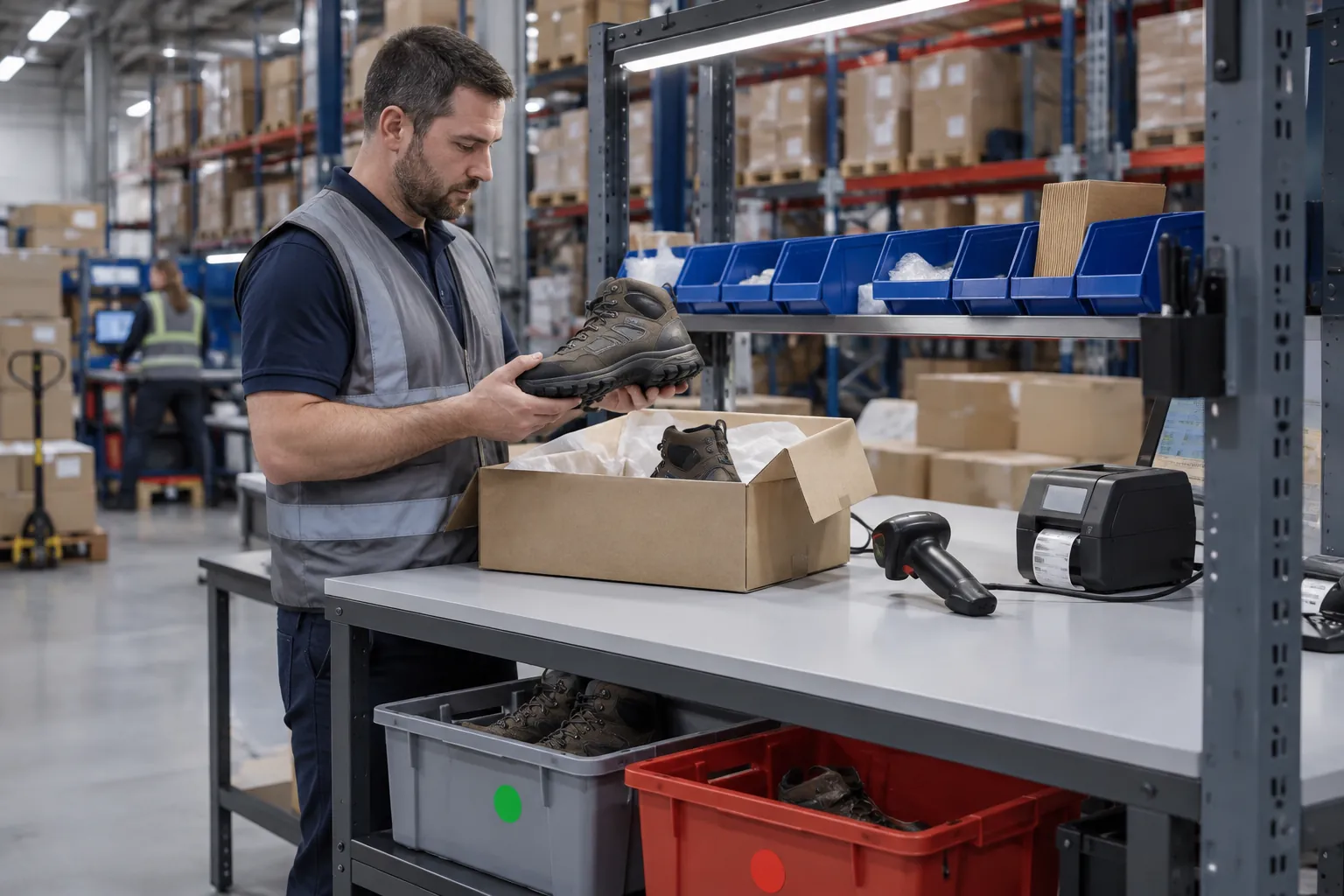
| Buyer scenario | Bench to start with | Key features | Why |
|---|---|---|---|
| Multi-client 3PL | Adjustable modular station | Power, bin rails, upper shelf | Handles changing client workflows |
| High-volume e-commerce | 72 or 96 inch packing station | Conveyor infeed, scale area, carton slots | Separates tote infeed from packing |
| Kitting and light assembly | Deep-top modular bench | Riser shelf, flow lanes or bins, task light | Keeps kit parts in front of the operator |
| Returns processing | Durable-top workbench | Task light, scanner, under-shelf totes | Room to inspect, relabel and sort |
| Peak season overflow | Boltless or mobile bench | Simple top, lower shelf, casters if needed | Fast to add and remove |
For real Utah projects, see how we planned storage for a multi-client 3PL, QVS Marketing, e-commerce apparel brand SKRE, and Enlinx, a West Valley City 3PL. If you also run a shop or maintenance area, our guide to workbenches for Utah auto repair and fleet shops covers heavy-duty benches.
Packing and Assembly Workbench FAQs
What is the best workbench for a packing station?
There is no single best bench. A basic packing bench works for steady single-item parcel orders. A modular bench with an upper shelf, bin rail and printer shelf fits mixed orders and kitting. Light assembly needs a stiffer top, a task light and power. Start with your order mix and the largest carton, then pick the bench family.
What height should a packing workbench be?
Use the packer’s elbow as the guide. For light work like packing and light assembly, Canadian safety guidance puts the work about 2 to 4 inches below elbow height. One packing station article says many guidelines suggest adjustable tables in the 36 to 44 inch range. If several people share a station, an adjustable frame is the simple fix.
How big should a packing and assembly bench be?
Common industrial bench lengths are 48, 60, 72 and 96 inches, and common depths are 30 and 36 inches. Treat those as starting points. Lay out the open carton, the incoming tote, the scale and the printer at full size, then check the aisle behind the packer before you pick a length.
How much weight should a fulfillment workbench hold?
Add up everything on the frame at once: the top load, upper shelves, printers, scales, carton stock and product. Then check how that weight is spread. Published workstation frames run from about 500 pounds for medium duty to 1,200 pounds for heavy duty, so ask for the rating of the full configuration you are buying.
Should every station be height adjustable?
No. Adjustable frames pay off when operators rotate between stations, when a bench is shared across shifts, or when work switches between sitting and standing. A fixed-height bench is fine for a dedicated station run by the same people every day, as long as the height fits them.
Can packing benches be anchored or moved later?
Both are possible. Some frames take lag plates on the leveling feet so the bench can be bolted to the floor. Others roll on locking casters so the row can be moved during peak season. Decide which you need before you order, because it changes the feet, the casters and sometimes the frame.
What should I send to get a workbench quote?
Send a floor plan or sketch, station count, the largest carton, product photos, any conveyor or rack connections, the operator height range, and the accessories you need, such as shelves, bin rails, lights, power strips or monitor arms. A marked plan gets a better quote than a request for a generic packing table.
Does Material Handling USA help with the layout?
Yes. Send your floor plan and a short description of the work for a free floor plan review. Our team can lay out the bench row with your shelving, racking and conveyor, then quote the full package. Call (800) 326-4403 to talk it through.
Choosing Packing and Assembly Workbenches for Your Utah Facility
The best packing and assembly workbenches for Utah fulfillment centers match the real order mix, product size, operator height, storage needs and site limits. Choose a basic bench for steady parcel work, a modular station for changing SKUs, an assembly bench for stiff task support, or an integrated station when a dedicated process earns the extra footprint.
Plan your pack line with Material Handling USA
We supply industrial workbenches, adjustable workstations, shelving, racking and conveyor for Utah fulfillment centers, and we help with the layout at no cost.
- Get a free floor plan review
- Size kitting storage with the Parts & Kitting Storage Planner
- Plan supply shelving with the shelving designer
- Request a workbench quote
Prefer to talk? Call (800) 326-4403 or contact our team.