
Fastener Distribution Warehouse Racking: Fastenal
Fasteners are the extreme case in warehouse design: tiny items, enormous weight per cubic foot, and tens of thousands of part numbers that all look alike from three feet away.
2016 & 2019
Years Fastenal worked with us on rack
Industrial distribution
Fasteners, tools and MRO supply
Pallet & cantilever rack
Product categories we supplied
Weight-led design
A small box of bolts loads a beam like a full pallet
Plan your layout before you buy
Configure upright height, beam width, bay count, and load levels in our free 3D Pallet Rack Designer, then get an instant bill of materials and request a quote.
The project
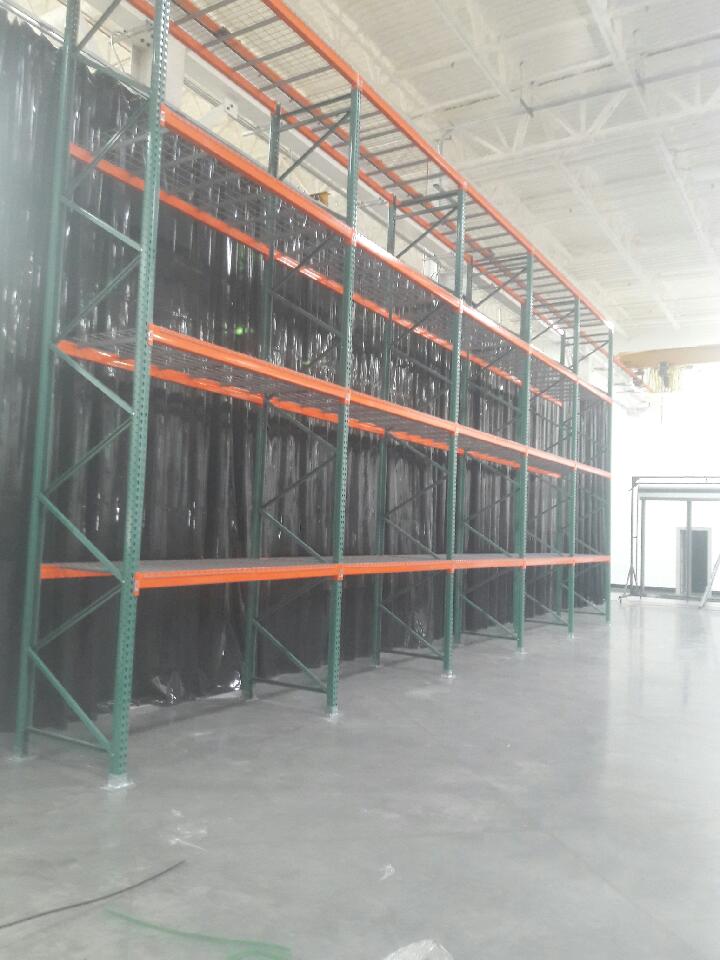
Fastenal is an industrial distributor of fasteners, tools and MRO supplies. Material Handling USA supplied pallet rack in 2016, and pallet rack together with cantilever rack in 2019. The client, those years and the product categories supplied are the only project details we publish.
Fastener distribution deserves its own treatment because it violates most of the assumptions built into generic warehouse guidance. What follows is how we approach pallet rack systems and heavy-duty storage for a fastener or industrial supply operation: where the capacity actually goes, how to zone the building, and where rack should give way to shelving.
Why fastener inventory breaks the usual rules of thumb
Most warehouse planning starts from an assumed average pallet weight and an assumed cube per SKU. Both assumptions collapse in a fastener building.
Weight per cubic foot is extreme. A single case of 5/8-inch bolts is unremarkable in size and heavy enough to matter. Fill a bay’s worth of levels with cases like that and the frame, not the space, becomes the limit. Bays are routinely full by weight while looking half empty.
Density varies wildly by SKU. Stainless hardware, plated hardware, anchors and threaded rod behave nothing like the plastic anchors and abrasives stored in the next aisle. Design per zone, not per building.
Part counts are enormous and the parts look identical. Location discipline and labelling do more work here than in almost any other sector; a mis-slotted box of the wrong grade is functionally lost inventory and, in a structural fastener, a real quality problem.
Movement is small-order, high-line-count. Order profiles are dozens of lines of a few pieces each, which means the pick face — not the reserve — determines productivity.
The single most common specification error
Ordering one beam size for a whole building. In a fastener warehouse the lower levels near the hardware zones may need heavy beams and heavier frames, while the packaging and abrasives zones do not. One beam size means either paying for capacity you cannot use, or discovering the limit the hard way.
Beam and upright capacity, honestly
Rack capacity is not a single number, and in a heavy-product warehouse the difference between the number on a spec sheet and the number that applies to your bay is the whole ballgame.
| What is rated | What the rating assumes | How a fastener warehouse breaks it |
|---|---|---|
| Beam pair capacity | A uniformly distributed load across the full beam span | Two dense cases set down side by side at mid-span concentrate the load; the published pair rating does not directly apply |
| Upright frame capacity | A specific number of levels at a specific vertical spacing, loaded evenly | Adding a level or lowering the first beam changes the frame rating, often downward |
| Deck panel capacity | A spread load across the panel’s support channels | A drum, coil or fixture on two feet is a point load and needs a deck rated for it |
| Anchoring | Every upright anchored into sound slab of a minimum thickness | Thin or cracked slab, or missing anchors after a re-configuration, void the design |
| Damage-free condition | Undamaged, plumb frames within tolerance | One struck upright reduces the capacity of the whole bay until it is repaired |
Practical consequence: specify from your heaviest real load, ask the supplier for the manufacturer’s load table for the exact beam span and level spacing you are buying, and keep the load application drawing. Our guide to pallet racking weight capacity explains how the three ratings interact, and pallet rack uprights covers frame selection and how column gauge and bracing pattern drive capacity.
Not sure what your bays are rated for?
If nobody can produce the load application drawing for your racking, that is the first thing to fix. We can inspect, document and re-rate an existing installation — see rack repair and inspection.
Zoning by velocity and by unit size
A fastener building typically ends up with four zones. Each has a different rack specification, and the boundaries follow the product, not the building grid.
Golden-zone pick faces
Fast-moving hardware in bins or cases at waist-to-shoulder height, in the shortest possible travel loop. This is where order picking time is won or lost; slotting, not steel, is the lever. See our warehouse slotting optimization guide for the method.
Case reserve directly above the pick face
Replenishment should be a lift, not a trip. Put the reserve for a pick location in the bay immediately above it wherever the weight allows.
Bulk and heavy reserve, low and central
Heavy hardware pallets belong on the floor level and first beam level, close to receiving, with the shortest possible travel for the heaviest loads.
Long, awkward and non-conforming
Threaded rod, all-thread, strut, pipe and stock lengths go to cantilever racking, not into pallet bays where they overhang the aisle.
Aisle width follows from the truck fleet and from how much hand picking happens in the same aisle. Where the building is space-constrained, narrow aisle and VNA rack buys back floor area, but only if the fleet and the floor flatness suit it — retrofitting narrow aisle onto an existing building with a counterbalance fleet is usually a false economy. Where high-volume case picking dominates, carton flow rack converts a run of static bays into a dense, FIFO pick face.

Rack, shelving, or both
The instinct to put everything on pallet rack costs money in a fastener warehouse. Three distinctions decide it.
How is the unit handled? If a forklift places it, use rack. If a person places it, use shelving or a decked hand level. Pallet rack designed for fork access is over-specified for hand-placed bins, and it wastes vertical space in 6-inch increments.
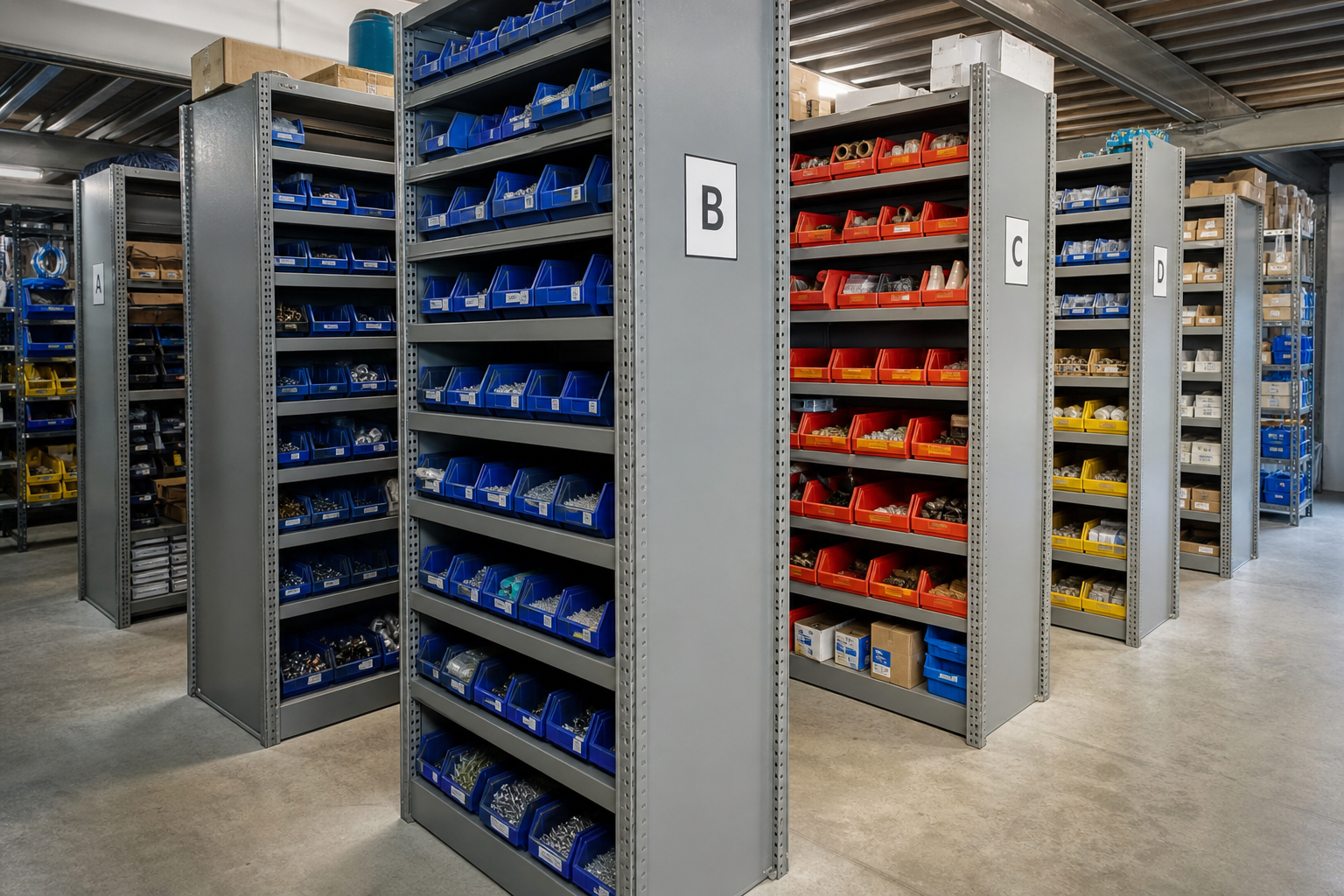
How dense is the pick? Thousands of small SKUs in bins belong in boltless rivet shelving or in shelf levels inside rack bays, where you can pitch levels every 12 to 18 inches instead of every 4 feet. Our comparison of boltless shelving vs pallet racking works through the cost and capacity trade.
Where is the weight? Heavy hardware still needs rack even at small unit sizes. Boltless shelving has real capacity, but it is per shelf level and it assumes a spread load; a case of structural bolts is not a spread load.
The most efficient fastener warehouses we work in use both, deliberately: rack for the reserve and the heavy, shelving and bins for the pick face, with the two sharing aisles so replenishment is a few steps rather than a trip across the building.
Long stock, coils and awkward items
Every industrial distributor accumulates inventory that does not fit a pallet: threaded rod, strut channel, pipe, conduit, extrusion, banding coils, hose reels. Left in pallet bays, these overhang the aisle, get damaged and take three people to retrieve.
- Cantilever racking for anything longer than the bay is deep. No front column means a fork or crane can place a full bundle in one motion. Arms are sized from the heaviest bundle and the number of support points the bundle needs, not from the average.
- Three support points minimum for long, flexible stock, so column spacing follows the lengths you actually buy.
- Keep loads back from the arm tip. Load applied at the tip of an arm is the fastest way to exceed a rating that looks generous on paper.
- Coils and reels need cradles or dedicated racks rather than sitting loose on a deck where they can roll.
- Give it a home before it needs one. Long stock stored on the floor beside a rack run is the single most common cause of aisle obstruction findings in distribution warehouses.
See cantilever rack systems for arm, column and base sizing, and structural pallet rack where forklift contact and very high point loads make roll-formed components a poor bet.

Installation, protection and inspection
Installation. Distribution buildings rarely have the luxury of a shutdown. Installations get phased run by run, with anchoring and load release completed on each section before stock goes in — see pallet rack installation services. Slab thickness and condition should be confirmed before the first anchor goes down, not discovered during it.
Protection. Heavy pallets, busy aisles and tight turns mean impacts. End-of-aisle guards, column protectors and row spacers are cheap relative to a damaged upright in a fully loaded bay of hardware: rack guards and column protectors.
Decking. Small, heavy items and open beams do not mix. Wire decking catches dropped boxes, keeps sprinkler water moving, and lets a bay hold non-palletized cases — but deck ratings are separate from beam ratings and have to be checked against how the load is applied.
Inspection. Industrial steel storage racks in the United States are designed to ANSI MH16.1 (Rack Manufacturers Institute) and treated as non-building structures by the International Building Code; OSHA expects storage to be stable and secure and aisles to be clear. A documented inspection cycle, with clear rules on what gets unloaded immediately, is the practical way to satisfy both — see rack repair and inspection.
Fastener and industrial distribution racking FAQs
What racking is best for fastener storage?
How much weight can a pallet rack beam hold?
Should small parts go on pallet rack or shelving?
How do you store threaded rod and long stock?
Does an existing rack installation need documentation?
Can racking be installed in an operating distribution center?
Related pages
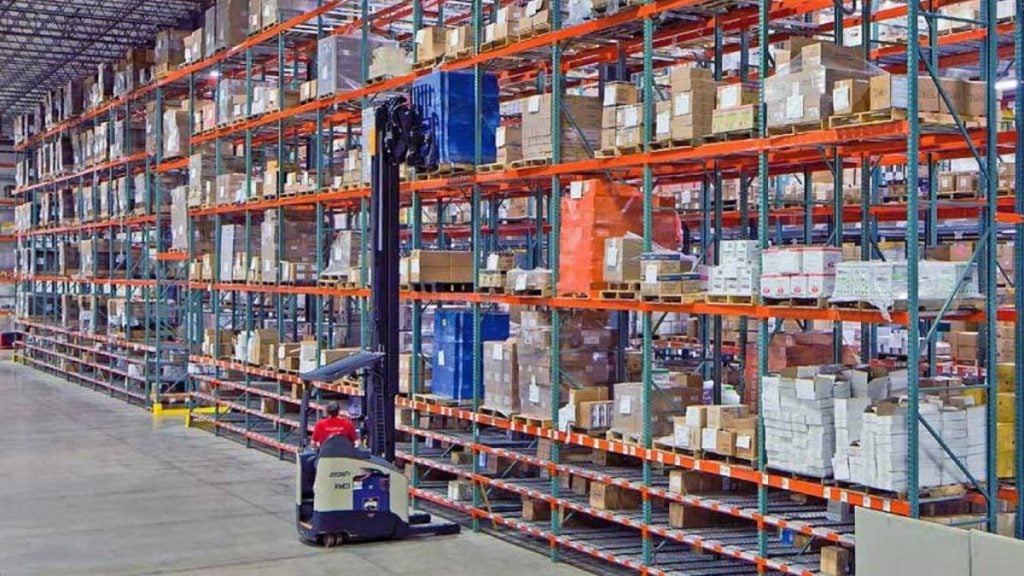 Selective Pallet RackDirect access to every pallet — the default for high-SKU distribution.
 Carton Flow RackDense FIFO pick faces for high-volume case and each picking.
 Narrow Aisle & VNA RackBuying back floor area when the building, fleet and floor allow it.
Storing heavy product in a high-SKU warehouse?
Send us your product mix and order profile and we will design the rack, shelving and pick face together.