
Wholesale Plant Nursery & Garden Supply Warehouse Racking: Glover Nursery
A wholesale nursery stores live plant inventory next to bagged bulk goods and outdoor yard stock — three handling problems under one roof, each with a different seasonal clock.
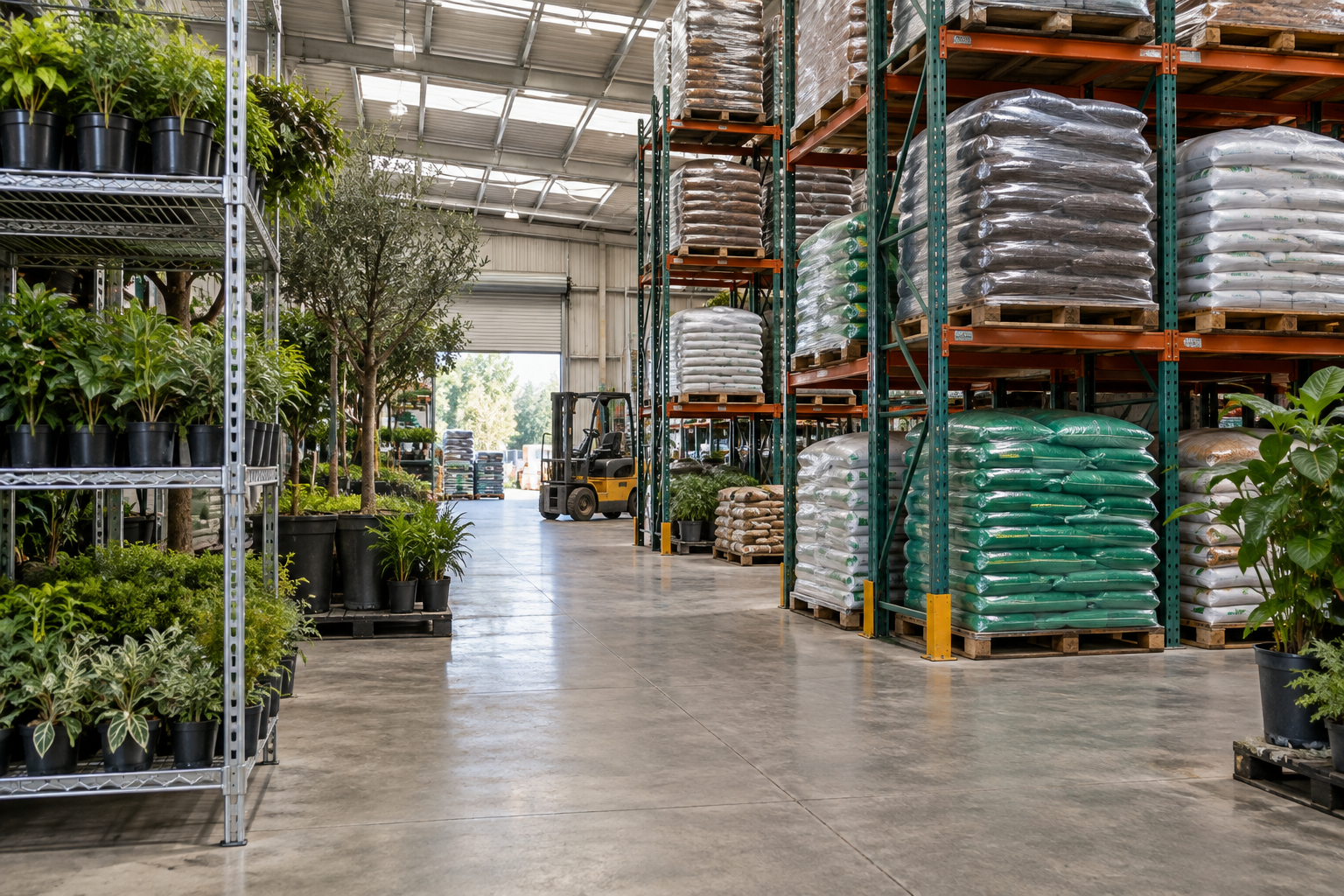
Wholesale plant nursery / garden supply
Client sector
Pallet rack
Product category supplied
Bagged goods, live plants & yard stock
Application
Utah
Project location
Plan your layout before you buy
Configure upright height, beam width, bay count, and load levels in our free 3D Pallet Rack Designer, then get an instant bill of materials and request a quote.
The project
Glover Nursery is a Utah wholesale plant nursery and garden supply operation. Material Handling USA supplied pallet rack systems for the company’s warehouse and yard storage.
A wholesale nursery’s storage problem isn’t just bagged goods — it’s bagged goods, live plant inventory, and outdoor yard stock all competing for the same footprint, each on a different seasonal clock. That’s a different underlying challenge than the bagged ag-input distribution we covered in our farm supply warehouse racking case study or the chemical-segregation focus of our agricultural warehouse racking case study: here, live plant stock that has to stay accessible, well-lit and rotated by growing season is the piece those other ag-sector pages don’t cover.
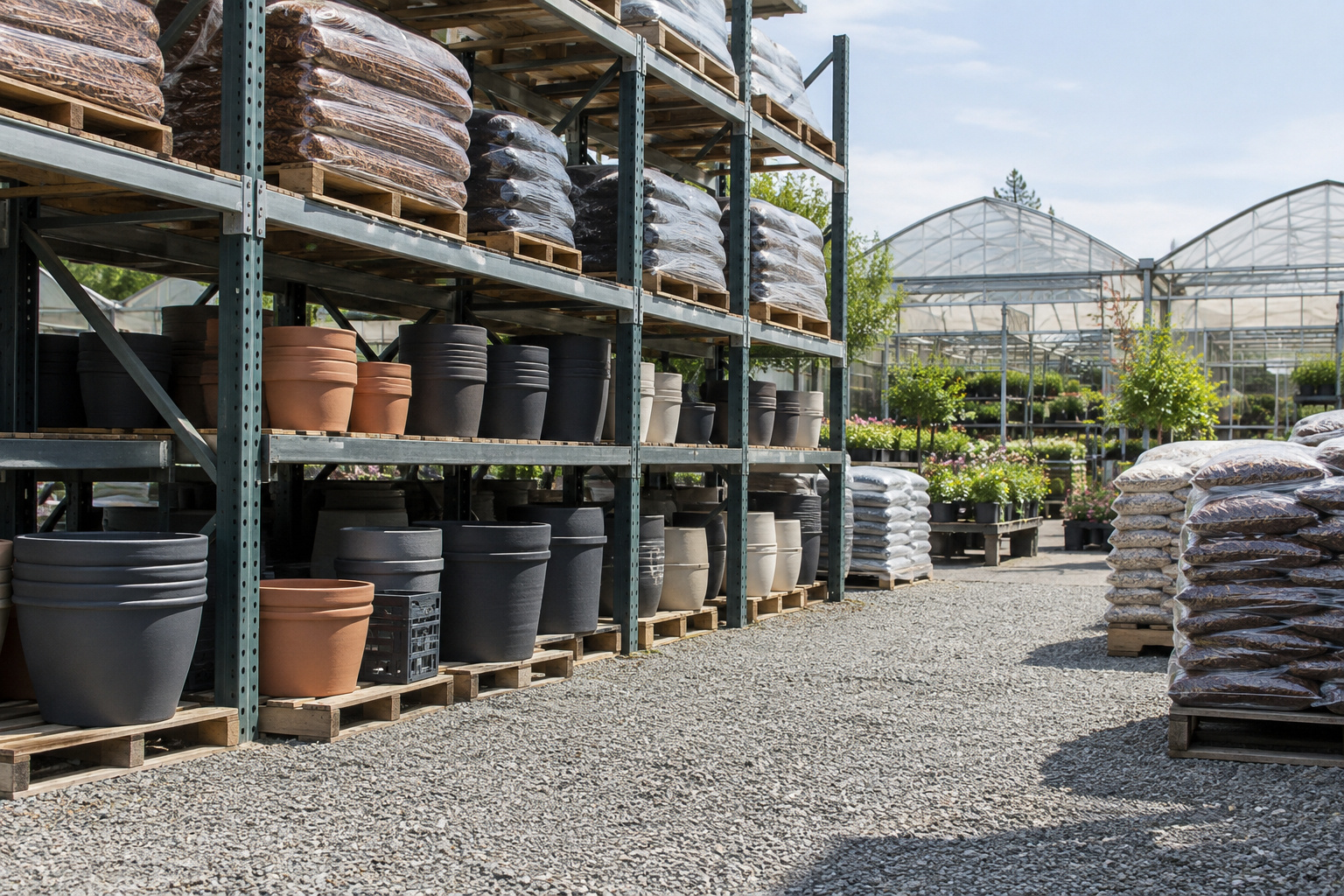
Why a wholesale nursery’s storage is different
Live plant stock isn’t shelf-stable inventory. Potted plants need light, airflow and regular handling to stay sellable — a nursery can’t warehouse plant stock the way it warehouses a bagged product, so live goods usually stay on open wire shelving or staged directly on the floor, not inside a pallet rack bay.
Bagged bulk goods still need efficient, dense storage. Potting soil, fertilizer and mulch are heavy, palletize cleanly, and turn over predictably enough to justify standard pallet rack and wire decking.
A meaningful share of inventory lives outdoors. Nursery pots, bagged mulch and overflow bagged goods commonly stage in an outdoor yard next to greenhouse structures, which changes both the rack finish required and the layout logic.
Demand is sharply seasonal. Spring planting season can multiply order volume for both plants and bagged goods several times over compared to the off-season.
What a wholesale nursery stores
Sorting inventory by handling need — live, bagged, or container/hardware — is what makes a nursery storage layout work, more than sorting by plant type.
| Group | Examples | Storage that suits it |
|---|---|---|
| Bagged bulk goods | Potting soil, fertilizer, mulch, soil amendments | Selective pallet rack with wire decking, sized to standard pallet footprints |
| Live plant stock | Potted trees, shrubs, bedding plants, flats | Open wire shelving or floor staging in a lit, ventilated area — not enclosed pallet rack bays |
| Empty and stacked containers | Nursery pots, trays, flats in various sizes | Cantilever rack or boltless shelving sized to nested-pot stack heights |
| Outdoor yard-staged bulk material | Overflow bagged goods, bulk aggregate, seasonal surplus | Galvanized or coated cantilever/pallet rack rated for outdoor exposure |
| Tools, irrigation and small hardware | Hand tools, irrigation fittings, plant tags, small hardware | Boltless shelving near a pick area for fast, small-quantity picks |
Rack choices for bagged goods and yard stock
The right rack selection for a wholesale nursery separates by load type first, then by whether the position lives indoors, in a covered yard, or fully outdoors.
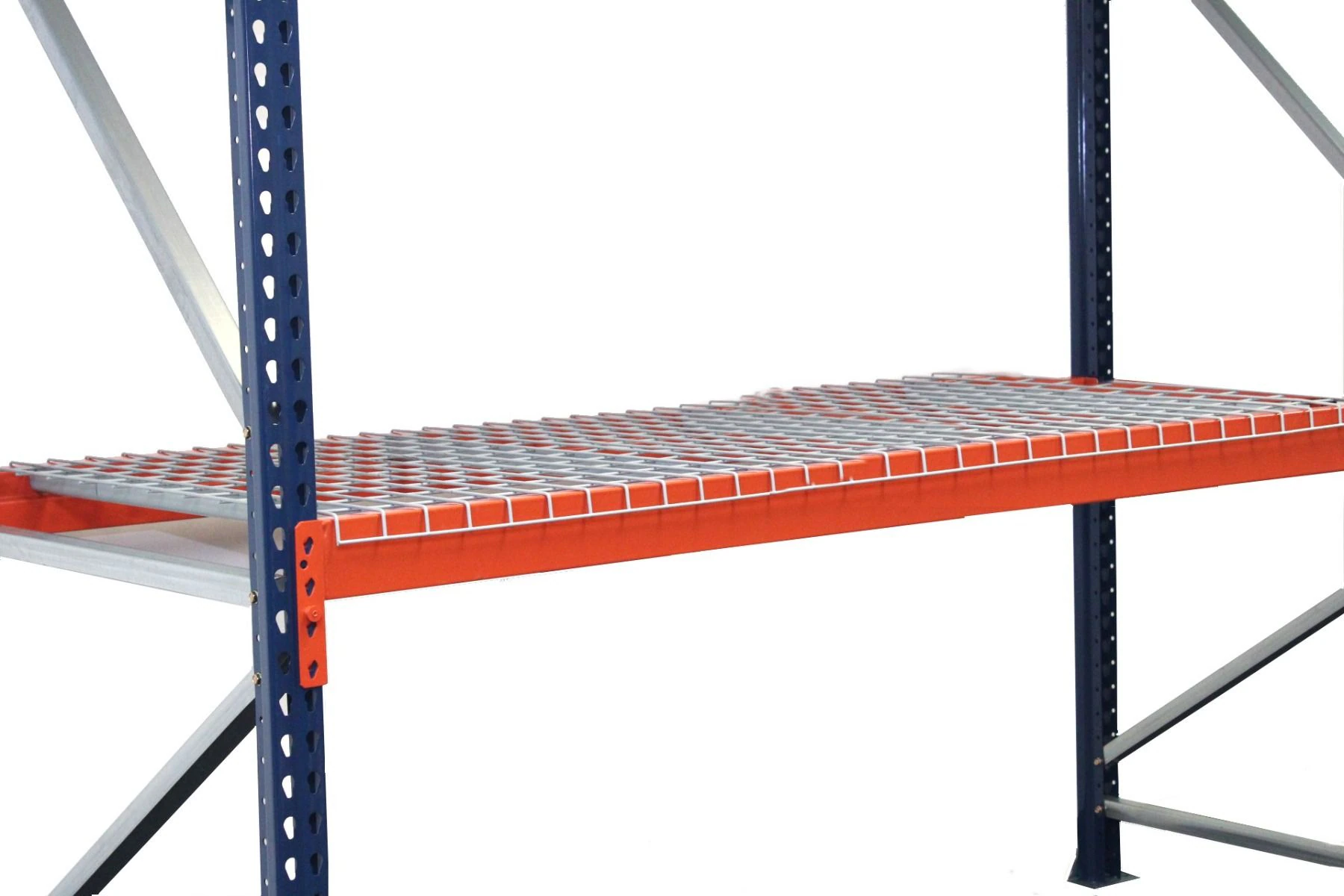
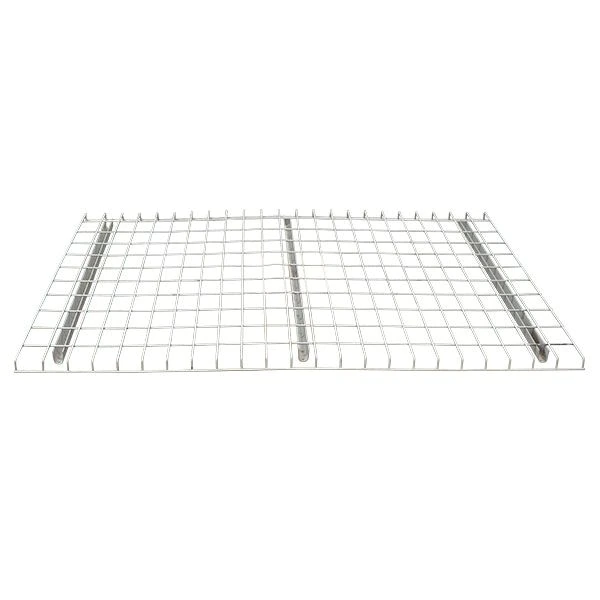
- Selective pallet rack with wire decking for bagged goods. Standard palletized bagged soil, fertilizer and mulch store efficiently on selective rack, and wire decking keeps torn bags from spilling through.
- Cantilever rack for stacked container and pot inventory. Open arms handle bulky nested pot stacks better than a boxed pallet position, and give a forklift clear access without unstacking a full pallet.
- Boltless shelving for tools, irrigation parts and small hardware. Frequent, small-quantity picks move faster off open shelving than off a full pallet position.
- Outdoor-rated cantilever or pallet rack for yard-staged bagged goods and containers. A yard position needs a coated or galvanized finish and a stable, hard-surfaced footing — not the same finish as an indoor warehouse rack.
Model bag pallet counts, container stack heights and yard footprint against your actual inventory mix in our 3D pallet rack designer before ordering.
Live plant stock and seasonal turnover
A wholesale nursery’s storage layout has to flex hard around the growing season, for both live stock and the bagged goods that move with it.
- Size bagged-goods rack capacity for peak spring volume, not the annual average. A spring planting rush can multiply weekly order volume several times over — a layout sized for the slow season creates a bottleneck exactly when demand peaks.
- Keep live plant staging separate from and adjacent to bagged-goods rack, not mixed in with it. Live inventory needs light and airflow that a rack bay doesn’t provide, so plant staging areas should border the racked storage, not sit inside it.
- Reserve fast-pick bagged-goods positions for the season’s top movers. The specific soil, fertilizer and mulch products that sell fastest shift by season; keeping ground-level positions flexible for the current top sellers beats a fixed permanent slotting plan.
- Use the off-season for rack inspection and maintenance. Winter downtime is the practical window to inspect, repair or reconfigure rack before spring volume arrives.
Fertilizer and chemical product segregation
A wholesale nursery’s bagged product line usually includes fertilizers and pesticide/herbicide products alongside plain bagged soil and mulch, and those categories need their own handling logic.
- Store fertilizer and pesticide/herbicide products in a dedicated rack run. Segregating chemical-treated bagged products from plain soil and mulch reduces cross-contact risk and simplifies inventory checks against product labels.
- Follow label storage requirements for temperature and ventilation. Some fertilizer and pesticide products carry specific storage temperature or ventilation requirements on the product label; a dedicated rack zone makes those easier to meet than mixed storage.
- Keep chemical storage away from live plant staging areas. Ventilation and odor from bagged chemical products shouldn’t share airflow with the live plant staging areas where workers spend extended time.
- Log lot numbers for chemical-treated bagged products. Recall traceability matters more for treated fertilizer and pesticide lines than for plain soil products; rack location discipline supports that even without a formal WMS.
Installation and safety
A wholesale nursery’s racking, indoor or outdoor, gets the same structural standards as any other pallet rack installation.
- Design rack capacity for actual bagged-goods pallet weight — see pallet rack weight capacity guidance rather than assuming a standard rating covers every bagged product line.
- Protect end-of-aisle uprights with column protectors and end guards where forklifts move bagged pallets and container stacks through active aisles.
- Inspect racking on a defined cycle, and immediately after any impact — see rack inspection and repair, and inspect outdoor rack more frequently for corrosion.
- Anchor and install to the ANSI/RMI MH16.1 standard — see our rack installation guidance, whether the run is indoors or in a yard.
ANSI/RMI MH16.1 is published by the Rack Manufacturers Institute. We design, supply and install pallet rack and cantilever rack for wholesale nurseries and garden supply operations across the region — see Utah pallet rack for our regional coverage.
Utah pallet rack project: This case study supports our Utah pallet rack design and installation guide and, at the top level, our main pallet rack systems hub.
Shop Pallet Rack Products Online
Buy select items directly from our online store, or request a quote for volume, custom sizes and freight-rated orders.
Frequently asked questions
What storage suits a wholesale plant nursery’s warehouse?
Why doesn’t live plant stock go on pallet rack?
What’s different about outdoor rack for a nursery yard versus indoor warehouse rack?
How should a wholesale nursery plan for spring season demand?
Should fertilizer and pesticide products be stored with plain bagged soil?
What’s the design standard for the racking itself?
Planning storage for a wholesale nursery or garden supply warehouse?
We design pallet rack, cantilever rack and outdoor-rated yard storage for wholesale nurseries and garden supply distributors. Free design consultation.