
Farm Supply Warehouse Racking: Carter Ag
Row-crop inputs distributors carry two things at once — long, awkward goods and chemistry that has to be kept apart — and both arrive in one hard peak season.
2025
Year we worked with Carter Ag
Cantilever + pallet rack
Product categories supplied A landscape and turf supply distributor faces a related roll-goods storage challenge on top of bagged inputs — see our turf and landscape supply distributor warehouse racking case study. A wholesale plant nursery faces a related mix of bagged goods, live inventory and outdoor yard storage — see our wholesale nursery and garden supply warehouse racking case study.
Agriculture / farm inputs
Client sector
Seasonal peak planning
The organizing principle
Plan your layout before you buy
Configure upright height, beam width, bay count, and load levels in our free 3D Pallet Rack Configurator, then get an instant bill of materials and request a quote.
The project
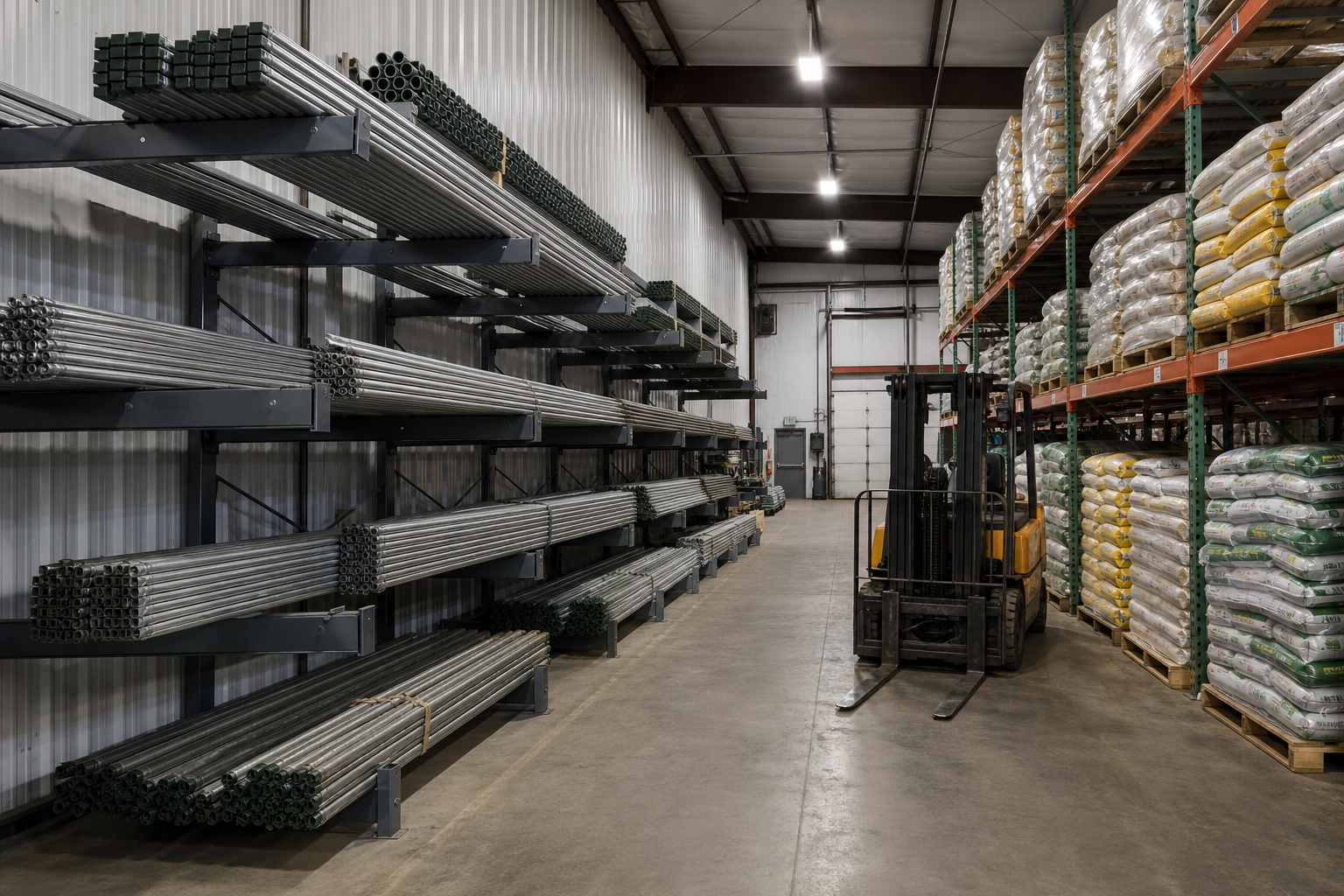
Carter Ag is a farm and row-crop inputs distributor. Material Handling USA supplied cantilever rack together with pallet rack for the company in 2025. Client, year and product categories are the only project facts we publish — no layouts, quantities, capacities or values.
The pairing tells you what the building actually handles. Farm input distributors move a mix of long, awkward material — fence panels, t-posts, irrigation pipe — that wants cantilever rack, alongside palletized bagged seed, feed and crop-protection product that wants engineered pallet rack systems. Neither storage type on its own covers the inventory.
We’ve built a similar case study for Mountain West Seed, a bagged feed and seed dealer. The difference here is the row-crop input side of agriculture — fencing and irrigation long goods, and the added discipline of segregating agricultural chemistry, neither of which a straight bagged-goods warehouse has to solve.

Why farm input distribution is different
The inventory has almost nothing in common with itself. A single farm supply warehouse stocks fencing panels, t-posts, irrigation pipe and fittings, bagged seed, bagged fertilizer, crop-protection chemicals, animal health products and hand tools — each with a different shape, weight and hazard profile.
Demand is a spike, not a curve. Planting and pre-season fertilizer application compress a year’s worth of certain SKUs into a few weeks. The warehouse has to hold peak-season volume for months and then release it fast.
Some of the product is regulated. Crop-protection chemicals carry label storage requirements — separation from feed and fertilizer, ventilation, spill containment — that a generic dry-goods warehouse layout ignores.
Customers load out by truck, not by case. A farm customer’s order is often a pallet or a truckload picked up at a will-call door, which puts a premium on staging lanes near loading rather than dense small-item picking.
The yard is part of the warehouse. Long goods and bulky, weather-tolerant material routinely live outdoors under cover, which extends the storage plan past the building’s walls.
What a farm supply warehouse stores
Sorting by physical behaviour, not by product family, is what makes the layout obvious.
| Group | Examples | Storage that suits it |
|---|---|---|
| Long goods | Fence panels, T-posts, rail, irrigation pipe, gates | Cantilever rack — arms loading from the side without a front column, arm length and spacing set from the actual material profile |
| Bagged seed and feed | Palletized bagged seed, feed and soil amendments | Selective pallet rack, fully decked, with clear pallet-position labeling for fast-changing seasonal SKUs |
| Crop-protection chemicals | Herbicides, pesticides, fungicides in original containers | A dedicated, separated area meeting the product label’s storage requirements — never mixed into general feed or fertilizer rack runs |
| Bulk fertilizer | Bagged and tote fertilizer products | Ground-level or low rack positions; heavy, moisture-sensitive product belongs near the floor and off any leaking roof line |
| Fittings and small hardware | Irrigation fittings, fencing hardware, fasteners | Bins or boltless shelving near the will-call counter, picked by hand many times a day |
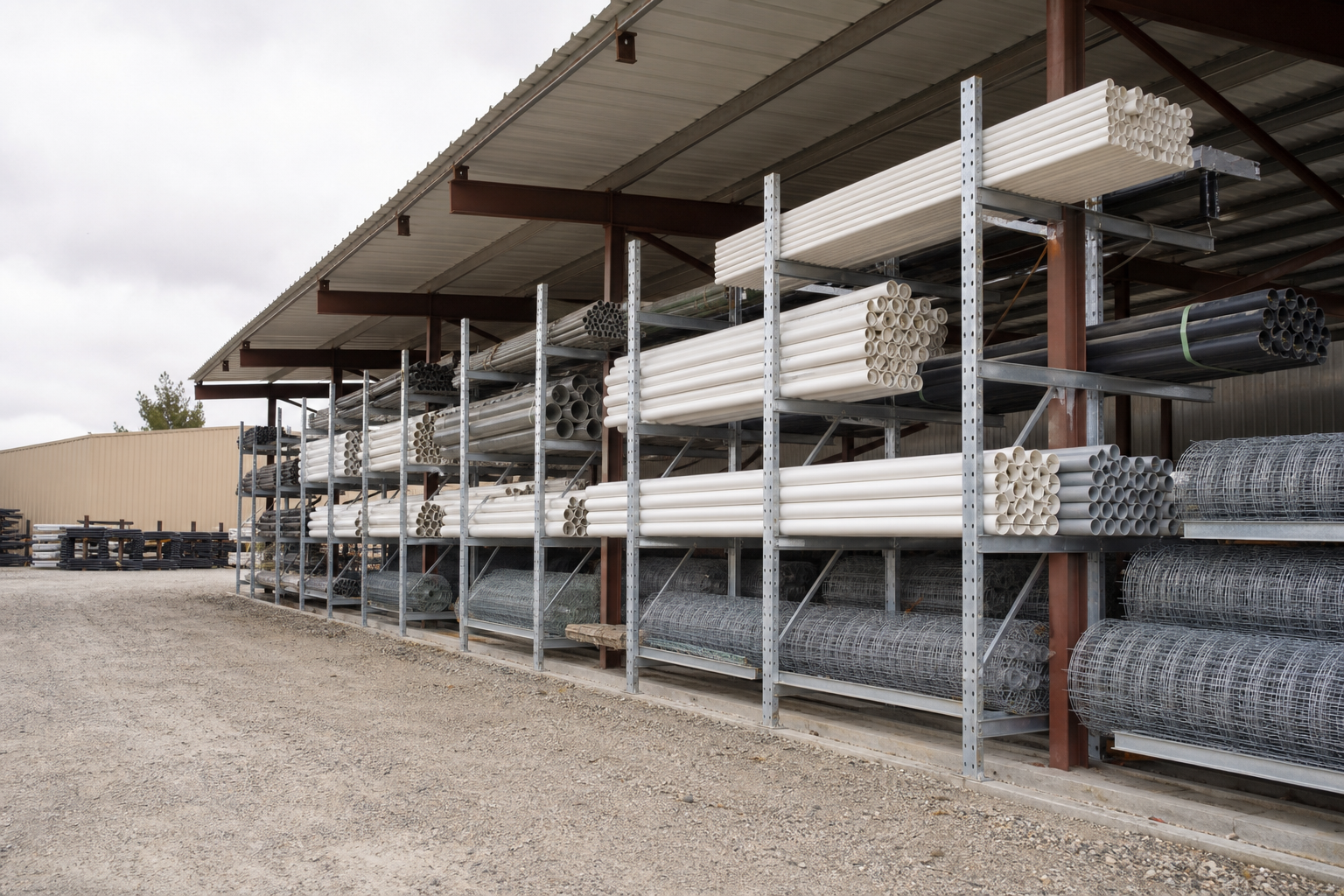
| Outdoor and weather-tolerant stock | Panel bundles, pipe, wire rolls, T-posts | Covered outdoor cantilever racking with galvanized or coated steel and proper drainage detail |
Cantilever for long goods
Fence panels, rail and irrigation pipe don’t fit a standard pallet position, and a beam in front of them just gets in the way of loading. Cantilever rack solves this with arms that support the material along its length and leave the front of the bay open.
- Set arm length from the actual material, not a catalogue default. Fence panel and pipe lengths vary by product line; the arms should be sized to what the yard actually stocks.
- Space arms vertically for the load, not just the count. Long, semi-rigid material like pipe needs enough support points that it doesn’t sag between arms.
- Match single- or double-sided towers to the aisle. A wall-side run wants single-sided arms; an island in the yard or floor can use double-sided towers.
- Deck lower arms where loose product could roll or slide. Pipe and rail want a physical stop; wire decking or arm stops keep material from working forward.
- Protect end columns from yard traffic. Loaders and trucks moving long material clip end columns more often in a cantilever row than anywhere else in the building.
Keeping ag chemistry segregated
Crop-protection products are the one category in a farm supply warehouse that cannot simply go wherever there’s an open pallet position.
Follow the label, not a house rule. Every registered crop-protection product carries its own EPA-approved label with specific storage, separation and ventilation requirements; the label governs, and it varies by product.
Physically separate chemistry from feed, seed and fertilizer. Cross-contamination from a leaking container is a real risk when incompatible product sits on adjoining rack runs.
Plan for containment. A dedicated area with spill containment and clear signage keeps a bad pallet from becoming a building-wide problem.
Keep documentation with the product. Safety data sheets should be readily available at the storage location, not filed away in an office.
Limit access. A caged or otherwise access-controlled area — the same approach used in our security cages case studies — works well for regulated product that needs both separation and control.
Planning for the seasonal peak
A farm supply warehouse that is sized for an average week runs out of room every spring and sits half empty every fall. The fix is planning the layout around the peak, not the average.
- Reserve flex capacity for pre-season build-up. Empty floor or low-rack positions that sit unused most of the year absorb the pre-planting surge without spilling into aisles.
- Stage by delivery week, not just by SKU. Product that arrives ahead of the season for a known push can be blocked into its own zone so the picking area stays organized when volume peaks.
- Keep the loadout lanes clear year-round. Will-call and truckload pickups slow down fastest when staging areas get used as overflow storage during the rush.
- Plan racking, not just square footage, for growth. A layout with reconfigurable bays absorbs a changing product mix better than a fixed shelving plan.
- Model the layout before the season starts. Our 3D pallet rack configurator lets you test bay counts and aisle widths against your real peak-season volume.
Outdoor yard storage
Fencing, pipe and other weather-tolerant long goods routinely live outside the four walls, and that extends the storage plan into the yard.
| Consideration | Practical answer |
|---|---|
| Steel finish | Galvanized or coated steel for any rack left outdoors, not standard interior-grade paint |
| Drainage | Base plates and anchor points kept above grade and out of standing water |
| Wind and snow load | An engineered design that accounts for the actual site’s wind and snow loading, not an interior rack spec reused outside |
| Cover | A canopy or lean-to over cantilever rows keeps bagged and boxed product usable and protects unprotected steel product from corrosion |
| Anchorage | Site-specific footing design; yard slabs and compacted gravel behave differently than an interior warehouse floor |
The design standard for pallet and cantilever rack, indoors or out, is ANSI/RMI MH16.1, published by the Rack Manufacturers Institute.
Installation and inspection
Farm supply buildings are often older ag-industrial structures repurposed for distribution, which puts extra weight on getting the engineering and upkeep right.
- Design to real load, not an estimate. See pallet rack weight capacity and have both the cantilever and pallet rack runs engineered to the material actually stocked.
- Check the slab and footing before anchoring, especially in older or partially outdoor structures where slab condition varies across the building.
- Protect columns from forklift and loader traffic. Will-call areas and cantilever aisles see more mixed-equipment traffic than typical warehouse aisles — column protectors and end guards earn their keep.
- Inspect on a cycle and after any impact. Bent arms or deformed columns reduce capacity immediately — see rack inspection and repair.
- Use an installer who works to the standard. Practical installation guidance is on our rack installation page.
We design, supply and install racking for agricultural and farm supply operations across the region — see Utah pallet rack.
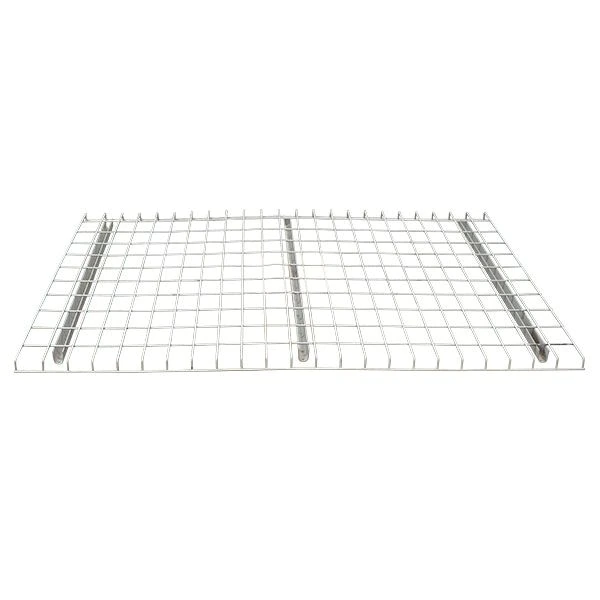
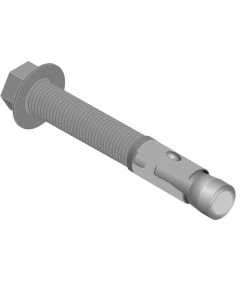
Shop Pallet Rack Accessories Online
Protect and finish your pallet rack installation with these in-stock accessories, or request a quote for custom-sized rack, freight and volume pricing.

Frequently asked questions
What racking suits fence panels and irrigation pipe?
Can crop-protection chemicals be stored on the same rack as feed or fertilizer?
How do you size a warehouse for a seasonal spike instead of an average week?
Is outdoor cantilever storage viable for farm supply yards?
What is the design standard for cantilever and pallet rack?
How often should farm supply racking be inspected?
Planning a farm supply or ag inputs warehouse?
We design combined cantilever and pallet rack layouts for row-crop and farm input distributors, sized for the seasonal peak. Free design consultation.