
Modular Buildings vs. Portable Office Trailers
A trailer is built on a chassis and usually rented; a modular building is built as a building and owned. Compare cost of ownership, comfort, indoor use and when each one fits.
Call (800) 326-4403 or email Sales@MH-USA.com

Trailer
Built on a Chassis
Modular
Built as a Building
Short Term
Trailers Fit
Long Term or Indoors
Modular Fits
What is a portable office trailer, and what is a modular office?
A portable office trailer (often called a mobile office or job-site trailer) is built on a steel chassis with axles and a hitch. It is towed to site, set on blocks and leveled, and is usually rented by the month for construction projects and short-term needs.
A modular building is built as a building: wall panels or factory-built modules set on a slab, piers or a foundation, in the size and layout the work needs. It is usually purchased, and it can be permanent or relocatable.
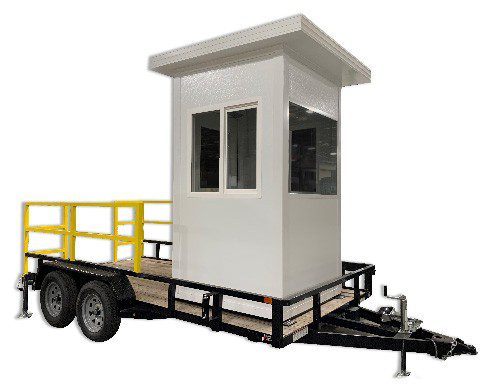
The term “modular office trailer” gets used for both. The practical difference is the chassis: a trailer is a vehicle you can tow; a modular building is not. That one difference drives comfort, appearance, where it can go and how long it makes sense to keep it.
Modular buildings vs. portable office trailers compared
| Factor | Portable office trailer | Modular building |
|---|---|---|
| Typical use | Construction sites and short projects | Long-term offices, plant buildings, booths, permanent sites |
| How you get it | Usually rented monthly; also sold | Usually purchased and owned |
| Base | Chassis on blocks or piers, with skirting | Slab, piers or foundation; existing slab indoors |
| Floor height | Raised; steps or a ramp at the door | At slab level indoors; set by foundation outdoors |
| Size and layout | Fixed widths and lengths from the fleet | Footprint, height and rooms designed to the job |
| Indoors | Not practical inside a plant | Assembled on the plant floor |
| Appearance | Utility trailer look | Office or building finishes; can match the site |
| Comfort | Basic insulation and HVAC; lighter construction | Insulated panels and HVAC sized for daily use |
| Moving it | Tow it away | Disassemble and reinstall, or move modules by truck |
When a trailer is the right call
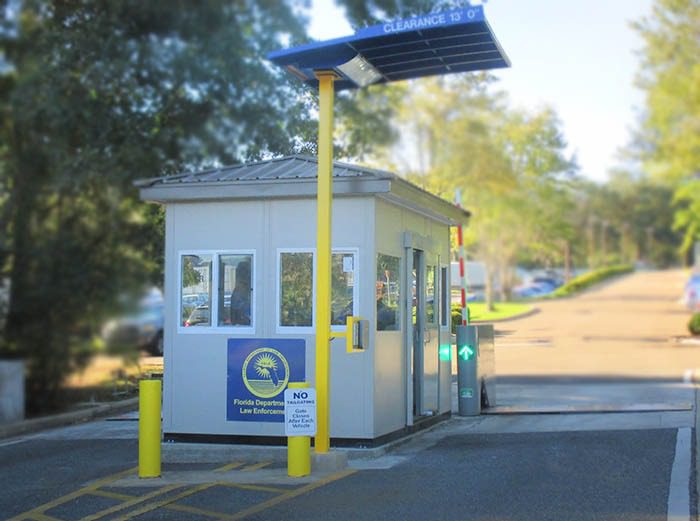
For a construction project that lasts a few months, a rented trailer is usually the practical answer: it arrives ready, sits on blocks, and leaves when the job ends. Short-term rental for a project office is exactly what trailers are built for.
Trailer-mounted guard booths serve a similar role at temporary gates; see mobile and portable guard booths.
- Short projects where the office leaves with the crew.
- Outdoor job sites with room for a trailer, steps and parking.
- No foundation wanted and no plan to stay.
When a modular building is the better investment
If the space is needed for years, if it goes inside a plant or warehouse, or if staff will work in it every day, a modular building usually wins. You own it, it looks and works like part of the facility, it sits at floor level indoors, and it can be expanded or moved later. Monthly rent on a long-term trailer adds up while you own nothing at the end.
Compare total cost on your own numbers; our cost guide shows what goes into a modular quote.

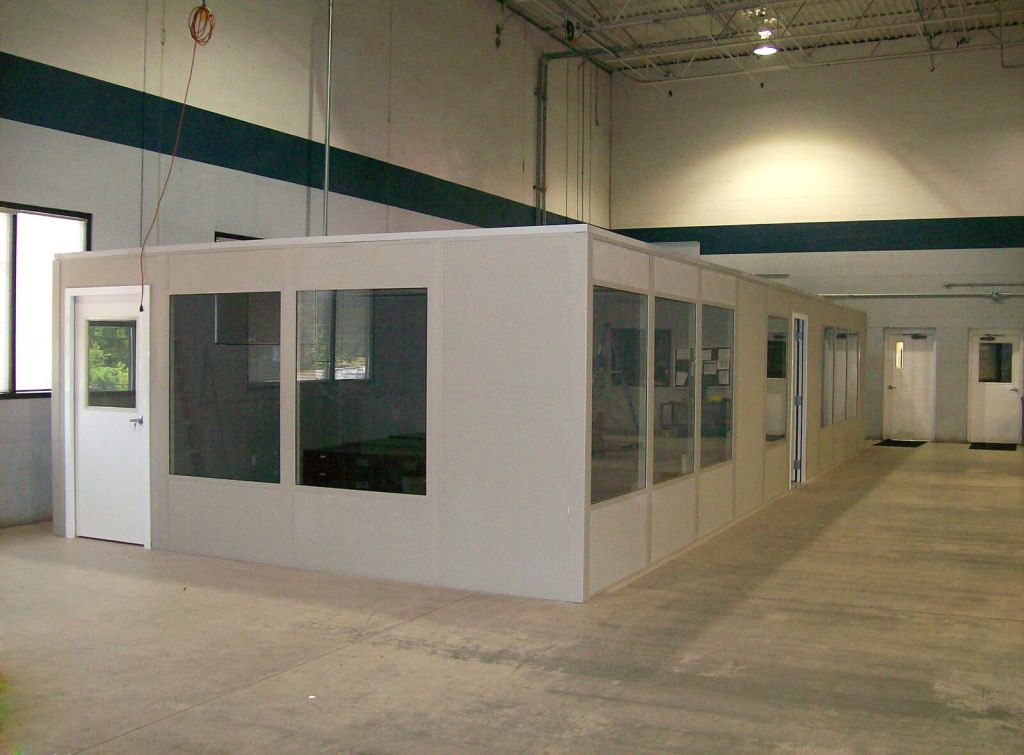 In-plant officesSupervisor, shipping and production offices on the plant floor.
 Exterior buildingsPermanent or relocatable site offices and buildings outside.
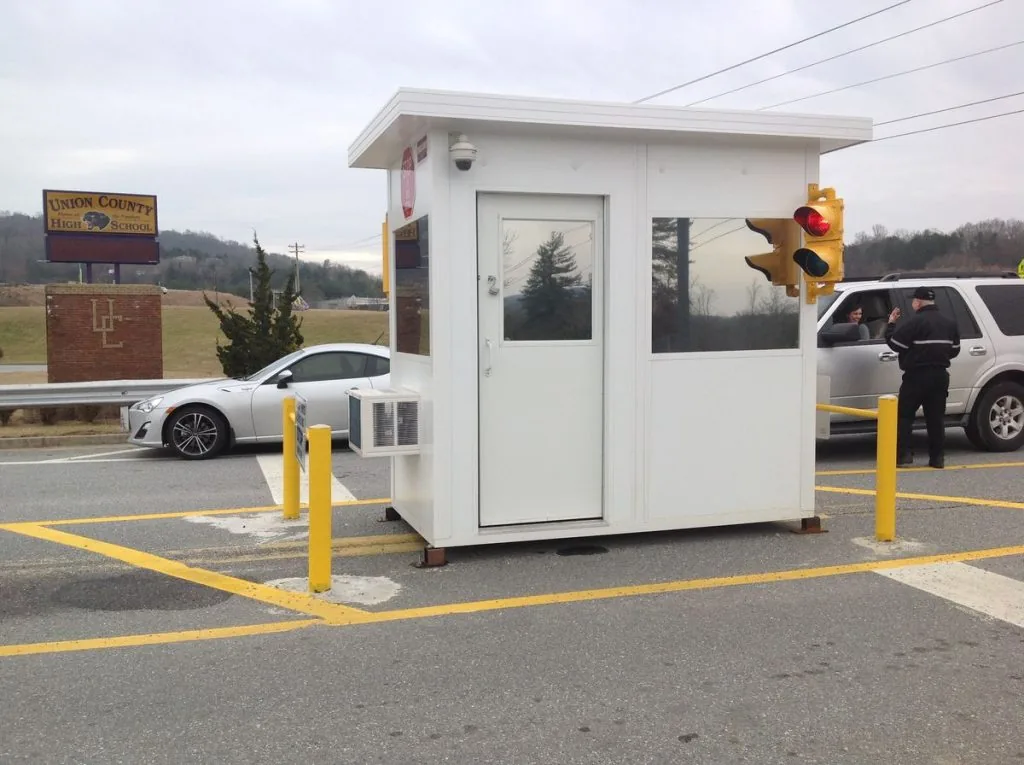 Guard boothsFactory-built booths for gates, entrances and parking.
Questions to decide
How long will you need it?
Months points to a rental trailer; years points to a modular building you own.
Inside or outside?
Inside a plant, only a modular building is practical.
Who uses it, and how?
Daily office work, customers or visitors favor modular comfort and finishes.
Will it move?
Both can move. Trailers tow; modular buildings disassemble or move by module.
Also compare modular buildings vs. shipping containers and modular vs. drywall buildout. Timing is covered in lead times, and leased-space decisions in in-plant offices in leased warehouse space. Back to the in-plant buildings hub.
Comparing the total cost of ownership
Compare the two on your own numbers over the time you will actually use the space. These are the lines to include.
| Cost line | Rental trailer | Purchased modular building |
|---|---|---|
| Upfront | Delivery, setup, blocking, skirting, steps or ramp | Building package, freight, installation |
| Monthly | Rent for as long as you keep it | None after purchase (financing payments if financed) |
| Site work | Pad or level ground, utilities, stairs | Existing slab indoors; foundation outdoors |
| End of use | Teardown and return delivery | Keep, relocate, reconfigure or resell |
| Comfort and image | Basic | Office-grade; matches the site |
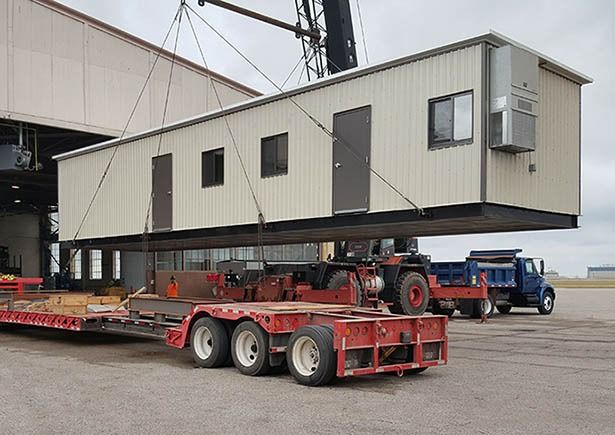
Some sites use both: a rented trailer covers the months while a permanent modular building is engineered, permitted and built, then the trailer goes back. Our lead time guide shows how long a modular building typically takes, and the financing guide covers ways to pay.
Protect Site Offices: Bollards and Railing
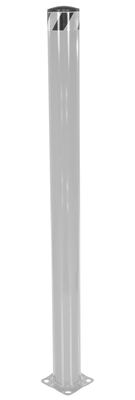
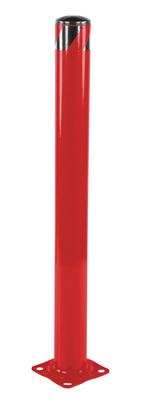
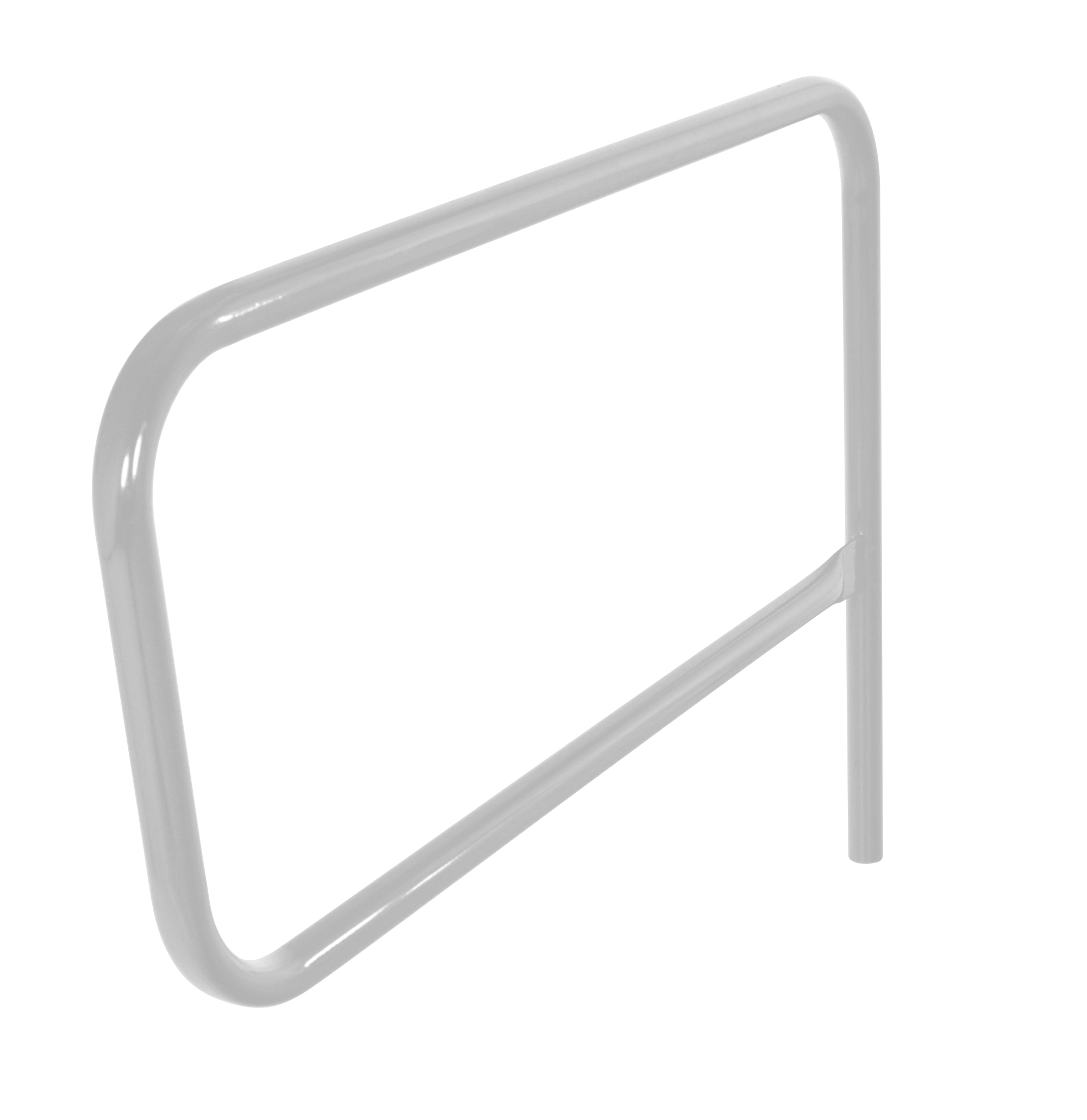
Whatever the office, keep vehicles away from it. Steel pipe bollards and safety railing gates can be ordered online.
Frequently asked questions
What is a modular office trailer?
Is it better to rent a trailer or buy a modular building?
Can an office trailer go inside a warehouse?
Do modular buildings need a foundation?
Can a modular building be moved like a trailer?
Which one looks more permanent?
Need space for the long run?
Tell us the use, size, location and how long you need it. We will quote a modular building you own.