
Energy and Industrial MRO Supply Racking: Distribution NOW
Valves, fittings, pumps and pipe are dense, expensive and irregular — and a branch network only works if every location is laid out the same way.
2025
Year Distribution NOW worked with us
Pallet rack
Product category we supplied
Energy & industrial MRO supply
Application
Dense, irregular loads
The design driver
Plan your layout before you buy
Configure upright height, beam width, bay count, and load levels in our free 3D Pallet Rack Designer, then get an instant bill of materials and request a quote.
The project
Distribution NOW (DNOW) is a distributor of energy and industrial products — pipe, valves, fittings, pumps, and the MRO supplies that keep production and processing sites running. Material Handling USA supplied pallet rack for the company in 2025. Client, year and product category are the only project facts we publish; no layouts, quantities or values.
What makes this application distinct is the combination. A general MRO distributor deals with variety. An energy supply operation deals with variety plus weight plus length plus outdoor storage, inside a branch network where every location has to be recognizable to a transferring employee. That combination shapes the pallet rack systems you should specify. It is a different problem again from the waterworks distribution work we wrote up with HD Fowler, where pipe and valve sizes dominate, and from a plant-side MRO storeroom, where the customer is internal.
What an energy and industrial MRO branch actually stores
Valves and actuators. Extremely dense for their size, frequently crated, and sometimes worth more per pallet than anything else in the building. A single large valve can put a serious concentrated load through a small footprint.
Fittings, flanges and gaskets. Thousands of line items, mostly small and heavy, and the reason a branch needs bins and small-parts storage integrated into the rack rather than beside it.
Pipe, tube and conduit. Long goods that belong on cantilever arms or in a rack designed for the purpose, not balanced across beams.
Pumps, motors and rotating equipment. Heavy, skid-mounted, awkward to lift, and often needing to stay accessible for months.
Consumables and safety supplies. High-turn cartons, PPE and shop supplies — light, fast-moving and best kept near the counter, away from the heavy racking.
Customer-owned and consigned stock. Material that belongs to somebody else and must be physically identifiable as such. This is a storage design requirement, not just a system flag.
Dense loads and concentrated point loads
The mistake that causes most trouble in industrial supply warehouses is treating a beam’s rated capacity as if it were a bucket you can fill any way you like. It is not. Published beam capacities assume a uniformly distributed load across the beam pair. A crated valve or a skid-mounted pump concentrates most of its weight into two small contact areas, and the effective demand on the beam and on the deck is very different from the catalogue case.
| Situation | What it does | What to specify |
|---|---|---|
| Crated valve or pump on two skids | Concentrates load at two points instead of spreading it | Pallet supports or heavy-duty deck rated for point loading; verify with the rack engineer, not the catalogue number |
| Short, heavy pallets on a long beam | Leaves beam capacity unused while the frame still carries full load | Shorter bays with more uprights are often cheaper than heavier beams |
| Very dense pallets, low height | Upright frame capacity, not beam capacity, becomes the limit | Frame capacity depends on vertical beam spacing — more levels can mean a weaker frame |
| Loose fittings in bulk bins | Bins get filled to the top with dense product and quietly exceed intent | Rate the bin, mark it, and give heavy small parts their own low-level positions |
| Mixed pallets built by the yard crew | Actual pallet weight drifts far from the design assumption | Post ratings at the bay and train to them; a plaque nobody reads is not a control |
Our guide to pallet racking weight capacity explains how beam and frame ratings interact. The governing design standard is ANSI/RMI MH16.1 from the Rack Manufacturers Institute; workplace duties are set by OSHA.

Rack type selection for an MRO branch
Structural pallet rack where abuse is constant. Bolted structural channel takes forklift contact far better than roll-formed steel. In a branch where drivers load and unload all day and material is heavy, the extra cost is usually recovered in avoided repairs.
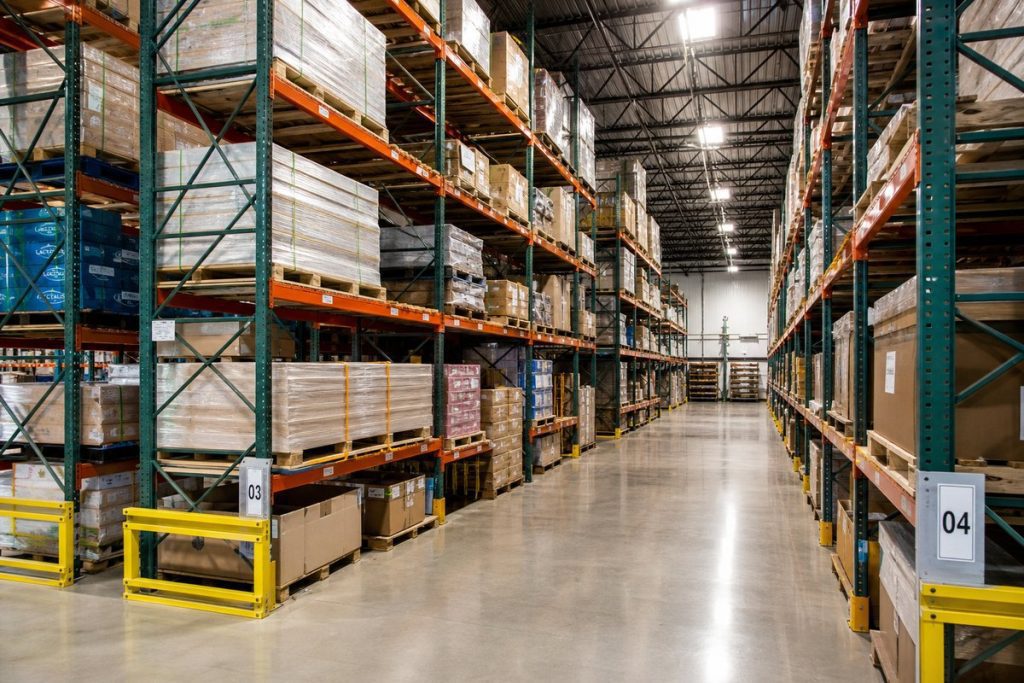
Selective rack for the long tail. Thousands of line items with a pallet or less of each is the definition of a selective application. Every position accessible, every SKU pickable.
Double-deep for the movers. A small number of high-volume items — common fittings, standard valves, consumables — arrive and sell in quantity and justify deeper storage behind a reach truck.
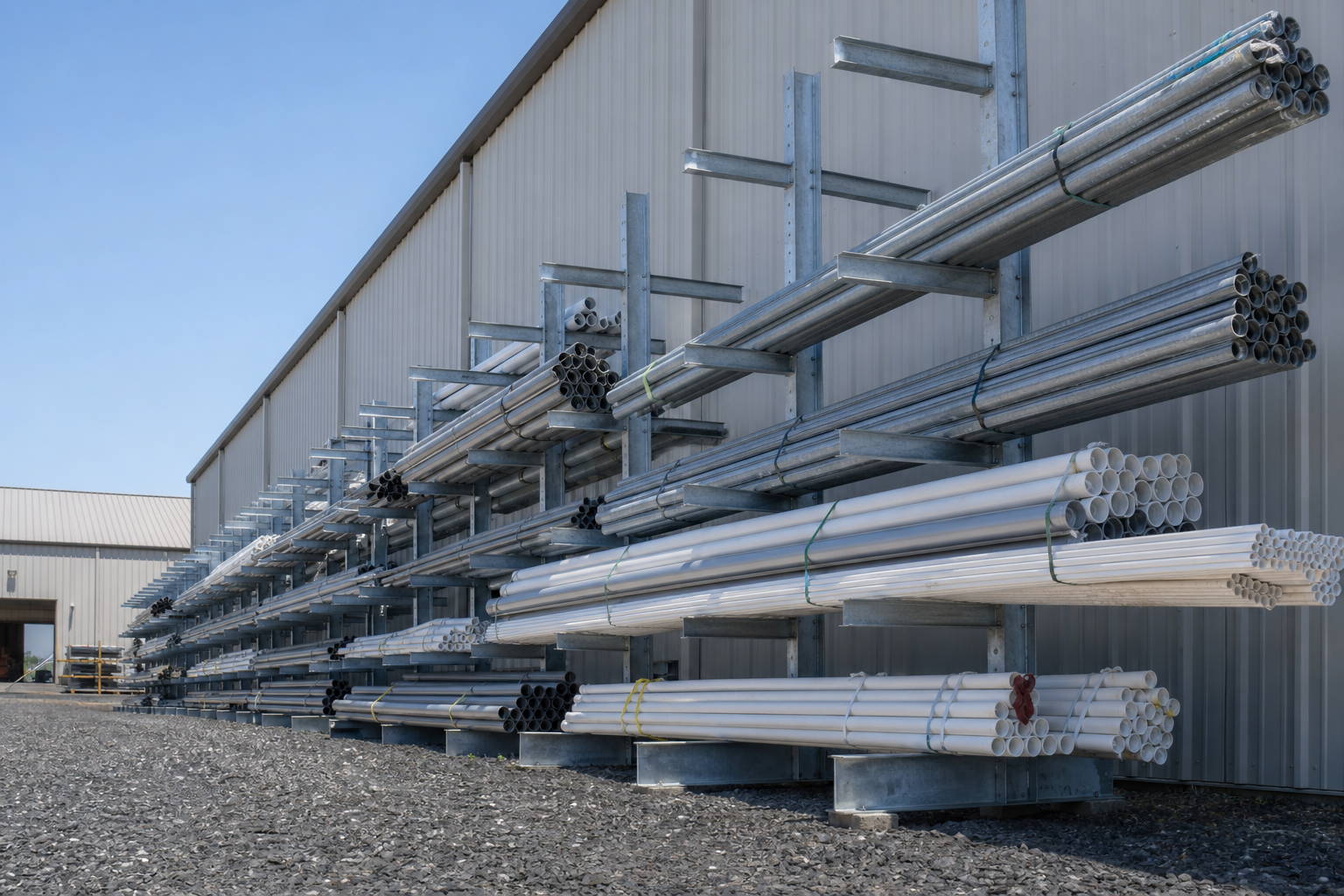
Cantilever for anything long. Pipe, tube, conduit, bar stock and strut. Arms, not beams.
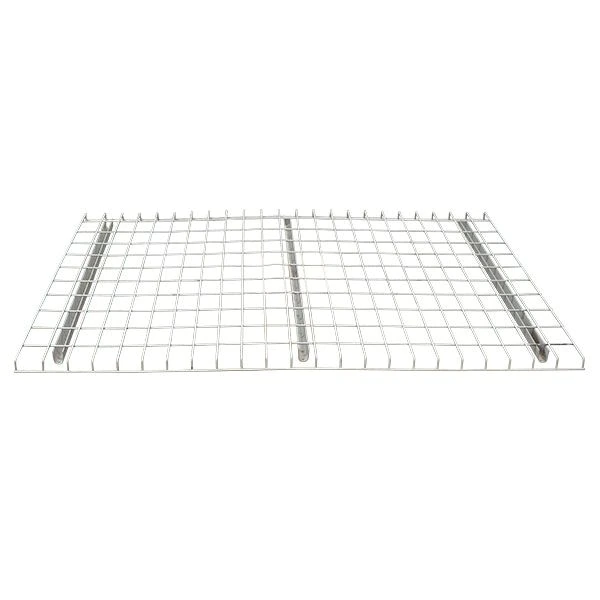
Decked levels with bins for small parts. Fittings and gaskets stored in bins on wire decking at pick height keeps the counter fast and stops small heavy items being stored on top of pallets.
Heavy-duty floor bays for rotating equipment. Pumps and motors that need a crane or a heavy lift belong at ground level in marked positions.
Long goods, pipe and the outdoor yard
Most energy supply branches store outdoors as well as indoors, and outdoor rack is a different specification, not the same rack in the weather.
- Corrosion protection has to match the exposure. Galvanized or suitably coated steel for outdoor racking; painted indoor rack put outside will show corrosion at the base plates and welds first, which is exactly where you least want it.
- Base plates and slab detail matter more outdoors. Water pools, freeze-thaw cycles work on concrete, and a base plate sitting in standing water loses section over time. Drainage and curb detail are part of the rack design.
- Wind loading is a real design input. Outdoor racking, especially tall cantilever, is engineered for wind as well as stored load. This is a structural calculation, not a judgement call.
- Store long goods on arms, not across beams. Pipe balanced on beams rolls, deflects and eventually falls. Cantilever arms with proper lips exist for this.
- Plan for how it gets loaded. Boom trucks, side loaders and yard forklifts need clearance and turning space; the practical aisle in a yard is set by the largest vehicle on the worst day.
- Bundle and band coated pipe carefully. Coating damage in storage is a warranty and quality problem, so arm spacing and protection matter as much as capacity.
Standardizing storage across a branch network
Any multi-branch distributor eventually discovers that its real storage problem is not one warehouse, it is twenty warehouses that do not resemble each other. Standardizing pays back in ways that a single site never sees.
| Standard | Why it matters across a network |
|---|---|
| Common bay and beam sizes | Steel becomes interchangeable between branches; a relocation or expansion reuses existing rack instead of ordering new |
| A common labelling scheme | Bay-level-position labelling that reads the same everywhere means transferring staff and cycle counters are productive on day one |
| Standard zone layout | Counter, fast movers, bulk, long goods, yard — in the same relative arrangement, so procedures transfer |
| One spec for protection | The same column protectors, end guards and barriers everywhere, so replacement parts are stocked once |
| Uniform capacity plaques | Ratings displayed the same way make audits and safety walks fast and repeatable |
| A documented rack drawing per site | Load application and rack configuration drawings are what let you safely reconfigure years later |
The last point is the one most often skipped. Keeping the engineered drawings for each branch turns a future reconfiguration from a guess into an engineering change. Without them, the safe answer is always to buy new steel.
Security, high-value stock and shrinkage
Industrial supply branches carry a surprising amount of easily resold inventory: hand tools, power tools, copper, instrumentation, specialty alloys and small high-value valves and fittings.
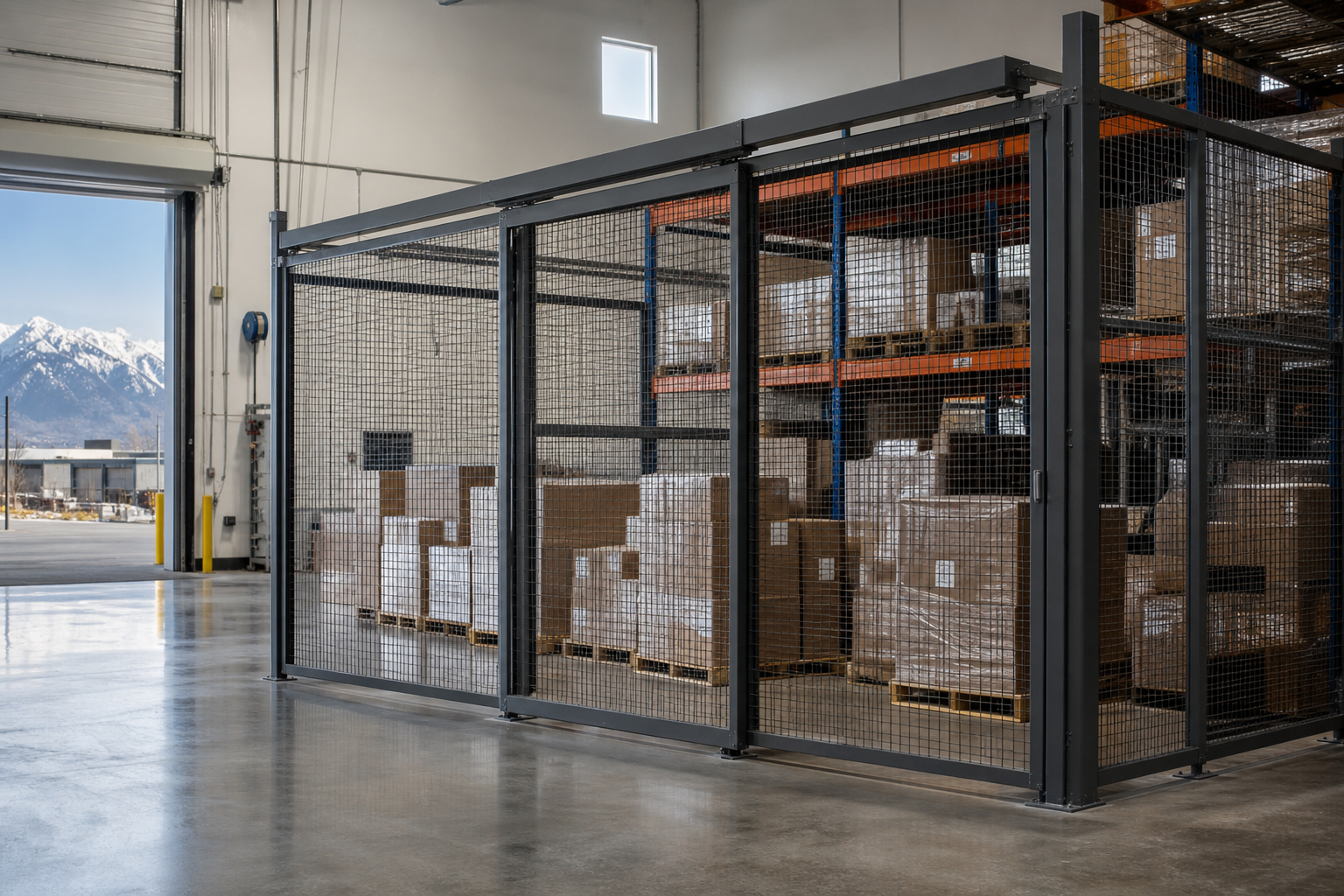
Cage the high-value run. A welded wire enclosure around a section of the rack line gives a lockable, auditable area without construction. Our security cages are designed to enclose existing rack.
Separate consigned and customer-owned stock. Physically distinct storage prevents the inventory dispute that follows a mis-picked consigned item.
Keep high-value items away from the shipping door. Proximity to an open dock is the most common contributor to loss in a busy branch.
Small heavy items belong low and labelled. Dense fittings stored high are both a handling hazard and effectively invisible to a cycle count.
Safety, damage and inspection
Heavy material and constant forklift traffic make this one of the harder environments for rack to survive in. Damage here is not cosmetic: a compromised upright under dense load is a collapse risk.
- Protect uprights everywhere trucks turn. Column protectors, end-of-aisle guards and barriers at every aisle entry and dock approach.
- Choose structural steel where impact is routine. It is the single most effective damage-reduction decision available in a heavy branch.
- Inspect on a schedule and after every strike. Bent columns, damaged base plates, cracked slab around anchors and missing safety pins — see rack repair and inspection.
- Never repair a damaged upright with a weld in the aisle. Repairs must be engineered; an improvised fix leaves a frame that looks whole and is not.
- Keep flue spaces clear. Longitudinal and transverse flues are fire-protection features, not spare inches.
- Re-check ratings whenever the product mix changes. Branches drift into carrying denser material than the rack was designed for, one pallet at a time.
- Anchor everything, including outdoor racking. Anchorage design has to reflect the actual slab and the seismic design category of the site.
Heavy industrial storage in seismic country is an engineering exercise every time — the same conclusion we reached in our mine site warehouse racking case study. For local design, supply and installation, see Utah pallet rack.
Shop Pallet Rack Accessories Online
Protect and finish your pallet rack installation with these in-stock accessories, or request a quote for custom-sized rack, freight and volume pricing.

Utah pallet rack project: This case study supports our Utah pallet rack design and installation guide and, at the top level, our main pallet rack systems hub.
Frequently asked questions
What racking suits an oilfield or energy supply branch?
Why do heavy valves and pumps need special consideration on pallet rack?
Is structural rack worth the extra cost in a distribution branch?
Can pallet rack be installed outdoors in a pipe yard?
How should a multi-branch distributor standardize racking?
How do you protect high-value inventory in an open warehouse?
What should be inspected in a heavy MRO warehouse?
Laying out an industrial supply branch?
We design and install racking for energy, MRO and industrial distribution — indoors and in the yard. Free design consultation.