
Pipe and Valve Storage Racking for a Waterworks Distributor: HD Fowler Company
Ductile iron, PVC, brass fittings and valve bodies do not share a shape, a weight or a handling method — but they share a yard. Here is how we plan pipe storage racks and pallet racking for a waterworks supply branch. Energy and industrial MRO branches add dense crated valves and pumps to the same mix — see our energy and industrial MRO supply racking case study.
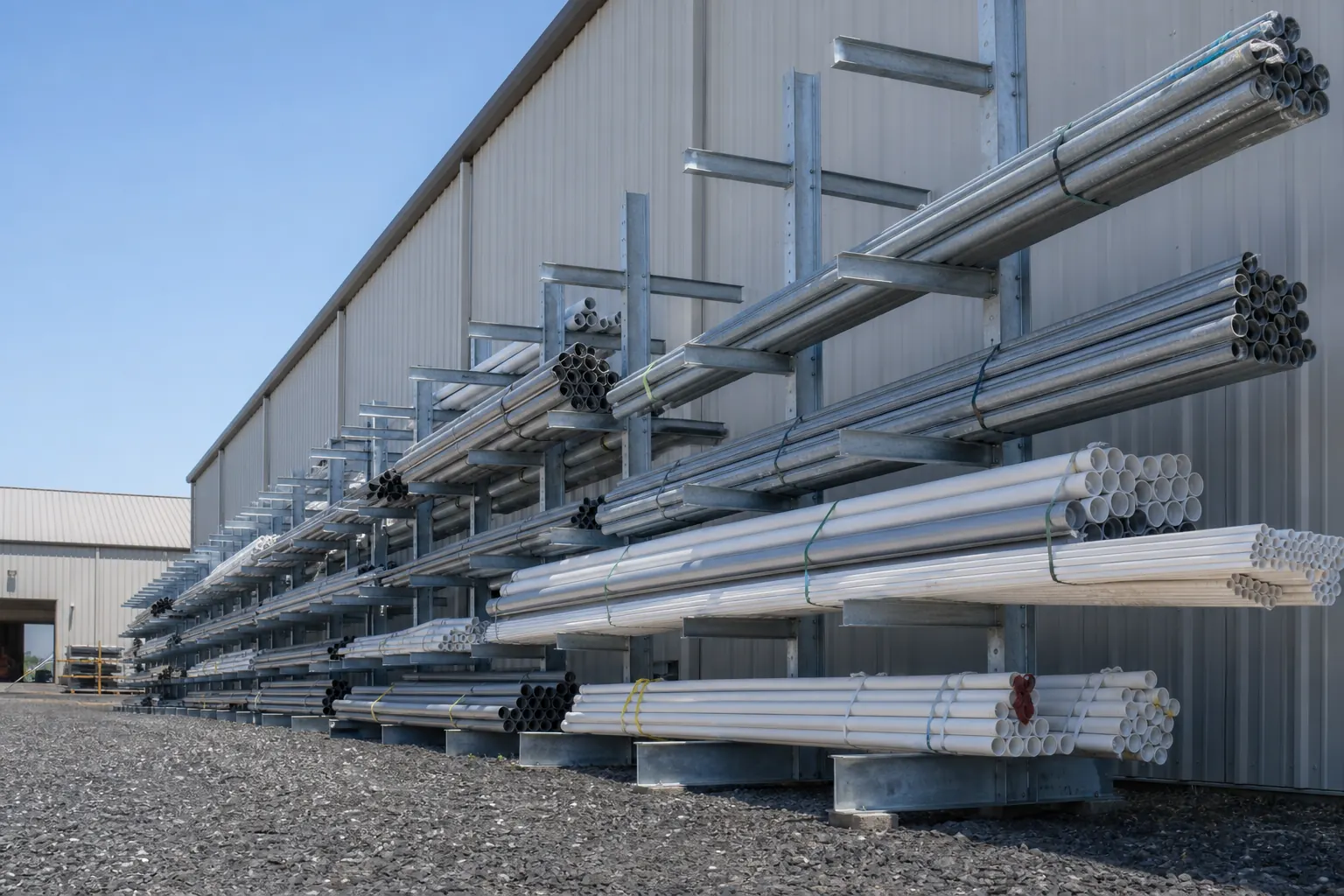
2022 & 2023
Years HD Fowler worked with us on rack
Waterworks
Pipe, valves, fittings and meter products
Cantilever + pallet rack
Product categories we supplied
Indoor and outside
Two very different storage environments
Plan your layout before you buy
Configure upright height, beam width, bay count, and load levels in our free 3D Pallet Rack Configurator, then get an instant bill of materials and request a quote.
The project
HD Fowler Company is a waterworks distributor supplying pipe, valves, fittings, meters and related products to municipalities and contractors. Material Handling USA supplied pallet rack for the company in 2022 and cantilever rack together with pallet rack in 2023. The client, those years and the product categories supplied are the only project details we publish.
A waterworks branch is one of the most demanding storage problems in wholesale distribution, and it is demanding for a reason that has nothing to do with volume. The product mix spans four or five completely different physical families — twenty-foot lengths of pipe, palletised boxes of fittings, loose brass, heavy valve bodies and reels — and a single order can pull from all of them. One storage method cannot serve that mix, so the design question is not “which rack” but “which rack for which family, and how do the zones connect”.
Below is how we approach that mix, and what a pipe, valve and fitting distributor should insist on when specifying warehouse pallet racking and long-material storage.
What we publish
We publish the client, the years we worked together and the product categories supplied. We never publish facility layouts, yard dimensions, inventory quantities or contract values.
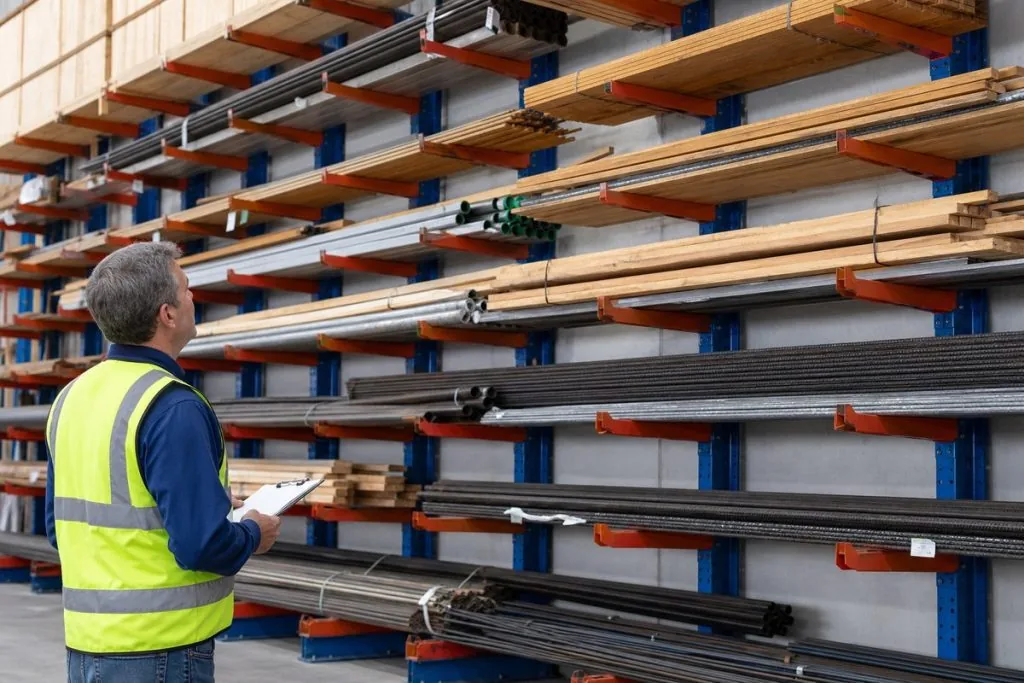
Why waterworks inventory breaks a standard rack layout
Most distribution warehouses are planned around a repeating unit: the pallet. Waterworks inventory refuses to become one.
The lengths are fixed by the product, not by you. Pipe arrives in standard lengths that will never fit a bay designed for a 48-inch pallet. Storing it on pallet rack means storing it across beams that were never engineered for a point load in the middle of the span, or letting it overhang — both of which create real hazards.
The density range is extreme. A bundle of small-diameter PVC is light and awkward; a pallet of ductile iron fittings or a gate valve is dense and compact. Designing every bay for the heaviest item wastes money; designing for the average is unsafe. Beam and arm capacities have to be zoned to what actually sits there.
Half the inventory lives outdoors. Pipe, casing and larger fittings are commonly stored in the yard, which introduces weather, wind loading, uneven ground and galvanised finish requirements that indoor racking never has to consider.
Order picking crosses all of it. A single contractor order can include pipe from the yard, fittings from selective rack and small brass from a shelving aisle. The layout has to make that trip short, or the counter and will-call become the bottleneck.
Pipe: cantilever rack, not pallet rack
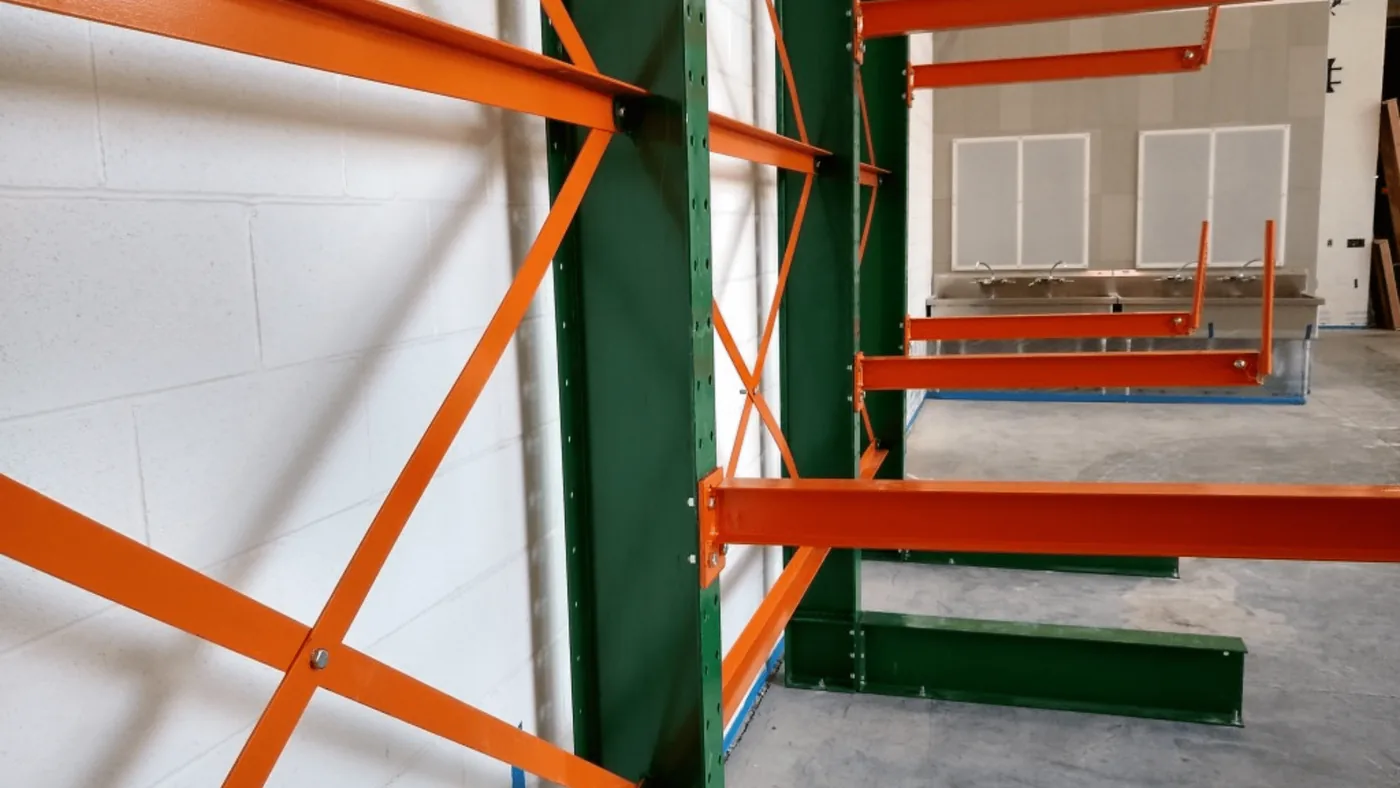
The single most valuable decision a waterworks distributor makes is to stop storing pipe on the floor in stacks and start storing it on cantilever racking. Floor stacking looks cheap because it uses no steel, but it costs on every pick: the length you need is under three others, the bands cut, the stack has to be restacked, and someone is working next to rolling material.
Cantilever rack removes the unstacking step entirely. Every level is open on the aisle side, so a forklift with a pipe boom or a fork-mounted attachment reaches any level directly. That is why the design conversation for a pipe distributor starts with four numbers, not with a catalogue.
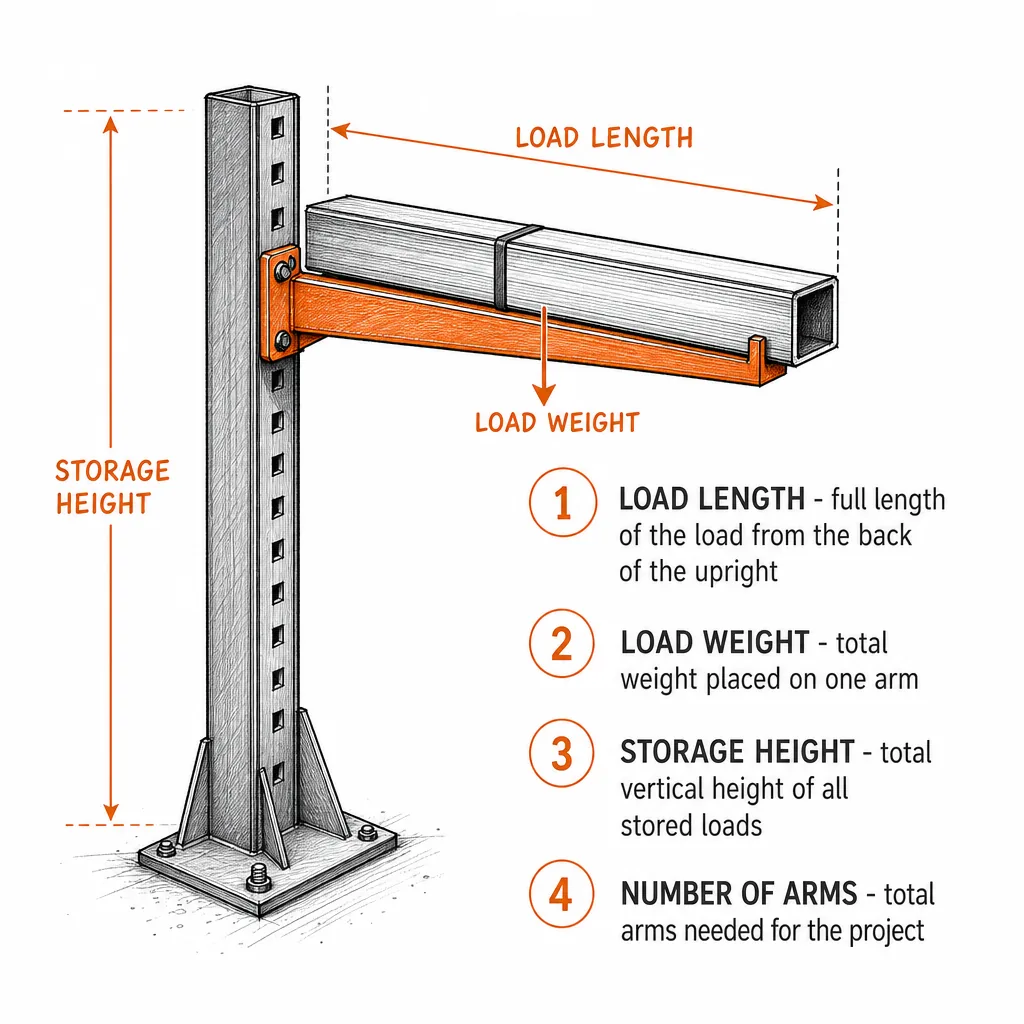
Load length sets the arm length and the column spacing. A load must be supported by at least two arms, and the arm spacing has to suit the least rigid product you store, not the stiffest. Small-diameter PVC deflects far more than steel of the same length, so the flexible product drives the spacing.
Load weight per arm sets the arm capacity, and it has to be the real bundled weight including banding and any packaging — not the catalogue weight of one stick.
Storage height sets the column, the base and the amount of stabilising the run needs. Taller runs are not simply longer columns; they change the base moment and the anchoring.
Arm count follows from how many levels the product families need, which is a merchandising decision as much as an engineering one: a level per diameter band is far faster to pick than a level per delivery.
Straight arms suit bundled, banded or boxed product. Inclined arms suit loose round stock that could roll toward the aisle. Adding lip stops on straight arms is a small cost that prevents the most common cantilever incident of all, which is a single stick walking forward during a pick and dropping into the aisle.
| Waterworks product family | Best-fit storage | Why |
|---|---|---|
| Pipe in standard lengths (PVC, steel, ductile) | Single- or double-sided cantilever rack | Open front, no unstacking, arm capacity matched to bundle weight |
| Palletised fittings and boxed goods | Selective pallet rack with wire decking | Every pallet reachable; decking supports partial and mixed pallets |
| Heavy valve bodies and hydrants | Low-level structural or heavy-duty selective bays | Dense point loads stored low, close to the handling equipment |
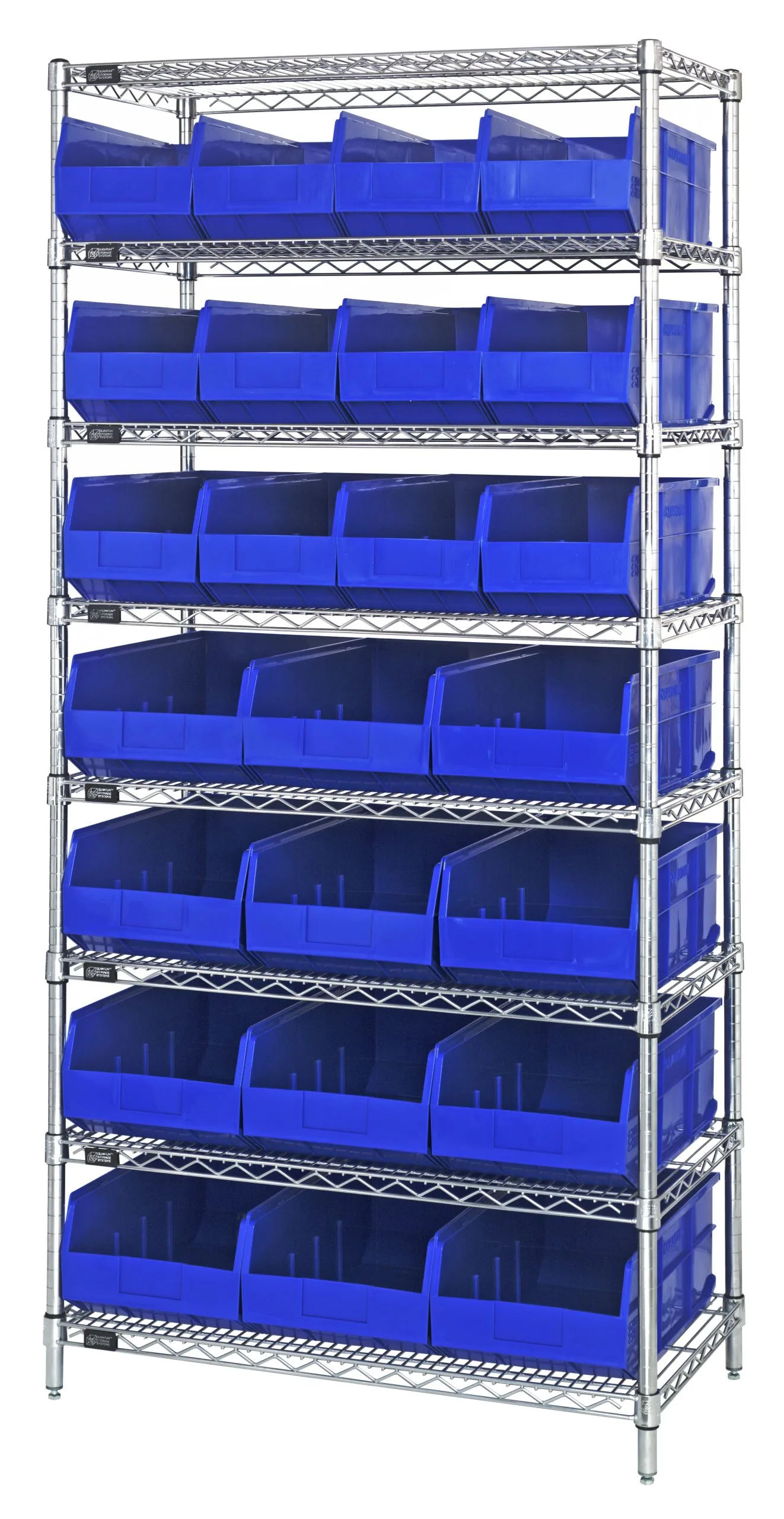
| Loose brass, couplings and small fittings | Shelving or bin storage in a pick aisle | Piece-pick items should never live in a pallet position |
| Reels, coil and tubing | Cantilever with inclined arms or a purpose-built reel rack | Prevents rolling and keeps the load supported across its width |
| Meter and instrument stock | Secured shelving or a caged pick area | Small, high-value items need controlled access rather than height |
Storing pipe, tube or long stock?
We size cantilever rack from real load lengths and weights, and install it indoors or in the yard.
Valves, fittings and brass: three storage jobs, not one
Behind the pipe, a waterworks branch is really running a parts warehouse — and the classic error is to store all of it in pallet positions because pallet positions are what the building has.
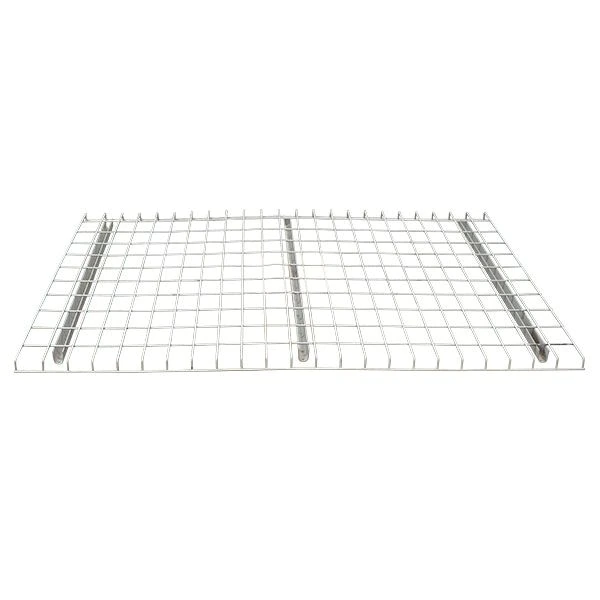
Palletised fittings belong in selective pallet racking with full-width wire decking. Decking matters more here than in general distribution because a fitting pallet is rarely full: it gets picked down, restacked, and finishes the month as a part pallet with an uneven footprint. A decked level supports that safely; open beams do not.
Heavy valve bodies should be stored low. It is tempting to treat a compact valve as a small item, but its density puts a large load in a small area, which is exactly the condition that overloads a beam rated by uniformly distributed load. Storing dense product at floor and first level also removes the highest-consequence lifting task from the aisle.
Loose brass and couplings are piece-pick items. Putting them in a pallet position wastes an expensive location and slows the picker, who now walks a rack aisle to grab one coupling. A dedicated parts shelving or bin aisle next to the counter turns that into a few steps.
The zoning principle behind all three is simple: match the storage medium to the pick unit. Pallet in, pallet out belongs on rack. Piece in, piece out belongs on shelving. Mixed cases belong between them, at waist height, close to the counter.
Racking in the yard: what changes outdoors
Outdoor cantilever runs are common at waterworks branches, and they are not simply indoor racking placed outside. Four things change.
Finish. Hot-dip galvanised or an equivalent protective finish is the practical default for yard racking. Painted rack in a wet, de-iced or coastal yard will surface-rust at every weld and bolt hole, and rust is not just cosmetic on a structure whose capacity depends on its section.
Foundation. Rack anchors need something to anchor into. A properly designed concrete strip or pad under each column line is part of the rack project, not a separate site problem to be solved after delivery. Asphalt is not a rack foundation.
Wind. Outdoor structures see lateral wind load, and a tall cantilever run loaded with pipe presents real surface area. Wind loading belongs in the rack engineer’s calculation alongside the stored load.
Drainage and access. Arms shed water toward the aisle or toward the column depending on how they are set. A small deliberate slope keeps water off the product and out of the picking path, and it keeps ice from forming where the forklift travels.
Load, anchoring and seismic requirements
Storage racks are engineered structures. In the United States they are designed to ANSI MH16.1, the rack manufacturers’ standard, and they are treated as non-building structures under the International Building Code adopted by state and local jurisdictions. Two practical consequences follow for a distributor.
- Capacity is a property of a configuration. Change the beam elevation and the bay capacity changes — the load sign has to change with it.
- Beam ratings assume a uniformly distributed load. Dense valve bodies, single bundles and point loads must be reviewed against that assumption, not against the sticker alone.
- Cantilever arm capacity is quoted per arm, and it falls as the load moves toward the arm tip.
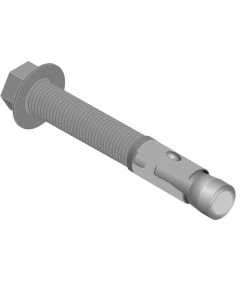
- Anchor type, size, embedment and count come from the rack engineer’s drawings for the installed configuration and the actual slab — never from a generic table.
- Seismic design categories in the Intermountain West drive base plates, footplates and sometimes full-depth base channels; this is design work, not a hardware upgrade.
- Outdoor runs add wind load to the same calculation.
For anything unusual — deep loads, extreme point loads, tall runs, seismic sites or outdoor installations — structural pallet rack is often the right answer rather than the heaviest available roll-formed frame. Structural rack takes impact and repeated load cycling far better, which matters in a yard where a loaded boom is entering an arm several dozen times a day.
Installation, protection and inspection
Installation quality determines how a rack behaves for the next twenty years. Plumb columns, correct anchor placement, proper torque, verified beam engagement and a documented handover with load signs are the difference between a system that ages gracefully and one that starts drifting in year two. That is why we treat rack installation as an engineered activity with its own sign-off rather than a delivery task.
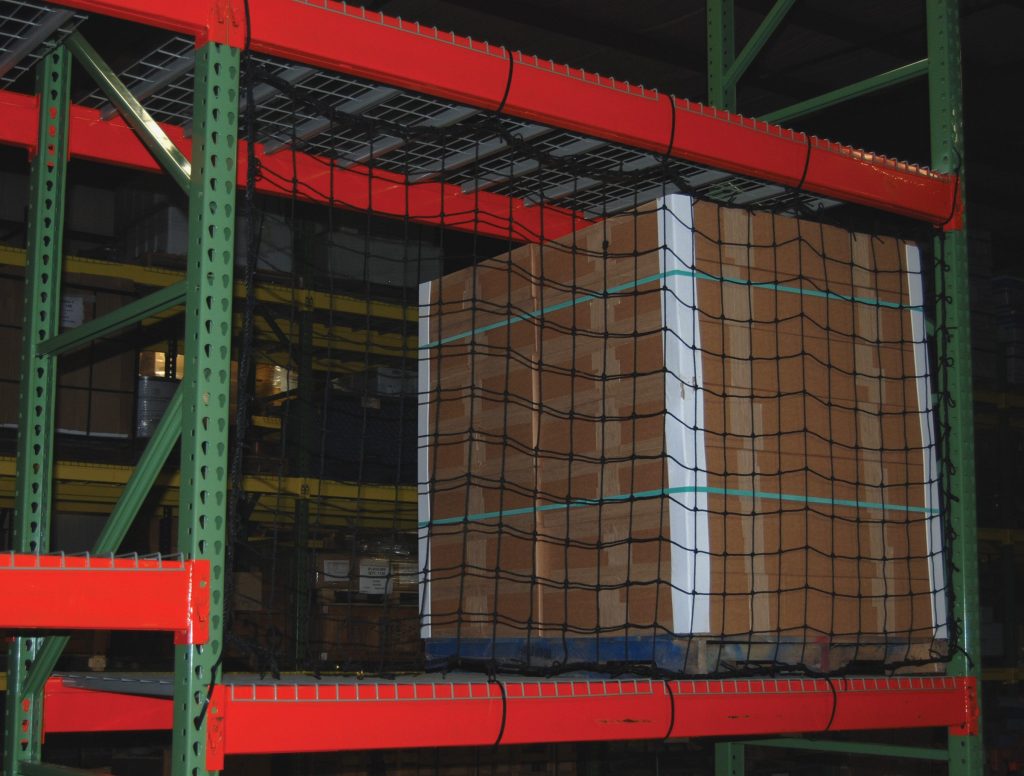
Protection is cheap relative to the damage it prevents. At a waterworks branch the highest-risk points are predictable: the ends of cantilever runs where booms swing, the first upright inside every door, the corners of the pallet rack aisles, and anywhere a forklift reverses with a long load. Column guards and end-of-row protection at those points pay for themselves the first time they are hit.
Inspection closes the loop. Damaged uprights lose capacity immediately, and a bent column carrying pipe is not a maintenance item to schedule for next quarter — it is an unload-and-isolate event. A short documented walk of the rack aisles on a set interval, plus a rule that anyone can report damage without going through a supervisor, catches nearly everything. Where damage is found, rack inspection and repair restores the original engineered capacity instead of improvising a fix.
- Plumb, anchored, torqued installation with a documented handover.
- Load capacity signs posted per configuration and reissued whenever beams move.
- Column guards and end protection at doors, aisle ends and boom-swing zones.
- Lip stops or inclined arms wherever round loose stock is stored.
- Yard runs on engineered concrete, galvanised, with drainage designed in.
- Scheduled documented inspections plus an immediate report-and-unload rule.
Shop Pallet Rack Accessories Online
Protect and finish your pallet rack installation with these in-stock accessories, or request a quote for custom-sized rack, freight and volume pricing.

Pipe and waterworks racking FAQs
What is the best rack for storing pipe?
How do you size a cantilever rack for a waterworks distributor?
Can cantilever racking be installed outdoors?
Should valves and fittings go on pallet rack or shelving?
Why does wire decking matter for a fittings warehouse?
Do storage racks need seismic engineering in the Intermountain West?
How often should pipe and pallet racking be inspected?
Planning storage for a pipe, valve or waterworks branch?
We design, supply and install cantilever rack and selective pallet racking across the Intermountain West, including Utah, and for water and wastewater operations.
Utah pallet rack project: This case study supports our Utah pallet rack design and installation guide and, at the top level, our main pallet rack systems hub.
Storage Built Around What You Actually Stock
Material Handling USA designs, supplies and installs cantilever rack, pallet rack and shelving for waterworks, pipe and industrial distributors across Utah and the Intermountain West.