
Pallet Racking for a Water Treatment Plant Storeroom: Central Valley Water Reclamation Facility
Maintenance and repair parts keep a wastewater plant running. Here is how Material Handling USA approaches industrial racking for a utility MRO storeroom — and what makes it different from racking a distribution warehouse. A city public works store faces the same problem across several divisions at once — see our municipal public works warehouse racking case study. A water and wastewater treatment equipment manufacturer’s own warehouse is a related but different storage problem — see our equipment-manufacturer component storage warehouse racking case study.
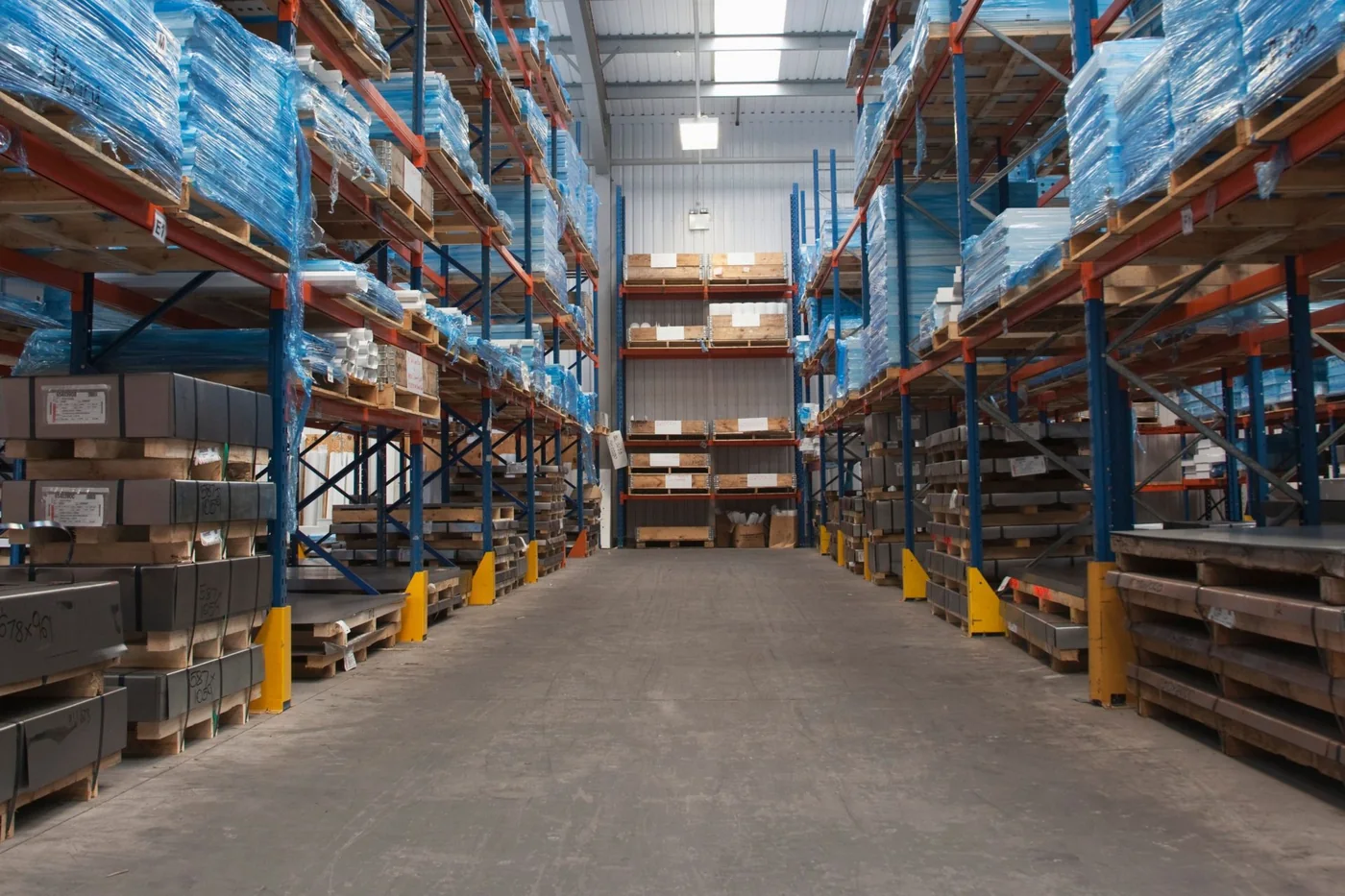
2024 – 2025
Years Central Valley Water Reclamation Facility worked with us on pallet rack
Salt Lake City, UT
Regional wastewater treatment facility
MRO
Maintenance, repair and operations parts — not saleable inventory
ASCE 7 / MH16.1
Standards behind seismic rack design in Utah
Plan your layout before you buy
Configure upright height, beam width, bay count, and load levels in our free 3D Pallet Rack Configurator, then get an instant bill of materials and request a quote.
The project
Central Valley Water Reclamation Facility is a regional wastewater treatment plant serving communities in the Salt Lake Valley. Material Handling USA supplied pallet rack for the facility in 2024 and again in 2025.
Water and wastewater utilities are one of the least discussed customers for industrial pallet racking, and one of the most demanding. A treatment plant cannot pause. Pumps, blowers, motors, gearboxes, valves, chemical feed equipment and instrumentation all have to keep running, which means the plant carries its own spare parts — often expensive, often long-lead, often irreplaceable at short notice. The storeroom that holds those parts is not a warehouse in the commercial sense. It is a piece of the plant’s reliability program.
This page uses that project as the starting point for how we plan warehouse racking for a maintenance storeroom. The client facts above are the only project specifics we publish; the rest is general engineering and planning guidance that applies to any utility, plant or municipal maintenance operation.
What we publish
For public-sector and utility customers we publish only the client, the years worked together and the product category supplied. We never publish facility layouts, room dimensions, quantities, contract values, security arrangements or anything else specific to a customer’s site.
Why an MRO storeroom is not a warehouse
A distribution warehouse is optimised for throughput: pallets in, pallets out, and a cost per pick that someone measures. A maintenance storeroom is optimised for something else entirely — the ability to put your hand on one specific part, immediately, possibly at 2 a.m., possibly during the exact event that makes the part urgent.
That difference changes the racking brief in four ways.
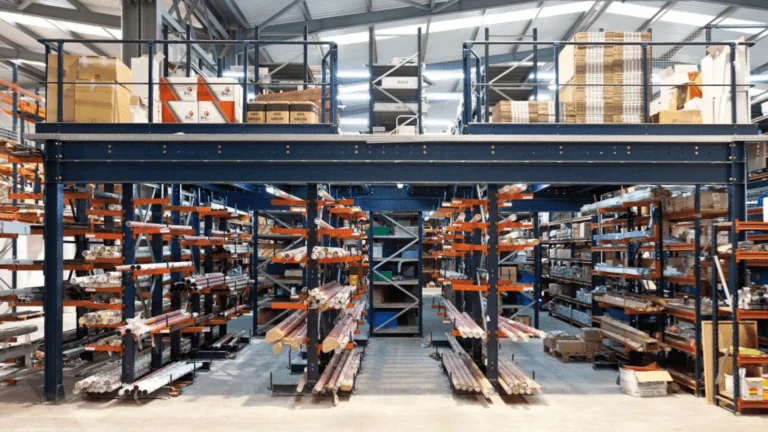
Turnover is low and value is high. Many items sit for years. The rack is a long-term holder, not a flow device, so density systems that bury inventory behind other inventory are usually the wrong answer.
Item shapes are wildly inconsistent. A single storeroom can hold a crated spare pump, a pallet of chemical containers, a coil of cable, a length of shafting and a bin of fittings.
Access matters more than cube. Being able to see and reach every position beats squeezing in extra pallet slots.
The environment is harsher. Humidity, chemical exposure, wash-down areas and outdoor or semi-covered storage are normal at a treatment plant and unusual in a dry-goods warehouse.
Profile the storeroom before you draw a layout
The most useful hour on a storeroom project is spent grouping what is actually stored by how it has to be handled. In a plant storeroom that generally produces six groups.
Match locations to the maintenance system
A storeroom layout is only as good as its addressing. Every rack position should carry a location code that already exists in the CMMS or inventory system, so the part number a technician searches at 2 a.m. resolves to a bay, a level and a position — not to ‘the back row somewhere’.
Rack selection: selective first, structural where it earns it
For the reasons above, the backbone of a plant storeroom is almost always single-deep selective pallet rack: every position visible, every position reachable, beams adjustable as the spares list changes over the decades the plant will operate.
The genuine decision is roll-formed versus structural pallet rack. Roll-formed teardrop rack is lighter, less expensive and easy to reconfigure. Structural rack uses hot-rolled channel uprights with bolted connections, and it earns its higher cost in three situations that plant storerooms produce regularly: heavy concentrated loads, a genuinely damp or corrosive environment where section thickness matters, and locations where forklift contact is routine rather than exceptional.
A common and sensible outcome is a hybrid: structural frames in the heavy-spares and high-traffic rows, roll-formed selective everywhere else, cantilever for long stock, and shelving for the small-parts wall. The same logic applies in any heavy manufacturing and plant storage environment.
| Consideration | Roll-formed selective | Structural |
|---|---|---|
| Typical use in a storeroom | General spares, boxed parts, moderate pallet weights | Heavy crated equipment, high-traffic aisles, damp or corrosive rooms |
| Reconfiguration | Beams lift out of teardrop slots without tools | Bolted connections; changes are a deliberate job |
| Impact tolerance | Lower — dents in a column reduce capacity | Higher, though damage still requires evaluation |
| Cost | Lower per position | Higher per position |
| Component availability | Very wide; teardrop is the market default | More manufacturer-specific |
Corrosion, wash-down and the environment
Treatment plants are wet, and some areas are chemically aggressive. That is a design input for the rack, not a maintenance problem to be discovered later.
Three questions decide the specification. Is the storage area heated and dry, humid, or exposed to wash-down? Is there airborne chemical exposure — chlorine compounds, hydrogen sulphide, coagulants, polymer? Is any of the storage outdoors or under an open canopy?
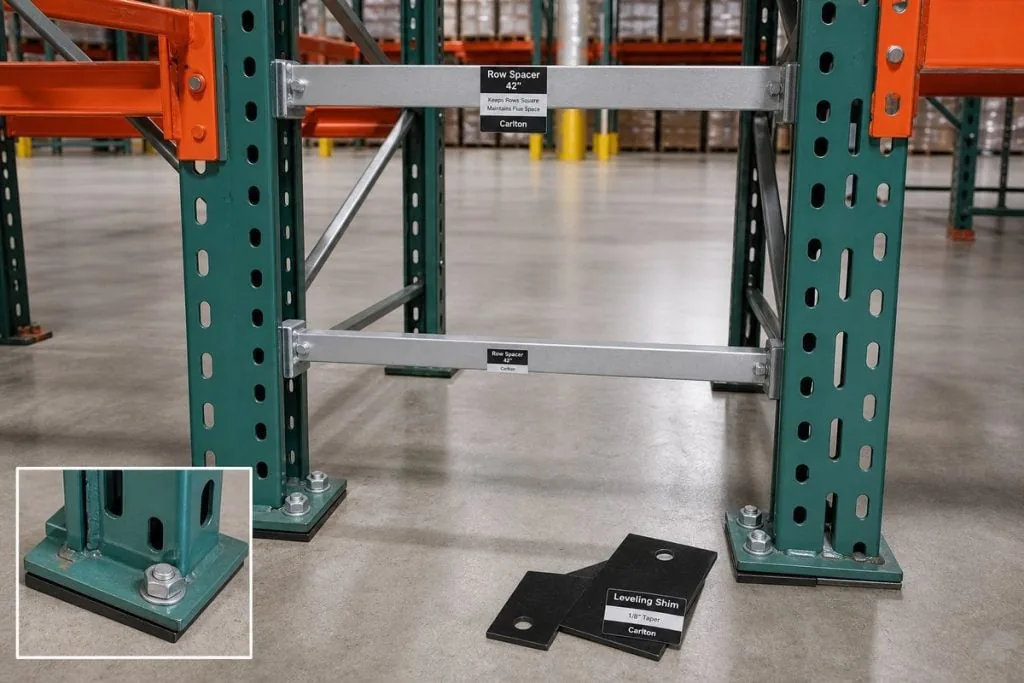
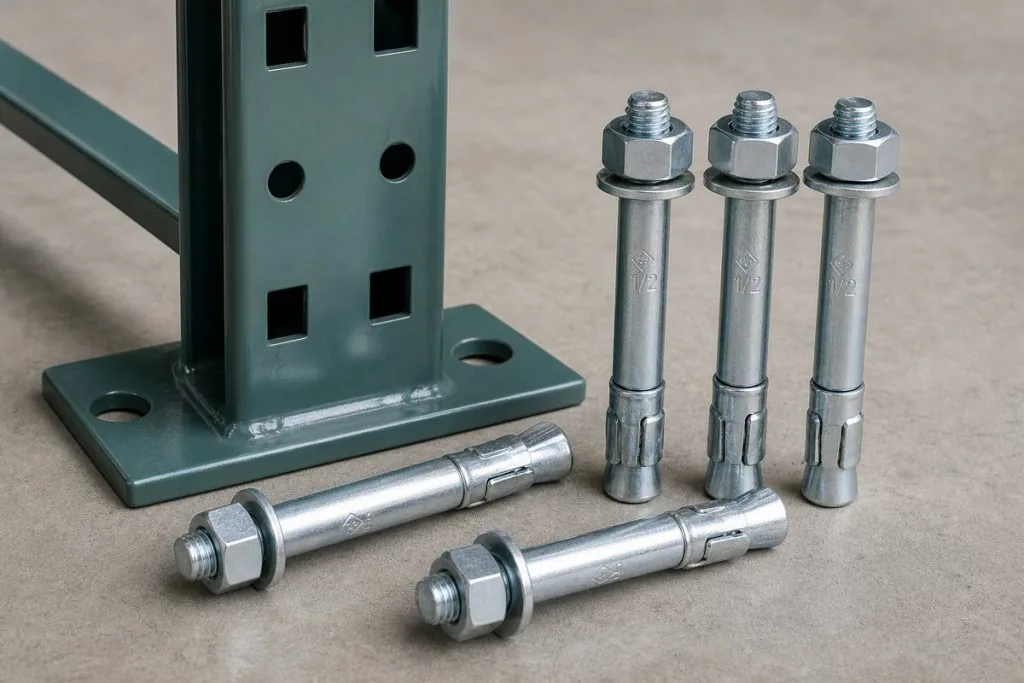
Standard painted rack is designed for dry indoor service. Where moisture or chemical exposure is real, options include galvanized components, heavier structural sections that tolerate section loss, isolating the rack from standing water at the base, and simply choosing a different room. Base plates and anchors deserve particular attention: they sit at floor level where water pools, and a corroded anchor at the base of an upright is a structural problem, not a cosmetic one.
Where chemicals are stored, containment, separation and compatibility requirements come from the safety data sheets and the fire code — and they can override an otherwise good layout. Settle those before the rack is ordered.
Seismic anchorage in the Salt Lake Valley
Utah’s Wasatch Front is seismically active, and steel storage racks are treated as structures under the adopted building code. In practice that means racks are designed as nonbuilding structures with seismic demands determined under ASCE 7 and rack design carried out to ANSI MH16.1, the American National Standard published through the Rack Manufacturers Institute at MHI. Above defined heights, engineered drawings and permitting are required.
For a critical facility, there is a second reason to care beyond code compliance. A plant that has just been through an earthquake is a plant that urgently needs its spare parts — and a storeroom whose racks have failed is a storeroom nobody can safely enter. Anchorage and configuration control are part of keeping the recovery possible.

Installing in a plant that cannot stop
A treatment plant runs continuously, and its storeroom is in use while the racking goes in. That makes sequencing as important as the equipment.
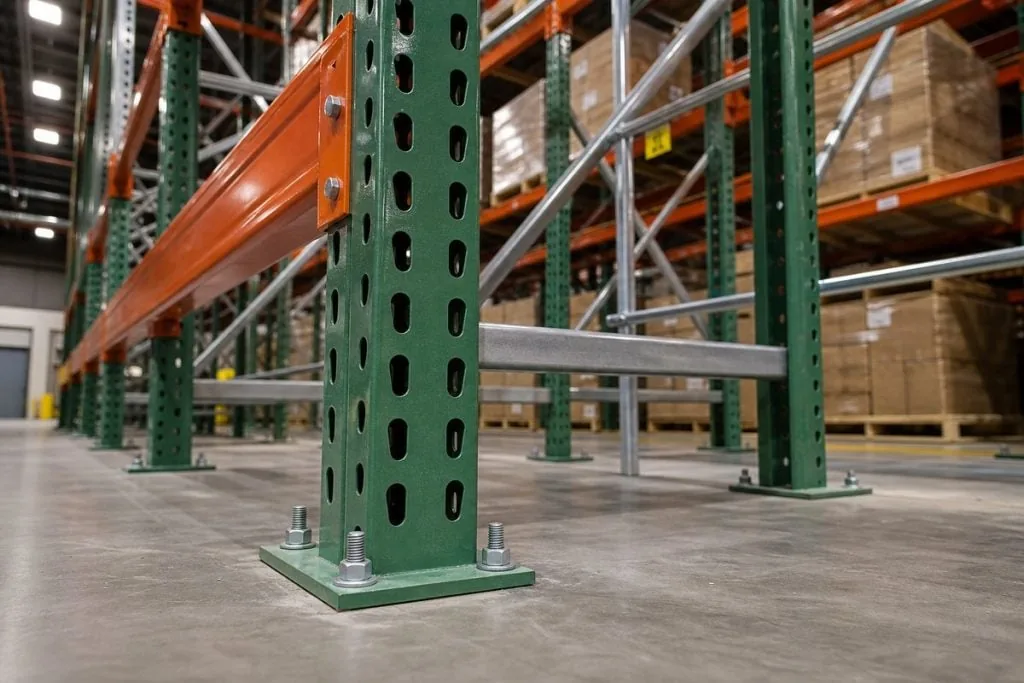
A workable approach reserves a staging area for parts that must come off existing shelving, installs and anchors a first block of new rack, moves inventory into it under its new location codes, and only then clears the next area. It keeps a defined route for critical spares throughout, so that if a part is needed mid-project it is still findable. And it schedules the noisy, dusty work — anchor drilling in particular — around plant operations and any adjacent electrical or instrument rooms.
Professional pallet rack installation matters here for the same reason: the installers have to work around live operations, anchor to the engineered drawings, and hand over a system that is plumb, anchored, plaqued and documented.
Protection, inspection and the long horizon
Utility infrastructure is planned in decades. The racking in a plant storeroom will outlast several maintenance managers, and it will be modified by people who were not there when it was designed. Two habits protect it.
The first is physical: column guards and end-of-row protection where equipment actually travels, and row spacers keeping frames square. The second is procedural: a scheduled walk-through, a rule that any impact is reported and the affected bay unloaded until it is evaluated, and a documented rack inspection and repair route for anything found. OSHA’s general materials-handling rule, 29 CFR 1910.176(b), requires stored material to be stable and secure against collapse; on a rack, that obligation is met through capacity, condition and anchorage together.
Keep the engineered drawings, the capacity information and the anchor specification with the plant’s maintenance records. Ten years from now, the person adding a beam level will need them.
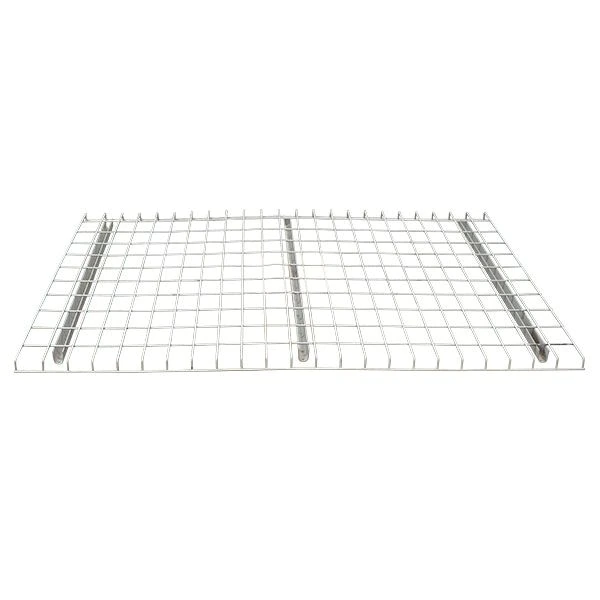
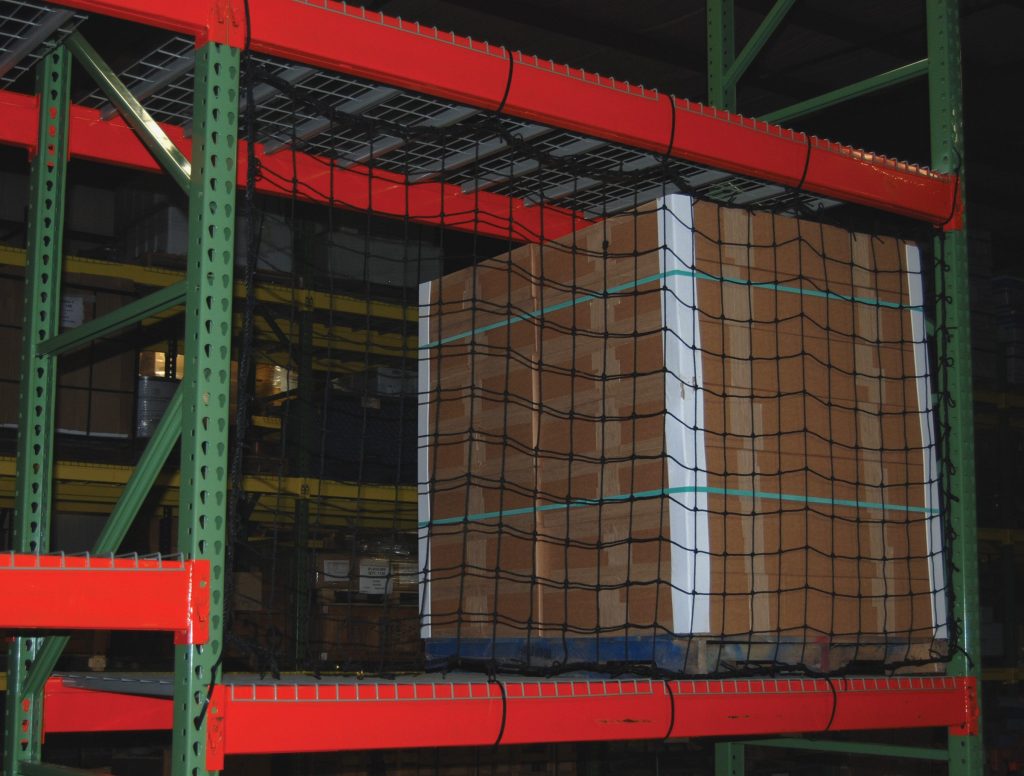
Shop Pallet Rack Accessories Online
Protect and finish your pallet rack installation with these in-stock accessories, or request a quote for custom-sized rack, freight and volume pricing.

Plant storeroom racking FAQs
What kind of racking suits a water or wastewater treatment plant storeroom?
Can pallet rack be used in a damp or wash-down area?
Do storage racks need seismic engineering in Utah?
How do we store chemicals and consumables on rack?
How should storeroom rack locations be labelled?
Can we install racking without shutting the storeroom down?
What maintenance does pallet rack itself need?
Planning a maintenance storeroom?
We design, supply and install pallet rack for utilities, plants and municipalities across Utah, including Salt Lake City.
Utah pallet rack project: This case study supports our Utah pallet rack design and installation guide and, at the top level, our main pallet rack systems hub.
Storage That Keeps the Plant Running
Material Handling USA designs, supplies and installs industrial racking for water and wastewater utilities, plants and municipal facilities across Utah and the Intermountain West.
Ready to configure your pallet rack system?
Use our guided configurator to choose the right configuration, review your parts and submit it for checkout or a formal quote.