
Equipment-Manufacturer Component Storage Warehouse Racking: WesTech Engineering
A water and wastewater treatment equipment manufacturer’s warehouse doesn’t store finished product on its way to a customer — it stores the fabricated components, weldments and mechanical parts that go into building that equipment. Not every manufacturer’s warehouse handles heavy fabricated components — an electronics and ITS device manufacturer’s storage looks very different; see our electronics & ITS device manufacturer warehouse racking case study.
Water/wastewater equipment mfg.
Client sector
Pallet rack
Product category supplied
Salt Lake City, UT
Client HQ
Fabricated components & parts
Application
Plan your layout before you buy
Configure upright height, beam width, bay count, and load levels in our free 3D Pallet Rack Configurator, then get an instant bill of materials and request a quote.
The project
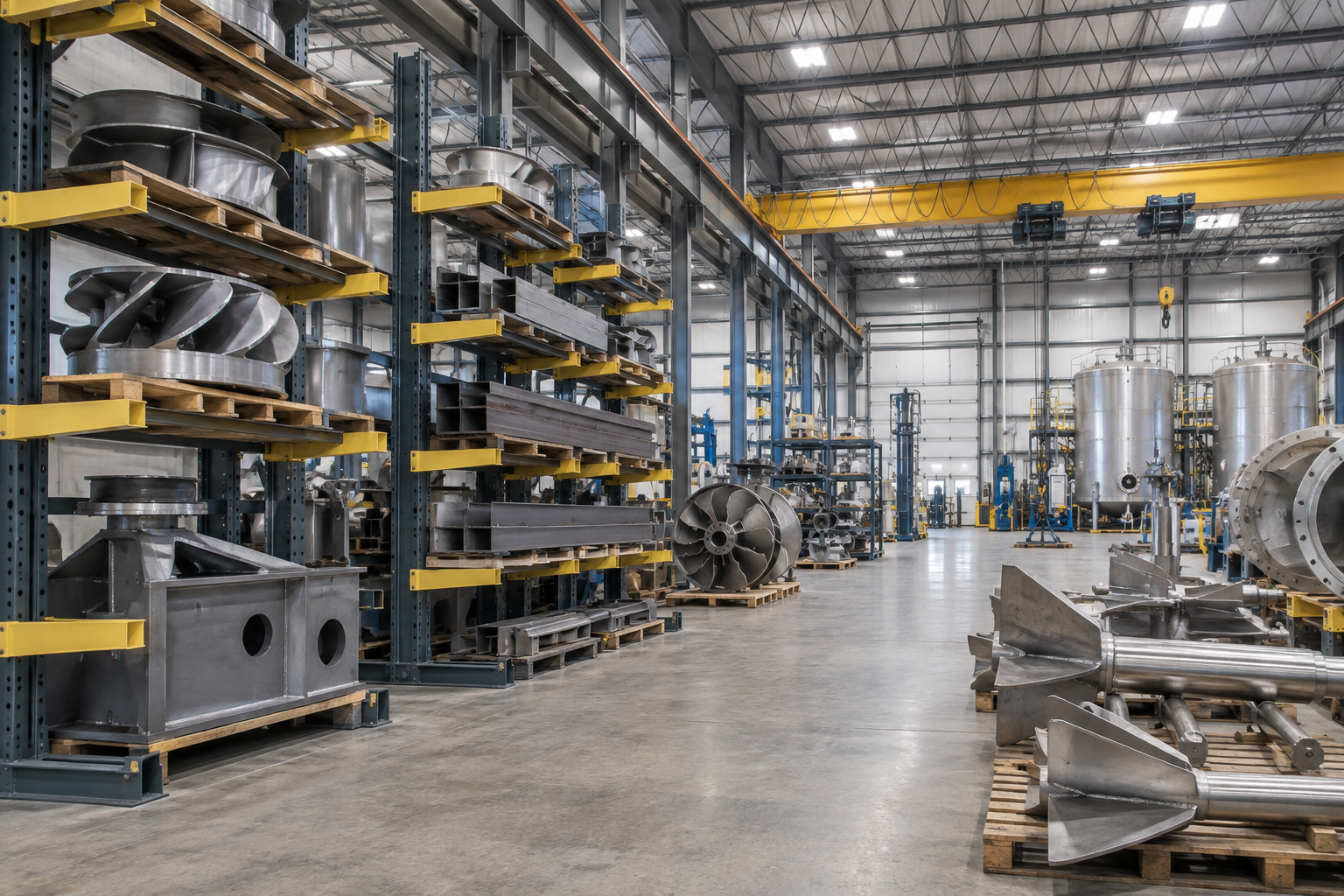
WesTech Engineering, LLC designs, builds, maintains and operates water and wastewater treatment process equipment for municipal, industrial and mineral-processing clients, headquartered in Salt Lake City, Utah. Material Handling USA supplied pallet rack systems for the company’s component and parts storage warehouse.
This is a different storage problem from the water utility side of our case-study work — our water treatment plant pallet racking case study covers a treatment facility operator’s own maintenance storeroom. WesTech is instead the equipment manufacturer: its warehouse holds the large fabricated components, weldments, and mechanical and electrical parts that get assembled into the treatment equipment it builds and ships to plant operators.
Why an equipment manufacturer’s warehouse is different
Components come in oversized and irregular shapes. Impellers, agitator shafts, steel weldments and fabricated tank sections don’t stack neatly on a standard pallet — many need open-arm support rather than a boxed position.
Inventory bridges fabrication and assembly. Parts move from raw fabrication, into storage, and out to an assembly area on a production schedule — storage has to support that flow, not just hold finished goods until shipment.
A crane, not just a forklift, moves the heaviest items. Large steel components are routinely handled by an overhead bridge crane, which changes how rack aisles, clearances and bay heights get planned compared with a standard forklift-served warehouse.
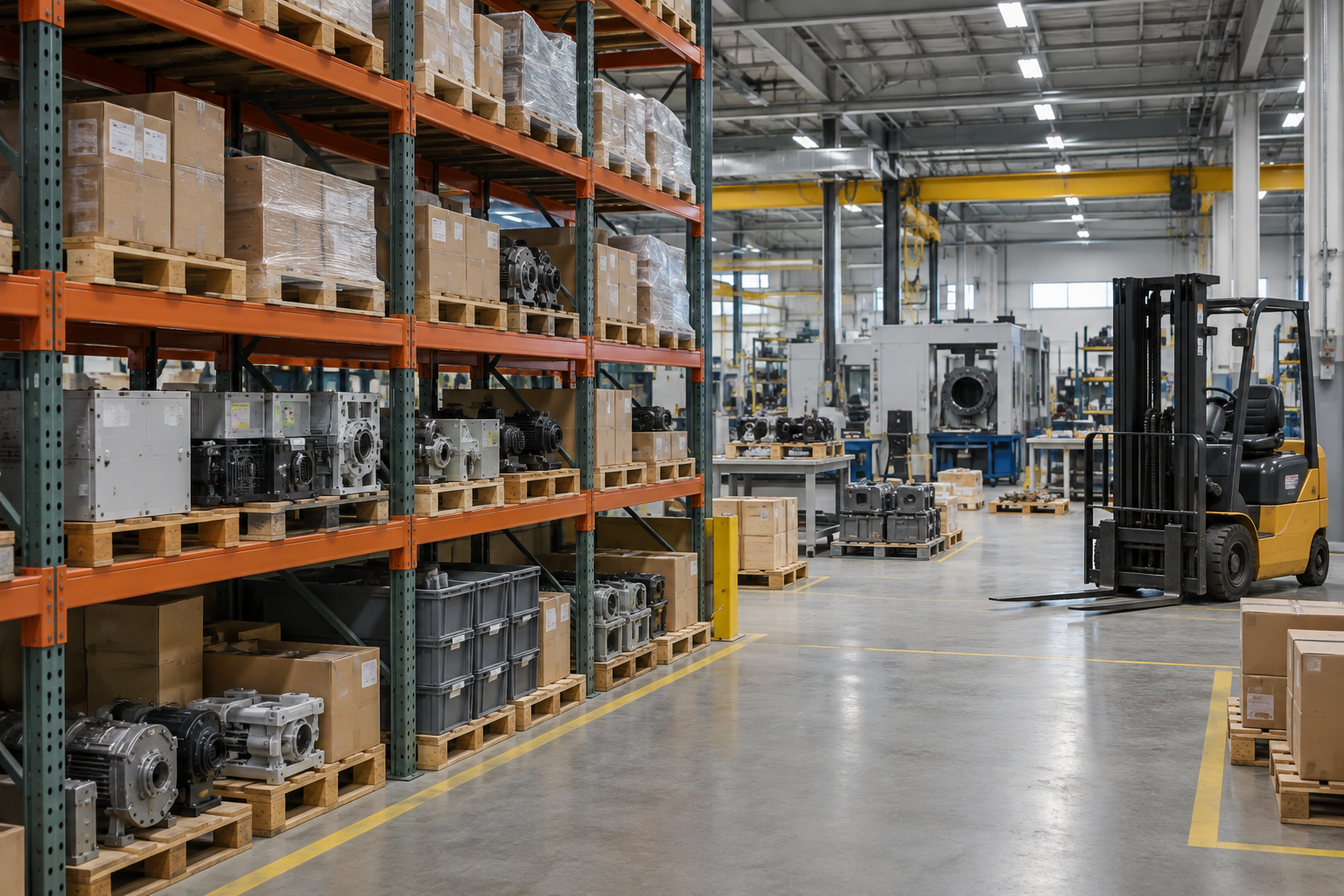
Smaller purchased components need a different storage type entirely. Motors, gear reducers and electrical components arrive boxed and palletized, and belong on standard pallet rack rather than mixed in with oversized fabricated parts — a different profile from the cantilever-racked metal stock we cover in our metal service center cantilever and structural rack case study.
What this warehouse stores
Splitting storage by component shape and size, not just by part number, is what makes an equipment manufacturer’s warehouse work.
| Group | Examples | Storage that suits it |
|---|---|---|
| Large fabricated components | Impellers, agitator shafts, steel weldments, fabricated tank and equipment sections | Cantilever rack, with open arms sized to the component’s length and weight rather than a pallet footprint |
| Purchased mechanical/electrical components | Motors, gear reducers, valves, instrumentation, electrical enclosures | Selective pallet rack with wire decking, palletized and slotted by production schedule |
| Small hardware and consumables | Fasteners, gaskets, seals, wiring and control-panel hardware | Boltless shelving near the assembly area for fast, frequent small-quantity picks |
| Finished sub-assemblies awaiting shipment | Completed skids and modules staged for outbound freight | A clearly marked staging area adjacent to the dock, separate from raw component storage |
Rack choices for components and parts
The right mix for an equipment manufacturer separates oversized fabricated components from standard palletized purchased parts.
- Cantilever rack for long, oversized or irregular components. Cantilever racking supports fabricated shafts, weldments and equipment sections on open arms instead of forcing them onto a pallet footprint they were never shaped for.
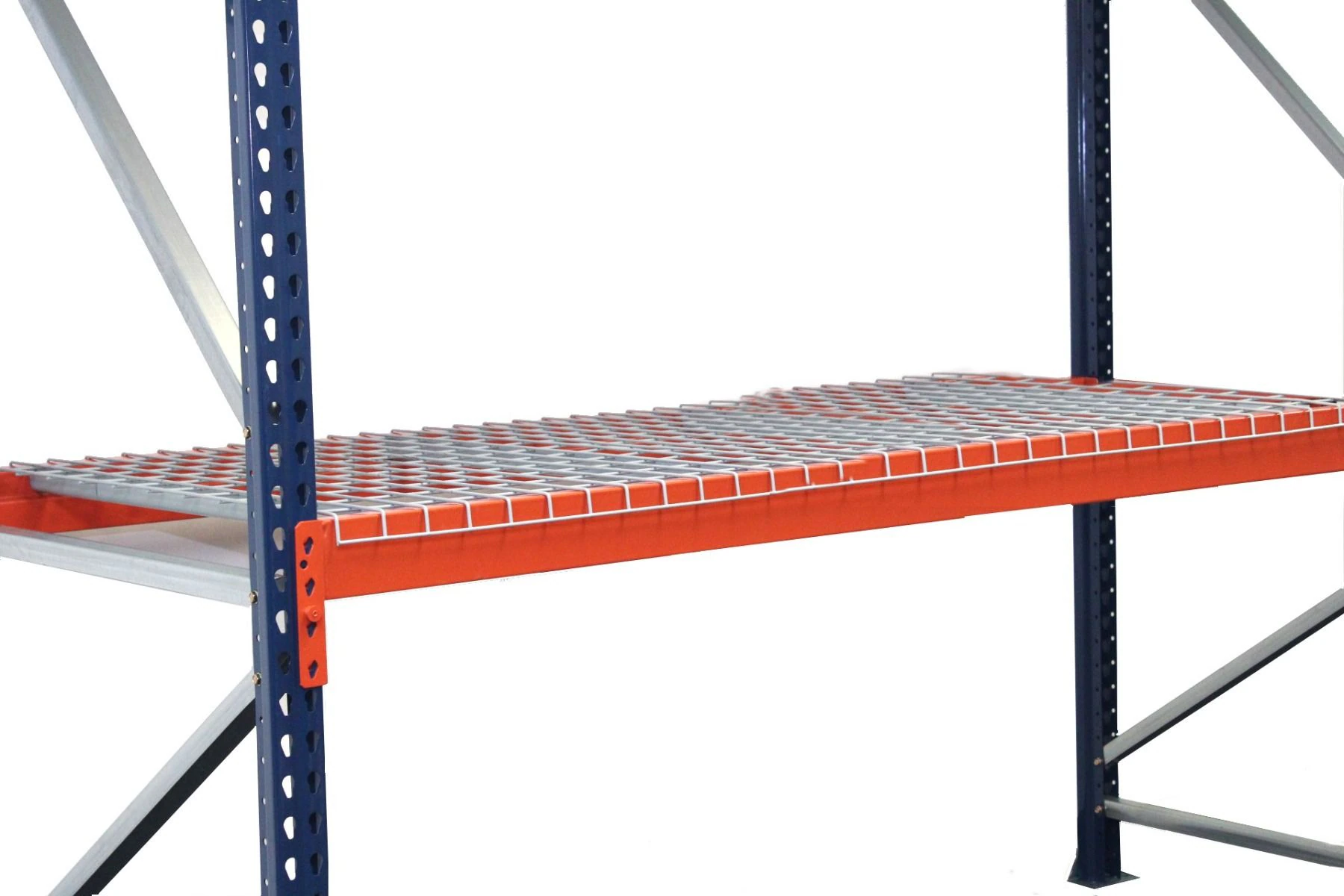
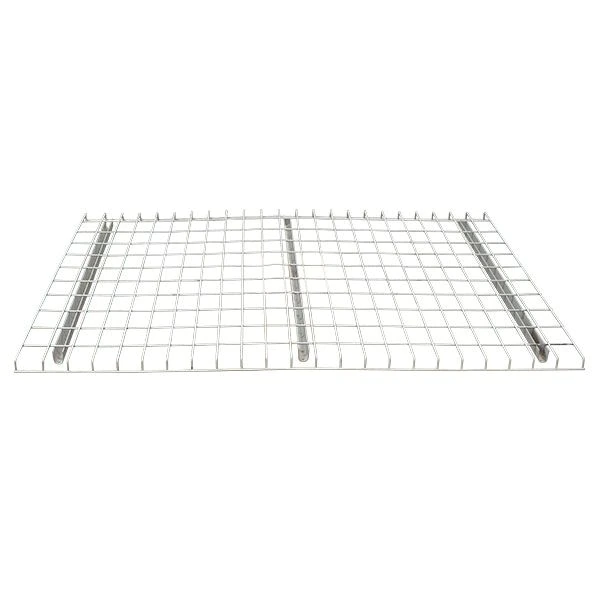
- Selective pallet rack with wire decking for purchased components. Boxed motors, gear reducers and electrical parts store efficiently on standard selective rack, with wire decking keeping smaller boxes from falling through to the level below.
- Boltless shelving for small parts and hardware. Fasteners, gaskets and control hardware move faster off open shelving near the assembly floor than off a full pallet position.
- Wide, crane-compatible aisles where an overhead crane serves the rack. Aisle width and rack height need to clear the crane’s hook travel and rigging clearance, not just a forklift mast, wherever cantilever rack sits under a crane bay.
Model bay counts, arm spacing and clearance for your own layout in our 3D pallet rack configurator before ordering.
Weight, clearance and crane coordination
Component weight and crane clearance drive the rack design more than square footage does in an equipment manufacturer’s warehouse.
- Confirm actual component weights before sizing arms and columns. Fabricated steel parts and cast components can weigh far more per unit than a typical palletized load of the same footprint — design capacity around real weights, not an assumed standard load.
- Coordinate rack height and column placement with crane hook travel. An overhead bridge crane’s rigging and swing radius has to clear rack uprights and any protective guarding along the crane’s runway.
- Leave working clearance for rigging, not just forklift access. Slinging and landing an oversized component on a cantilever arm needs more maneuvering room than placing a palletized load with a forklift.
- Anchor to slab capacity rated for concentrated point loads. Heavy cantilever base plates and column footings concentrate load differently than lighter selective rack — verify slab design with a qualified engineer before installation.
Installation and safety
An equipment manufacturer’s warehouse gets the same structural design standard as any other rack installation, with extra attention to crane interaction and component handling.
Seismic design applies in Utah. Utah sits in a moderate-to-high seismic zone along the Wasatch Front, so rack anchoring, base plate design and bracing need to account for seismic load combinations under the applicable building code — not just static and live loads — the same way any other pallet rack or cantilever rack installation in the region does.
- Design rack capacity for actual load weights — see pallet rack weight capacity guidance rather than assuming a standard beam rating covers dense fabricated components.
- Protect rack uprights with column protectors and end guards in aisles that see forklift and rigging traffic.
- Inspect racking on a defined cycle, and immediately after any impact — see rack inspection and repair, with extra attention to any cantilever arm that regularly handles heavy or irregular components.
- Anchor and install to the ANSI/RMI MH16.1 standard — see our rack installation guidance, coordinated with the site’s own crane operation and lockout/tagout procedures.
ANSI/RMI MH16.1 is published by the Rack Manufacturers Institute. We design, supply and install pallet rack and cantilever rack for equipment manufacturers and industrial-plant warehouses across the region — see Utah pallet rack for more of our local project work.
Serving Salt Lake City equipment manufacturers
Material Handling USA has been an industry leader in storage and material handling since 1997, working from Salt Lake City with manufacturers, fabricators and industrial plants across the Wasatch Front. For Utah projects call 801-328-8788, or see our Utah pallet rack page.
Shop Pallet Rack Products Online
Buy select items directly from our online store, or request a quote for volume, custom sizes and freight-rated orders.
Frequently asked questions
What storage suits an equipment manufacturer’s component warehouse?
Why can’t fabricated components store on standard pallet rack?
How does an overhead crane affect rack layout?
What’s the design standard for the rack itself?
Is this the same as storage for a water treatment plant operator?
Does seismic design matter for rack in Utah?
Planning storage for an equipment manufacturing or industrial-fabrication warehouse?
We design pallet rack, cantilever rack and component storage layouts for equipment manufacturers and industrial-plant warehouses. Free design consultation.