
Warehouse Automation for Next-Day Delivery
Goods-to-person storage, carton flow, conveyor and powered workstations designed backwards from your carrier cutoff — so orders ship the same day they are placed. Design, supply and installation from Material Handling USA.

320
Boxes/hour, EffiMat 4
150%
Throughput gain, UNEX carton flow
75%
Less floor space vs. shelving
30+
Years designing warehouses
Next-Day Delivery Is a Clock Problem, Not a Shipping Problem

Next-day delivery has stopped being a premium service and become the default expectation, for consumer orders and for the service parts that keep a customer’s equipment running. The promise is made at checkout, but it is kept — or missed — on your warehouse floor, in the hours between an order dropping and the last trailer pulling away from the dock.
That is why the useful way to plan automation is backwards from the carrier cutoff. Every minute of walking, waiting, searching and re-handling between those two points is a minute you cannot sell. Retailers, e-commerce brands and third-party logistics providers all end up solving the same three problems: too much travel at the pick face, too much manual transport between zones, and too many trips to a stationary computer or printer.
The constraint is almost never storage capacity
Most operations that miss cutoffs are not out of space — they are out of time. Automation earns its keep by removing travel and handoffs first, and adding density second. Add capacity without fixing flow and you simply build a bigger, slower building.
The Technologies That Make Next-Day Fulfillment Possible
These are the systems we design, supply and install most often for high-velocity fulfillment. None of them is a whole answer on its own; the result comes from combining two or three of them against a specific order profile.
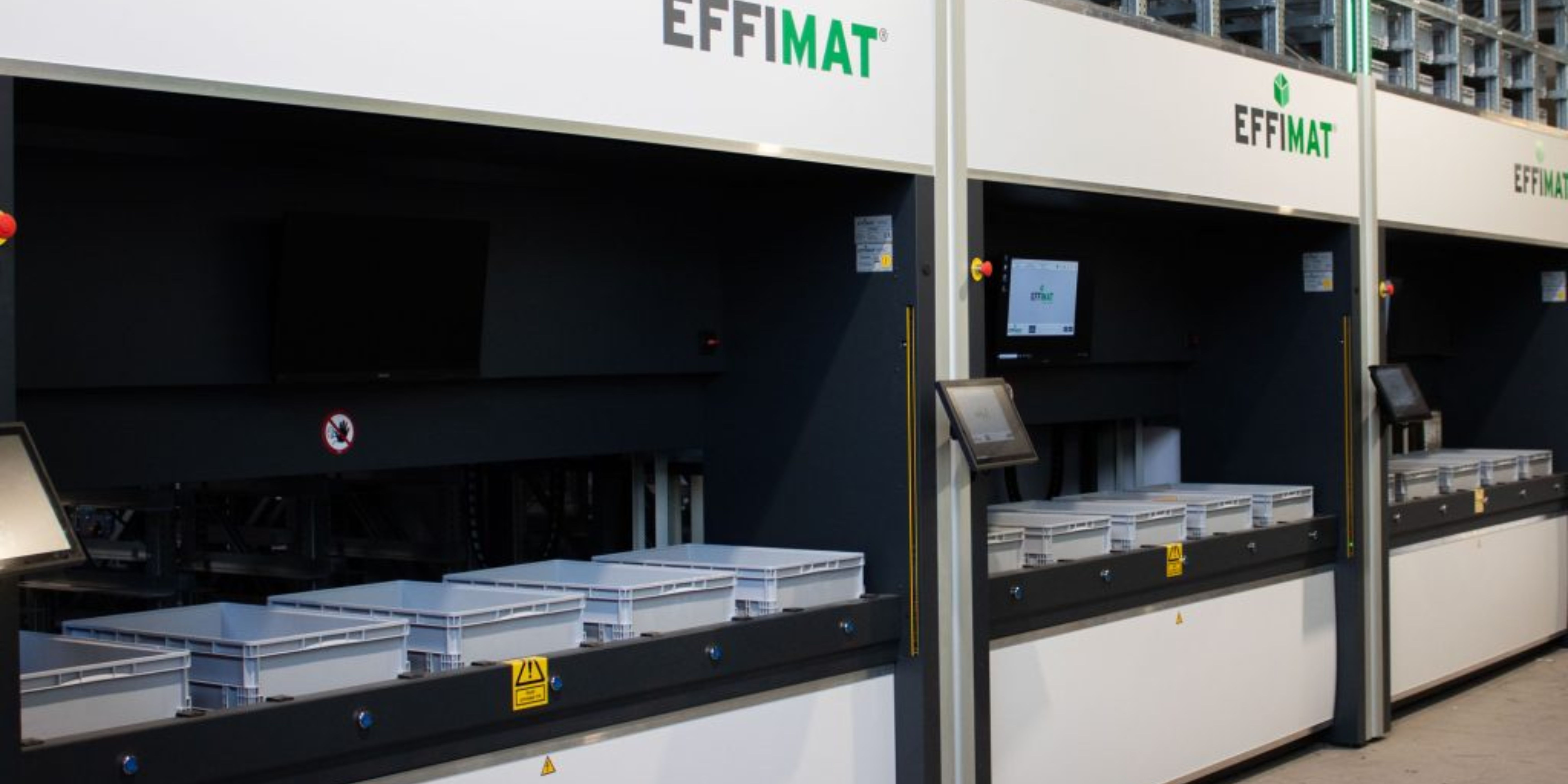 High-Speed Box Movers (EffiMat)Goods-to-person towers that stack standard boxes and trays vertically and bring them to a fixed pick station. EffiMat rates its EffiMat 4 at up to 320 boxes per hour with up to five boxes presented in a single cycle, up to 10 picking stations, and up to 75% less floor space than manual shelving. Automatic infeed and outfeed lets it hand boxes off to conveyor or an AMR.
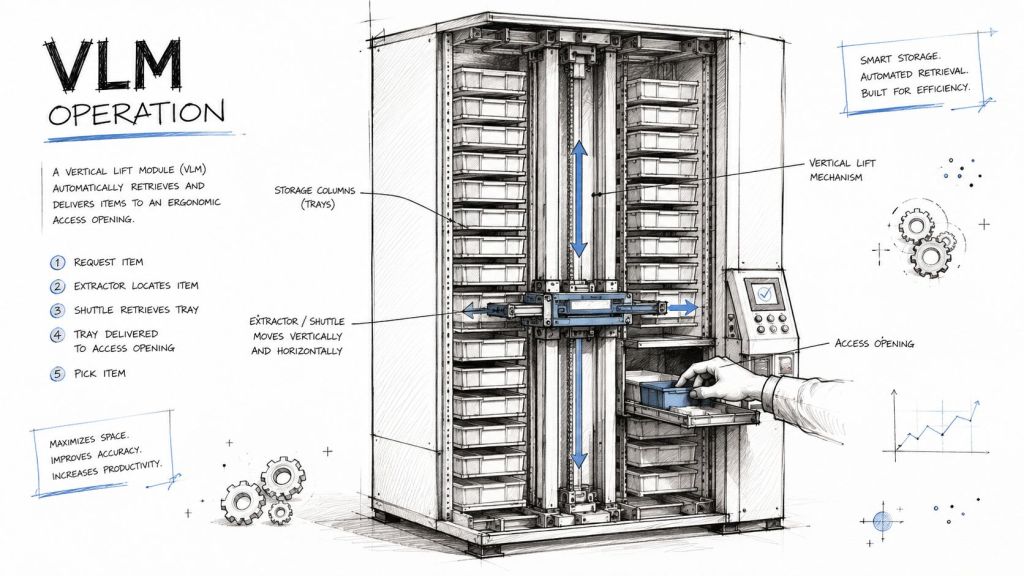
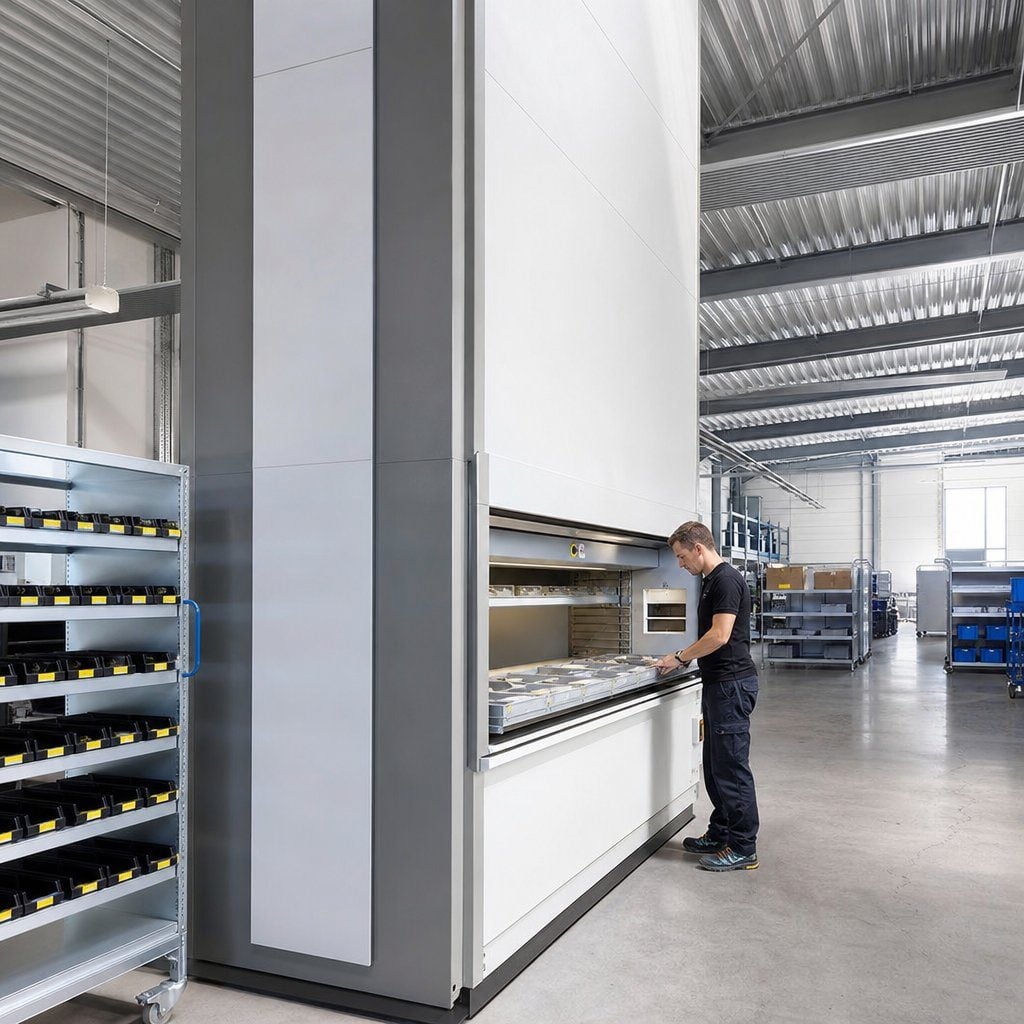 Vertical Lift Modules (Vidir)An enclosed tower of trays with an extractor that delivers the requested tray to an ergonomic window. Vidir publishes up to 132,000 lbs total machine capacity, 600 or 1,000 lb tray options, tray pitches of 2.5″, 4.5″ and 6″, and light curtains plus variable height sensors as standard.
 Vertical Carousels (Vidir)Carriers rotate on a closed loop so the operator never walks or climbs. Best where SKUs are similar in size and turn constantly — service parts, e-commerce smalls, tooling and controlled inventory that has to be locked and logged.
 Carton Flow Pick Faces (UNEX SpanTrack)Gravity lanes that drop into your existing pallet rack, present every SKU at the pick face and rotate stock FIFO automatically. UNEX states SpanTrack increases throughput by up to 150% versus picking from pallets and is covered by a 7-year warranty. Wheel beds re-slot left to right; lanes suit fixed SKU positions.
 Conveyor & SortationThe connective tissue of a next-day operation. Gravity and powered roller conveyor move totes and cartons from pick modules to pack, then to a sort wall or carrier lane, so nothing waits on a person to carry it.
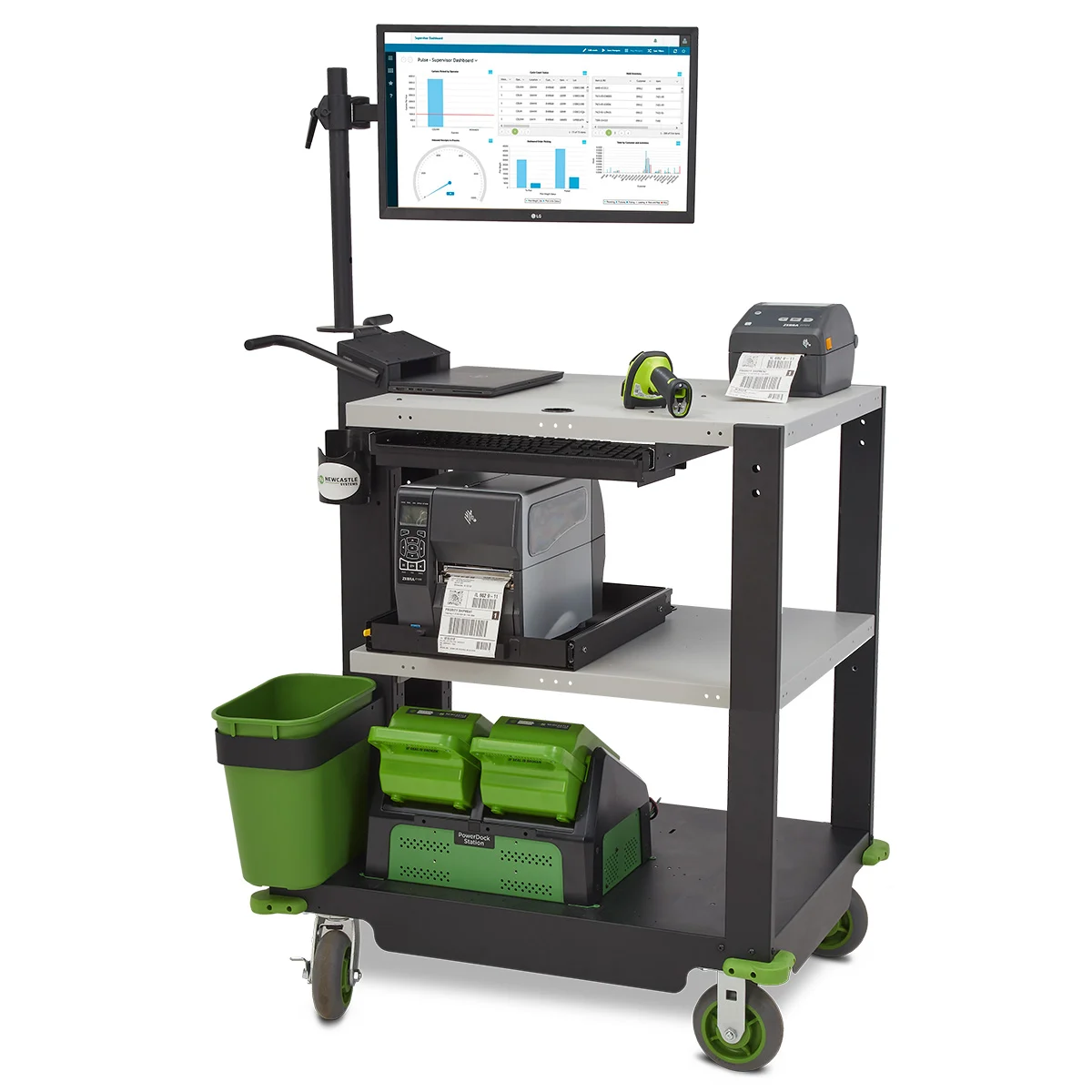 Powered Mobile Workstations (Newcastle Systems)Bring the label printer, scanner and computer to the product instead of walking to it. Newcastle’s PowerSwap Nucleus lithium iron phosphate system runs 8–12+ hours on a 460 Wh battery, recharges in 4–5 hours and swaps in seconds so a cart never leaves the floor.
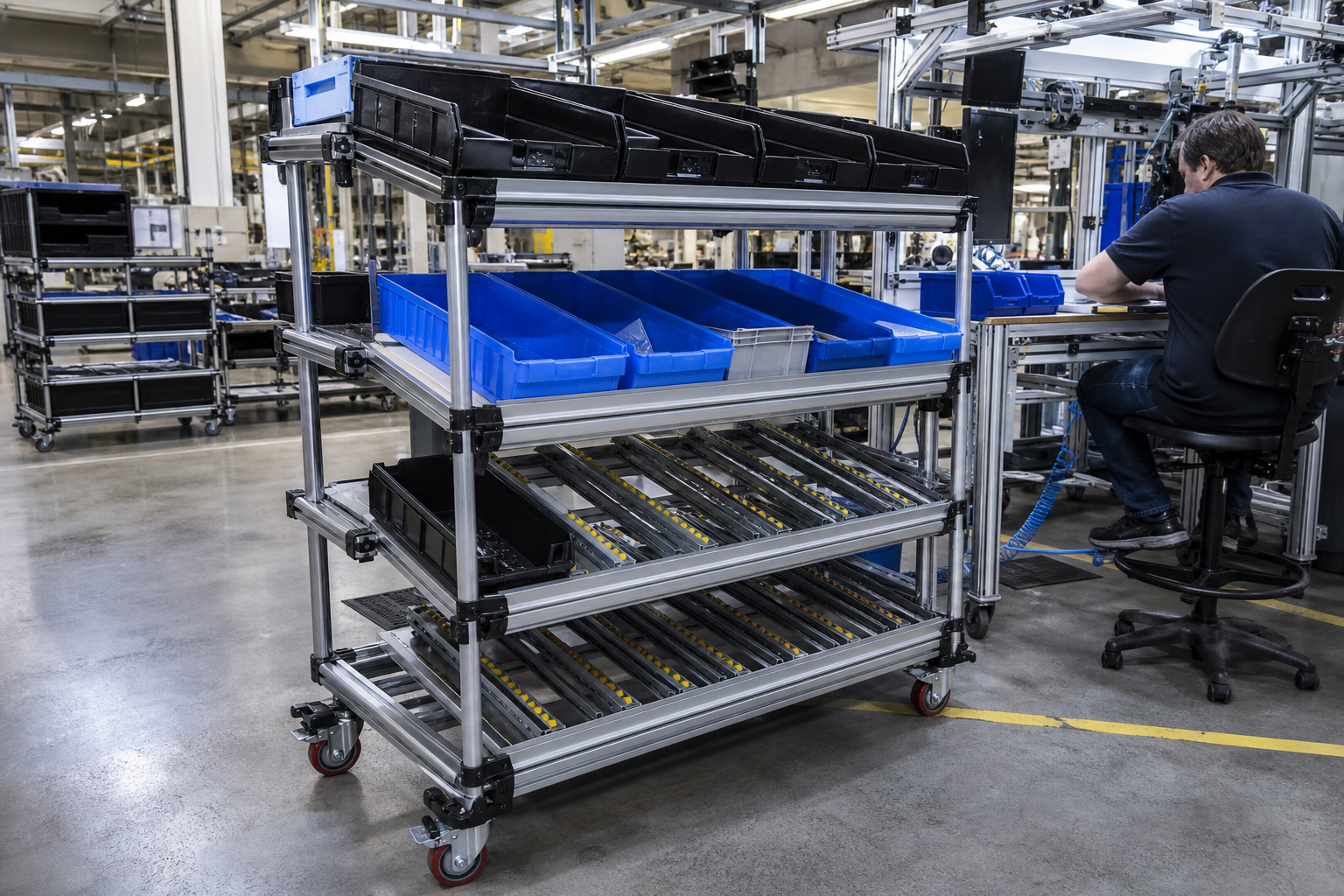 Modular Flow Racks (UNEX FlowCell)Reconfigurable pick, pack and assembly cells built from 1.75″ square tube in 6″ increments, accepting SpanTrack lanes or wheel beds, add-on pick trays and workbench surfaces. Add 4″ × 2″ casters rated 750 lbs each and the cell becomes mobile.
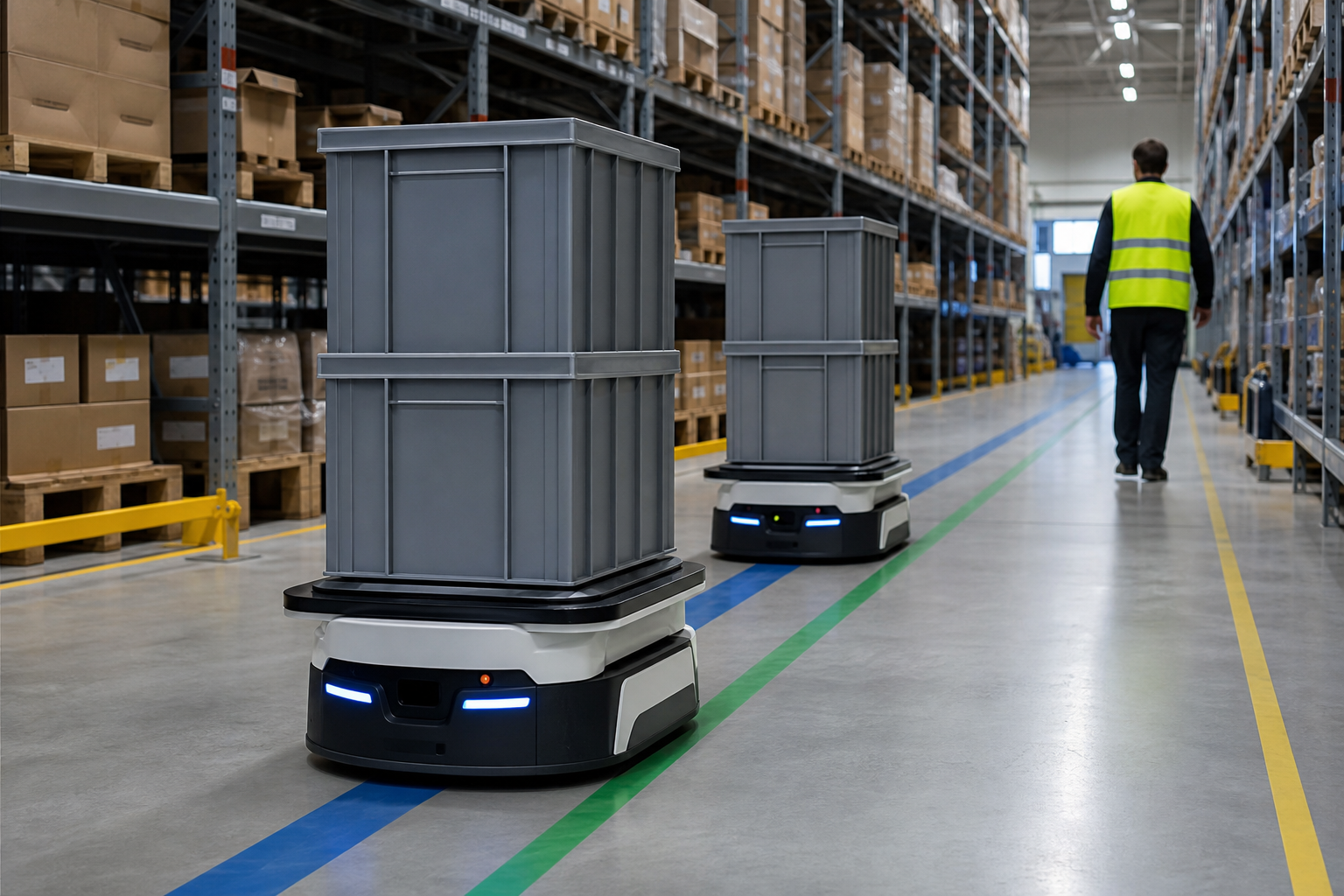 AGVs, AMRs & Tote TransportAutomated guided vehicles and autonomous mobile robots handle the repetitive moves — replenishment runs, tote transport between zones, trailer loading support and pallet moves — on a fixed route or a mapped floor, through every shift without a break.
 Rail-Mounted Mobile RackingRacking carriages travel on embedded floor rails so only the aisle you are working in stays open. It recovers roughly a third to half of the aisle space in a reserve or cold-storage area — the cheapest way to buy capacity when relocating is off the table.
See what a goods-to-person system would look like in your building
Our free Automated Vertical Storage Designer lets you set your ceiling height, footprint and part profile and see the machine configuration it produces — then send it straight to our engineers.
Open the Automated Vertical Storage Designer Request a Quote Call (800) 326-4403
Which System Fits Which Problem
The comparison below uses figures published by each manufacturer. Real throughput always depends on your order profile, picks per presentation and how the workstation is staffed — which is exactly what a throughput model is for.
| System | Best fit | Published throughput | Space effect | Integration |
|---|---|---|---|---|
| High-speed box mover (EffiMat 4) | Standard boxes/trays, many order lines, high peaks | Up to 320 boxes/hr, up to 5 boxes per presentation | Up to 75% less floor space vs. manual shelving | Conveyor or AMR infeed/outfeed; WMS integration |
| Vertical lift module (Vidir) | Small parts and slow-to-medium movers, mixed sizes | Tray-based; up to 1,000 lbs per tray | Up to about 85% of floor space reclaimed vs. shelving | Stand-alone or WMS/ERP integrated |
| Vertical carousel (Vidir) | Uniform SKUs with constant turns; secured inventory | Continuous carrier rotation | Recovers vertical cube in a small footprint | Stand-alone or WMS/ERP integrated |
| Carton flow (UNEX SpanTrack) | Case and each picking from cartons; FIFO stock | UNEX: up to 150% more throughput than picking from pallets | Uses the full depth and height of existing rack | Drops into your current pallet rack |
| Conveyor & sortation | Moving totes/cartons between zones and to ship | Continuous flow; scales with lane count | Uses aisle air, not floor storage | Scan points feed the WMS directly |
| Powered mobile workstation | Receiving, cycle counting, returns, pack-at-point | 8–12+ hours per 460 Wh battery, swap in seconds | No fixed footprint at all | Runs your existing printer, scanner and PC |
Goods-to-Person vs. Person-to-Goods

Person-to-goods is the traditional model: the picker travels to the SKU. It is cheap to start, endlessly flexible, and it scales badly — double the order lines and you roughly double the walking. Carton flow, better slotting and high-density bin storage make it dramatically better by shortening the route rather than removing it.
Goods-to-person inverts it: the machine brings the box or tray to a fixed, ergonomic station. Travel goes to zero, quality becomes consistent because every pick happens in the same controlled position, and throughput becomes predictable enough to plan a cutoff around. EffiMat notes that its box mover can present up to five boxes in one presentation and connect to conveyor or an AMR for automatic infeed and outfeed, so the station never idles waiting for stock.
Most successful projects are hybrids. Fast, uniform movers go to carton flow at the pick face; the long tail of slow SKUs — which is where travel is worst per line — goes into a vertical lift module or vertical carousel.
Where the Time Goes: Automating Each Stage of the Order
Automation applied to one stage just moves the bottleneck. Walk the whole order path and fix the two or three stages that actually consume the clock.
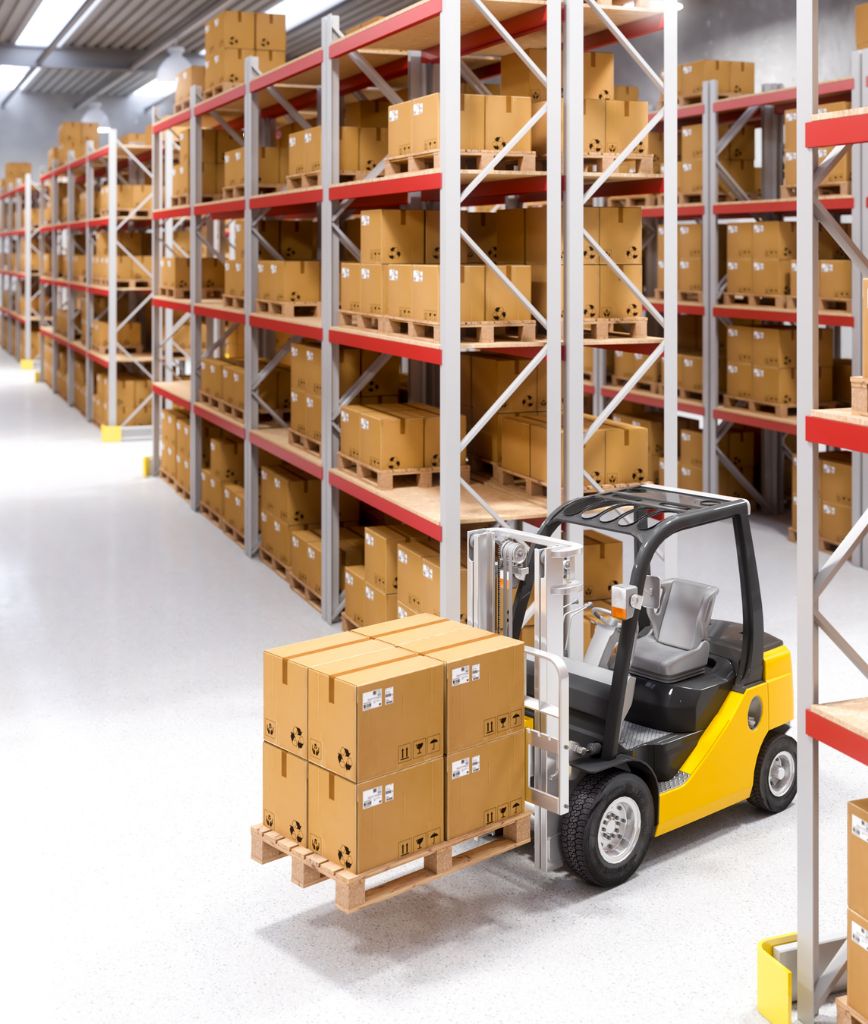 Receiving & PutawayLate trailers eat the cutoff first. Cross-dock the fast movers straight to the pick face, put the rest away by velocity, and receive against the purchase order at the trailer with a powered mobile workstation instead of walking every pallet to a desk.
 Slotting & StorageSlot A movers in the golden zone of carton flow, B movers in shelving or high-density bins, C movers in a vertical lift module or carousel. The goal is a pick path where 80% of the lines come from 20% of the footprint.
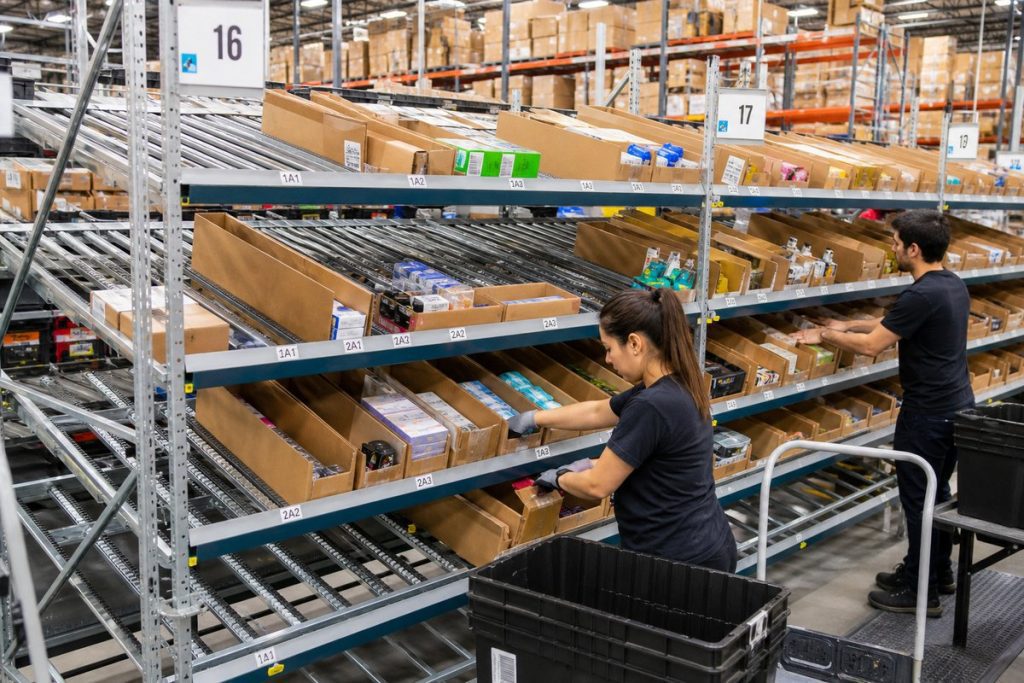 PickingThis is where the shift is won or lost: travel is typically the largest single component of pick time. Goods-to-person systems, carton flow and batch picking all attack the same number from different angles.
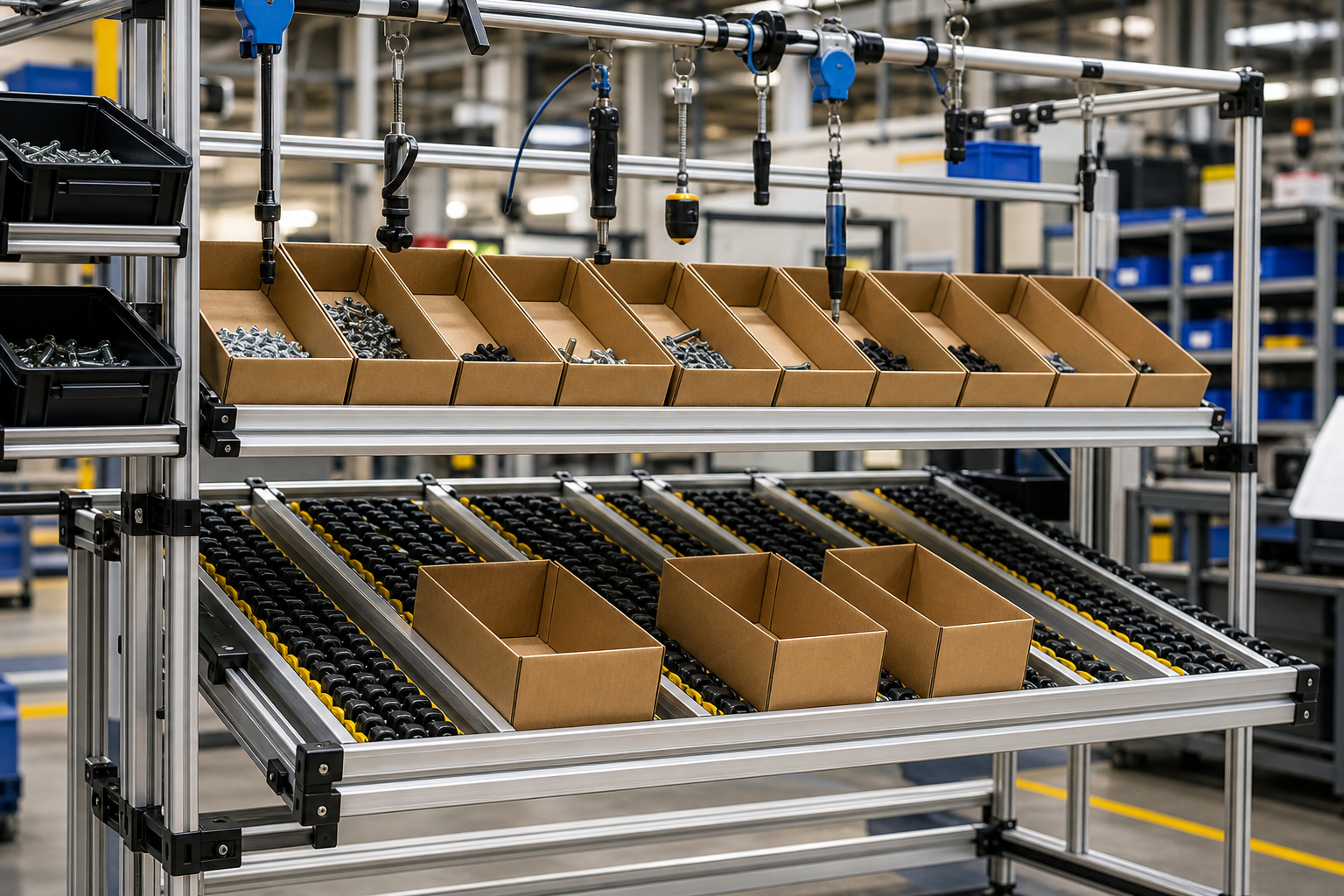 Consolidation & QCMulti-line orders need one place where the pieces meet. A put wall or flow-rack consolidation cell with lighted positions turns consolidation into a checkable step instead of a pile on a table.
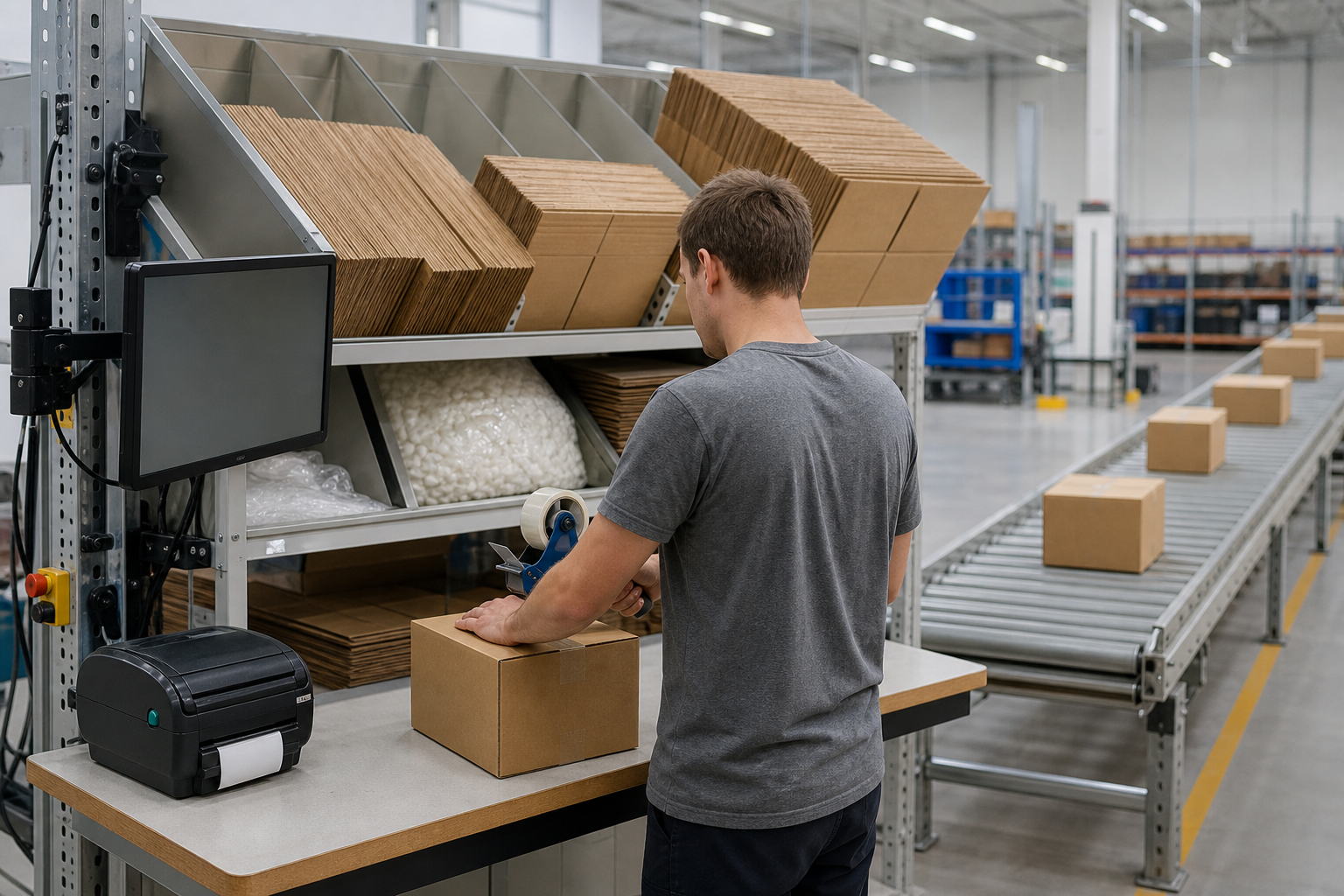 PackingRight-size the carton, print the label in the cell and let conveyor take it away. Every step a packer walks is a step no customer pays for.
 Sortation & ShipSort to carrier and service level in numbered lanes, stage by cutoff time, and load in reverse stop order. A clean dock is what lets you promise next day without paying for air freight to cover mistakes.
Cutting Travel Time: The Cheapest Automation There Is
Before quoting a machine, it is worth exhausting the changes that cost far less and often deliver more. Density and slotting shorten the pick route; carton flow presents every SKU at the face; powered workstations delete the walk to a printer. Each of them buys back the same resource a goods-to-person system buys — operator minutes.
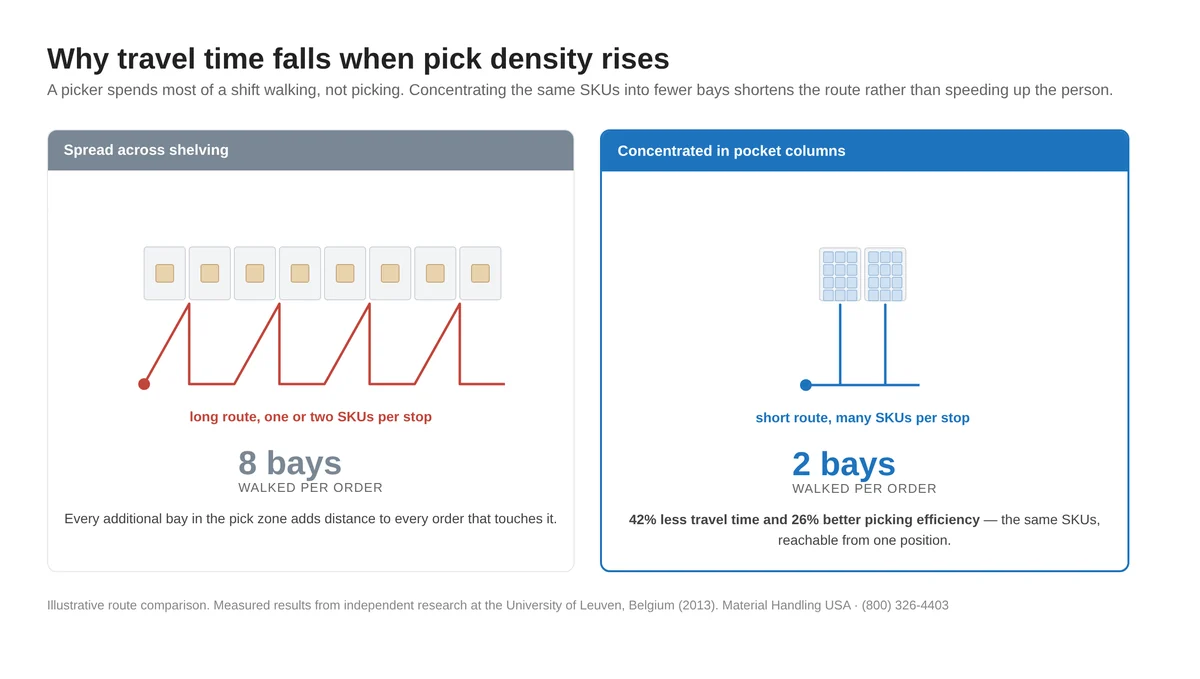
Carton flow at the pick face

Carton flow lanes drop into pallet rack you already own, use the full depth of the bay, and let gravity move the next carton forward automatically. Every SKU stays visible and in the ergonomic golden zone, and stock rotates FIFO without anyone managing it — which matters as much for dated goods as it does for speed. UNEX states that its carton flow increases throughput by up to 150% compared with picking from pallets, that Shelf Track provides up to 300% more product contact than plastic wheel rails, and that the system carries a 7-year warranty.
Choosing between the two track styles is straightforward: use SpanTrack Wheel Bed when SKU sizes vary and slotting changes often, and SpanTrack Lane where positions are fixed and predictable. Both relocate later, because they simply drop into rack.
- Re-slot by velocity before buying anything — it is free and usually worth double digits
- Put A movers between knee and shoulder height; reserve the bending and reaching for C movers
- Batch or cluster pick multi-line orders instead of walking the route once per order
- Give every picker scanning and label printing at the point of work
- Take completed cartons away by conveyor so pickers never carry finished work
- Measure lines per labor hour by zone — you cannot improve a number you do not track
Want the travel time out of your pick path?
Send us a layout and a few weeks of order history. We will show you what re-slotting and carton flow recover before we quote a single automated machine.
Pick Modules, Flow Cells and Mobile Workstations
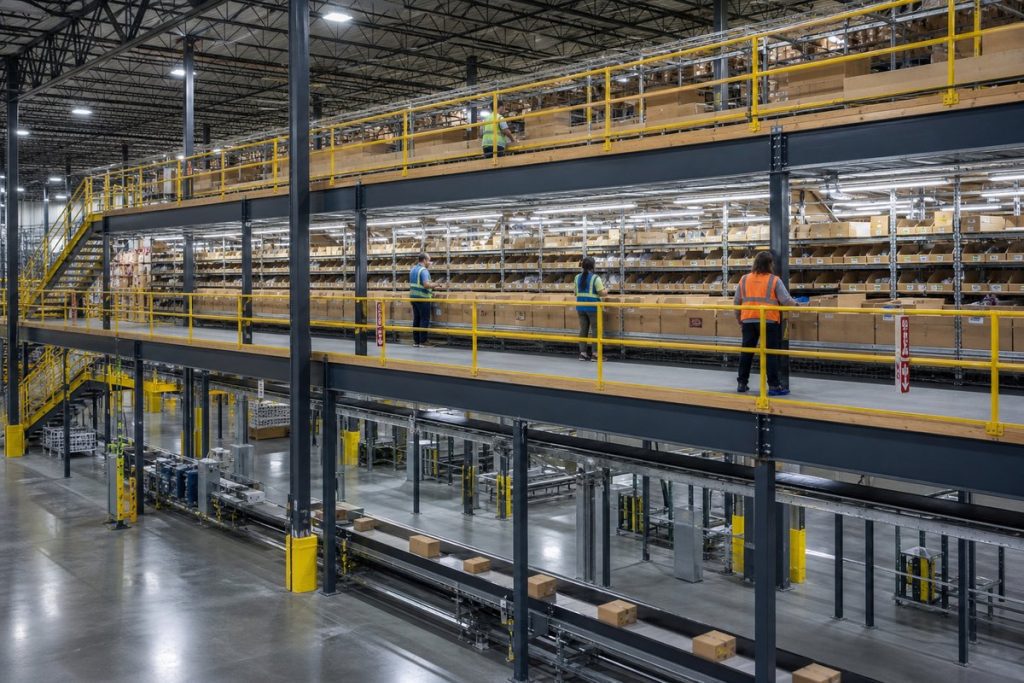
Multi-level pick modules
When floor space is gone but clear height is not, a pick module stacks two or three picking levels over the same footprint, with carton flow at each level and take-away conveyor running to pack. It is the standard answer for e-commerce operations with thousands of active SKUs and a hard cutoff, and it is built from the same structural rack, walkways and stairs we install every week.
Related: conveyor systems and e-commerce fulfillment storage.

Flow cells for pack, kitting and returns
Not every station belongs in a rack. UNEX FlowCell builds a self-contained cell from 1.75″ square tube in 6″ length increments, accepting SpanTrack lanes or wheel beds, add-on pick trays at a 30° angle and galvanized workbench tops 12″ or 18″ deep. Add phenolic casters rated 750 lbs each and the whole cell rolls to wherever the volume is this week — useful for peak pack lines and returns processing that only exists for two months of the year.
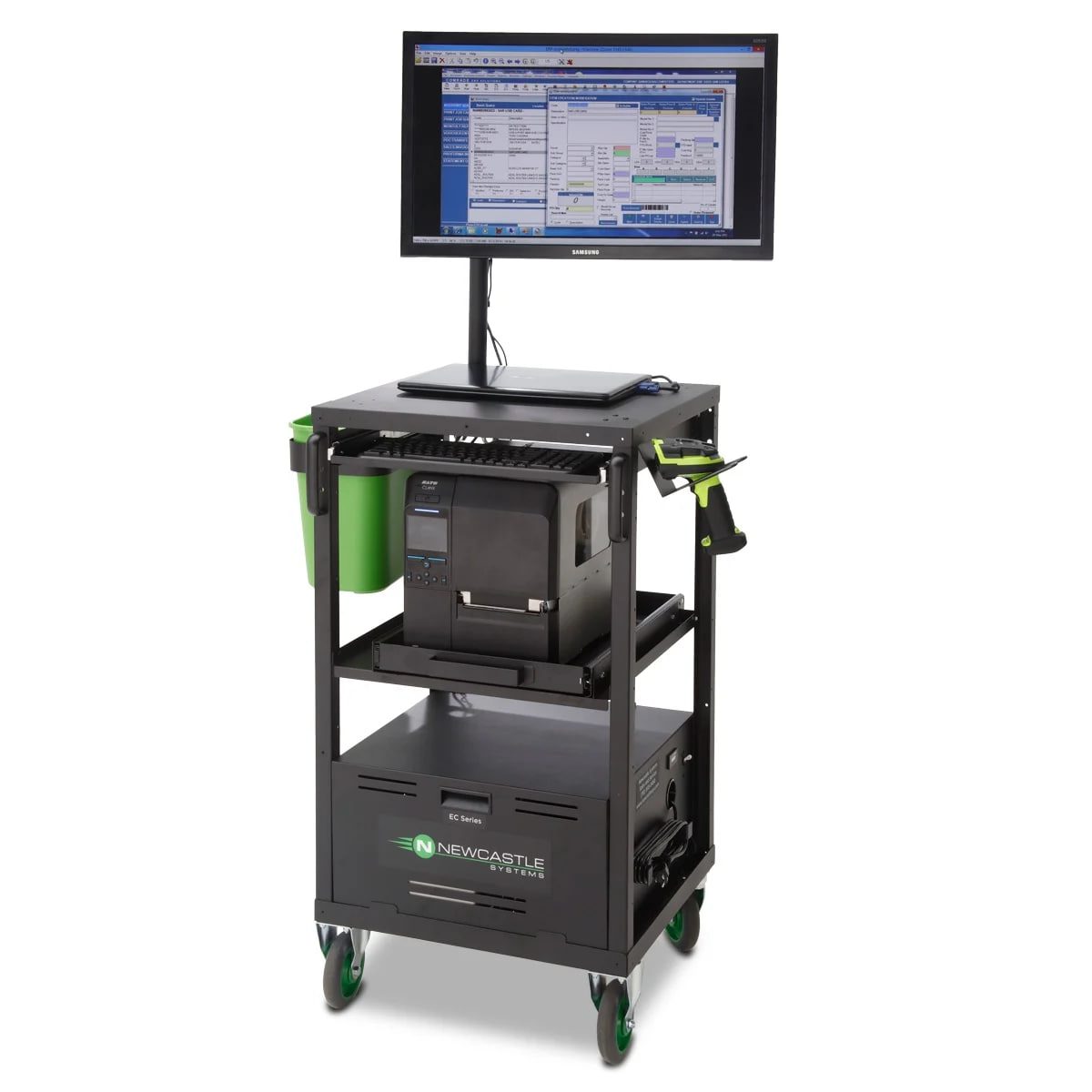
Powered mobile workstations
The least glamorous item on this page has one of the shortest paybacks. Receiving, cycle counting, returns and pack-at-point all involve someone walking to a fixed computer and printer. A Newcastle Systems powered cart brings both to the work: the PowerSwap Nucleus lithium iron phosphate system delivers quiet AC power for 8–12+ hours, charges in 4–5 hours, and swaps in seconds so the cart keeps running across shifts. Newcastle publishes a 460 Wh battery bank per battery (920 Wh with two) and an operating range of 50–104°F.
See powered mobile workstations for configurations.
The Data We Need Before Recommending Anything
Every honest automation recommendation starts with your numbers, not a catalog. This is the short list we work from — and what each item actually decides.
| What we look at | What it decides |
|---|---|
| Order lines per day and per hour at peak | Sets throughput; decides whether one goods-to-person station is enough or you need several plus conveyor |
| Lines per order and units per line | Single-line orders favor carton flow and pick-and-pass; multi-line orders need consolidation or a put wall |
| SKU count and velocity curve (A/B/C) | Drives slotting: golden-zone flow lanes for A, shelving or bins for B, automation for the long C tail |
| Cube and weight per SKU | Boxes up to 600 × 400 × 320 mm and 25 kg fit a box mover; heavier or longer goods go to a VLM or cantilever |
| Carrier cutoff times | Fixes the working window backwards from the last trailer — the real constraint behind “next day” |
| Clear height and column grid | Determines how much of your cube automation can actually reach |
| Seasonality and growth | Decides modular vs. fixed: rack, flow and carts scale in weeks; a fixed crane ASRS does not |
| WMS/ERP and labor reality | No machine fixes bad data or an unstaffed second shift — integration and training are part of the project, not an afterthought |
Automation does not fix bad inventory data
A goods-to-person machine picks exactly what your system tells it to pick. If cycle-count accuracy, unit-of-measure and slotting data are unreliable today, fix those first — otherwise the project buys you faster errors and a longer list of exceptions.

Right-sizing: modular first, fixed last
Order profiles change faster than buildings do. That is the argument for building the first phase from equipment that can be re-slotted, relocated or resold — rack, carton flow, flow cells, shelving, carts — and reserving fixed, high-commitment automation for the volume you are certain of. It is also the reason we phase installations: prove the throughput model on live orders, then buy the next module.
If growth is the real driver, read our warehouse design and layout services and full warehouse design solutions.
How a Material Handling USA Automation Project Works
Consultation to installation, with the same team from start to finish.
Data & Discovery
We pull order history, SKU velocity, cube and carrier cutoffs, and walk the floor to see where travel and waiting actually happen.
Design & Model
CAD layouts and a throughput model per zone, with an honest comparison of two or three options instead of one recommendation.
Quote & Justify
Equipment, freight, install and permitting in one number, next to the labor and space savings that pay for it.
Install & Support
Phased installation around live operations, operator training, spare parts and service — over 30 years of installs behind it.
Start with an assessment, not a quote
Tell us your order volume, cutoff times and the building you have. We will tell you where the clock is actually going and what it takes to fix it — including when the answer is not a machine.
Request a Free Assessment Browse Our Design Tools Call (800) 326-4403
Warehouse Automation FAQs
What does warehouse automation for next-day delivery actually require?
Is a vertical lift module or a high-speed box mover better for order picking?
How much space can automation give back?
What is the difference between SpanTrack lanes and wheel beds?
Do AGVs and automated systems work in freezers and hot environments?
What does a project like this cost, and how is it justified?
Can automation be phased in without shutting the warehouse down?
Do you serve operations outside Utah?
Related Products & Resources
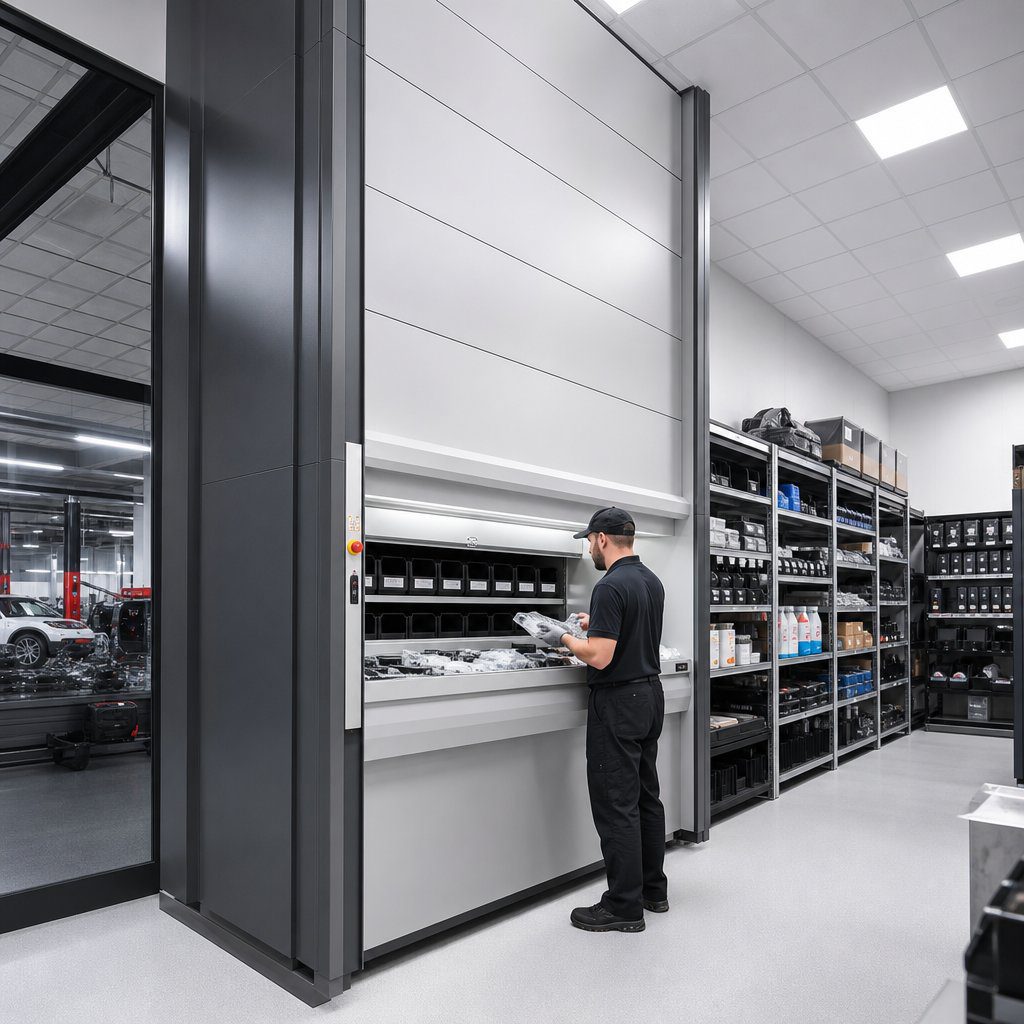 Vertical Lift ModulesTray-based goods-to-person storage with 600 and 1,000 lb tray options — the answer for a long tail of small parts.
 Carton FlowGravity pick faces that drop into existing rack, rotate stock FIFO and shorten every pick route.
 Conveyor SystemsGravity and powered conveyor to move totes and cartons between pick, pack and ship without carrying them.
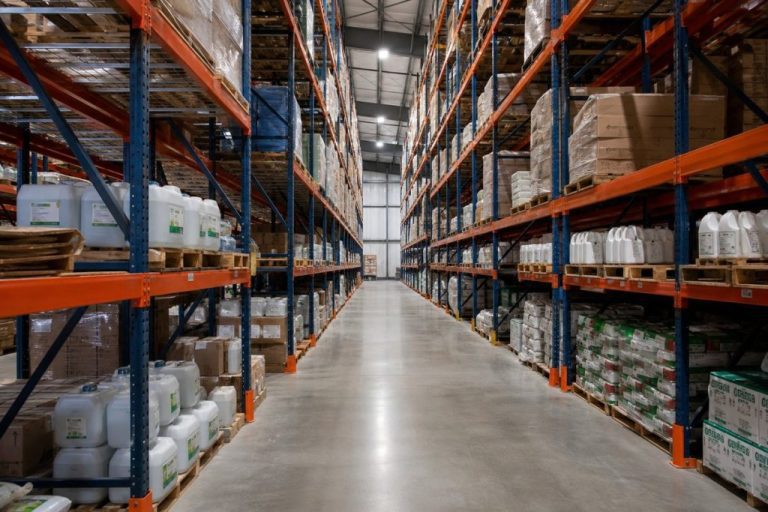 E-Commerce FulfillmentStorage and pick-face design for high-line-count, small-order operations with hard carrier cutoffs.
 Powered Mobile WorkstationsNewcastle Systems carts that bring the scanner, PC and label printer to receiving, counting and packing.
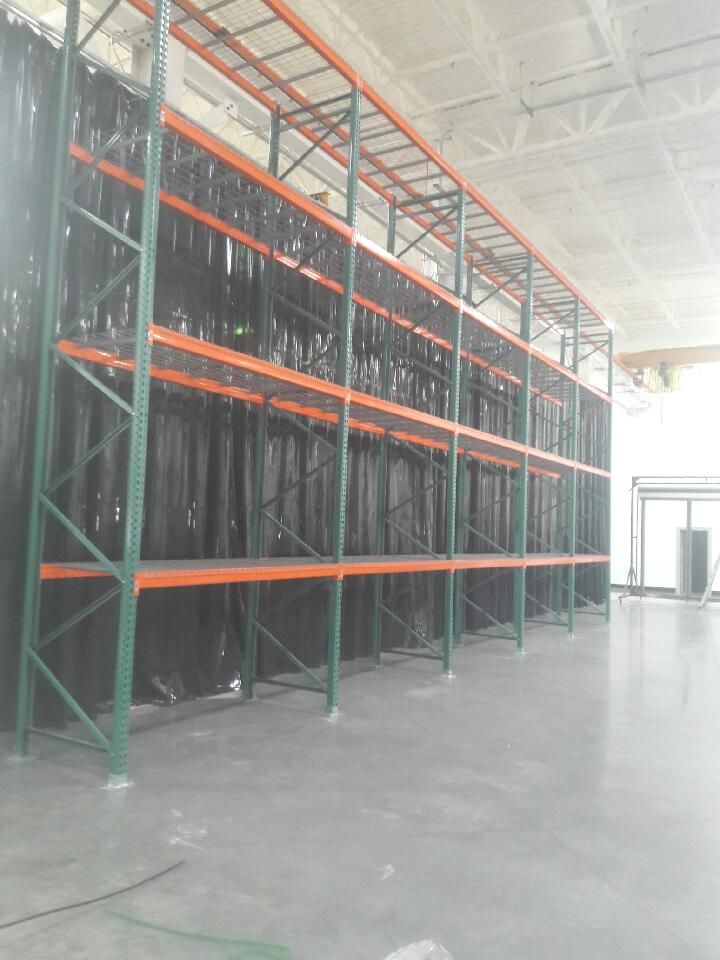 Warehouse Design & LayoutCAD layouts, throughput modeling and phased installation for the whole building, not one zone.
Shop Online at MaterialHandling-USA.com
Need the shipping and packaging supplies that go with a faster fulfillment operation? Our e-commerce store stocks corrugated boxes, mailers, void fill and tape with published pricing.
Ready to Ship Next Day, Every Day?
Send us your order volume, SKU profile and carrier cutoffs. We will model the throughput, lay out the system and quote the equipment and installation together.