
Education & Government Storage › Mobile Shelving for School Districts
Mobile Shelving for School District Office & Records Storage
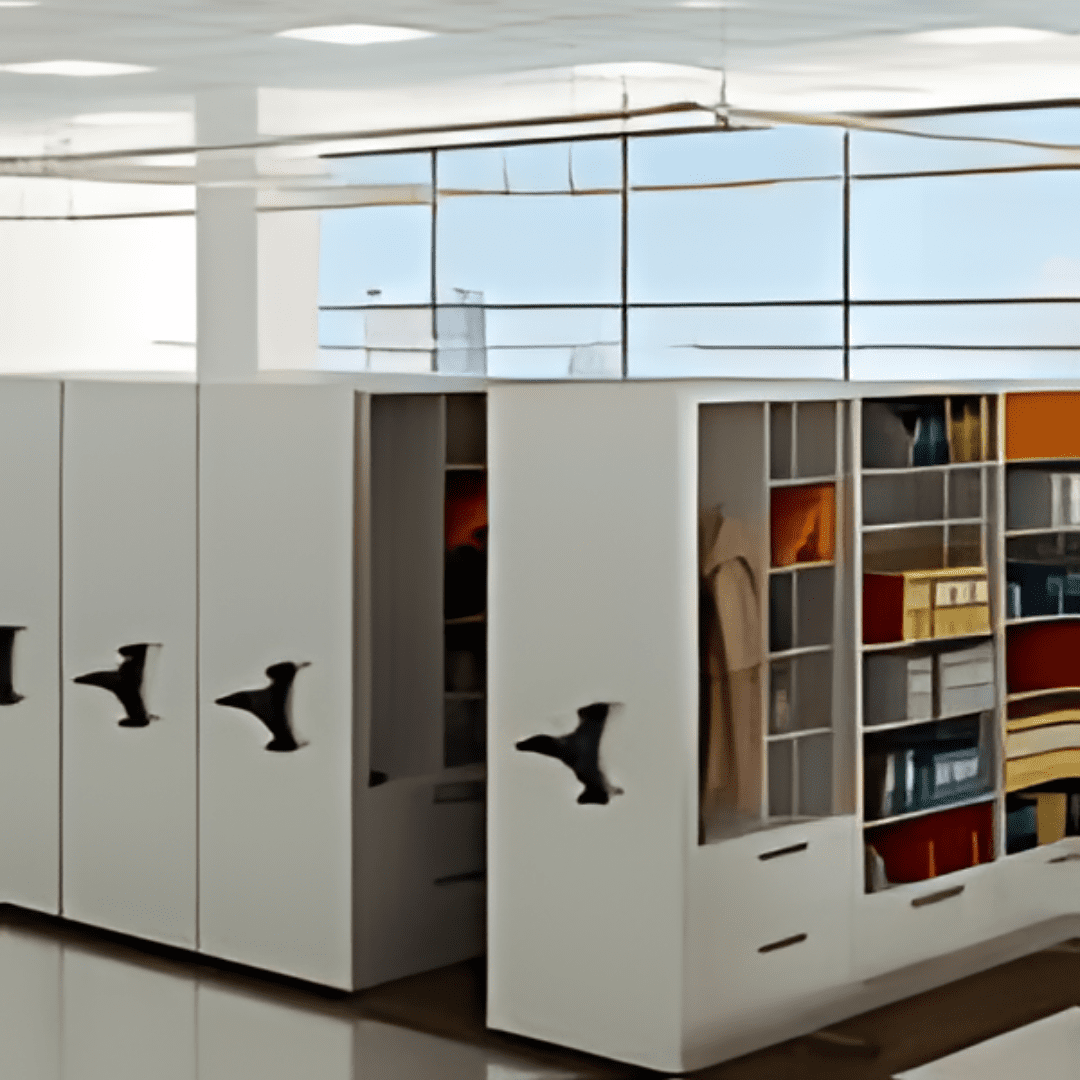
High-density mobile shelving lets a district administration building store student records, business office files, curriculum, technology and supplies in about half the floor space — without renting offsite storage. Designed, supplied and installed by Material Handling USA.
~50%
Less floor space for the same records
4,000 lb
Minimum capacity per mechanical assist carriage
1 lb
Effort to move a fully loaded carriage
31
Standard Gloss-Tek colors
The Storage Problem in a District Office Is Retention, Not Clutter

A school district office does not accumulate paper by accident. Cumulative student folders follow retention schedules measured in decades. Special education files, immunization records, transcripts, personnel files, payroll, purchase orders, bond and construction documents and board minutes all have to be retrievable on request — sometimes on a deadline set by a parent, an auditor or an attorney. Add curriculum adoptions, technology inventory, election and enrollment materials and the district print shop, and the room that was designed for a few lateral cabinets is full within a few years of a bond-funded remodel.
The usual responses all cost money. Renting offsite storage adds a monthly bill plus a retrieval delay every time someone needs a file. Buying more lateral cabinets consumes more floor area than the cabinets themselves, because every run needs its own permanent aisle. Converting a conference room or a classroom into a file room takes instructional or administrative space out of service permanently.
High-density mobile shelving attacks the aisle instead of the paper. Shelving is mounted on wheeled carriages that roll side-to-side on rail, so the system stores one aisle’s worth of open space and shares it across every range. Aurora Storage Products — the manufacturer behind these systems — documents installations storing the same material in roughly half the space, or twice the material in the same footprint. On the American Fork district court project Aurora published, the finished mobile system used 50% less space than the court’s old filing, and the dealer’s own note was that the space saving justified the system cost within a year or two compared with building out the square footage traditional cabinets would have needed.
- Recover floor space you already pay for — a records room usually gives back 40–50% of its area, which is often enough to add offices or a workroom.
- Keep long-retention records on site instead of paying monthly offsite storage and waiting on retrieval.
- File and pull faster — end-tab folders on open shelving beat drawer cabinets on both filing and retrieval time.
- Control access with carriage locks, dual-aisle locking and lockable end doors for FERPA-protected student files.
- Grow into it — carriages, shelves and accessories are added later without replacing the rail.
Not sure how much space your records room would gain?
Send us the room dimensions and roughly how many linear feet of files, boxes and shelving you have today. We will lay the room out both ways — static shelving and high-density mobile — and show you the capacity difference before you spend anything.
Request a Free Layout & Quote Try the Mobile Shelving Planner Call (800) 326-4403
What a School District Actually Stores on These Systems
The same rail and carriage platform handles very different material, which is why one district often ends up with two or three systems: a file-shelving system in the records room, and heavier wide-span carriages in the district warehouse. Each of these is a real application we specify for districts.
Drama and music departments have a storage problem of their own: costume stock, choir robes, band uniforms and props. See our guide to mobile shelving for theater costume, wardrobe and prop storage.
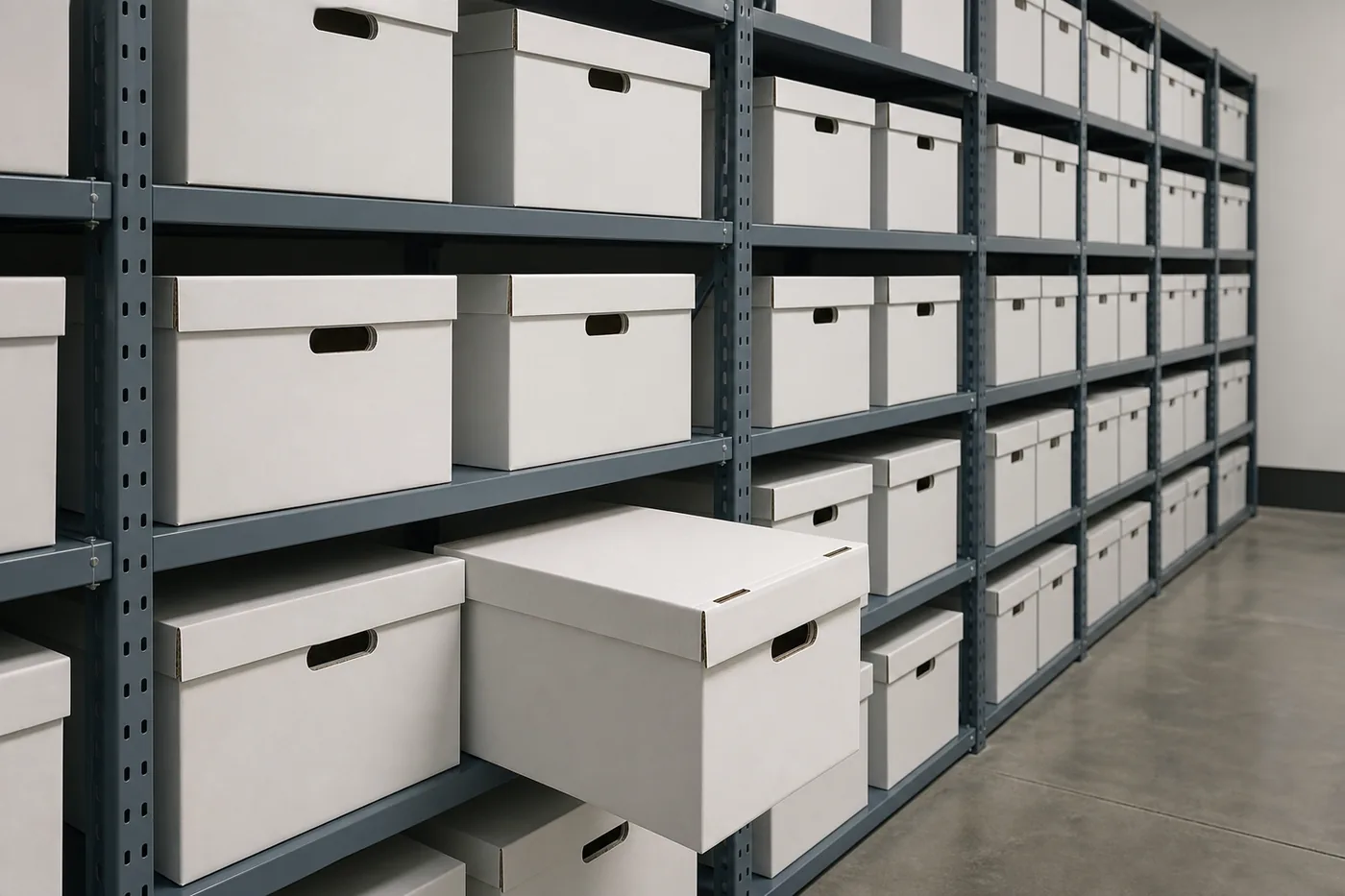 Student Cumulative & Special Education FilesThe records a district can never lose: cumulative folders, IEP and 504 files, immunization records, transcripts and withdrawal records. Mobile carriages keep active years at the front of the room and long-retention years compacted behind a locked aisle instead of paying for offsite boxes you have to retrieve by courier.
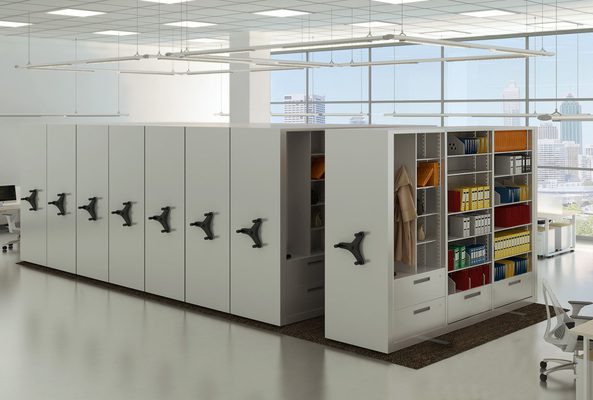 Business Office, HR & Board RecordsPayroll and personnel files, purchase orders, bond and construction documents, board minutes, audit binders and grant files. End-tab folders on open shelving are two to three times faster to file and retrieve than drawer cabinets, and mobile carriages remove the fixed aisle each cabinet run would need.
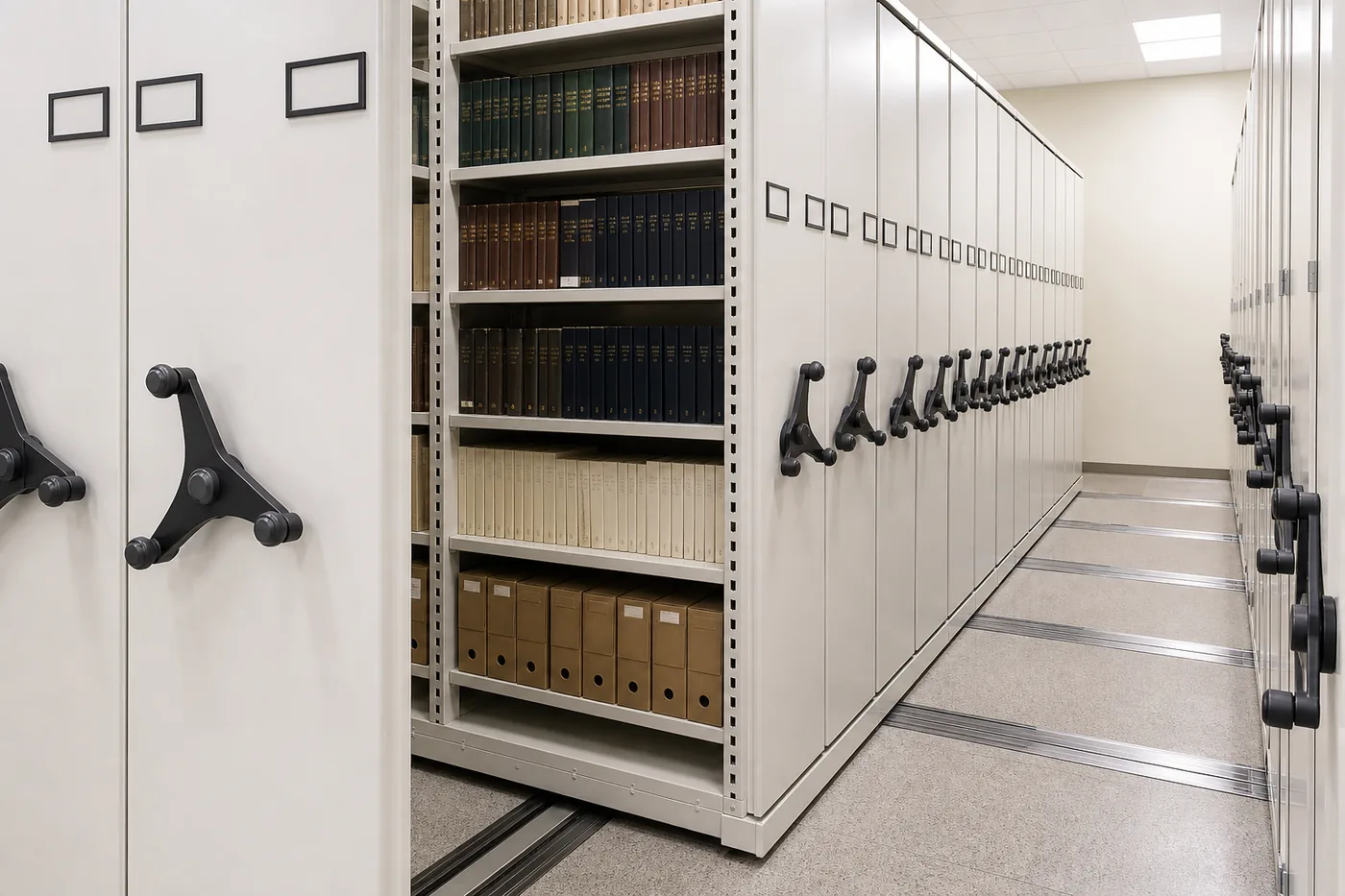 Textbooks & Curriculum AdoptionsAdoption sets, teacher editions, consumables and assessment materials are heavy and seasonal. Wide-span shelving on mobile carriages carries the weight, and the whole adoption can be pulled to the aisle at distribution time instead of being buried three pallets deep.
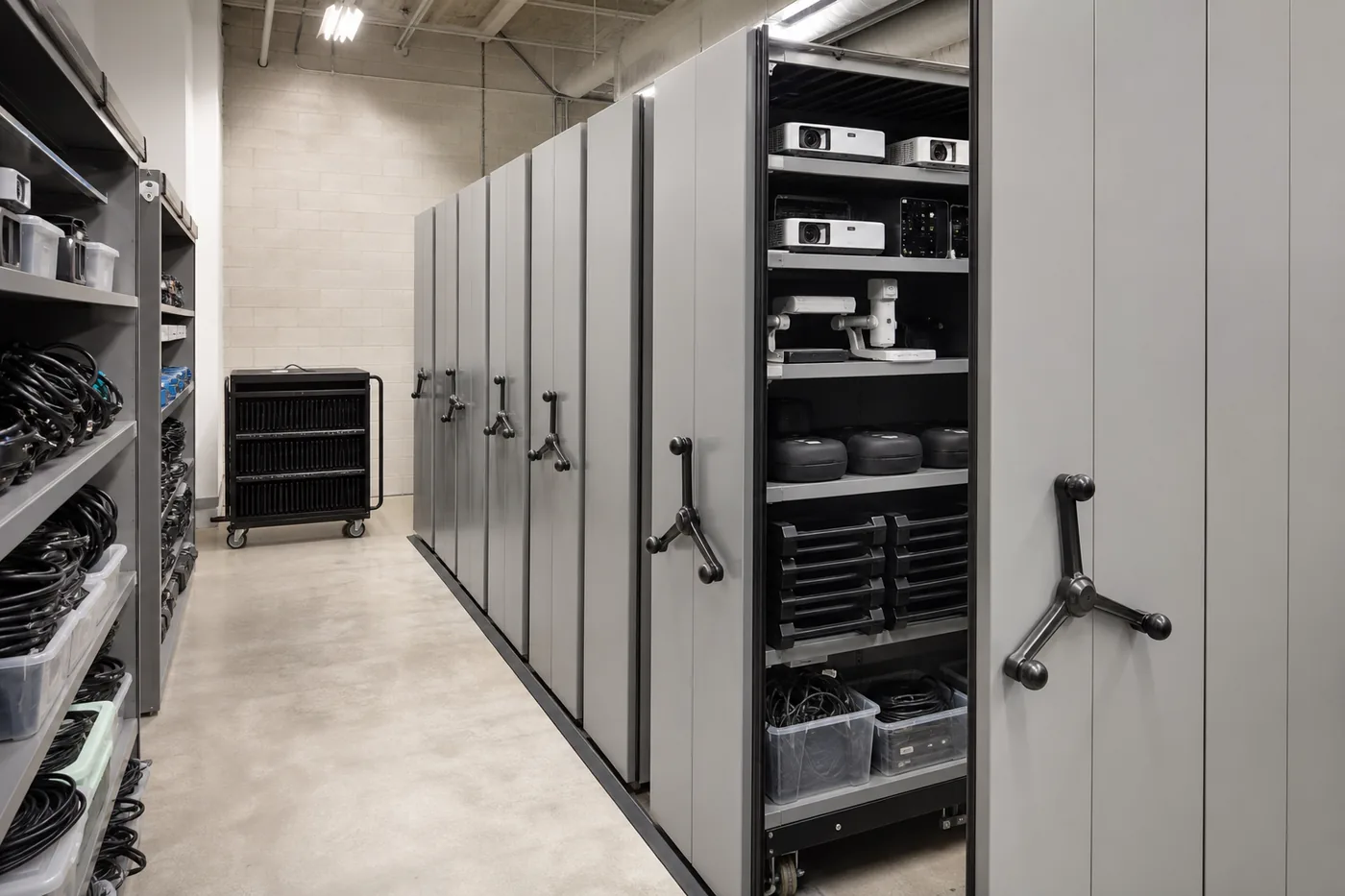 Technology & AV EquipmentProjectors, document cameras, spare Chromebooks and tablets, cables, adapters, speakers and charging carts. Lockable end doors and a locked aisle give the technology department real accountability without building a separate cage.
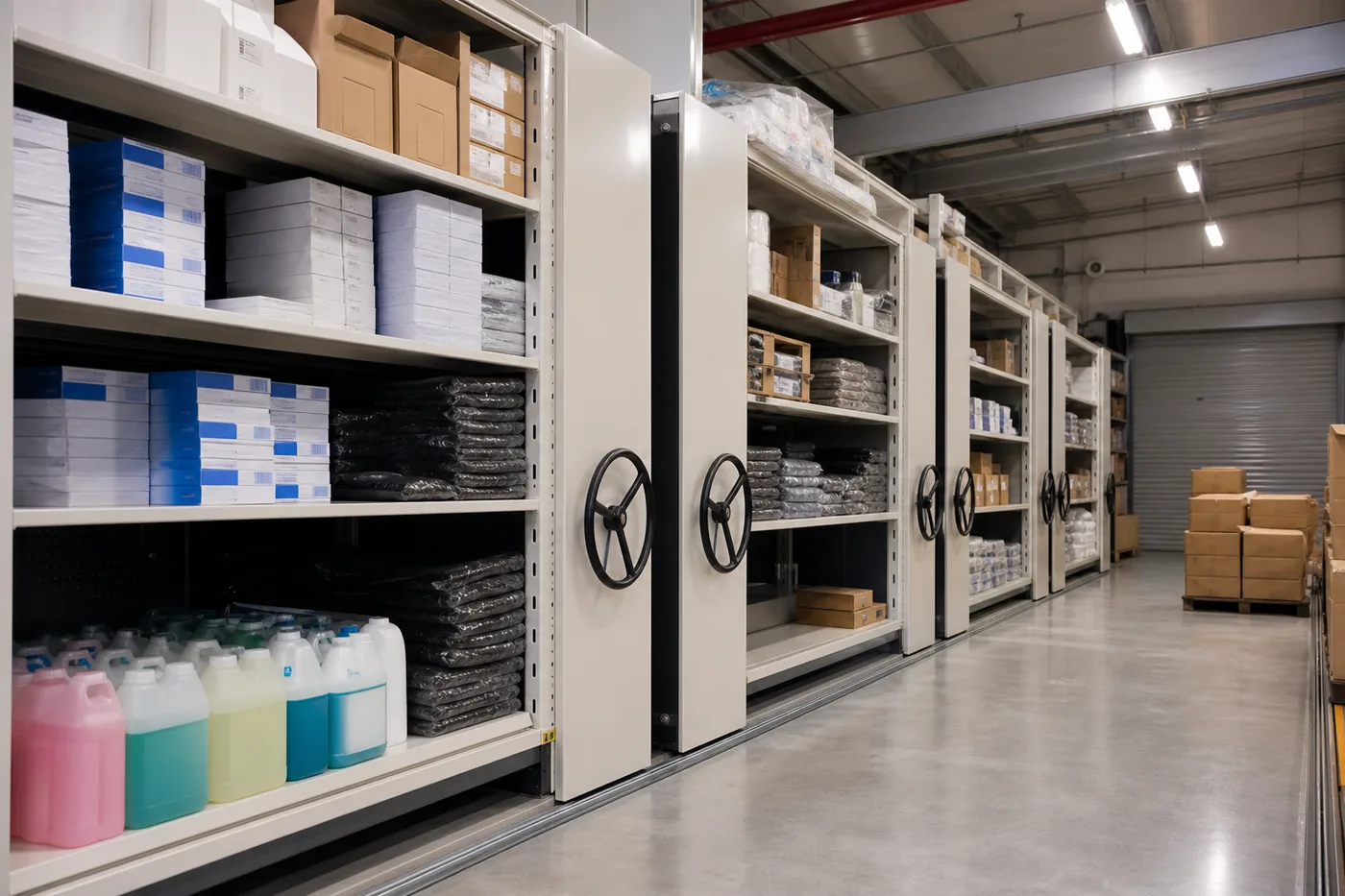 Office, Print Shop & Custodial StockCases of copy paper, toner, forms, envelopes, liners and cleaning chemicals. Heavier duty carriages and wider shelves handle case goods, and a barrier-free rail lets supply carts roll straight over the track into the aisle.
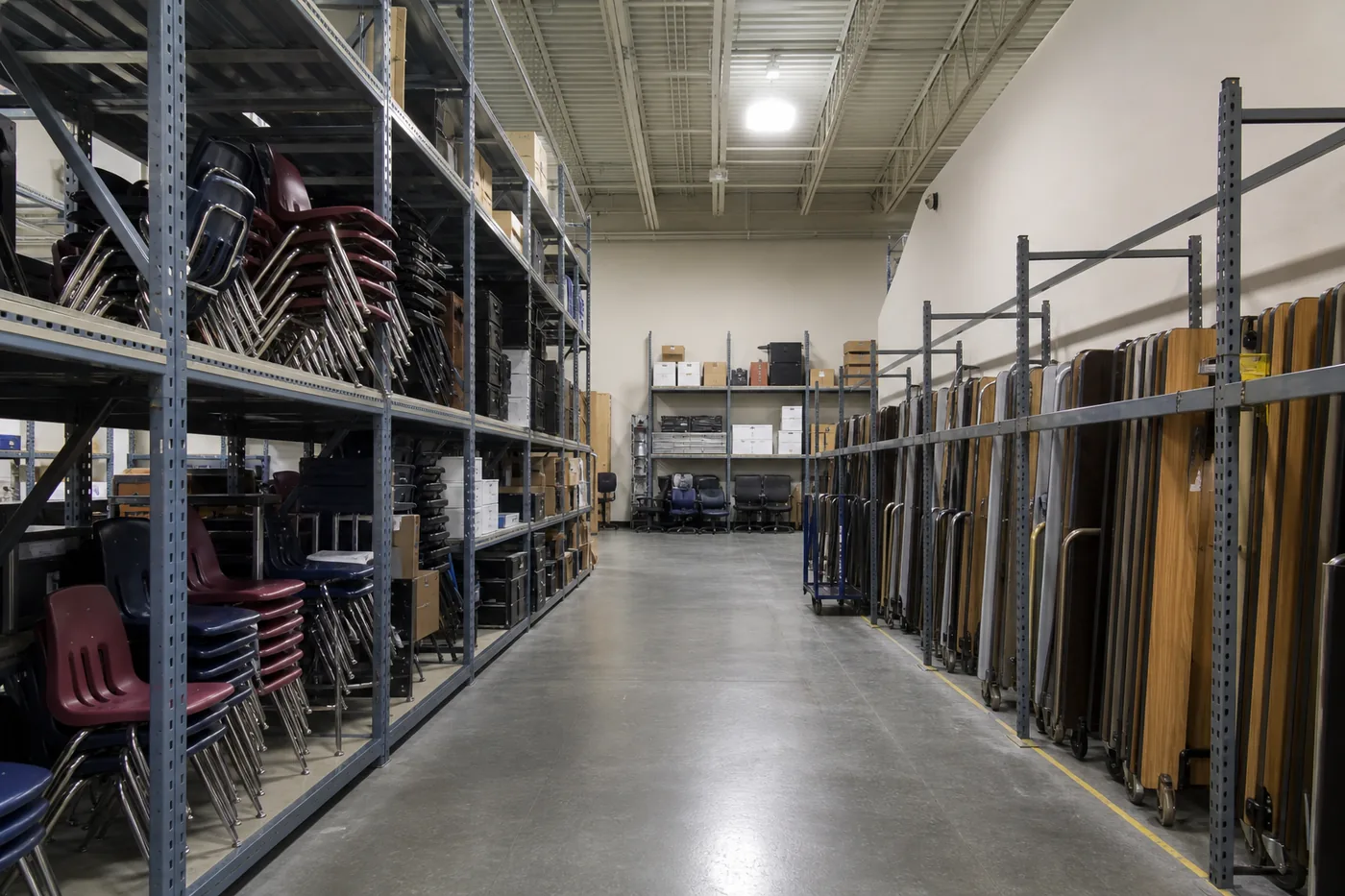 Surplus Furniture & EquipmentStacked classroom chairs, folding tables, whiteboards and retired equipment waiting to be reissued or surplused. This is usually the material that has taken over a district warehouse; heavy duty shelving on mobile carriages gets it off the floor and back into inventory.
How a High-Density Mobile System Works

Six components make up every system: the rail anchored and shimmed level to the floor, the carriages that roll on it, the shelving or drawers mounted on the carriages, the end panels that finish and secure the face of the system, the handle or control that moves it, and the accessories — reference shelves, dividers, bins, doors and locks — that make the room usable day to day.
Movement quality is a rail-and-wheel problem, not a marketing one. Aurora uses a patented concave wheel on a convex rail so the carriage tracks straight with no play between wheel and rail, and dual pins at each rail joint keep sections aligned. Wheels are precision cast ductile iron on permanently lubricated, shielded bearings rated for 4,400 lb. dynamic load. That is what lets a mechanically assisted carriage carrying 4,000 lb. move with roughly a pound of effort at the handle years after installation — and it is why level rail and a sound slab matter more than any other single detail in the installation.
The rail itself is barrier free, so it does not create a trip hazard and mail or supply carts roll over it. In a district office that matters: the people using the room are administrative staff moving folders and carts, not warehouse operators.
Aisle math in one sentence
Static shelving needs a permanent aisle for every range; a mobile system keeps one aisle and shares it. Nine ranges of static shelving with nine aisles becomes nine ranges with one or two open aisles — the recovered area is the aisles you deleted, which is why the savings scale with the number of ranges rather than the amount of paper.
Which Drive Type Belongs in a District Office
Drive type is chosen from carriage length, load, how often the aisle is opened and who is opening it — not from budget alone. A three-carriage records room and a district warehouse full of curriculum pallets are different machines.
 Manual MobileThe most affordable way to compact a small room. Carriages up to 8 ft. long are pushed by hand using a handle on the end panel. Best for one- or two-carriage side-to-side systems and light file loads in a single office.
 Mechanical AssistThe workhorse choice for district records rooms. Geared drive at the three-spoke handle moves a fully loaded carriage with about a pound of effort, and the gearing is chosen so retrieval takes fewer handle turns. Available in 1000 Series and Low Profile carriage heights.
 Powered (Electric Assist)A button opens the aisle. Each carriage runs on a 1/8 HP 24 VDC motor at about 3 in. per second with an infrared photoelectric safety sweep per aisle. Right when carriages are long, loads are heavy, or the staff using the room should not be cranking anything.
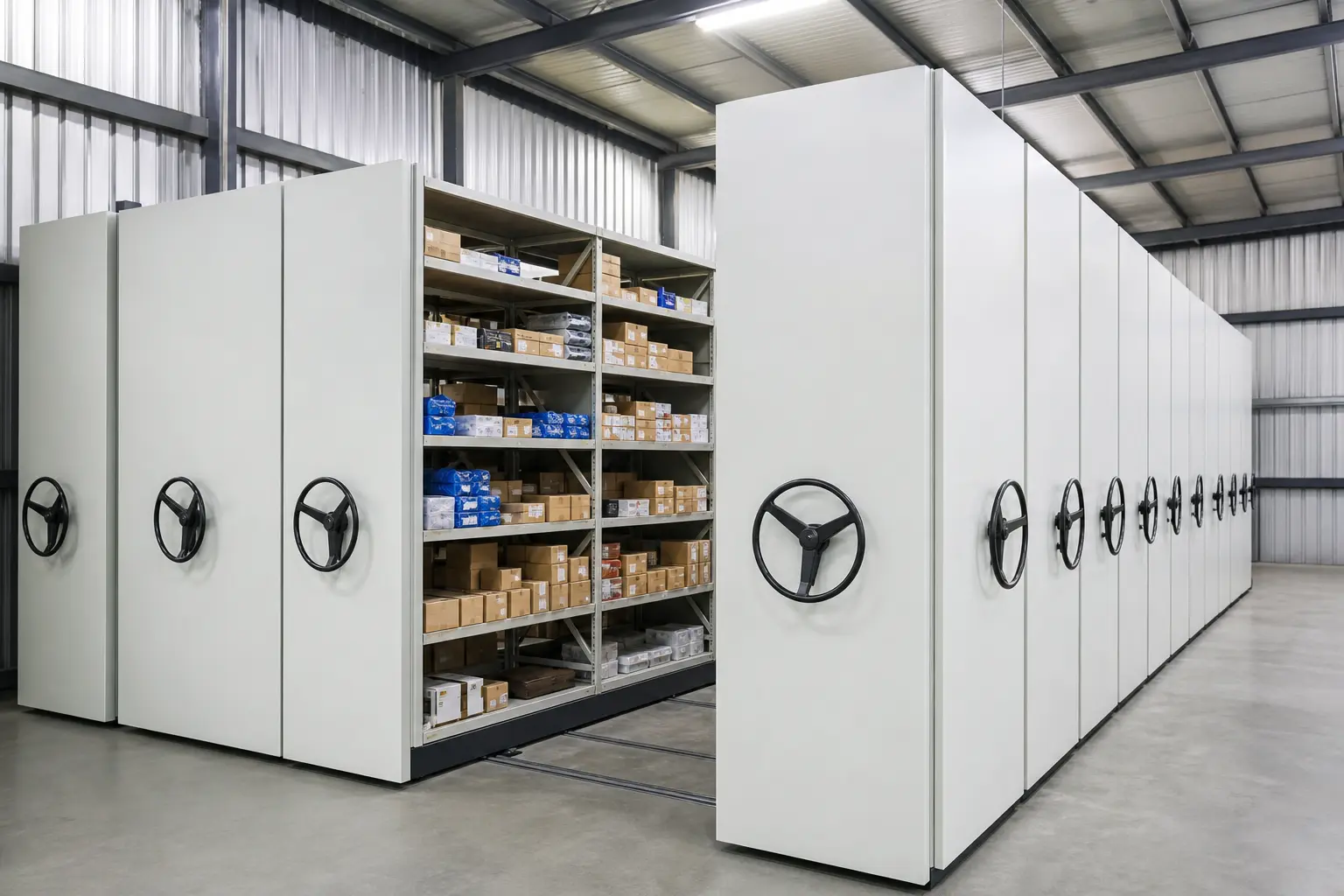 Wide-Span / Industrial MobileHeavier carriages under wide-span shelving for a district warehouse or distribution center: case goods, curriculum pallets, athletic equipment and surplus furniture instead of file folders. Rated to 1,000 lb. per linear foot of carriage on the mechanical assist platform.
| If your room looks like this | Specify | Why |
|---|---|---|
| One or two ranges in a single office, light file loads | Manual mobile, carriages up to 8 ft. | Lowest cost. Hand pressure moves a short, lightly loaded carriage without gearing. |
| A district records room, 3–10 carriages of files and boxes | Mechanical assist, 1000 Series or Low Profile | 4,000 lb. carriages that move with about a pound of effort; fewer handle turns per retrieval; nothing to power or service. |
| Long carriages, heavy loads, frequent daily access, or ADA-driven design | Powered / electric assist | A button opens the aisle. 1/8 HP 24 VDC drive at ~3 in./sec with an infrared safety sweep per aisle. |
| A district warehouse: curriculum, case goods, athletic equipment, surplus furniture | Wide-span or industrial mobile carriages | Carriage and shelving rated for case-goods loads (1,000 lb. per linear foot) with wider, deeper shelves. |
Rail and Track Options
The rail decision is made from the condition of the floor, the finished floor height you have to hold, and the seismic design requirements at your site. It is also the part of the project that most affects installation cost and schedule.
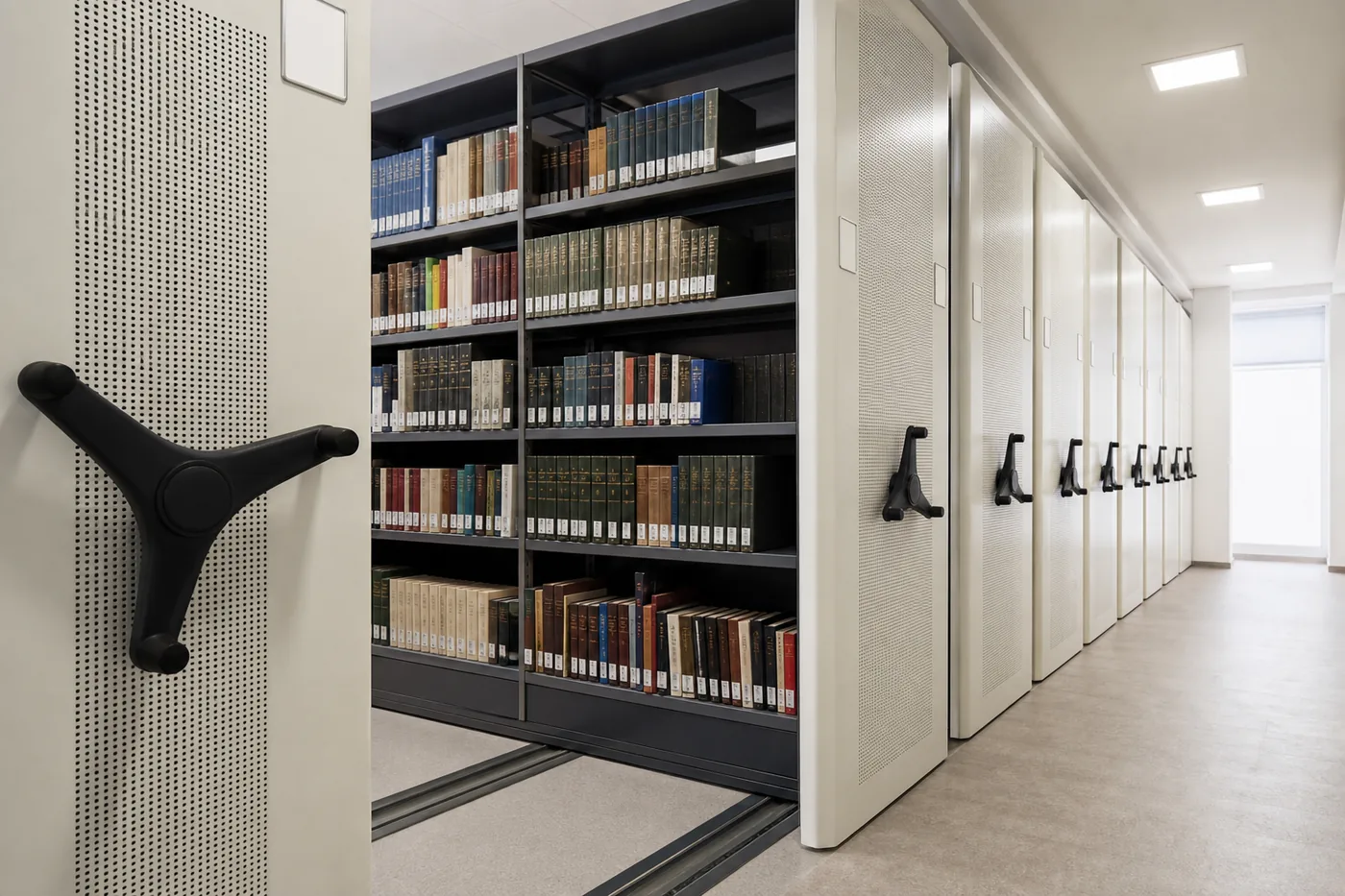 Standard Surface-Mount RailRail is mounted to the existing slab and shimmed level, with dual alignment pins where lengths join so there is no movement in any direction. The lowest-cost option and the one most district records rooms use, because no floor work is required.
 Twin Ramp & Raised DeckWhere the room cannot be trenched, a ramped deck or twin ramp brings the floor up flush with the rail. Twin ramp also makes rolling heavy carts and equipment over the track easy, and it cut both labor and schedule on the American Fork court system Aurora documents in its case study.
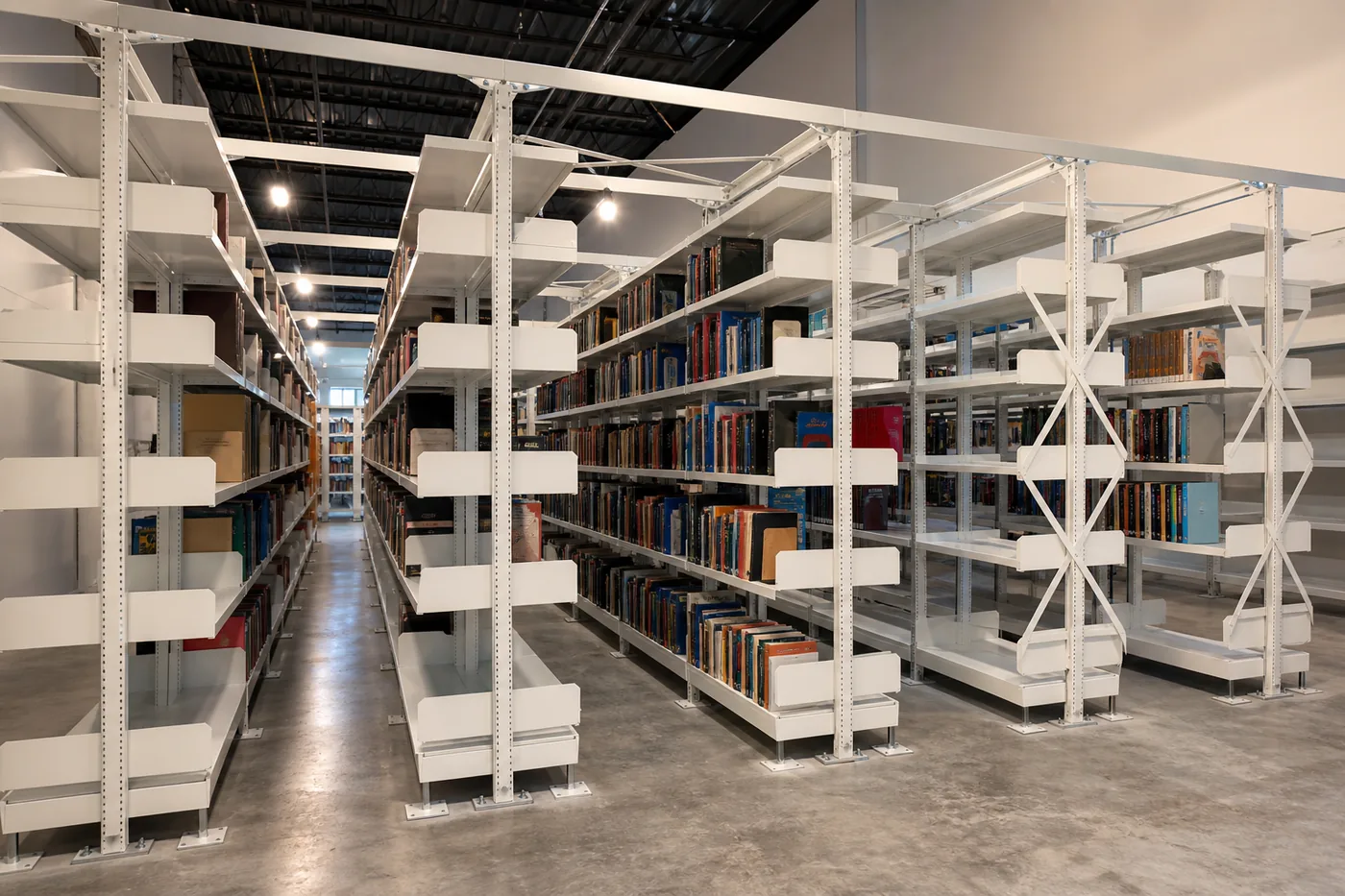 Seismic & Anti-Tip RailAnti-tip rail resists tipping when a carriage is loaded unevenly, and seismic rail plus anchored perimeter shelving is what the building department will look for on the Wasatch Front. Final anchorage is designed for your seismic design category, not assumed.
On seismic requirements — what we will and will not promise
Aurora builds seismic and anti-tip rail, and its shelving is manufactured to ANSI and ASTM material standards. Whether a specific installation satisfies code is decided by the authority having jurisdiction for your building, using your seismic design category, slab condition and anchorage — and on larger systems by a registered design professional. We will provide the manufacturer’s data and anchorage details for that review. We do not claim that buying a system automatically makes an installation code compliant.
Specifications
These are the figures from the manufacturer’s CSI Section 105626 (High-Density Mobile Storage Units) language and product literature — the same numbers your architect or purchasing department will want in a spec package. They are starting values: the final submittal is written to your project.
Mechanically Assisted Mobile Storage Units
| Item | Specification |
|---|---|
| Carriages | Welded structural steel with machined wheels running on steel rail, carrying new or existing shelving housings |
| Carriage capacity | 4,000 lb. minimum per carriage, moved with roughly 1 lb. of user effort at the handle |
| Shelving load | 1,000 lb. per linear foot of carriage |
| Handle | Three-spoke handle with rotating soft-touch knobs, centered on each movable carriage face panel; dual controls available |
| Rail | Type 1045 steel, zinc-phosphate coated, with a patented concave wheel / convex rail guidance system and dual alignment pins at joints |
| Wheels & bearings | Precision cast ductile iron wheels on permanently lubricated, shielded bearings rated for 4,400 lb. dynamic load |
| Drive | Direct drive, line shaft or synchro drive depending on carriage length and the number of ganged carriages |
| Security | Integrated carriage locks, optional dual-aisle locking, lockable end doors and retractable doors |
| Finish | Gloss-Tek textured powder coat — non-emissive, no VOCs, free of formaldehyde and methanol, in 31 standard colors, with laminate or wood end panels available |
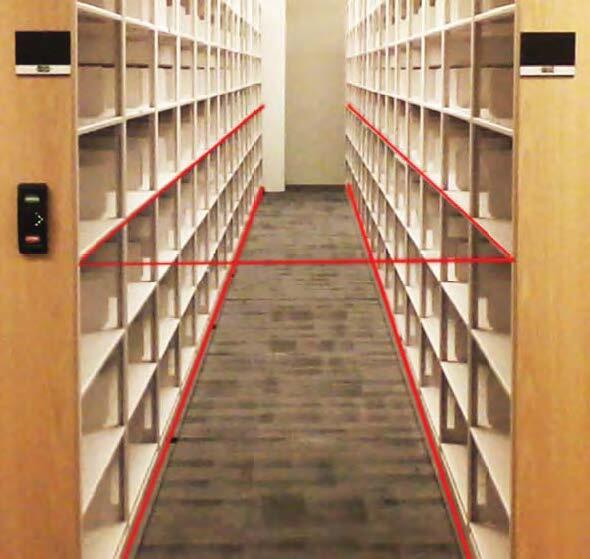
Low Profile Electrically Assisted Mobile Storage Units
Powered carriages are specified when the aisle is opened constantly, when carriages are long enough that even geared assist becomes tedious, or when the room has to be usable by anyone regardless of strength. Low profile carriages also keep the system height down, which is how projects preserve the clearance a sprinkler layout requires.
| Item | Specification |
|---|---|
| Motor | 1/8 HP 24 VDC per carriage — the CSI section rejects carriages requiring higher voltage |
| Speed | Smooth, non-binding, non-slipping movement at approximately 3 in. (76 mm) per second |
| Drive | Direct, line shaft or synchro drive, all bearings permanently lubricated and shielded |
| Shelving load | 750 lb. per linear foot of carriage |
| Safety | Infrared photoelectric safety sweep, minimum one per aisle, plus aisle-entry sensors and optional dual sweeps |
| Controls | Push-button aisle selection with programmable options, night/fire park modes and optional battery backup |
| Standards referenced | ANSI, ASTM, UL, ADA accessibility and seismic requirements for the project location |
| Installation | Rail set level and grouted per the manufacturer’s instructions, alignment verified after installation, staff training on operation and maintenance included |
Four-Post Wide-Span Metal Shelving (on or off carriages)
| Item | Specification |
|---|---|
| Heights | 40-1/4 in. to 121-1/4 in., adjustable in 1-1/2 in. increments |
| Widths | 54 in. to 96 in. nominal |
| Depths | 15 in. to 36 in. |
| Shelf material | 18-gauge cold-rolled steel decks on double-wall uprights |
| Shelf capacity | 510 lb. to 1,800 lb. per shelf depending on width, depth and gauge selected |
| Assembly | Tool-free with stabilizer beams and supports; boltless Quik-Lok shelving can be ordered “mobile ready” to mount directly on mobile carriages |
| Accessories | Aisle ties, wall ties, floor anchors, reference shelves, bin dividers, dividers, drawers and touch-up paint |
| Finish | Gloss-Tek powder coat, 31 standard colors, ANSI/ASTM materials |
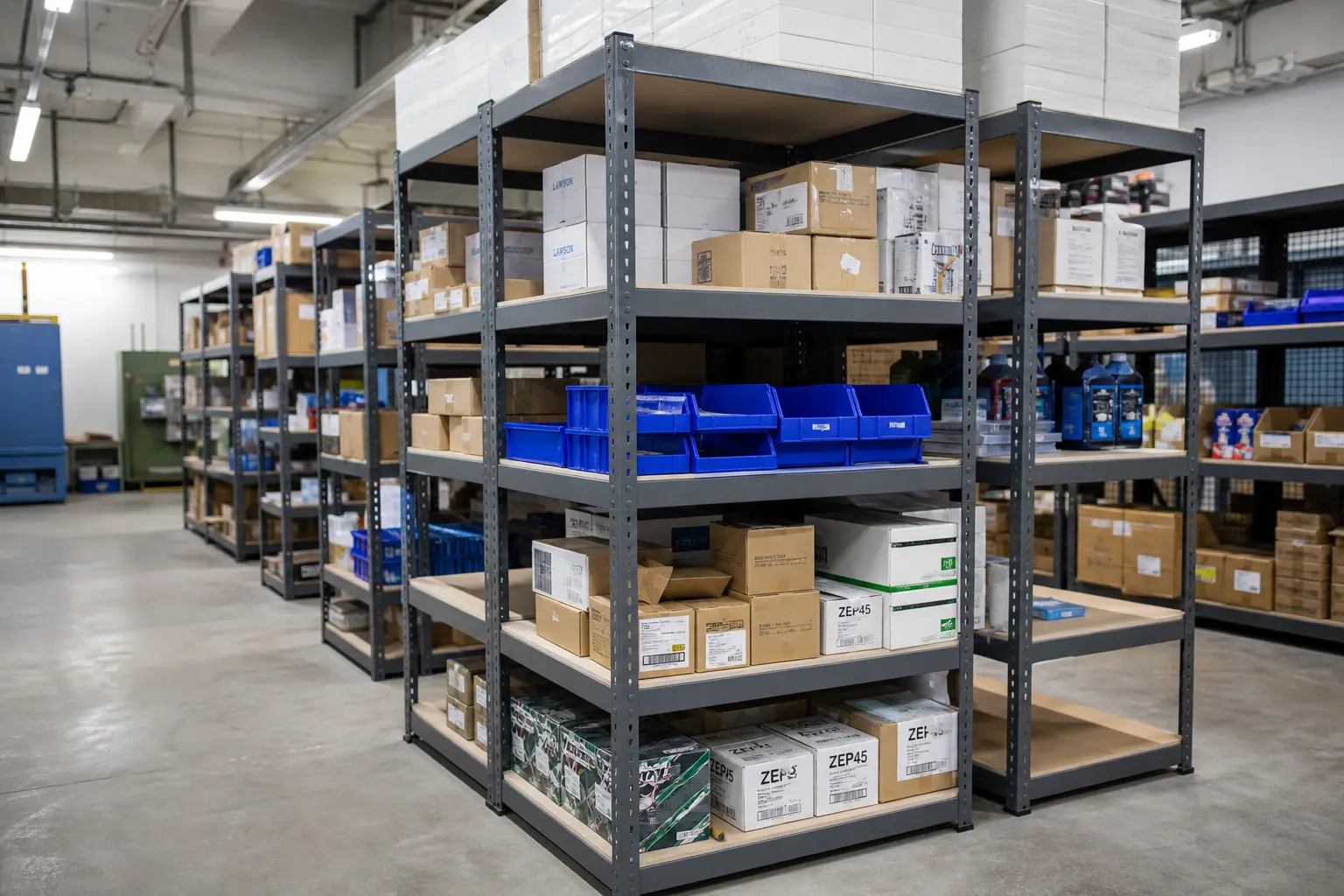
Not every range in the room should move. Most district records rooms end up as a hybrid: a mobile system in the middle of the room with anchored static shelving around the perimeter for high-turnover material, forms and supplies that staff touch hourly. On the American Fork court project, Aurora ran a U-shaped perimeter of Quik-Lok shelving around a seven-carriage mechanical assist low profile mobile system for exactly that reason.
Boltless Quik-Lok shelving can be ordered “mobile ready” so the same shelving family is used both on the carriages and against the wall — one color, one shelf pitch, one set of accessories, and shelving that can be moved onto carriages later if the room is converted.
Need this in a spec or bid package?
We can supply CSI-format specifications, submittal drawings, finish samples and a line-item quote for a bond project, a state contract purchase or an RFP response. Tell us the deadline and what format your purchasing department needs.
Request a Quote Mobile Shelving Buyer’s Guide Call (800) 326-4403
Planning the Room: What We Need From You
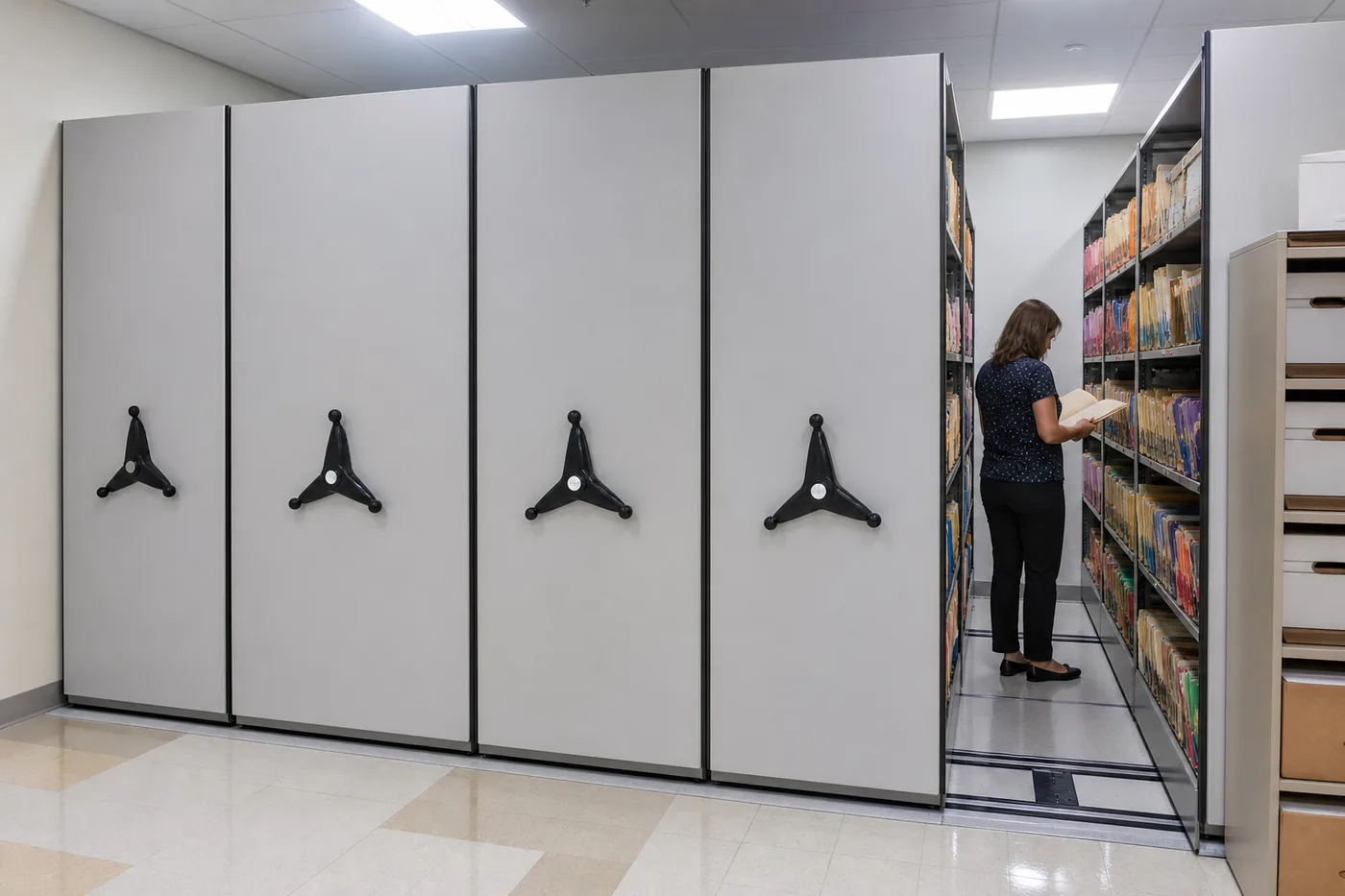
A mobile system is designed backwards from the room and the inventory, so the questions we ask first are unglamorous and specific. Getting them right is what separates a system that lasts twenty years from one that becomes a complaint.
We measure the room, including door swings, columns, HVAC and electrical rough-ins, ceiling height and sprinkler head height. We inventory what is going in it — linear feet of letter and legal folders, record cartons, book or curriculum sets, equipment — and how much growth to plan for, because retention schedules make growth predictable. We check the slab: flatness, thickness and condition determine shimming, anchorage and whether a ramped deck is needed. Then we lay out carriage length, carriage count, aisle count and shelf depth around how the room is used, and how staff will move carts through it.
Two mistakes show up repeatedly in district offices. The first is designing for today’s paper, then discovering that a retention schedule adds four years of cumulative folders before anything is destroyed. The second is a single-aisle layout in a room where three people file at once — technically dense, miserable in practice. Both are fixed on paper, for free, before anyone orders steel.
| Bring this | Why it matters |
|---|---|
| Room dimensions and a floor plan (even a sketch) | Sets carriage length and how many carriages fit; door and column locations decide where the aisle can open. |
| Linear feet of files, boxes, books or equipment today | Sizes the shelving levels and shelf depth. Letter, legal and record-carton storage all size differently. |
| Retention schedule and expected annual growth | Determines how much empty capacity to build in now rather than adding a system later. |
| Ceiling and sprinkler head heights | Caps system height and often drives the choice of low profile carriages. |
| Floor construction and condition | Decides shimming, anchorage, and whether surface rail, a raised deck or twin ramp is used. |
| Who uses the room and how often | Drives drive type, number of open aisles, lighting and locking. |
| Security and privacy requirements | Selects carriage locks, dual-aisle locking and lockable or retractable end doors for FERPA-protected records. |
How a District Project Runs
Site visit and inventory
We measure the room, check the slab and sprinkler heights, and inventory the files, boxes and equipment going into it.
Layout and capacity study
You get a drawn layout with carriage sizes, aisle locations, shelf counts and the capacity gained versus static shelving.
Quote, specs and submittals
Line-item quote plus CSI specifications, finish selections and submittal drawings for bond, state contract or RFP purchasing.
Installation and training
Rail set level and verified, carriages installed and aligned, then hands-on training on operation, locking and maintenance.
Districts on the Wasatch Front are our home market — we have installed mobile systems for school districts, courts, cities and state agencies across Utah, and we service what we sell. Purchasing through an existing state or cooperative contract is usually the fastest route; tell us which contract you buy from and we will quote to it.
School District Mobile Shelving FAQs
Can a mobile shelving system be customized to our room?
Is installation disruptive? Do we have to modify the floor?
How secure is a mobile system for student records?
How much floor space will we actually get back?
Can we keep the shelving we already own?
Does the room need anything special from our facilities department?
Is a mobile system safe with staff and students in the building?
Who is the manufacturer, and what is the warranty?
Related Products & Resources
 Complete Mobile Shelving System GuideThe full guide to high-density mobile storage: system types, capacities, planning rules and costs.
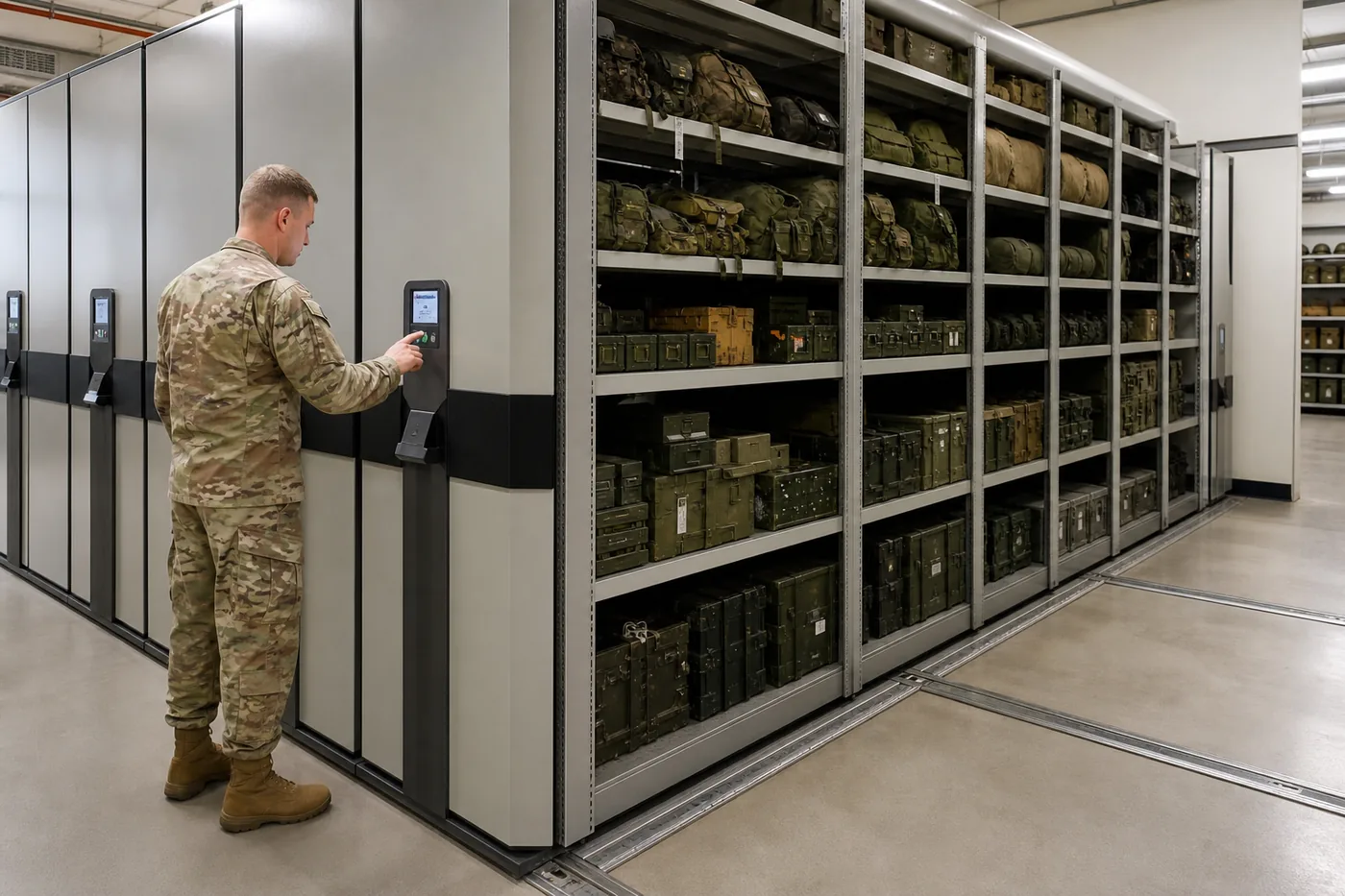 Electric Mobile ShelvingPowered carriages in detail — controls, safety sweeps, speeds and where powered beats mechanical assist.
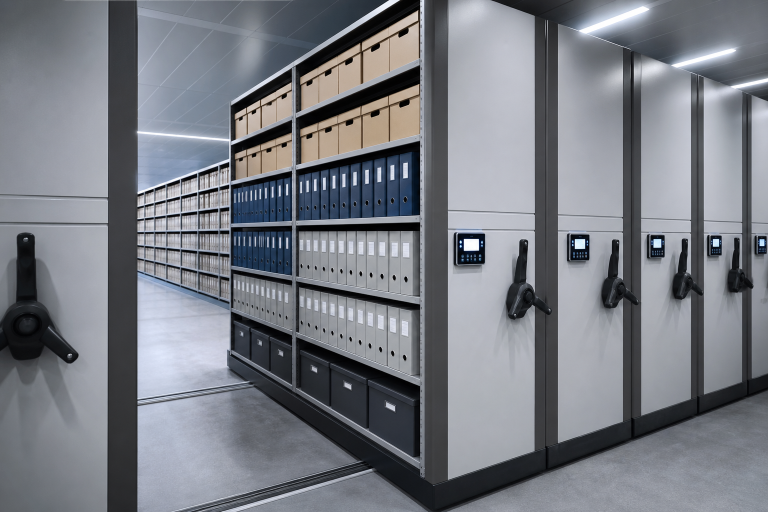 Mobile Shelving PlannerLay out carriages and aisles for your room online and send the configuration straight to our design team.
 Mobile Shelving in UtahLocal installations, state contract purchasing and service across the Wasatch Front.
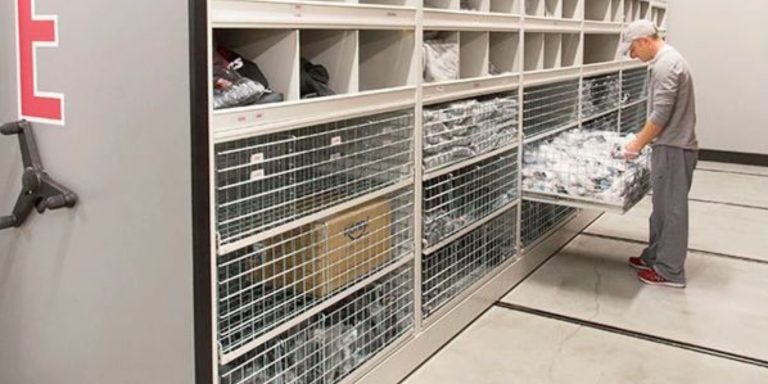 Athletic Equipment StorageUniform, helmet and equipment storage for district athletic programs and field houses.
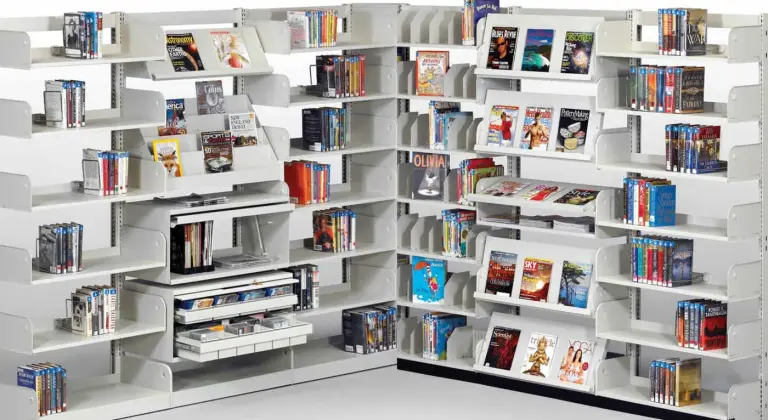 Library ShelvingCantilever library shelving for school and district media centers, on static bases or mobile carriages.
Get Your District Records Room Laid Out Free
Send us the room dimensions, your file and box inventory and your retention horizon. We will return a drawn high-density layout, the capacity you gain, and a line-item quote you can take to purchasing.