
Mobile Shelving for Theater Costume, Wardrobe and Prop Storage
A planning guide for costume shops, wardrobe departments, performing arts centers and school theater programs: how to fit hanging costume stock, accessories, fragile pieces and props into a high-density room that the crew can still work in.
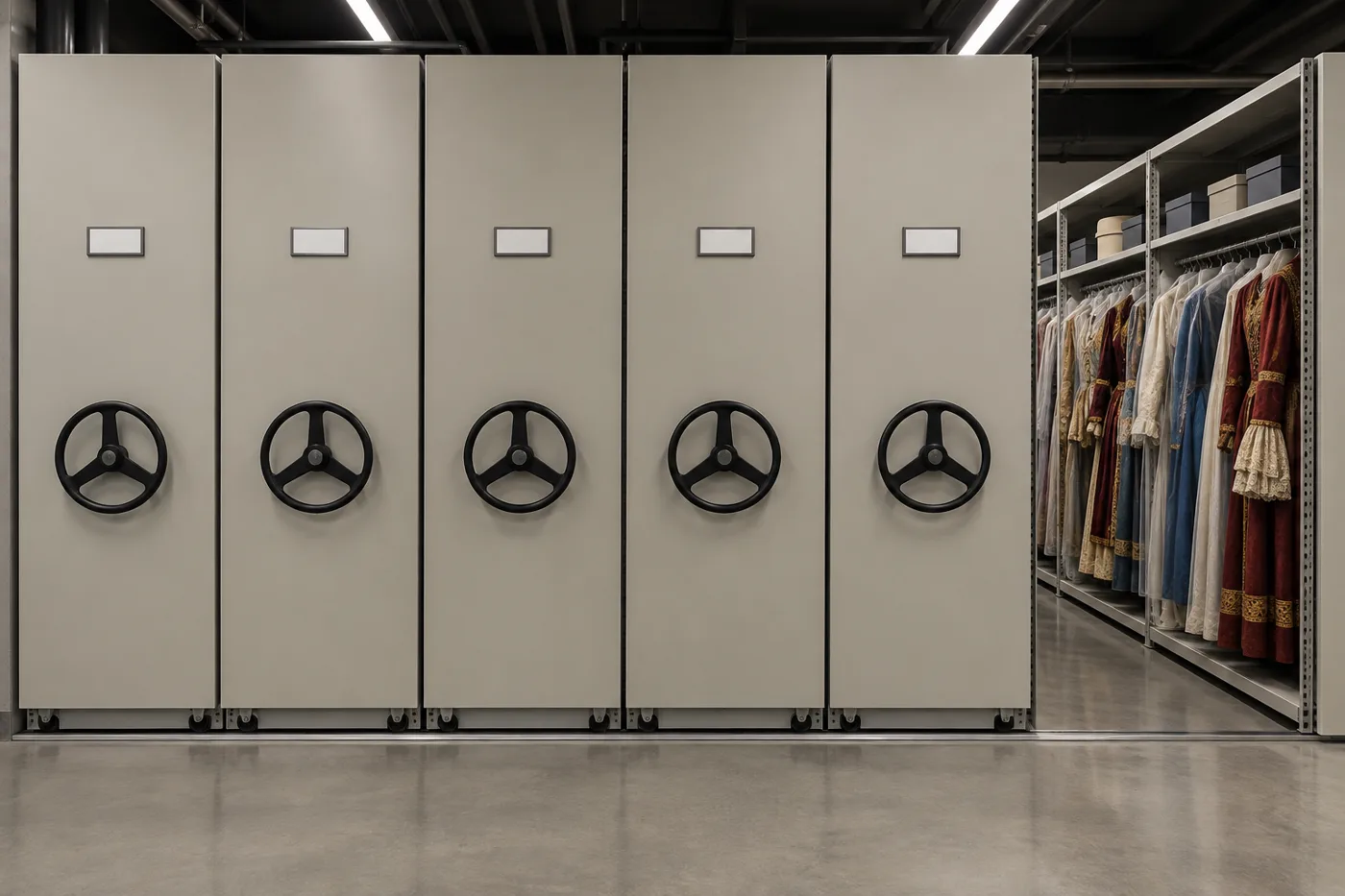
Hanging stock
Single- and double-tier garment rods mount inside mobile carriages
Fragile pieces
Deep shelves for flat textile boxes, hat boxes and accessories
Props
Adjustable shelving and bins for hand props and set dressing
Who it is for
Costume shops, wardrobe departments, university and K-12 theater, opera and dance
Why theater storage rooms fill up faster than any other room in the building
A costume stock only grows. Every production adds builds, purchases and donations, and very little ever leaves because the next show might need a Victorian bodice, a dozen matching choir robes or a 1940s overcoat. Props collections behave the same way. Meanwhile the storage room is usually whatever space was left over backstage, under the stage, or in a basement, and it is shared with soft goods, lighting gear and the paint cart.
High-density mobile shelving is one of the few ways to put substantially more stock into the same footprint. Shelving and hanging sections ride on carriages that roll along floor rails, so instead of a permanent aisle between every pair of racks you open only the aisle you need. The closed system also keeps light and dust off the garments and can be locked. For a costume shop, the difference is practical: the stock can live in one room instead of three, and a crew member can find and pull a costume without unloading a rack to reach the one behind it.
This guide covers what is specific to theater and performing arts storage: how much hanging length to plan, how to treat fragile and historic pieces differently from working stock, where props fit, how to zone the ranges around production schedules, and the fire, floor and safety questions to settle before a system is ordered. It is general planning guidance, not a substitute for your facility’s fire marshal, structural engineer or collections conservator.
What a theater storage room actually holds
Most rooms hold several very different kinds of material, and each one wants a different storage method. Sorting the inventory this way is the first step in sizing a system, because hanging length, shelf area and box space are counted separately.
| Material | Best storage method | How it fits a mobile system |
|---|---|---|
| Working costume stock (jackets, shirts, trousers, skirts) | Hanging on sturdy hangers | Double-tier garment rods inside a carriage section |
| Full-length gowns, robes, coats and capes | Hanging with floor clearance | Single high rod; taller sections or a dedicated range |
| Choir robes and band uniforms | Hanging in matched sets, often bagged | Uniform rod spacing; lockable ranges |
| Fragile, beaded, bias-cut, knit or historic garments | Flat in boxes with tissue | Deep shelves sized to textile boxes |
| Hats, shoes, wigs, gloves and jewelry | Boxes, bins and drawers by category | Adjustable shelves; labeled bins |
| Hand props and set dressing | Shelves and clear bins, heavy items low | Adjustable shelving with lips or dividers |
| Paints, dyes, solvents and aerosols | Approved flammable storage cabinets | Not in the mobile system; separate cabinet |
| Large scenery, flats and furniture | Open floor, scenery racks or pallet rack | Usually outside the mobile system |
The last two rows matter as much as the first six. Flammable liquids belong in approved flammable storage cabinets, and large scenery is rarely a good fit for shelving that has to roll. A well-planned room keeps those items out of the carriages entirely.
Planning hanging costume stock
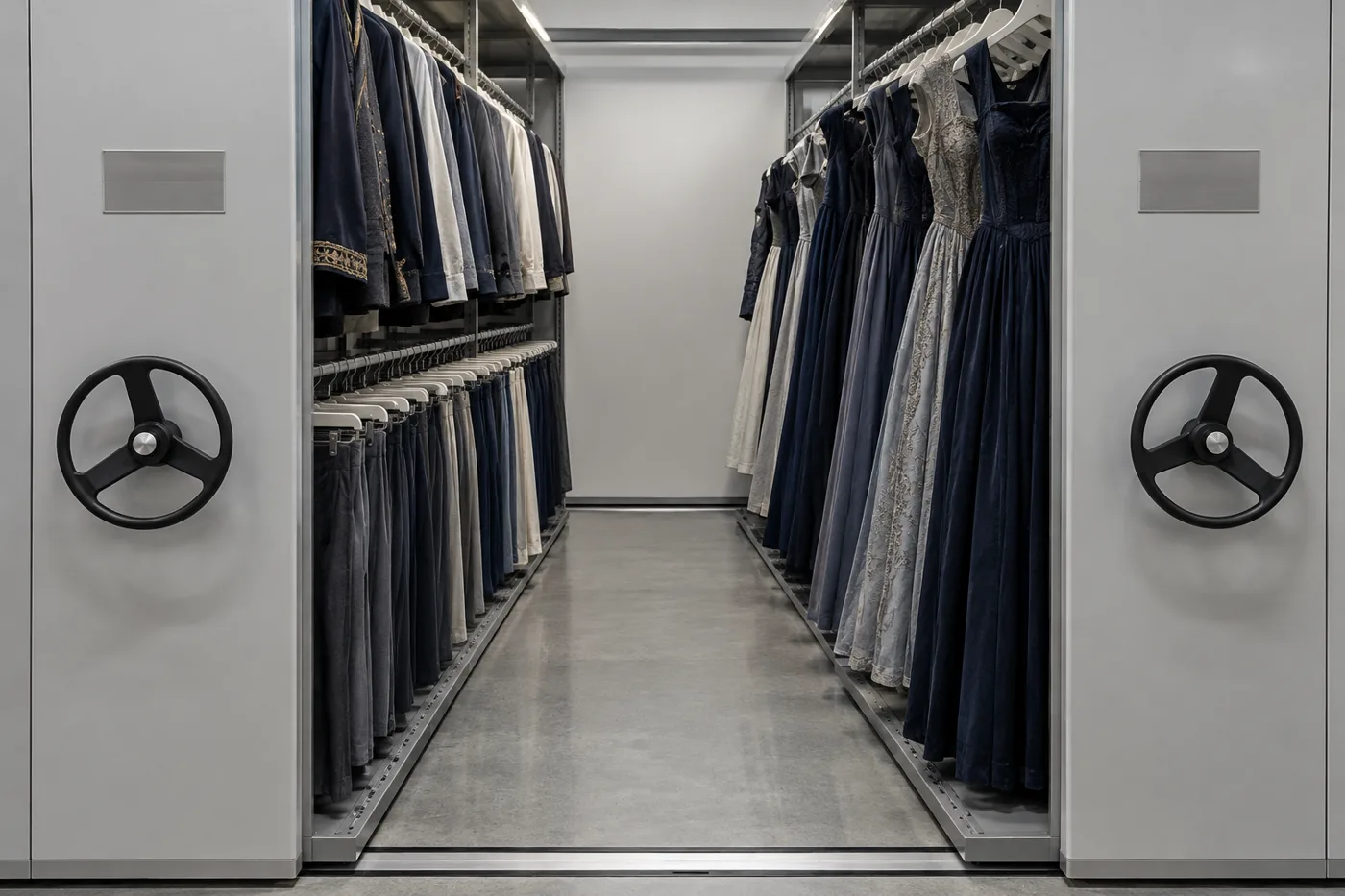
Hanging length is the number that decides most theater systems. Count it in running feet of rod, not in number of racks, and split it by garment length. Short garments such as jackets, shirts, vests and folded trousers can usually be double-hung, with one rod above another, which roughly doubles the stock per foot of carriage. Full-length gowns, robes, capes and long coats need a single high rod with enough clearance that hems do not drag on the shelf or floor below.
Do not plan rods at full packing density. The Canadian Conservation Institute’s guidance on hanging storage for costumes recommends hanging garments at least 10 cm (about 4 inches) apart, keeping them in enclosed units where possible, and draping open rods with cotton sheeting. That guidance is written for museum collections, so a working costume shop will hang its rental stock tighter, but the principle holds: a jammed rod crushes garments, strains shoulder seams and makes every pull slower. Plan spare rod length for each season’s builds.
Mobile carriages help here. Because the aisles are closed most of the time, the stock sits in the dark and away from dust. Cotton or breathable garment covers protect pieces that are pulled often; avoid sealed plastic bags for long-term storage, which can trap moisture. Use strong hangers that match the garment, and padded hangers for heavier or more delicate pieces.
Fragile, historic and archive costumes

Not everything should hang. Conservation guidance from the Canadian Conservation Institute and the National Park Service museum handbook on textiles is consistent: garments that are fragile, heavily beaded or embellished, bias-cut, knitted, or weak at the shoulders should be stored flat in boxes, padded with acid-free tissue so folds stay soft. Those boxes are large and light, which suits deep shelves on a mobile carriage.
Environment matters for these pieces. The NPS handbook recommends textiles be stored between 65 and 75 °F with relative humidity as close to 50% as possible, and CCI warns that high humidity invites mold, dye transfer and corrosion of metal trim while light fades dyes. A closed mobile system blocks light, but it does not control humidity; that comes from the room’s HVAC. Keep archive ranges away from exterior walls, plumbing and the paint shop, and check them regularly for insects, which are a well-known risk to wool, silk and feathers.
Many university and repertory companies keep a small archive of signature pieces alongside the working stock. Give that archive its own locked range with a lower loading density, so it is never treated as rental stock. Our guide to museum and archival collections mobile shelving covers collections-grade storage in more depth.
Props, accessories and set dressing
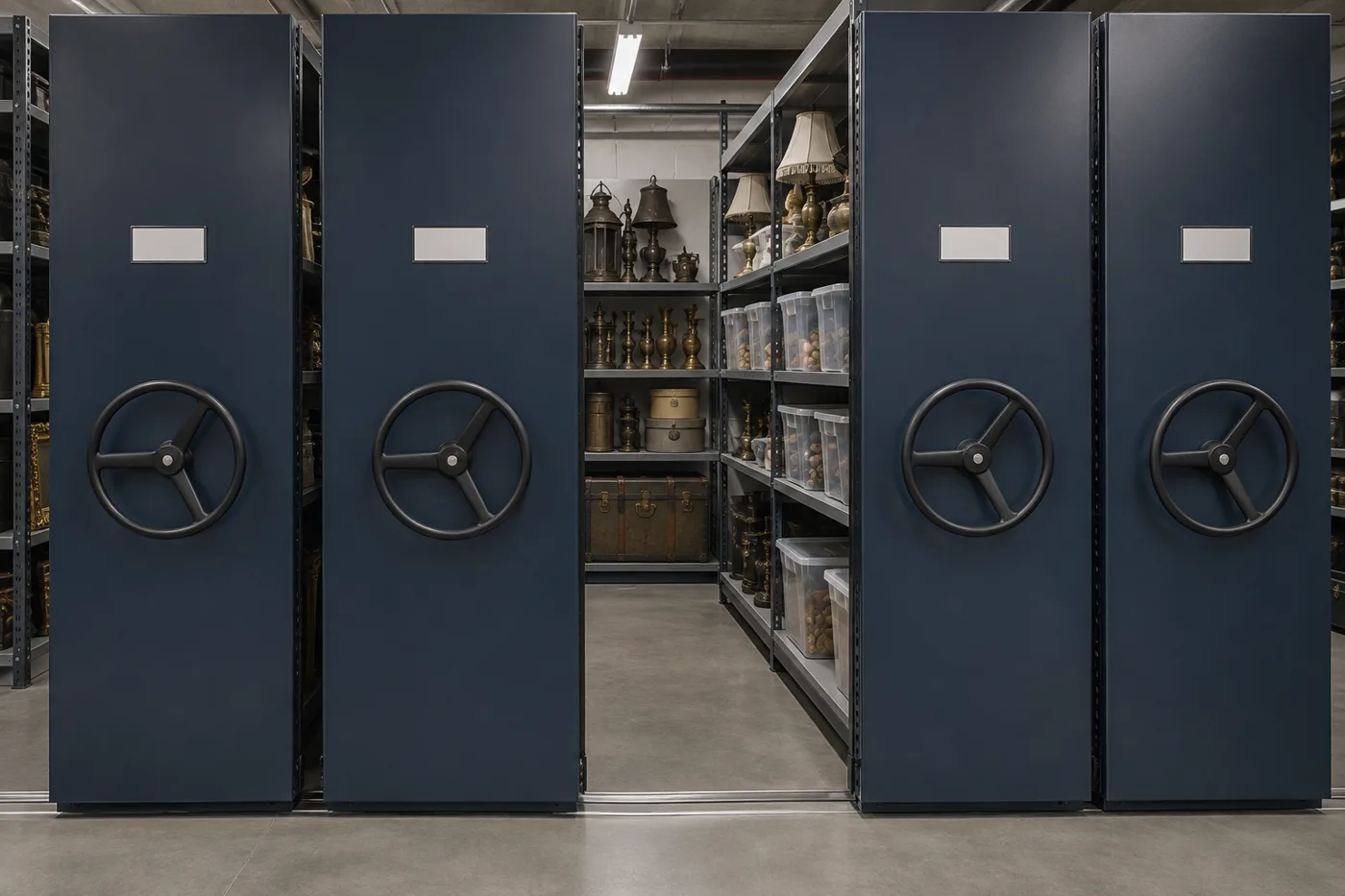
Props are the opposite of costumes: small, dense, oddly shaped and often fragile. Adjustable steel shelving on mobile carriages handles them well when the shelves are set to the items rather than the other way round. Group hand props by category (lamps, tableware, books, luggage, weapons replicas) and use clear bins so a crew member can see the contents without opening every box.
The State of Utah’s Performing Arts Safety Manual makes points that apply to any props room: keep items from falling off shelves, for example with a lip on the leading edge, do not let stored items extend beyond the edge of the shelf, and put heavy, awkward and frequently used items on lower shelves. On a mobile system those rules matter even more, because carriages move and anything overhanging a shelf edge can catch on the next carriage. Shelf lips, dividers and bin fronts keep loads in place as ranges open and close.
Accessories such as hats, shoes, wigs, gloves and jewelry fit the same shelving. Hat boxes and shoe boxes stack to a predictable height, so shelf spacing can be set once. Wigs on blocks and delicate millinery are best in enclosed or covered sections.
Zoning the ranges around the production calendar
Most costume rooms are organized by garment type and period, which is how stock is searched. Inside that scheme, it helps to arrange the ranges by how often each group moves:
Put sizes and periods on the end-panel labels so the crew knows which aisle to open before turning a handwheel. A consistent location code for every range, section and rod makes it possible to record where each costume lives and return it to the same place after strike.
Tagging, pulling and returning costumes
Density only helps if people can find things. Theater inventory guides recommend tagging each item with a durable ID, photographing it, and assigning it to a storage location such as a rack or box number in an inventory database or spreadsheet. On a mobile system the location code is simply range, section and rod or shelf, printed on the end panel and on each section.
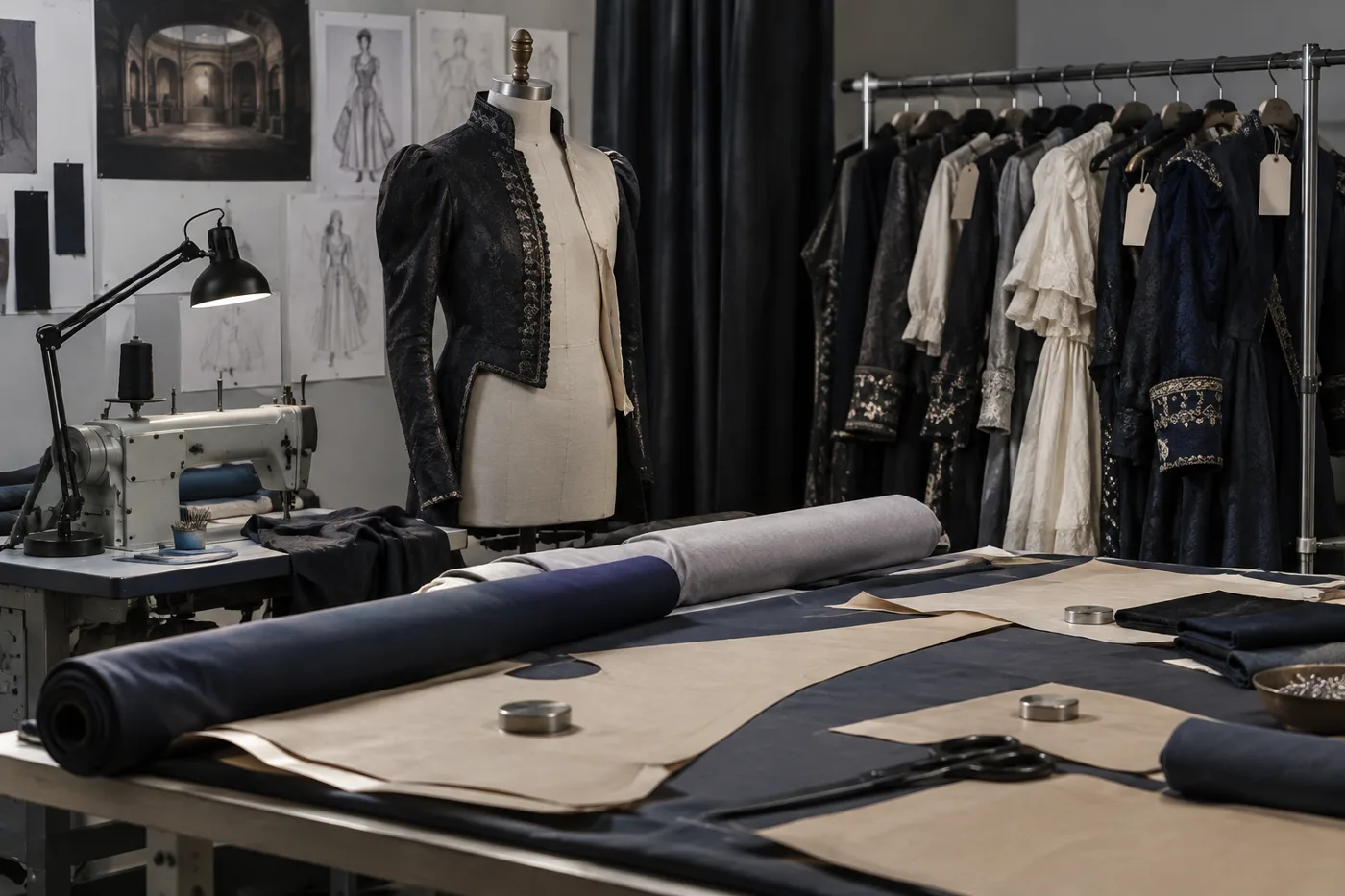
Plan the workflow as well as the storage. A pull for a new show means many trips into the stock, so leave a staging area near the door for rolling garment racks, a fitting or sorting table, and space for laundry and repair returns after strike. That work area is usually outside the mobile system, on the same floor and close to the costume shop.
Carriage aisles should be wide enough to hold a costume and a hanger comfortably, and, where rolling racks need to go into an aisle, wide enough for the rack. Our guide to labeling and location coding for mobile shelving has more on location schemes.
Fire, floor and safety questions to settle early
Theater storage rooms carry a lot of combustible material in a small space, and many sit in older buildings. These are the items that shape what can be installed:
- Fire protection. A dense costume stock is a significant fuel load, so sprinkler coverage, clearances below sprinkler heads and lighting must be coordinated with the layout and approved by the fire marshal. See sprinkler, lighting and HVAC coordination.
- Flammable liquids. Paints, dyes, thinners and aerosols from the costume and scene shops belong in approved flammable storage cabinets, not in the mobile system.
- Housekeeping and egress. OSHA’s walking-working surfaces standard (29 CFR 1910.22) requires storage areas to be kept clean and orderly; a mobile system with clear aisles and nothing stored on the floor is easier to keep that way than a room of loose rolling racks.
- Floor capacity. Hanging garments are light per foot, but props, shoes and boxed accessories add up, and mobile shelving concentrates weight on the rails. Upper floors and stage-level rooms over a trap room may need a structural check. See mobile shelving floor load requirements.
- Seismic anchorage. In seismic regions, tall loaded ranges need anchorage and shelf restraints designed for the site; see seismic anchoring requirements.
- Accessibility and access control. Aisle widths and handwheel height matter where staff and students with disabilities use the room, and locks keep expensive stock and archive pieces secure. See ADA aisle planning and security and access control.
- Timing. Install between seasons or over the summer, and plan where the stock will live while the room is emptied and the rails go in.
Manual, mechanical-assist or powered?
Most costume and props rooms work well with mechanical-assist carriages moved by a handwheel, which need no power and little maintenance. Hanging costumes are light, but long ranges loaded with props and boxes take more effort, and powered carriages make sense there or where keypad access at each range is wanted. Whatever the drive, aisle safety devices keep carriages from closing on someone working in an aisle.
| Drive type | Fits when | Watch for |
|---|---|---|
| Manual (push) | Short ranges of mostly hanging stock | Effort rises with props and boxes |
| Mechanical-assist (handwheel) | Most costume shops, wardrobe rooms and school theaters | Handwheel clearance at each end |
| Powered | Long or heavily loaded ranges; keypad access | Power, controls and service plan |
Compare them in manual vs mechanical-assist vs powered mobile shelving. Where the stock is mostly uniforms or garments retrieved one at a time at a counter, an automated vertical carousel is another option; see our page on vertical storage for uniform and garment management.
How a theater storage project gets specified
Theater storage is often added late in a renovation, after the stage and house are designed. Working through these steps early keeps it from being squeezed:
Helpful references: capacity sizing, shelf depth and level spacing, cost and budget drivers and the specification and submittal checklist. Schools and public universities often buy through cooperative contracts; see GSA and cooperative contract purchasing.
Common mistakes in theater storage rooms
- Counting racks instead of running feet of rod, so full-length gowns end up folded or dragging.
- Packing rods tight on day one, leaving no room for the next season’s builds.
- Hanging fragile, beaded or knit pieces that should be stored flat.
- Storing paints and solvents in the costume room instead of a flammable storage cabinet.
- Leaving no staging space for pulls, fittings and post-strike returns.
Related pages
Planning storage for a school or campus? See mobile shelving for school districts and a real athletics facility storage project in Ogden, Utah, another equipment-heavy room that uses mobile shelving. For collections care, see museum and archival collections storage.
Shop Garment Racks and Wardrobe Cabinets Online
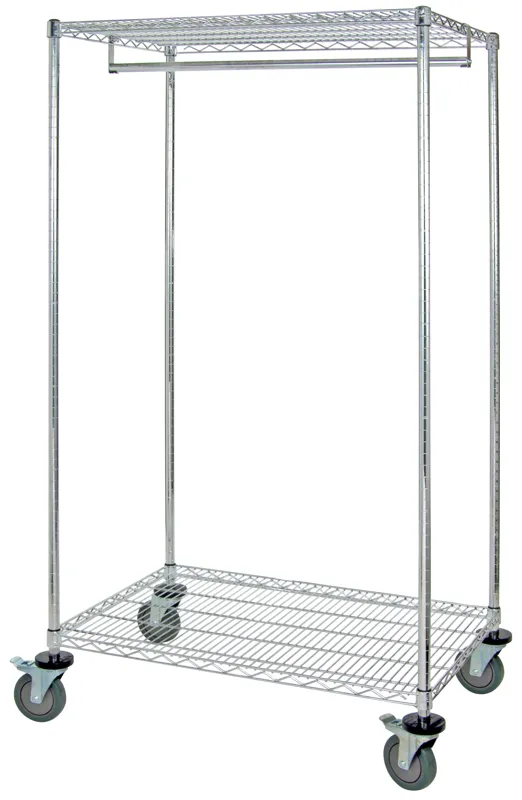
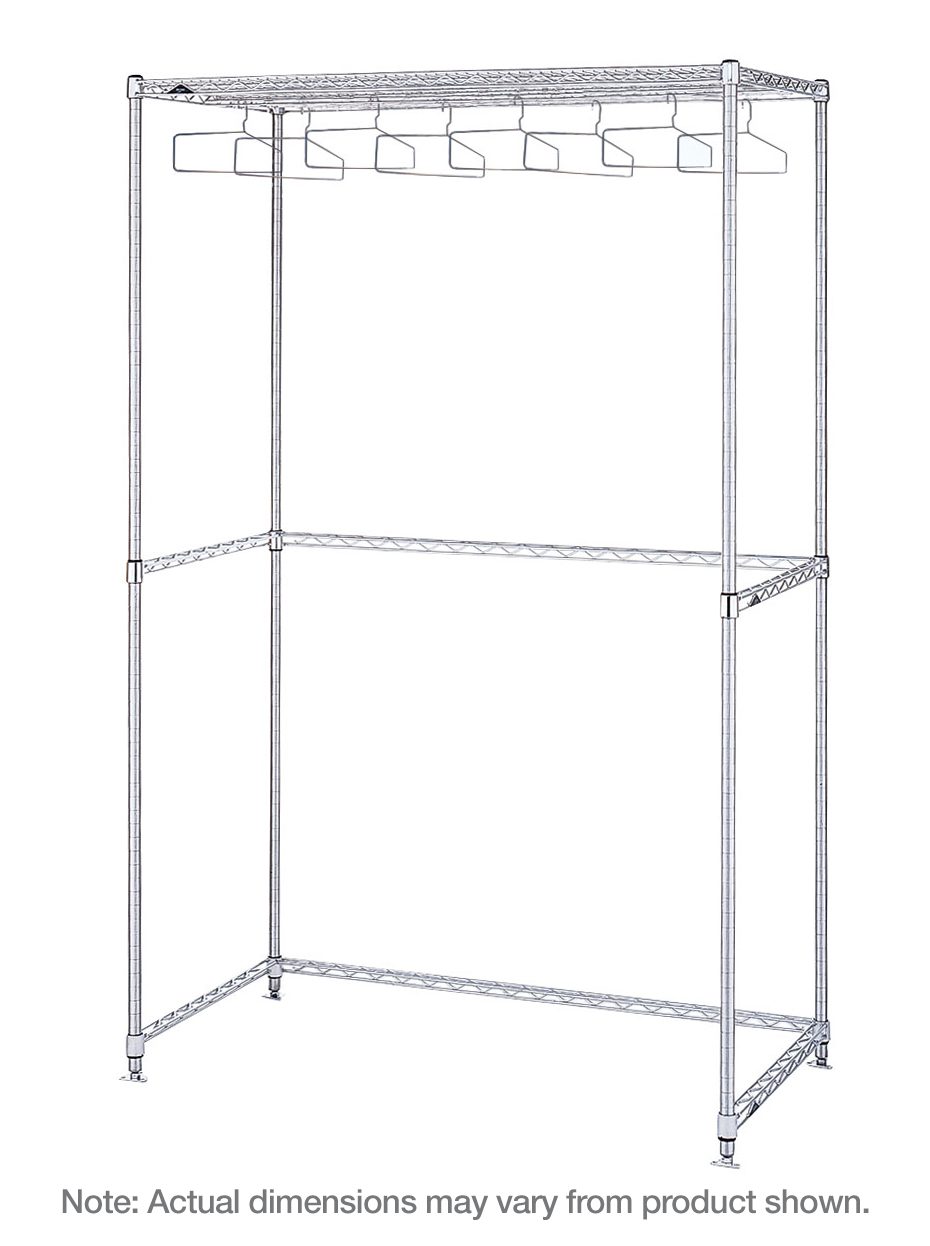
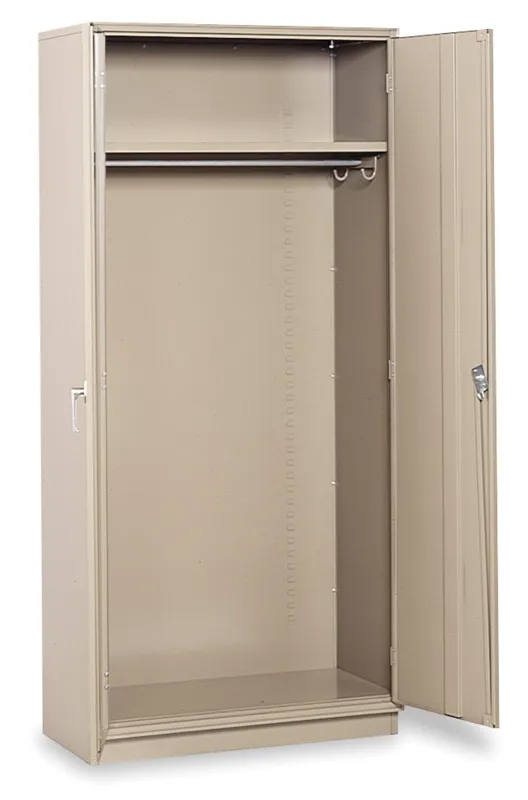
Rolling garment racks for pulling, fitting and staging show costumes, and lockable wardrobe cabinets for small costume and uniform collections. Engineered mobile shelving systems with garment-rod sections are designed and quoted per project.

Frequently asked questions
Can mobile shelving hold hanging costumes?
How much hanging space should we plan per costume?
Should historic or fragile costumes be hung?
Can props and costumes share one mobile system?
Is mobile shelving a fire risk in a costume room?
Manual or powered mobile shelving for a school theater?
Planning a costume, wardrobe or props room?
Send us the room dimensions, door and sprinkler locations, and a rough count of hanging stock, boxes and props. We will prepare a layout drawing, size it for growth and flag the floor, fire and seismic questions to settle with your facilities team. Call (800) 326-4403 to start.