
Refinery MRO & Lubricant Storage Warehouse Racking: Silver Eagle Refining
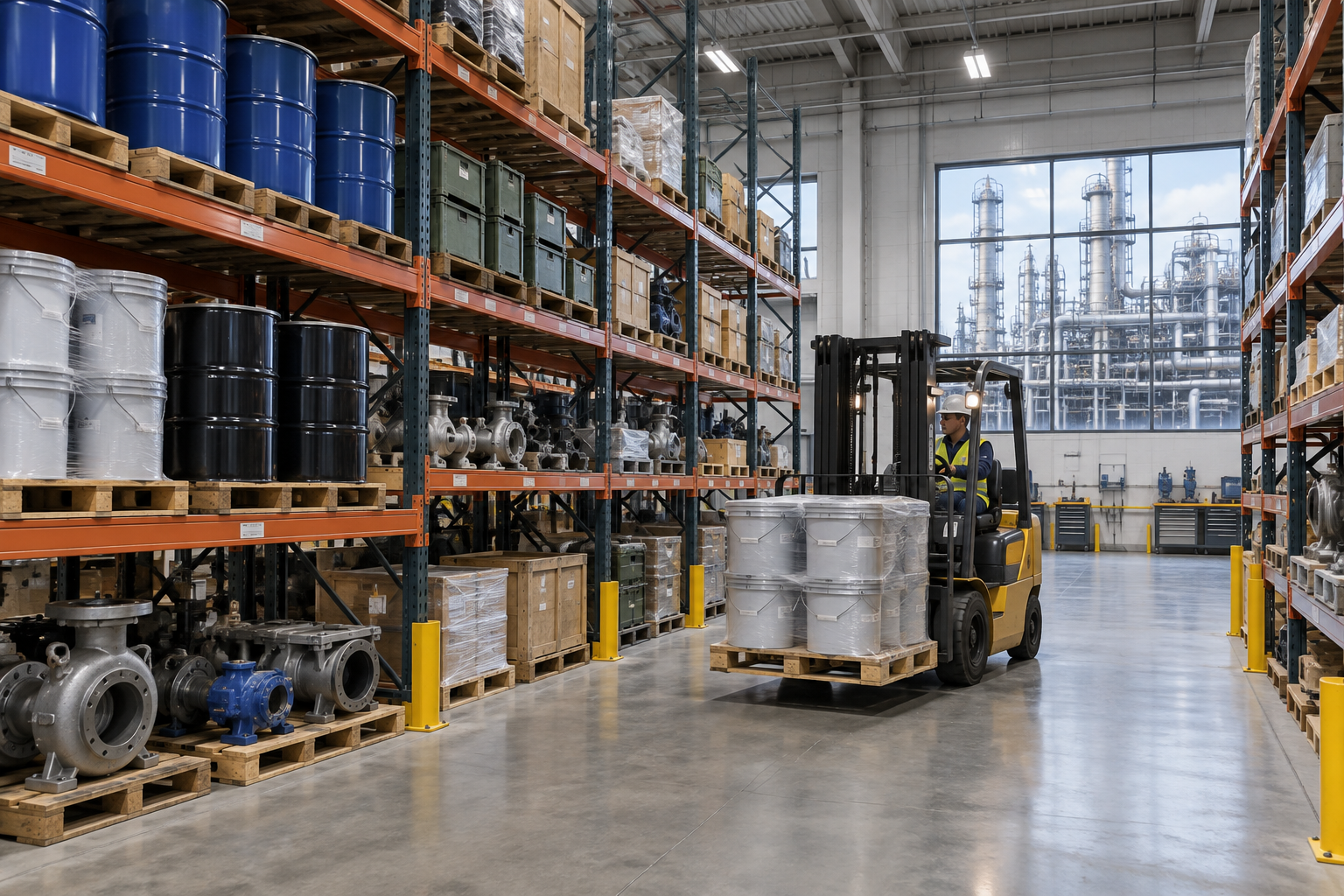
A refinery’s warehouse holds two very different jobs at once — maintenance spare parts for the plant itself, and packaged lubricant and oil products moving through the site — under fire-code rules that don’t apply to an ordinary distribution warehouse.
Petroleum refining
Client sector
Pallet rack
Product category supplied
Woods Cross, UT
Site
MRO parts & packaged lubricants
Application
Plan your layout before you buy
Configure upright height, beam width, bay count, and load levels in our free 3D Pallet Rack Designer, then get an instant bill of materials and request a quote.
The project
Silver Eagle Refining operates a petroleum refinery in Woods Cross, Utah. Material Handling USA supplied pallet rack systems for the site’s maintenance and materials warehouse.
A refinery site is not a typical distribution warehouse client, and it isn’t a drum manufacturer’s storage floor either — that’s a different problem we cover in our drum and IBC storage racking case study, which is about a company that makes and ships steel drums and IBC totes as its product. A refinery’s own storeroom instead holds two separate inventories under one roof: rotating maintenance spare parts that keep process equipment running, and packaged lubricant and oil products staged for site use or onward shipment. Both live under fire-code rules that a generic parts warehouse doesn’t have to design around.

Why a refinery storeroom is different
It runs two inventories, not one. Mechanical, electrical and instrumentation spare parts for the plant’s own equipment sit alongside packaged lubricant and oil product — different turnover, different handling, different code requirements, in the same building.
Packaged flammable and combustible liquids drive the layout. Drums, totes and pails of lubricant and oil product are regulated as flammable or combustible liquids under fire code, which sets maximum quantities per storage area, separation distances and often a dedicated, ventilated storage room — not just a rack aisle.
Downtime cost changes the parts side of the equation. A refinery MRO storeroom exists to prevent unplanned process downtime, so critical spare parts need a findable, permanent location — the storeroom is closer in purpose to a plant maintenance operation like our mine-site MRO racking case study than to a retail or distribution warehouse, though the site codes and hazard classes differ.
It’s an active industrial site, not a clean office park. Racking, aisle widths and protective guarding have to account for heavier equipment traffic and a harsher plant environment than a typical warehouse.
What a refinery MRO warehouse stores
Splitting a refinery storeroom by hazard class and turnover, not just by part type, is what makes the layout work.
| Group | Examples | Storage that suits it |
|---|---|---|
| Rotating mechanical/electrical spares | Pump seals, bearings, valves, gaskets, instrumentation parts | Selective pallet rack and boltless shelving, slotted by criticality so the fastest-moving and most critical parts sit at accessible levels |
| Packaged lubricants and oil products | Drummed and totted lubricants, greases, process oils | Selective pallet rack in a segregated, spill-contained area sized to the site’s flammable-liquid storage limit, not mixed in with general parts |
| Bulk hardware and consumables | Fasteners, gaskets, PPE, consumable maintenance supplies | Boltless shelving near the issue counter for fast, frequent small-quantity picks |
| Large or awkward spares | Pipe spools, structural spares, oversized replacement components | Cantilever rack or a dedicated floor-level laydown area outside standard rack bays |
| Empty and partial drums/totes staged for return | Emptied lubricant drums and totes pending pickup or reuse | A clearly labeled, separately located staging area so empties are never mistaken for full product |
Rack choices for parts and packaged product
The right rack mix for a refinery storeroom separates by hazard class first, then by part size and pick frequency.
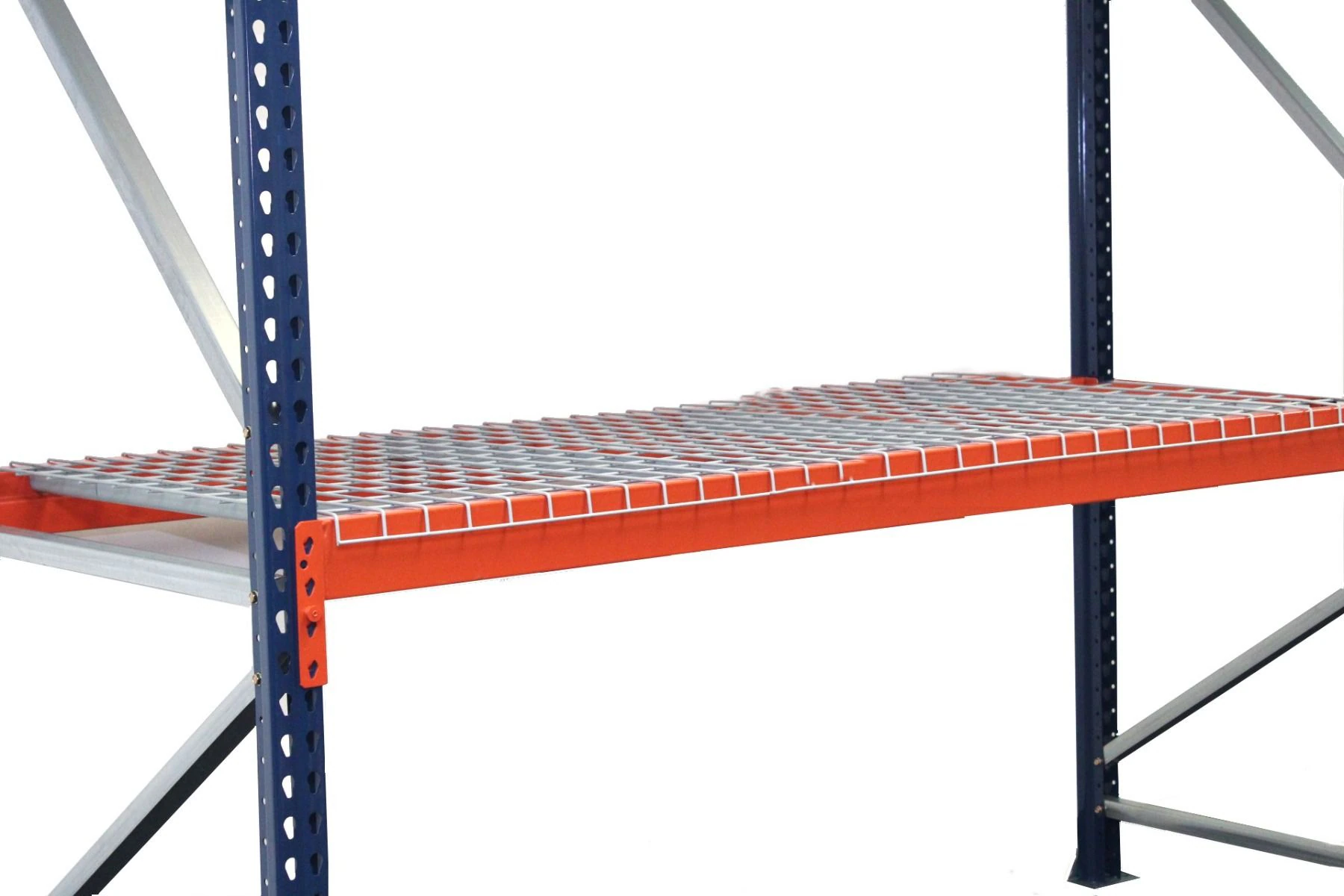
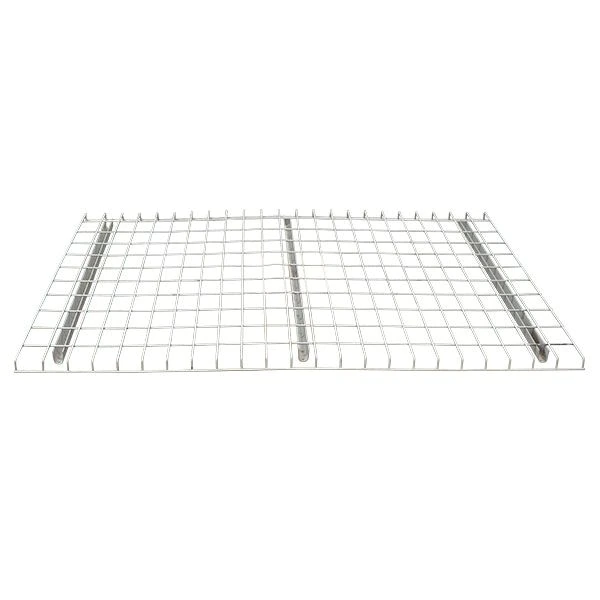
- Selective pallet rack with wire decking for general spares and packaged product. Standard palletized parts and packaged lubricant containers store efficiently on selective rack, and wire decking keeps smaller boxed parts from falling through to the level below.
- Boltless shelving for small, high-frequency parts. Fasteners, gaskets, seals and other small consumables move faster off open shelving near the issue counter than off a full pallet position.
- Cantilever rack for oversized spares. Pipe spools and other long, awkward spares need open-arm support rather than a boxed pallet position.
- A separate, spill-contained rack section for packaged flammable liquids. Drummed and totted lubricant product needs its own physically separated area with secondary containment — see spill control and secondary containment — sized to the site’s permitted storage quantity, not mixed into general parts racking.
An MRO storeroom’s slotting logic matters as much as the rack type — see our spare parts MRO storage guidance for how to organize a maintenance storeroom around part criticality and turnover. Model bay counts and layout for your own site in our 3D pallet rack designer before ordering.
Flammable-liquid segregation and fire code
Packaged lubricant and oil product is what makes a refinery storeroom’s layout different from an ordinary parts warehouse, and the applicable code is specific to flammable and combustible liquids in storage — not general warehouse racking rules.
- Classify the liquids before you plan the layout. Flammable and combustible liquids are grouped into classes based on flash point under NFPA 30 (Flammable and Combustible Liquids Code) and the International Fire Code — the class determines maximum allowable quantity per control area and whether a dedicated storage room is required.
- Keep packaged liquid storage physically separate from general MRO parts. Segregation limits how far a fire or spill in one area can spread into the other, and keeps aisle traffic away from stored flammables.
- Provide secondary containment under drums and totes. Containment pallets or a diked storage area keep a leaking container’s contents from spreading across the floor.
- Coordinate with the site’s fire protection design. In-rack sprinkler demand, ventilation and any required fire-rated separation for a flammable-liquid storage room are set by the site’s fire protection engineer against the applicable code edition, not by the rack layout alone.
NFPA 30 is published by the National Fire Protection Association; the International Fire Code is published by the International Code Council. We design and supply racking around a site’s actual hazard classification, not the other way around — consult your fire protection engineer or AHJ for the specific limits that apply to your facility.
Installation and safety
A refinery storeroom’s racking gets the same structural design standard as any other pallet rack installation, on top of the site’s own process-safety rules.
- Design rack capacity for actual load weights — see pallet rack weight capacity guidance rather than assuming a standard beam rating covers dense parts or packaged liquid loads.
- Protect rack uprights with column protectors and end guards in aisles that see forklift or plant-vehicle traffic.
- Inspect racking on a defined cycle, and immediately after any impact — see rack inspection and repair, with extra attention to any rack section exposed to plant chemicals or wash-down.
- Anchor and install to the ANSI/RMI MH16.1 standard — see our rack installation guidance, coordinated with the site’s own safety and permit-to-work process.
ANSI/RMI MH16.1 is published by the Rack Manufacturers Institute. We design, supply and install pallet rack for refinery and industrial-plant MRO storerooms across the region — see Utah pallet rack and our related mine-site warehouse MRO racking case study for a similarly hazard-driven, plant-maintenance layout.
Utah pallet rack project: This case study supports our Utah pallet rack design and installation guide and, at the top level, our main pallet rack systems hub.
Shop Pallet Rack Products Online
Buy select items directly from our online store, or request a quote for volume, custom sizes and freight-rated orders.
Frequently asked questions
What storage suits a refinery MRO and lubricant storeroom?
Why can’t packaged lubricants store on the same rack as general spare parts?
What code governs flammable-liquid storage quantities at a refinery site?
How is a refinery MRO storeroom different from a general distribution warehouse?
What’s the design standard for the rack itself?
Planning storage for a refinery, process plant or industrial MRO warehouse?
We design pallet rack, cantilever rack and segregated storage for refinery and industrial-plant MRO storerooms, including flammable-liquid segregation. Free design consultation.