
Home | Storeganizer | Pick 360
Storeganizer Pick 360: A Dense Pocket Pick Face Built for Mobile Robots
Pick 360 pairs Storeganizer textile pocket units with autonomous mobile robots. The pockets provide a dense, passive, barcoded pick face; the AMRs take the travel out of the picking. No rack modification, no software in the storage, and no lock-in to one robot platform.
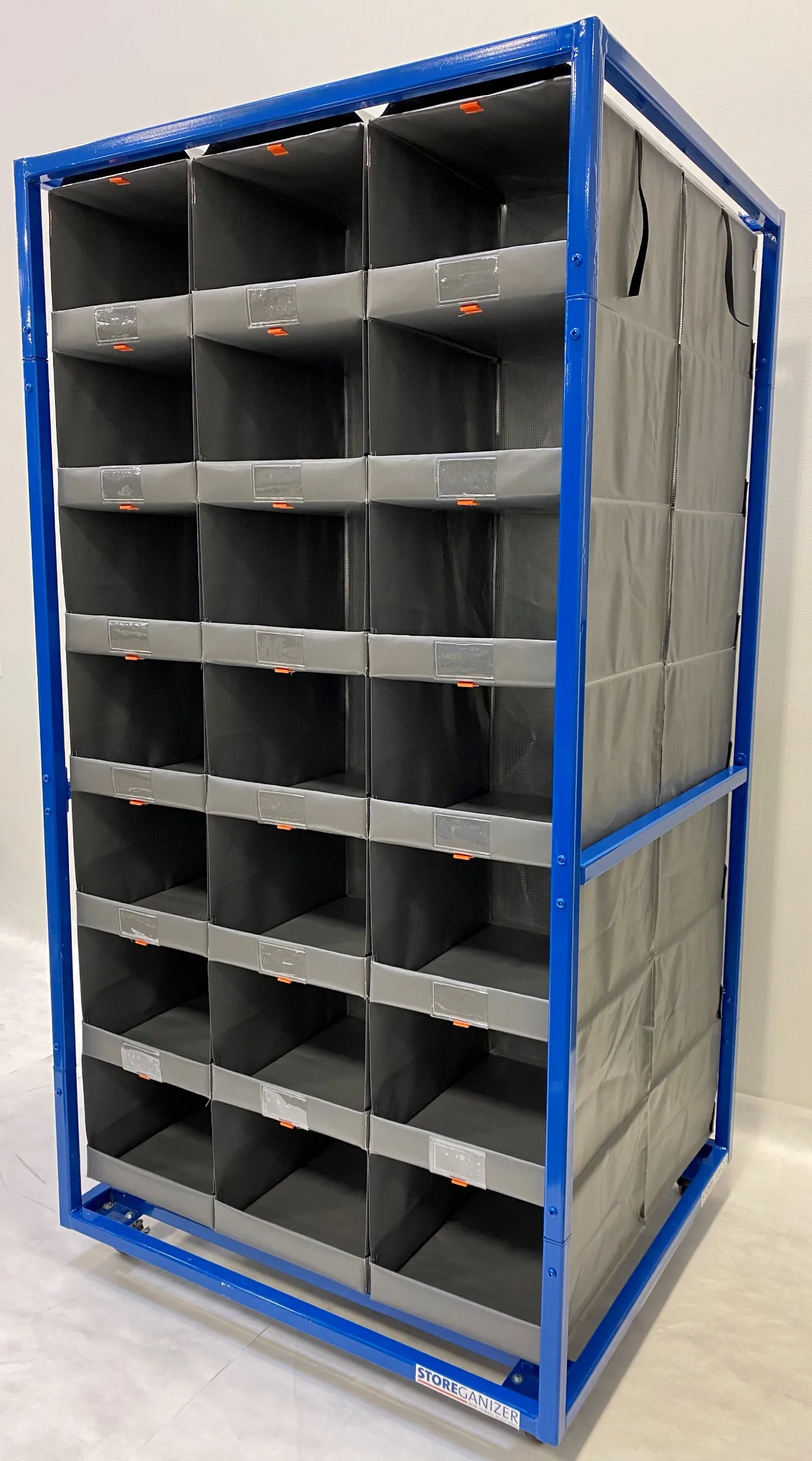
60
Pockets in an extra-small Hive
48″ x 42″
Standard pallet footprint
Minutes
To set up, by one person
Any AMR
Passive, platform-agnostic face
What Pick 360 actually is

Pick 360, sometimes referred to as “the Hive”, is a way of configuring Storeganizer pocket storage as the front end of a robot-assisted picking operation. It is important to be clear about what is in the box and what is not: what MH-USA supplies is dense, passive, textile pocket storage — mobile units or rack-hung columns — designed so autonomous mobile robots can work to and from it. The robots, their fleet software and their integration come from your AMR vendor.
That division is deliberate, and it is the main reason customers like the approach. The storage half of the system has no power, no controls, no software and no service contract, so it does not age with the robot platform and it is not stranded if you change vendors. The dense pick face keeps working even if you never deploy a robot at all.
Why this exists
Two pressures drove it. E-commerce piece-pick volume kept rising after its pandemic step-change, and warehouses near large economic centres face persistent labour shortages and wage pressure. Both problems point at the same place: the number of picks a person can complete in a shift, most of which is walking rather than picking.
The Picking Hive
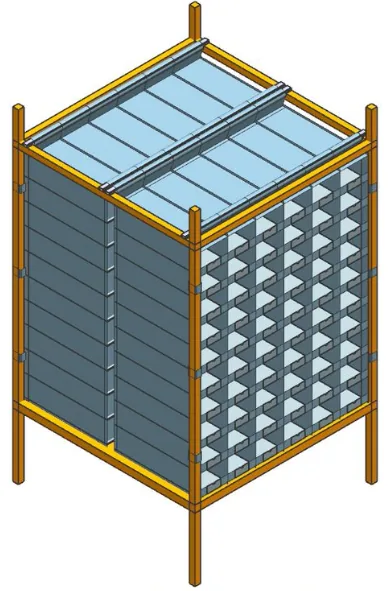
The Hive is the mobile form of the pocket system: a self-supporting frame the size of a standard pallet footprint, filled with the same coated industrial textile pockets used in rack-hung Storeganizer bays. The top suspension is universal, assembly clicks together without tools, and one person can set a unit up in a few minutes. There is nothing to anchor and nothing to wire.
| Size | Reference number | Pocket (W x D x H) | Pocket max weight | Pockets per unit | Frame (W x D x H) | Frame max weight |
|---|---|---|---|---|---|---|
| Extra Small | PH-XS-US-404154 | 14.5″ x 19.5″ x 6″ | 44 lb | 60 | 48″ x 42″ x 76.5″ | 1,320 lb |
| Small | PH-S-US-404920 | 14.5″ x 19.5″ x 12″ | 44 lb | 30 | 48″ x 42″ x 76.5″ | 1,320 lb |
| Medium | PH-M-US-404921 | 14.5″ x 19.5″ x 20″ | 44 lb | 18 | 48″ x 42″ x 76.5″ | 792 lb |


Textile grades run from light Tiger fabric to heavy-duty PC380 rated to around 500,000 abrasion cycles, and pocket inserts can be swapped as the product mix changes — so a unit configured for small parts this year can be reconfigured for cartons next year. Full specifications are on the Storeganizer specifications page.
How robot-assisted picking uses a pocket face
Start with the pick face
Before you scope robots, work out how dense your pick face could be. The free Storeganizer Configurator sizes rack-hung bays and returns the pick-location count and a bill of materials. For Picking Hive quantities, call us.
Where Pick 360 fits
 E-commerce & 3PL fulfilmentHigh piece-pick volume, many SKUs, low units per SKU, and a labour constraint that will not resolve itself.
 Retail backroom, BOPIS & returnsClick-and-collect staging, curbside orders and unpredictable returns volumes on mobile units that need no installation.
 Temporary & seasonal pick linesA dense face that stands up for a peak or a promotion and rolls aside afterwards, with no structural work either way.
Be clear about the boundary before you buy
Automation projects get into trouble when the scope is fuzzy, so here is where our responsibility ends and your robot vendor’s begins.
| Element | Supplied by MH-USA | Supplied by your AMR vendor |
|---|---|---|
| Textile pocket units, pockets, dividers, covers, label holders | Yes | No |
| Rack to hang columns in, and installation | Yes | No |
| Layout of the pick face, slotting and location scheme | Yes, as part of the design service | No |
| Robots, charging, fleet management software | No | Yes |
| WMS / WES integration and pick logic | No | Yes |
| Floor flatness, network coverage and safety assessment for robot operation | No — advisory only | Yes |
Our honest recommendation
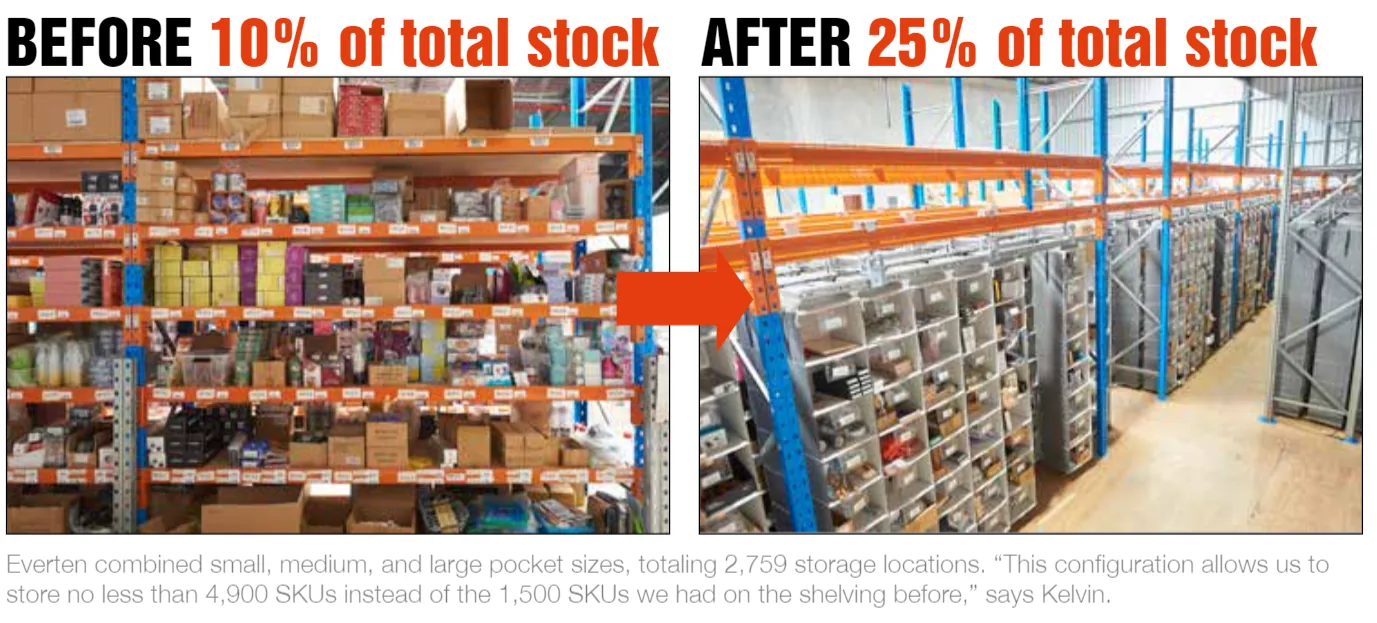
Densify the pick face first and measure it. In several documented operations the density gain alone delivered most of the improvement people expected from automation — one distribution centre evaluated vertical carousels and paternosters and concluded the benefits were far smaller than a pocket-column solution at a fraction of the cost. Once the face is dense and well slotted, you will know precisely how much automation you actually need, and the robot business case gets easier rather than harder.
Related pages
 Storeganizer hubThe system, specifications, options, process and results.
 Storeganizer ConfiguratorConfigure bays, pocket sizes and options; get pick-location counts and a bill of materials.
 Case studies & resultsAttributed before-and-after figures from real operations.
 AS/RS and vertical lift modulesWhen automated enclosures are the right answer instead.
 Vertical carouselsGoods-to-person storage with access control.
 Warehouse optimizationLayout, slotting and storage design services.
Pick 360 FAQs
What is Storeganizer Pick 360?
What is the Picking Hive?
What sizes is the Picking Hive available in?
Is it tied to one brand of robot?
Do I need Pick 360 to get the benefit of Storeganizer?
Goods-to-person or person-to-goods?
How quickly can it be deployed?
Where does it make the most sense?
Work out whether you need robots or just a better pick face
Tell us your order profile, your pick rates and where the bottleneck is. We will size the pocket face — and say plainly if automation is the part you actually need.