
Home › Laboratories › Chemical Storage Cabinets
Chemical Storage Cabinets
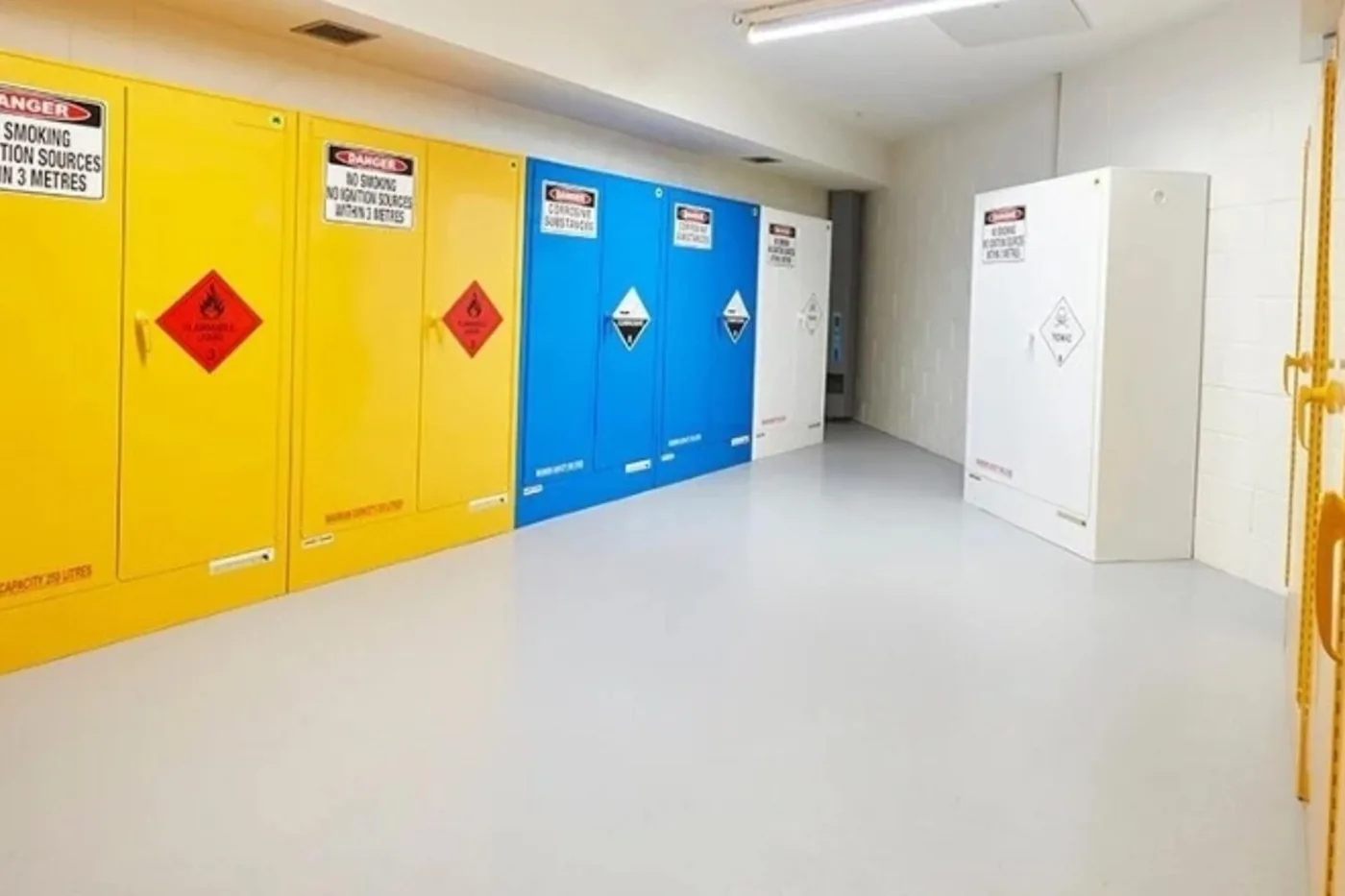
Flammables, corrosives, pesticides, and waste each need a different cabinet. This guide covers how safety cabinets are built, which OSHA and NFPA rules apply, how to size capacity, and how to segregate incompatible chemicals so an inspection never becomes a citation.
60 gal
Max Class I/II liquids per cabinet (NFPA 30)
18 ga
Double-wall steel on a compliant flammable cabinet
2 in
Minimum liquid-tight sump depth
10 min
Fire-test survival standard for listed cabinets
What a Safety Cabinet Actually Does
A chemical storage cabinet is not a locker with a warning sticker. A listed safety cabinet is an
engineered fire barrier whose job is to keep the liquids inside it below their auto-ignition point long
enough for people to evacuate and for a sprinkler system or fire department to intervene.
That single function drives everything about how these cabinets are built: double-wall steel with an
insulating air gap, doors that close and latch themselves when heat rises, a welded liquid-tight sump in
the bottom, and a bonding path so a static spark cannot ignite vapor during dispensing.
The secondary benefits are why facility managers actually notice them. Chemicals stop migrating to
random shelves. Inventory becomes countable. Incompatible materials stop sitting next to each other.
And when an OSHA or fire marshal inspection arrives, the answer to “where do you keep your flammables”
is a single point on the floor plan instead of a tour of the building.
The most common violation is not the cabinet — it is the quantity outside it
OSHA 1910.106 limits how much flammable liquid can sit outside an approved cabinet or storage room in a single fire area. Facilities usually buy the right cabinet and then keep using the floor next to it for overflow. Size for your real peak inventory, not your average.
The Five Cabinet Types — and What Belongs in Each
Cabinets are not interchangeable. Putting nitric acid in a yellow flammable cabinet will eat the cabinet; putting solvents in a polyethylene corrosive cabinet removes your fire barrier. Match the cabinet to the hazard class, not to whatever is in the storeroom.
 Flammable Liquid CabinetsDouble-wall 18-gauge steel with a 1-1/2 inch insulating air space, self-closing and self-latching doors, dual vent bungs, a grounding lug, and a leak-tight 2-inch sump. Yellow is the convention for flammables. This is the cabinet for solvents, alcohols, acetone, fuels, thinners, and adhesives.
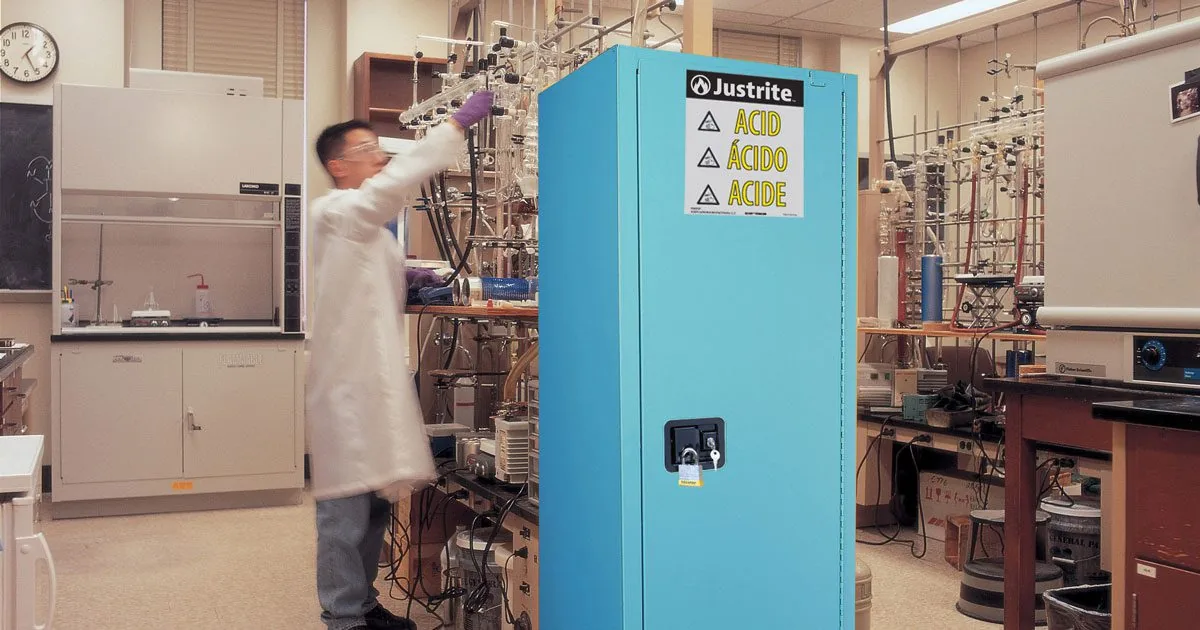
 Corrosive / Acid CabinetsBuilt to survive their own contents. Either non-metallic polyethylene throughout, or steel with a chemical-resistant liner and coating, plus polyethylene shelf trays. Blue or white is typical. Look for separate compartments so acids and bases are physically divided inside one footprint.
 Pesticide & Agricultural Chemical CabinetsGreen-labelled cabinets designed around containment and contamination control rather than fire alone. Deep sumps hold spilled concentrate, and locking doors satisfy the secured-storage requirements that apply to restricted-use products.
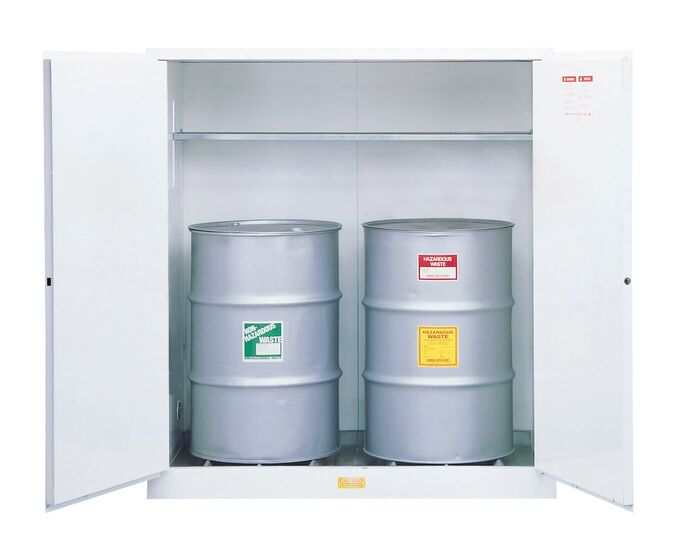 Hazardous Waste & Satellite AccumulationCabinets used as satellite accumulation areas for waste solvent and used oil. Usually white, with larger sumps, drum-height interiors, and clear waste labelling. Keeping waste in its own cabinet prevents the classic mistake of accumulating waste alongside virgin product.
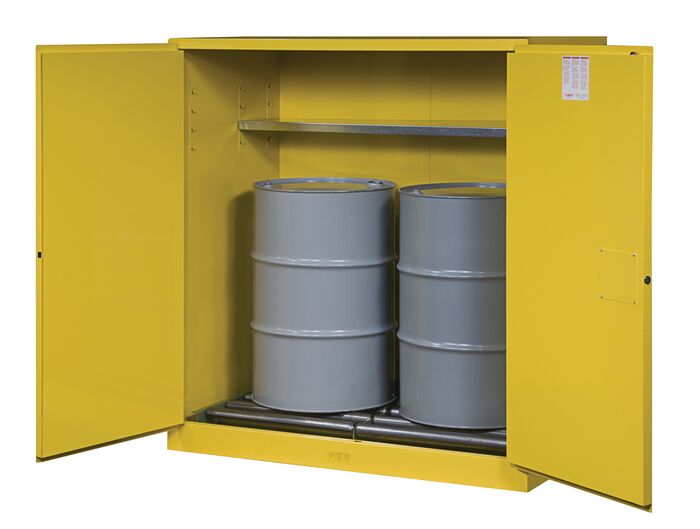 Drum Storage CabinetsFor bulk liquid handled at the drum rather than the container. Available in horizontal-drum, vertical-drum, and combination vertical-with-roller configurations, with fire-rated construction and integral sumps sized to the drum volume.
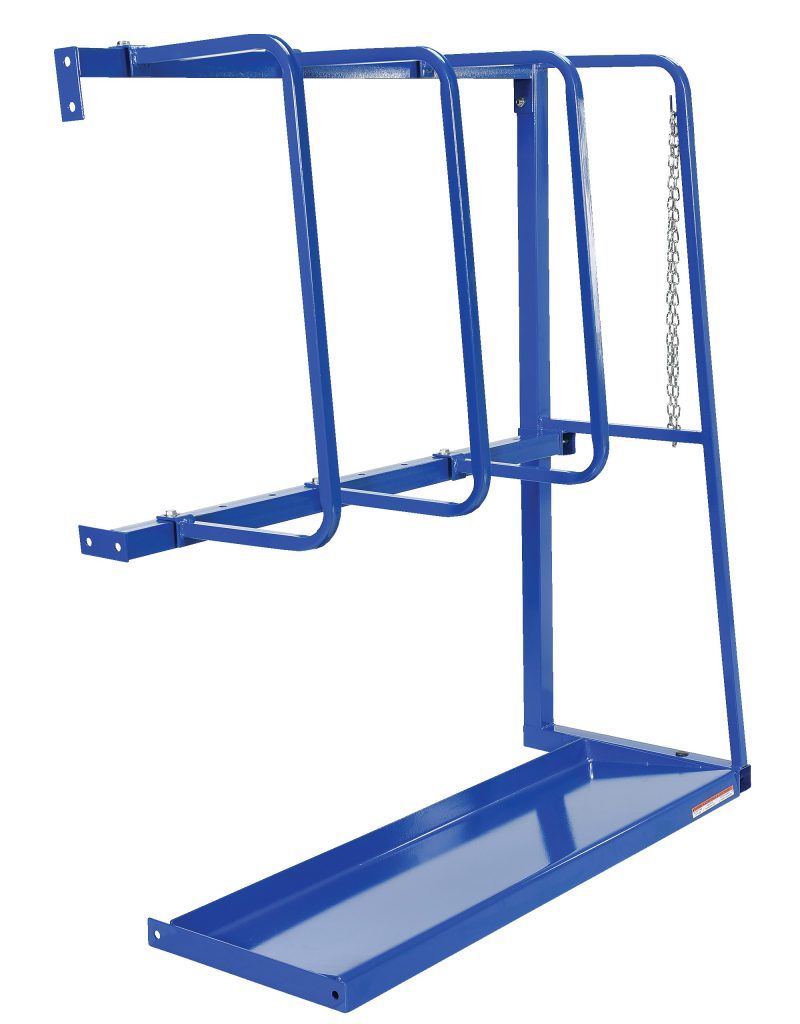 Compressed Gas & Cylinder CabinetsA separate category worth mentioning because gas cylinders should never share a liquid cabinet. Cylinder cabinets provide restraint, ventilation, and separation of oxidizers from fuel gases.
How a Compliant Cabinet Is Built
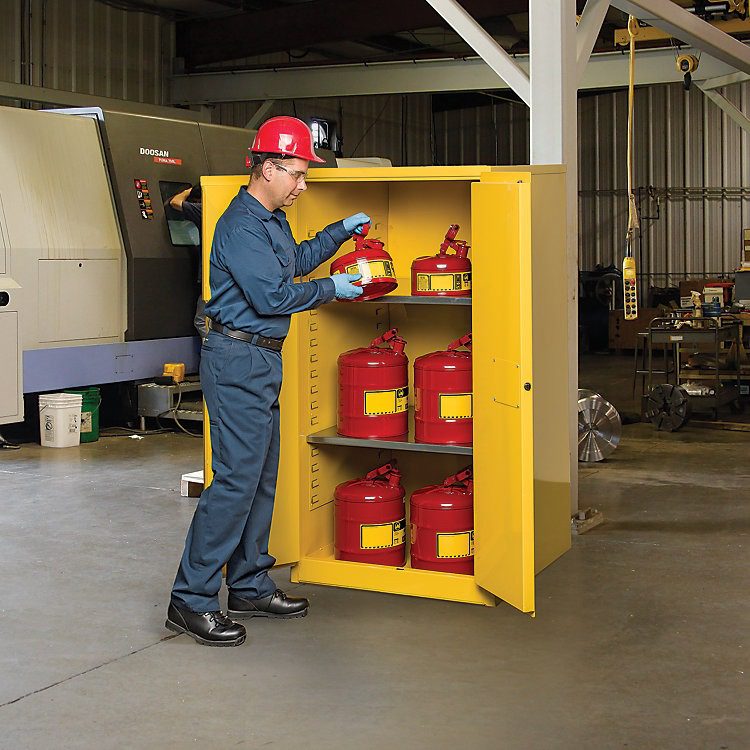
When you compare quotes, you are usually comparing these eight details. A cabinet missing any
of them is not a safety cabinet, whatever the product page calls it.
- Double-wall 18-gauge steel with a 1-1/2 in insulating air gap on all sides, top, bottom, and doors
- Self-closing, self-latching doors with a fusible link or thermal actuator so heat closes them unattended
- Three-point latching so doors stay shut as the steel warps under heat
- Continuously welded, leak-tight sump at least 2 in deep to hold a container failure
- Dual 2 in vent bungs with fire baffles — capped when unvented, ducted when vented
- Grounding / bonding lug so containers can be bonded during pouring and dispensing
- Adjustable, chemical-resistant shelves with load ratings published, not implied
- A third-party listing mark — FM Approved or UL listed, with the label physically on the cabinet
| Feature | What It Protects Against | What to Verify Before You Buy |
|---|---|---|
| Double-wall construction | Contents reaching auto-ignition during an external fire | 18-gauge minimum, air gap on all six surfaces including the doors |
| Self-closing doors | A door left open by the last person to use the cabinet | Fusible link rating and that the mechanism is field-testable |
| Liquid-tight sump | A dropped or corroded container draining onto the floor | Continuous welds, 2 in depth, and capacity vs. your largest single container |
| Bonding and grounding | Static discharge igniting vapor while dispensing | An accessible external lug, plus bonding wires for your containers |
| Corrosion-resistant interior | The cabinet failing before its contents do | Polyethylene trays or liner for anything acidic or caustic |
| Third-party listing | Marketing language substituting for a fire test | FM or UL label present, and the listing covers the exact model |
The Codes That Actually Get Cited
Four documents govern almost every chemical cabinet decision in a U.S. facility. Your local authority having jurisdiction can be stricter than all of them, so confirm before you finalize a layout.
| NFPA 30 Liquid Class | Flash Point | Typical Examples | Per-Cabinet Limit |
|---|---|---|---|
| Class IA | Below 73°F, boiling below 100°F | Diethyl ether, pentane | 60 gal combined Class I & II |
| Class IB | Below 73°F, boiling at or above 100°F | Acetone, ethanol, toluene, gasoline | 60 gal combined Class I & II |
| Class IC | 73–100°F | Xylene, turpentine, some thinners | 60 gal combined Class I & II |
| Class II | 100–140°F | Diesel, kerosene, mineral spirits | 60 gal combined Class I & II |
| Class IIIA | 140–200°F | Heavier fuel oils, many cutting fluids | 120 gal |
| Class IIIB | Above 200°F | Lubricating and hydraulic oils | 120 gal |
Combustible does not mean harmless
Class II and III liquids get stored casually because they will not flash at room temperature. In a fire they still burn, and a drum of hydraulic oil next to a solvent cabinet is a fuel load your sprinkler design may not have accounted for.
Sizing Capacity Without Guessing
Cabinet capacity is rated in gallons of liquid, not in shelf space, and the useful number is
always smaller than the nameplate once you account for container geometry. A 45-gallon cabinet will not
hold forty-five gallons of liquid in one-gallon cans.
Work the problem in this order:
1. Inventory at peak, not average. Pull twelve months of purchasing data and find the
week with the highest on-hand volume. That is your design point.
2. Separate by hazard class. Flammables, corrosives, pesticides, and waste each get
their own gallon total, because they each get their own cabinet.
3. Add container overhead. Budget 25 to 40 percent more rated capacity than raw
gallons if you store in small cans, jugs, and bottles rather than 5-gallon pails.
4. Check the per-fire-area cap. NFPA 30 limits how many cabinets can occupy one fire
area. If your total pushes past it, the answer is a rated storage room or an exterior locker — not a
fifth cabinet.
5. Leave room to grow. Cabinets are cheap relative to a mid-year compliance
retrofit.

| Rated Capacity | Typical Footprint | Door Style | Fits Best |
|---|---|---|---|
| 4–12 gal | Benchtop or undercounter | Manual or self-close | Individual lab benches, QC stations, small maintenance shops |
| 15–30 gal | Roughly 43 in H × 43 in W | Two-door self-close | Single-department storage, print shops, dental and clinical labs |
| 45 gal | Roughly 65 in H × 43 in W | Two-door self-close | The workhorse size for maintenance shops and mid-size labs |
| 60 gal | Roughly 65 in H × 34 in W (upright) | Two-door self-close | The NFPA 30 ceiling for Class I/II in one cabinet |
| 90 gal | Roughly 65 in H × 43 in W (deep) | Two-door self-close | Class III liquids, pails, and bulk consumables |
| Drum cabinets | Horizontal or vertical drum height | Bi-fold or two-door | 55-gallon drums with dispensing and roller support |
Segregating Incompatible Chemicals
Most chemical incidents in storage are not fires. They are two things that should never have shared a shelf. A cabinet solves the fire problem; a segregation plan solves this one. Always confirm against the SDS for the specific products you carry.
| Hazard Group | Keep Away From | Why | Storage Approach |
|---|---|---|---|
| Flammable liquids | Oxidizers, acids, ignition sources | Oxidizers dramatically accelerate combustion; acids can react and generate heat | Dedicated yellow flammable cabinet, no other classes inside |
| Oxidizing acids (nitric, perchloric) | Organics, flammables, bases, reducing agents | Violent exothermic reaction and toxic gas evolution | Corrosive cabinet with a dedicated, physically separated compartment |
| Mineral acids (HCl, sulfuric) | Bases, cyanides, sulfides, metals | Neutralization heat, and toxic gas from cyanide and sulfide salts | Acid side of a divided corrosive cabinet, polyethylene trays |
| Bases / caustics | All acids | Rapid exothermic neutralization and splash hazard | Base side of a divided corrosive cabinet or a separate cabinet |
| Oxidizers (peroxides, chlorates) | Flammables, organics, reducing agents | Supply oxygen to a fire that would otherwise self-limit | Dedicated oxidizer cabinet or a physically isolated compartment |
| Water-reactives | Aqueous solutions, humidity | Heat and flammable gas generation on contact with moisture | Sealed, desiccated storage in a dry, separate location |
| Pesticides | Food, feed, PPE, potable water lines | Contamination risk and regulatory exposure | Locked pesticide cabinet with a deep containment sump |
| Hazardous waste | Virgin product of any class | Cross-contamination and RCRA labelling violations | Separate waste accumulation cabinet, dated and labelled |
A divided cabinet is not the same as two cabinets
Internal dividers are excellent for keeping acids off bases in a small footprint, but they are not a substitute for separation between hazard classes that react violently. If the SDS language is strong, buy the second cabinet.

Vented or Unvented? The Question Everyone Gets Wrong

Every listed flammable cabinet ships with two 2-inch vent bungs and caps. The default answer is
leave them capped. NFPA 30 does not require flammable cabinets to be vented, and both FM
and UL fire tests are performed with the bungs closed. Opening them without ducting them properly can
actually reduce the cabinet’s fire performance by admitting air.
You should duct a cabinet when one of these is true:
- An SDS or your industrial hygienist requires ventilation for the specific product
- You are storing highly odorous, toxic, or sensitizing materials in an occupied space
- You dispense inside the cabinet rather than removing containers to a fume hood
- Your local AHJ or a facility standard mandates it in writing
If you do duct, do it correctly: metal duct, no plastic, drawn to the outdoors, with a
dedicated fan, both bungs used (one inlet, one exhaust), flame arresters left in place, and no shared
ductwork with other exhaust systems. A half-measure — open bungs with no duct — is the worst
of both options.
Where These Cabinets Go
 LaboratoriesResearch, clinical, cannabis testing, and QC labs run the widest chemical variety and the tightest inspection scrutiny. Typical build: undercounter flammable cabinets at solvent benches, a divided acid/base cabinet near the fume hoods, and a separate waste cabinet at the exit.
 Maintenance & Fleet ShopsSolvents, brake cleaner, oils, paints, and aerosols in high turnover. A 45- or 60-gallon flammable cabinet with a bonding lug near the parts washer covers most shops, with a waste cabinet for used oil and rags.
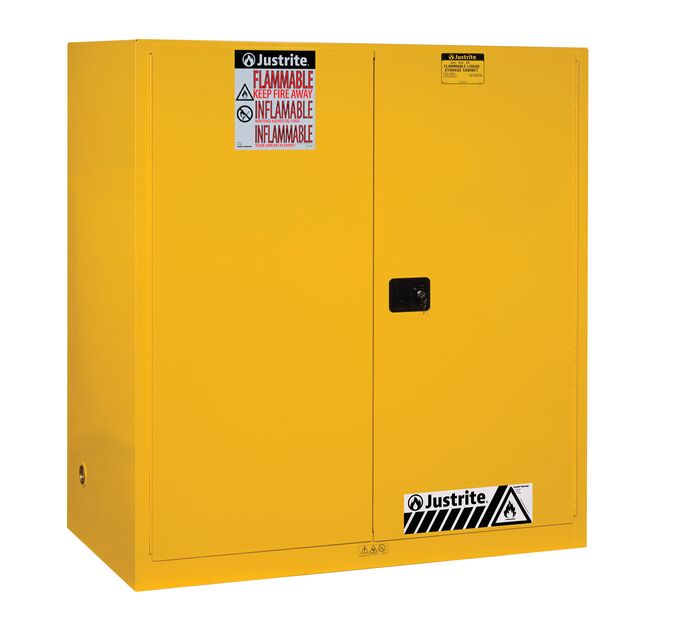 Manufacturing & CoatingsAdhesives, thinners, and coatings drive volume past what a single cabinet can hold. This is where drum cabinets, dispensing stations, and eventually a rated storage room enter the plan.
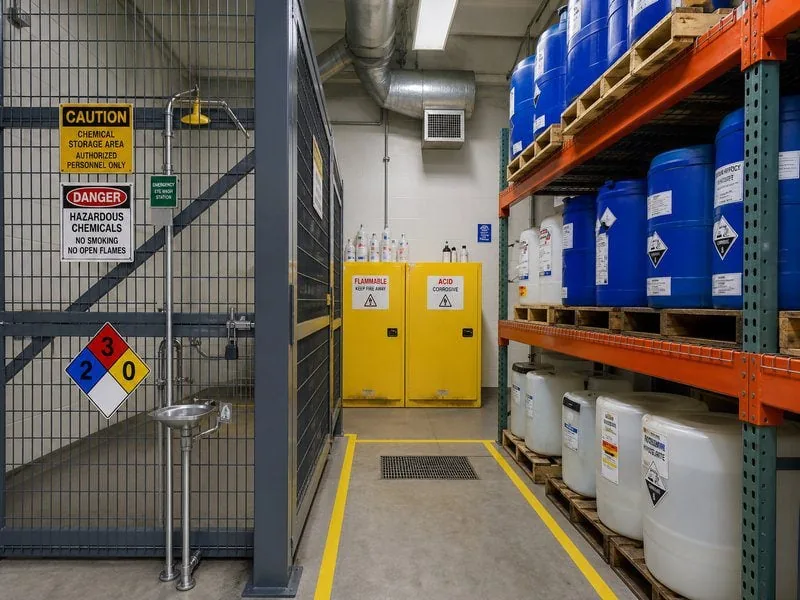 Water & Wastewater TreatmentChlorine, polymers, acids, and caustics in an environment that is hard on steel. Non-metallic or coated cabinets, deep sumps, and rigorous acid/base separation are non-negotiable.
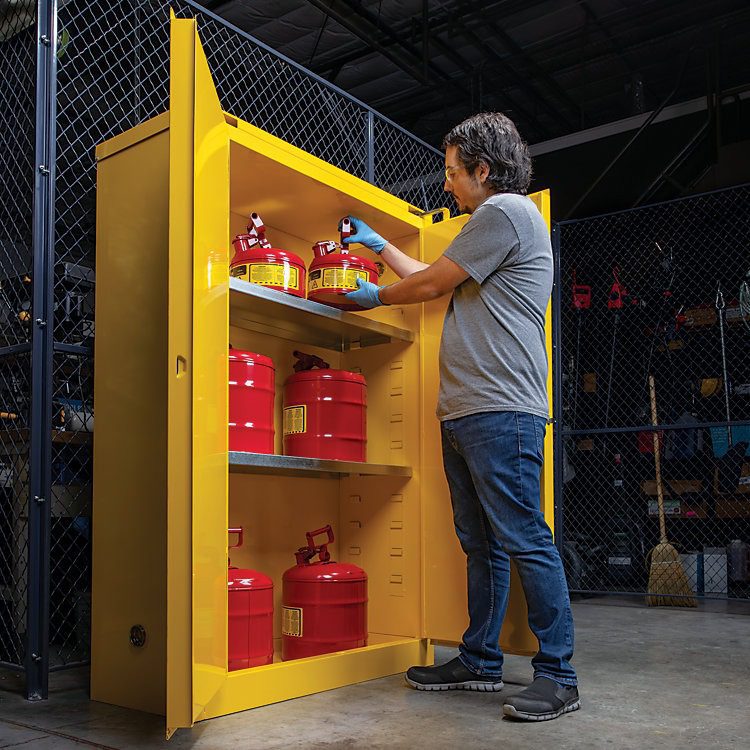 Agriculture & GroundsRestricted-use pesticides require secured, contained, ventilated storage away from feed and potable water. Green pesticide cabinets with locking doors and deep sumps are the standard answer.
 Education & InstitutionalChemistry classrooms, career-tech shops, and university facilities need small-capacity cabinets in many locations, plus locking hardware and clear labelling for student environments.
Cabinets Are One Layer — Containment Is the Other
A cabinet sump holds a container failure that happens inside the cabinet. It does nothing for
the drum on the dock, the tote at the mix station, or the pail somebody set on the floor. A complete
program pairs cabinets with secondary containment and spill response at every point the chemical
actually travels.
The layers that matter, in order of how often they get skipped:
- Spill containment pallets under every drum and tote outside a cabinet
- Drip trays and shelf trays inside cabinets, so the sump is the backstop and not the first line
- Safety cans with flame arresters for anything dispensed or carried by hand
- Plunger and dip cans at solvent wipe stations instead of open beakers
- Spill kits stocked for your worst-case single container, staged within sight of the storage area
- Absorbent pads and socks at transfer points, replaced rather than reused

 Spill Containment PalletsPolyethylene or steel platforms that hold 66 to 100 percent of the volume above them. Required under most drum and tote storage outside a rated cabinet.
 IBC Tote ContainmentLarger basins engineered for 275- and 330-gallon totes, usually with a dispensing shelf and a removable grate for cleanout.
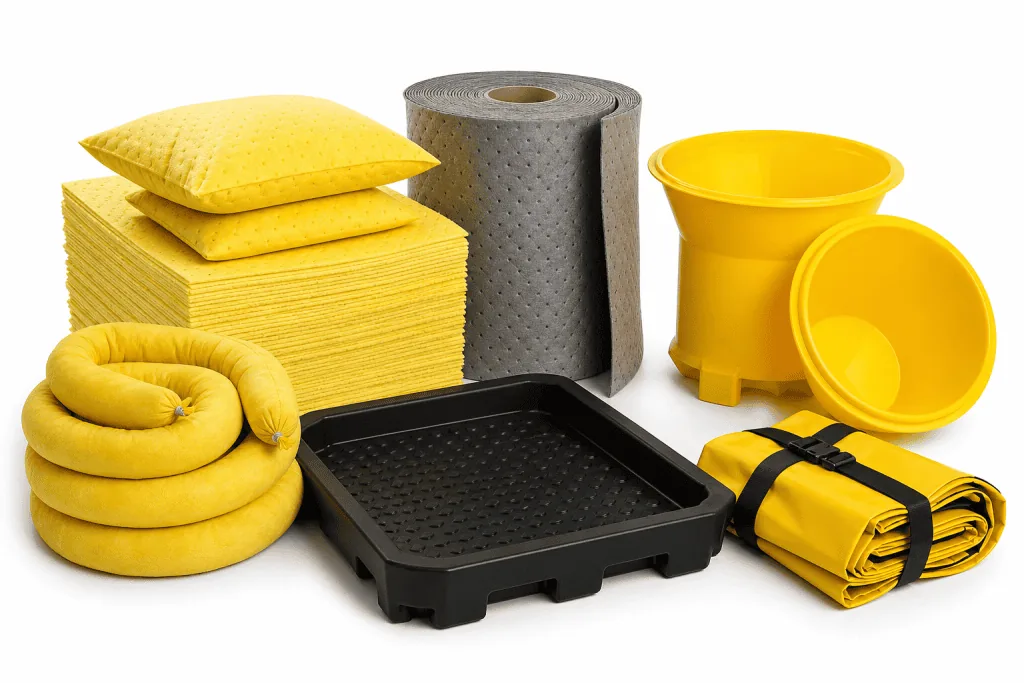 Spill Kits & AbsorbentsPads, socks, pillows, and disposal bags matched to the chemistry — universal, oil-only, or hazmat. Stage them where the spill will happen, not in a supply closet.
See the full spill control and secondary containment lineup →
Specification and Inspection Checklist
Before you buy
- Peak inventory volume calculated per hazard class
- Cabinet type matched to hazard class, not to what is available
- FM Approved or UL listed, with the listing covering the exact model
- Self-closing doors specified if the cabinet is in an occupied or sprinklered area
- Bonding and grounding lug present if anything is dispensed
- Polyethylene trays specified for corrosives
- Shelf load rating confirmed against your heaviest containers
- Footprint checked against aisle clearance and egress paths
- Total cabinet count checked against the per-fire-area limit
Monthly walkthrough
- Doors close and latch fully on their own from any position
- Sump is dry, clean, and free of stored items
- Every container has a legible HazCom label
- No incompatible classes sharing a shelf or compartment
- Nothing stored on top of or leaning against the cabinet
- Bonding wire present and connected during dispensing
- Waste containers dated and within accumulation limits
- Vent bungs capped, or ducting intact if vented
- Spill kit stocked and unexpired
Shop Online at MaterialHandling-USA.com
Cabinets, safety cans, containment pallets, and spill kits are available to order online, or call our team for volume pricing and freight on drum cabinets.
Related Storage and Safety Solutions
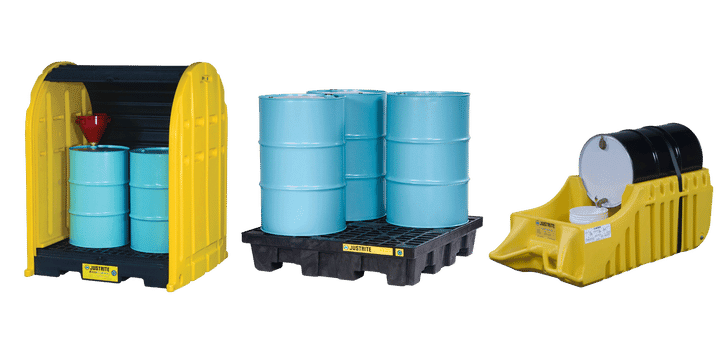 Spill Control & Secondary ContainmentContainment pallets, basins, spill kits, and absorbents for everything stored outside a cabinet.
 Laboratory SolutionsFume hoods, casework, lab shelving, and complete laboratory layout and design services.
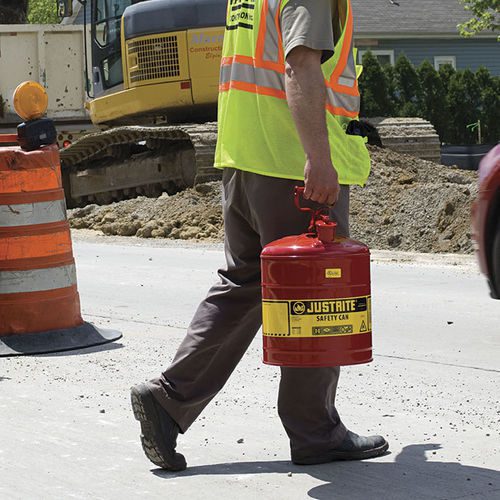 Water & Wastewater StorageChemical cabinets, security cages, and corrosion-resistant storage built for treatment plants.
Frequently Asked Questions
How much flammable liquid can I store in one cabinet?
Do flammable storage cabinets have to be vented?
Can I store acids in a yellow flammable cabinet?
What is the difference between FM Approved and UL listed?
Do I need self-closing doors?
How should I store hazardous waste solvent?
Can I stack or store things on top of a safety cabinet?
Can you help us design the layout, not just supply cabinets?
Get a Chemical Storage Plan, Not Just a Cabinet
Send us your chemical inventory or SDS list and we will size the cabinets, flag incompatible storage, and lay out containment for your space. Free consultation — call (800) 326-4403 or request a quote.