
Accountable Property Security Cages for Government Services Contractors
How Filius Corporation approached secure storage for accountable and government-furnished property: custody you can prove, not just a locked door.
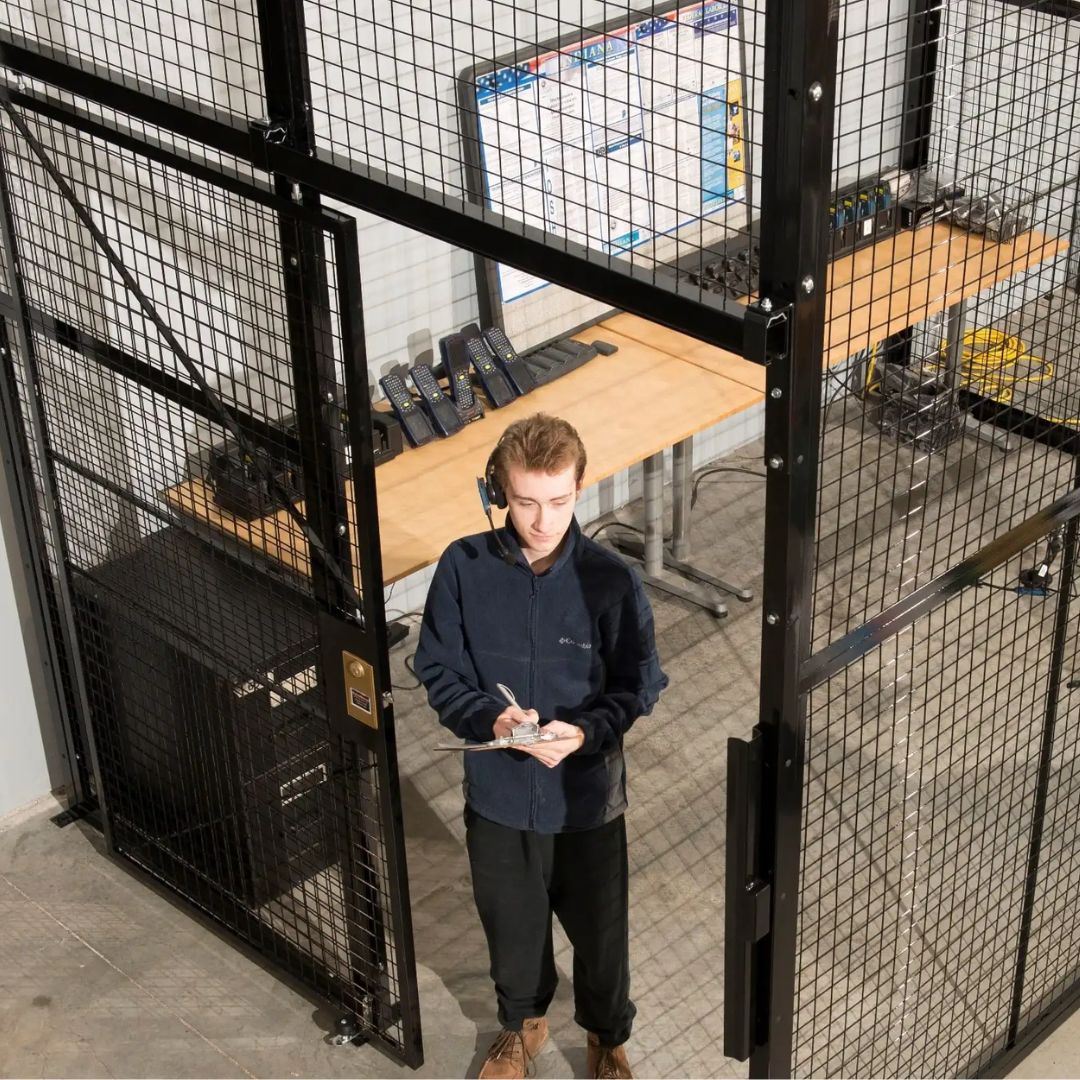
Filius Corporation
Professional services contractor — information assurance, logistics and IT support to federal and civilian agencies
El Paso, Texas
Where the enclosure shipped
The problem
Property that has to be accounted for, not merely stored
The answer
A caged custody area with one controlled issue point and a documented boundary
Government contract property is an accounting problem before it is a security problem
Filius Corporation is a professional services contractor that supports federal and civilian agencies with information assurance, logistics services, systems engineering and advisory and assistance work. Its enclosure shipped to El Paso, Texas. Like most services contractors, the company holds a mix of property that is not simply inventory: items that belong to a customer, items bought against a specific contract, and items that must be individually identified, tracked and eventually returned or disposed of on somebody else’s instruction.
That distinction changes what a storage room has to do. In commercial distribution, loss shows up as shrink. On a government services contract, the same missing item shows up as a property record you cannot reconcile — and the question is not only what is gone but who had custody and when the record last matched reality. A locked back room with three keys in circulation cannot answer that.
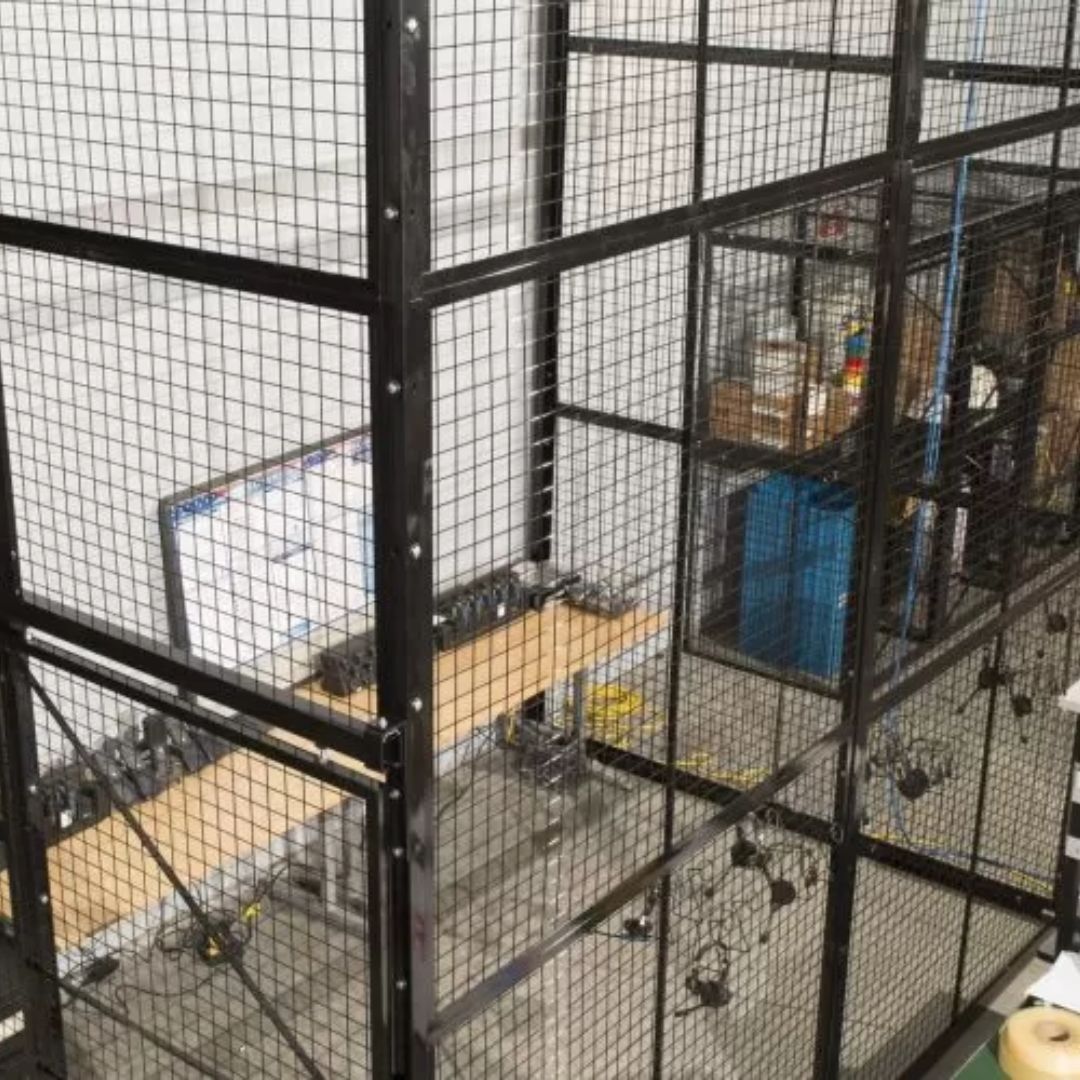
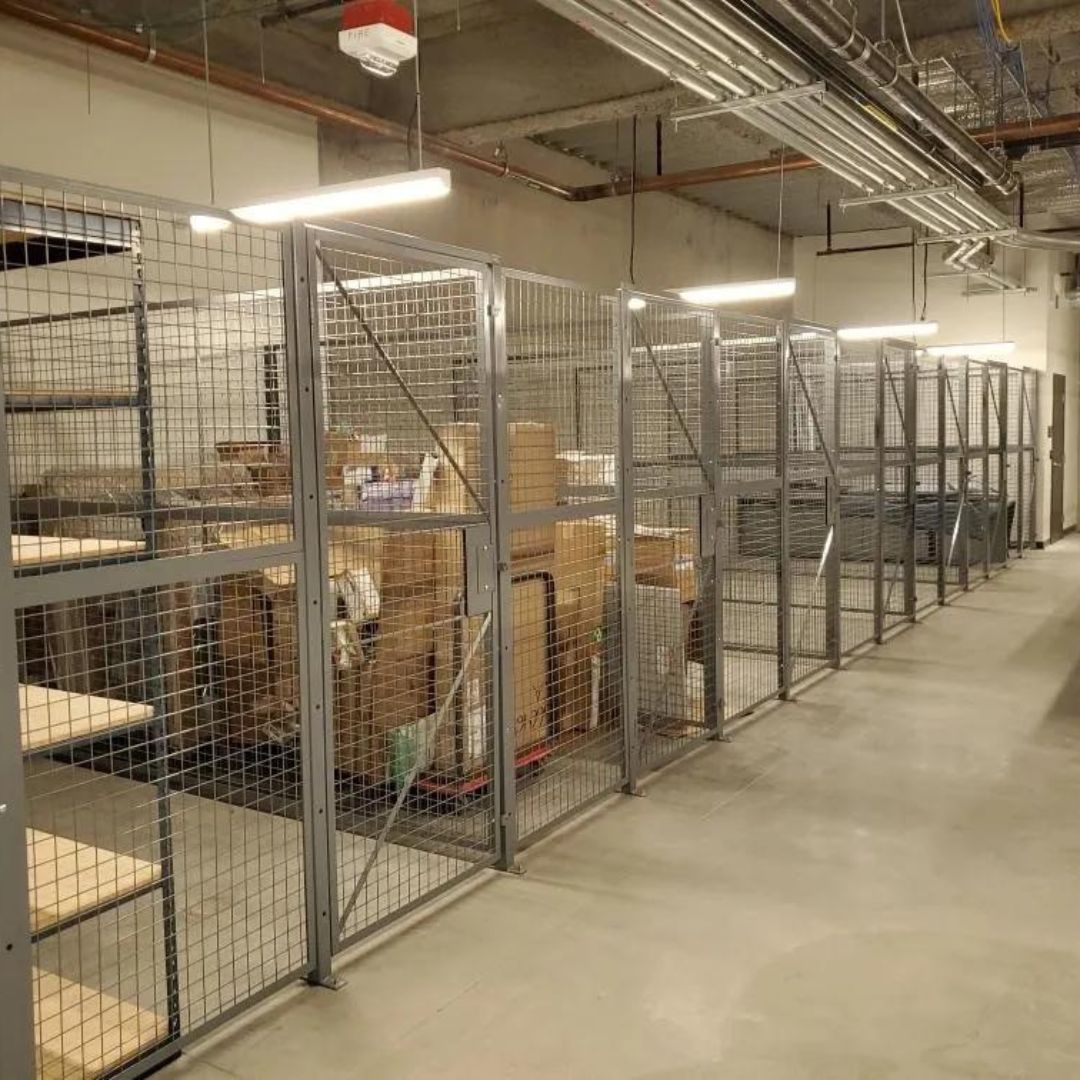
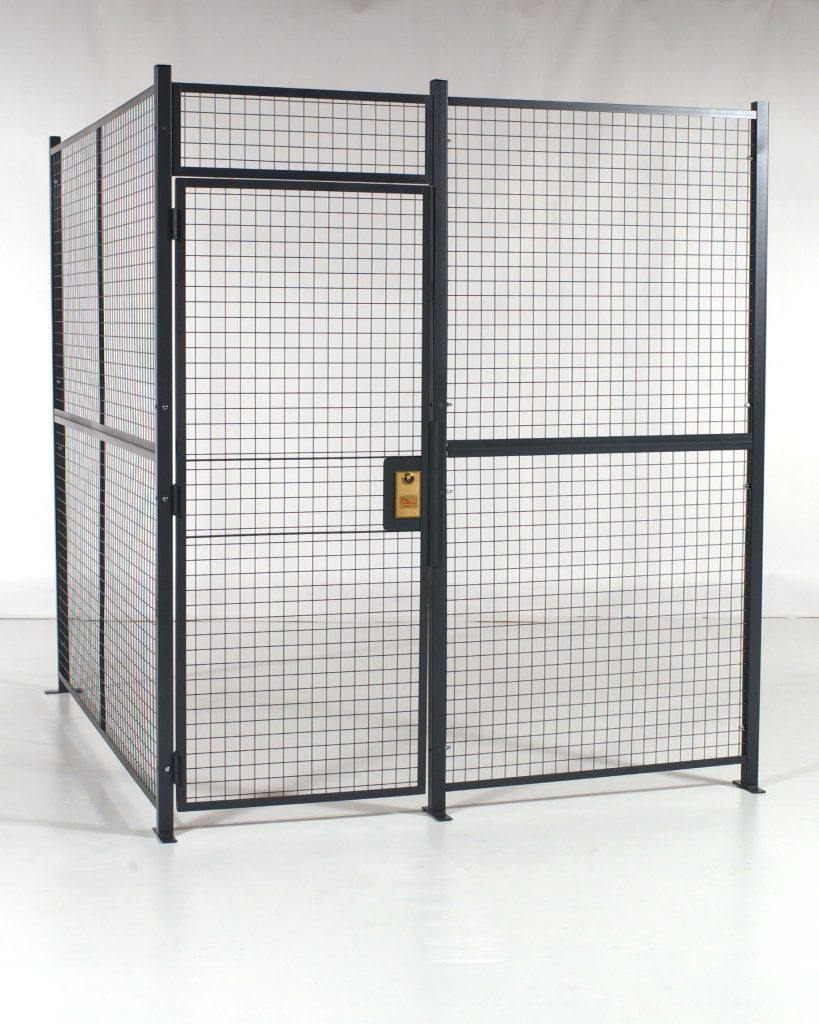
The practical answer we build for contractors in this position is a defined, visible custody area inside the working space: a mesh enclosure with one controlled way in and out. Our security cage and wire partition systems are used this way because the boundary is unambiguous, it can be seen through and counted from the aisle, and it can be reconfigured when the contract or the space changes.
Everything below describes the problem class. No layouts, dimensions, quantities, contract details or security arrangements from this client’s site are published here, and none should be.
What actually belongs behind the mesh
The sorting rule is not value. It is accountability: what would you have to prove, to whom, and on what timescale, if the item could not be found this afternoon?
Customer-owned and government-furnished property. Items provided for use on a contract belong to someone else’s property record. They should be physically distinguishable from company-owned stock, not just flagged in a spreadsheet.
Individually identified items. Anything tracked by serial number, asset tag or unique identifier — IT hardware, instruments, test equipment, communications gear. If the record is per item, the storage should support per-item retrieval.
Contract-specific consumables and spares. Material purchased against one contract and quietly used on another is a common, entirely non-criminal way for records to drift.
Items awaiting disposition. Excess, turn-in, repair and end-of-life property often waits weeks for instruction. That wait is where property tends to disappear into general stock.
Tools and kits issued to staff. Anything signed out to a named person needs a defined home so the sign-out has meaning.
General office and facility supplies stay outside. Caging them adds door traffic and door traffic is what makes people prop a cage open.

What a wire mesh cage is not
This matters more in the government space than anywhere else, and being blunt about it saves everyone time.
Used inside those limits, an enclosure is one of the cheapest controls available. Sold outside them, it creates a compliance problem instead of solving one.
Dividing the cage by custody status, not by item type
One large cage with everything inside it solves reach and creates a new problem: nobody can tell which items are under whose control. The layouts that survive an inventory divide the enclosure into a few clearly labeled zones using internal mesh partitions rather than more doors.
| Zone | What lives there | Who should reach it |
|---|---|---|
| Customer-owned / furnished property | Items on another party’s property record | Property custodian only |
| Contract-assigned stock | Material bought against a specific contract | Custodian and named project staff |
| Serialized asset hold | Tagged hardware awaiting issue or handover | Custodian, logged issue |
| Issued-tool return | Kits and instruments coming back in | Custodian, then re-shelved after check |
| Awaiting disposition | Excess, turn-in, repair and end-of-life items | Custodian only |
| General high-value stock | Company-owned, attractive, not contract-specific | Warehouse team |
Internal partitions cost little against the confusion they prevent, and they make the enclosure self-documenting: anyone standing at the door can see that turn-in property is not stacked on top of furnished property. That is exactly the question an auditor or a property administrator asks first.
Where a customer requires their property to be physically separate from everyone else’s, a walled bay inside the cage is a far cleaner answer than a promise about process.
The records a cage makes possible
A cage is worth building when it changes what you can evidence. Four things get easier immediately:
A boundary you can describe. “Accountable property is stored in a locked wire enclosure inside a secured facility, accessed by the named custodian” is a sentence you can write in a procedure and demonstrate on a walkthrough.
Counts without a shutdown. Mesh is transparent. Shelved, labeled and visible stock can be counted from inside the enclosure without pulling a room apart, which makes periodic inventory an hour instead of a day.
Access that leaves a trail. Keypad or card hardware on the door turns access from “whoever has a key” into a list. Even a signed key log is a step up from a shared padlock.
Exceptions that stay visible. A labeled disposition zone means nothing sits in limbo unnoticed — the pile itself becomes the reminder.
None of that requires software. It requires a boundary, a custodian and labels that match the words your property procedure already uses.
Layout, aisles and one controlled issue point
The single biggest design decision is the issue point. Property leaves the cage far more often than it enters, and every exit is a custody event.
For issue-window options see security cage service windows, and for the door and lock decision the cage door guide and cage lock options cover the practical trade-offs.
Specifying the enclosure
For a custody area, specification is refreshingly ordinary. What matters is the height of the boundary, how the door is controlled, and how easily it can be reconfigured later — contracts end, spaces change. For a real example of that, see how a military base security cage at Robins Air Force Base was reshaped, ceiling and all, a few months after it was installed.
If you are weighing a mesh top against an open top, our notes on security cage ceilings explain when it is genuinely needed, and the security cage cost guide sets budget expectations before you ask for a number.
Code, egress and anchoring
A wire enclosure becomes part of the building the moment it is standing, and inspectors ask the same three questions every time.
Egress. A cage must never trap a person or obstruct a required exit path. Doors on an egress route need hardware that opens from the inside without a key, and required aisle widths have to survive the installation. OSHA’s exit route requirements in 29 CFR 1910.36 and 1910.37 are the baseline; the building code may be stricter.
Fire protection. Mesh ceilings and stacked storage change how sprinkler water reaches the floor. NFPA 13 governs the design and the authority having jurisdiction applies it, so a planned mesh top is a question for the fire protection engineer, not a field decision.
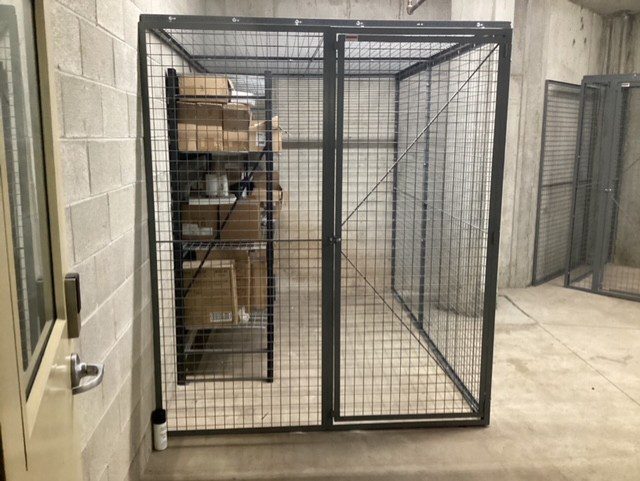
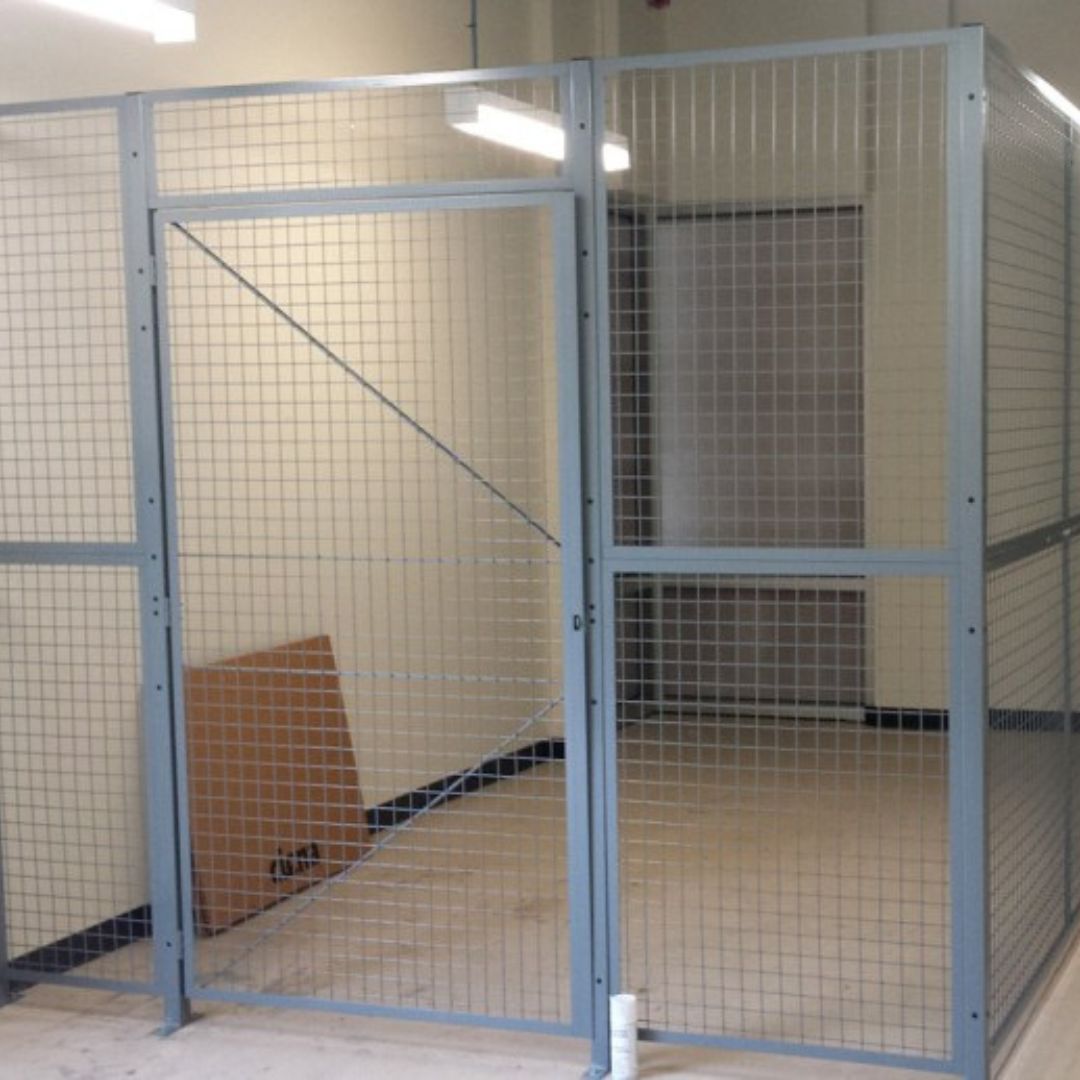
Anchoring and leased space. Posts anchor to the slab, and slab thickness, post-tension cables and seismic requirements shape the detail. In leased or government-occupied space the landlord or facility manager may restrict penetrations, which is one more reason to choose a bolted, removable system.
None of this argues against a cage. It argues for drawing it before buying it.
Installing inside occupied space
Contractor facilities cannot stop for a week, and government-occupied space usually adds badge, escort and work-window rules. The sequence that keeps a site working:
Phasing beats speed: standing the customer-owned and serialized zones first removes the most urgent accountability risk, and the rest can follow. Our security cage installation guide covers site conditions, access requirements and lead times.
Planning a custody cage for your own contract
Five answers are enough for a realistic quote:
1. What has to be separated, and why. Owner, contract, serialization or disposition status — the reason decides the zones.
2. How property is issued and returned. Hand-carried, cart, pallet. That sets the opening, and whether you need a service window.
3. Who holds custody, and who covers. One custodian and a three-shift operation need different door hardware.
4. What the space allows. Ceiling height, sprinkler heads, lighting, slab type, post-tension, and any landlord restriction on anchoring.
5. What happens at contract end. If the enclosure may need to move or be removed, say so now and it will be specified to come apart cleanly.
Send a floor sketch with those five answers marked on it and we can size and quote an enclosure without a site visit in most cases.
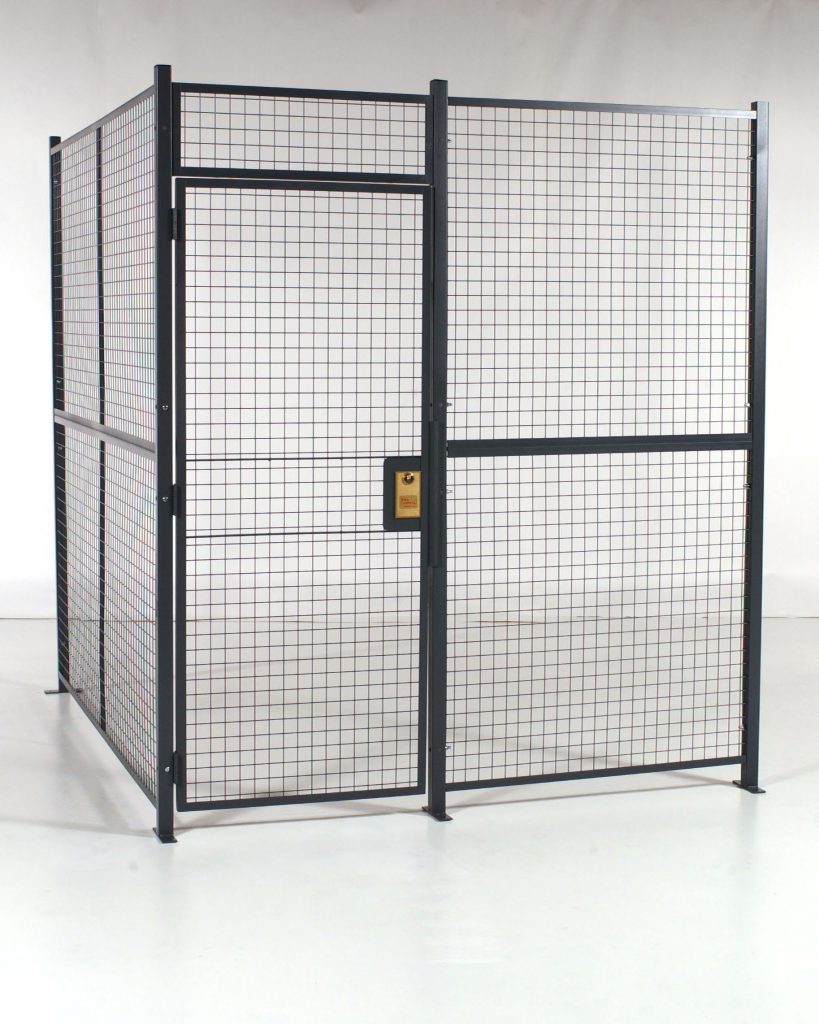
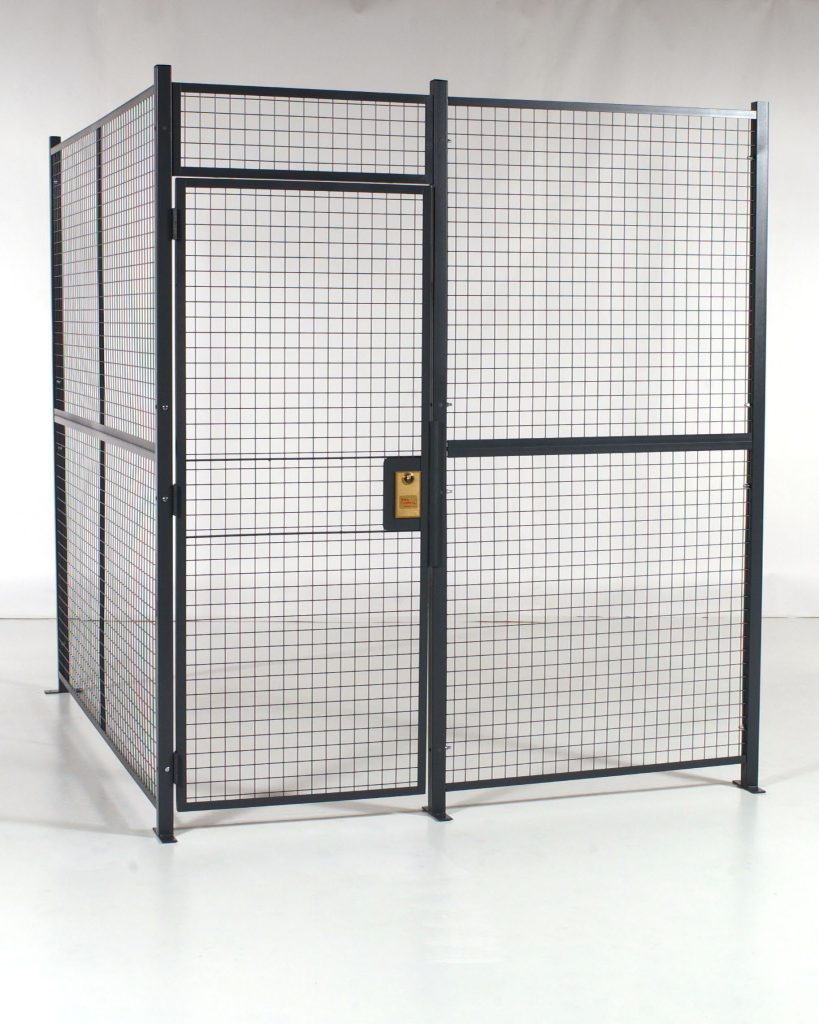
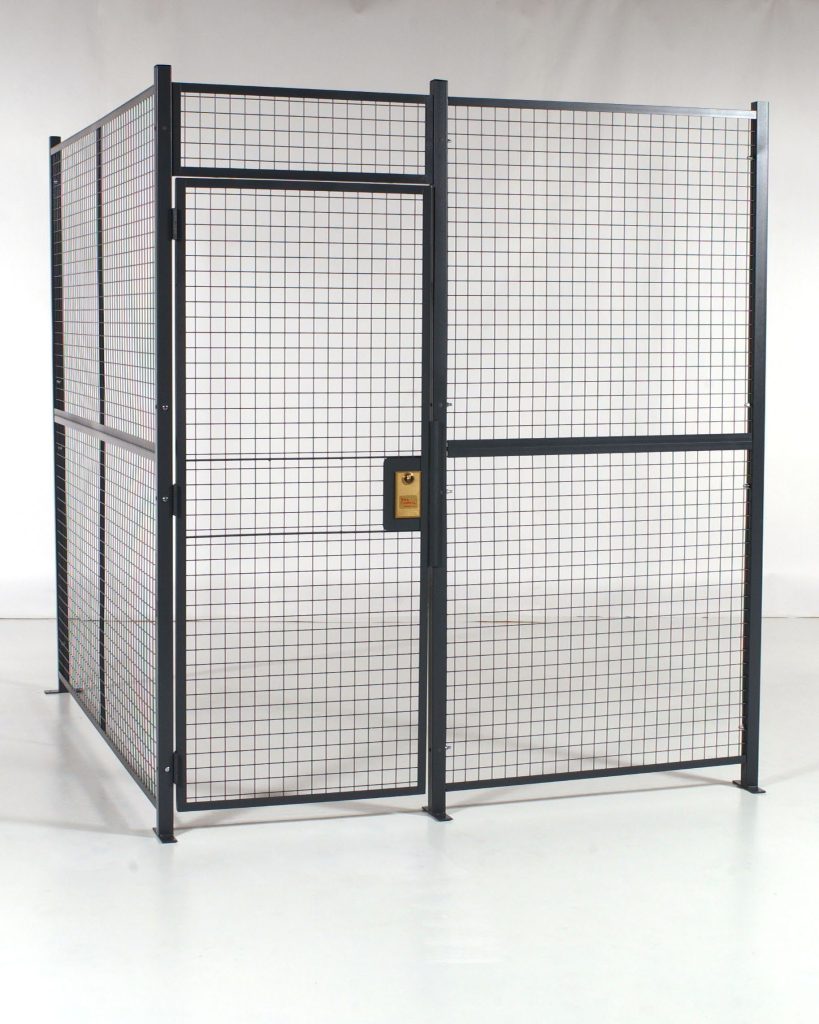
Shop Pre-Configured Wire Mesh Cage Kits Online
Standard-size welded wire cage kits, priced online, for smaller storage needs. Every kit still needs to be anchored to sound concrete — for tall, braced or engineered enclosures, request a quote with your building location and floor details.
Frequently asked questions
Can a wire mesh cage be used to store classified material?
Is a security cage enough for government-furnished property?
How should the cage be divided?
Do we need a mesh ceiling?
What door hardware gives us an access record?
Can the enclosure be removed at the end of a contract?
Can you install in leased or government-occupied space?
Need a custody area you can evidence?
Send us a floor sketch and a short list of what has to be separated, and we will size, detail and quote an enclosure — supply-only or installed.