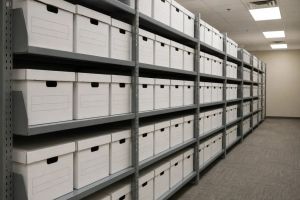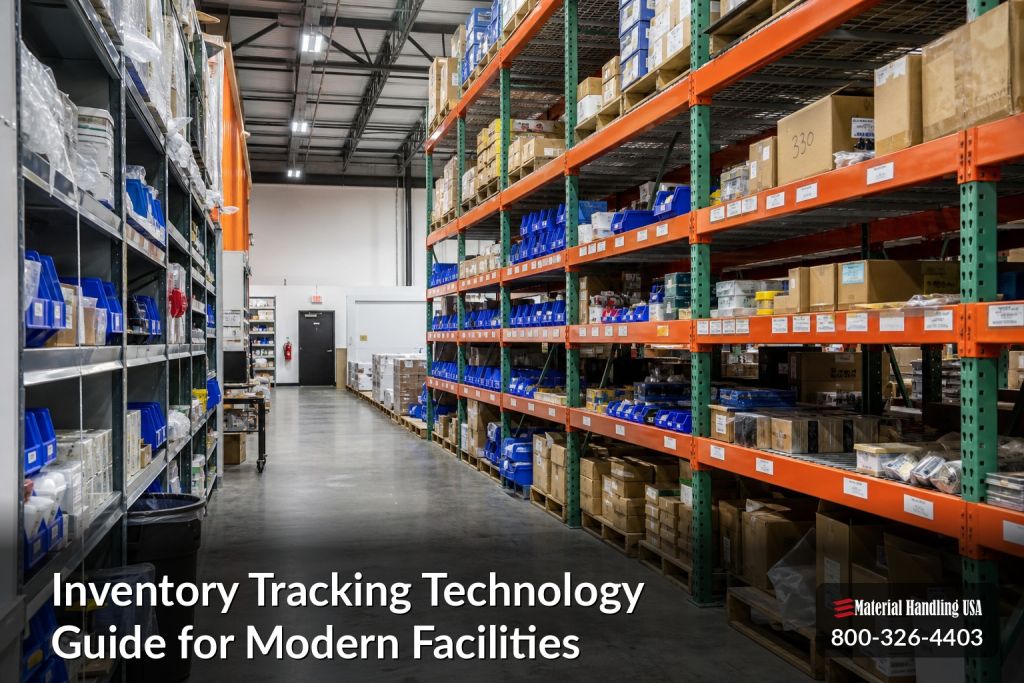
You're probably dealing with the same problem many facilities face right now. The shelves are full, orders keep moving, and yet someone still has to hunt for missing items, reconcile spreadsheet counts, or explain why a customer order was delayed. Inventory tracking technology exists to turn that scramble into a controlled process, with live item data that supports receiving, picking, replenishment, and audit work across the facility.
The big shift is simple. Inventory used to be a historical record, updated after the fact. Now it can be a live operational input. By the 2020s, the global inventory management software market was already measured in the billions, and one independent estimate projected growth from about $4.8 billion in 2024 with a 7.4% CAGR (Marketintelo report). That growth reflects a real change in how managers run warehouses, labs, stockrooms, and secure storage spaces.
For teams comparing options, the question is no longer whether tracking matters. It's which mix of tools fits the site, the workflow, and the risk level. A warehouse with pallets in motion needs a different stack than a lab handling sensitive materials or an evidence room with strict chain-of-custody needs. If you're mapping those choices, this warehouse automation planning resource is a useful related read.
Introduction and Evolution of Tracking
A warehouse supervisor often sees the problem first. A customer order is due out, the item should be on the shelf, and the spreadsheet says one thing while the bin says another. Someone checks paper logs, then asks the floor team, then walks the rack again. By the time the mismatch is found, the clock has already moved.
That kind of delay pushed inventory tracking away from manual counts and toward connected systems. Early barcode workflows gave facilities a faster way to record movement, but a key shift came when scan data started flowing into software that could update stock records in real time. The result is less waiting, fewer blind spots, and tighter control over what is available.
By the 2020s, inventory tracking had become a core operational technology category, not just a back-office task. Software and connected tracking tools reflected a broader move toward real-time visibility and supply-chain control. For buyers, that matters because the technology now affects customer service, labor planning, and replenishment timing.
Practical rule: If the count in your system lags behind the floor by hours, the issue is no longer reporting. It is operations.
The clearest lesson from the evolution is that tracking only matters when it supports action. If the data helps a manager spot a short pick face, a missing pallet, or an item that moved outside its zone, then the system is doing real work. That is why modern projects are judged less by how many labels they print and more by how quickly they turn movement into usable data.
The same logic explains why a warehouse does not need the same setup as every other site. A pallet flow area, a lab bench, and a secure evidence room all need accurate counts, but each one creates different friction points. That is why a hybrid approach, built around the workflow instead of the tool alone, can be more accurate and more cost-aware than a single standard package. For a related planning example, see this warehouse automation design guide.
Understanding Inventory Tracking Technology
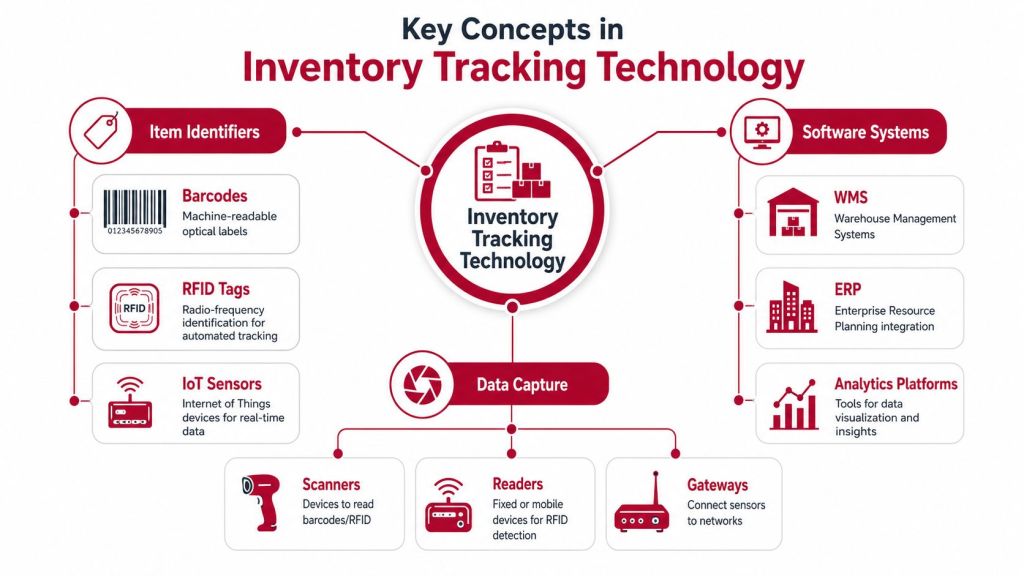
Inventory tracking technology is a data capture workflow. An item receives an identifier, a reader captures its movement or location, and software updates the record that planners, supervisors, and buyers rely on. The system matters most at the handoff points, receiving, putaway, picking, packing, and shipping, because that is where small errors become stock gaps, delays, or misplaced assets.
The basic building blocks
Item identifiers form the first layer. Barcodes are common because they are simple and familiar. RFID tags work differently because they can be read without direct line of sight. IoT sensors can add live condition or location data where that matters. Inventory tracking depends on these identifiers being captured by scanners or readers and then synced into ERP or WMS platforms for visibility (Lowry Solutions).
A scanner works like a check-in desk, and the software layer works like the control tower. The scanner records the event, middleware cleans it up, and the system of record decides what changed. In well-run deployments, cleaned scan events are pushed into inventory tables quickly, while pilots often aim for high read accuracy and alert timing that is short enough to support daily work. That timing matters because a delayed update can be as disruptive as a missed scan.
Why the software layer matters
The hardware only tells part of the story. A barcode or tag on its own does not solve stock visibility. The value comes from syncing those reads into a centralized WMS, IMS, or ERP layer so the same record updates across departments. Receiving, picking, and shipping can then work from one version of the truth instead of three separate guesses.
That software layer also has to fit the site it serves. A warehouse that moves pallets all day, a lab that tracks small controlled items, and a secure evidence room all need accurate records, but they create different friction points. Hybrid stacks address that difference by combining the right identifiers, readers, and software rules for each workflow, instead of forcing one tool to do every job.
For readers comparing operational platforms, Fleetalyse's fleet tracking is a useful reference point for how location data gets used in movement-heavy environments. The underlying lesson is the same. The capture method matters, but the workflow matters more.
Comparing Inventory Tracking Methods
Not every site needs the same tool. A pallet-heavy warehouse, a regulated lab, and an outdoor yard each have different visibility problems. That's why a hybrid stack often works better than a single device or tag type.
Key takeaway: Real-time visibility is a reconciliation process, not one product.
| Technology | Accuracy | Range | Cost | Best Use Case |
|---|---|---|---|---|
| Barcode | Strong for item-level scans, depends on line of sight | Short | Lower initial cost | Retail backrooms, receiving, simple stock checks |
| RFID | Strong for bulk reads and fast audits | Medium to long, depending on setup | Higher than barcode | Pallets, secure rooms, fast count environments |
| BLE | Strong for micro-location inside a building | Short to medium | Varies by deployment | In-aisle locating, zone-level movement |
| GPS | Strong for outdoor movement tracking | Wide outdoor coverage | Varies by fleet scale | Yards, trailers, in-transit assets |
The point of the comparison isn't to crown a winner. It's to match the tool to the movement pattern. RFID excels at bulk reads, BLE helps with micro-location, and GPS supports fleet telematics. A hybrid stack becomes important because no single tool covers indoor, outdoor, and in-transit tracking well (GPX).
For facilities with health-related stock, this RFID-based medical inventory alert system shows why tighter event detection can matter when items have strict handling needs. The same principle applies across regulated environments, where a missed movement can create a compliance problem, not just a counting error.
Performance Metrics and Real-World Use Cases
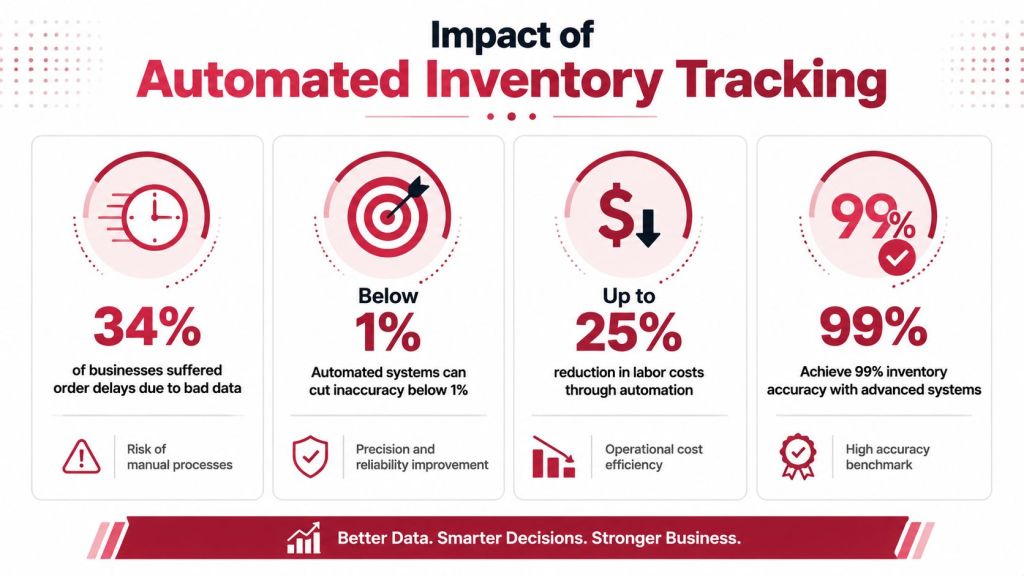
A stockroom can look organized and still be running on bad numbers. An industry statistic from Sci-Tech Today found that around 34% of businesses had delayed or canceled customer orders in the past year because inventory data was inaccurate. In operations terms, that usually means missed shipments, rushed labor, and extra verification at the worst possible moment.
What to measure before and after rollout
The clearest KPIs are the ones that connect directly to daily work. Measure inventory accuracy, pick time, space utilization, and labor efficiency before installation, then compare the same metrics after go-live. Modern systems are built to reduce inaccuracy, and one report says automated systems can bring inaccuracy to under 1% in many applications (Sci-Tech Today).
A useful way to read those numbers is to look at movement, not just counts. If a team spends less time searching and more time moving product, the process has improved even when the on-hand total appears similar on paper. That is the difference between a system that records inventory and one that actively supports work.
Where the gains show up
The benefits look different by site type, which is why one-size-fits-all advice often misses the point. Warehouses often gain better slot discipline because the system can show where an item should be and where it is sitting. Laboratories care more about traceability and item integrity, since a small labeling error can affect the whole chain of custody. Secure evidence rooms need auditable movement records and controlled access trails, where every handoff matters.
A hybrid setup often fits these environments better than a single tool. Barcode, RFID, sensor data, and camera coverage can each answer a different part of the same question. A warehouse may need fast location checks, a lab may need item-level traceability, and evidence storage may need visual verification of who handled what. For facilities that also want a physical security layer, the guide to warehouse CCTV solutions is a useful companion read. Tracking systems and camera systems solve different problems, but both help teams answer the same question, what happened, where, and when.
Selecting the Right Technology for Your Facility
The right stack depends on how the facility operates. A site with fast pallet movement needs a different design than a cold room or an evidence locker. That's why buyers should start with workflow, not with hardware catalogs.
A simple decision framework
Look at four things first. Inventory volume and turnover tells you how often items move. Environmental conditions tell you whether the stock faces temperature, humidity, or security demands. Integration complexity shows how hard it will be to sync with existing systems. Budget constraints help narrow the options without overbuilding the solution.
Start with the movement pattern, then pick the technology.
Here's a practical way to think about it.
- Warehouse rack storage: RFID is often a strong fit when bulk reads and WMS integration matter.
- Lab reagent stockrooms: Item-level control matters more, so barcode or specialized RFID can make sense.
- Government evidence lockers: The priority is secure, auditable movement records with strict control.
- Cold storage facilities: Tags and readers must perform reliably in harsh conditions.
- Retail backrooms: Fast replenishment and simple scan workflows often matter most.
A warehouse, a stockroom, and a locker room don't have the same risks, so they shouldn't use the same design. For a site that needs integrated layout planning alongside software decisions, WMS-integrated warehouse design is a practical next step.
Why hybrid systems are often the safer choice
A hybrid stack reduces blind spots. Barcode can handle low-cost item control, RFID can speed bulk verification, and IoT sensors can add condition data where needed. In a regulated or high-value space, that combination is often more useful than betting on one method alone.
Implementation and Integration Best Practices
A tracking system can look sound on paper and still fail on the floor if the rollout is rushed. The usual trouble starts with tag placement that misses the actual movement path, master data that does not match physical stock, weak training, and software that cannot keep pace with daily transactions. Implementation needs to be treated like an operations project, because it changes how people count, move, and verify inventory every day.
The rollout sequence
Start with a site survey. Map receiving points, storage zones, exits, and any areas where signal or line of sight may be weak. Then match the tag type, reader placement, and software settings to the actual workflow. A pilot in one zone gives the team a chance to see where readings fail before the system is expanded across the facility.
Integration comes next. Middleware should clean scan events before they reach ERP or WMS platforms, so the records remain usable and consistent. In practice, that means the tracking layer has to act like a filter, not a raw feed. For teams that need layout and software decisions to work together, WMS-integrated warehouse design where data defines your layout is a useful reference point. For teams that want a planning lens for scaling test zones without adding risk too early, mitigating risk with simulation and IoT is also relevant.
What makes adoption stick
People need clear rules for scans, exceptions, and correction steps. If a read fails and no one knows whether to rescan, verify manually, or escalate the issue, the data quality drops quickly. Training should cover the daily workflow, not just the software screens, because staff need to understand how the system behaves in an operational setting, with actual stock, under live time pressure.
The physical layout matters too. Material Handling USA is one option for teams that want facility planning support alongside product selection. That matters when the tracking system has to fit around racks, cages, shelving, or a secure room layout, instead of being added after the space is already fixed.
Maintenance and Long-Term Planning
Inventory systems age in quiet ways. Readers drift out of calibration, tags get damaged, and staff habits change as projects move on. If no one checks the system, the data slowly becomes less trustworthy even when the software still looks fine on screen.
Keep the system honest
Schedule regular audits of tag integrity, scan performance, and exception logs. Firmware updates matter too, especially for readers and gateways tied to live operations. Training refreshers help new hires follow the same process as experienced staff, which keeps the data clean.
Good tracking systems are maintained, not just installed.
Planning should also include room to grow. A site might start with one zone and later expand to multiple areas or sites. If the original design is too narrow, the next phase becomes expensive and slow. It's smarter to budget for replacement cycles, support contracts, and future software integration from the start.
Plan for higher-risk stock
High-value and regulated facilities need more than count accuracy. They need traceability, security, and condition control. That means future planning should include audits, access review, and exception handling for items that expire, move in and out of secure areas, or require chain-of-custody records.
The safest long-term approach is to treat the system as a living workflow. The hardware will change, the software will change, and the operation will change too. Facilities that review performance regularly are better positioned to protect accuracy and avoid the hidden cost of drift.
Conclusion
A warehouse team can have shelves full of product and still lose time if the counts are off. A lab can have accurate equipment on paper and still struggle if tags are missed. A secure storage site can meet policy in one area and fall short in another if tracking tools do not match the workflow. Inventory tracking technology helps close those gaps by tying barcodes, RFID, IoT sensors, GPS, and cloud software into one operating picture, so warehouses, labs, stockrooms, and secure storage spaces can reduce blind spots, speed replenishment, and make better day-to-day decisions.
The clearest results usually come from a hybrid stack built for the site's actual risks. In a warehouse, that may mean fast barcode scans at the dock and RFID in higher-volume zones. In a lab, it may mean tighter item histories and condition checks. In evidence storage, it may mean stronger traceability and access control. The point is simple, one-size-fits-all advice often misses the accuracy and cost gains that appear when the technology matches the job.
For managers and buyers, the value is practical. Better tracking can improve space use, cut search time, and help protect service levels before small inventory errors turn into delayed orders. Facilities that plan early often avoid the slowdowns that come with rushed installs, disconnected tools, and unclear ownership of the process.
If you're comparing options for a new build, retrofit, or secure storage project, choose one of the following:
- Request a Quote
- Call (800) 326-4403
- Contact Us
Material Handling USA can help you scope the right solution, match it to your workflow, and move ahead with competitive pricing and fast delivery.
A CTA for Material Handling USA.