
Comprehensive Lab Renovation Services for Distillery Quality-Control Labs
Casework, work surfaces, vapor extraction and safety storage built for the proof testing, sensory work and process chemistry that a distillery the size of Brown-Forman’s Louisville operations runs every day.

SEFA 8
Compliant casework construction
4 casework types
Wood, painted steel, stainless, phenolic
6–7 weeks
Typical design-to-install turnaround
800-326-4403
Talk to a lab specialist today
A Lab Built Around Proof, Not Just Chemistry

Large multi-site spirits producers — Brown-Forman’s Louisville distillery operations among them — run continuous quality control on fermentation, distillation and finished product. That means a lab bench that sees ethanol, acids and solvents daily, proof determinations that have to satisfy a federal regulator, and a sensory or tasting area that has to stay clean and odor-free next to a working chemistry bench.
Material Handling USA designs and installs the casework, work surfaces, point-source vapor extraction, flammable-liquid storage and shelving that a distillery or beverage QC lab needs, sourced from manufacturers already built to laboratory-industry standards rather than office furniture adapted for lab use.
This page walks through the material, extraction and safety choices that matter most for a distillery lab, and how our renovation process is run so production is not disrupted while the work happens.
Planning a distillery or beverage QC lab project?
Send us your current lab layout or the shell space and the testing you run, and we will come back with a casework and equipment plan and a real schedule.
Request a Quote Try the Lab Layout Designer Call (800) 326-4403
Why a Distillery QC Lab Is a Different Design Problem

Proof testing is a federal requirement, not a preference
TTB (the Alcohol and Tobacco Tax and Trade Bureau) requires distilled spirits plants to determine proof using the gauging procedures in 27 CFR Part 30, and TTB can require that a proprietor’s own gauging equipment and methods be verified. TTB’s own guidance on formula approval also calls out “proof at distillation” as a specific lab analysis producers need to be able to run and document.
That is the practical reason a distillery lab is not simply a chemistry classroom scaled up: the bench, the instruments and the recordkeeping all have to hold up to a regulator looking at the numbers, not just to internal QC.

Ethanol and solvent exposure is constant, not occasional
Where a general chemistry lab might see a solvent spill now and then, a distillery QC lab opens ethanol-based samples, reagents and standards throughout the shift. Work surfaces need continuous chemical resistance, and vapor has to be captured at the bench, not just diluted by the room’s general ventilation.
Sensory and tasting evaluation is also part of the workflow at most beverage producers, which usually means a separate, odor-controlled space next to — but not inside — the working chemistry bench.
What we will not do
We will not claim to certify a lab as TTB-compliant or promise automatic regulatory approval — that determination stays with TTB and your compliance team. We supply and install casework, work surfaces, extraction and safety equipment built to recognized laboratory-furniture standards, and we size and lay it out around the testing you describe to us.
Casework and Work Surface Options
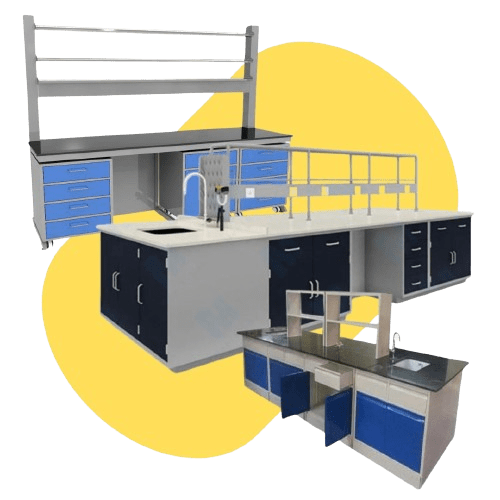
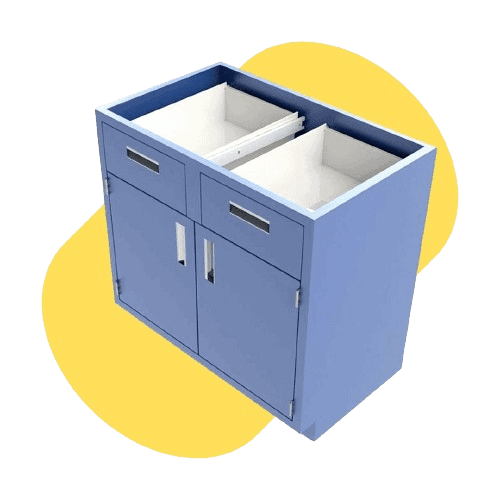
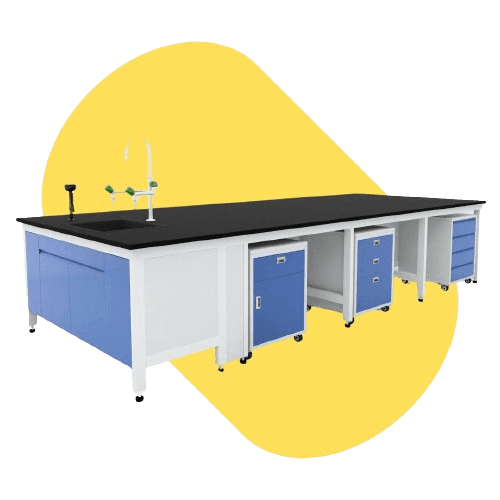
All of our in-stock and custom laboratory casework programs are built to SEFA 8 (Scientific Equipment and Furniture Association) laboratory-grade metal casework construction standards. The choice between materials comes down to chemical exposure, wash-down needs and budget — not one default option.
| Casework | Construction | Why it’s specified | Where it fits |
|---|---|---|---|
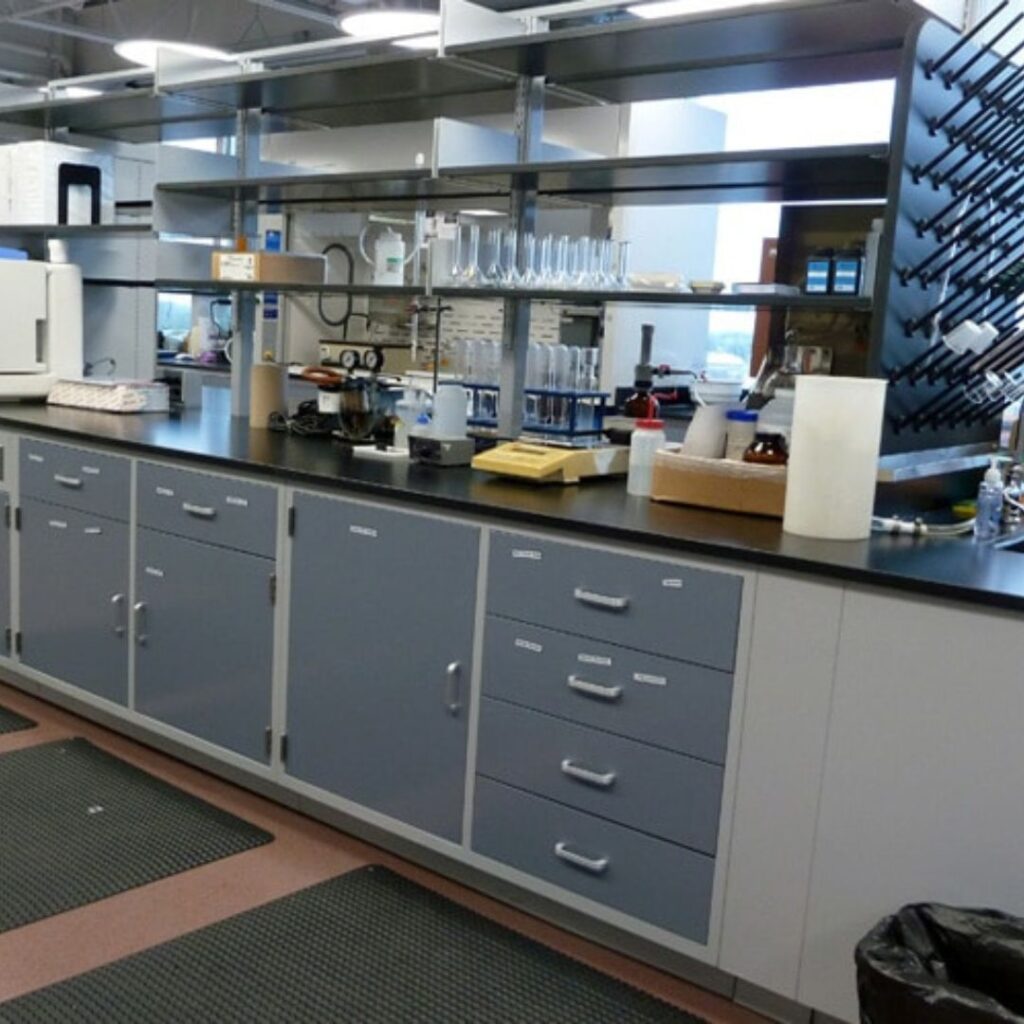
| Painted steel | Recycled steel body, urethane powder-coat finish, inset-style doors | Chemical and abrasion resistance at a lower cost than stainless | General QC labs, sample prep, sensory panel rooms |
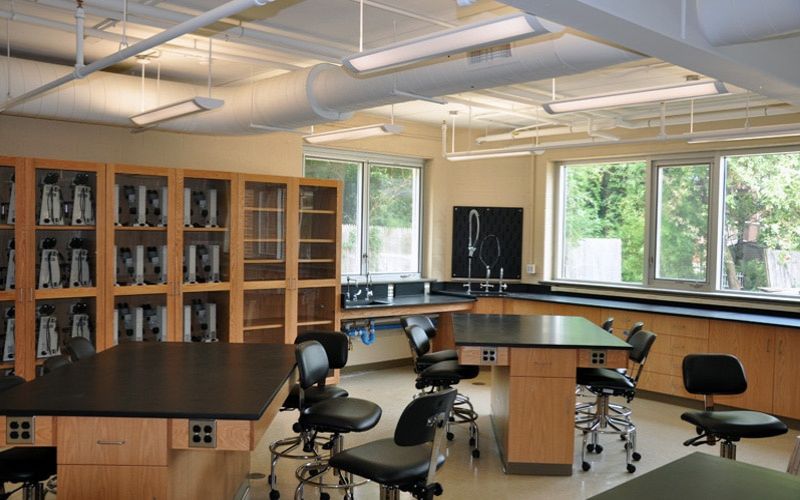
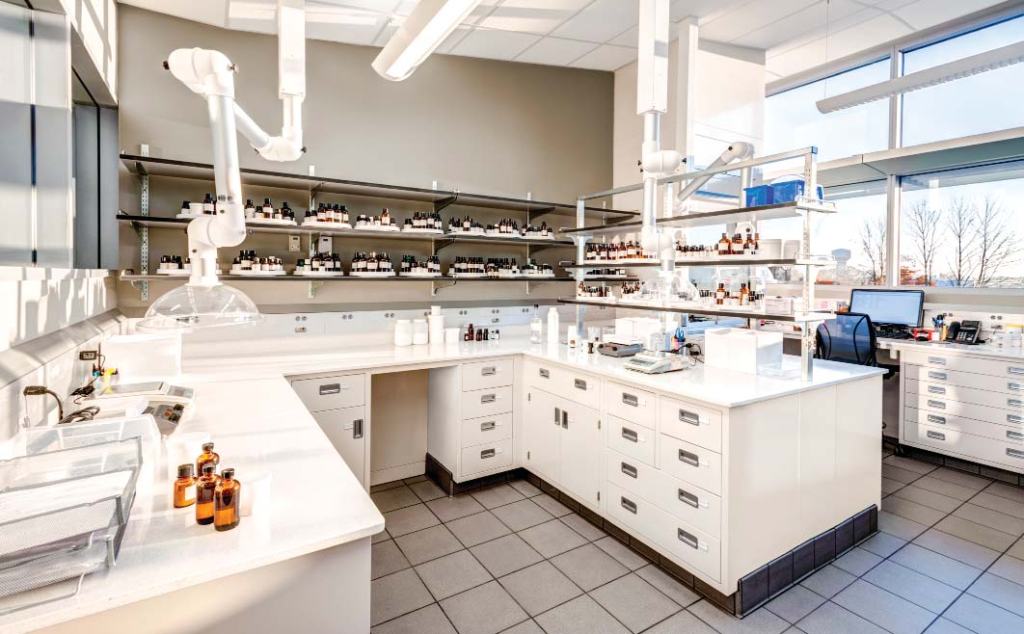
| Laboratory wood | Hand-selected veneers, FSC-certified wood, chemically resistant finish | Warmth and durability for offices adjoining the lab | Front-office/lab hybrid space, tasting and sensory rooms |
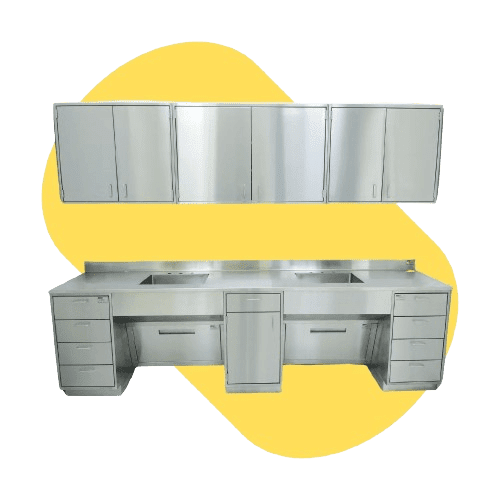
| Stainless steel (Type-304, #4 finish) | Full-extension drawer suspension, welded seams | Sanitation and wash-down tolerance | Fermentation QC, microbiology, wash-down areas |
| Phenolic (black core) | Acid- and moisture-resistant phenolic panels | Virtually maintenance-free in wet, corrosive areas | Proof rooms, titration benches, chemical storage areas |

Work surfaces: epoxy vs. phenolic resin
The two materials that show up on nearly every distillery lab bench are epoxy resin and phenolic resin. Both resist chemicals far better than laminate, but they trade off cost and heat tolerance differently.
| Material | Strengths | Best for |
|---|---|---|
| Epoxy resin | Exceptional chemical and heat resistance; seamless pours available | Proof testing, chromatography and other high-heat/high-spill benches |
| Phenolic resin | Chemical and moisture resistant, more economical than epoxy | General QC benches, sample prep, wet chemistry |
Laboratory Wood CaseworkHand-selected veneers and FSC-certified wood for offices and sensory rooms next to the lab.
Stainless Steel CaseworkType-304 stainless with a #4 finish for wash-down and sanitation-critical areas.
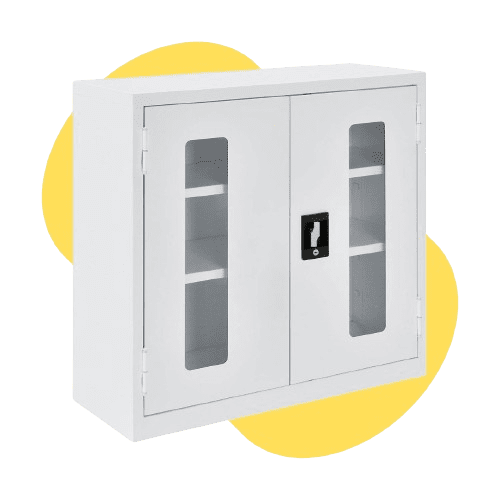
Tall Storage CaseworkFull-height, locking cabinets for reference standards, retains and consumables.Point-Source Vapor Extraction at the Bench

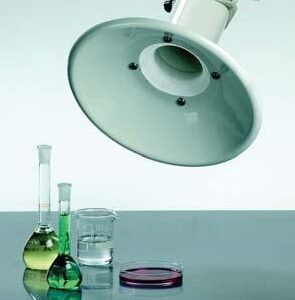
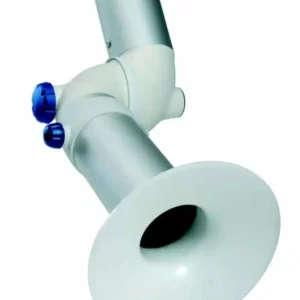
General room ventilation is not enough where ethanol, solvents and reagents are opened at the bench all day. Nederman FX2-series benchtop extraction arms capture vapor right at the source — where the sample is opened or the titration is run — before it reaches the technician’s breathing zone.
Arms come in three diameters, sized to the volume of vapor and the distance from source to duct. We size and place them against your actual bench layout rather than defaulting to one arm size across the whole lab.
| Model | Published airflow | Typical use |
|---|---|---|
| FX50 (2 in.) | 30–65 cfm (50–110 m³/h) | Single bench position, low-volume vapor capture |
| FX75 (3 in.) | 65–140 cfm (110–240 m³/h) | Standard proof/titration bench, ethanol and solvent vapor |
| FX100 (4 in.) | 120–265 cfm (200–450 m³/h) | Higher-volume sample prep or shared bench runs |

How the ductwork comes together
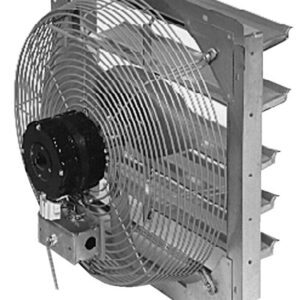
Individual extraction arms tie into branch ducts with blast gates, a central exhaust fan and roof discharge — the same layout whether the lab is one bench or a full QC suite. Planning the duct run early avoids retrofitting ceiling space later.
Not sure how many extraction points you need?
Tell us your bench count and what gets opened at each one, and we will lay out the arms, ducting and fan sizing before you commit to casework.
Flammable-Liquid Storage and Lab Safety

Ethanol and other solvents are flammable liquids, and a distillery lab typically keeps more of them on hand than a general QC lab. Self-closing, self-latching flammable storage cabinets — sized to your on-hand quantities and kept clear of ignition sources — are standard equipment on every distillery lab we fit out, not an add-on.
We also spec eyewash/safety-shower fixtures, spill containment and labeled chemical storage as part of the same casework package, so safety equipment is planned into the layout instead of squeezed in afterward.
- Self-closing, self-latching flammable-liquid storage cabinets sized to your inventory
- Point-source vapor extraction at every bench that opens solvent-based samples
- Phenolic or epoxy resin work surfaces where acids and solvents are used daily
- Labeled, segregated chemical storage separated from sensory/tasting spaces
- Eyewash and safety-shower fixtures planned into the layout, not retrofitted
- ADA-compliant bench heights and clearances where required
Shelving and Storage for Samples, Standards and Supplies

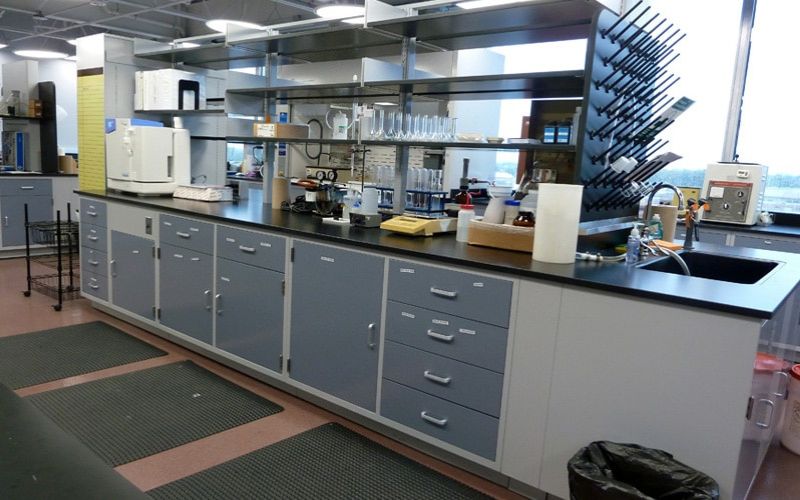
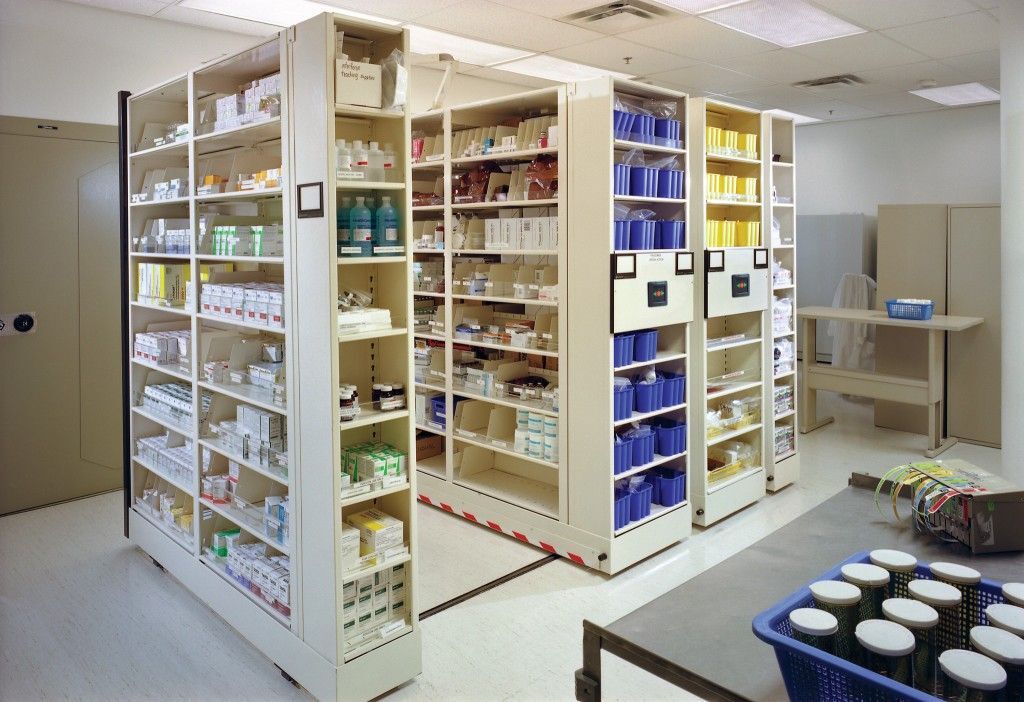
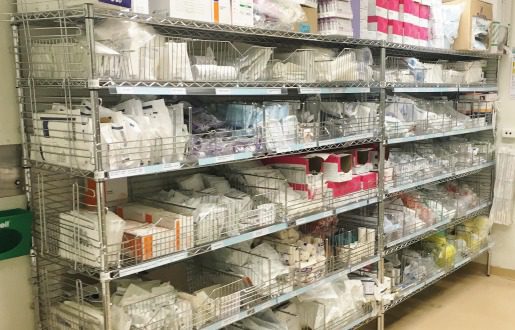
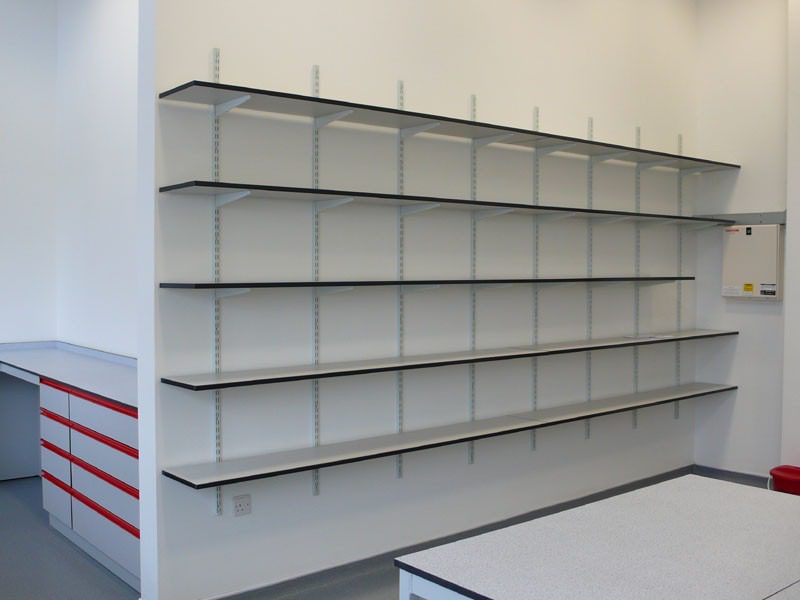
A proof/QC lab accumulates retained samples, reference standards, glassware and consumables fast. Phenolic wall and bench shelving handles the wet, corrosive side of the lab; open wire shelving keeps dry storage areas ventilated and easy to inspect; and high-density mobile shelving reclaims floor space in labs that are tight on square footage.
Every shelving system is sized and specified against your actual retention requirements and floor plan, not sold as a one-size grid.
Stainless Bench & Fume Hood SuitesStainless casework and fume hoods for process chemistry and wash-down areas.
Bench-Level Sample RacksOpen bench storage for pipettes, glassware and sample racks near the extraction arm.
Open Wire StorageVentilated wire shelving for dry storage where air circulation and easy inspection matter.How a Lab Renovation Project Runs
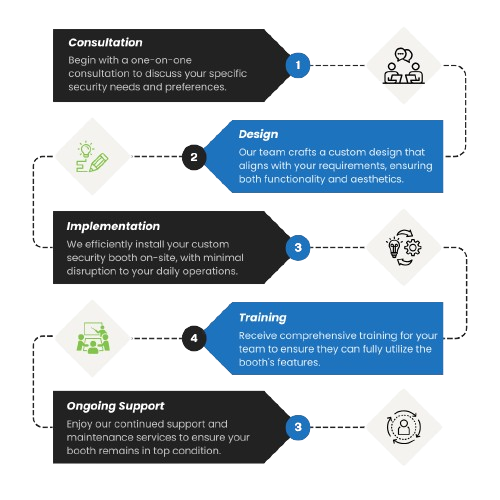
Site survey and program
We walk the existing lab or the shell space, note utilities, drains, egress and any TTB gauging or fire-code requirements, and confirm what has to stay operational during the work.
Casework and layout design
Bench runs, fume/vapor extraction points, storage and safety equipment are laid out to your workflow — sample intake through proof testing to storage — and reviewed with you before ordering.
Material and vendor selection
Steel, wood, stainless or phenolic casework; epoxy or phenolic tops; Nederman extraction arms; Justrite safety cabinets — matched to your chemical exposure and budget, not defaulted to one product line.
Coordinated demolition and install
We coordinate with your facilities team on demolition, utility disconnects/reconnects and disposal so the rest of the plant keeps running.
Fit-out and commissioning
Casework, countertops, extraction arms, safety cabinets and shelving are installed, leveled, and connected; punch list walked with your team before handover.
Support after handover
Replacement parts, additional casework runs, and shelving or storage expansions as your lab and testing volume grow.
Get a schedule you can plan around
Once your design is locked we give you a real installation schedule, coordinated with your facilities team so production areas that do not need to be touched keep running.
Request a Quote Open the Lab Layout Designer Call (800) 326-4403
Selected Lab Casework Projects
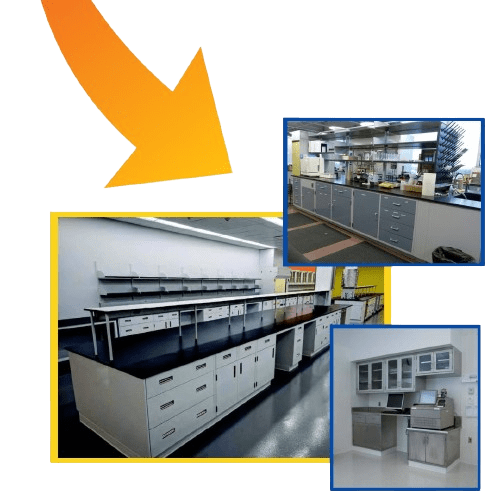
A few of the labs we have fitted out with casework, fume/vapor extraction and furniture for process research, flavor development and materials testing.
BalchemCasework, fume hoods and lab furniture for Balchem’s work in human health, animal nutrition and oil/gas research.
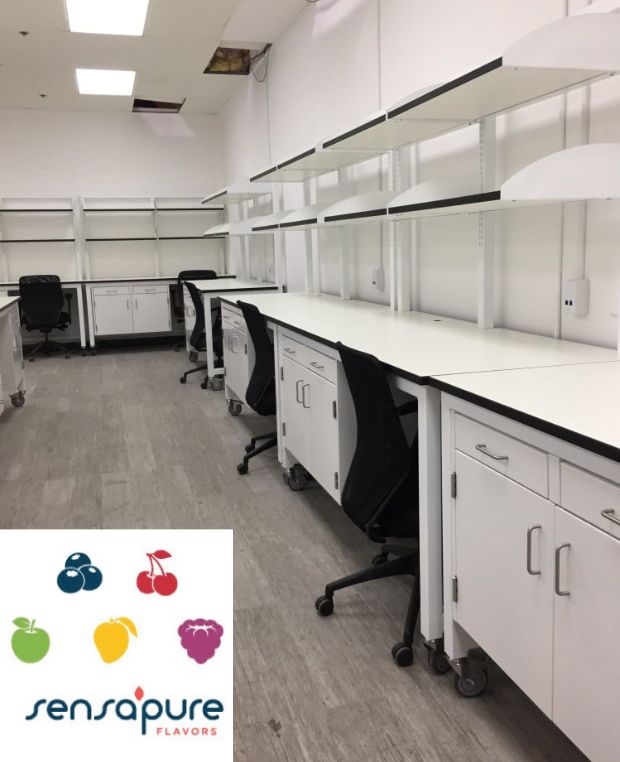
Sensapure FlavorsCasework and open wall shelving for a flavor research and development lab.
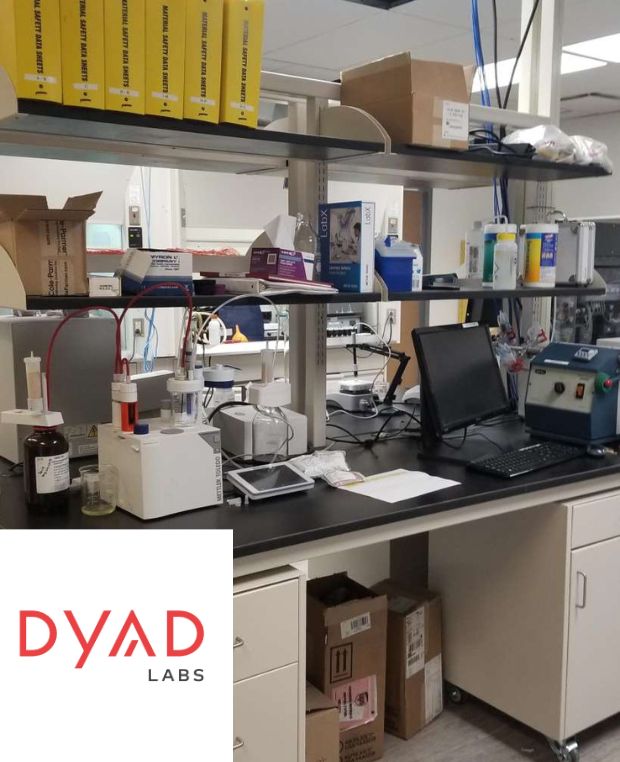
Dyad LabsNew casework and furniture for a material-testing laboratory in Salt Lake City.Distillery & Beverage Lab Renovation: FAQs
Do you design labs specifically for distilleries and beverage producers?
Why does a distillery need a formal proof/QC lab at all?
What casework material do you recommend for a proof or titration bench?
How do you handle ethanol and solvent vapor at the bench?
What about flammable-liquid storage in the lab?
How long does a lab renovation like this take?
Can you keep the rest of the facility running during the renovation?
Do you supply the shelving and storage, not just the benches?
Ready to Renovate Your Distillery or Beverage QC Lab?
Send us your current layout or shell space and the testing you run, and we will come back with a casework, extraction and safety plan, a real installation schedule, and a quote. Free design consultation.