
Custom Lab Tables for Princeton University
Adjustable, mobile, chemical-resistant lab tables built to your dimensions — with the epoxy, phenolic or stainless work surface that matches your chemistry, and the casework, shelving and fume hoods to finish the room.

24″ × 48″
Standard table footprint
30″ deep
Optional for larger equipment
3 work surfaces
Epoxy, phenolic & stainless
~6 days
Epoxy/phenolic tops after approval
Lab Tables Built Around the Way You Work

Setting up or refitting a laboratory means getting the work surface right, then building a table around it that fits the room, the equipment and the people using it. Material Handling USA designs and supplies custom laboratory tables and casework for university, research, medical and industrial labs — adjustable, mobile, and made to your dimensions rather than pulled off a fixed size chart.
Whether you are outfitting a new teaching lab, adding benches to a research group, or replacing tired furniture in an existing space, the questions are the same: what does the surface have to survive, how much can you move things around, and how do power, storage and shelving reach the point of use. This page walks through each of those decisions, shows real labs we have built, and points you to the tools to lay out your own.
Custom does not mean slow or complicated. Standard tables start at 24″ × 48″ and scale from there; work tops are chosen from three proven materials; and epoxy or phenolic tops are typically fabricated within about six days of approved drawings.
Planning a lab table or a full lab fit-out?
Send us the room, the equipment and the work you do, and our Furniture Specialists will come back with a surface recommendation, a layout and a real lead time.
Choosing the Work Surface: Epoxy vs. Phenolic vs. Stainless Steel
The single most important decision in a lab table is the top. Most modern labs converge on three proven materials, and the right one depends on what the surface has to handle in a normal week — and what it has to survive when something goes wrong. The industry benchmark for evaluating work surfaces is SEFA 3, the Scientific Equipment and Furniture Association standard for laboratory work surfaces, which screens for chemical, heat and impact resistance.
| Work surface | What it is | Chemical resistance | Heat resistance | Best fit |
|---|---|---|---|---|
| Epoxy resin | Monolithic, non-porous slab (resin + silica, oven-cured). The performance benchmark for aggressive wet chemistry. | Excellent — concentrated acids, bases, most solvents and repeated disinfection | High; supports hot glassware and hotplate-adjacent work within spec | Heavy-use wet chemistry, fume-hood and sink runs, teaching chemistry benches |
| Phenolic resin | High-pressure laminate of kraft paper saturated with phenolic resin, cured under heat and pressure. Thinner and lighter than epoxy. | Broad resistance for routine acids, bases, alcohols and buffers | Moderate; not for sustained high heat (will ignite under prolonged flame) | Teaching, biology and general-purpose benches; mobile tables where weight matters |
| Stainless steel (304 / 316) | Non-porous metal work surface, often with an integral welded sink. Autoclave- and heat-compatible. | Good, but can pit with chlorides and harsh oxidizing acids | Very high; tolerates sterilization and hot equipment | Cleanrooms, pharmaceutical, sterile prep and wash-down rooms |

Epoxy resin — the performance benchmark
Epoxy resin is cast as a dense, monolithic slab and cured hard, so it is non-porous all the way through: a deep scratch does not expose a weaker layer underneath. It handles many concentrated acids — including sulfuric, hydrochloric and nitric — strong bases, common solvents and repeated disinfection, with good impact and scratch resistance and short-term heat tolerance for hot glassware. Because it is heavy, the table framing has to be built to carry it, which is part of why a custom table matters.
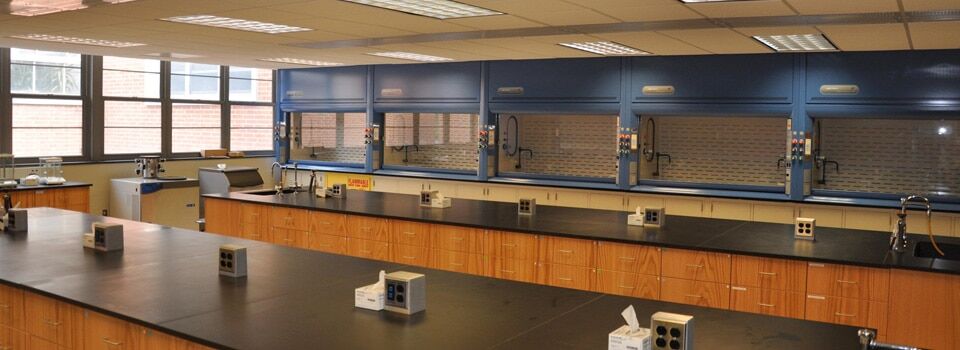
Phenolic resin — the versatile all-rounder
Phenolic resin is a high-pressure laminate: layers of kraft paper saturated with phenolic resin and cured under heat and pressure. It is thinner and lighter than epoxy, which makes it a natural fit for mobile tables and long bench runs, and it costs less. It resists moisture and a broad range of routine acids, bases and alcohols, and it is non-conductive and flame-resistant. It withstands constant heat up to roughly 350°F, but it is not flame-retardant — sustained high heat will eventually ignite it — so it is not the surface for a dedicated high-heat station.
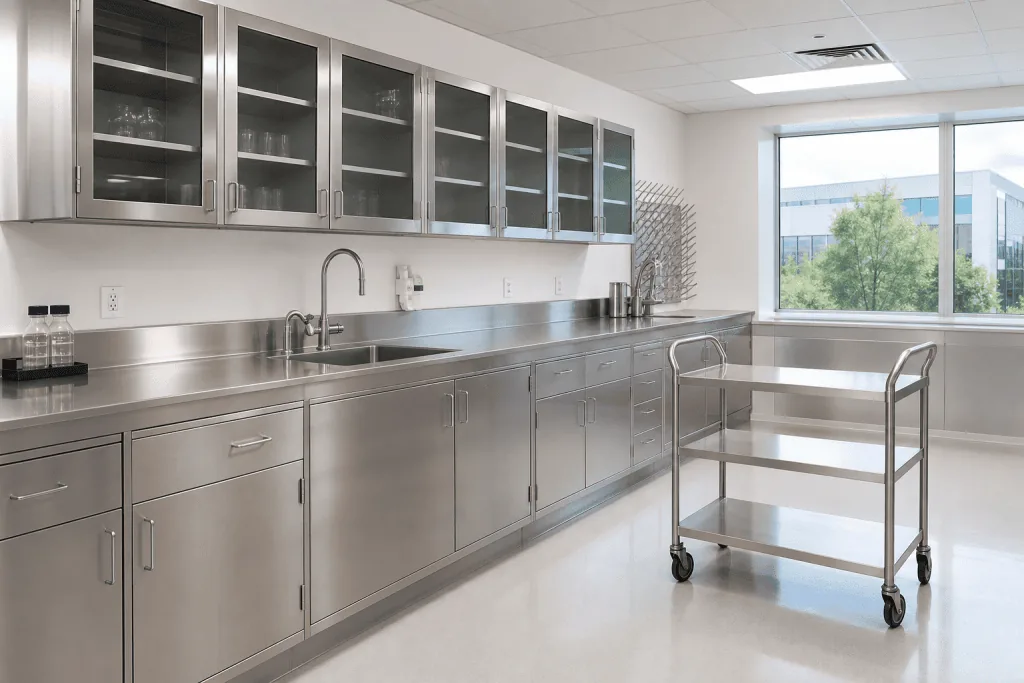
Stainless steel — for sterility and wash-down
Stainless steel (typically Type 304, or 316 for tougher exposures) is non-porous, autoclave- and heat-compatible, and the easiest surface to decontaminate quickly, which is why it dominates cleanrooms, pharmaceutical prep and sterile procedure rooms. Its one caution is chemistry: repeated exposure to chlorides and harsh oxidizing acids can pit the surface, so it is chosen where hygiene and rapid wipe-down — not aggressive acid work — drive the room.
Which one for your lab?
A quick rule that holds up in real projects: epoxy for the toughest chemical and heat work, phenolic for balanced, cost-conscious general and teaching benches, and stainless where sanitation and sterility come first. The prior version of this page called stainless the default; in practice the best result comes from matching the surface to the application first, then the budget. We also offer chemically resistant plastic laminate and hardwood tops, with custom depths, edge details, backsplashes and cutouts — samples and full specifications on request.
What Makes These Lab Tables “Custom”
Once the surface is set, the table is built around your workflow. These are the options that turn a flat top into a workstation that fits the room and adapts as the research changes.
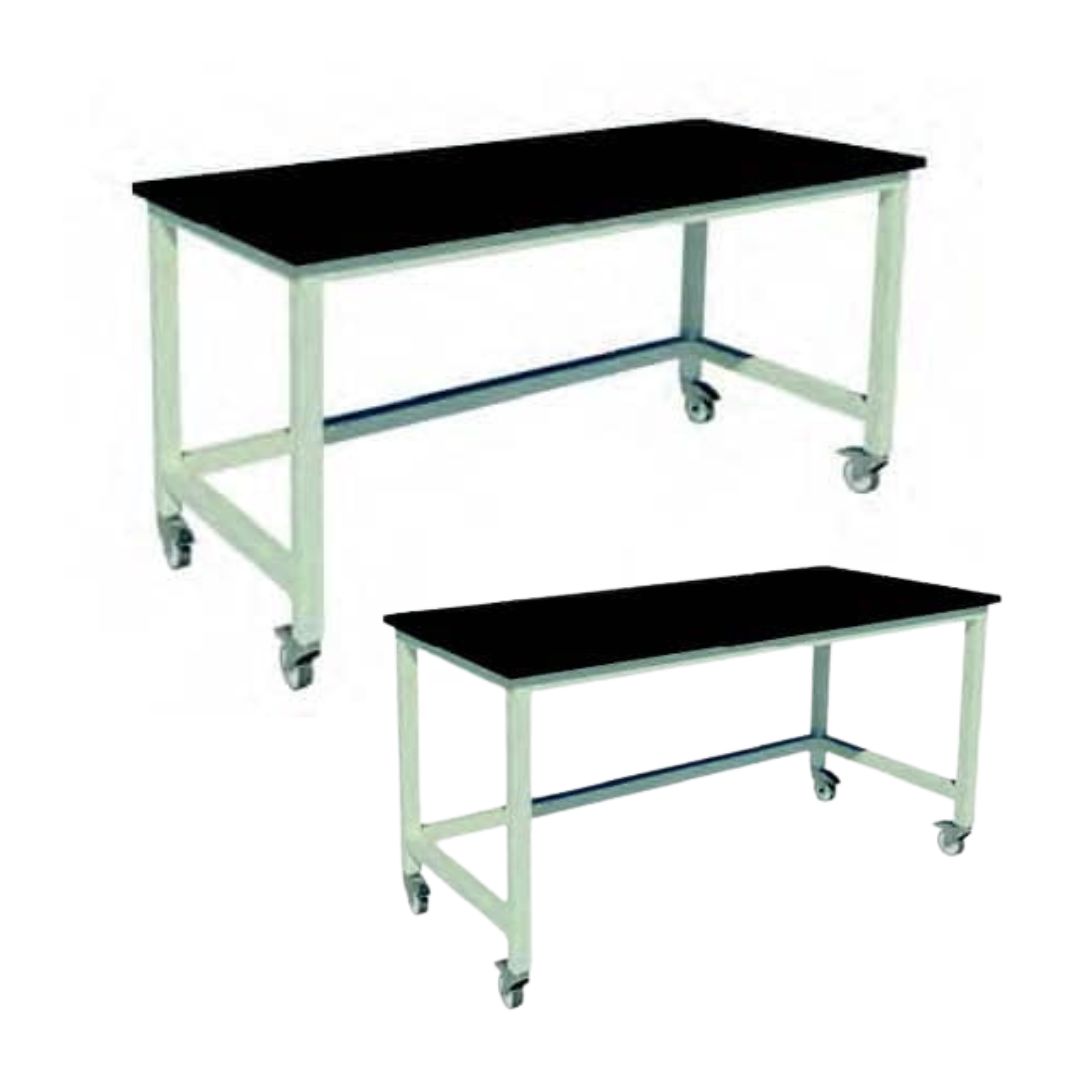 Built to Your DimensionsThe standard table is 24″ × 48″, with an option to increase the depth to 30″ so larger instruments, incubators and analyzers sit fully on the surface. Lengths, leg heights and overhangs are made to your floor plan rather than a fixed catalog size.
 Mobile on Locking CastersHeavy-duty casters let a table be repositioned for a new experiment or rolled out of the way for cleaning, then locked so it stays put in use. It is the difference between a fixed bench and a lab you can reconfigure as the work changes.
 Integrated Power & DataTables can be pre-wired with outlets and data so equipment plugs in at the point of use instead of trailing cords across the floor. Fewer cords is both a safety improvement and a cleaner bench.
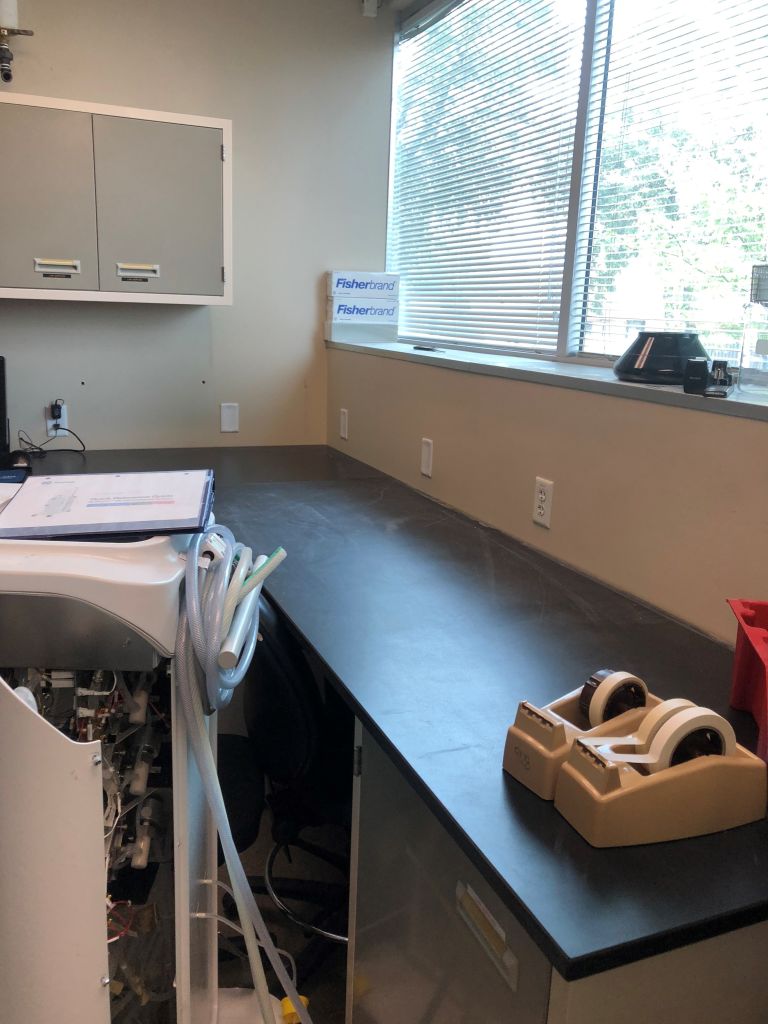 Adjustable & Removable ShelvesUpper reagent shelves and lower storage adjust or come off entirely, so a single table can hold glassware today and clear to an open surface for a large instrument tomorrow.
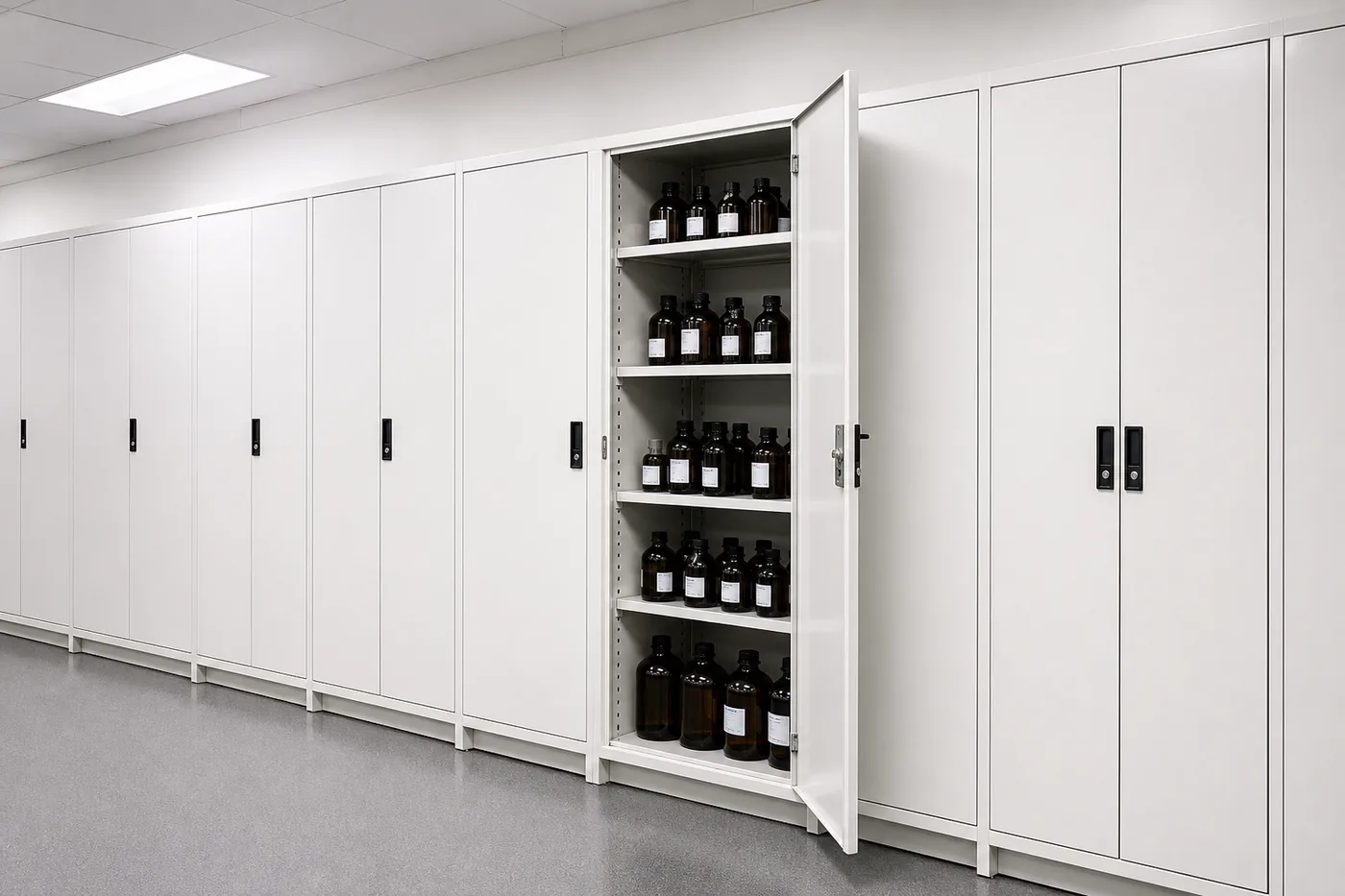 Suspended & Mobile CabinetsAdd drawer and cabinet units suspended under the top or as standalone mobile pedestals for tools, consumables and PPE — storage that follows the workflow instead of a fixed cabinet run.
 Islands & Shared WorkstationsThe same table system builds two-sided islands and shared workstations for group teaching and multi-user research, with power and shelving down the spine.
- Standard 24″ × 48″ footprint, with an option to go 30″ deep for larger equipment
- Adjustable height for seated or standing work
- Heavy-duty locking casters for mobility, or leveling feet for a fixed bench
- Pre-wired power and data at the point of use
- Adjustable and fully removable reagent shelves
- Suspended or standalone mobile cabinets and drawer pedestals
- Scratch-resistant, easy-to-sanitize work surfaces that withstand 70% ethanol and bleach
Configure a bench in minutes
Set the size, surface, shelving and storage in our free Lab Bench Designer, or plan the whole room in the Lab Layout Designer, then send it to our team for a quote.
Open the Lab Bench Designer Plan the Whole Room Call (800) 326-4403
Casework to Finish the Room
Tables rarely stand alone. We supply full laboratory casework in four families, all built to SEFA 8, the association standard for laboratory casework, so the base and wall cabinets around your tables match the same durability and chemical-resistance expectations as the work surfaces.
 Wood Veneer CaseworkHand-selected premium-grade veneers with chemically resistant finishes and FSC-certified wood, in a modular design. Warm, durable and a common choice for university and research labs. Applications: university labs, research facilities, pharmaceutical labs.
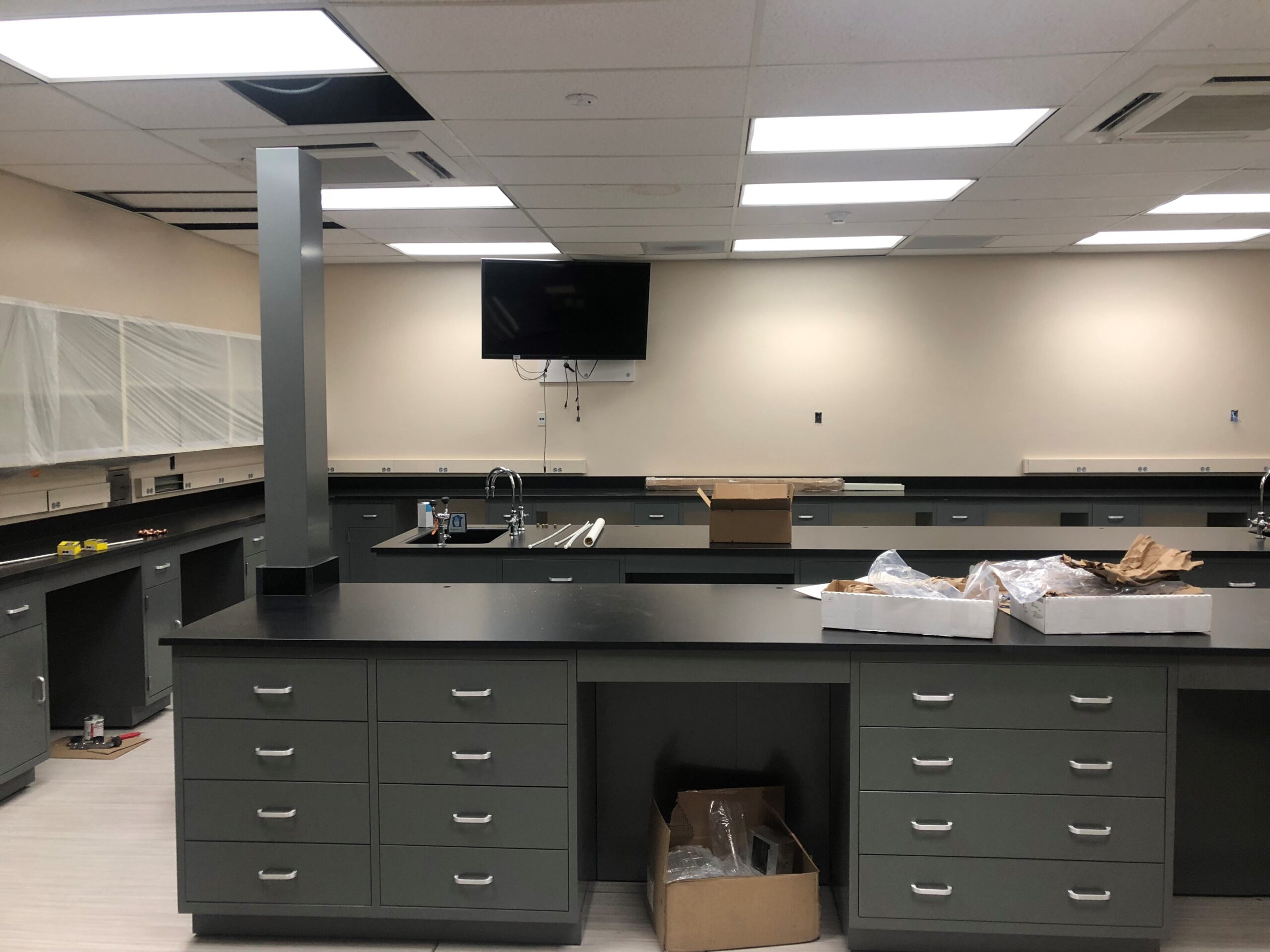 Painted Steel CaseworkRecycled-steel cabinets with a urethane powder-coat finish for superior chemical and abrasion resistance, built to SEFA 8 and offered in an inset, modular design. Applications: research labs, medical facilities, universities.
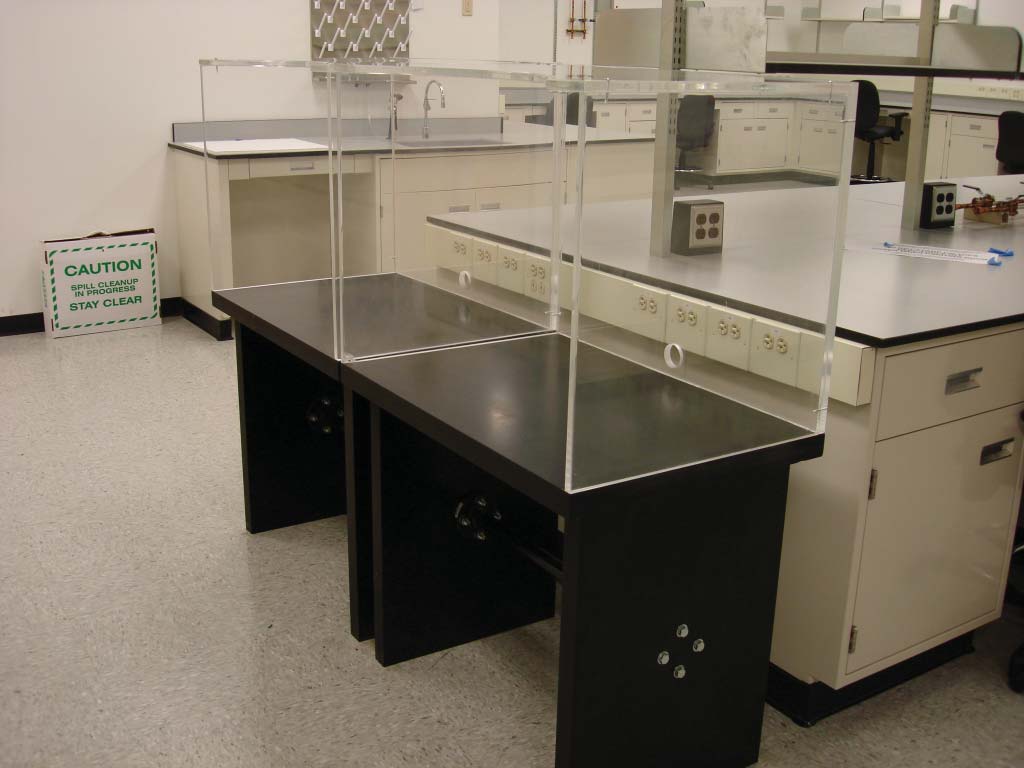 Stainless Steel CaseworkType-304 stainless with a #4 finish and full-extension drawer suspension, SEFA 8 compliant — the choice where sanitation and sterilization drive the room. Applications: operating rooms, clinical labs, healthcare facilities.
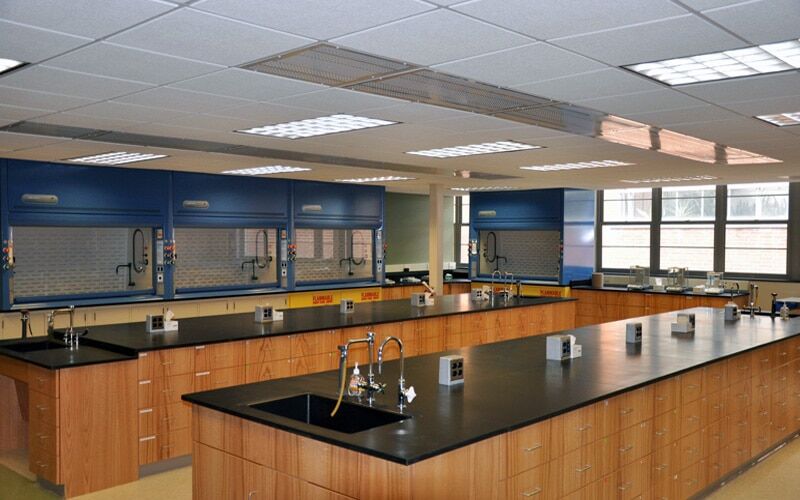 Phenolic CaseworkAcid- and moisture-resistant, impact-resistant, virtually maintenance-free with a black core — built for wet areas where corrosion or rust is a concern. Applications: chemical labs, healthcare facilities, research labs.
Who We Build Lab Tables For
The same table and casework system covers a wide range of laboratories. What changes between them is the work surface, the cleaning regime and how much the room needs to reconfigure — not the underlying system.
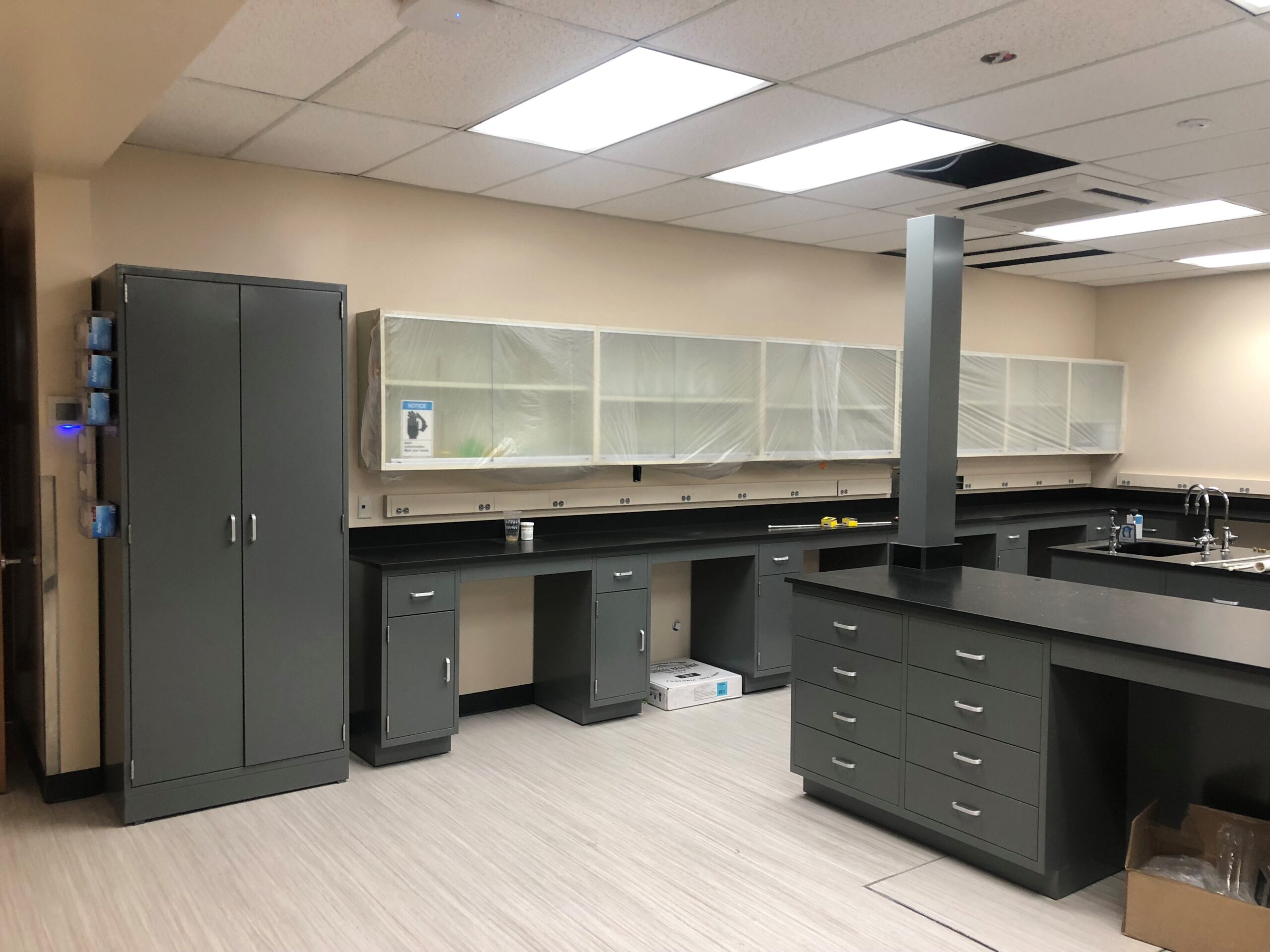 University & Teaching LabsStudent benches, two-sided islands and instructor stations that take daily abuse and reconfigure between courses. See how we approach a university build on our lab for a university page.
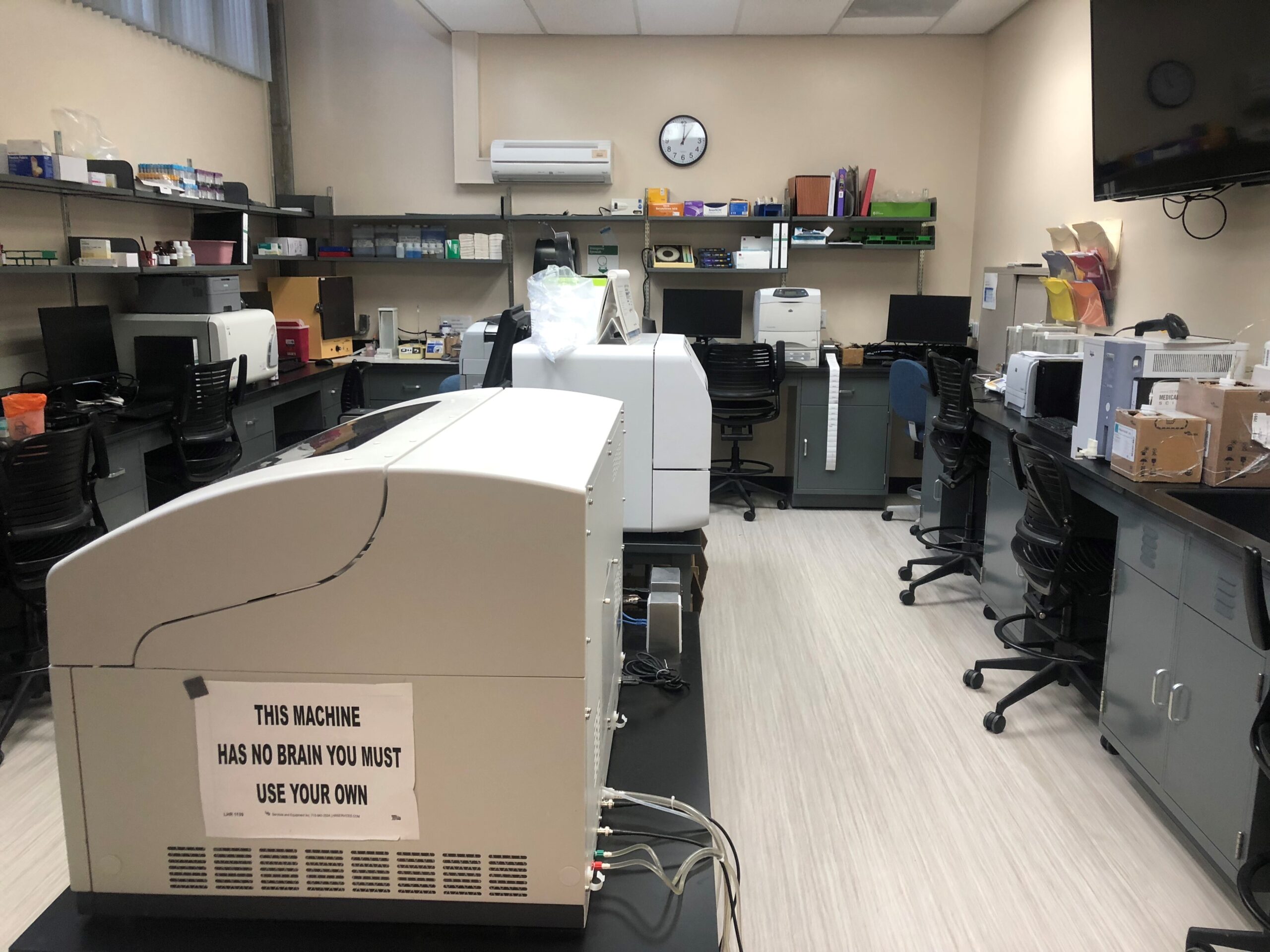 Research & Analytical LabsInstrument-ready benches with the power, data and vibration-stable surfaces that analytical and R&D groups need, sized to the equipment rather than to a catalog table.
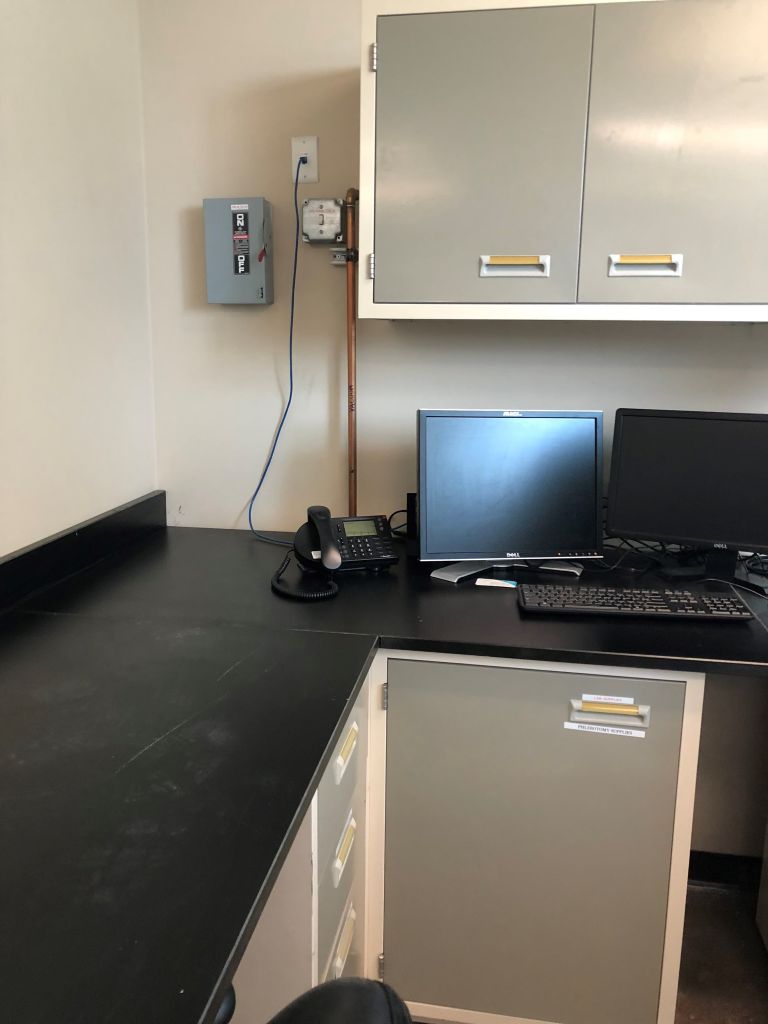 Medical & Clinical LabsNon-porous, easy-to-sanitize work surfaces and casework for clinical, diagnostic and healthcare laboratories where cleaning regime drives the material choice.
 QC, Forensic & Industrial LabsDurable benches and tables for quality-control, forensic and industrial testing labs, including chemically resistant tops and heavy-duty frames for bench-top equipment.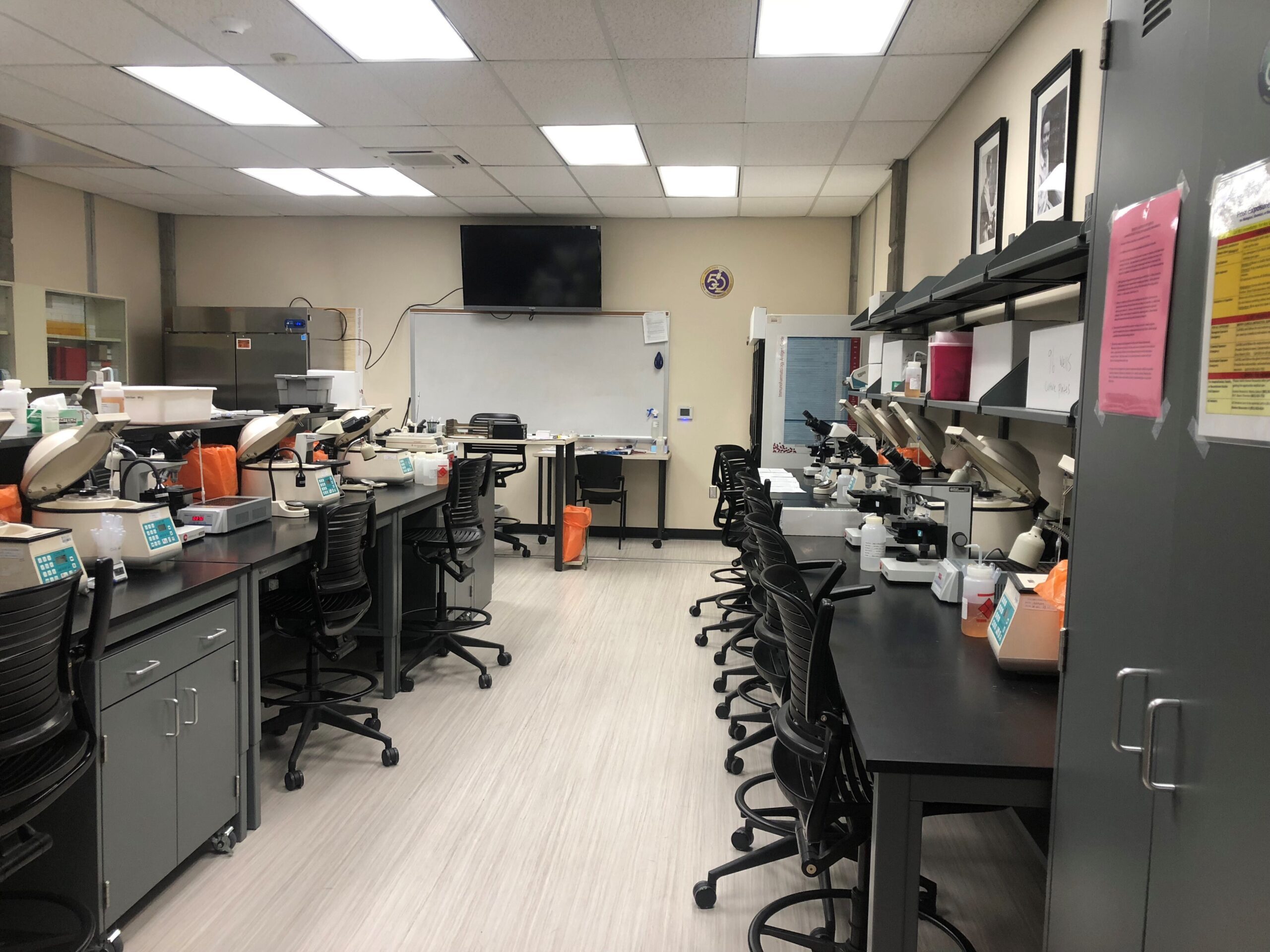
Especially for universities
University labs are a demanding case: they take daily student use, reconfigure between courses, and have to satisfy both the science and the facilities team. That is exactly the environment these custom tables are built for — durable surfaces, mobile tables and islands, and casework that holds up. If you are standing up a new space from scratch, our guides on setting up a laboratory and building a lab for a university are a good place to start, and mobile shelving from our lab mobile shelving line can reclaim floor space for more bench.
Laboratory Projects We’ve Delivered
These are real laboratories Material Handling USA has furnished — casework, tables, shelving and fume hoods delivered and installed. They are the proof behind the specifications above.
 Weber State UniversityA full science-teaching lab fit-out with painted steel casework, black work surfaces and student benches — the kind of university build this page is written for.
 Brown-Forman Lab RenovationA comprehensive laboratory renovation with wood-grain casework, black epoxy work tops and overhead reagent shelving along the bench runs.
 BalchemCasework, fume hoods and lab furniture supporting Balchem’s research across human health, animal nutrition and oil & gas.
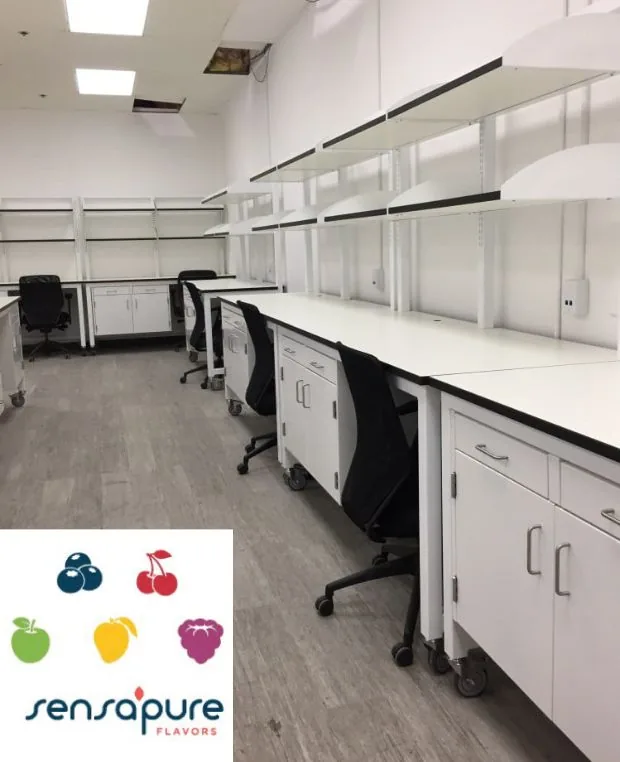 Sensapure FlavorsCasework and lab furniture that gave the Sensapure Flavors team the bench space and storage to run flavor research and development.
 Dyad Labs, Salt Lake CityNew lab casework and furniture for a material-testing laboratory — a complete, working solution delivered and installed.
 Perimeter Casework RunsPerimeter casework with black work tops, base cabinets and glassware shelving — a recurring layout across our university and research projects.
Ordering, Lead Times & How We Work

The fastest path to a real quote is a short list of facts: the room dimensions and layout, the equipment that has to sit on the tables, the chemistry and cleaning regime that drive the surface, and any power, data or fume requirements. If the space already exists, photographs of the benches, walls and utilities are worth more than any description.
From there we recommend a work surface and casework family, lay out the tables, and confirm lead times. Black epoxy and phenolic tops are typically fabricated within about six days of approved drawings; stainless steel, plastic laminate and hardwood tops usually run 7–8 weeks. Samples and full specifications are available on request, and our Furniture Specialists help you choose the material and style.
- Room dimensions and layout, plus access for delivery and install
- Equipment list — what sits on each table, and how heavy
- Chemistry and cleaning regime, so the work surface is matched correctly
- Power, data, gas and fume-hood requirements at the point of use
- Whether tables need to be mobile, adjustable-height, or fixed
- Timeline and any phasing around an occupied lab or a semester schedule
Get a custom lab table quote
One bench or a full lab, a single surface or a mixed-material room — we quote the tables, casework and installation together, and we tell you a lead time we can hold.
Why Phenolic Resin Is Such a Common Lab Choice
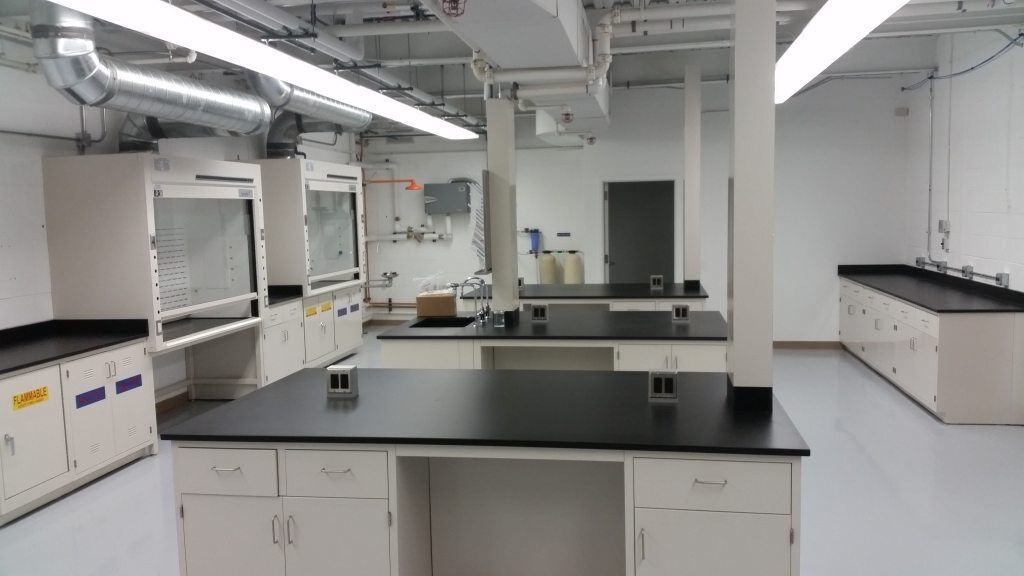
Phenolic resin work surfaces are the preferred choice across a long list of industries — electronics, ballistics, aerospace, chemistry, medicine, pharmacology, mining and oil & gas — because they are non-reactive, durable and impervious, and they resist chemicals and high temperatures well for the price. Because they are non-conductive and flame-resistant, they are a sensible option for labs that have to address toxicity, combustion and fire-safety considerations, provided the surface is not used as a sustained high-heat station.
Phenolic tops suit clinical, analytical, biological and chemical testing labs — the kind of work whose results depend on a clean environment and a work surface that is chemical-resistant, sanitary and impervious. When productivity depends on a lab running efficiently and every bench has to earn its footprint, phenolic often wins on the combination of performance, appearance and a lower cost than epoxy. As always, weigh price, look and function against the actual chemistry and heat the surface will see.
Custom Lab Tables: FAQs
What sizes do the custom lab tables come in?
Which work surface should I choose — epoxy, phenolic or stainless steel?
Are the tables adjustable and mobile?
What is the difference between phenolic and epoxy resin, and why is phenolic often less expensive?
Do you also supply the casework, fume hoods and shelving around the tables?
What are the lead times?
Can you design the layout for us?
Related Products & Resources
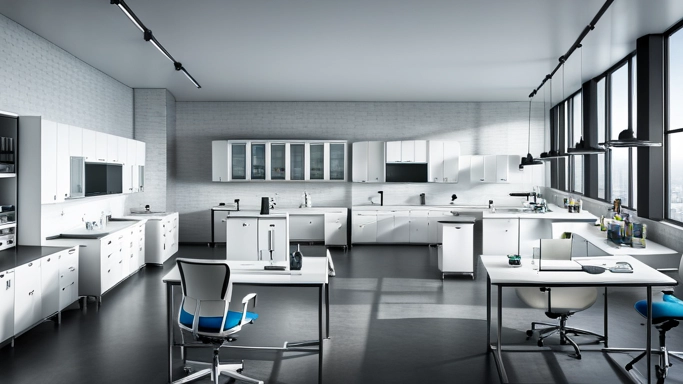 Laboratory FurnitureThe full laboratory furniture and casework line — benches, tables, cabinets and work surfaces.
 Furniture for Analytical TestingHigh-quality laboratory furniture configured for analytical and testing environments.
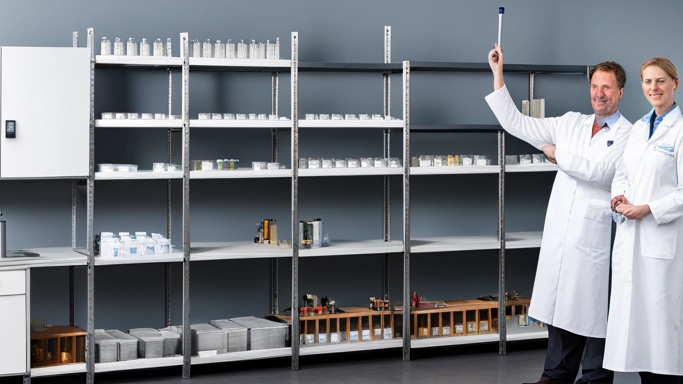 Laboratory Shelving & StorageShelving and storage systems, including high-density mobile shelving, to reclaim lab floor space.
 Lab Bench DesignerConfigure a lab table or bench — size, surface, shelving and storage — then send it to our team.
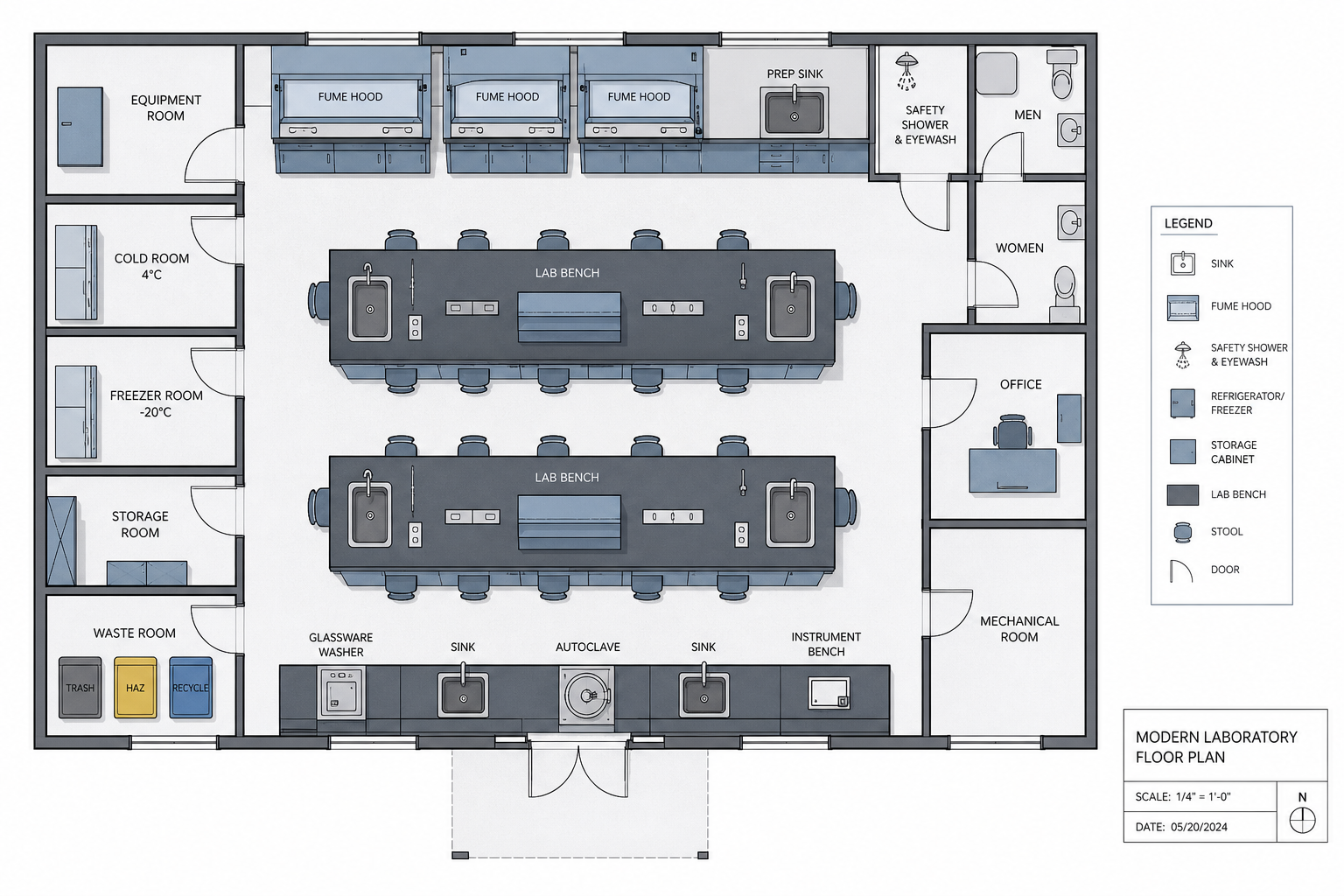 Lab Layout DesignerPlan the whole room: benches, fume hoods, casework and support spaces on a floor plan.
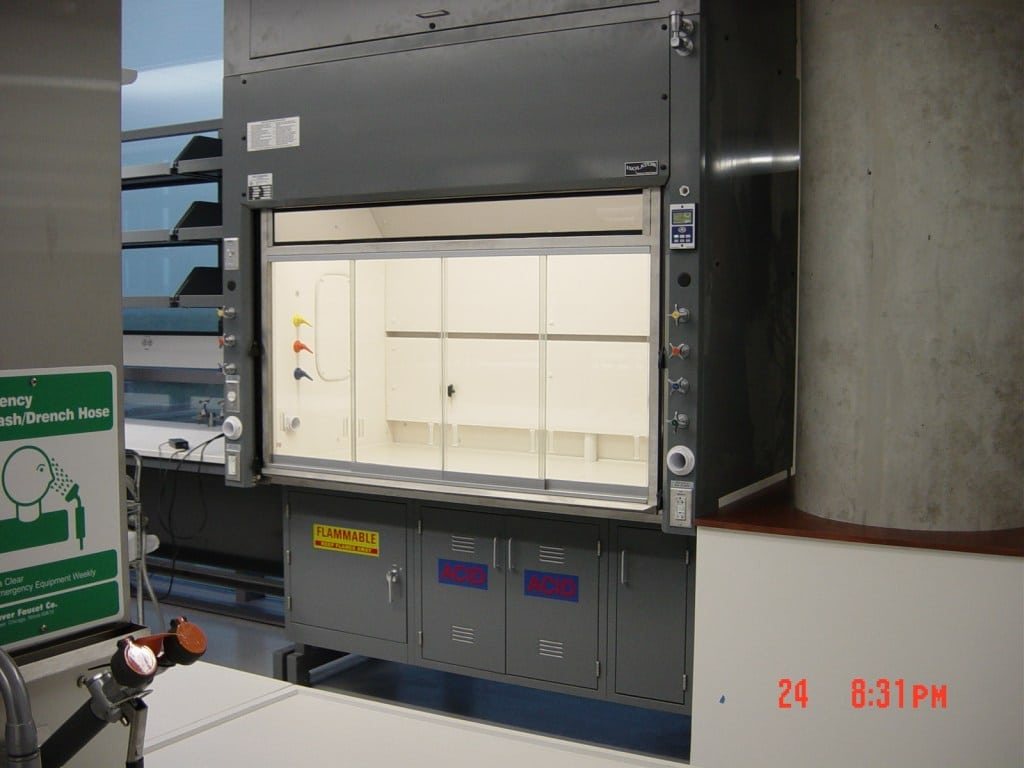 Fume HoodsBench-top and floor-mounted fume hoods to pair with your tables and casework.
Let’s Build Your Lab Tables
Tell us the room, the equipment and the work you do. We will recommend the right work surface, lay out the tables and casework, quote the furniture and installation together, and give you a lead time we can hold. Free design consultation.