
Efficient Solutions for R&D Chemistry Lab Setup
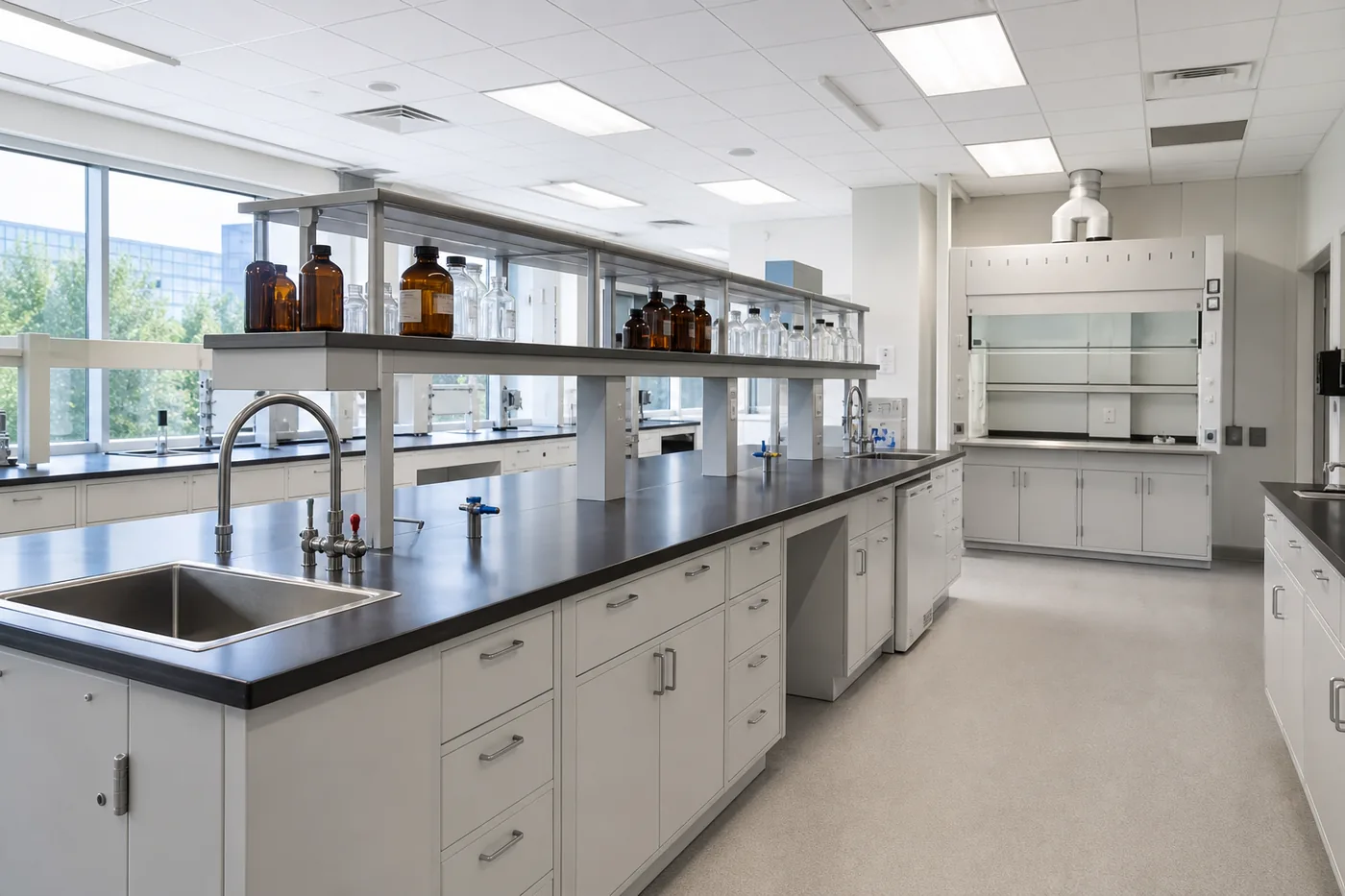
Custom lab casework, work surfaces, fume hoods and storage — designed around your chemistry, drawn before anything is ordered, manufactured to the drawings and installed by our own team. Free layout design, and a delivery target of about six weeks.
6 weeks
Delivery target we work to
SEFA 8
Casework test protocols
80–100 fpm
Typical hood face velocity range
Free
Layout drawings & elevations
Setting Up an R&D Chemistry Lab Without Designing In Problems

Most of what makes a chemistry lab efficient is decided before a single cabinet is ordered: where the hoods go, which walls carry services, how far a chemist walks between the balance and the hood, and which work surface can actually survive what you spill on it. Furniture is the part you can see, but layout is the part you live with.
Material Handling USA designs, manufactures and installs laboratory casework, benches, work surfaces, fume hoods and lab storage for research and development chemistry labs — startups fitting out a first space, established groups renovating around live programs, universities, industrial QC labs and testing laboratories. We start with your chemistry, your instruments and your room, then draw it and cost it before anything is built.
This page walks through the decisions in the order you have to make them, with the standards each one is judged against. If you would rather sketch than read, the free lab layout configurator lets you lay out the room yourself and send it to us.
Send us your room and your chemistry
A floor plan or even a phone photo of the space, a list of what happens in it and what has to be ventilated is enough for us to come back with a layout, a materials recommendation and a real number.
Request a Quote Open the Lab Layout Configurator Call (800) 326-4403
Step One: Zone the Room, Then Furnish It
An R&D chemistry lab is not one space, it is six overlapping ones. Getting the adjacencies right is what makes a small lab feel workable and a large lab feel fast. Ventilated work goes where the exhaust can go; dry instruments go away from sinks and drafts; write-up desks come out of the chemical use area.
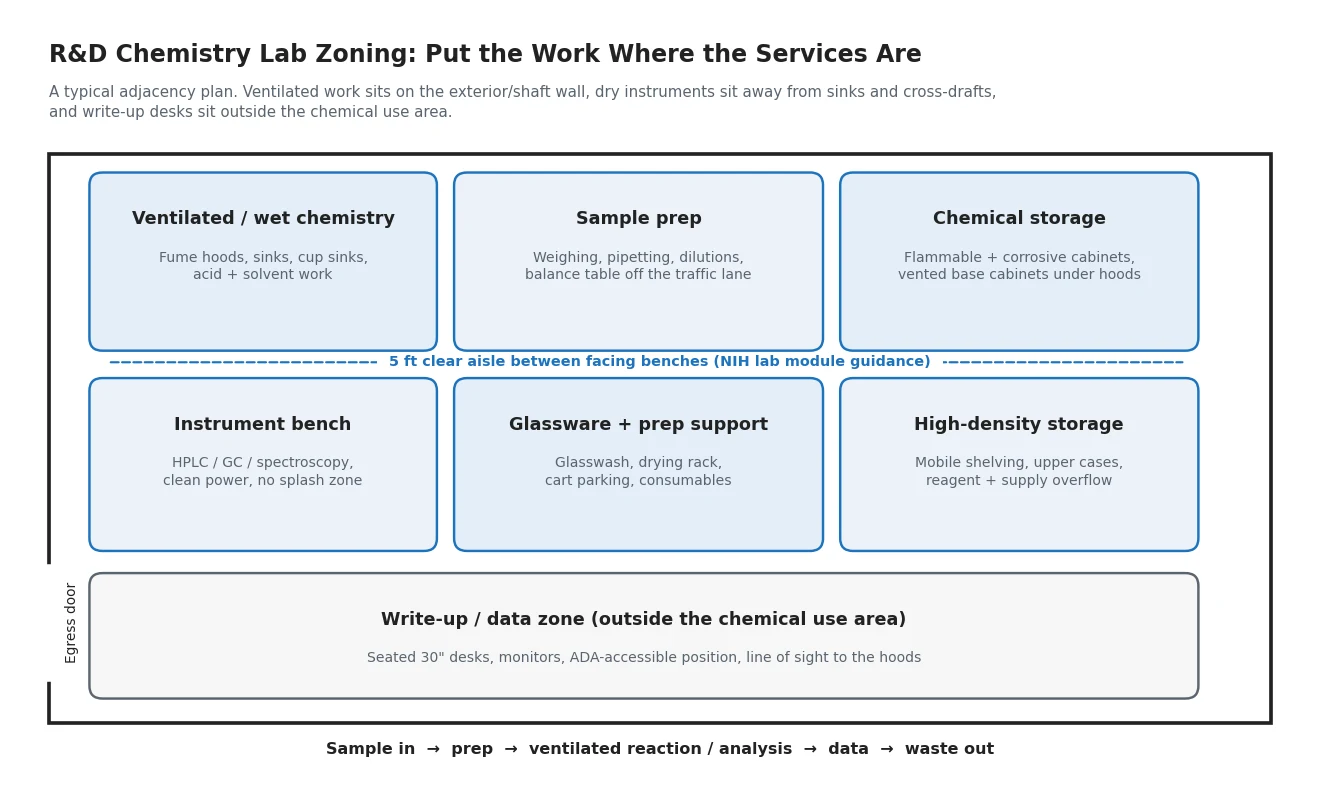
 Wet Chemistry & Ventilated WorkSinks, cup sinks, acid and solvent work and the fume hoods that serve them. This zone belongs on the wall with the exhaust riser and away from the door, because every foot of duct and every cross-draft you design in later costs you containment and money.
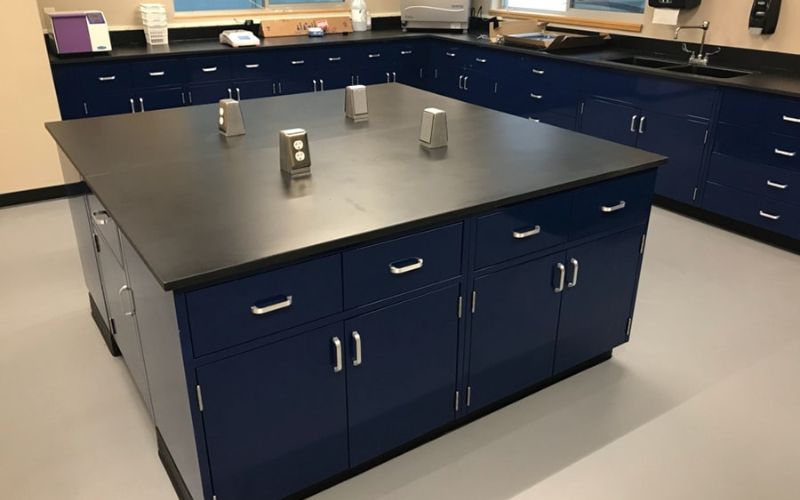
 Sample Prep & WeighingDilutions, weighing and pipetting want a stable, vibration-free surface out of the traffic lane. Balances hate drafts, so keep them off the hood face and away from diffusers — a dedicated balance table or a heavy-top section of bench solves it.
 Instrument BenchesChromatography, spectroscopy and benchtop analyzers need clean power, cable management, heat rejection and depth. We size these runs to the instrument footprint plus service access, not to a standard 24″ cabinet, and keep them out of splash range of the sinks.
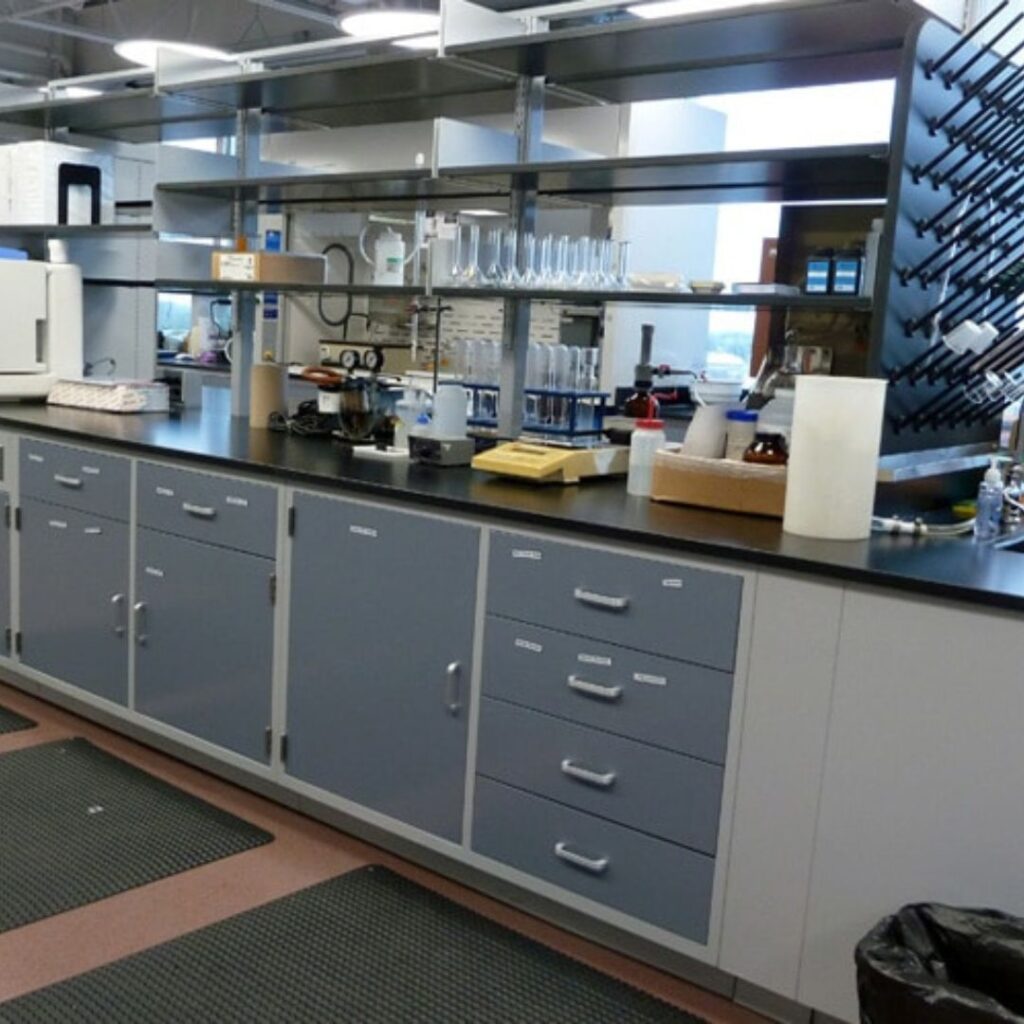 Glassware, Drying & Prep SupportGlasswash, drying racks and pegboards, cart parking and consumable storage. Putting this next to prep instead of across the room removes hundreds of steps a week from your technicians.
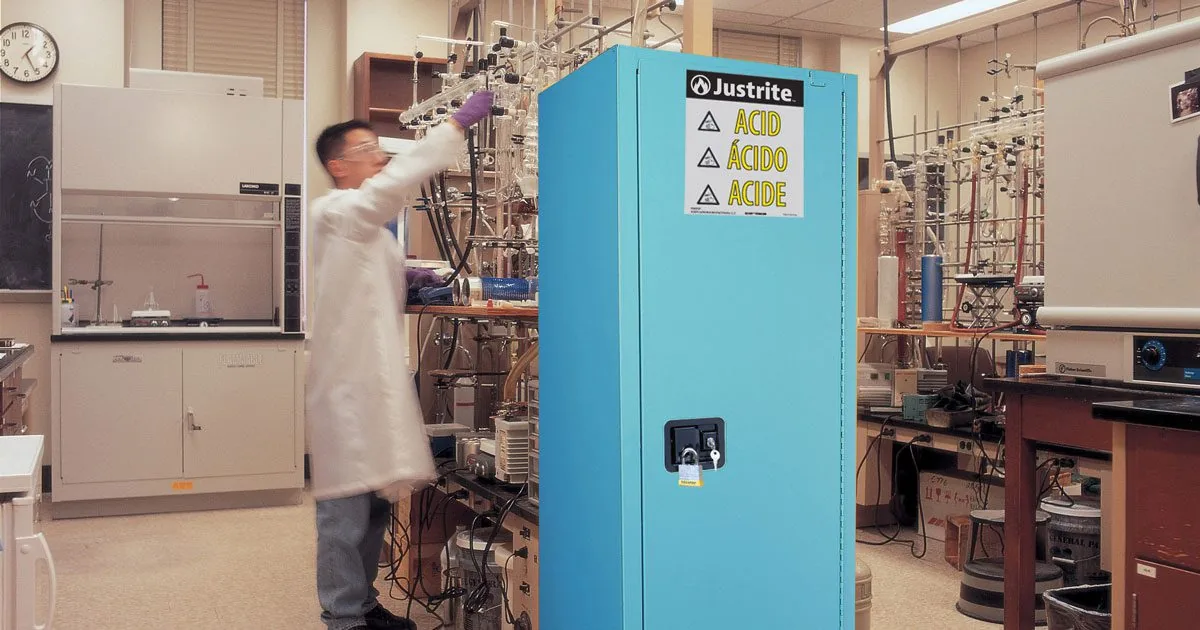 Chemical StorageFlammable and corrosive cabinets, vented base cabinets under the hoods and segregated storage by compatibility. NFPA 45 limits how much ignitible liquid a laboratory unit can hold, so storage is a layout decision, not a shopping decision.
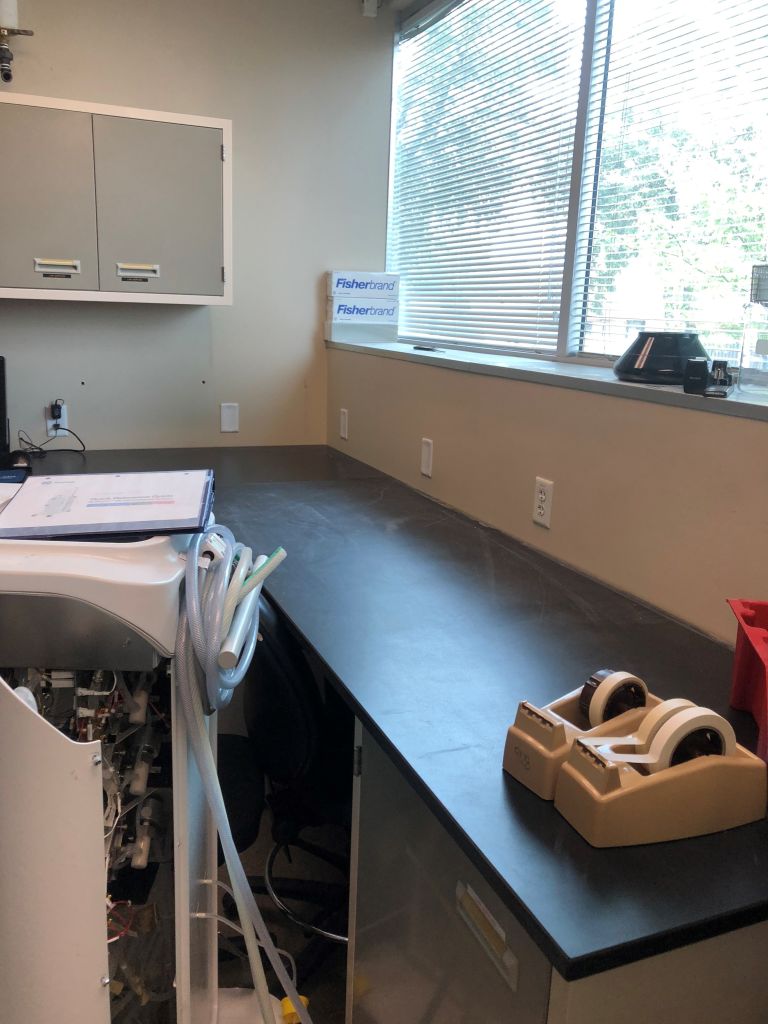 Write-Up & DataSeated 30″ desk height, knee space, monitors and notes — positioned outside the chemical use area but still in sight of the hoods. This is also where the ADA-accessible position is easiest to build in from day one.
The one dimension worth fighting for
The NIH’s own laboratory module guidance settles on an 11′-0″ module because it yields a 5′-0″ aisle between facing benches: 5′ is the minimum ADA turning radius, it lets two people work back to back without collisions, it is the minimum clearance from a biological safety cabinet to an opposing bench, and it is narrow enough to discourage people from parking equipment in it. Deeper equipment — high-efficiency hoods, freezers, containment enclosures at 40″ or more — needs a wider module to keep that aisle.
Laboratory Casework: In Stock or Manufactured to Your Drawings
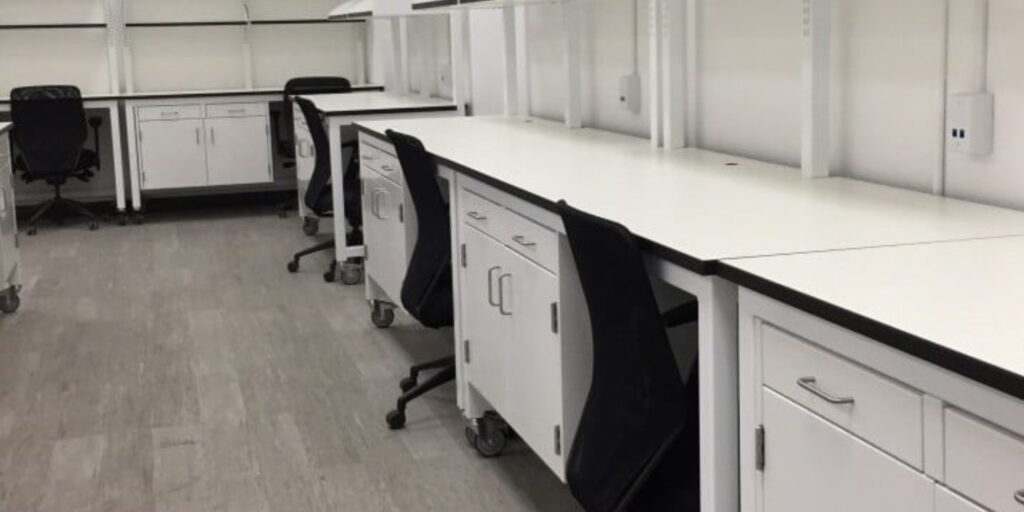
Our in-stock casework program exists for labs that need furniture in days rather than months: an extensive selection of base, wall, tall and mobile cabinets in stainless steel, painted steel, wood and phenolic, with a powder-coat finish held to the SEFA 8 test protocols and a wide range of colors and cabinet styles. Modular construction means the same cabinets can be reconfigured later instead of replaced.
Custom manufacturing covers everything a real room needs that a catalog does not: odd widths, corner conditions, deep instrument benches, hood surrounds, sink runs, service chases and ADA-accessible positions. Because we manufacture to the approved drawings, the cabinet that arrives is the cabinet on the plan.
Storage options inside a cabinet are not a permanent decision either — drawer banks, doors, adjustable shelves and pull-outs can be changed as the work changes, which is the cheapest flexibility available in a lab.
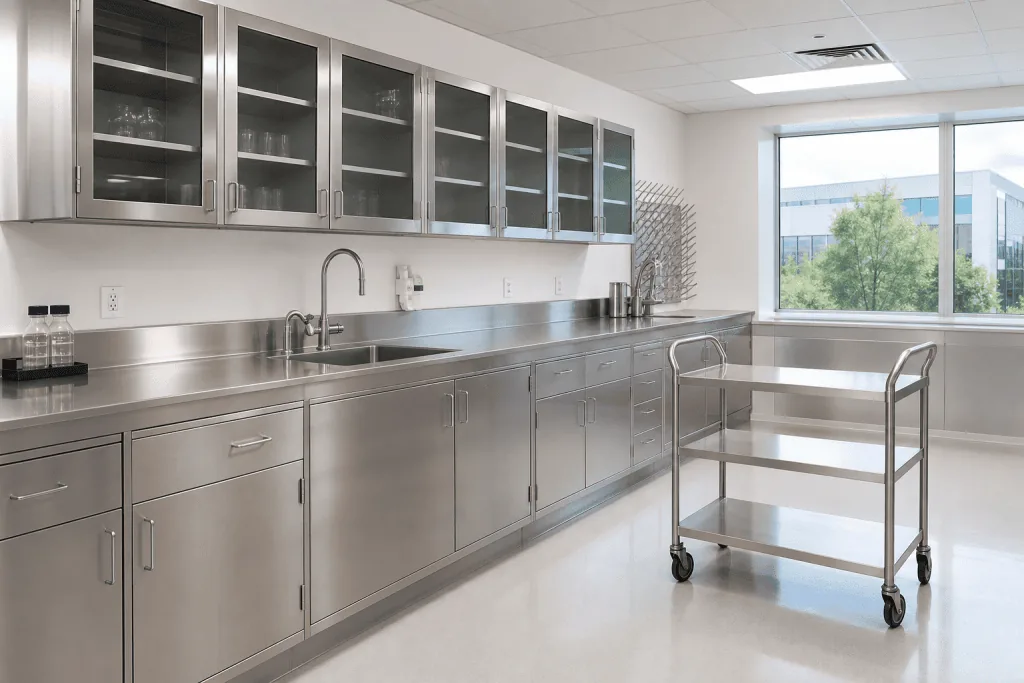 Stainless Steel CaseworkType 304 or 316 stainless for aggressive cleaning regimes, radiochemistry, sterile and high-purity work. Welded construction, no absorbent surfaces, and the easiest family to decontaminate. It is the premium option and it earns it where cleanability is the driver.
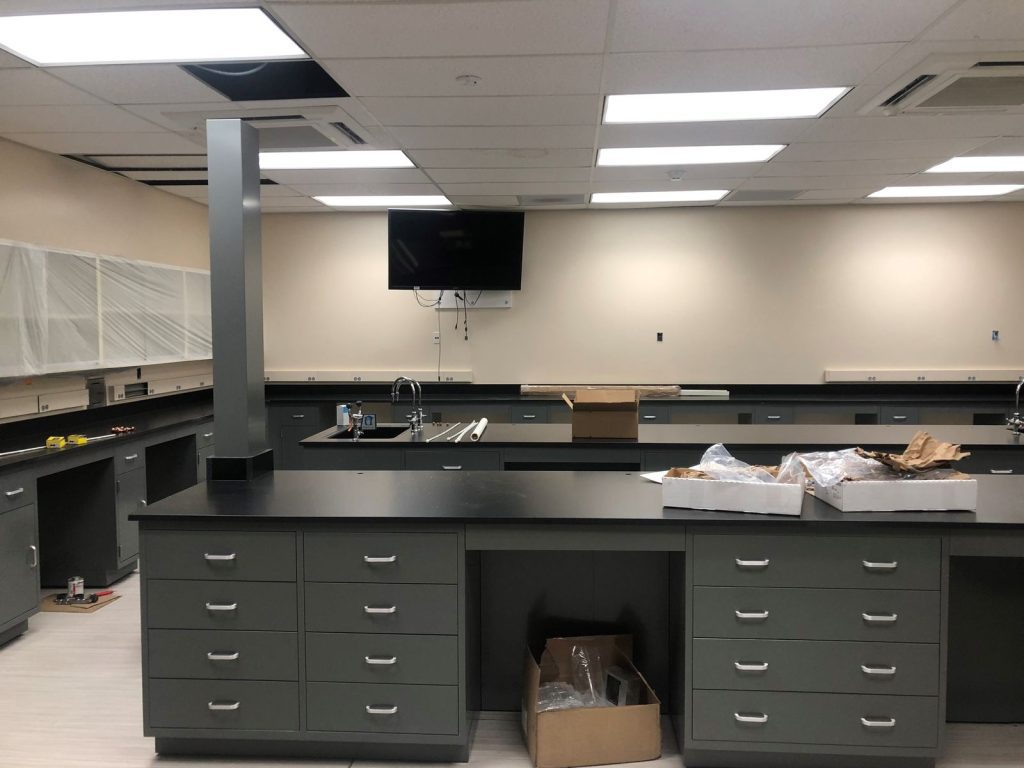 Painted Steel CaseworkThe workhorse of R&D chemistry: chemical-resistant powder-coat over steel, a wide color range, and the full range of base, wall, tall and mobile cabinets. Finishes are evaluated with the SEFA chemical spot test and paint hardness tests.
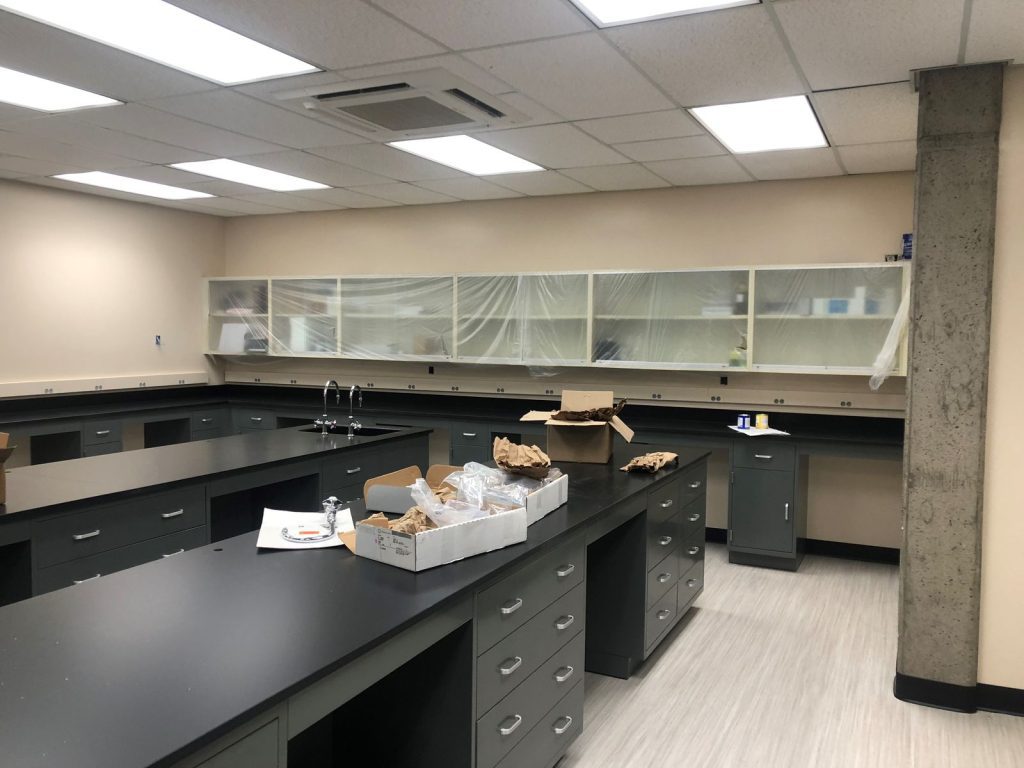 Phenolic & Wood CaseworkSolid phenolic composite is a good answer for wet and humid areas — a compression-molded phenolic core with integrally cured surfaces, so it is not absorbent and it does not rust. Laboratory wood casework is still specified where a warmer finish is wanted.
What “laboratory grade” casework actually means
“Lab grade” is not a marketing word — it is a set of published tests. The SEFA 8 standards (8M for metal, 8W for wood, 8PH for phenolic) define how casework is loaded, racked, cycled and chemically spotted, and what counts as a pass. When you are comparing quotes, these are the numbers to ask for.
| SEFA 8 test | What is done to the cabinet | Acceptance |
|---|---|---|
| Cabinet load and concentrated load | Loaded to the laboratory rating, then racked on three corner blocks under 350 lb and 200 lb corner loads for 24 hours | Operation stays normal with no permanent damage; diagonal measurements change no more than 1/8″ |
| Door hinge | A 200 lb sling hung 12″ out from the hinge centerline, then the door is cycled through a 160° arc | Door still swings and closes through its full range |
| Door cycle | 100,000 open/close cycles at 15 cycles per minute with no hinge adjustment | No deterioration that affects function; door still operates freely without binding |
| Drawer cycle | 50,000 cycles to within ¼″ of full extension at a 100 lb laboratory load, or a 150 lb heavy-duty load | Suspension and drawer head survive years of simulated use |
| Shelf load | Loaded uniformly to 40 lb per square foot of shelf area, to a 200 lb maximum | Deflection no more than 1/180 of the span |
| Chemical spot and paint hardness | Reagents applied to the finish for a set dwell time; pencil-hardness testing on the coating | Rated for finish change; results are published by the manufacturer on request |
Ask for the results, not the logo
SEFA is a trade association of laboratory furniture, casework and fume hood manufacturers, and its standards are written so that architects can specify them and buyers can compare products. Aggregate test results vary by manufacturer, and the standard itself says results are to be made available on request. So request them — for the specific cabinet series you are being quoted, not for the brand in general.
Want to see and feel the finish first?
We can send a finish sample of Pearl White or any of our other available colors before you commit to a color for an entire lab, and walk you through the casework families against your cleaning regime.
Request Samples & a Quote Configure a Bench Call (800) 326-4403
Work Surfaces: Match the Top to the Chemistry, Not to the Budget Line
The work surface is the single component most likely to be regretted. It is also the one where the differences are objective: SEFA’s work-surface standard defines what each material actually is, and the material decides how it behaves under your reagents, your heat and your cleaning.
| Material | What it is | Where it belongs | What you gain and give up |
|---|---|---|---|
| Epoxy resin | Cast composite of epoxy resin, silica, inert fillers and organic hardeners; oven cured, homogeneous and non-absorbent | General and aggressive chemistry, solvent and acid work, integral drop-in sinks | The broad benchmark for chemical and heat resistance; molded sinks and drip grooves in the same material; heavy, so support has to be designed for it |
| Solid phenolic composite | Compression-molded organic-fiber-reinforced phenolic core with one or more integrally cured non-porous surfaces | Wet areas, humidity, cost-sensitive general chemistry, large continuous runs | Lighter and usually less expensive than epoxy, will not rust, and holds a crisp edge detail; less tolerant of sustained high heat than epoxy |
| Stainless steel | Typically 14–18 gauge type 304 or 316, seams fully welded with stainless filler, ground and blended to a #4 mill finish | Sterile and high-purity work, radiochemistry, aggressive cleaning and washdown | The most cleanable surface available and repairable in place; can be marked by strong acids and chlorides, so 316 is specified where chlorides are present |
| Chemical-resistant / high-pressure laminate | Melamine-impregnated surface papers pressed over phenolic-impregnated kraft layers, bonded to a substrate | Write-up desks, instrument benches, low-hazard and dry work | Lowest cost and widest appearance range; not the right surface where solvents, acids or standing water are routine |
| Edge-grain hardwood | Solid hardwood strips glued edge to edge, finished with penetrating oil or a clear synthetic finish | Balance tables, physical testing benches, glassware assembly | Forgiving, repairable by sanding and easy on glassware; needs maintenance and is not for chemical exposure |
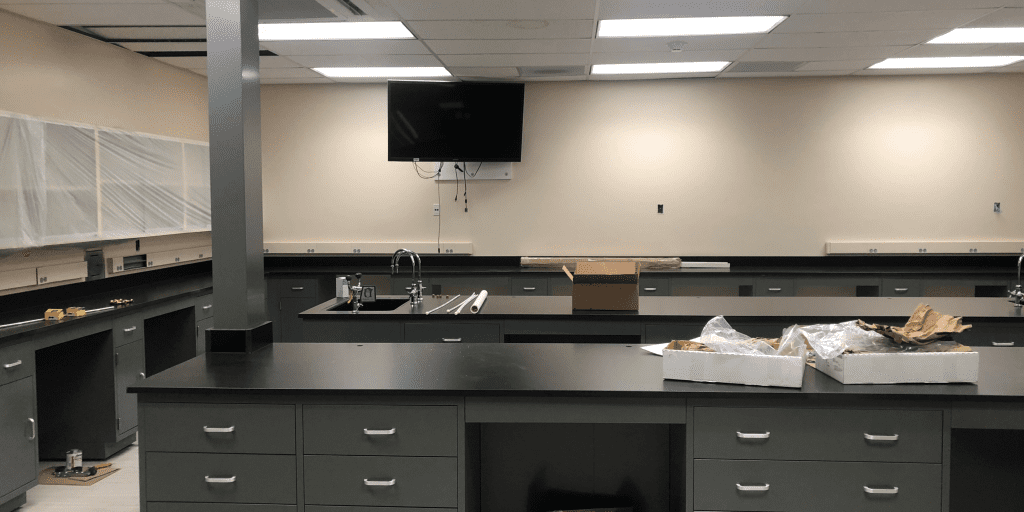
Test it with your own chemistry
Published chemical-resistance charts are a starting point, not a verdict. SEFA states plainly that chemical and stain resistance is affected by concentration, dwell time, temperature, humidity and housekeeping, and recommends users test samples in their actual environment with the substances they use. For an unusual reagent set, that is exactly what we do before specifying a top for an entire lab.
Two practical rules that save money: do not buy the most chemically resistant surface for a write-up desk, and do not economise on the two feet of bench where your worst chemistry happens. Mixing surfaces within one lab is normal and sensible.
Sinks and drip grooves are part of this decision
Epoxy resin sinks and molded drip grooves can be made in the same material as the top, which removes a joint from the wettest part of the bench. Stainless and polyolefin sinks are the other common answers. Whichever you choose, decide before the tops are fabricated — retro-fitting a sink into a finished lab top is the most expensive way to buy a sink.
Fume Hoods and Ventilation: Four Options, One Test That Matters
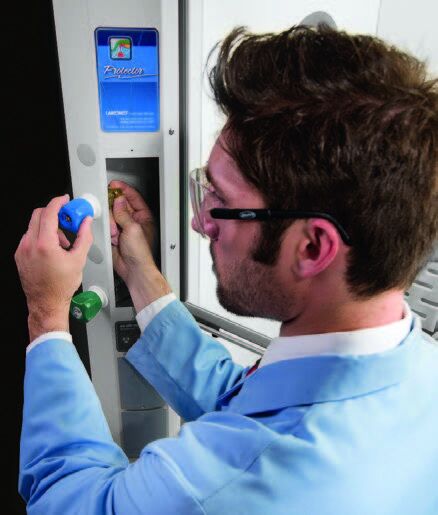
Ventilation is where a chemistry lab is either safe or not, and it is the part of a furniture package that touches the building. Each hood type below solves a real problem, and we specify chemical-resistant, acid-resistant and application-specific hoods for chemical, powder and pharmaceutical work.
What none of them do is work on the strength of the datasheet alone. Containment is a property of the hood and the room it sits in: the supply air, the door, the traffic and the way the sash is used. That is why the ASHRAE 110 protocol reports results As Manufactured, As Installed and As Used — and why the As Installed result on your hood in your room is the number to ask for.
Two things we specify as a matter of course: an airflow monitor or alarm at every hood so users can see that it is working, and a marked sash height that matches the height the hood was tested at. A hood used with the sash wide open is not the hood that passed the test, and a lab that cannot tell the difference will not notice when the exhaust fan drifts or a filter loads up.
 Bench-Top Ducted Fume HoodsThe default for R&D chemistry. Contaminated air is captured at the sash opening and exhausted through ductwork to a roof fan, so nothing is recirculated into the room. Sits on a base cabinet run — usually vented acid and solvent storage — with a chemical-resistant interior liner and a tempered safety-glass sash.
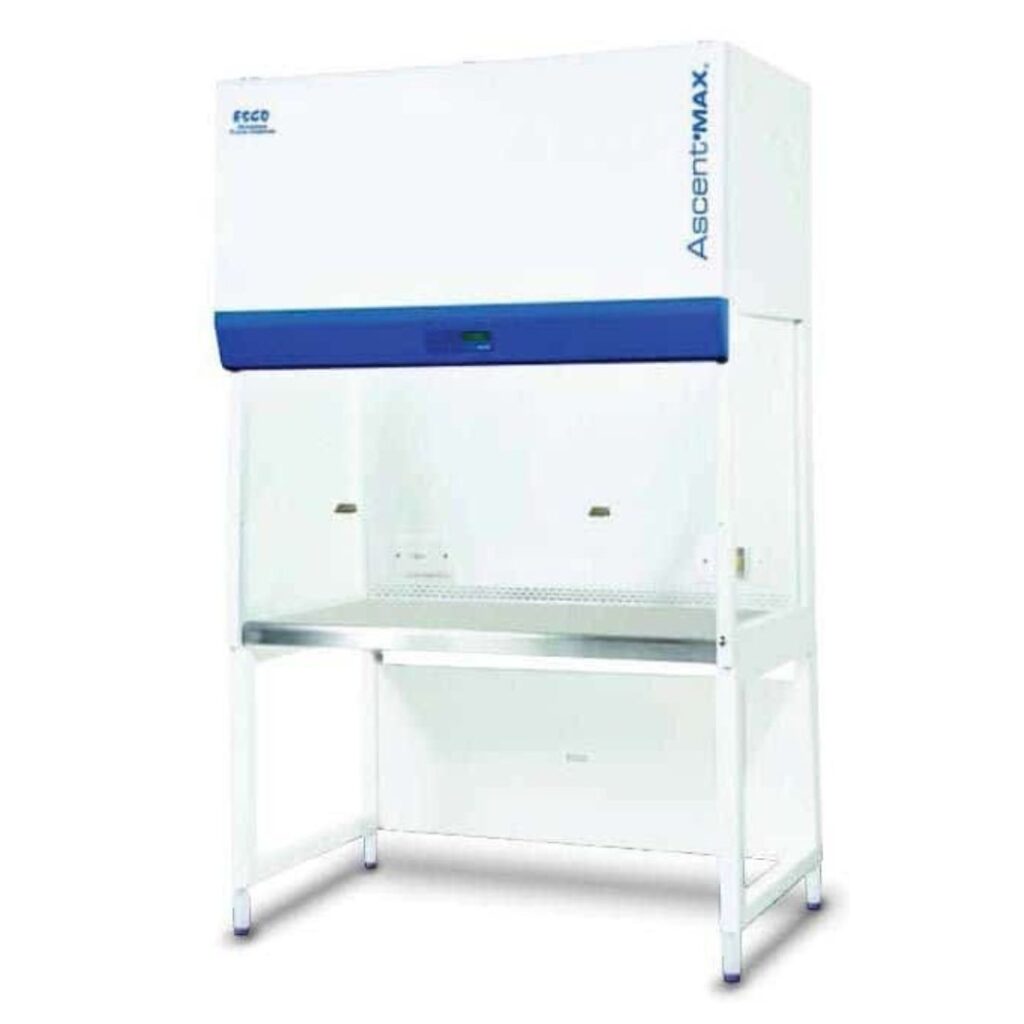 Filtered Ductless HoodsFans pull fumes through carbon and particulate filtration and return the air to the room. Fast to install where no duct route exists, but the filter media has to be matched to your specific chemistry and monitored and changed on a schedule. ANSI/ASSP Z9.5 treats ductless hoods as a special case for exactly that reason.
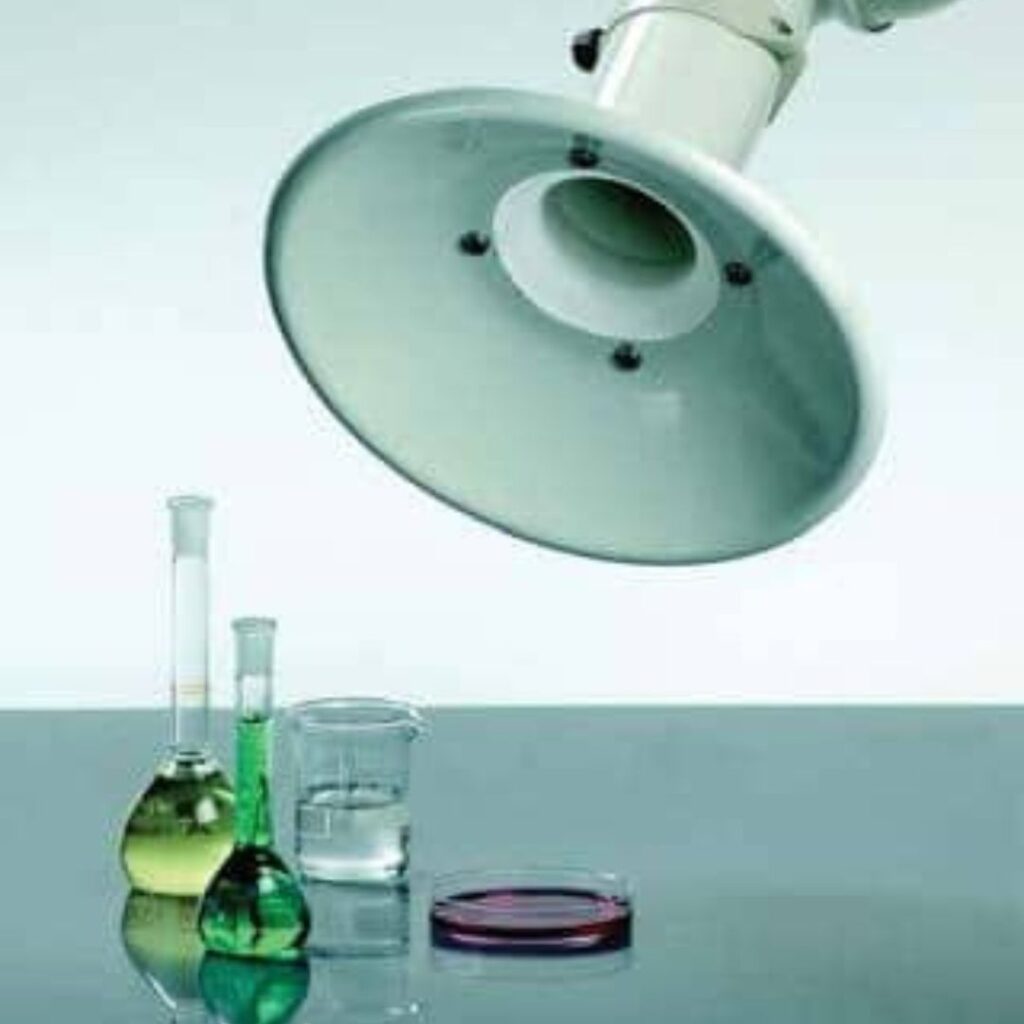 Extraction Arms & SnorkelsArticulated arms mounted to the wall, ceiling or bench, positioned right at a point source — a reflux condenser, a small heat source, a soldering or sample-prep station. Anodised aluminum and corrosion-resistant hood options suit aggressive environments. They supplement hoods; they do not replace them for open handling of hazardous chemicals.
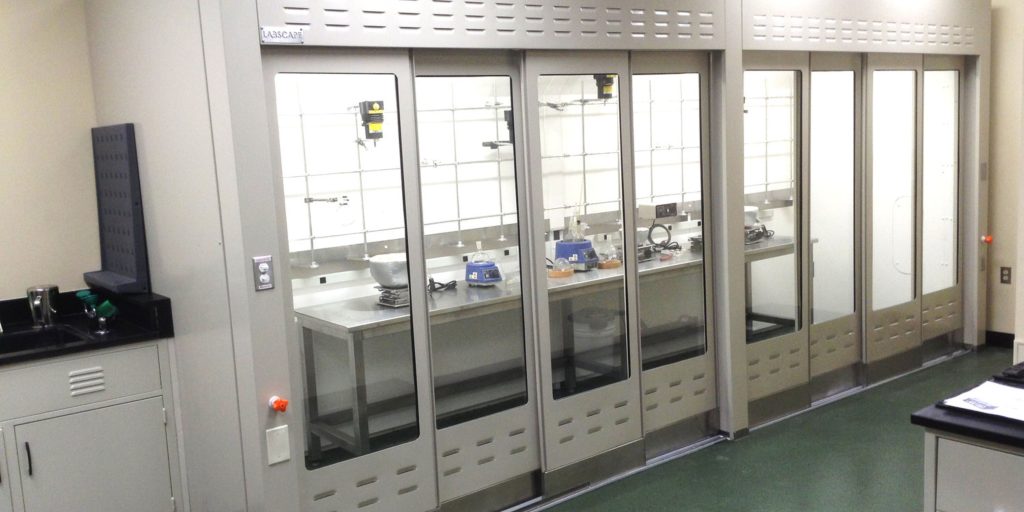 Walk-In & Floor-Mounted EnclosuresFull-height enclosures for tall apparatus, distillation rigs, carts of equipment and process skids that will not fit under a bench-top sash. Specified when the work, not the bench, sets the size of the ventilated envelope.
Design the room, not just the hood
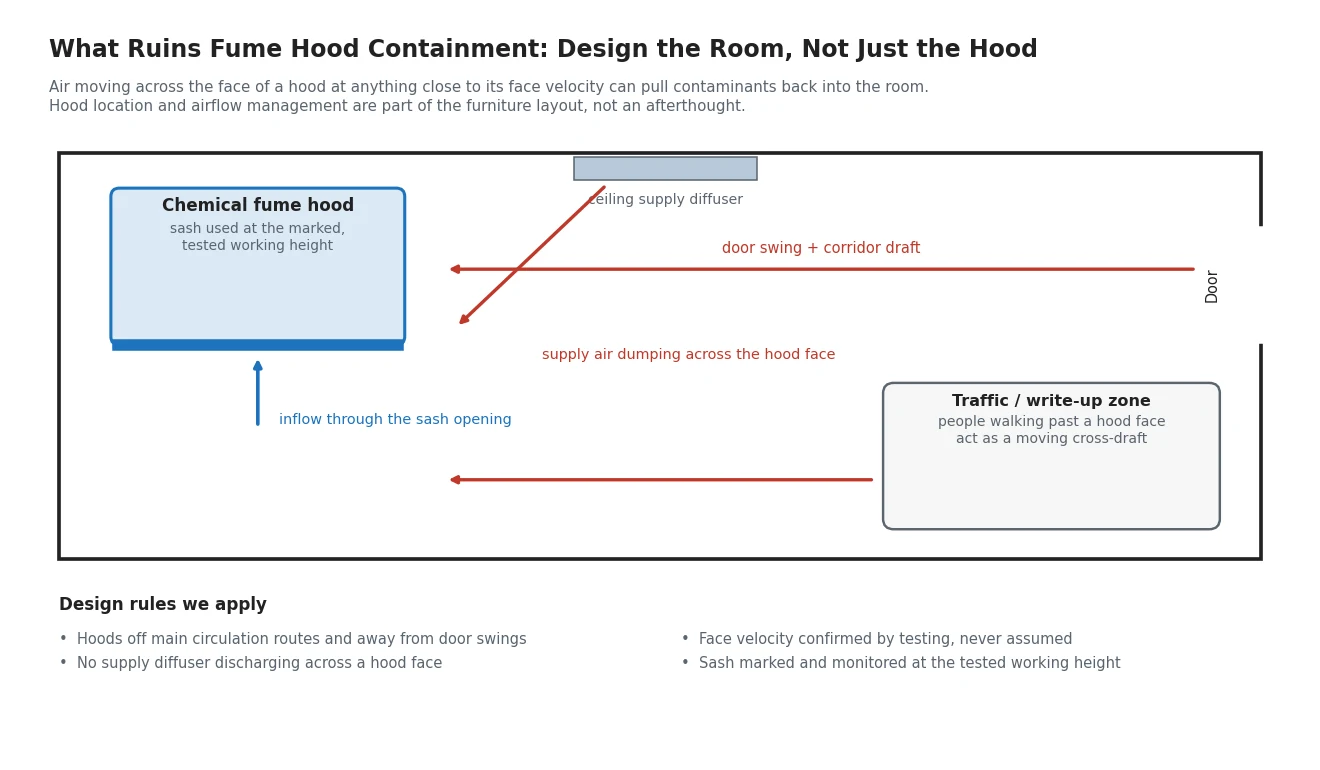
ANSI/ASSP Z9.5-2022, the current consensus standard for laboratory ventilation, is performance based: face velocity has to be sufficient to contain the chemicals the hood was selected for, with 80–100 fpm suggested as a starting point. Earlier editions specified 80–120 fpm with no individual reading deviating more than 20% from the average, and OSHA’s non-mandatory laboratory guidance describes adequate face velocity as typically 60–100 fpm. The right number for your hood comes out of a hazard assessment and is confirmed by testing — never copied off another lab’s spec.
A fume hood is not a biological safety cabinet
The previous version of this page blurred the two, and it is worth being precise. A chemical fume hood draws room air in at the sash and exhausts it out of the building to protect the user from chemical vapour. A Class II biological safety cabinet uses HEPA or ULPA filtration and a downflow of filtered air that meets the inflow at a dynamic air barrier, protecting the user and the sample from biological agents, and many models recirculate air to the room. If your work is chemical, specify a chemical hood; if it is both, tell us early, because it changes the ventilation design.

Not sure which hood your chemistry needs?
Tell us the reagents, the scale, the apparatus height and whether there is any exhaust route out of the building. We will tell you what we would specify and what has to be tested after installation.
Storage, Services and the Space You Forgot to Plan
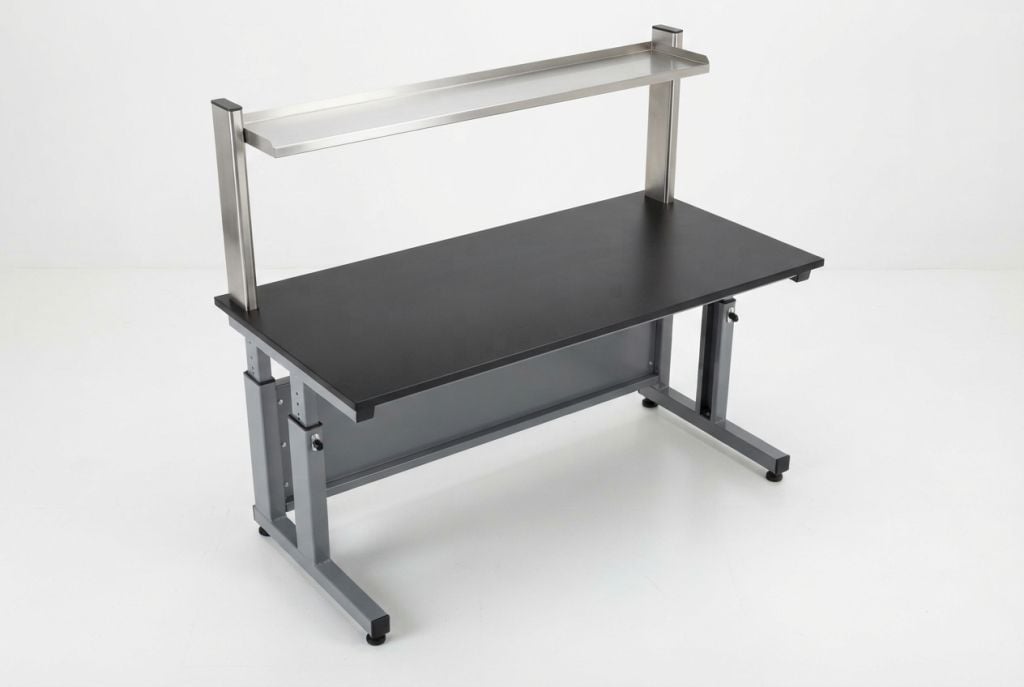 Bench-Mounted Reagent Poles & ShelvesThreaded poles bolted through the work surface carry tiered shelves right where reagents are used, and come with the hardware for a quick install. It is the cheapest square footage in a lab because it is vertical and it is already above the bench.
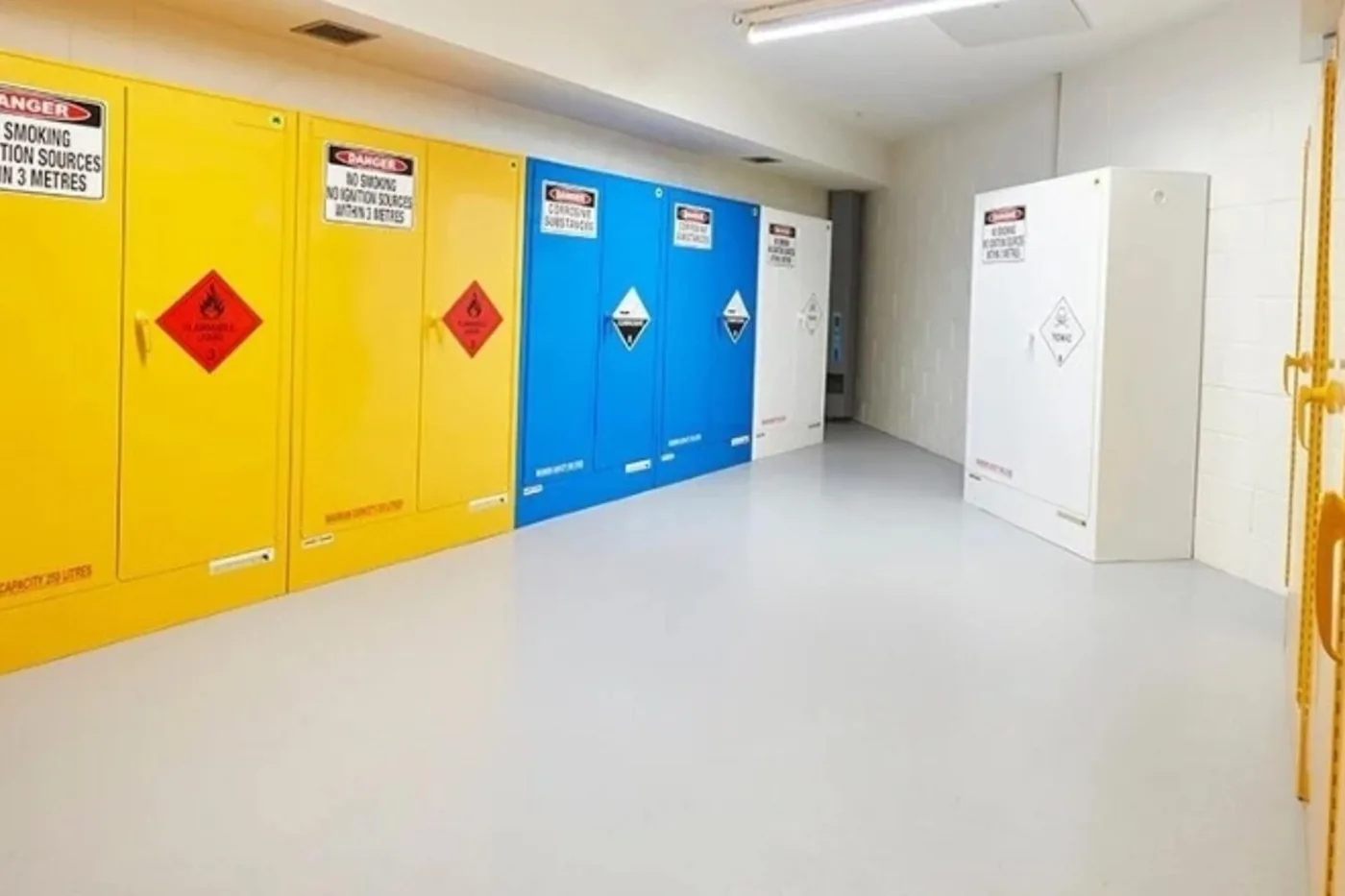 Chemical & Flammable StorageFlammable and corrosive safety cabinets, vented under-hood cabinets and compatibility-segregated storage. NFPA 45 classifies laboratory units and caps ignitible liquid quantities, so this is a design input rather than an afterthought.
 High-Density Mobile ShelvingWhen the supply room is the bottleneck, carriages on floor track compress the aisles and give back floor area for benches and instruments — commonly the difference between renovating and moving.
 Services at the Point of UsePower, data, gas, vacuum and air brought to the station in service turrets, dividers or bench-mounted rails, so a bench can be re-purposed without an electrician.
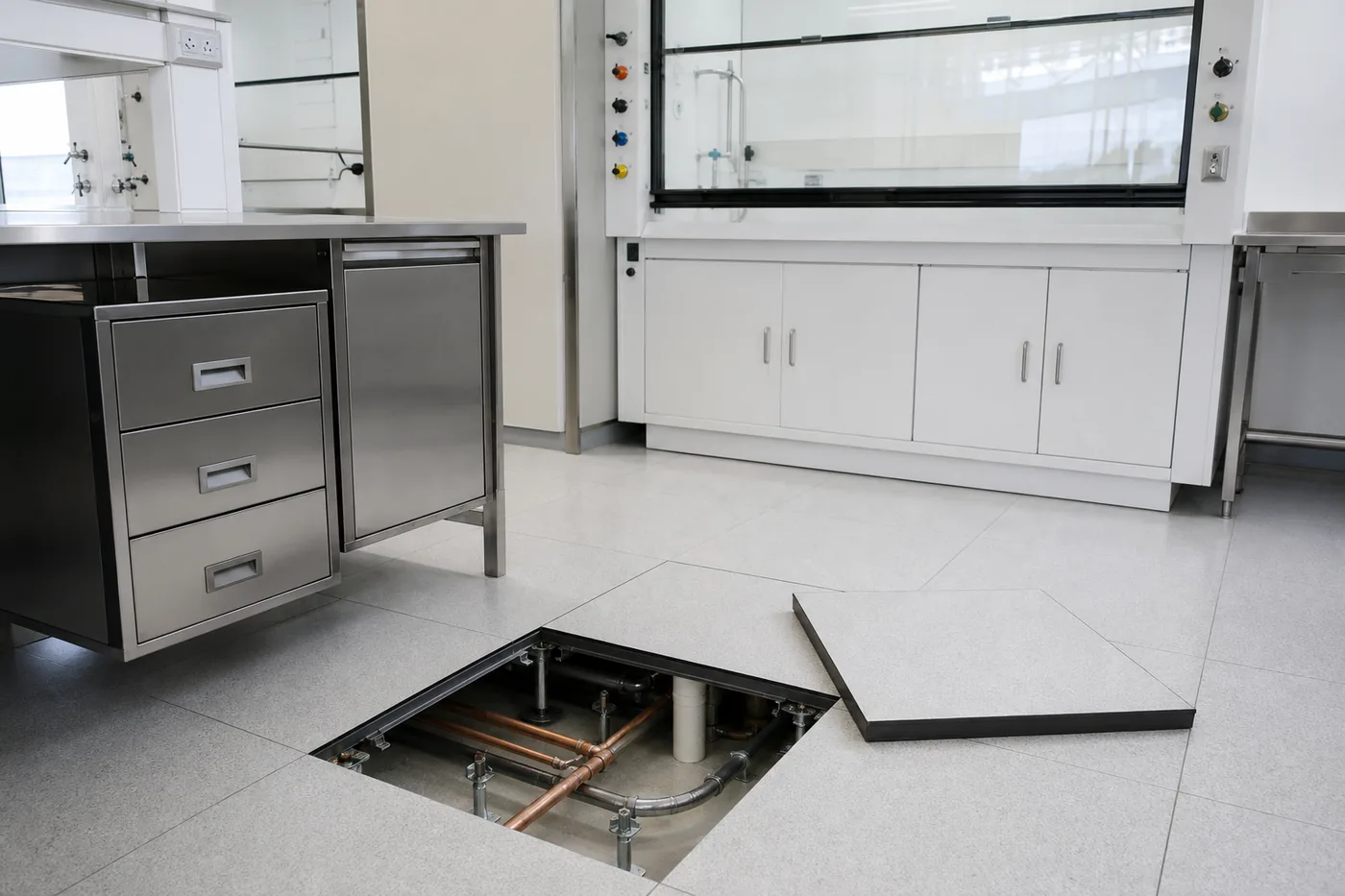 Access Floors and Service RoutesIn heavily serviced labs, a raised access floor makes gas, drain and power routes reachable without cutting finishes — worth evaluating early, because it changes bench heights and thresholds.
 Mobile Benches and TablesAdjustable-height and mobile tables let a research group reconfigure a room in an afternoon. In labs where the experiment changes every quarter, this beats fixed casework everywhere except the wet wall.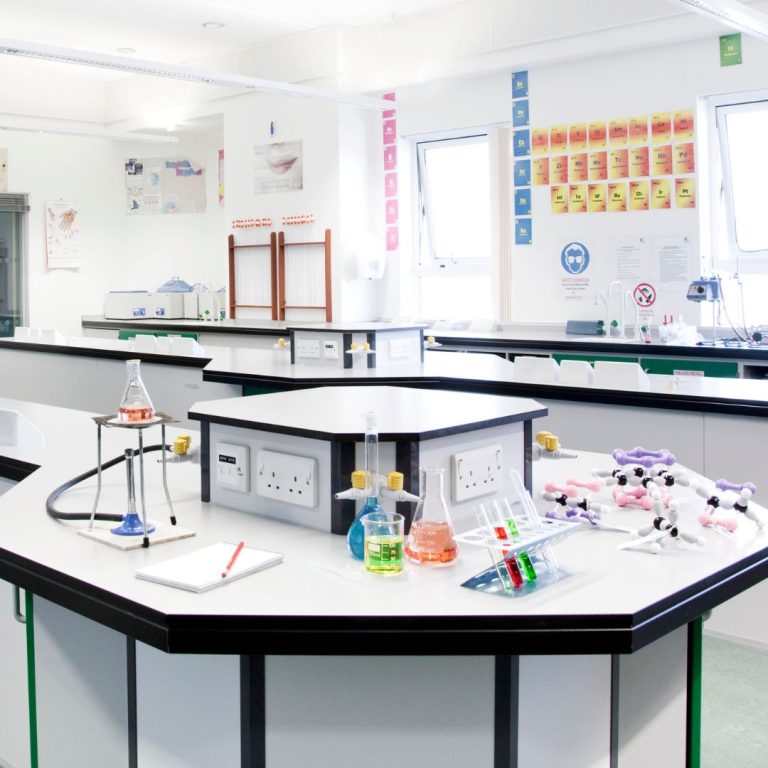
Getting a first lab inside a startup budget
We do a lot of first labs, and the pattern that works is consistent. Plan the layout properly, because no discount recovers the cost of a bad one. Take the free storage: corner cabinets, cabinets under the hoods, shelving above the bench. Buy the expensive work surface only for the benches that need it. Choose adjustable and mobile furniture so the room can be reconfigured rather than rebuilt when the program shifts.
Then phase it. The bench, hood and storage the first program actually needs go in now; the second instrument bench and the extra casework land when the funding does. Because the casework is modular and we hold your drawings, phase two matches phase one instead of looking like a patch.
The Standards Your Lab Will Be Judged Against
None of these are ours, and that is the point. Every material, dimension and airflow figure on this page traces back to a published standard or code, and a good supplier should be able to tell you which one applies to a decision you are making.
| Standard or code | Subject | Why it matters to your furniture package |
|---|---|---|
| OSHA 29 CFR 1910.1450 | Occupational exposure to hazardous chemicals in laboratories | Requires a written Chemical Hygiene Plan with control measures and hood performance criteria. Non-mandatory Appendix A describes adequate hood face velocity as typically 60–100 fpm. |
| ANSI/ASSP Z9.5-2022 | Laboratory ventilation | The consensus standard: performance-based hood airflow, a Laboratory Ventilation Management Plan, airflow management in the room, and special requirements for ductless hoods, gloveboxes and perchloric acid hoods. |
| ASHRAE 110 | Method of testing performance of laboratory fume hoods | The containment test itself — flow visualisation, face velocity, then tracer gas — reported As Manufactured, As Installed or As Used. |
| NFPA 45 (2024) | Fire protection for laboratories using chemicals | Laboratory unit hazard classification, hood and ventilation requirements, and the maximum quantities of ignitible liquids allowed per laboratory unit. |
| SEFA 8 series / SEFA 3 | Laboratory casework and work surfaces | The test protocols behind casework durability claims (8M metal, 8W wood, 8PH phenolic) and the material definitions for work surfaces and sinks. |
| 2010 ADA Standards §902 / §306 | Accessible work surfaces | Work surfaces 28″–34″ above the floor, with knee clearance 30″ wide minimum, 27″ high, 11″ deep at 9″ and 8″ deep at 27″. |
What we will not claim
We do not certify your laboratory, and we will not promise that furniture alone makes you compliant. Your Chemical Hygiene Plan, hazard assessments, hood commissioning and periodic testing belong to you and your safety officer, and hood performance depends on the building’s supply and exhaust systems as much as on the hood. What we supply is furniture, ventilated equipment, drawings, material data and an installation that does not undermine any of it.
How an MH-USA Lab Project Runs
Program the lab
What chemistry happens here, what instruments arrive now and later, how many people work at once, what has to be ventilated, and what the building already gives you for exhaust, power and water.
Draw it before you buy it
Floor plans and elevations for every wall, hood and bench run, marked with services. We iterate the drawings with you until the layout is right — changing a line on a drawing is free, changing a cabinet run after installation is not.
Specify materials against the chemistry
Casework family, work surface material, sink material, hood type and storage type chosen against your reagents, cleaning regime, loads and code requirements — not against a default catalog page.
Manufacture to the drawings
Casework, benches and tops are built to the approved drawings and finish selections, so the sizes that arrive are the sizes on the plan, including the odd-width fillers real rooms need.
Install and coordinate the trades
We set the casework, tops, hoods and shelving and coordinate with the mechanical, electrical and plumbing trades so the hood, the duct, the outlets and the water all land in the right place at the right time.
Support the lab afterwards
Punch list, adjustments, finish samples and documents — then reconfiguration, added cabinets, replacement tops and extra benches as the research program changes.

What we need from you to quote it
You do not need a finished specification to get a useful answer. A dimensioned sketch, a list of the chemistry and the instrument list gets you a layout and a budget. The list below is what turns that into a firm quote, and most of it you already know.
- Room dimensions with ceiling height, plus door, window and column locations
- What chemistry is performed, and which of it must happen inside a hood
- Instrument list with footprints, heat load and power requirements
- How many people work at once, and how many seated write-up positions you need
- Available exhaust routes, or the honest answer that there is none (filtered hoods then)
- Water, gas, vacuum, compressed air and special power requirements per station
- Cleaning and decontamination regime — this drives the work-surface choice
- Whether an ADA-accessible station is required, and where it makes the most sense
- Whether the lab has to be relocatable or reconfigurable later
- Target occupancy date, and whether the space is under construction or in use
Get a free lab layout and a real number
Send the room and the chemistry and we will draw the plan, specify the surfaces and hoods, quote the furniture and the installation together, and tell you what your mechanical contractor still has to do.
R&D Labs We Furnish
The furniture families are the same; the priorities are not. These are the kinds of chemistry labs we plan, manufacture for and install.
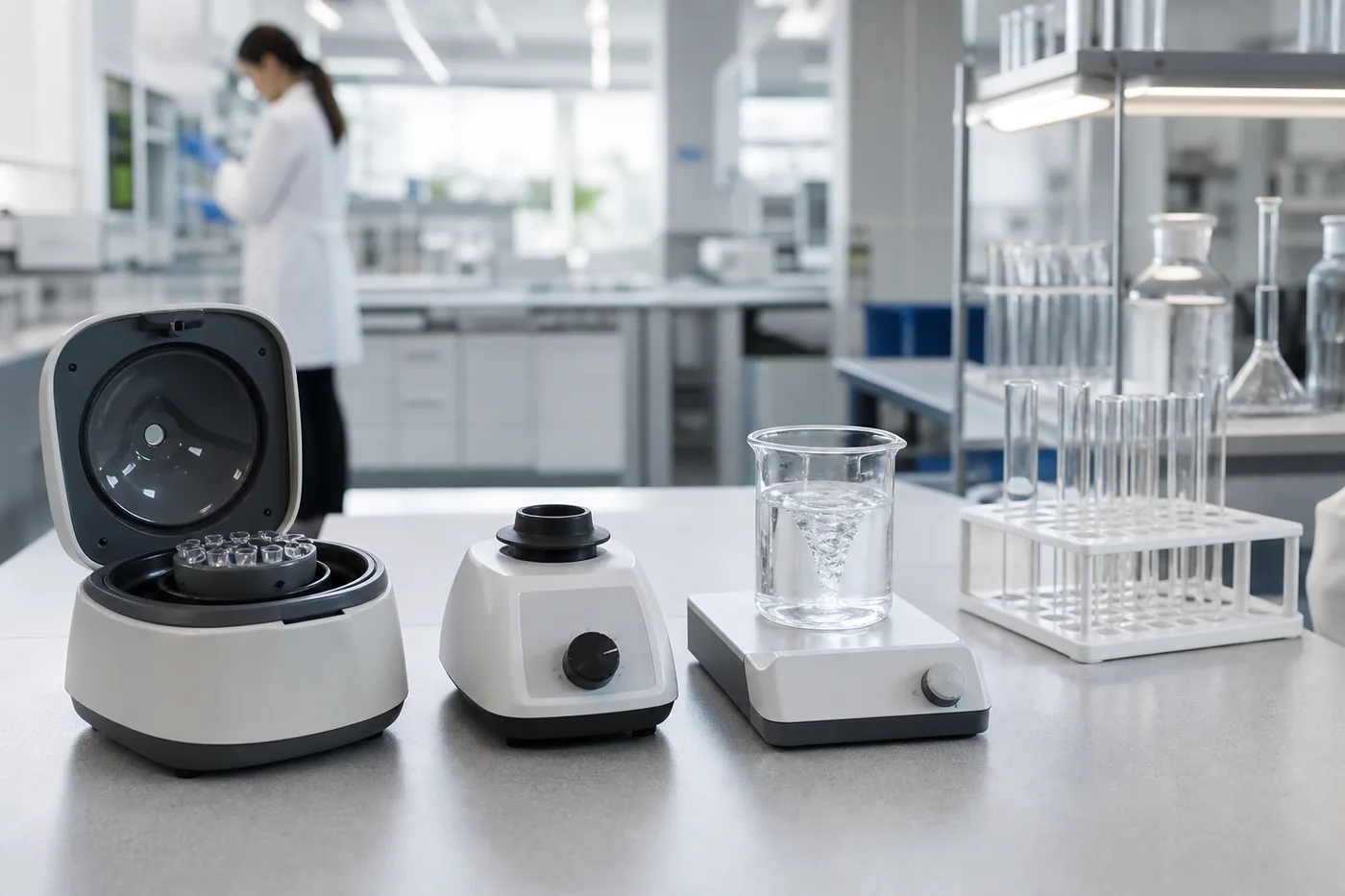 Startup & Scale-Up R&D LabsFirst lab, first GLP-adjacent build, or a move into real square footage. The priority is a layout that survives the next two hires and the next three instruments without a rebuild.
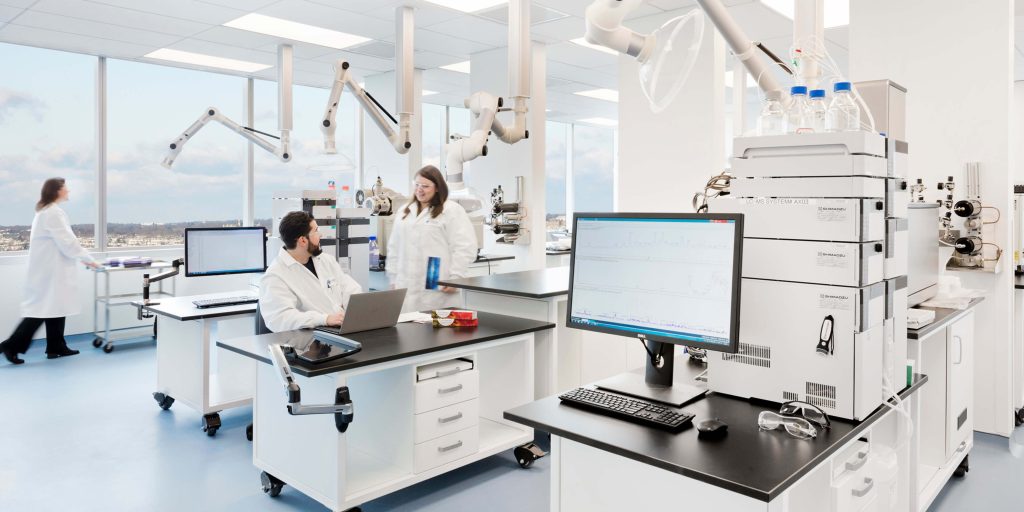 Pharmaceutical & Analytical ChemistryMethod development, stability and QC benches: dense instrument runs, cold storage adjacency, documented finishes and a clean split between sample handling and data work.
 Materials, Polymer & Battery ResearchMixed wet and dry work with heavy equipment and frequent reconfiguration. Adjustable-height tables and mobile cabinets earn their keep because the experiment changes every quarter.
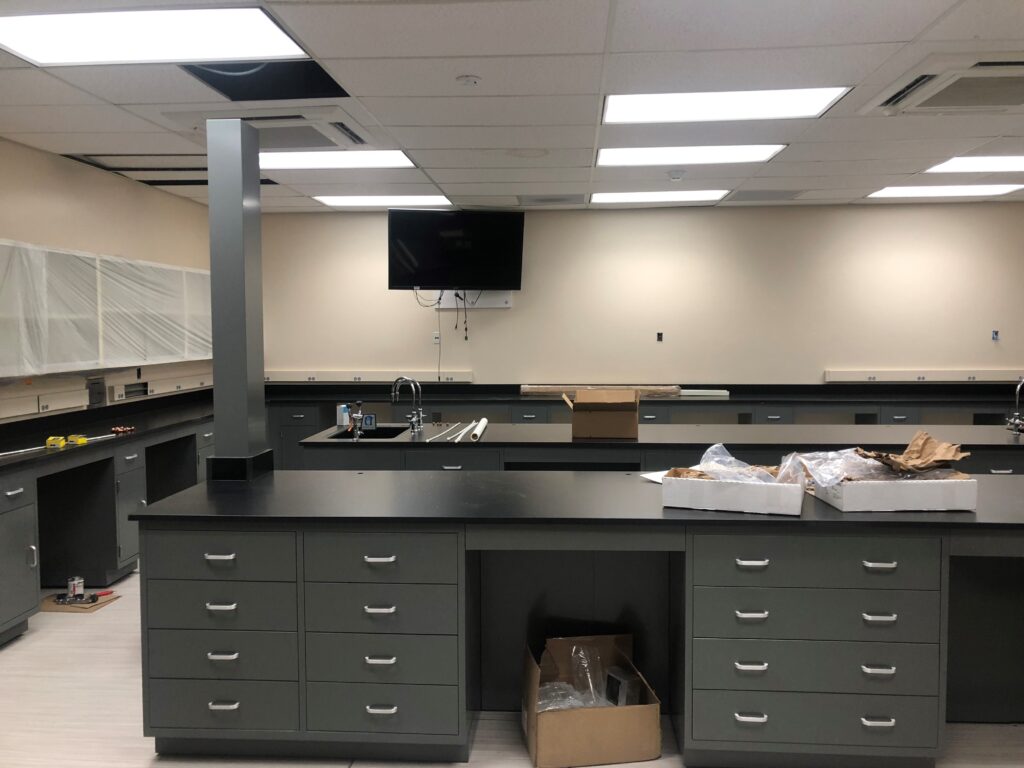 University & Research Institute LabsTeaching and research space where durability, service access at every station and a finish that still looks right in ten years matter more than any single spec line.
 Environmental & Water TestingSample receiving, digestion and instrument analysis under one roof, with ventilated work and chemical storage sized around the testing schedule rather than the room shape.
 Industrial QC & Process LabsPlant-floor and near-line labs that have to take abuse, stay clean and be relocated when the line moves. Steel casework, epoxy or phenolic tops and mobile benches are the usual answer.
Chemistry labs are one of many lab types we furnish. See our laboratory furniture overview for benches, casework, countertops, sinks and storage specified for your lab.
R&D Chemistry Lab Setup: FAQs
How long does it take to get a chemistry lab furnished?
What work surface should an R&D chemistry lab use?
How much face velocity does a chemical fume hood need?
What is the difference between a chemical fume hood and a biological safety cabinet?
Can I use ductless filtered hoods instead of running duct?
Do we have to buy custom casework, or can we get something off the shelf?
How do you keep a first lab build inside a startup budget?
Can our existing furniture be reused or reconfigured?
Related Products & Resources
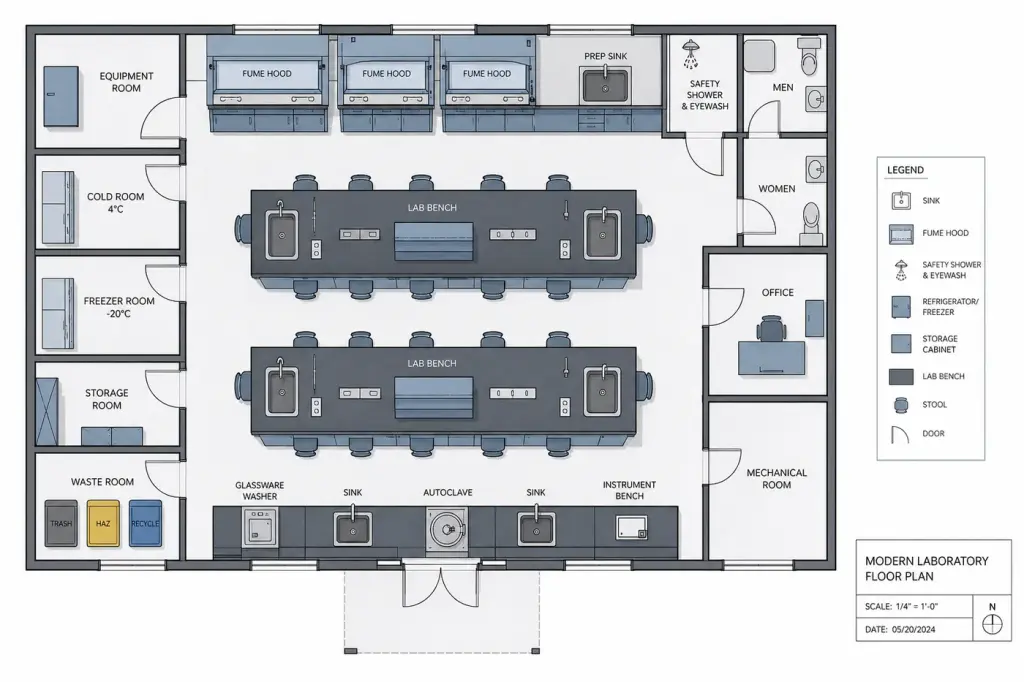 Lab Layout ConfiguratorFree online tool: lay out benches, hoods and casework in your own room and send the plan straight to our lab team.
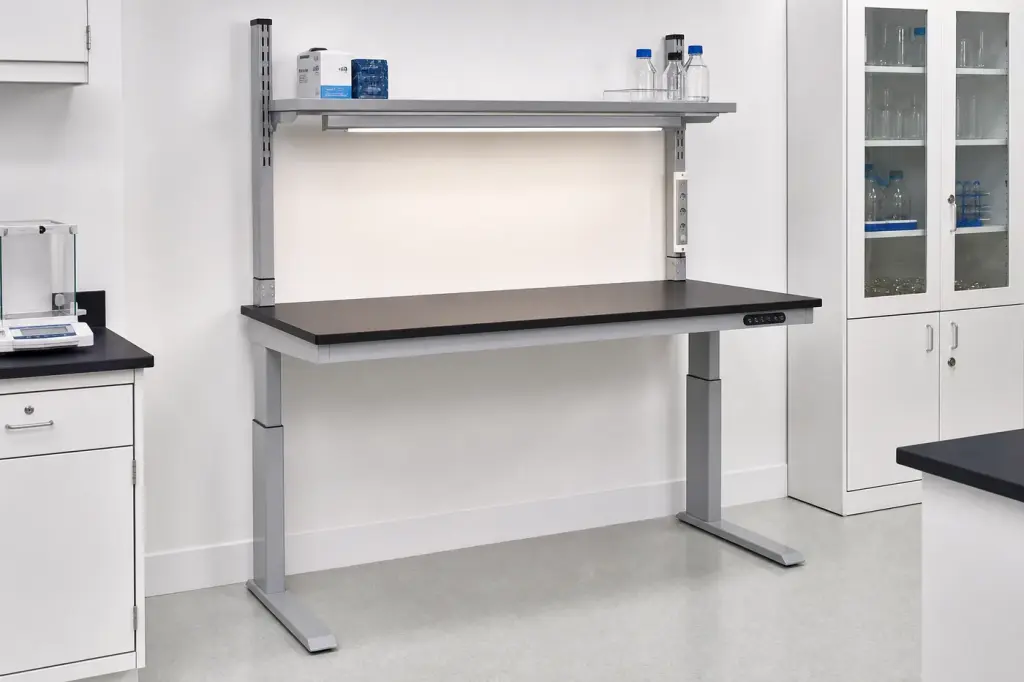 Lab Bench ConfiguratorConfigure a lab bench — size, work surface, upper shelving, storage and mobility — and send the specification to us.
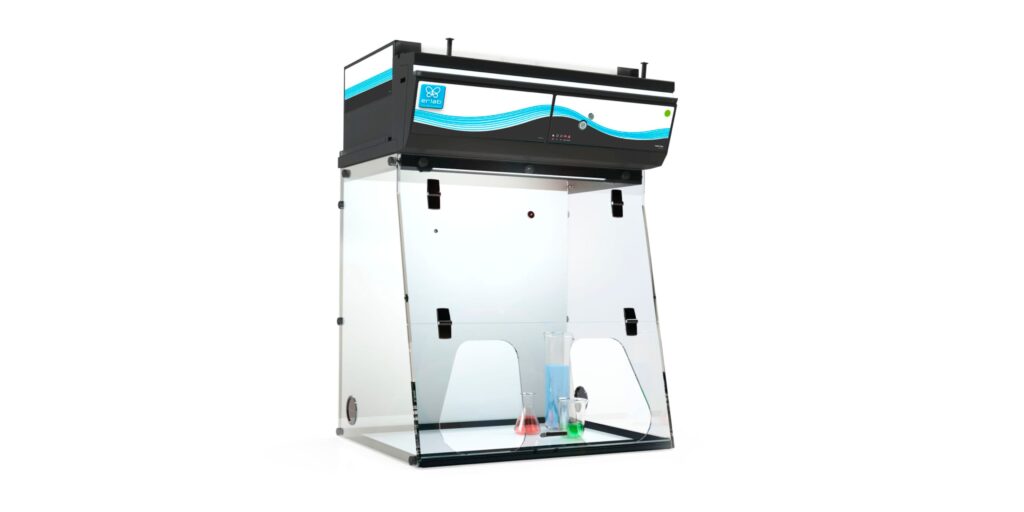 Fume HoodsDucted, ductless, walk-in and specialty hoods, plus extraction arms and ventilated enclosures for laboratories.
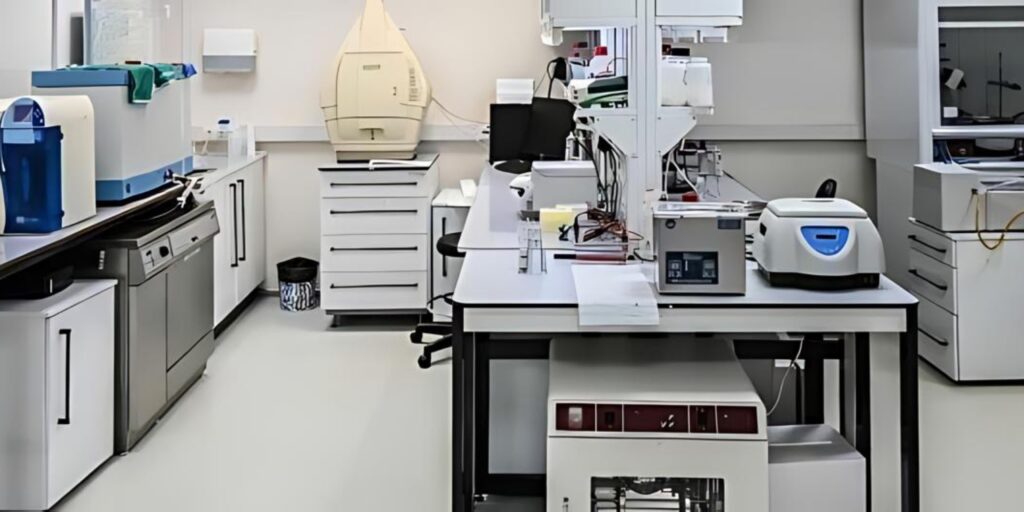 Lab Countertop MaterialsA deeper comparison of phenolic, epoxy, stainless steel and laminate work surfaces, and when each one is the right call.
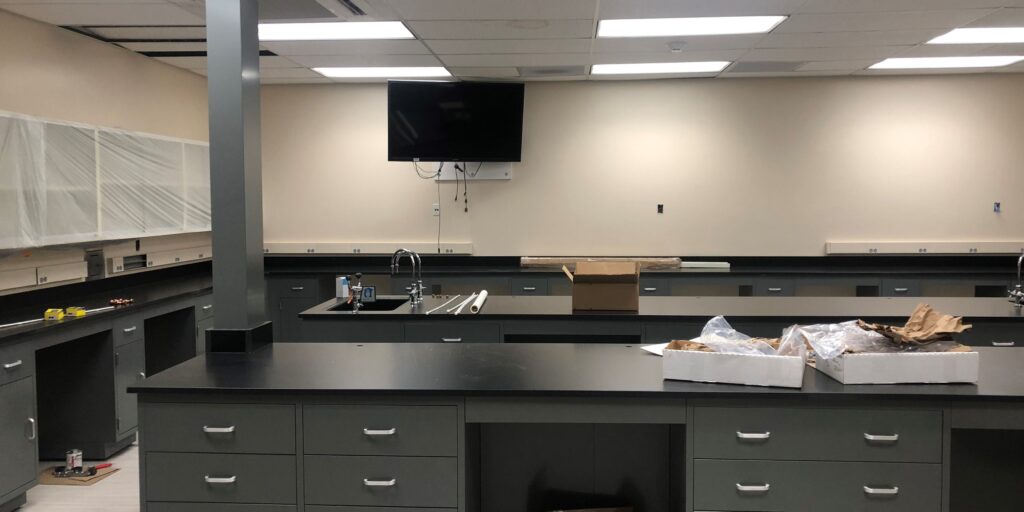 Laboratory DesignHow we plan laboratories end to end — programming, layout, casework, ventilation and installation.
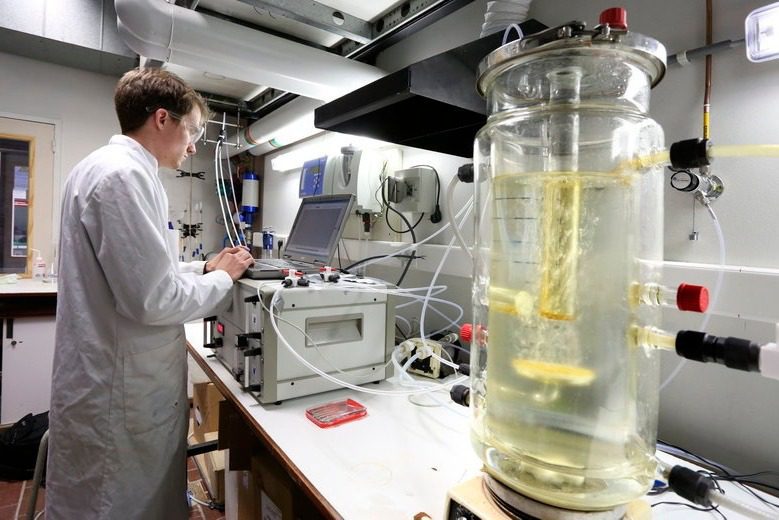 Comprehensive Laboratory DesignFull-service lab design and equipment: utilities, safety systems, storage and commissioning support.
Let’s Draw Your Chemistry Lab Before You Buy It
Send us the room dimensions, what chemistry happens in it and your instrument list. We will come back with a floor plan and elevations, a casework and work-surface recommendation matched to your reagents, the right ventilation for the work, and one quote covering the furniture and the installation. Free design consultation — call (800) 326-4403.