
School District Records and Supply Mobile Shelving Case Study: Boise, Idaho
How an Idaho school district moved student records and curriculum and supply stock into high-density mobile shelving with eight shelf levels and a ramped floor track, no sub-floor construction required.
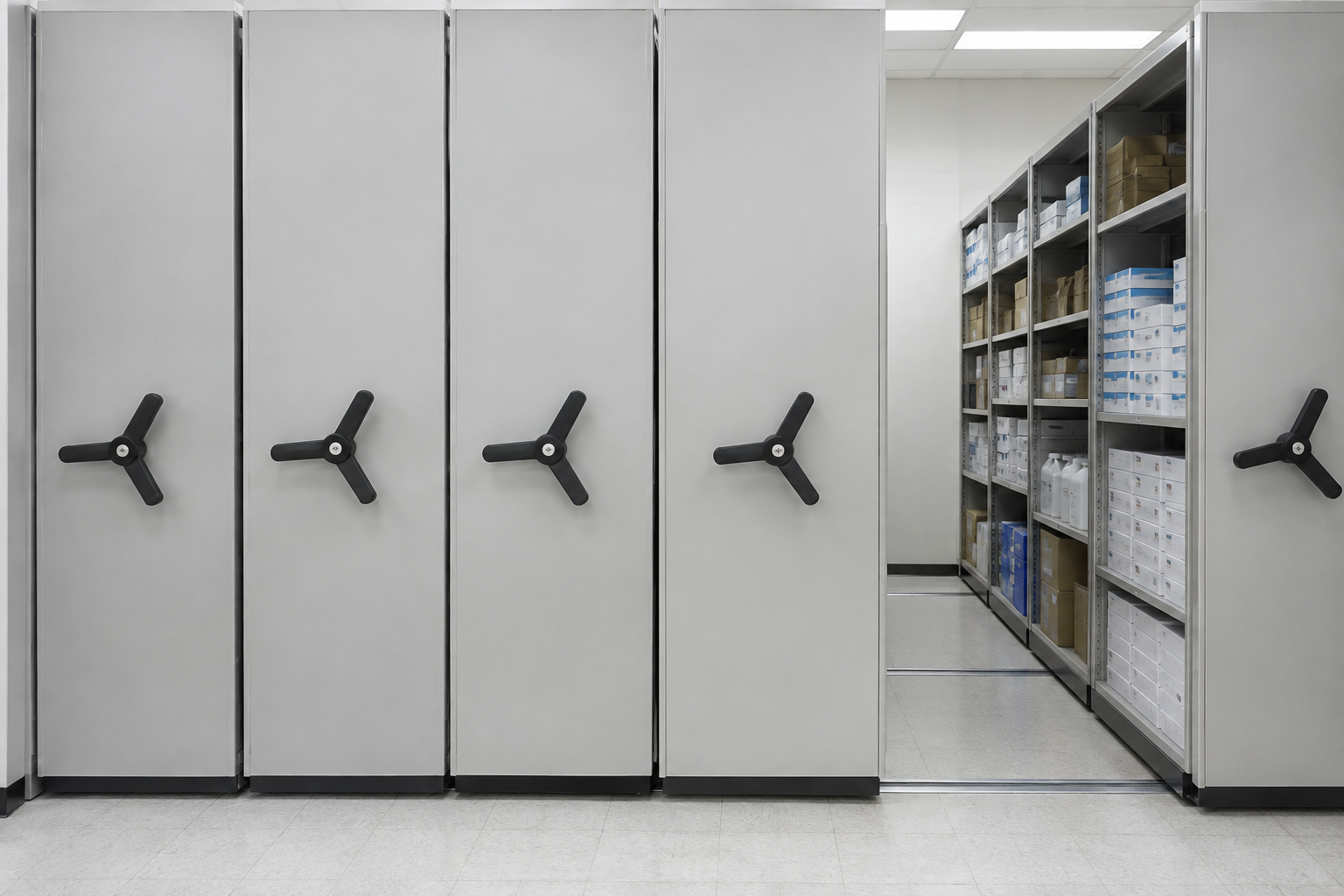
Customer
A public school district in Boise, Idaho
Location
Boise, Ada County, Idaho
Product
High-density mobile shelving, eight shelf levels, twin ramp
Application
Student records plus curriculum and supply storage
About the project
This project supplied high-density mobile shelving to a public school district in Boise, Idaho. The district needed one room to carry two jobs at once: keeping student records filed and retrievable, and holding the curriculum materials and supply stock that a district office issues out to its schools.
Material Handling USA supplied and installed a mobile shelving system laid out to an approved room drawing, configured with eight shelf levels per section and set on a twin ramp so no sub-floor had to be built. Freight, inside delivery, installation by our own crew and removal of all packaging were included, and the project closed in February 2017 on a four to six week delivery and installation schedule.
Project scope at a glance
The situation
A district office accumulates two very different kinds of material. Student records have retention obligations, so the file volume grows every year and cannot simply be thinned when the room fills. Curriculum materials, testing stock, office paper and supply inventory move in and out constantly and need to be visible and reachable.
Storing both on static shelving or in filing cabinets uses floor space badly. Cabinets pay for drawer pull space, and static shelving ranges each need a permanent aisle nobody stores anything in. In a district office building where classroom and program space always wins the argument, the storage room does not get to expand.
High-density mobile shelving removes those fixed aisles. The ranges roll on a floor track and share one moving aisle, so the same room holds roughly twice the material without changing the building.
What Material Handling USA supplied
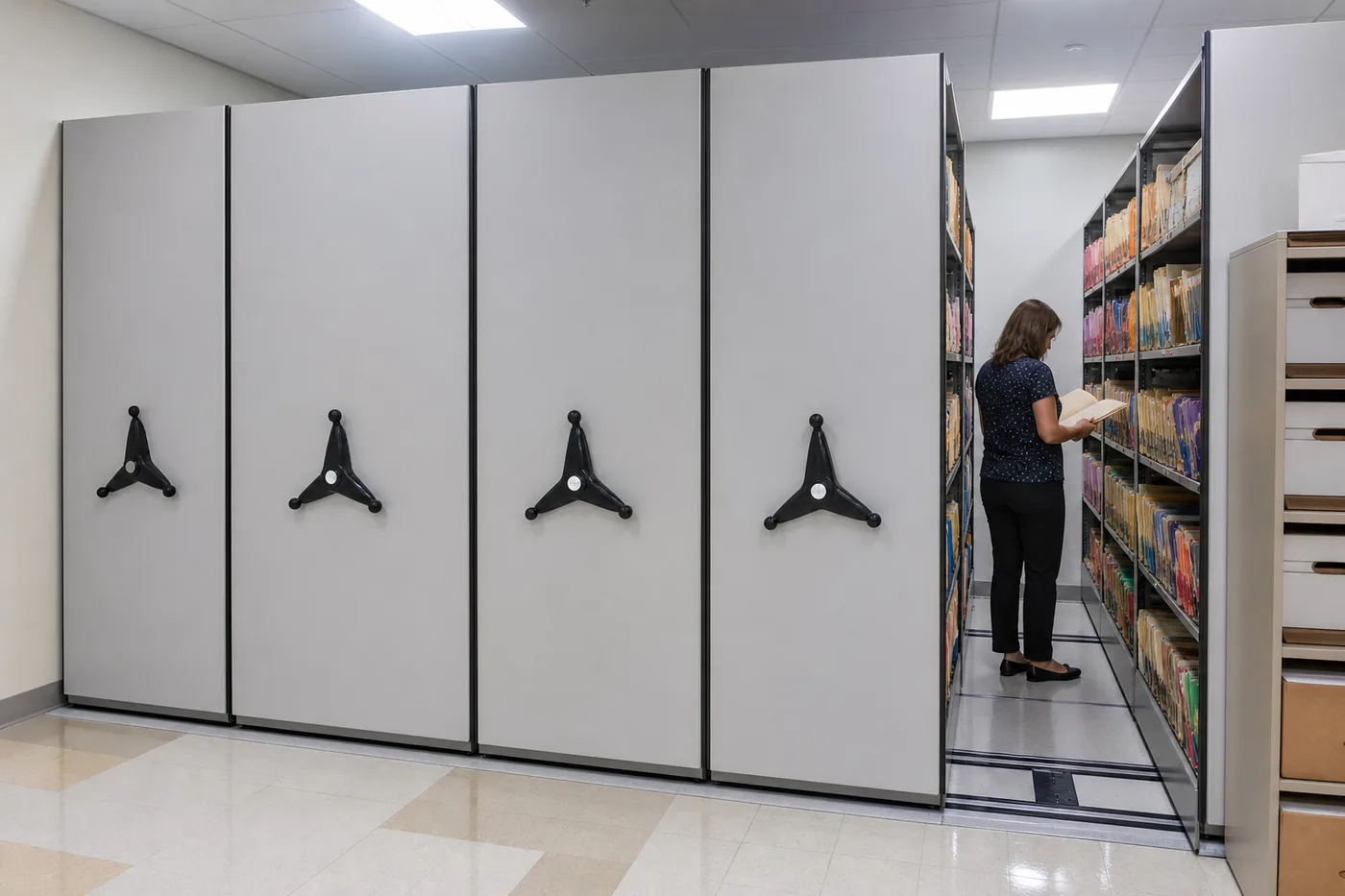
We supplied a high-density mobile shelving system built to the room drawing, with eight shelf levels per section. Eight levels is a records and light-goods configuration: the shelf openings are shorter, and the section carries more of them, which is exactly right for filed material, boxed curriculum and cased office and classroom supplies.
The system was set on a twin ramp rather than a sub-floor, so the rail was installed directly on the existing floor and the district did not pay for or schedule floor construction.
Our scope covered freight and inside delivery, installation by our own installers, and removal of all packaging material, so the district got a finished, loaded-and-ready room rather than a pallet of parts at a dock.
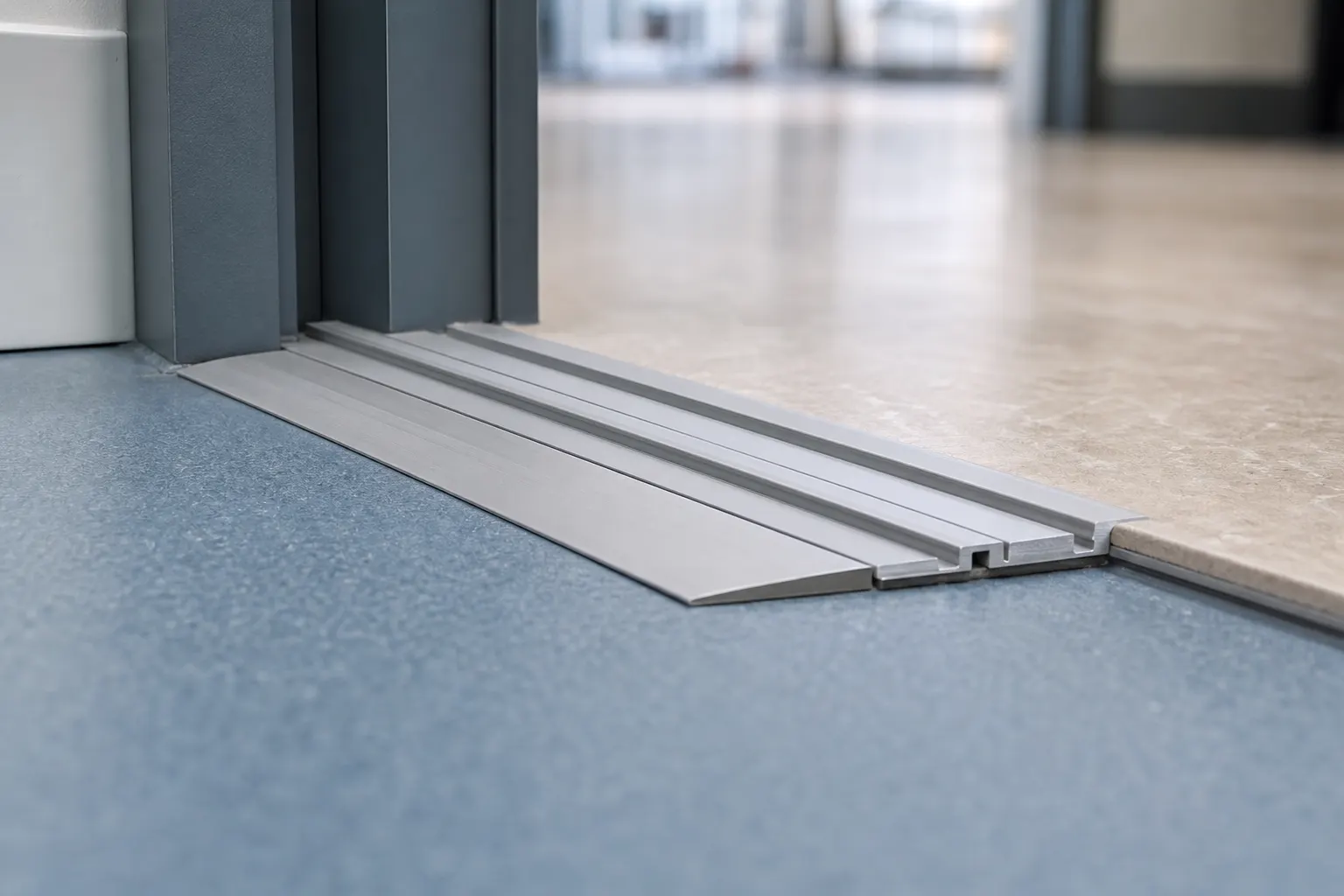
Twin ramp instead of a sub-floor
Mobile shelving runs on rail. Two ways exist to deal with the height of that rail. A sub-floor builds a decked platform level with the top of the rail across the whole footprint. A twin ramp leaves the rail exposed and adds a shallow ramp on each approach side so carts and feet cross it smoothly.
For this district the ramp was the right call. It is less expensive, it installs faster, it does not raise the room’s floor level at doorways, and it can be removed or reconfigured later without demolition. A sub-floor earns its cost when a room needs a perfectly flush surface end to end, for example where heavy carts cross the ranges continuously or where a facility wants no visible track at all.
This is one of the first questions worth answering on any records or supply room project, because it changes both the budget and the installation schedule.
Why eight shelf levels suit a district storage room
Shelf levels are the quiet decision that determines how much a room actually holds. Filed records, textbooks, workbooks and cased supplies are uniform and light enough to stack high, so more levels means more capacity in the same footprint. Rooms that hold bulky items, oversized plans or equipment need fewer levels and taller openings instead.
Mixing both uses in one system works when the configuration is planned that way: taller openings on the lower levels for cased stock, tighter openings above for filed material. That keeps the heavy items at waist height and the light, rarely handled material higher up.
If you are weighing configurations for your own room, mobile shelving cost and budget drivers explains which choices move the number most.
What the district gained
Roughly double the capacity in the same room. Removing the permanent aisles between static ranges converted circulation space into storage.
Records and supplies handled together. One system covers both the retention obligation and the day-to-day supply operation, instead of two separate rooms.
No floor construction. The twin ramp kept the project to a shelving install with no sub-floor build, which shortened both the budget and the schedule.
Room to absorb years of growth. Sections that are only partly loaded today take on new records and new curriculum cycles without any change to the building.
School district and public agency storage across Idaho
Material Handling USA supplies mobile shelving, industrial shelving and racking to school districts, cities, counties and state agencies across the Treasure Valley, including Boise, Meridian, Nampa and Caldwell, with delivery and installation by our own crews. Boise is both the state capital and Idaho’s largest school district market, so district office records rooms, central warehouses and school supply rooms are a regular part of this work.
Public agency storage projects repeat a pattern. Retention rules mean records volume only grows, buildings cannot grow with it, and staff need same-day access to material that off-site storage would delay by days.
Related pages: mobile shelving in Boise, ID, our election office storage case study, and buying mobile shelving on GSA and cooperative contracts.
Call (208) 284-2559 to plan a records or supply room for an Idaho district or public agency.
Frequently asked questions
Why do school districts use mobile shelving?
Can one system hold both records and supplies?
What is a twin ramp and when should we use one?
How many shelf levels should a district storage room have?
Is mechanical assist enough, or do we need electric drive?
How long does a project like this take?
Do you install in Boise and the rest of Idaho?
Can a district buy mobile shelving on a contract instead of bidding it?
Planning a district records or supply room?
Send us the room footprint and what you store, records, curriculum, testing stock or supplies, and we will lay out a mobile shelving system that fits it, including delivery and installation. Boise, the Treasure Valley and nationwide.