
Orbital Stretch Wrappers
Horizontal-ring stretch wrap machines that wrap film around and under the load, locking long, bundled and odd-shaped products to the pallet. We supply the full TAB Wrapper Tornado lineup as an authorized dealer.
Shop Stretch Wrap Machines and Film Online
We don't sell orbital wrappers through the online cart because every ring is sized to your loads. If a turntable machine or stretch film fits your need today, these are in stock to order; for an orbital wrapper, request a quote below.


What Is an Orbital Stretch Wrapper?
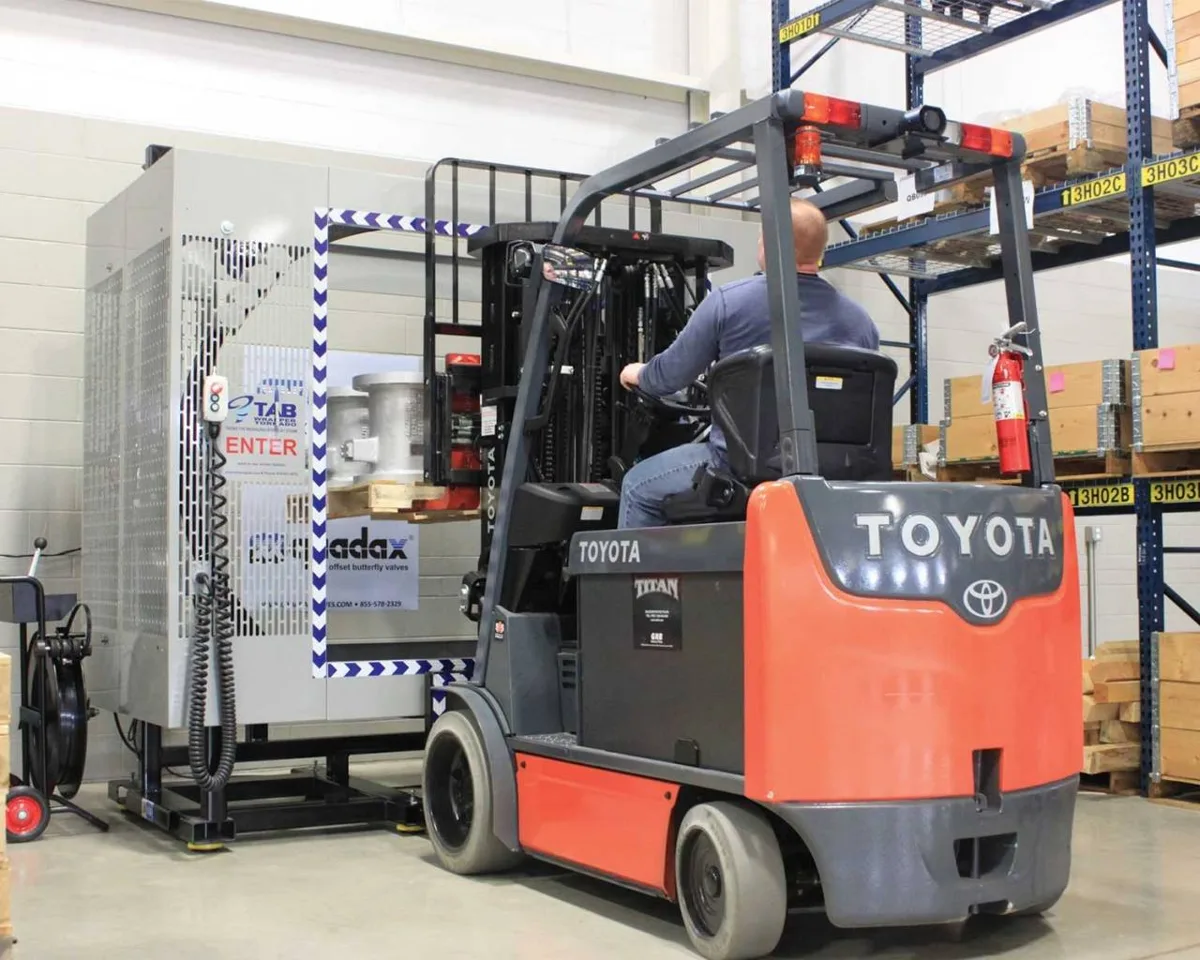
An orbital stretch wrapper (also called an orbital wrapper, ring wrapper or horizontal stretch wrapper) moves a roll of stretch film around a ring that stands upright. The load passes through the middle of the ring, so the film travels over the top, down the side, under the bottom and back up. Every wrap circles the load on a horizontal axis instead of the vertical axis a turntable uses.
That one difference is why people buy them. Because the film runs under the pallet or bundle, it ties the product to its base on all six sides. Loads that slide off a pallet on a turntable stay tied down. Long items that would never spin on a turntable can be fed straight through the ring, either on forks, on rollers or by hand.
Photo: TAB Industries
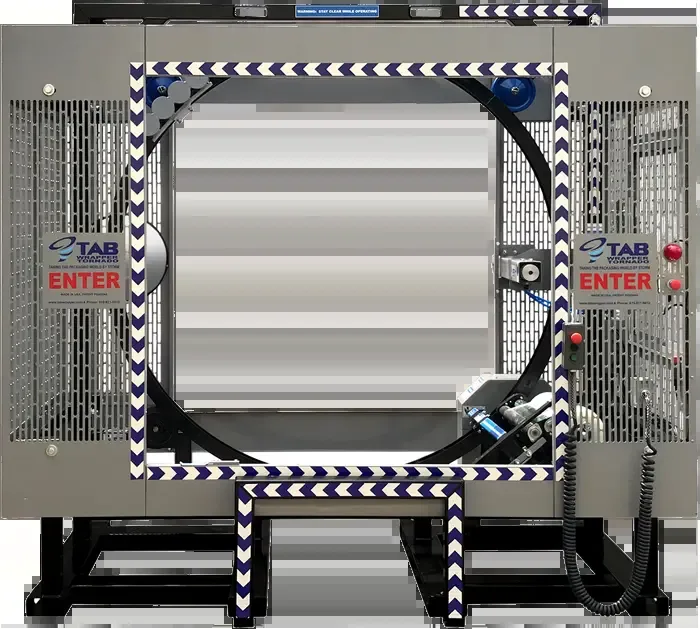
Most orbital machines on the market fall into two groups. Bundle wrappers have small rings (roughly 15 to 40 inches) and wrap tubes, extrusions, lumber or bar stock fed lengthwise on rollers. Pallet-size orbital wrappers have rings of 80 inches or more, big enough for a forklift to drive a full pallet in. The TAB Wrapper Tornado is built for this second job, and TAB also makes compact models for bundles and small parts. On the pallet machines, the forklift driver holds the load in the ring while the film travels around it. No pallet transfer, no turntable and no second worker are needed.
If you are still comparing machine families, start on our stretch wrap machines guide. It covers turntable, automatic in-line and orbital machines side by side. This page goes deep on the orbital option: where it wins, where it doesn’t, and how to size one.
Orbital vs. Turntable vs. Rotary-Arm Wrappers
There are three ways to wrap a load in stretch film. You can spin the load (turntable), spin the film around a load that stays still on a vertical axis (rotary arm or ring), or pass the film around the load on a horizontal axis (orbital). Each has a sweet spot. Buyers often get into trouble by picking a machine for its price instead of its fit with the load.
| Factor | Orbital (horizontal axis) | Turntable (vertical axis) | Rotary arm (vertical axis) |
|---|---|---|---|
| How film is applied | Ring circles the load over the top and under the base | Load spins while a film carriage rises and falls on a mast | Arm circles a load that stays still |
| Ties load to pallet | Yes, film passes under the pallet | Only by roping or extra bottom wraps; film never goes under | Only by roping or extra bottom wraps |
| Long or overhanging loads | Excellent; fed through the ring | Poor; long items swing out and hit the mast | Fair; limited by arm clearance |
| Light, tall or unstable loads | Good; load never spins | Risky; spinning can tip light loads | Good; load never spins |
| Heavy loads | Good; held on forks or conveyor (check capacity) | Limited by turntable rating | Excellent |
| Typical operator | Forklift driver stays in the seat (remote models) | Operator places load, starts cycle | Operator or conveyor |
| Best for | Metal, pipe, lumber, panels, parts, mixed or odd loads | Standard square pallets of boxed goods | High-volume conveyor lines, very heavy loads |
A simple rule: if your pallets are square, boxed and stable, a turntable is usually the lowest-cost answer (see our semi-automatic stretch wrap machines guide). If your products hang over the pallet, slide on the deck, are too light to spin or are long, an orbital wrapper solves problems a turntable can’t. Many plants run both, a turntable in shipping for boxed goods and an orbital machine in the metal or fabrication area.
Which Loads Belong on an Orbital Wrapper?
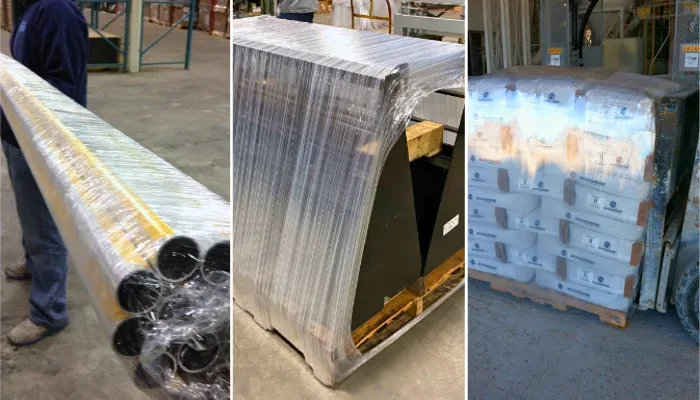
Orbital wrapping earns its keep on products that fight back on a turntable. These include long products that overhang the pallet, slick metal that slides when the deck spins, and odd shapes with no flat faces for film to grip. Because the film goes under the base, the product and the pallet become one unit. Often that unit is secure enough to ship without banding, strapping or a wooden crate.
TAB states its customers use the Tornado for metal service center shipments, fabricated parts, doors and millwork, furniture and boxed goods. Our own conversations with buyers point to the same list, plus building products and rolled goods.
Photo: TAB Industries
Odd shapes and heavy parts
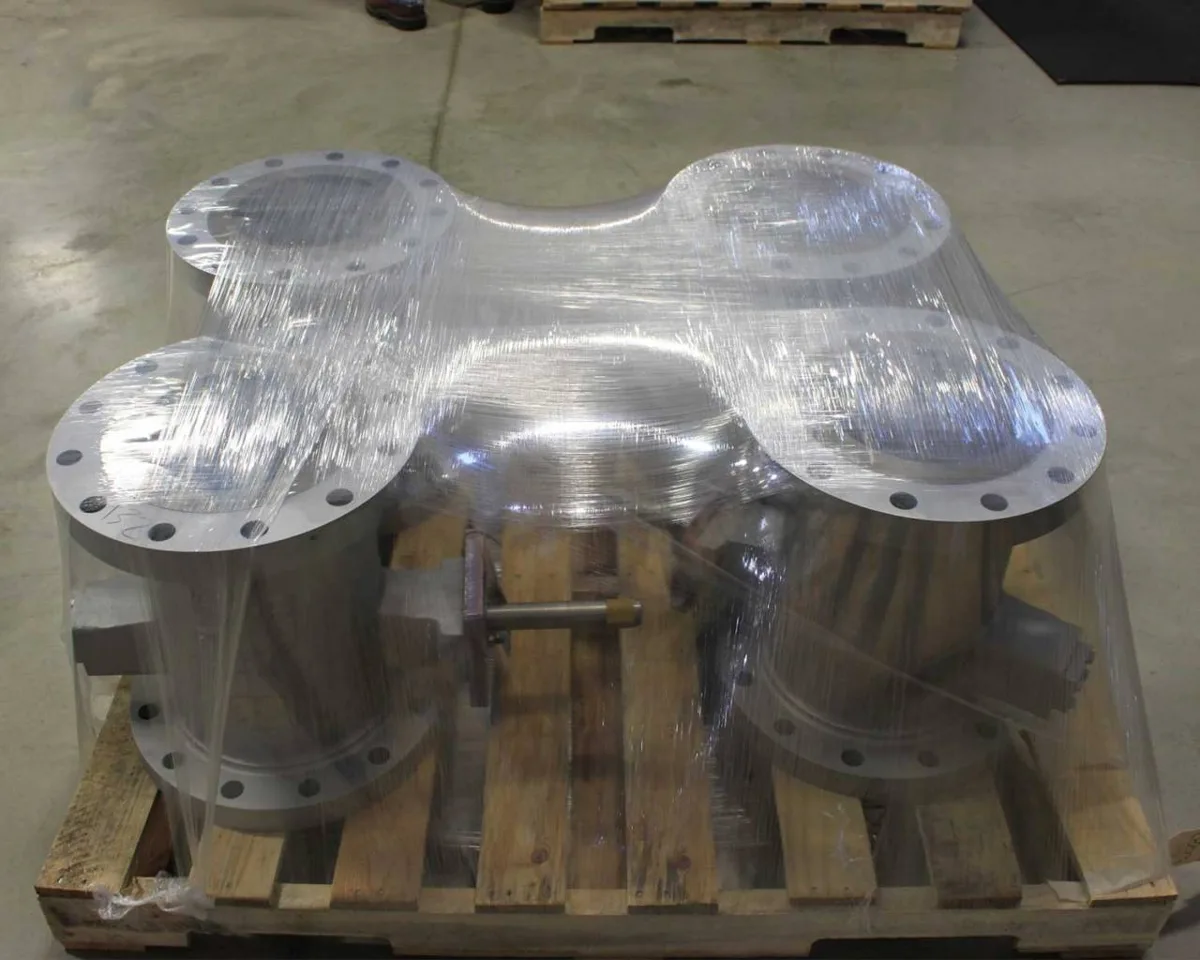
The flanged fittings in this photo have no square faces at all. On a turntable, film would slip off the curves and the parts would slide on the deck. With an orbital ring, each wrap passes under the pallet and pulls the parts down onto it. That’s why metal service centers and fabricators make up a big share of orbital buyers.
Very long products, like 20-foot pipe or full-length extrusions, are best handled by a bundle-style orbital machine with roller conveyor on both sides. Pallet-size rings handle shorter bundles that sit on forks.
Photo: TAB Industries
The TAB Wrapper Tornado Lineup: Model Picker
TAB Industries builds the Tornado in Reading, Pennsylvania. TAB describes it as a patented, American-made orbital stretch wrapping system. MH-USA is an authorized TAB dealer for the entire range. We help you choose the model, size the ring, quote freight and set up a demo. Specs below come from TAB’s published product information. Confirm them on your quote, because TAB updates its range.
| Model | Control style | Ring sizes (TAB) | Best fit |
|---|---|---|---|
| Tornado Standard | Hold-to-run corded remote; operator cuts film | 80″, 100″, 115″ | Lower-volume shops moving off hand wrapping on a tight budget |
| Tornado Smart Controls | One-button start, auto home position, auto-cut; wireless remote optional | 80″, 100″, 115″ | Mid-volume docks that want the driver to stay seated |
| Tornado Genius Controls | Detects the forklift, scans the load, programmable wrap recipes, touch-screen HMI with training videos | 80″, 100″, 115″ | Mid-to-high volume operations with many SKUs and multiple shifts |
| Tornado Dual Dispensing | Two independent film dispensers with dual auto-cut | 80″, 100″, 115″ | Heavy, wide or high-value loads that need more film coverage per pass |
| Tornado Perfect Storm | Fully automatic; conveyor infeed and discharge, sensor scan, optional load cells | 80″, 100″, 115″ | High-volume lines where TAB cites cycles as short as 15 seconds |
| Tornado Box Wrapper | Automatic; powered guides and gravity rollers feed a 40″ ring | 40″ | Small parts on backer board, e-commerce parcels, bundled rods |
| TAB Wrapper Lightning | Foot-pedal, continuous wrap; compact portable frame | 24″, 36″ | Unpalletized tubes, pipe, wood bundles and boxes |
TAB’s pallet ring sizes map to load sizes like this. The 80-inch machine fits skids up to 48 x 48 in. The 100-inch fits up to 60 x 60 in. The 115-inch takes loads up to 50 in wide by 95 in tall. TAB lists electrical needs that step up with ring size: 110 V for the 80-inch, 220 V for the 100-inch and 240 V single-phase for the 115-inch. That makes the smallest machine one of the few pallet-size wrappers that plugs into a standard outlet.
Model-by-Model Notes
Standard and Smart Controls
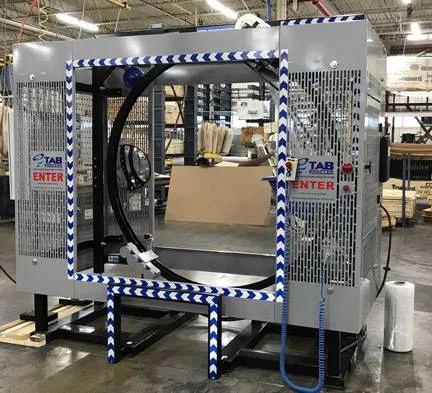
The Standard model is the entry point. The driver sets the pallet in the ring, tucks the film tail, holds the remote button while the ring runs and cuts the film when done. TAB says one operator can wrap a pallet in under a minute.
Smart Controls removes the hold-to-run step. One press starts the cycle, the dispenser homes itself and the film is cut automatically. With the optional wireless remote, the driver never leaves the seat.
Photo: TAB Industries
Genius Controls
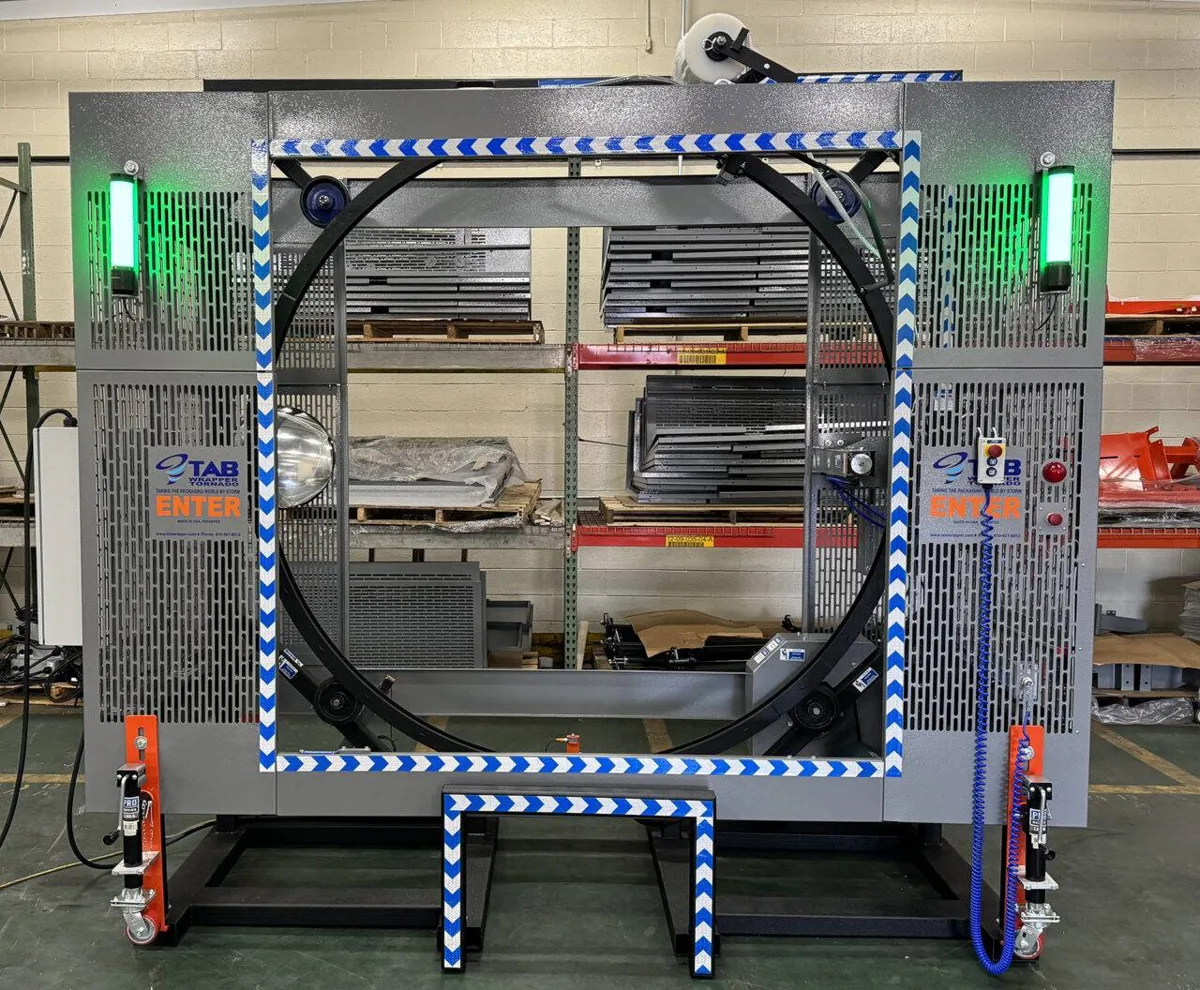
Genius Controls is the step up for busier docks. The machine detects the forklift entering the ring, scans the load and applies a stored wrap recipe. It then cuts and holds the film for the next pallet. A touch-screen HMI with built-in training videos, stack lights and maintenance alerts helps new drivers run it the same way every time. That consistency is what keeps damage claims down on multi-shift operations.
Photo: TAB Industries
Dual Dispensing
Dual Dispensing mounts two film carriages on the ring. Each pass lays down twice the film. TAB notes you can run two different films at once, for example a puncture-resistant grade with an opaque or colored grade for privacy. Dual auto-cut devices cut both rolls together. Choose this when single-roll coverage isn’t enough for heavy steel or sharp-edged loads.
Photo: TAB Industries
Perfect Storm
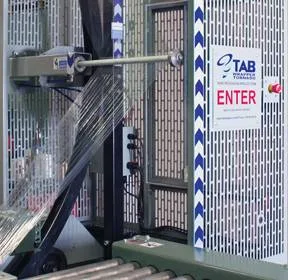
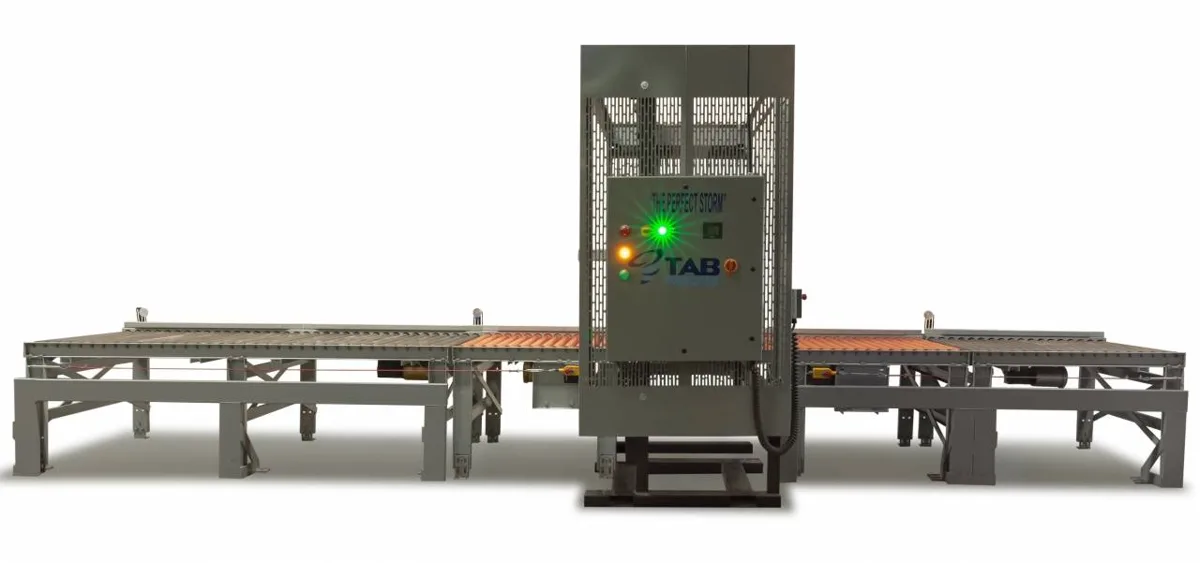
Perfect Storm is TAB’s fully automatic orbital wrapper. The driver drops the pallet on an infeed conveyor and steps away. Sensors scan the load, the system calculates the pattern, wraps it and discharges it. Load cells (weigh-on-wrap) and accumulation conveyors can be added. TAB states cycles can run as short as 15 seconds, so this is the model for plants wrapping pallets all shift.
Photo: TAB Industries
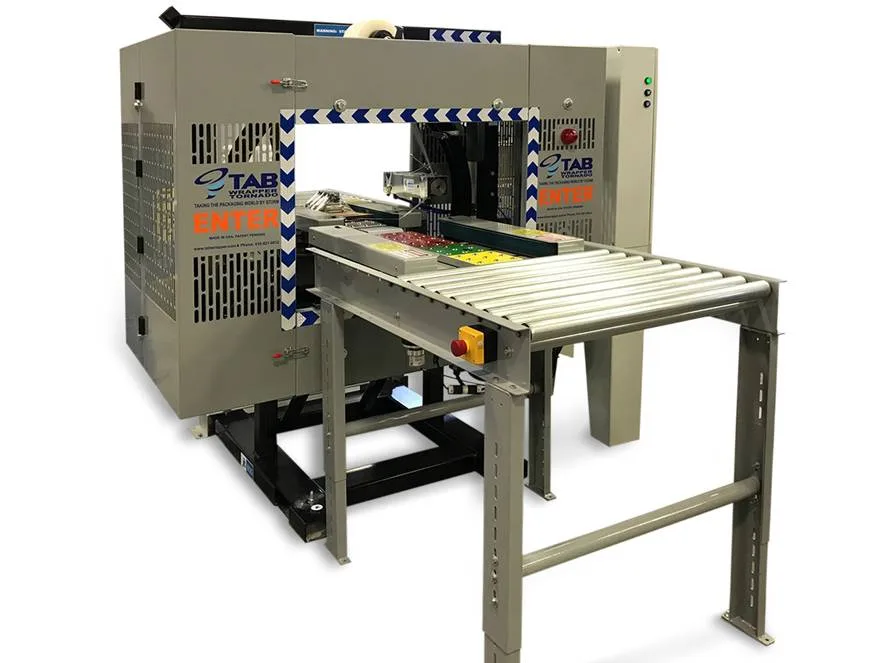
Box Wrapper
The Box Wrapper uses a 40-inch ring with powered guides and gravity rollers. It secures loose parts to a cardboard backer or bundles rods and tubes into one unit. TAB pitches it as a way to cut boxes and dunnage from parcel shipments, which suits small-parts distributors and e-commerce packing benches.
Photo: TAB Industries
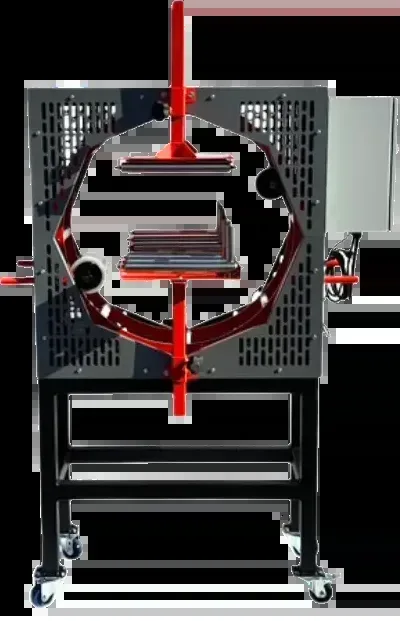
Lightning
The Lightning is TAB’s compact model, with 24- or 36-inch rings on a portable frame. The operator places the bundle, attaches the film and presses a foot pedal for continuous 360-degree wrapping. Optional gravity roller conveyors support longer pieces. It’s the natural choice for pipe, tube, lumber bundles and other unpalletized products.
Photo: TAB Industries
Options and Add-Ons Worth Considering
Most of the value in an orbital wrapper comes from matching options to how your dock actually runs. TAB offers these add-ons across the Tornado range (availability varies by model):
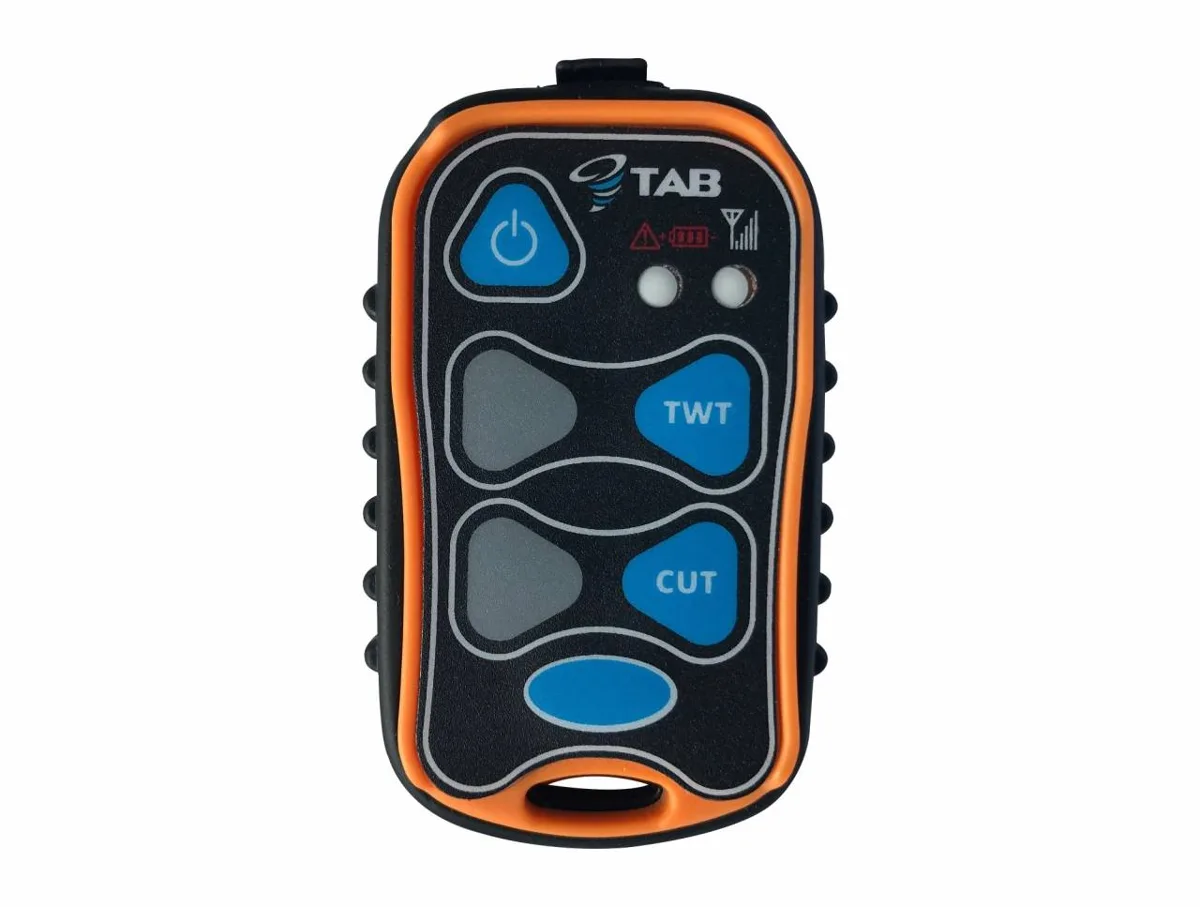 Wireless remote operationLets the forklift driver start, stop and cut from the seat. It cuts the on-and-off trips that slow hand wrapping and cause slips. Photo: TAB Industries
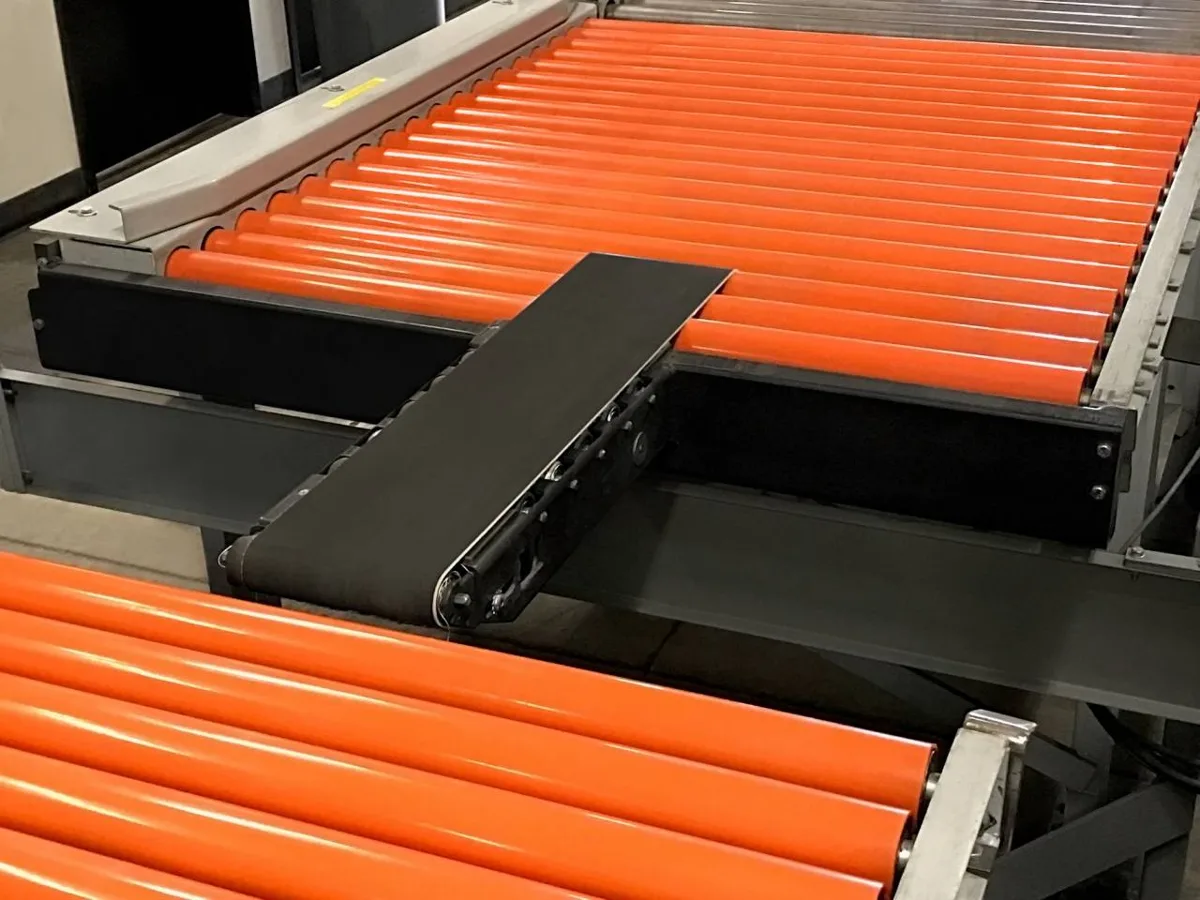 Conveyors and load cellsPowered infeed and outfeed, conveyor bridges and weigh-on-wrap load cells turn a semi-automatic machine into part of a line. Photo: TAB Industries
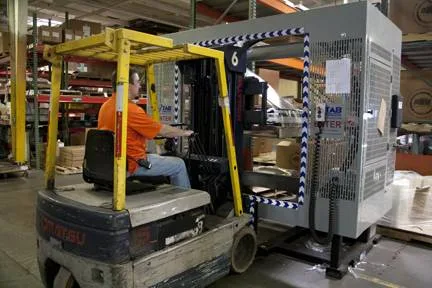 Dimensioning and safety scannersA dimensioning system measures each load for wrap patterns and shipping data. Area safety scanners stop the ring when a person enters the zone. Photo: TAB Industries
- Portability add-ons let you move the machine between bays or buildings. This is useful when wrapping happens in more than one place.
- Blower / air recycling options manage film and air around the dispenser.
- Preventive maintenance kits hold the wear parts (rollers, belts, cutters) a busy machine goes through, so a worn part doesn’t stop shipping.
- Anti-vibration pads and removable bumper guards protect the frame from forklift contact and floor vibration.
How to Size an Orbital Wrapper
Ring size is the single most important spec. The ring has to clear the load’s diagonal (not just its width or height) plus forks, dunnage and any overhang. Measure your largest common load, not your average one. A machine that can’t take the biggest 10% of your pallets sends those loads back to hand wrapping.
For pallet machines, TAB publishes a simple size calculator based on maximum load height and width. We’ll run the same check from your measurements before quoting.
Photo: TAB Industries
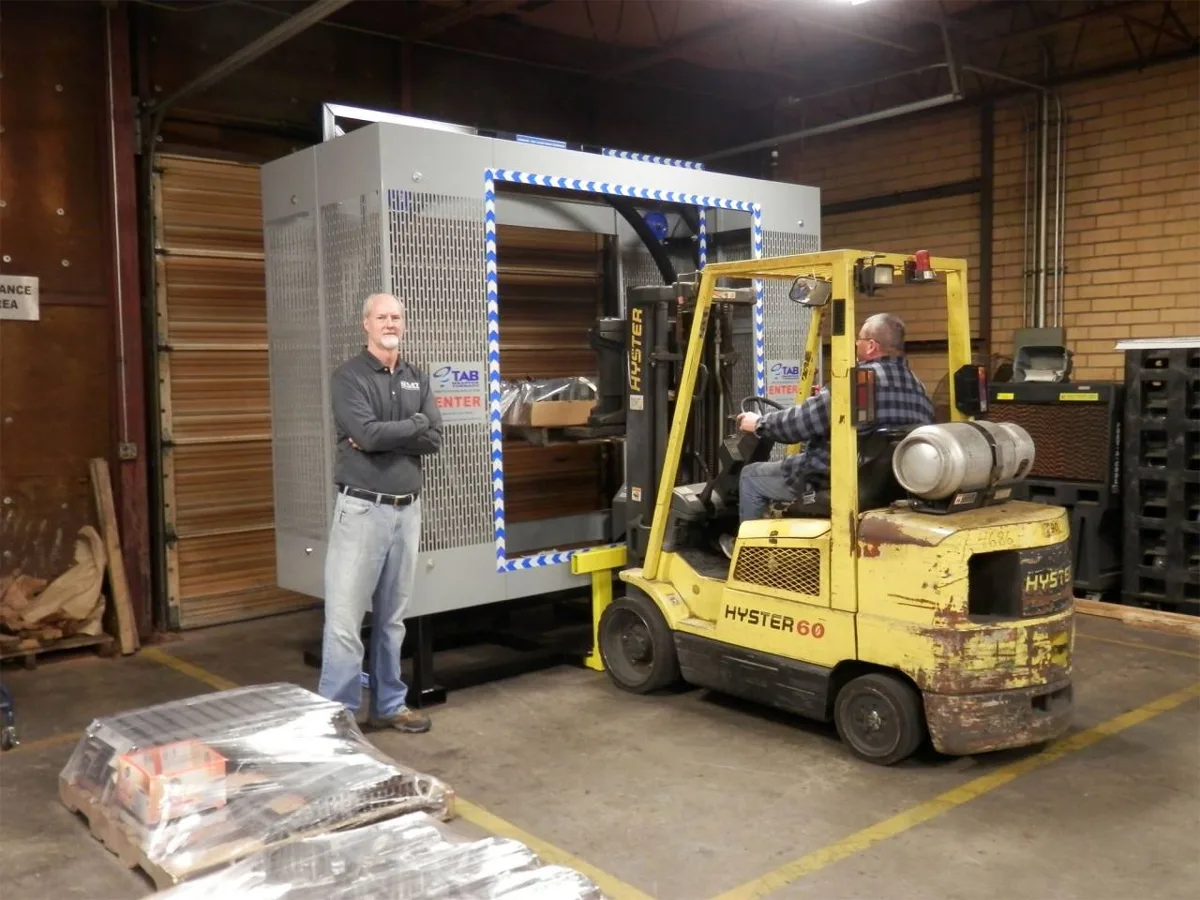
Measure the largest load
Width, height and length of your biggest regular pallet or bundle, including overhang.
Check the diagonal
The load’s cross-section diagonal plus fork and pallet clearance must fit inside the ring opening.
Count pallets per shift
Volume decides manual vs. Smart, Genius or Perfect Storm controls.
Plan the floor
Allow forklift approach and exit space on both sides, and check the overall frame height against your ceiling, sprinklers and doors.
Confirm power
TAB pallet models step from 110 V to 220 V and 240 V single-phase as ring size grows.
For long products, also think about the length you’ll feed through the ring. A pallet machine wraps a bundle held on forks. A bundle wrapper with roller tables on each side handles 10-, 20- and 24-foot lengths. If your products vary a lot, send photos of your three most common loads. That usually settles the choice faster than spec sheets do.
Choosing Stretch Film for Orbital Wrapping
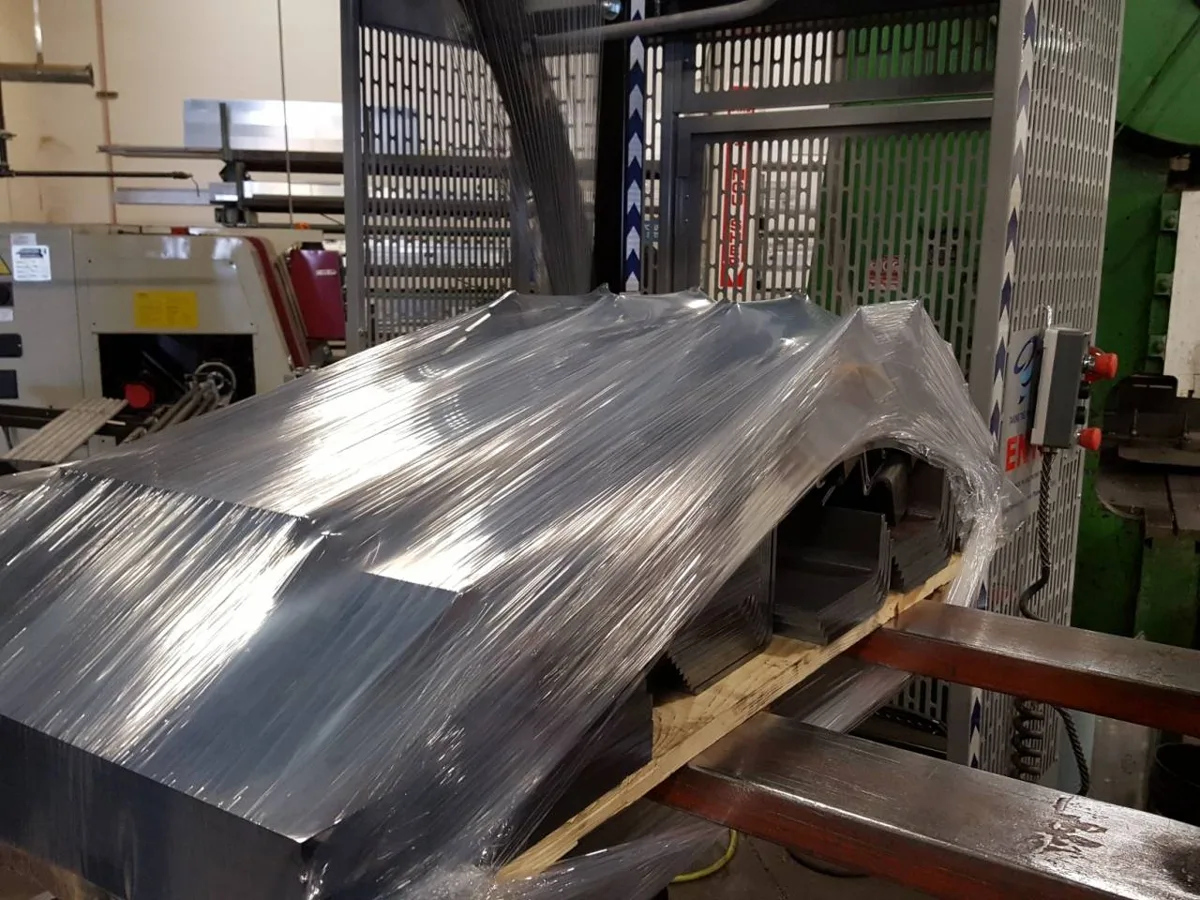
Orbital machines wrap at a different angle than turntables, and the film rubs on the pallet base and forks. Film choice matters. TAB sells several grades sized for its dispensers: standard, heavy-duty, ribbed, cold-temperature and automated-cut films, plus hand rolls for touch-ups.
As a starting point, use standard cast film for boxed or smooth loads and heavy-duty film for steel, castings and sharp edges. Ribbed film adds strength along the length of long bundles. Cold film stays stretchy in unheated warehouses and freezers.
Photo: TAB Industries
- Puncture resistance first on metal: a tear that starts at a corner runs fast under tension.
- Opaque or tinted film hides high-value or customer-branded product; a dual-dispensing machine can run it over a clear structural layer.
- Overlap and pass count matter more than gauge. A consistent machine pattern often uses less film than hand wrapping because the tension stays the same from start to finish.
- Ask us to match a film to your ring. Roll diameter and core size must fit the dispenser.
ROI: Orbital Wrapper vs. Hand Wrapping
Hand wrapping a long or awkward load is slow, uses more film than needed and is hard on backs and knees. Workers walk backward around the pallet bent over to reach the base. An orbital wrapper changes three cost lines:
A quick way to estimate payback: (minutes saved per load × loads per year × loaded labor rate) + banding and crate cost removed + damage claims avoided, compared with the installed price. TAB offers an online ROI calculator, and we’ll run the numbers with your volumes before you commit. Plants that wrap a few dozen awkward loads a day, or that spend real money on banding and crates, often see payback in a year or two. Low-volume sites should compare the Standard or Lightning model against continued hand wrapping honestly.
Safety, Demo and Lead Time
Safety. The ring is a moving part. Guarding, e-stops, safety relays and the optional area scanners keep people out of the path. Remote and Genius-style operation keeps the driver in the forklift seat during the cycle. Train every driver on lockout and on clearing a film break before running the machine.
See it run. We can arrange a video or live demonstration on loads like yours through TAB. Send photos and dimensions and we’ll match a model before you schedule.
Photo: TAB Industries
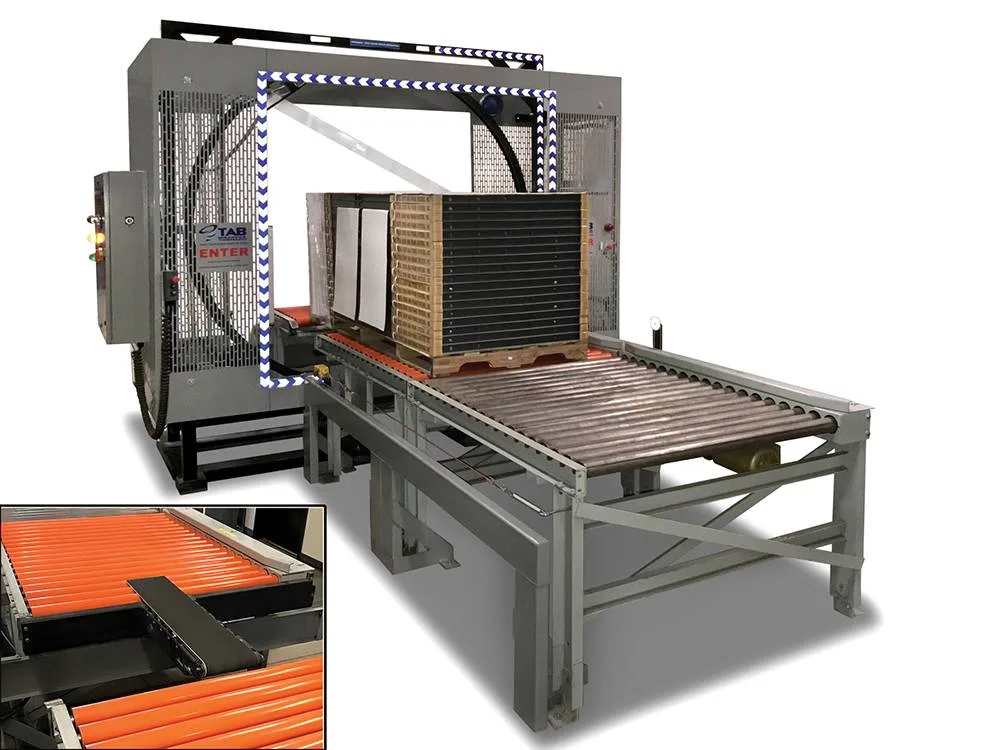
Lead time and installation. Orbital wrappers are built to order, so lead time depends on model, ring size and options. Your quote will show a current estimate. The pallet models ship mostly assembled. Plan for unloading with a forklift of the right capacity, a level floor, the correct electrical drop and a short commissioning and training visit. We coordinate freight to sites anywhere in the U.S., with in-person support in Utah, Idaho and Nevada.
Get a free quote
Tell us what you are storing, the room size and your timeline. A project specialist will follow up with layout options and pricing. Prefer to talk? Call (800) 326-4403.
Frequently Asked Questions
What is an orbital stretch wrapper?
What is the difference between an orbital wrapper and a turntable wrapper?
Is a horizontal stretch wrapper the same as an orbital wrapper?
Can an orbital wrapper wrap pipe, lumber or extrusions?
What size orbital wrapper do I need?
Do I still need banding or strapping?
Which TAB Wrapper Tornado model is right for me?
What power does a TAB orbital wrapper need?
Can the forklift driver run it without getting off the truck?
How do I get a price or a demo?
Is the Yellow Jacket orbital wrapper still sold, and what replaces it?
Ready to Stop Hand Wrapping Long and Odd Loads?
Send us photos and dimensions. We’ll match the right TAB Wrapper Tornado model and ring size.