
Binder Storage Cabinets That Rotate
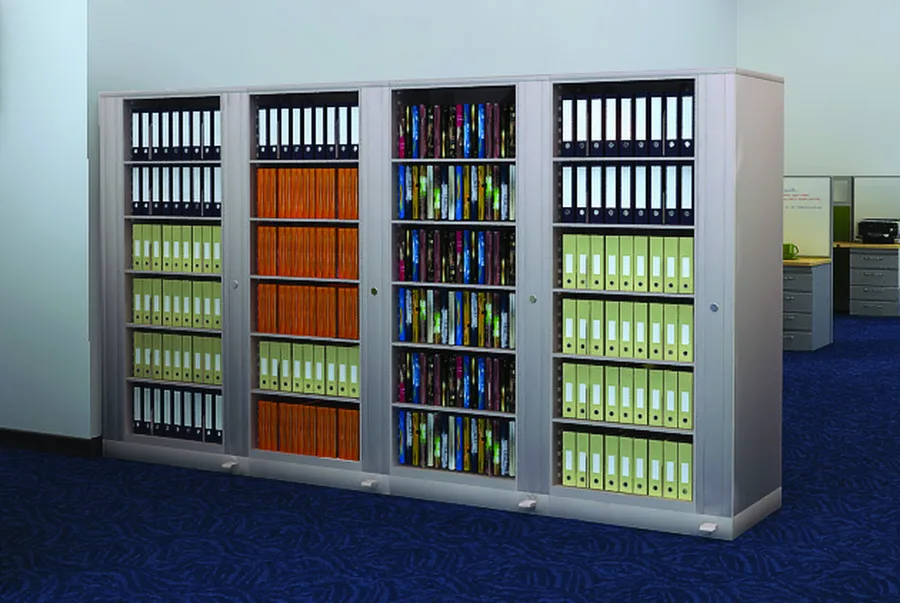
Aurora Times-2 rotary cabinets hold ring binders on both sides of every shelf, turn to bring the back half to you, and lock shut behind a clean panel. Binder storage that takes about half the floor of lateral files.
11 3/4 in.
Opening Aurora specifies for 3-ring binders
2 sides
Binders on the front and back of every shelf
10 heights
From 29 1/2 in. to 92 1/2 in.
1 lock
Secures every binder in the unit
Shop Binder Dividers and Binder Pockets
Index dividers and three-ring pockets for organizing the binders that go into a new rotary cabinet. Order online, or ask us to quote them with your cabinets.


Why a Rotary Cabinet Works for Binder Storage
Binders are awkward in most office furniture. A lateral file drawer is built for folders hanging side to side, so binders end up lying flat or standing spine-up, and the drawer is half empty either way. An open bookcase holds them upright, but every spine is on display, nothing locks, and the shelves collect dust.
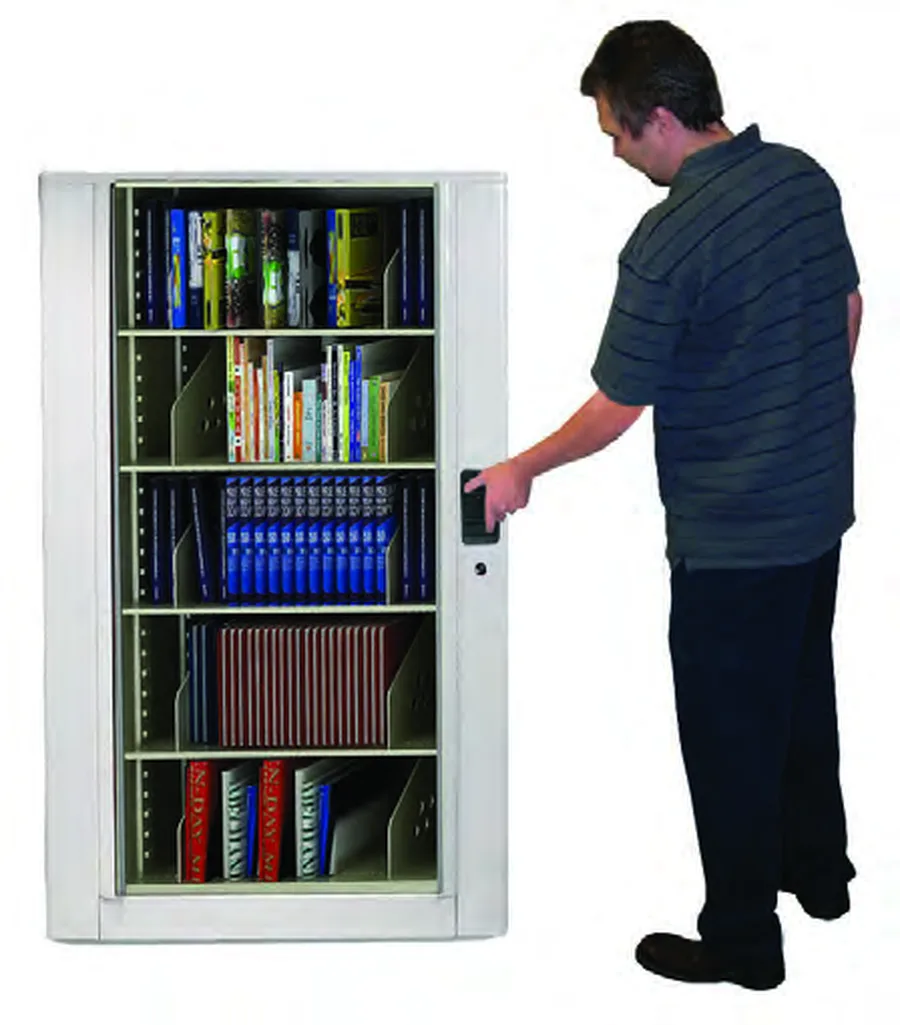
A Times-2 rotary file cabinet stores binders the way a bookcase does, standing on a shelf with the spine facing out, but it is double-depth and turns on its base. Half the binders face you. The other half sit back to back with them and are one spin away. Close the unit and the room sees a flat steel panel.
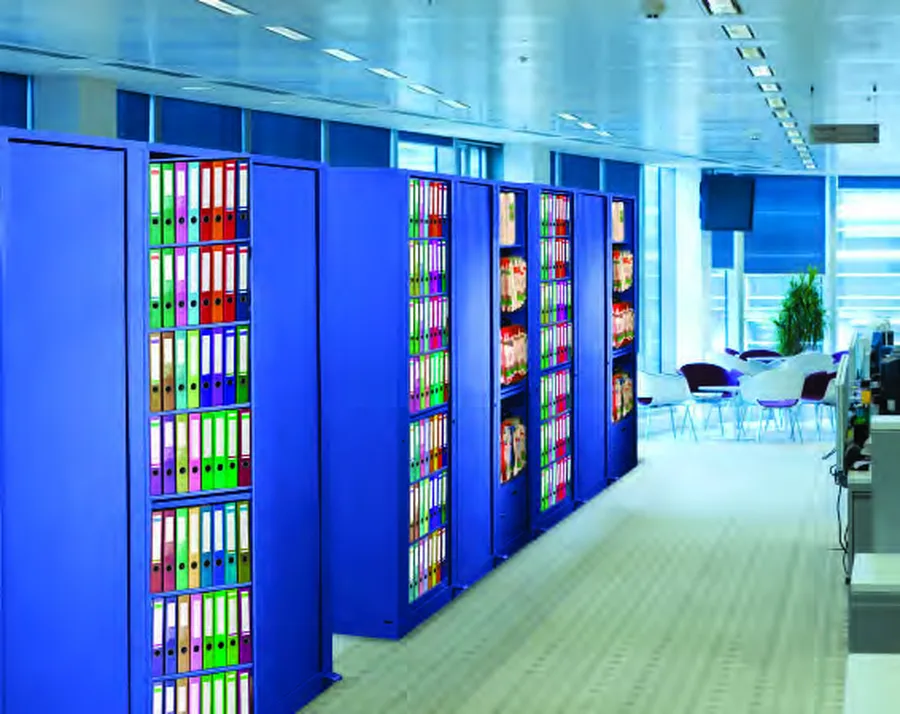
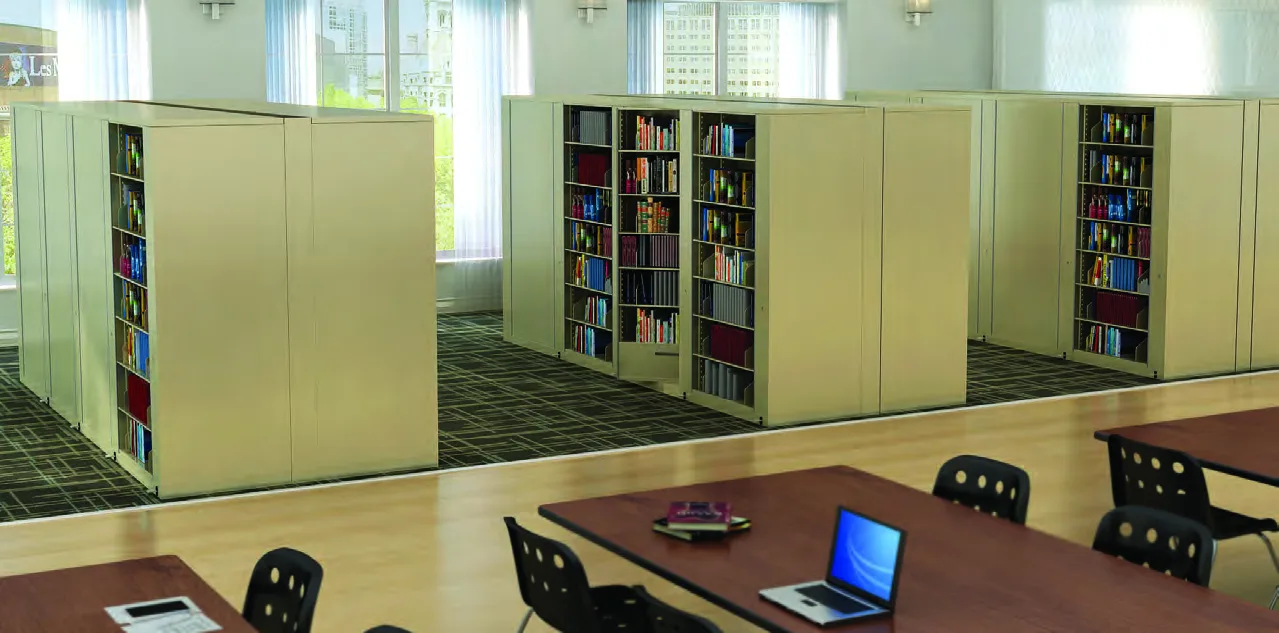
That double-depth design is where the space savings come from. Aurora rates a single 8-tier Times-2 at about the capacity of three standard lateral files, in a footprint roughly half the size, because there is no drawer to pull out and no aisle needed in front of each drawer.
The other reason people choose a rotary cabinet over a dedicated binder rack is flexibility. Aurora lists binders next to books, hanging files, supplies, media and personal items among the things one Times-2 can hold. When a department moves from paper binders to something else, the same cabinet takes new shelves, drawers or file frames instead of going to surplus.
Opening Heights for Binders: Planning by Louvers
The inside of a Times-2 is laid out in louvers, slots spaced every 1 3/4 inches. Shelves move between them without tools, so the useful question is how many louvers each tier needs. Aurora’s vertical planning table answers it:
- 7 louvers, 11 3/4 in. clear: standard 3-ring binders.
- 9 louvers, 15 1/4 in. clear: tall ledger binders.
- 6 louvers, 10 in. clear: standard file folders and hanging folders.
- 1 louver: a rollout reference shelf.
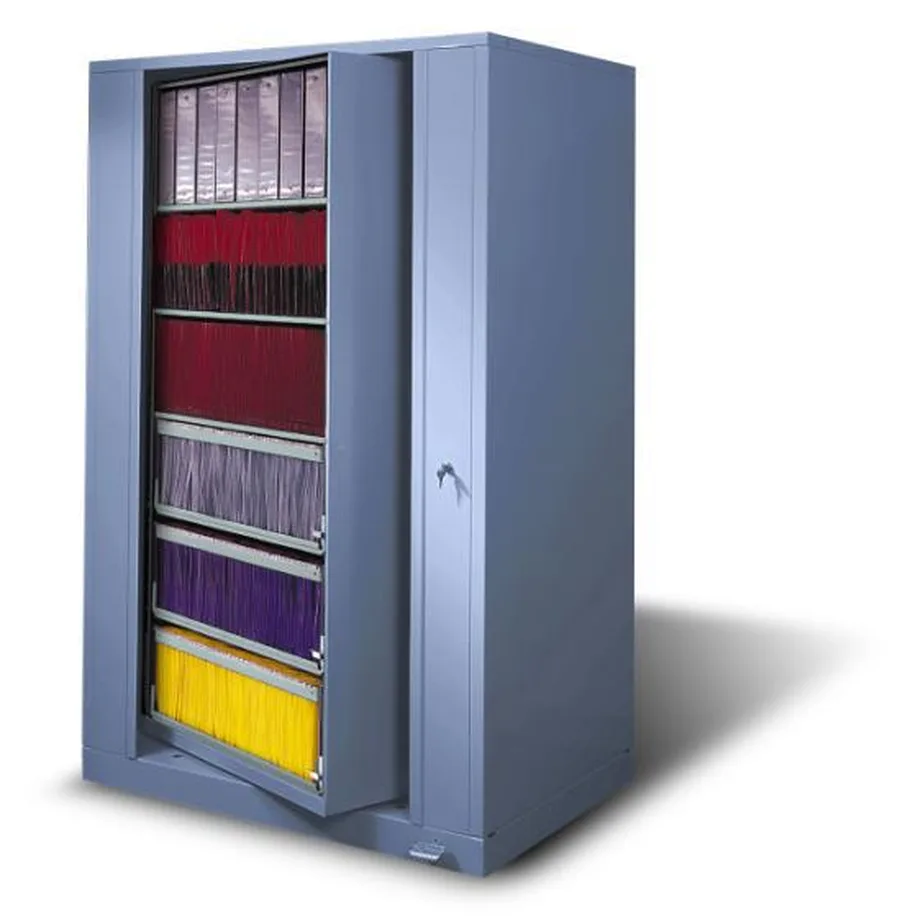
One detail catches people out. Standard preconfigured units come with six louvers between shelves, a 10-inch clearance set up for end-tab folders. For a binder cabinet, the shelves have to be re-spaced to seven louvers, or you can order an Empty unit (an “E” suffix on the model number) and lay out the interior yourself.
Each cabinet height has a fixed number of usable louvers, so the planning is simple division. The table below shows Aurora’s louver counts and our own arithmetic for how many 3-ring binder openings fit on each side of a unit if every tier is set to binders. Treat it as a starting point. We check the final layout on Aurora’s vertical planning sheet before anything is ordered, especially when binder tiers, file tiers and a reference shelf share one unit.
| Times-2 height | Overall height | Usable louvers | 3-ring binder openings per side (7 louvers each) |
|---|---|---|---|
| 2-tier | 29 1/2 in. | 13 | 1 |
| 3-tier | 41 5/8 in. | 20 | 2 |
| 4-tier | 50 3/8 in. | 25 | 3 |
| 5-tier | 60 7/8 in. | 31 | 4 |
| 6-tier | 71 3/8 in. | 37 | 5 |
| 7-tier | 82 in. | 43 | 6 |
| 8-tier | 92 1/2 in. | 49 | 7 |
Ledger binders and oversized binders
Ledger and other tall binders need nine louvers per tier, so a unit holds fewer binder openings. Plus-size 5-, 6- and 7-tier units add three or four louvers of extra height for layouts like this. Bring us your tallest binder and we will plan around it.
Shelves, Dividers and Reference Shelves for Binders
Times-2 comes with Aurora’s adjustable, reversible shelf. It has a 1/4-inch lip on one edge and is slotted every inch for dividers. Lip to the back suits folders. Lip to the front keeps boxes and loose items from sliding off when the cabinet turns.
For binders, Aurora points to the recessed shelf. It improves visibility of what is stored in the lower tiers, which matters when someone is reading spine labels near the floor, and Aurora notes it is typically used for binder storage. It takes the same dividers.
Dividers keep a half-empty shelf from turning into a row of leaning binders. They have three-point support, two points on the shelf and one under the shelf above, and come in heights matched to the opening, including the 11 3/4-inch binder opening. Two per opening are standard on letter units, three on legal units.
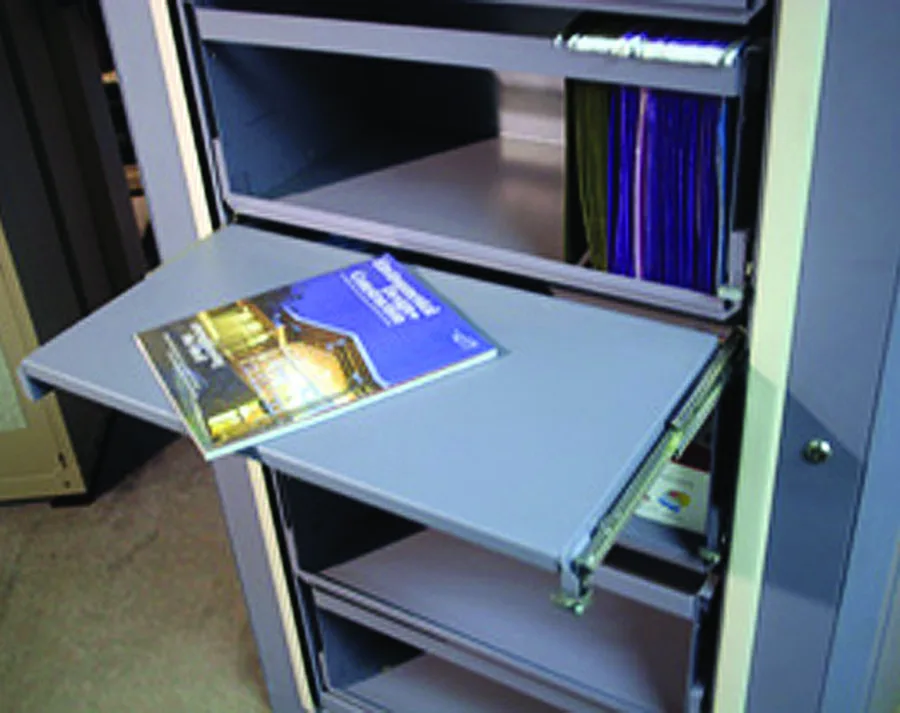
The rollout reference shelf is the accessory Aurora calls its most popular, and it suits binders well: pull it out, set the binder on it, look something up and put it back without carrying it to a desk. On 4- to 8-tier units it fits without costing any storage when standard shelves are used. With rollout file drawers in the same unit it takes three louvers.
Letter or Legal Width for a Binder Cabinet
Times-2 comes in two widths, and for binders the choice is mostly about depth. Measure your largest binder from spine to front edge and compare it with the inside depth below. Most letter-size ring binders suit a letter unit. Wider binders, binders with extended tab dividers, and mixed binder-and-box storage are usually easier in a legal unit.
| Letter-size unit | Legal/A4-size unit | |
|---|---|---|
| Inside width x depth (each side) | 24 1/4 x 12 1/4 in. | 30 1/4 x 15 1/4 in. |
| Shelf rating | 100 lb | 110 lb |
| Starter unit footprint | 36 1/2 in. wide x 25 in. deep | 45 1/4 in. wide x 31 in. deep |
| Each add-on unit | +30 3/4 in. | +38 1/8 in. |
| Rotation gap next to a wall | about 5 7/8 in. | about 7 1/4 in. |
Weight is rarely the limit on a binder shelf. Aurora’s media-weight table puts binders at about 2.75 pounds per filing inch, so a full row across a letter shelf works out to roughly 65 to 70 pounds by our math, under the 100-pound shelf rating. A legal shelf of binders lands in the low 80s against its 110-pound rating. A room full of loaded cabinets is a different matter, which is why floor loading is part of every layout we do.
Binders, Files and Personal Storage in One Cabinet
Few departments store only binders. Because every Times-2 accessory hangs on the same louvers, one unit can hold a binder tier at seven louvers, hanging-file drawers at six, and an accessory drawer for supplies, all turning together on one base.
Aurora’s wardrobe kit takes it further: a coat section on one side of a unit, with half-shelves for binders or books beside it and an optional locking drawer for valuables. That turns a binder cabinet into personal storage for staff without lockers or a coat closet, which helps in hoteling and shared-desk offices.

If the contents change later, the interior changes with them. Shelves, drawers and frames can be swapped or added to an installed unit, so a cabinet bought for binders today is not stuck being a binder cabinet.
Low and Counter-Height Binder Storage
Not every binder cabinet needs to be tall. The 2-tier Times-2 is 29 1/2 inches high and the 3-tier is 41 5/8 inches, low enough to sit under a work surface. A row of short units topped with a counter holds reference binders below and a printer, copier or layout space on top.
Aurora’s interconnect option joins units of different heights, tall to short to tall, so a binder wall can drop down under a window or around building controls and still use the space.
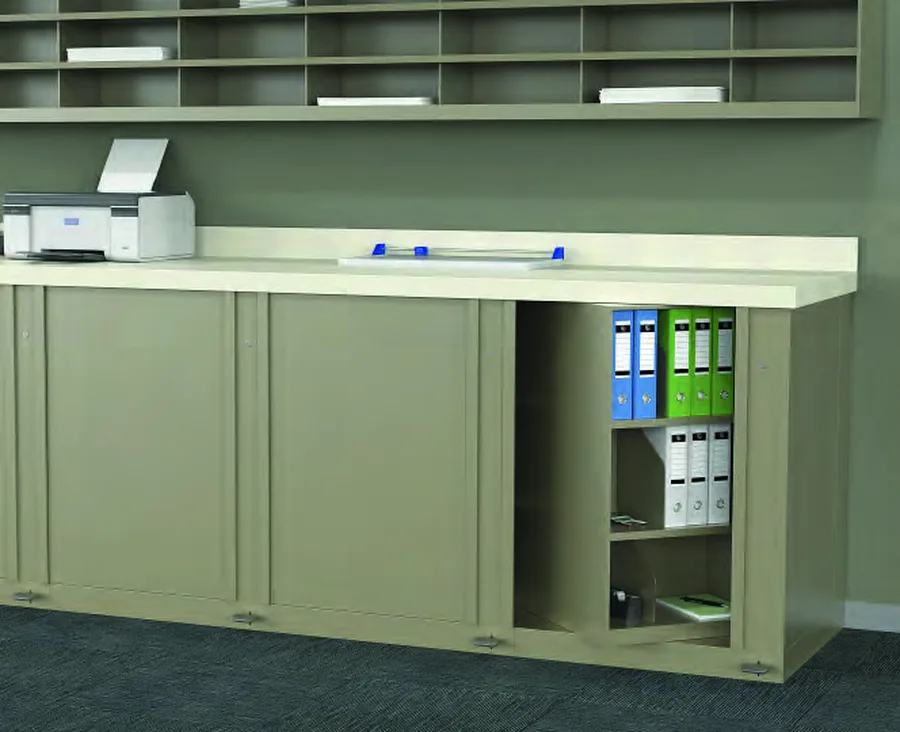

Short units also work as an island. Set back to back under a shared top, they become a stand-up meeting counter for a project team, with the team’s binders and boxes stored right where people gather. Each unit still turns, so both sides of the island can reach what is stored inside.
For a team that works from binders all day, this puts the reference material at the table instead of in a file room down the hall.
Locking Binder Storage Cabinets
Binders often hold the material people least want left on an open shelf: HR and personnel binders, client and case binders, patient chart binders, safety and compliance manuals. Every Times-2 locks as a unit with a standard key lock, and Aurora offers upgrades:
- Electronic keypad lock with separate user codes, so a bank of units can be coded differently, and a lockout after five wrong entries.
- Medeco high-security cores.
- Twin locks keyed differently, with the top lock as a supervisor’s key.
- Locking security drawers inside the cabinet for items that need their own key.
The lock secures the whole cabinet, so there is no separate door to leave open. For patient chart binders specifically, see our medical chart rotary file cabinets page.
How We Plan a Binder Storage Layout
Count the binders
Measure the total shelf inches of spines you have now, and add room for growth.
Sort by size
Standard 3-ring, ledger and oversized binders need different opening heights.
Pick heights and width
Ceiling, sightlines and binder depth set the tier count and letter or legal.
Check the room
Floor load, rotation gap, door swings and the delivery route into the building.
Send us a rough binder count, a photo of your current shelves and a floor plan or tape measurements. We will lay out the units, set the louver spacing for your binders and quote the shelves, dividers and locks the layout needs. Our Times-2 installation planning guide covers leveling, floor loading and anchoring. If the binders have to live in a hallway or a recess, the corridor and alcove rotary cabinet page shows how those layouts work. Comparing a rotary cabinet with lateral files for the same wall? Our rotating office cabinet comparison covers that. Buyers in Utah can work with our Salt Lake City team through the Times-2 Speed Files Utah page.
Get a free quote
Tell us what you are storing, the room size and your timeline. A project specialist will follow up with layout options and pricing. Prefer to talk? Call (800) 326-4403.
Binder Storage Cabinet FAQs
What is the best way to store binders?
Is it better to store binders vertically or flat?
What size shelf opening do 3-ring binders need?
What is a binder carousel?
Can a binder storage cabinet lock?
Should I choose a letter or legal rotary cabinet for binders?
Have a Wall of Binders to Organize?
Send a rough binder count and a photo or floor plan. We will lay out Times-2 units, set the shelf spacing for your binders and quote the dividers and locks you need.