
Rotary File Cabinets for Medical Charts and Clinic Records
Aurora Times-2 rotary cabinets keep active patient charts, lab paperwork and exam-room supplies behind a locking door in about the floor space of a lateral file — supplied and installed for Utah clinics, labs and medical offices.

3 lateral files
Aurora’s published capacity per unit
Both faces
Reached from one standing position
Locking
Keyed standard, keypad optional
801-328-8788
Utah project line
Why Clinics Still Buy Chart Storage Cabinets
Electronic health records took over the active clinical workflow years ago, and paper did not disappear with them. Signed consent forms, outside records, imaging reports, immunization cards, workers’-compensation and billing files, lab requisitions and closed charts inside a retention window all still live in the building — usually in a corner of a front office, a nurses’ station or a small records room that was never designed for them.
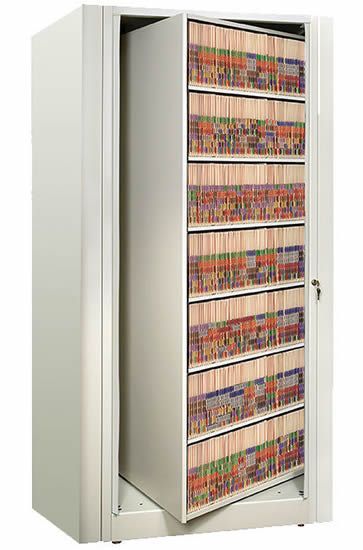
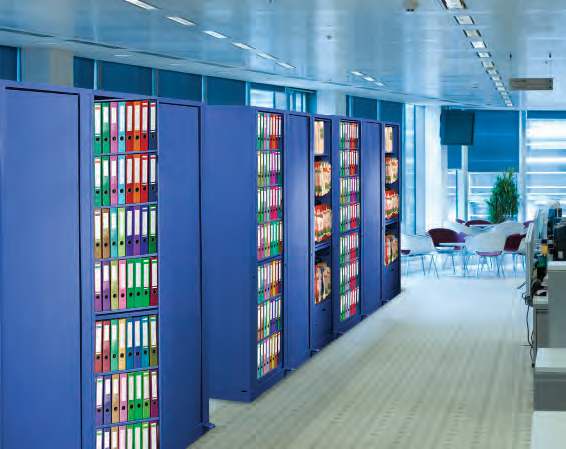
That is the problem a rotary file cabinet solves. A Times-2 puts a rotating inner shell inside a fixed outer housing, so both faces of the interior are filled and both are reached from one standing position. Aurora publishes the capacity as the equivalent of three lateral files in a single unit, which is why a clinic can move a wall of four-drawer cabinets into one or two rotary units and give the room back to staff.
Full model lines, heights, widths and interior dimensions live on the Times-2 Speed Files hub. This page is about the clinical application: what goes inside, how access is controlled, and where the cabinet ends up.
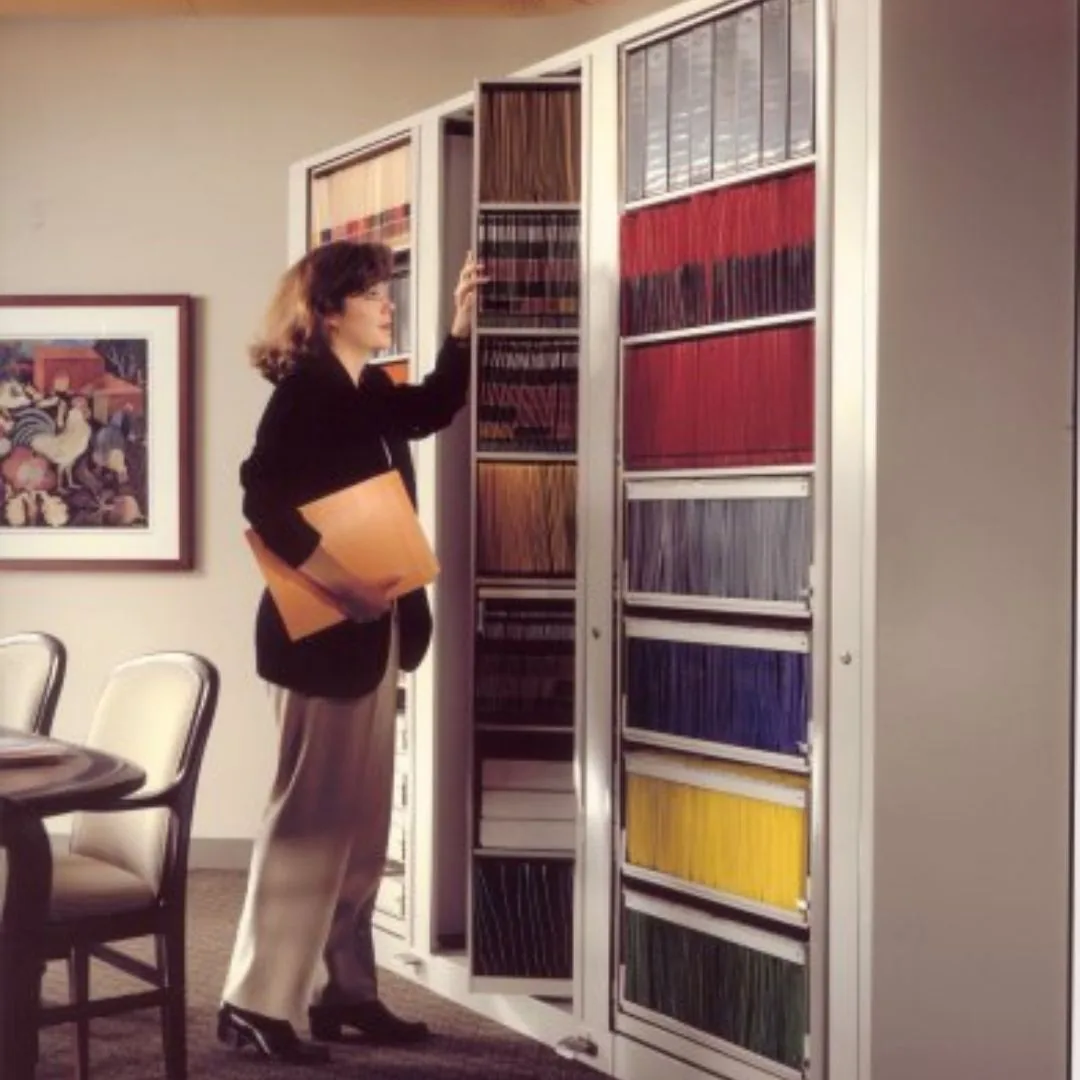
Retrieval time, not just square footage. Drawer files force staff to walk the row, open a drawer, and block the aisle while they read. A rotary cabinet turns the needed face toward the person, so pulling and refiling a chart happens in one place. In a front office where the same handful of files is touched dozens of times a day, that is the difference staff actually notice.
No pull-out clearance. A lateral or vertical file needs clear floor in front of it for the drawer travel. A rotary cabinet rotates inside its own footprint, so it fits against a corridor wall, beside a check-in counter or in an alcove where a drawer file would block traffic.
What Goes Inside a Clinical Rotary Cabinet
The interior is specified by what you store, not by a fixed drawer pattern. These are the configurations clinics ask for most often — tell us the media mix and we size the tiers.
 End-Tab Charts and Color CodingOpen shelf tiers suit end-tab medical charts, where the color-coded tab is read from the side. Misfiles are visible at a glance instead of hidden inside a drawer.
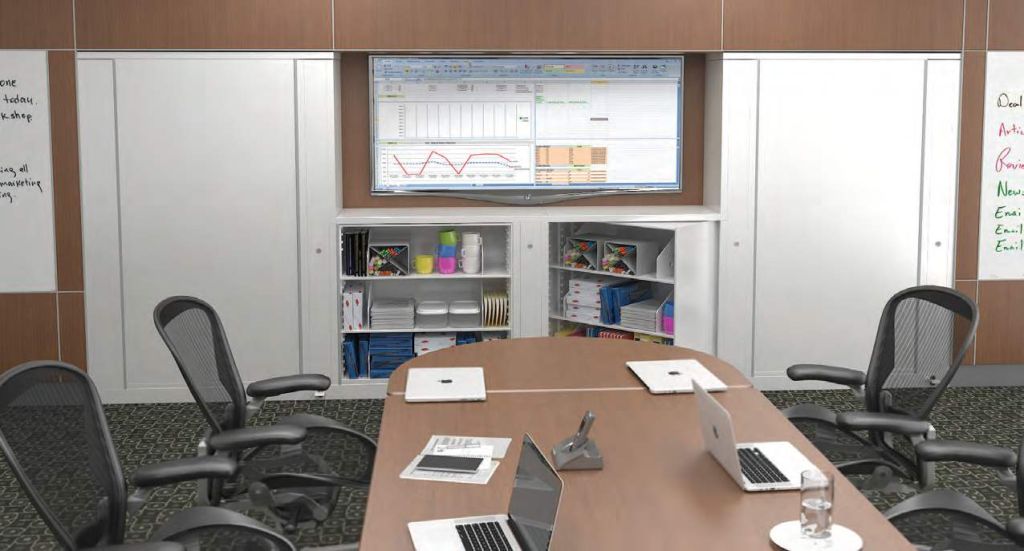
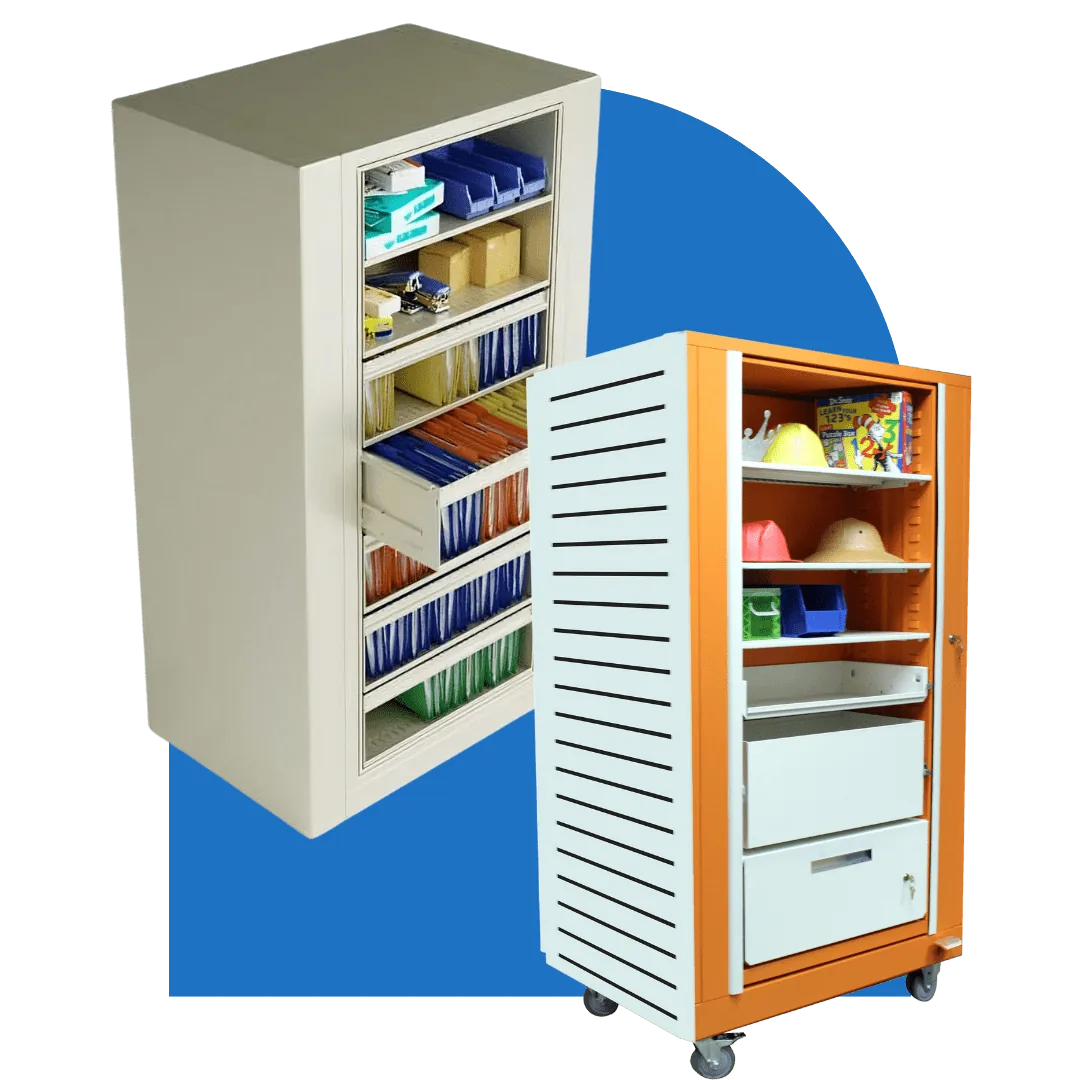 Exam-Room and Nurse-Station SuppliesBins, dividers and drawer inserts turn a tier into supply storage — dressings, consumables, forms and small instruments — that closes and locks between shifts.
 Hanging Files, Binders and MediaHanging folder frames handle letter and legal files; open shelves take policy binders, logbooks, imaging envelopes and reference material on the same unit.
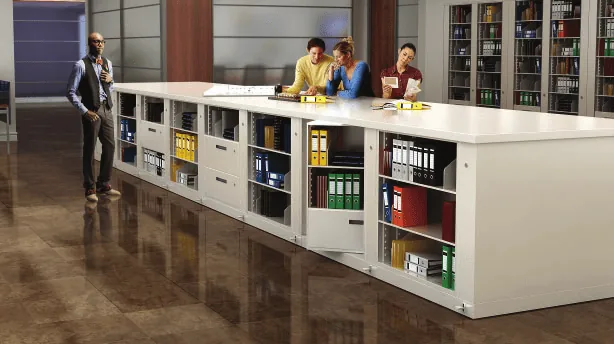 Counter-Height Units at Check-InShorter units keep the work surface usable at a reception or triage counter while the filing sits directly underneath the person using it.
Access Control, Privacy and Retention
Paper holding protected health information sits under the same HIPAA Security Rule facility-access expectations as any other PHI location: 45 CFR 164.310(a) requires policies and procedures limiting physical access to the places where PHI is kept. A cabinet that rotates its contents inward and locks gives a records custodian something concrete to point at during a walkthrough — closed, keyed, and nothing legible from the corridor.
Keyed locks are standard on Times-2 cabinets and keypad access is a factory option, which matters where several staff need entry and key handoffs are the weak point. Your own policies still decide who holds credentials, how long closed charts are retained and when they are destroyed — we spec the hardware, not the policy. For the records-room side of the same question, see mobile shelving for medical records.
Confirm current lock options and finishes with us before ordering; Aurora’s option list is what governs, not a general description on a web page.
Where the Cabinet Goes in a Medical Building
Front office and check-in. Active charts, referral packets and forms within arm’s reach of the desk, locked at close. Counter-height units keep sightlines open across the reception area.
Nurses’ station and clean supply. A single unit can split duty between paperwork on one face and bins of consumables on the other, which suits small clinics that do not have separate rooms for each. Clinics that dispense medications can add bag rails and locking drawers — see Times-2 pharmacy cabinets.
Corridors and alcoves. Because nothing swings out, cabinets can line a corridor recess or an alcove that is otherwise dead space — an Aurora application their own literature covers for corridor and pass-through installations.
Laboratory and specimen paperwork. University and hospital laboratories in Utah have specified rotary units for requisitions, QC logbooks and reference binders kept at the bench rather than in a remote file room.
Utah clinics, labs and medical offices from Salt Lake City and West Valley City through Provo, Orem, Ogden and Logan are supported by our Salt Lake City project team — see Times-2 Speed Files in Utah for delivery and installation detail, or the GSA Times-2 page if you buy on federal contract.
Rotary Cabinet or Mobile Shelving for Patient Records?
Both compress filing. They solve different sizes of problem, and clinics often end up with one of each — a rotary cabinet where charts are used, mobile shelving where the archive lives.
| Question | Rotary file cabinet | Mobile shelving |
|---|---|---|
| Best fit | Active charts and supplies in an occupied room | Closed-chart archive or a dedicated records room |
| Volume | A department’s working files | Thousands of files or records-center boxes |
| Floor work | None — freestanding cabinet, rotates in place | Rails fixed to the floor, levelness and load check first |
| Security | Locking door on each cabinet | Locking carriage ranges or a locked room |
| Installation | Assembled in the room in hours | A multi-day system install |
| Read more | Rotary office cabinets | Mobile shelving in Utah |
Specifying a Chart Storage Cabinet
Inventory the media
Count linear feet or drawers of charts, plus binders, boxes and any supplies you want in the same cabinet. Separate active from closed files.
Measure the space
Wall length, ceiling height, door and elevator openings. Cabinets ship in sections and assemble on site, which is how they reach upper floors of older buildings.
Choose tiers, interior and locks
We match tier count, interior inserts and keyed or keypad access to that inventory and quote it through Aurora.
Delivery, assembly and load-in
Our Utah team delivers, assembles and levels the cabinet and can schedule around clinic hours so the front office is never closed.
Send the chart count and a photo of the room to start, or call the Utah project line at 801-328-8788. If the volume turns out to be archive-sized rather than desk-sized, we will say so and price records-room shelving instead — a rotary cabinet is the wrong tool for 2,000 boxes. No capacity, dimension, lead-time or price figure on this page substitutes for a quote: Aurora’s current specification sheet and our written quote govern.
Get a free quote
Tell us what you are storing, the room size and your timeline. A project specialist will follow up with layout options and pricing. Prefer to talk? Call (800) 326-4403.
Can a rotary file cabinet be used for patient charts under HIPAA?
How many charts does one Times-2 cabinet hold?
Do rotary cabinets work for end-tab medical charts?
Can one cabinet hold both files and clinical supplies?
Is keypad access available instead of keys?
Does Material Handling USA install these in Utah clinics?
Shop Records Storage Supplies Online
Buy select items directly from our online store, or request a quote for volume, custom sizes and freight-rated orders.


Size a Rotary Chart Cabinet for Your Clinic
Send your chart count and room dimensions for a free layout recommendation and Aurora quote.