
Planning a Times-2 Speed File Installation in Utah
What to check before Aurora Times-2 rotary file cabinets arrive: the delivery route, rotation space, floor load, seismic anchoring, leveling, locks and warranty. This is the survey our Salt Lake City installers do on every job.
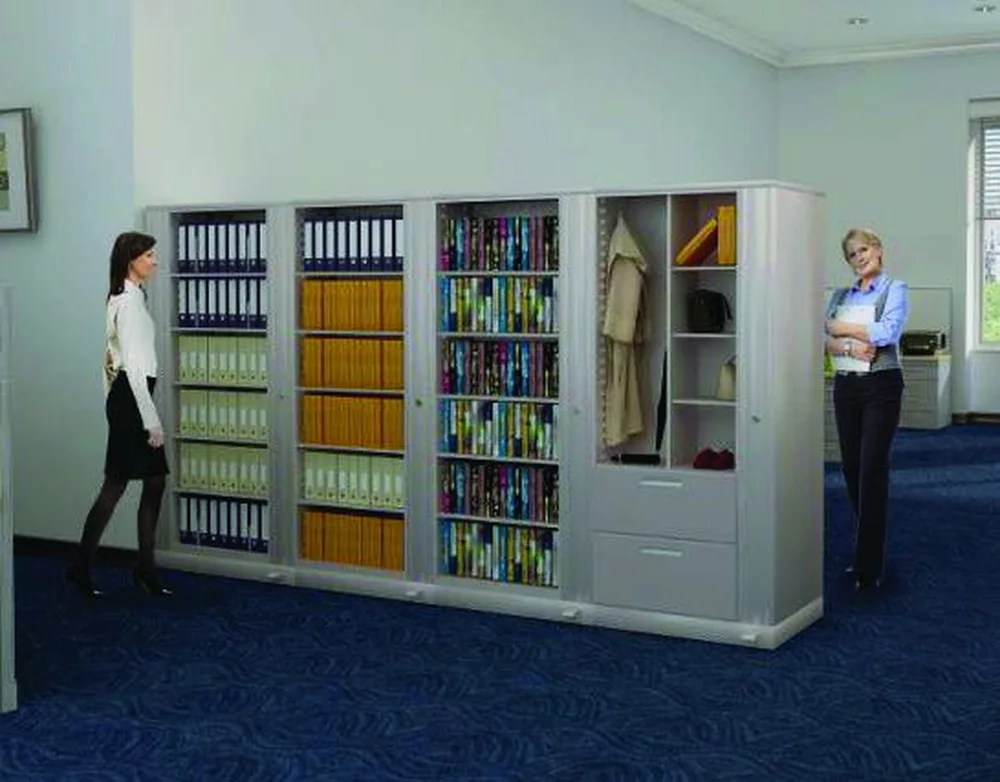
Boxed parts
Assembled in the room, not carried in whole
4 levelers
On every base, sharing the load
Seismic anchor
Aurora floor anchor option
801-328-8788
Utah project line
What a Times-2 Installation Involves
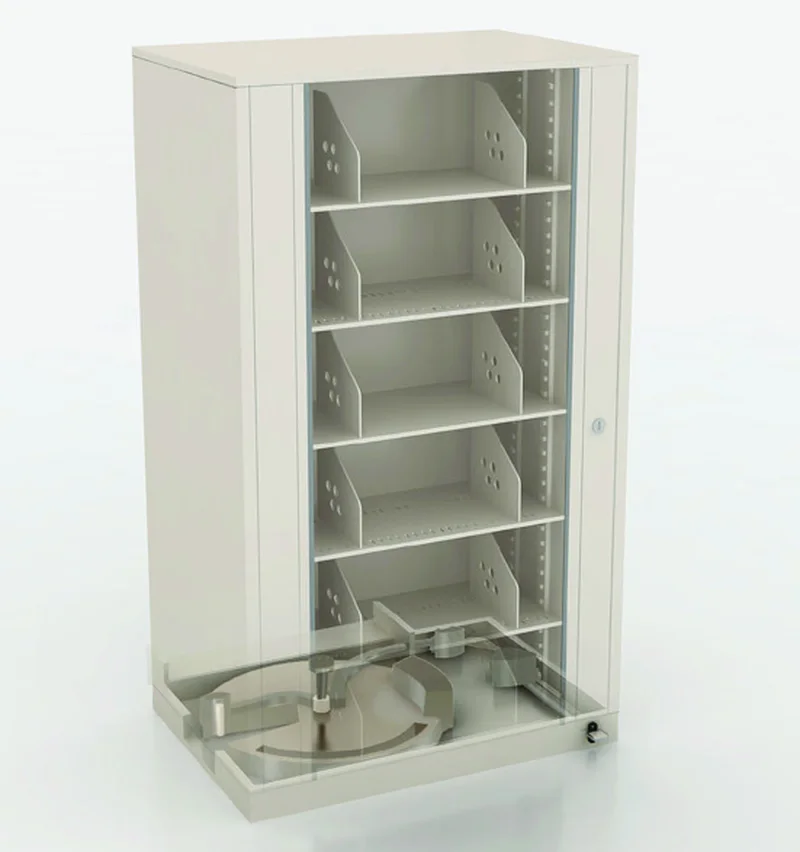
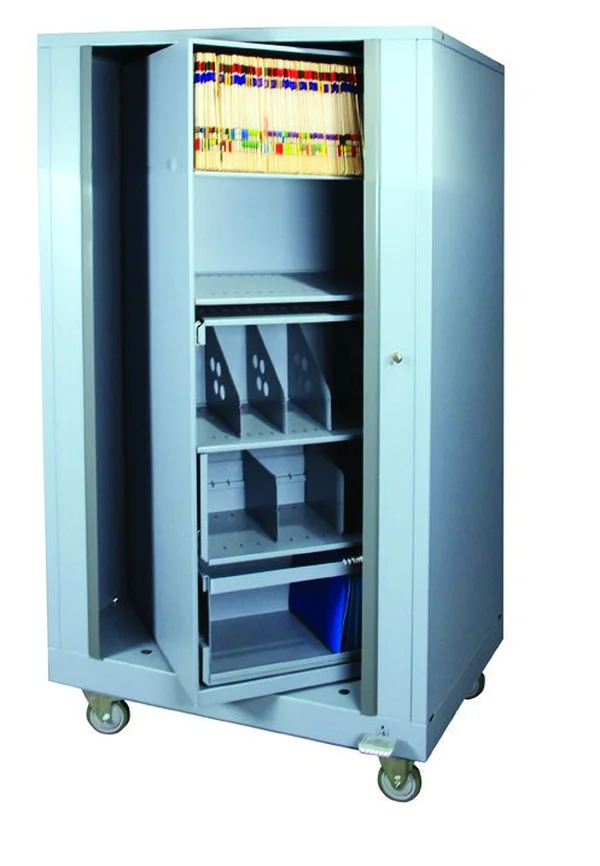
A Times-2 Speed File does not arrive as a finished cabinet on a pallet. Aurora ships it as parts. A starter unit comes as a base box (the base with the rotor bottom already attached, the rotor top, the canopy top and a lock rod), a door box (two doors, the center panel, the posts and vinyl strips), end panels, a hardware package, and separate boxes for shelves, dividers and accessories. Each add-on unit has its own base and door boxes.
The cabinet is built where it will stand, so nothing has to fit through a doorway or into an elevator at full height. It also means every install step depends on the one before it.
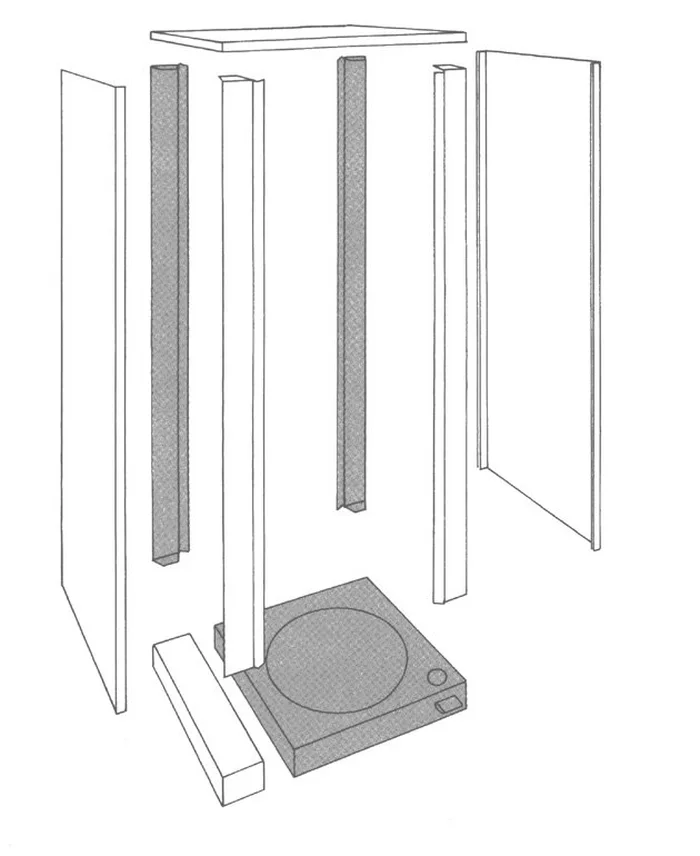
Aurora’s installation manual sets out the sequence. This is the order our crews follow on a new row:
Unpack and check
Match the delivery to the packing list, look for freight damage, and set doors with laminates or special colors aside for their planned spots.
Prepare and place bases
Check the pedal and lock linkages. Set the starter base first, then add-on bases to its right, spaced off the wall for rotation.
Level and join
Level each base front to back and side to side, bring the add-ons to the same plane, then clamp the bases together.
Build the rotors
Hang the doors and center panels on the rotor bottom, then tap the rotor top into place and check the alignment again.
Posts, panels, locks
Bolt on end panels and posts, fit the canopy tops, and connect the vertical lock rod to the lock bar in the base.
Final spin and interiors
Spin every unit and listen for rubbing, then fit shelves, dividers, drawers and other accessories last.
Site Survey Checklist for Utah Buildings
Most installation problems start before the truck shows up. A cabinet that fits the floor plan can still clash with a sprinkler head, block an electrical panel, or sit too close to the wall to turn. We walk the space, or go through photos and measurements with you, before an order is placed.
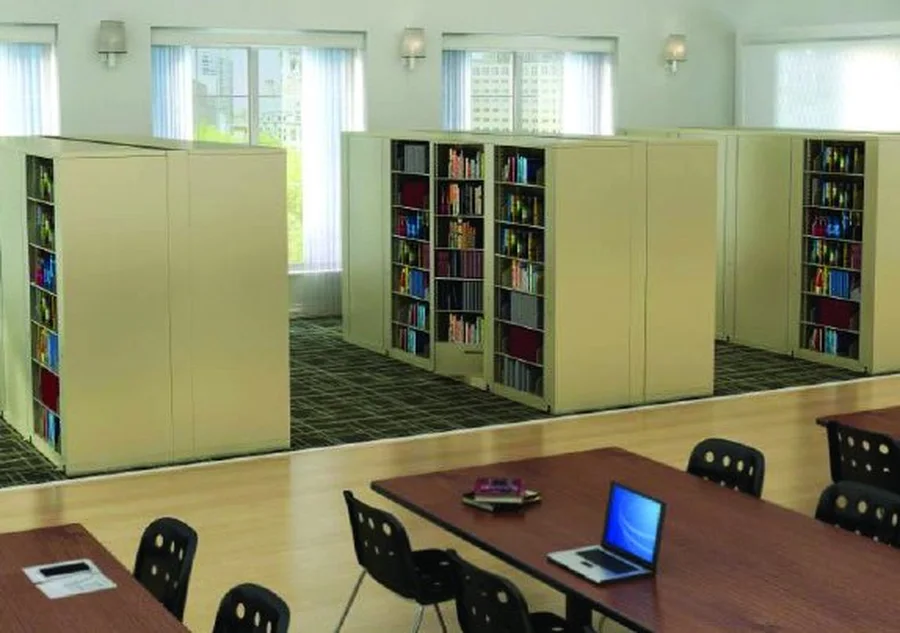
Rotation space is the item people most often miss. The interior of a Times-2 turns inside the fixed housing, so every layout needs a gap behind the unit, and a wider one between rows set back to back. Aurora gives separate figures for letter and legal units. The gap does not have to show: a color-matched wall closing strip covers it at the back, and an extended canopy top covers it at the top.
- Delivery route: dock or entry door, elevator car and door, stair turns and corridor corners from the truck to the room. Boxed parts make older Salt Lake, Ogden and Provo buildings workable, but the route still has to be clear on install day.
- Ceiling height: taller tier counts hold more but must clear ceiling grid, sprinkler heads, light fixtures and diffusers, and the top tier has to stay within reach for your staff.
- Rotation and working space: the gap behind each unit, room in front to stand, room for drawers to pull out, and no blocked walkways, windows or electrical panels.
- Floor finish and condition: carpet pile, tile, sealed concrete or raised access floor, and how far out of level the slab is.
- Floor load and anchoring: whether an engineer needs to confirm the floor, and whether the building or tenant requires seismic anchors (both covered below).
- Door and finish plan: which faces get laminate, color or fabric overlays, and where each cabinet sits in the run.
- Locks and access: key or keypad, twin locks, foot pedal or hand release, and who gets which keys.
Confirm the Floor Can Carry a Loaded Row
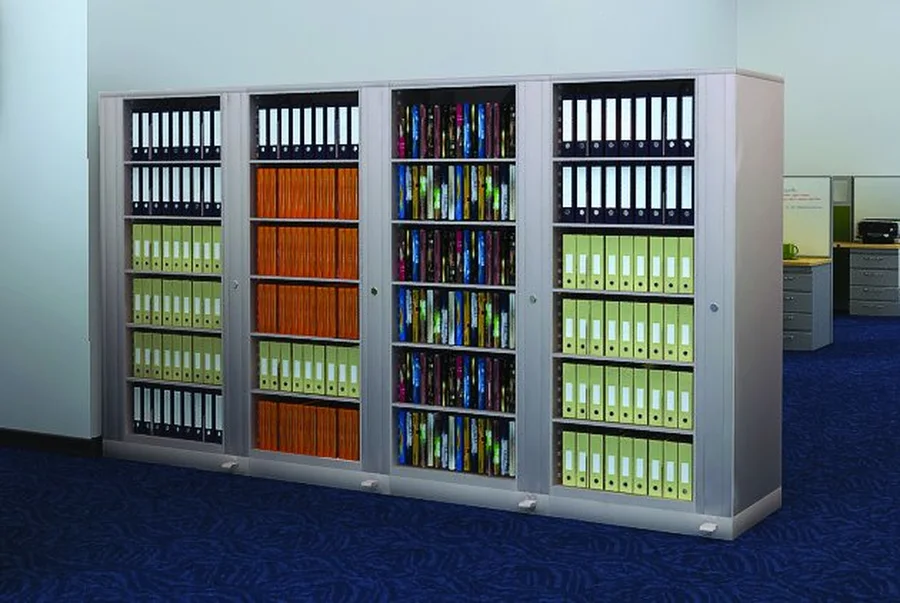
A Times-2 packs a lot of paper into a small footprint, and that is exactly why floor load matters. Aurora’s planning guide says a conventional drawer file holds at most about 35 filing inches per square foot of floor, while a Times-2 holds up to 72. The same files sit on about half the floor area, so the weight on each square foot goes up.
Aurora treats the building’s load rating as the fifth step of space planning, after capacity, workflow, square footage and equipment selection. It asks owners to confirm the floor can carry a fully loaded system, meaning the cabinets plus their contents. It also offers equipment and media weight estimates and other configurations if a floor needs help.
Aurora’s published media weights, based on averages of the BIFMA ranges, give a starting point for that conversation:
| Media | Aurora estimate per filing inch |
|---|---|
| Letter-size files | 2.27 lb |
| Legal/A4-size files | 2.80 lb |
| Books | 1.30 to 2.40 lb |
| 6 x 4 in. index cards | 0.72 lb |
| 5 x 3 in. index cards | 0.45 lb |
Rough math, not an engineering number
At Aurora’s top figure of 72 filing inches per square foot, letter-size paper alone works out to roughly 160 lb per square foot before the cabinet’s own weight. Aurora says its estimates are only a guide and actual weights vary with what you store. Upper floors, mezzanines and older wood-framed buildings should be checked by the building’s engineer. We supply the equipment and media estimates they need.
Seismic Anchoring Along the Wasatch Front
Much of Utah’s population lives along the Wasatch Fault, so seismic questions come up on Times-2 projects here more often than in many states. Aurora’s answer is a specific accessory: a floor anchor for seismic installations, which the planning guide says adds safety in regions with seismic concerns.
A few points before you plan it. First, the building owner, the design team or the authority having jurisdiction decides whether anchoring is required. We do not make that call and we won’t claim a cabinet meets a code. Second, anchoring changes the install: the anchor has to suit the floor, whether that is a concrete slab, a topping slab or a raised access floor, so tell us about the floor before we quote. Third, if your engineer needs calculations, we ask Aurora for them.
Leveling on Carpet, Tile and Uneven Slabs
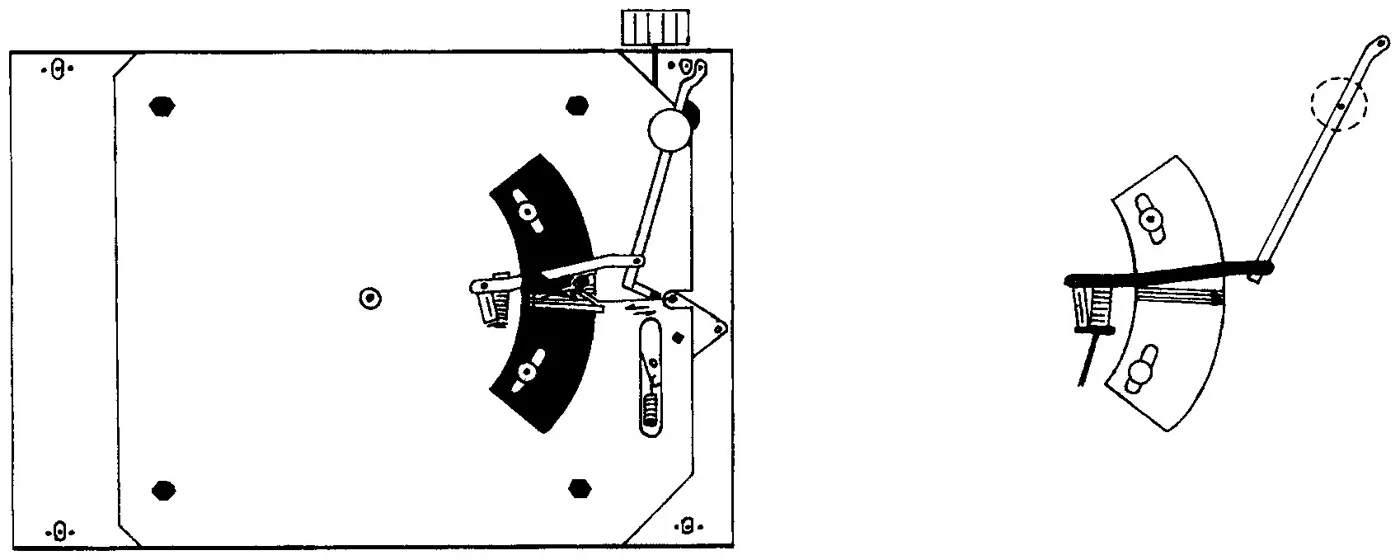
Level is what makes a rotary cabinet feel right. Each Times-2 base sits on four leveling screws, and Aurora’s manual says all four must share the load equally. On a floor that is badly out of level, installers find the high point and level outward from there. Each base is leveled front to back, then side to side. The next base is brought to the same plane and checked again before the bases are clamped together.
Carpet needs extra care. A loaded cabinet presses the levelers into the pile, so the manual has installers run the leveling screws down further on heavy carpet and leave clearance for the loaded weight. Skip that step and a row that looked level on install day can settle out of level once the files go in.
There are two more checks once the rotors are on. From the end of the row, the installer sights along the tops of the units, then from the front checks that every vertical line is parallel. Each unit is turned slowly to make sure it does not touch its neighbor at the top. At the end, every unit gets a full spin while the installer listens for rubbing on the vinyl door strips, adjusting the levelers until it runs clean.
If a cabinet drags or feels heavy to turn after a move, level and alignment are the first things to check, as on our University of Utah lab relocation.

Delivery, Receiving and Freight Damage
Times-2 cabinets travel by freight carrier, and freight damage does happen. Aurora’s manual asks for the delivery to be matched against the packing list and inspected for transit damage on arrival, with the details gathered for any freight claim. That step protects your schedule. A damaged base found on install day can hold up the whole row, because every add-on is leveled and clamped to the unit next to it.
We saw this on the Salt Lake Valley Detention Center Times-2 installation. Damage was found when the shipment was received, replacement bases came from Aurora, and the freight claim was handled separately. The customer’s cabinets went in as planned.
Locks, Foot Pedals and Accessible Access
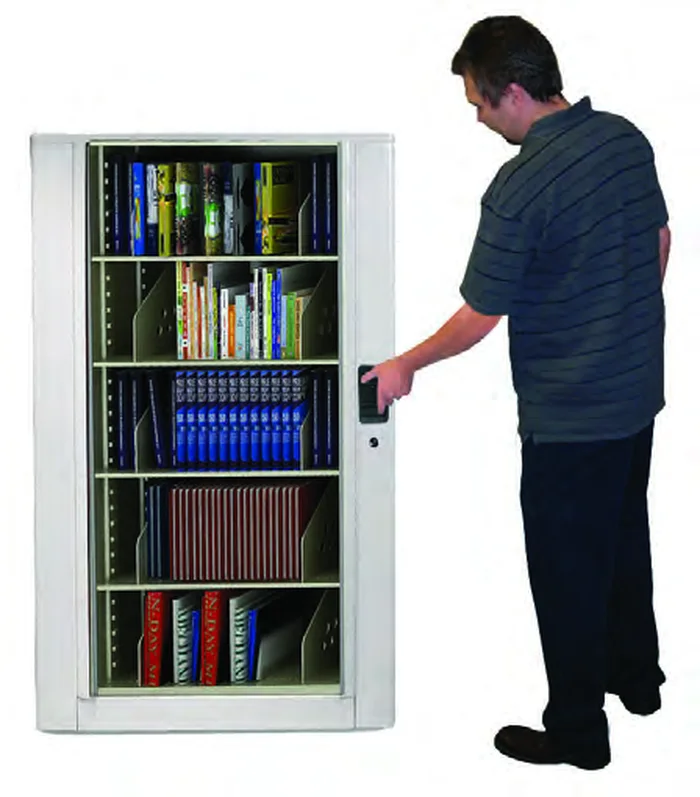
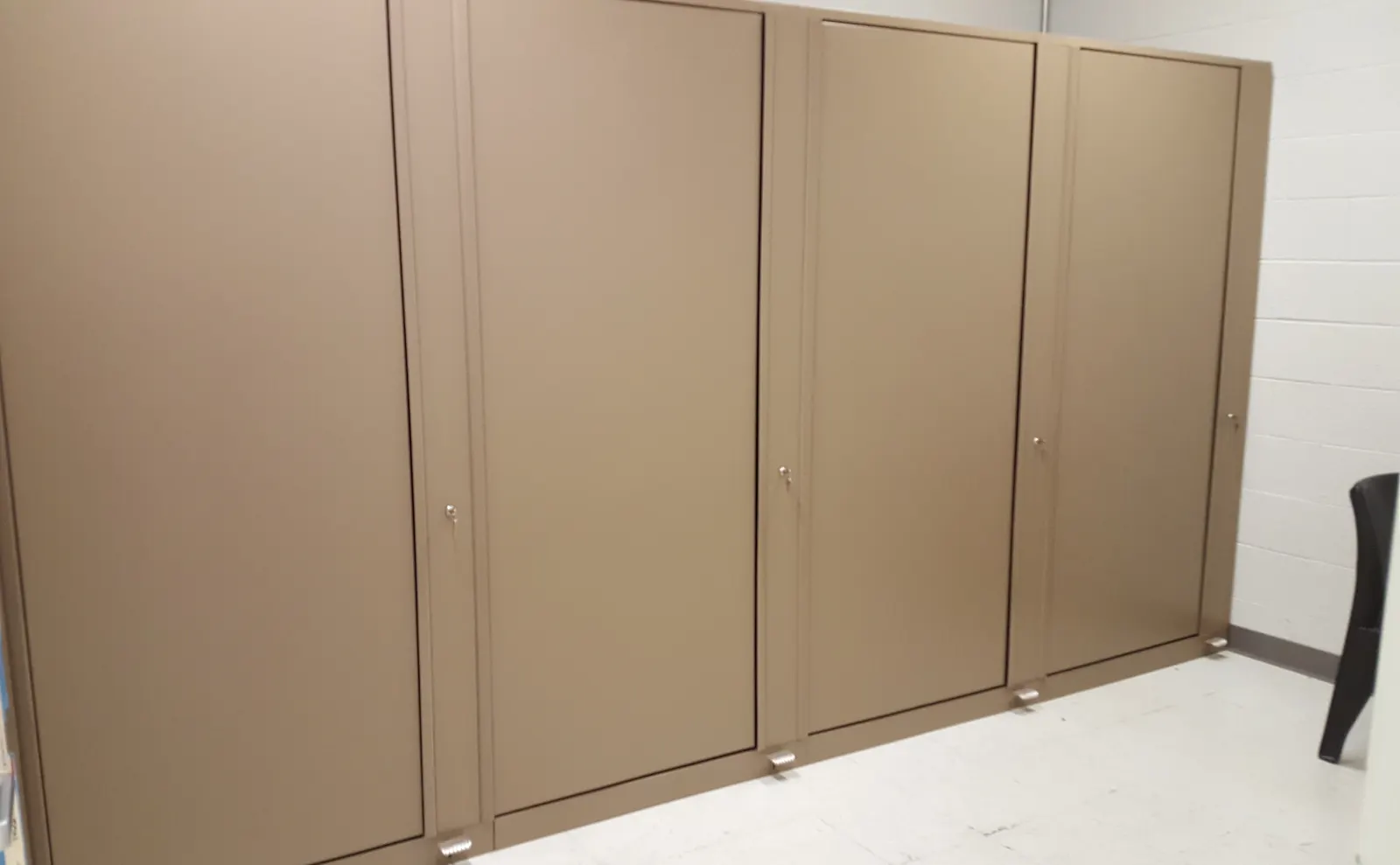
Settle how staff will open the cabinet before install day, because some options change how the base and posts go together. A standard Times-2 releases with a foot pedal, and Positive Position Control gives a firm stop every quarter turn. Aurora notes that a unit can be installed in the free-spin position, or fitted with a hand release in place of the pedal, where accessible operation matters. Check the approach with your accessibility reviewer. A dual foot pedal is the option for a unit used as a room divider and opened from both sides; our guide to pass-through and room divider rotary cabinets covers those layouts.
Locks are part of the assembly too. The key lock in the front post drives a vertical rod that passes through the base into a lock bar, so it is set up and tested during installation. Aurora also offers Medeco high-security cylinders, twin locks with a supervisor key, and a battery-powered electronic keypad that replaces the key core in the field. The keypad cannot be used on security drawers (see our pharmacy rotary cabinet guide for locking drawers in use).
Warranty: Why the Installer Matters
Aurora’s warranty is tied to installation in two ways. Coverage on equipment other than the structural frame runs from the customer’s written acceptance of installation. And the warranty does not apply to product installed, repaired or moved by anyone other than an authorized party. The installation manual says the warranty is predicated on installation by authorized dealers.
| Aurora coverage | What the planning guide says |
|---|---|
| Structural frames (the cabinet itself) | Lifetime limited warranty; labor included in the first year |
| Other equipment, including moving parts | 5-year limited warranty from written acceptance of installation; labor included in the first year |
| Exclusions | Product installed, repaired or moved by anyone other than an authorized party, plus improper installation, operation or maintenance |
Keep the signed install acceptance with your purchase records, and use an authorized crew if the cabinets move later. MH-USA is an Aurora dealer; our Salt Lake City team installs, moves and services Times-2 cabinets across Utah.
Planning for Changes After Install Day
A Times-2 row can change over time, and planning for that now saves money later. Add-on units bolt to the unit beside them and share its post, so leave wall space at the open end of the row if you expect to grow. Aurora sells a conversion kit that turns an add-on into a starter if a unit ever needs to stand alone. Interior accessories are described as fully compatible and orderable later, so a cabinet bought for files can take drawers, dividers or bins down the road.
For spaces that get rearranged often, Aurora’s caster kit fits 2-tier through 5-tier units, with two locking and two free-spinning casters. Floor-standing rows that need to move are taken down and rebuilt rather than rolled. If your records are growing past what a few cabinets can hold, compare the plan with high-density mobile shelving in Utah, which uses floor rails and has its own floor preparation needs.
Shop Records and File Storage Supplies
Folders, file jackets and records boxes for packing and refilling cabinets around install day.


Get a free quote
Tell us what you are storing, the room size and your timeline. A project specialist will follow up with layout options and pricing. Prefer to talk? Call (800) 326-4403.
Times-2 Installation FAQs
How is a Times-2 Speed File installed?
Will a Times-2 cabinet fit in our elevator or through a narrow door?
How much clearance does a rotary file cabinet need behind it?
Do we need an engineer to check the floor?
Do Times-2 cabinets need seismic anchors in Utah?
Does a non-authorized installer affect the Aurora warranty?
Planning a Times-2 Installation in Utah?
Send the room size, photos of the route in, the floor type and what you need to store. Our Salt Lake City team will come back with a layout, the site questions to settle and an installed quote.