
Crowd Control Equipment for Political Rallies and Events
Clear entrances, understandable queues and well-placed information help people move through an event. Material Handling USA can help organizers compare Visiontron stanchions, signage and barrier equipment for a defined venue plan. The equipment should support the event team's approved operating arrangements and the actual conditions at the site.
This guide takes a nonpartisan approach to equipment planning for political rallies and other public gatherings. It covers the information needed to select products, organize setup and compare a complete proposal. A belt, rope or barricade does not guarantee crowd safety on its own. Event capacity, emergency arrangements, staffing and site-specific requirements need review by the responsible organizers, venue professionals and authorities.

Start with the event journey and operating brief
Arrival
Identify entrance and check-in functions.
Circulation
Coordinate queues with the venue plan.
Departure
Review leaving and dispersal arrangements.
Describe how attendees reach the venue, find the entrance, complete any check-in process and move onward. Include the departure period as well as arrival. A layout that works when people enter gradually may face different demands when many leave at the same time.
Identify the actual services at each point. A ticket check, information desk and credential collection desk can have different processing times and equipment needs. Keep those functions visible in the brief so the queue is planned around the work being performed.
Record the event conditions
- Venue layout and the areas available for queuing.
- Expected arrival pattern and the basis for that estimate.
- Check-in tasks and the staff assigned to them.
- Indoor or outdoor exposure and surface conditions.
- Setup, operating and removal times.
Ask the event team to identify who can approve layout changes. The people installing equipment should know which drawing is current and which questions require escalation. This is especially useful when several contractors or venue teams share the same entrance area.
Keep the equipment brief distinct from assumptions about attendees' political views. Product selection should follow the physical setting and operating requirements, with clear information for everyone using the venue. Avoid treating a political gathering as proof of a particular behavior or security need.
For broader queue design principles, our Visiontron six-step queue guide discusses the visitor experience. Apply those ideas within the event's reviewed site plan and the selected products' intended uses.
Select retractable belt stanchions for the queue
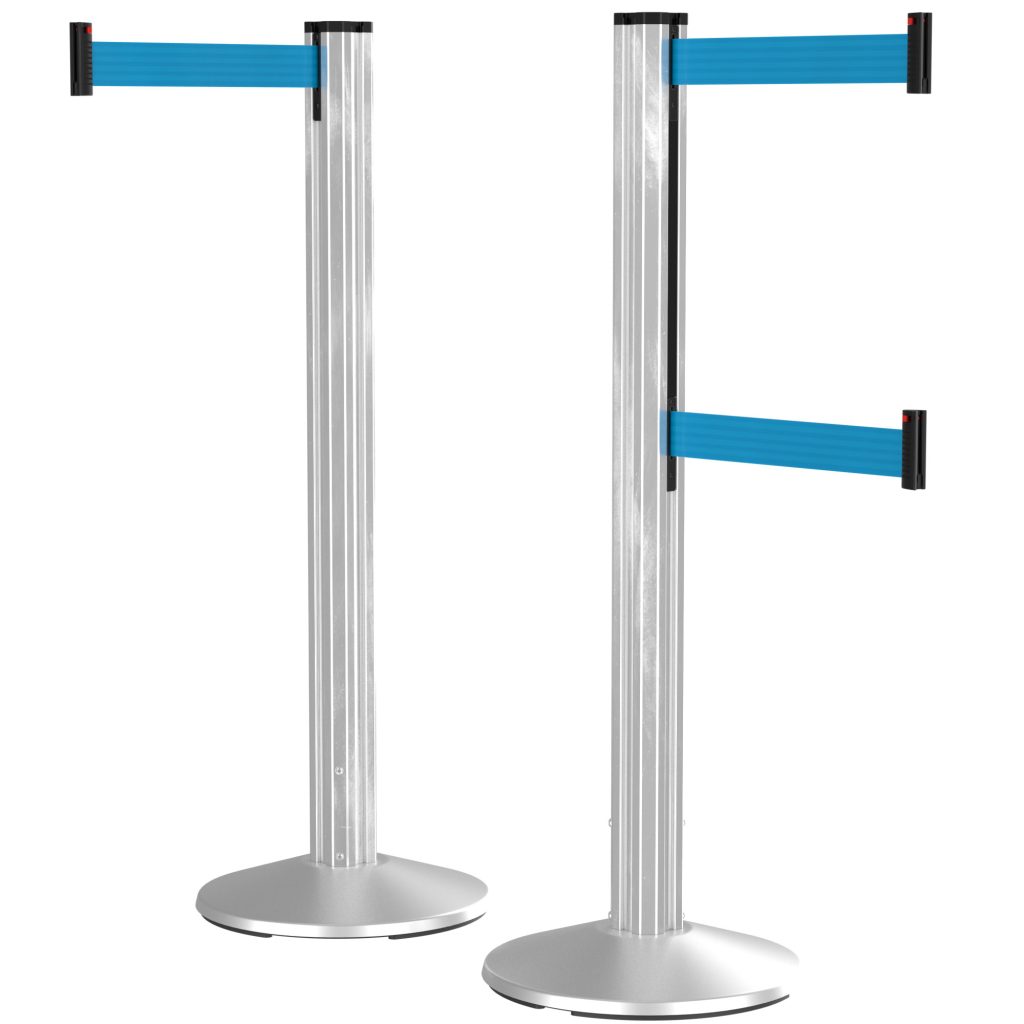
Visiontron's Explore MH-USA crowd-control solutions provides configurable queue equipment with different posts, bases and accessories. Ask the supplier to identify the exact series and configuration proposed for your event. Do not assume every belt post has the same intended environment or operating features.
Start with the proposed queue arrangement and its operating purpose. Identify where attendees join, how they reach the service position and how staff manage changes in demand. Have the responsible event team review the layout before translating it into equipment quantities.
Compare the components together
| Component | What to confirm |
|---|---|
| Post and base | Suitability for the surface and intended environment |
| Belt | Supplied length, color and connection arrangement |
| Layout | Relationship to the approved queue and circulation plan |
| Accessories | Compatibility with the selected post series |
| Handling | Setup, transport and storage requirements |
Do not estimate a queue's safe capacity from belt length alone. The available area, service rate and approved circulation arrangements all matter. Ask the event planners to establish the operating limits and the actions staff should take when those limits are approached.
Review the manufacturer's setup and operating instructions with the team handling the equipment. Connections and belt retraction should be managed as instructed. A practical demonstration before the event can help staff understand the selected equipment without relying on experience with a different model.
Include spare or replacement components only where they match the selected system and operating plan. Similar-looking parts from another series should not be assumed compatible. Keep the model and accessory list with the equipment schedule for setup and future reorders.
Distinguish ropes, panels and steel barricades

Post-and-rope systems, rigid queue panels and steel barricades serve different equipment needs. A visual boundary for a reception area should not be described as equivalent to a system selected for another physical requirement. Define the task before choosing the product family.
Visiontron's Explore MH-USA crowd-control solutions includes Q-PANEL products for defining and reinforcing queues. Review the actual configuration, compatible posts and operating conditions. A rigid panel's appearance does not establish a universal crowd-load, protective or vehicle-impact rating.
Review outdoor equipment separately
Visiontron's steel-barricade literature identifies galvanized products and different foot arrangements. Confirm the current model and appropriate feet with the supplier for the proposed surface and use. The manufacturer describes options; the event plan must establish where and how the selected equipment belongs.
- Identify the required purpose of each barrier run.
- Confirm the product model and connection arrangement.
- Review the ground or floor conditions.
- Include openings and access needs in the approved layout.
- Request the relevant setup and handling instructions.
Do not treat a queue barrier as a substitute for specialized protection that has not been specified. Where the event review identifies another performance requirement, have the responsible professionals define it and select equipment with appropriate documentation.
For a staffed building at an entrance, our guard shack specification guide covers the enclosure and services. Coordinate the booth and surrounding event equipment within the same site plan while retaining the separate requirements of each system.
Place signs where attendees make decisions
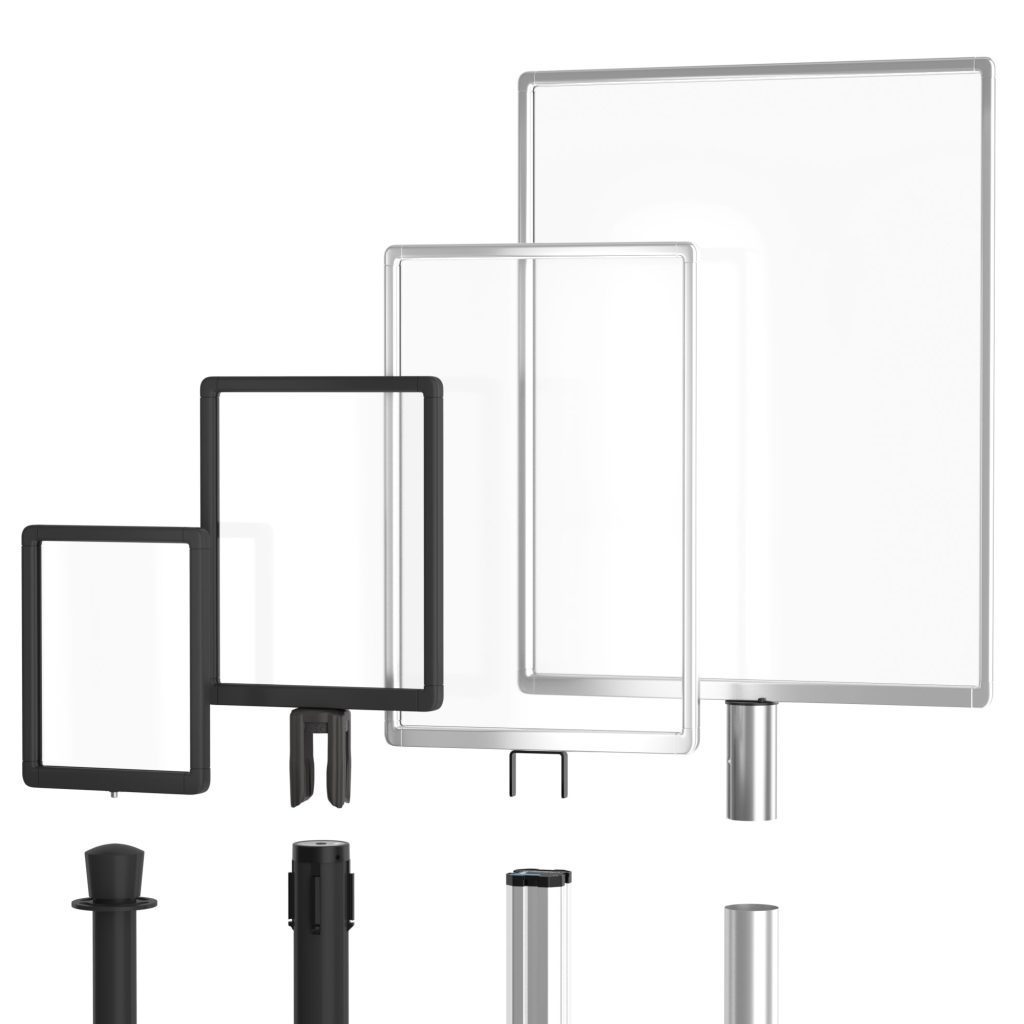
Signage works best when it answers the question a person has at a particular location. Identify the entrance, the relevant service point and the route onward. Keep operational information concise and consistent with the event's actual procedures.
Review signs from the approach direction and the position of someone waiting in line. A message that is clear from behind a desk may be difficult to see before reaching it. The holder's position, surrounding objects and changing daylight can all affect the result.
Prepare a sign schedule
| Sign item | Information to record |
|---|---|
| Purpose | Direction, service identification or operating information |
| Location | The decision point it supports |
| Format | Graphic size and compatible holder |
| Content owner | Person approving the current message |
| Change process | Who replaces or removes outdated information |
Visiontron offers post-top and freestanding signage options. Confirm compatibility with the selected equipment and the intended environment. A sign frame should not be attached to a post merely because the components appear to fit together.
Keep operational messages separate from campaign content in the planning schedule. The equipment discussion concerns clear navigation and event information. The organizer remains responsible for the wording and approvals of any displayed content.
Plan for changes such as a closed service point or a revised check-in arrangement. Staff need a clear process for updating signs so old instructions do not remain visible beside the new ones. Review the final sign positions during the venue walkthrough, after tables, barriers and other equipment are in place.
Preserve circulation and coordinate the wider event plan

Review the queue alongside surrounding circulation, service access and departure routes. The event team should evaluate the complete arrangement rather than approving each equipment line in isolation. An entrance queue can affect other activities even when it fits within a drawn rectangle.
The UK's Health and Safety Executive offers general crowd-management guidance covering arrival, circulation and departure. It emphasizes keeping routes usable and coordinating queues with event operations. This is general planning context, not a statement of the legal requirements for a particular U.S. venue.
Ask the responsible reviewers to resolve interfaces
Identify nearby traffic, accessible routes, venue facilities and emergency-access needs on the event plan. Have the appropriate professionals establish the required clearances and operating arrangements. Do not copy a generic queue diagram and assume it is an approved layout for a different site.
Discuss what staff should do when a service point becomes unavailable or the queue changes. The event's procedures should define the response and the person authorized to direct it. Equipment should support those arrangements, with any proposed change reviewed through the established process.
Include outdoor conditions in the event review. Surface changes, weather and the addition of signs or other attachments can affect an equipment arrangement. Follow the relevant manufacturer instructions and the event team's approved operating decisions rather than improvising modifications during use.
The purpose of this review is coordination. Material Handling USA can discuss equipment options and the information needed for a proposal, while the organizer and responsible specialists retain the overall event, capacity and emergency-planning responsibilities. A clear division of responsibilities makes the equipment scope easier to assess.
Plan setup, staffing and equipment care

Prepare an equipment schedule that corresponds to the approved layout. Identify post types, bases, belts, panels, sign holders and other selected components. Label the schedule clearly enough that the setup team can distinguish similar products without guessing.
Confirm delivery and storage arrangements before the event. Equipment may need to arrive before the installation window, and a suitable holding area helps protect it from damage or interference with other venue work. Plan how it will be moved to the setup location using the appropriate handling methods.
Conduct a practical pre-opening review
- Compare the installed equipment with the current plan.
- Check components and connections as the manufacturer instructs.
- Confirm signs show the approved information.
- Review staff responsibilities and escalation contacts.
- Record and resolve missing or damaged equipment.
Assign the team responsible for observing the equipment during use and reporting problems. The operating plan should explain how an issue reaches the person who can make a decision. A supplier's product instructions and the venue's procedures should remain available to the relevant staff.
Avoid unreviewed substitutions or improvised repairs. A replacement foot, connector or panel should be appropriate for the selected product. If equipment is damaged, use the established process and manufacturer guidance to determine the response.
Plan removal and storage with the same care as setup. Identify who collects the components, checks their condition and records losses or damage. Good equipment records support the next event and make it easier to distinguish a routine reorder from a change in the system configuration.
Request a proposal that matches the event scope

Send Material Handling USA the venue plan, intended queue and service functions, expected operating periods and photographs of the installation area. Include the surfaces, indoor or outdoor conditions, setup access and the contact responsible for reviewing the equipment arrangement.
Ask the proposal to identify the manufacturer, series, quantities, accessories and delivery assumptions. Separate equipment supply from installation, graphic production and other services. If an item is excluded or provided by another party, record that responsibility explicitly.
Compare complete offers
Check whether the proposed components are compatible and whether the quantities correspond to the same layout. Review transport, storage and future replacement needs alongside the initial equipment price. For a recurring event program, a consistent component record can make later planning more straightforward.
The supporting drawing is an AI-generated concept of a calm entrance queue. It is not an engineered evacuation plan, a capacity calculation or a completed MH-USA project. Actual event arrangements require the appropriate site review and the selected equipment's instructions.
Keep the approved layout and equipment schedule together for delivery and setup. Record changes so the team working on the event day has one current version. Contact Material Handling USA to begin a focused discussion of Visiontron equipment for your event's reviewed requirements.
Compare stanchions, barriers, signage and queue layouts on our main crowd control barriers page.
Frequently asked questions
Which equipment is appropriate for a political rally?
Select equipment from the venue conditions and approved operating plan. Retractable belts, ropes, signs, panels and steel barricades serve different purposes and should not be treated as interchangeable.
Can retractable belt posts guarantee crowd safety?
No. They support a defined queue arrangement. Overall crowd management also depends on site planning, operating limits, staffing and the event's reviewed procedures.
Are all stanchions suitable for outdoor use?
No. Confirm the exact post, base, belt and accessory configuration with the manufacturer for the intended environment and surface.
Does a rigid queue panel provide vehicle-impact protection?
Do not assume that it does. Any required protective performance must be specified and supported by documentation for the actual selected system.
What should be checked before attendees arrive?
Compare the setup with the approved plan, inspect equipment as instructed, confirm signs and review staff responsibilities. Resolve missing or damaged components through the established event process.
What information is needed for an equipment proposal?
Provide the venue layout, service functions, operating periods, surfaces, environmental conditions, installation access and desired equipment scope. Identify the person responsible for approving the arrangement.
Specify equipment for the reviewed event plan
Share your application details, photographs and requirements with Material Handling USA to start a focused project discussion.