
Drum and IBC Storage Racking: Greif
A drum is the least rack-friendly load in industrial storage: round, top-heavy when full, and capable of leaking onto everything below it. A refinery site stores packaged drums and totes under a related but stricter set of fire-code segregation rules driven by its own operations — see our refinery MRO and lubricant storage warehouse racking case study.
2022–2025
Years Greif worked with us on rack
Industrial packaging
Steel and plastic drums, IBCs, containers
Pallet rack
Product category we supplied
Round loads
Why standard beam assumptions do not apply
Plan your layout before you buy
Configure upright height, beam width, bay count, and load levels in our free 3D Pallet Rack Configurator, then get an instant bill of materials and request a quote.
The project
Greif is an industrial packaging manufacturer — steel and plastic drums, intermediate bulk containers and related containers. Material Handling USA supplied pallet rack across several projects between 2022 and 2025. The client, those years and the product category supplied are the only project details we publish.
Drum and container storage is worth its own page because almost every rule of thumb in warehouse design assumes a rectangular, stable, uniformly distributed pallet load. A drum is none of those things. What follows is how we approach pallet rack systems for drum and IBC storage: orientation, capacity, decking, containment and the handling that goes with them.

Why drums break the usual rack assumptions
Round loads want to roll. Bare beams support a pallet across its stringers. A drum on its side without a cradle or chock is a rolling hazard, and a drum standing on a pallet is stable only while the pallet is sound and the load is centred.
Weight arrives in a very small footprint. A filled 55-gallon steel drum is heavy and its whole weight passes through a base roughly two feet across. Four of them on one pallet position is a concentrated load, not the uniformly distributed load that beam ratings assume.
Contents change the problem. An empty drum is a cube problem; a filled drum is a weight, containment and compatibility problem. The same rack run rarely suits both.
Top-heavy behaviour. Partially filled drums slosh. Handling them at height with a lift truck is a genuinely different task from handling boxed goods, and the layout has to allow for slower, more careful placement.
Corrosion is a live risk. Where drums are decanted or dispensed, the atmosphere and the floor around the rack are harsher than in a general warehouse, and the base plates take the worst of it.
Specify from the filled weight, always
The single most common mistake in drum storage is speccing rack from the drum’s nominal capacity rather than its filled weight with the actual product. Density varies enormously between products, and a bay sized for one liquid can be well over its design load with another.
Vertical or horizontal: two different systems
Drums are stored upright or on their side, and the choice drives the whole design rather than being a detail of it.
| Factor | Vertical (upright on pallets) | Horizontal (on cradles or drum racks) |
|---|---|---|
| Handling | Standard pallet handling; a forklift or drum handler places a palletized set of drums into the bay | Each drum is placed individually onto cradles or a rack module — slower, more manual |
| Best suited to | Reserve stock, full drums moved whole, high volumes of the same product | Dispensing operations where product is drawn from a tap or pump |
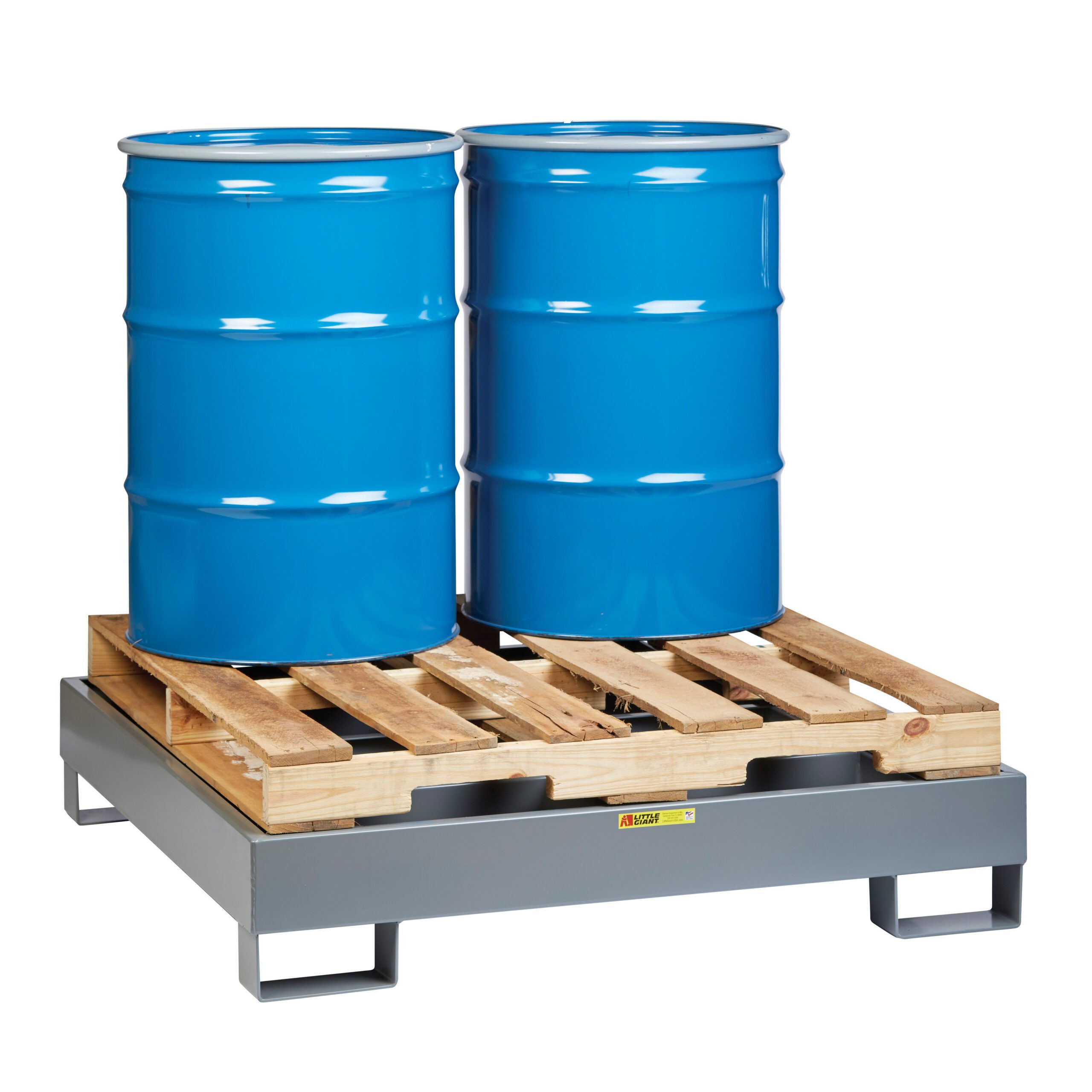
| Containment | Containment pallets or a decked bay with a sump tray under the load | Cradles typically sit above a dedicated sump; drip containment at the tap is essential |
| Cube efficiency | Better — the pallet footprint is used fully and levels can be closely spaced | Lower — cradles and access space cost cube, but access per drum is far better |
| Rack implications | Deck the bays; treat the load as concentrated rather than uniformly distributed | Confirm the cradle or drum module is rated and compatible with the beam profile you own |
Most plants end up with both: vertical storage for reserve inventory and a small horizontal dispensing area near the point of use. That is a good outcome as long as it was designed that way rather than arrived at by accident, because the two areas have different beam levels, different decking and different containment.

Empty containers versus filled containers
In a packaging plant, empty stock and filled stock are two separate warehouses that happen to share a roof.
Empty drums and containers are light and bulky. They are a cube problem, which means density systems earn their keep: drive-in racking or deep lanes let you store a lot of identical, low-weight product in a small footprint, and last-in-first-out sequencing rarely matters for empties of one specification. Height is your friend here, limited only by stability of the stacked unit load and by what the truck can place safely.
Filled containers are the opposite: heavy, valuable, sometimes hazardous, and frequently subject to lot control. Those belong on selective pallet racking or structural rack where every position is directly accessible, the load path is conservative, and containment can be built in bay by bay.
Mixing them in one run is where problems begin. Beam levels sized for stacked empties are wrong for filled drums, and a bay rated for empties will not carry a filled pallet just because it fits.
IBC totes on pallet rack
Intermediate bulk containers are stored on rack constantly and are routinely under-engineered for. Three points decide whether it is done safely.
We plan these bays with the containment strategy and the rack drawing on the table at the same time. Retrofitting containment into a rack run built without it usually means losing a beam level or rebuilding the bay, both of which cost more than getting it right at the design stage. Our spill control and secondary containment page covers the containment products themselves, and the chemical and pesticide warehouse racking case study shows how segregation and containment are planned together in a distribution setting.
Decking, containment and fire protection
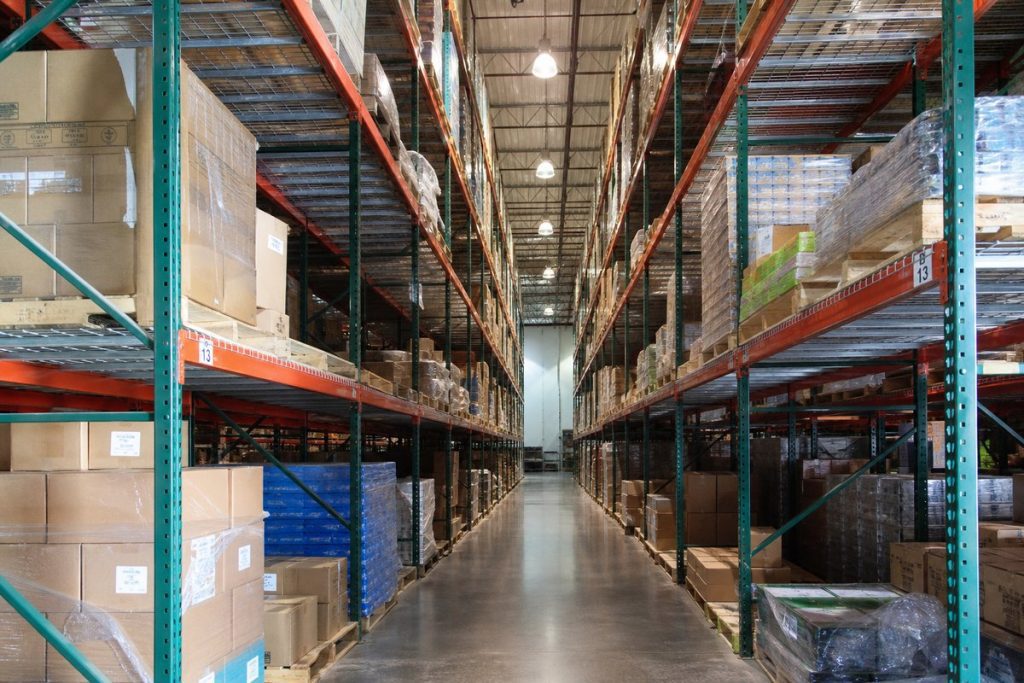
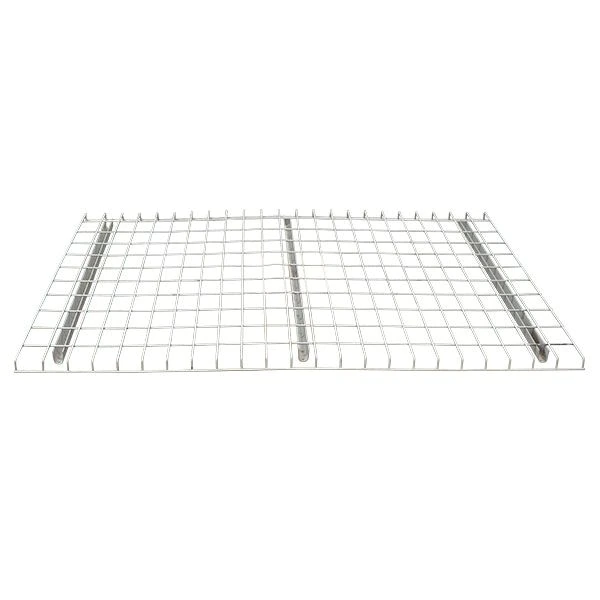
Decking. Drum bays are decked far more often than general storage bays, because containment trays, cradles and irregular pallets all need continuous support. Wire decking is the usual choice: it supports the load, allows sprinkler water through, and lets you see a leak from the aisle. Solid decking blocks water and hides drips, so where it is used for containment reasons it changes the sprinkler design conversation rather than avoiding it.
Flue space. Sprinkler designs for rack storage depend on transverse and longitudinal flue spaces staying open. Drums and totes placed to fill every inch of a bay are exactly how flues get blocked. Keep the flue space in the layout and in the operating rules.
Fire protection is a design input, not an afterthought. Storage height, commodity classification and the presence of flammable or combustible liquids drive sprinkler requirements through NFPA 13 and, for flammable and combustible liquids, NFPA 30. Confirm the requirements with your fire protection engineer and the authority having jurisdiction before you finalise beam elevations — changing rack height after the sprinklers are designed is expensive.
Handling, protection and inspection
- Handle drums with drum equipment. Fork-mounted drum clamps, drum handlers and dollies exist because forks alone crush and drop drums. The handling method belongs in the layout decision, because it sets the aisle width.
- Keep the beam ratings honest. Beam capacity is published for a uniformly distributed load; drums are not. Ask for the manufacturer’s load table for your exact beam span and level spacing, and keep the load application drawing — see pallet racking weight capacity.
- Remember the frame rating changes with the levels. Adding a level or moving the first beam alters the upright’s capacity; pallet rack uprights explains why.
- Protect the frames, and inspect the base plates. In decanting areas the base plate and the lower column see spills and washdown, and corrosion there is a structural issue. Column protectors and rack guards deal with impact; only inspection deals with corrosion.
- Inspect on a schedule and after every impact. One struck upright reduces the capacity of the whole bay until it is repaired — see rack repair and inspection.
- Install to the drawing, anchored and plumb. Our installation teams set the rack to the engineered layout, which is what the capacity and seismic design assume.
Two standards are worth knowing by name here: ANSI MH16.1 for the design and utilization of industrial steel storage racks, and OSHA 1910.176, which requires that stored material be stacked and secured against sliding or collapse. Neither replaces a stamped design for your building, your seismic category and your actual loads.
Shop Pallet Rack Accessories Online
Protect and finish your pallet rack installation with these in-stock accessories, or request a quote for custom-sized rack, freight and volume pricing.

Drum and IBC racking FAQs
Can 55-gallon drums be stored on standard pallet rack?
Is vertical or horizontal drum storage better?
How do you provide secondary containment for drums on racking?
What about storing filled IBC totes on rack?
Does drum storage change the sprinkler design?
What rack finish suits a decanting or filling area?
Utah pallet rack project: This case study supports our Utah pallet rack design and installation guide and, at the top level, our main pallet rack systems hub.
Racking Designed Around Filled Weight and Containment
Tell us what you store, how it is filled and how it is handled, and we will design bays that carry it safely.