
Chemical and Pesticide Warehouse Racking: Do My Own Pest Control
Storing liquid pest control chemicals is a racking problem and a containment problem at the same time, and the two have to be solved with one layout. Packaged coatings sit between bulk chemistry and general distribution — see our paint and coatings distribution warehouse racking case study for the fire-code driven layout.
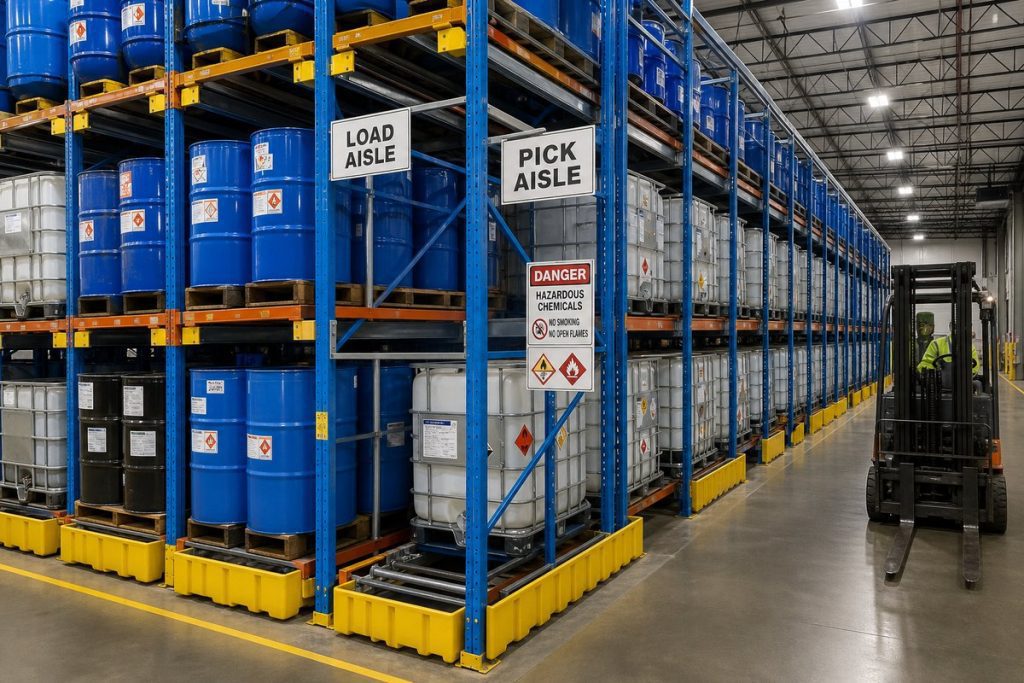
2021
Year Do My Own Pest Control worked with us on rack
Chemical distribution
Pest control products sold direct to consumers and pros
Pallet Rack
Product category we supplied
Containment-led
Where liquid goes if a container fails drives the design
Plan your layout before you buy
Configure upright height, beam width, bay count, and load levels in our free 3D Pallet Rack Configurator, then get an instant bill of materials and request a quote.
The project
Do My Own Pest Control distributes pest control, lawn and pond products — concentrates, ready-to-use liquids, granular products, baits and application equipment — to homeowners and professional applicators. Material Handling USA supplied pallet rack for the company in 2021. The client, that year and the product category supplied are the only project details we publish.
Everything below is the engineering behind that kind of application: how to plan pallet rack systems for a warehouse holding regulated liquid chemicals, where the storage decisions and the environmental compliance decisions cannot be separated.
Why chemical distribution breaks a standard rack layout
A chemical distribution warehouse looks like any other e-commerce fulfillment building until you look at what happens when something leaks, and at how the inventory has to be kept apart.
| Characteristic | What it means on the floor | Design consequence |
|---|---|---|
| Liquids in consumer-size containers | Cases of pint, quart and gallon bottles picked as eaches | Dense, low pick faces with solid or fine-mesh support, not open beams |
| Bulk concentrate in drums and totes | Drums and IBC totes handled by forklift | Containment pallets, drum racks and heavier beam levels near the floor |
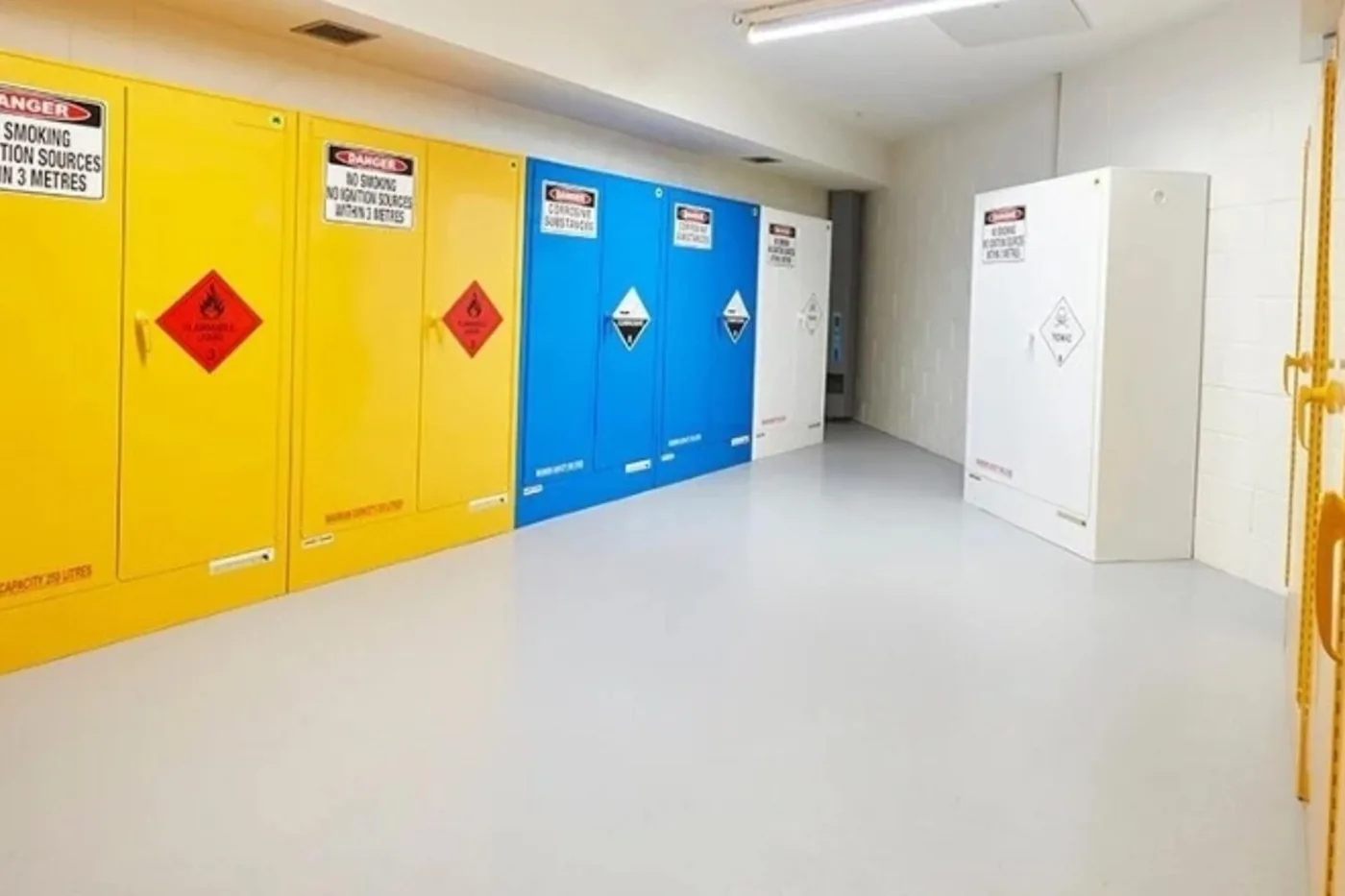
| Incompatible chemistries in one building | Oxidizers, flammables, corrosives and general products together | Physical segregation by zone, not merely by aisle label |
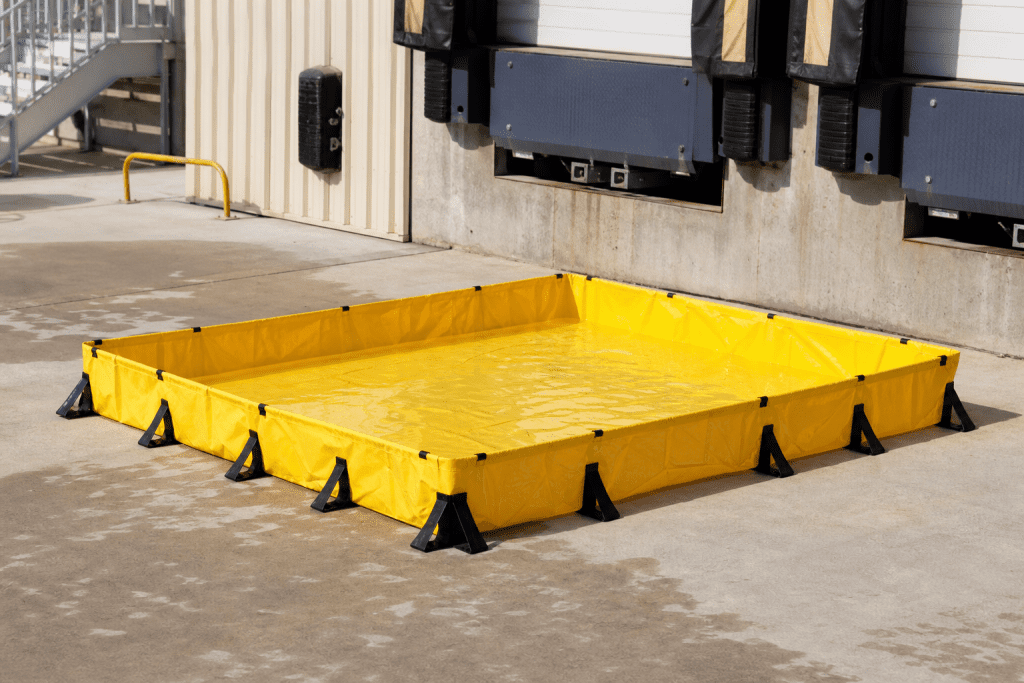
| Leaks are an environmental event | A dripped container can reach a floor drain | Secondary containment sized to the largest container, and controlled floor drainage |
| Label-driven storage rules | Each product label states its own storage requirements | Zones must be able to satisfy the strictest label in that zone |
| Temperature sensitivity | Freeze/heat limits on many formulations | Rack layout must not block airflow or push stock against exterior walls and roof deck |
The third and fourth rows are what most general warehouse designs get wrong. Segregation is usually treated as a slotting rule inside a WMS, and then the rack layout physically defeats it: incompatible products end up in vertically adjacent levels of the same bay, where a leak on level three lands on level two. Segregation only works when it is built into the steel — separate bays, separate runs, and ideally separate containment.
The rule that decides the layout
Ask one question of every location: if the largest container here failed right now, where would the liquid go? If the honest answer is “onto the product below it” or “to the floor drain”, the location is wrong no matter how efficient the pick path is.
Segregation and compatibility zones
Pesticide and general chemical warehouses are normally zoned before a single bay is placed. A workable approach:
Start from the product labels and safety data sheets. The label is the legal storage instruction for a pesticide, and the SDS gives incompatibilities. The zoning plan has to satisfy the strictest requirement present in each zone.
Keep oxidizers away from flammables and combustibles, and keep any product that reacts dangerously with another out of the same bay, the same containment sump and the same drainage path. Manufacturer guidance for pesticide warehouses is consistent on this point: products stored together must be compatible, and foodstuffs never share space with pesticides.
Use aisles and full bay runs as boundaries. A boundary that lands mid-bay will not survive a busy receiving day. Where the building is tight, cabinets or caged runs make the boundary physical — see chemical and spill containment for the containment products that support this.
Never stack incompatibles vertically. If two chemistries must share a run, put the higher-hazard liquid on the lowest level, so gravity works in your favour.
Give returns and damaged stock a dedicated location. Leaking returns are the most common source of contamination in this sector, and they arrive unannounced.

Secondary containment inside pallet rack
Secondary containment is the part of a chemical warehouse that a general racking supplier tends to leave out. It has three practical forms in a rack bay.
Containment pallets and sumps sit on the beam level or on the floor and hold drums or totes above a sealed sump. They are the normal answer for bulk concentrate, and they are also the component whose capacity has to be checked against the volume you actually store.
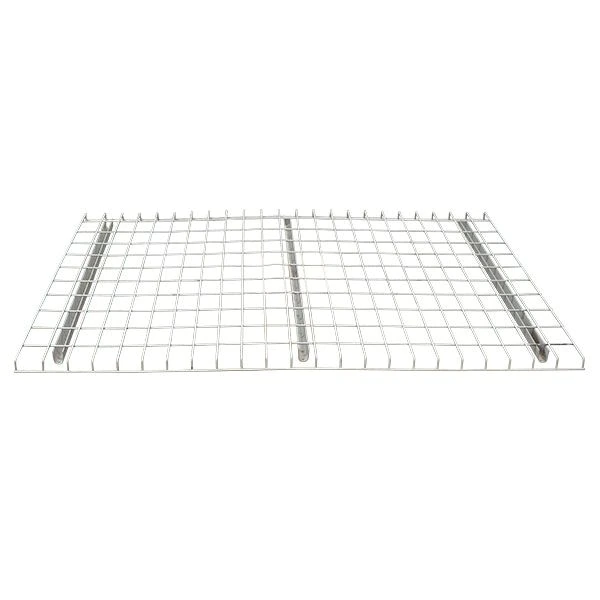
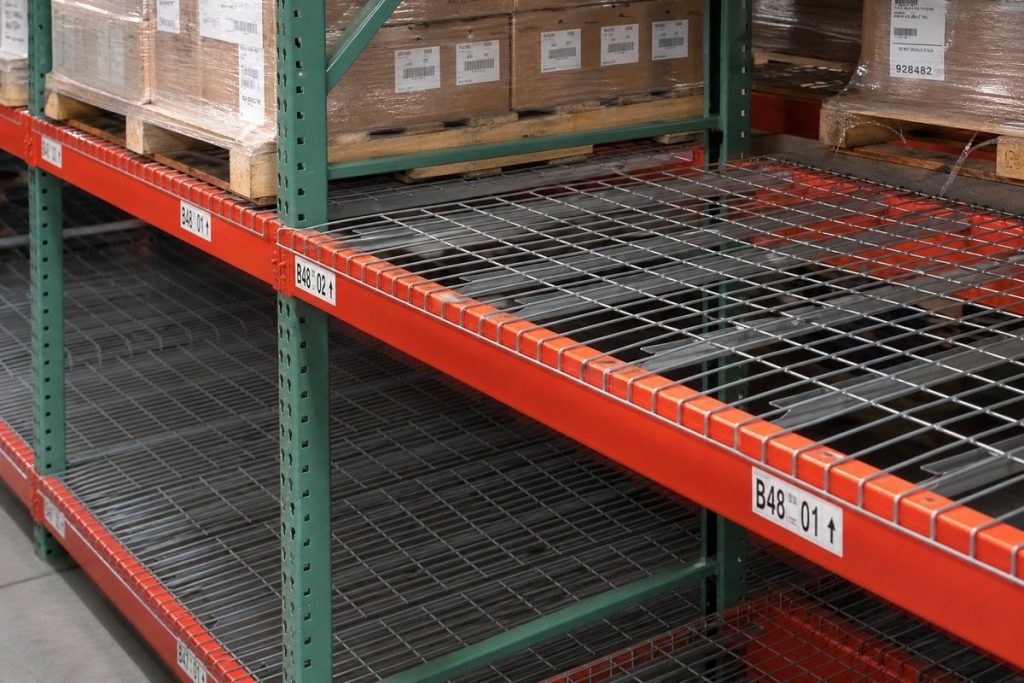
Containment decking and trays line a beam level so a case of leaking bottles drains into a tray rather than onto product below. This is where the choice between wire decking and solid or lipped panels matters: wire deck is right for sprinkler flow and for most dry goods, but it will not contain a litre of concentrate.
Floor berms and drain controls handle the volume no rack-level tray can, and they belong at the receiving dock and around bulk storage. Guidance for federally managed pesticide storage sets containment at 110 percent of the largest container stored, which is a sensible design target even where it is not the rule that applies to you.
Containment also changes the loading. A filled containment pallet under two 55-gallon drums is a heavy, awkward unit load; the beam level and deck under it must be rated for that load applied on the pallet’s feet, not for a spread pallet of boxed goods.
Storing liquid chemicals on rack?
We plan the racking and the containment together, so the layout does not quietly defeat the compliance plan. See spill control and secondary containment.
Rack type and pick face design
A chemical distribution operation is usually shipping small orders of many SKUs while receiving pallets of a few. That splits the building into two problems with two answers.
Seasonality is the other force at work. Lawn and pest control demand peaks hard in spring, so the building has to absorb a large seasonal inventory swing without spilling into aisles. That is an argument for designing the reserve area with deliberate empty bays at peak, and for keeping one run of adjustable selective bays that can be re-pitched between seasons.

Decking, load and layout details
Load per level. A pallet of gallon jugs is heavy — liquid is roughly eight pounds a gallon before packaging — so a chemical warehouse often loads beams closer to their rating than a dry-goods warehouse of the same footprint. Design from the heaviest real pallet, and check the manufacturer’s chart for the exact beam span and level spacing; our guide to pallet racking weight capacity works through how the numbers interact.
Decking. Wire deck for reserve levels, contained or solid deck for pick levels, and a deck rated for the way the load is actually applied. Deck panels are rated separately from beams.
Dividers and load stops. Case goods that get picked into cross-aisle carts travel along the level; pallet rack dividers and back stops keep them where the location label says they are, and stop product being pushed off the back of a bay into the next aisle.
Sprinklers and clearance. Rack storage changes the fire protection design. Storage height, flue spaces and the clearance to sprinkler heads are all part of the layout, and they must be coordinated with whoever holds the sprinkler design for the building — not adjusted on the day by whoever is placing pallets.
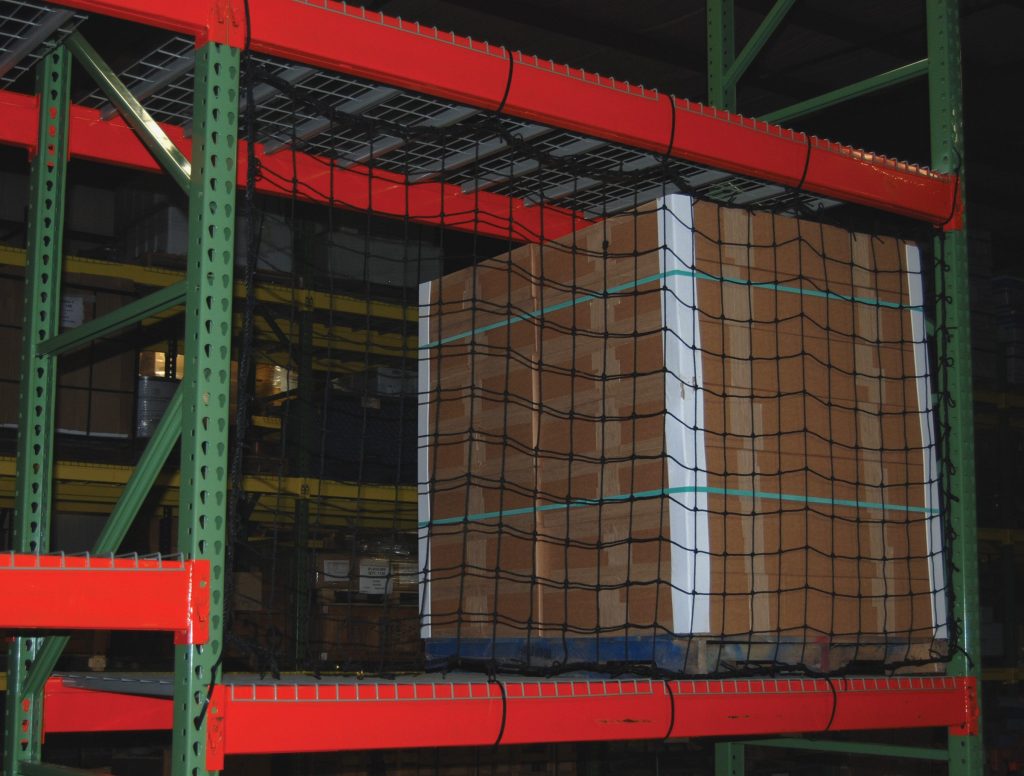
Traffic protection. Receiving-heavy buildings hit rack. End guards, column protectors and row spacers pay for themselves; see rack guards and column protectors, and keep an inspection cycle running, because a damaged upright in a chemical warehouse is a spill risk as well as a structural one.
Codes and standards that apply
Four regimes overlap in a chemical warehouse, and none of them replaces the others.
The product label and SDS. For pesticides, the label is a legal instruction. It is also the first document a compliance inspector will ask about.
Fire code and NFPA standards. NFPA 434 covers storage of pesticides; NFPA 30 covers flammable and combustible liquids; rack storage arrangements, pile height and sprinkler protection follow from them and from the fire code adopted locally.
OSHA. Hazard communication, labelling, safety data sheet availability, training, aisle marking and safe stacking all apply to the warehouse regardless of what is stored.
EPA and state environmental rules. These drive containment, drainage, waste handling and reporting. Facilities managing pesticide inventory frequently work to containment of 110 percent of the largest container as a design basis.
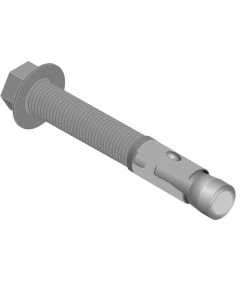
On the structure itself, industrial steel storage racks are designed to ANSI MH16.1 (Rack Manufacturers Institute) and treated as non-building structures by the International Building Code. Anchoring matters, and in seismic regions it drives the base detail — see pallet rack anchor bolts and pallet rack seismic compliance. Keep the rack engineer’s load application drawing on file, and put a documented rack inspection routine in place.
None of this makes a supplier the compliance authority. The authority having jurisdiction, your fire marshal and your environmental regulator decide what your building must do; the racking has to be designed so that meeting those requirements is possible.
Shop Pallet Rack Accessories Online
Protect and finish your pallet rack installation with these in-stock accessories, or request a quote for custom-sized rack, freight and volume pricing.

Chemical and pesticide warehouse racking FAQs
Can you store liquid chemicals on ordinary pallet racking?
What secondary containment do you need for a pesticide warehouse?
How should incompatible chemicals be separated on rack?
Is wire decking suitable for chemical storage?
Which standards cover pesticide and chemical warehouse storage?
Does seasonal demand change the rack design?
Related pages
 3PL & Distribution Center RackReserve and pick-face design for high-SKU distribution buildings.
 Wire DeckingDeck selection, ratings and where solid panels beat wire mesh.
 Rack Repair & InspectionWhat to inspect, what to unload immediately, and how to document it.
Storing regulated chemicals?
Send us your product mix and container sizes and we will design racking and containment that work together.
Faster Picking on Existing Rack
Need faster access to slow-moving pallets deep in a bay? Heavy duty metal pallet rack roll-out shelves mount directly onto your existing rack structure so workers pull inventory forward instead of reaching into the bay.