
Stretch Wrap Machines for Pallet Loads
Semi-automatic, automatic and orbital stretch wrappers sized to your throughput, film cost and dock footprint — with a live demo before you buy.

Stop Losing Loads — and Losing Time — to Hand-Wrapping
Hand-wrapping a pallet with a handheld film dispenser takes 3–5 minutes of a team member’s time, uses more film than the load needs, and still ships loose more often than a machine-wrapped pallet does. A stretch wrap machine tensions and pre-stretches the film to a set spec on every pallet, so the load holds through the truck, the dock and the final delivery — without a person walking the load with a roll of film strapped to their hip.
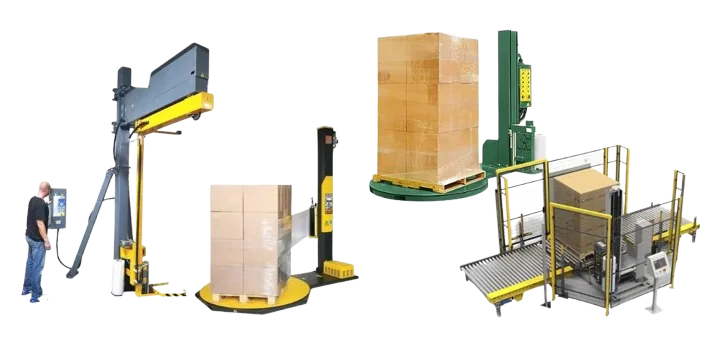
We carry three families of stretch wrap machines built for different volumes and floor plans: turntable semi-automatic machines for lower-volume operations, automatic in-line wrappers for continuous conveyor lines, and orbital wrappers for oddly shaped, unstable or top-heavy loads a turntable can’t spin safely. All three run on the same core idea — programmable film tension and pre-stretch — just packaged for different throughput. Packaging individual products instead of pallets? Heat-sealed film is a different process, covered on our shrink wrap machines page.
Most operations that switch from hand-wrapping to a machine do it after one of three triggers: a load-shift damage claim that gets expensive enough to notice, a labor crunch where wrapping pallets is eating time better spent picking or shipping, or a new line/SKU that produces pallets a person genuinely can’t wrap safely (too tall, too heavy, too irregular). If any of those sound familiar, the conversation usually isn’t whether to add a machine — it’s which type fits your floor and your volume.
Three Machine Types, One Decision: How Your Pallets Move
A semi-automatic turntable wrapper spins the pallet while an operator starts and stops the cycle from a control panel. It’s the right fit for lower-to-mid volume operations (roughly 10–60 pallets/day) that don’t have a continuous conveyor line and want the lowest equipment cost. An operator still loads/unloads the pallet by forklift or pallet jack, but no longer walks the film around it by hand.
An automatic/in-line wrapper sits in a conveyor line and wraps every pallet that passes through with no operator intervention — the right call once volume climbs past what a turntable machine can keep up with, or where labor is the bottleneck.
An orbital wrapper spins the film ring around the load instead of spinning the load itself, which is the only safe option for unstable, top-heavy, oversized or irregularly shaped loads — carpet rolls, pipe bundles, furniture, and pallets that would tip on a turntable.
| Machine Type | Best For | Typical Throughput | Operator Involvement |
|---|---|---|---|
| Semi-automatic turntable | Lower/mid-volume, mixed pallet sizes | 10–60 pallets/day | Loads pallet, starts cycle |
| Automatic in-line | Continuous conveyor lines, high volume | 60+ pallets/day | Line-fed, hands-free wrap |
| Orbital wrapper | Unstable, oversized, or irregular loads | Varies by load type | Loads/positions the item |
Orbital Stretch Wrappers: TAB Wrapper Tornado Models
When a load can’t spin safely on a turntable — long metal, pipe bundles, doors, panels, furniture or top-heavy skids — an orbital stretch wrapper keeps the load still and passes the film ring around it, wrapping over and under the pallet in one pass. MH-USA is an authorized TAB Industries dealer for the full TAB Wrapper Tornado line.
Pick by load size first (the ring must clear your load’s diagonal plus forks), then by how much of the cycle you want automated. Ring sizes below are TAB’s published sizes; we confirm fit on your actual loads before quoting.
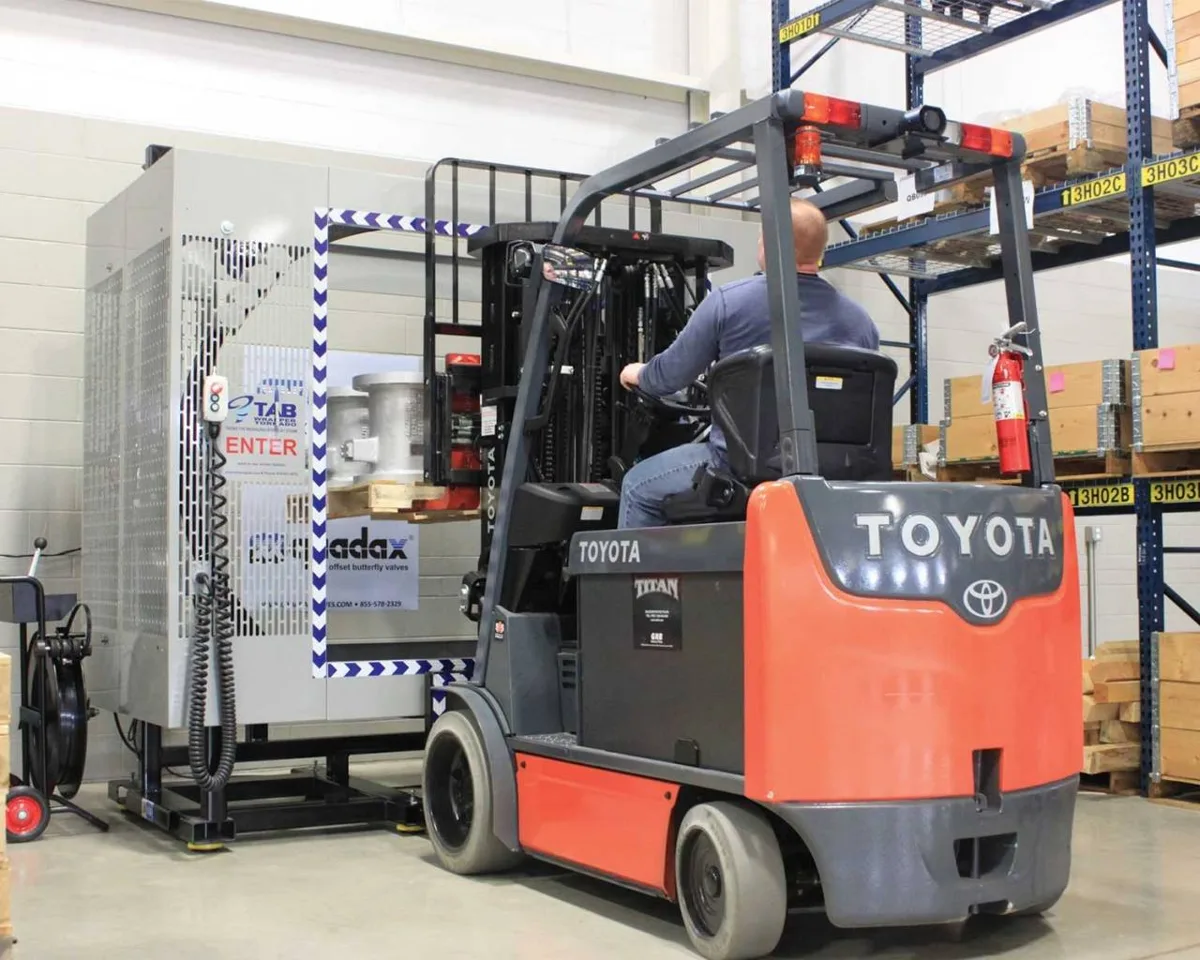
Photo: TAB Industries (TAB Wrapper Tornado orbital wrapper)
| Model | Ring sizes (TAB) | Best fit |
|---|---|---|
| Tornado Standard | 80″, 100″, 115″ | Lower-volume shops moving off hand wrapping |
| Tornado Smart Controls | 80″, 100″, 115″ | One-button start and auto-cut so the driver stays seated |
| Tornado Genius Controls | 80″, 100″, 115″ | Many SKUs and shifts; scans the load and stores wrap recipes |
| Tornado Dual Dispensing | 80″, 100″, 115″ | Heavy, wide or high-value loads needing more film per pass |
| Tornado Perfect Storm | 80″, 100″, 115″ | Fully automatic conveyor lines |
| Tornado Box Wrapper | 40″ | Small parts, parcels and bundled rods |
| TAB Wrapper Lightning | 24″, 36″ | Unpalletized pipe, tube, lumber and board bundles |
Full model comparison, sizing steps and options are in our orbital stretch wrappers guide.
Stretch Wrap Machine Applications & Buying Guides
Go deeper on the machine type that fits your loads:
How to Choose the Right Machine
Four questions settle it almost every time:
See It Run on a Real Pallet Before You Buy
Request a Live Demo
The most common hesitation we hear isn’t about the machine — it’s about how it performs in a real shift with real operators. We can arrange a live demo, including a walkthrough at another customer’s site running the same or a comparable model under normal operating conditions, so your team sees actual cycle times and film usage before committing capital. Ask your rep to set up a demo when you request a quote.
A demo run by a brand-new operator on day one doesn’t tell you much about a machine’s real cycle time or film usage. Seeing it run for a full shift, or at a site that’s had the machine in daily use, gives a much clearer picture — and it’s a normal, no-obligation part of evaluating a new machine before it goes into your capital budget.
Building the ROI Case for a Capital Budget Cycle
Stretch wrap machines are a common line item in quarterly and annual capital-budget reviews because the payback math is straightforward and easy to defend to finance:
- Film savings: programmable pre-stretch typically cuts film usage per pallet compared with hand-wrapping.
- Labor time back: a machine cycle frees the 3–5 minutes per pallet an operator previously spent hand-wrapping, worth reallocating to picking, staging or shipping.
- Fewer damaged/rejected loads: consistent film tension on every pallet reduces load-shift damage claims and refused deliveries.
- Predictable maintenance cost: unlike a fleet of handheld dispensers and film rolls purchased ad hoc, a machine’s film and wear-part costs are easy to forecast for next year’s budget.
If your purchase is moving through a Q4/Q1 capital-budget review, ask your rep for a one-page cost/benefit summary built around your current pallet volume and film spend — it’s built to support that internal approval process, not just to close a sale.
It’s common for this kind of purchase to move in two steps: a live demo settles whether the machine performs the way the buyer needs on the shop floor, and a separate internal budget cycle settles when the purchase order actually gets cut. We’re glad to work on both timelines — running the demo now and holding a quote open for the next budget window, rather than pushing for a decision before your finance team has reviewed it.
Choosing the Right Film for Your Machine
The machine only does half the job — the film gauge and pre-stretch setting you run determine how much you actually spend per pallet and how well the load holds. Thinner high-performance film run at a higher pre-stretch percentage typically costs less per pallet than a heavier gauge run at low or no stretch, for the same or better containment force.
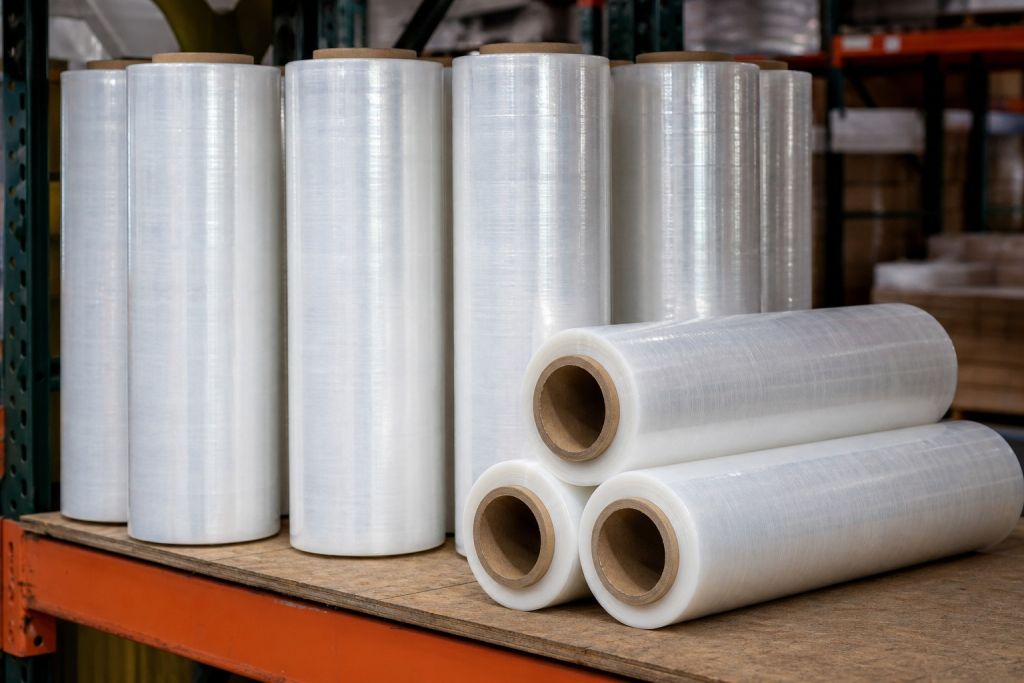
We stock standard 20-inch machine-grade film rolls sized for the semi-automatic and automatic machines on this page, along with narrower film for orbital wrappers. If you’re not sure what gauge and pre-stretch setting fits your load weight and shipping distance, send us your current roll spec and pallet weight and we’ll recommend a starting point.
Installation, Operator Training and Warranty
A stretch wrap machine only delivers the film and labor savings above if it’s set up correctly and the people running it know the controls. We cover all three when you order through us:
Site Check
We confirm floor space, door/aisle clearance, power (single- or 3-phase) and, for in-line machines, conveyor integration before the order ships.
Delivery & Setup
Machines ship freight to your dock; setup and initial calibration is handled by our team or a qualified local installer, depending on the model.
Operator Training
A short walkthrough on load positioning, film loading, and the tension/pre-stretch controls so operators get consistent wraps from day one.
Manufacturer Warranty
Every machine carries its manufacturer’s standard parts and labor warranty; we handle warranty claims and source replacement parts directly.
Because we sell the film rolls and wear parts (rollers, film carriages, turntable bearings) alongside the machines, ongoing maintenance is a single call rather than chasing down parts from three different vendors after the sale.
Typical Specifications
Exact specs vary by model and manufacturer; these are typical ranges we quote against most often.
| Spec | Semi-Automatic Turntable | Automatic In-Line | Orbital Wrapper |
|---|---|---|---|
| Film pre-stretch | 150–250% | 150–300% | 150–250% |
| Max load height | 80–96 in (model-dependent) | 80–96 in (model-dependent) | Varies with ring size |
| Turntable/ring speed | Adjustable, ~6–12 RPM | Line-speed matched | Adjustable ring rotation |
| Power | 110V/220V single-phase (most models) | 220V/480V, 3-phase common | 220V single- or 3-phase |
| Film roll width | 20 in standard | 20 in standard | Narrower orbital-spec rolls |
Shop Stretch Wrap Machines Online
Buy select semi-automatic and automatic stretch wrap machines directly, or request a quote for volume orders, custom film specs and freight-rated shipping.


Shop boxes, mailers, tape, film and void fill on our main packaging supplies page.
Frequently Asked Questions
Can I see a stretch wrap machine running before I buy?
How much film does a machine save compared to hand-wrapping?
What’s the difference between a turntable and an orbital wrapper?
Do you help build the ROI case for a capital budget request?
What power and floor space does a stretch wrap machine need?
Can you wrap oddly shaped or top-heavy loads on a normal turntable machine?
How long does installation and operator training take?
Why Buy Your Stretch Wrap Machine From MH-USA
We sell and support stretch wrap machines as one part of a full material handling catalog — pallet rack, conveyor, packaging equipment and the racking your wrapped pallets go back onto. That means one quote can cover the machine, the film, and the racking or staging area it feeds, with one point of contact if something needs service later.
Ready to Stop Hand-Wrapping Pallets?
Request a free quote and ask about scheduling a live demo before you buy.