
Pallet Rack / Carpet Roll Storage Racks
Carpet Roll Storage Racks: Cantilever, Roll Beams & Vertical Carousels
Get 12′ carpet and vinyl rolls off the floor and into locations you can pick, count and sell from — cantilever roll racks, teardrop pallet rack with roll beams, remnant storage and automated Vidir carpet carousels. Designed, permitted and installed nationwide from Salt Lake City.

12′
Full roll lengths handled
70%
Less floor space with a carousel
13,000 lb
Vidir carousel chain rating
30+ yrs
Designing and installing racking
Storing Carpet Rolls Is a Geometry Problem, Not a Shelving Problem
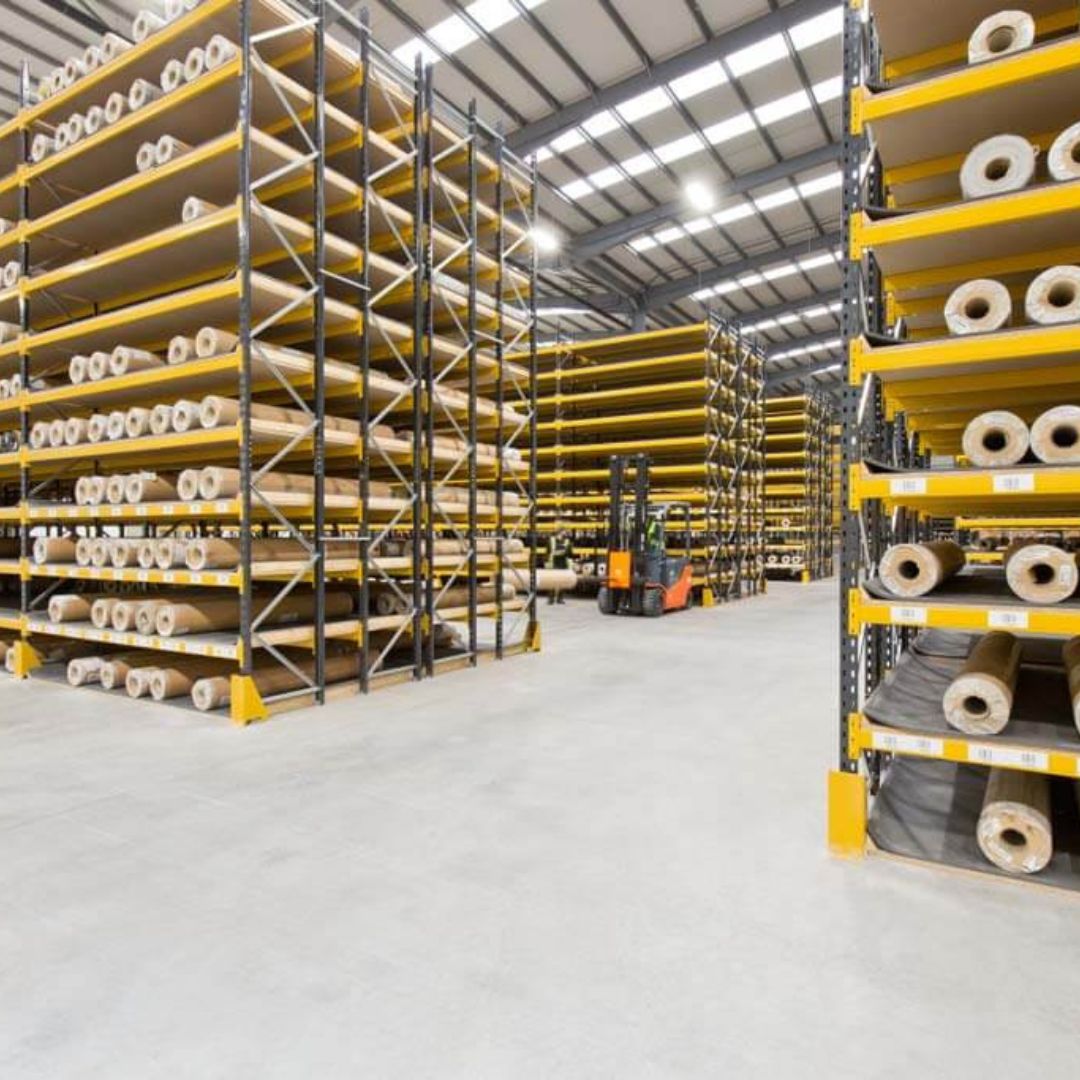
A pallet is a 48″ cube you can set down anywhere. A carpet roll is 12′ long, several hundred pounds, round, and it wants to move. That single difference is why flooring warehouses that run perfectly good pallet rack still end up with rolls lying on the concrete: the bays were never sized for the product.
Rolls on the floor cost real money. They get crushed at the contact points, they pick up moisture and grit, they are counted by walking the building instead of by scanning a location, and every retrieval means moving three rolls to reach one. The fix is not more shelving — it is choosing the right roll storage geometry for the lengths, diameters and turn rates you actually carry.
Material Handling USA designs, supplies and installs all three of the systems that work: cantilever roll racks for full-length rolls, teardrop pallet rack with roll beams and full-width decking for shorter rolls and mixed inventory, and automated Vidir vertical carousels where floor space is worth more than steel. Most real buildings end up with two of the three.
Carpet & Roll Storage Systems We Supply
Six configurations cover almost every flooring, textile and roll-goods operation. Each one is quoted from your roll dimensions, weights and clear building height — never from a catalog default.
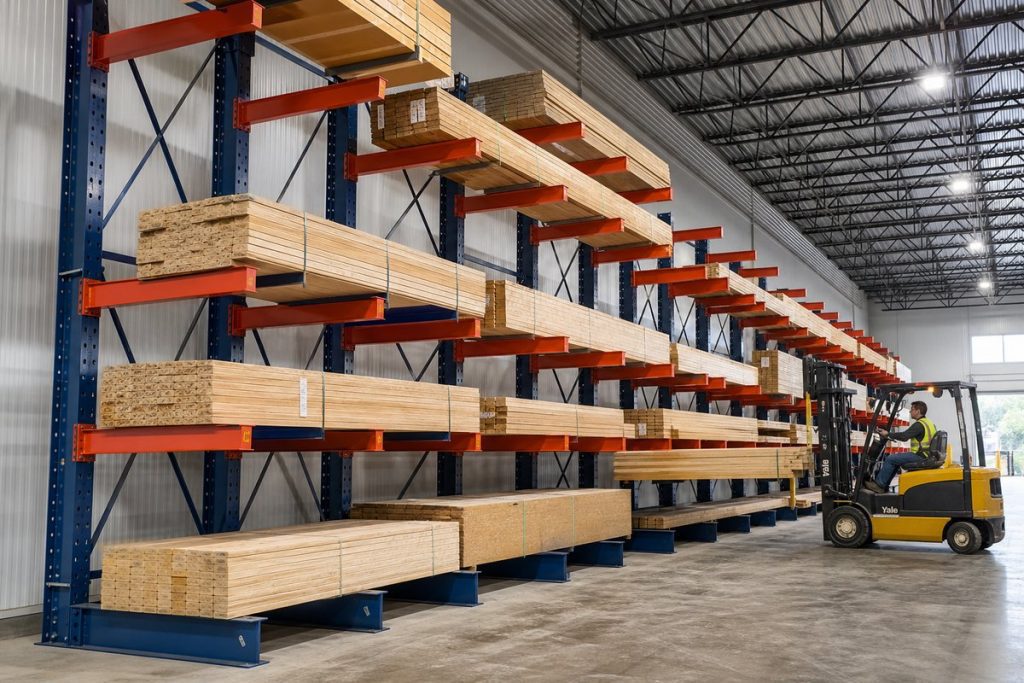 Cantilever Roll RacksThe default answer for full-length 12′ carpet and vinyl rolls. Columns, bases and arms give you one continuous, obstruction-free storage level, so a forklift with a carpet pole can load and pull a roll from anywhere along the bay instead of hitting an upright every 8′. Arms slope back 3/4″ over 12″ so rolls settle toward the column instead of rolling out.
 Pallet Rack with Roll BeamsStandard teardrop bays with beams set on 2″ centers and rolls laid across the beam pair. The least expensive way to get rolls off the floor when you already run pallet rack, and it stays flexible — the same bay converts back to pallet storage in an afternoon. Best for rolls up to about 9′ and for mixed roll-and-pallet inventory.
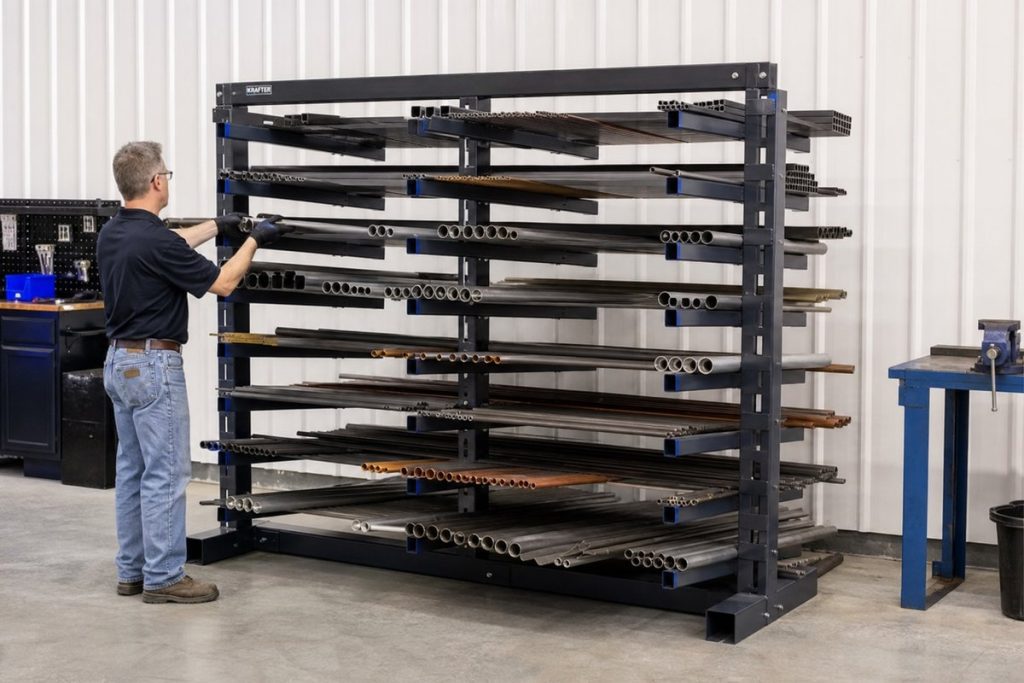 Medium-Duty Cantilever for RemnantsShort rolls, remnants and roll ends are the hardest part of a flooring inventory to keep sellable. Closely spaced medium-duty arms let you pick a single remnant without unstacking the pile, and each level can be labeled and counted like any other pick location.
 Vidir Carpet CarouselMotorized vertical carousel that stores carpet rolls on powered carriers and delivers the one you want to waist height at the push of a button. Vidir rates the standard package at a 13,000 lb chain capacity, 1,000 lb per carrier and 21′ per minute retrieval, and reports up to 70% less floor space than flat roll storage.
 Rolled Goods & Vinyl CarouselsThe same vertical platform configured for vinyl, sheet goods, technical textiles and upholstery rolls. Vidir’s industrial rolled goods brochure lists 13,000 and 34,000 lb unit capacities, carriers to 3,000 lb and unit heights from 7′ 6″ to 30′ 0″ for high-bay buildings.
 Teardrop Bays for Boxed & Palletized FlooringMost flooring warehouses are not only rolls: LVP cartons, tile, adhesives, trim and pad all need pallet positions next to the roll rows. We lay out the roll storage and the palletized SKUs together so one forklift class and one aisle width serve the whole building.
Not sure which system fits your rolls?
Send us your roll lengths, diameters, weights and how many you hold at peak, plus your clear height and aisle widths. We will come back with a layout, a capacity calculation and an installed price.
Request a Pallet Rack Quote Call (800) 326-4403 Call (800) 326-4403
Pallet Rack vs. Cantilever vs. Vertical Carousel
Roll length, roll weight and the value of your floor space decide this, in that order. Here is how the three systems actually behave once they are loaded.
| Consideration | Pallet rack with roll beams | Cantilever roll rack | Vidir vertical carousel |
|---|---|---|---|
| Roll length handled | Up to about 9′ across a beam pair | Any length — 12′ rolls are routine | 6′ and 12′ roll models are standard |
| Access | Front access, blocked by uprights every bay | Clear, unobstructed frontal access along the row | Powered — the roll comes to the operator |
| Floor space | Baseline | Similar footprint, deeper single-sided rows | Up to 70% less than flat roll storage (Vidir) |
| Handling equipment | Forklift with a carpet pole | Forklift with a carpet pole or roll clamp | One person at the control panel, no forklift |
| Best for | Mixed roll and pallet inventory, tight budgets | Full-length rolls, high volume, heavy rolls | Showrooms, cut-order operations, limited floor area |
| Watch out for | Roll sag and crushing on point loads — support the full width | Every column must be anchored; bracing is not optional | Three-phase power and building height required |
The 9-foot rule of thumb
If most of your rolls are under about 9′, roll beams with full-width decking in existing teardrop bays are usually the fastest and cheapest fix. Once you are handling full-length 12′ carpet and vinyl, cantilever pays for itself in retrieval time and in rolls you no longer damage getting them in and out.
Rack Specifications
Structural cantilever arm capacities
Published Ridg-U-Rak structural cantilever arm ratings, based on a uniformly distributed load. Capacity falls as the arm gets longer, which is why arm length should be set by roll diameter and nothing else. Concentrated loads require an engineering review.
| Arm part | Arm height | 24″ arm (lb) | 36″ arm (lb) | 48″ arm (lb) | 60″ arm (lb) |
|---|---|---|---|---|---|
| CAS-03 | 3″ | 3,200 | 2,100 | 1,550 | 1,050 |
| CAS-04 | 4″ | 5,225 | 3,500 | 2,625 | 2,100 |
| CAS-05 | 5″ | 6,600 | 4,400 | 3,300 | 2,650 |
Cantilever column capacities
Single-sided column capacities; a double-sided configuration doubles these values, and the load carried by the base is not included. Columns are punched on 4″ vertical centers, need 6″ of clear column above the top arm, and the base length must equal or exceed the arm length.
| Column part | Column depth | Max height to top arm | 24″ arms (lb) | 36″ arms (lb) | 48″ arms (lb) | 60″ arms (lb) |
|---|---|---|---|---|---|---|
| CTS-08 | 8″ | 18′ | 19,500 | 15,800 | 13,300 | 11,300 |
| CTS-10 | 10″ | 24′ | 30,300 | 25,200 | 21,600 | 18,900 |
| CTS-12 | 12″ | 24′ | 42,400 | 35,300 | 30,200 | 26,500 |
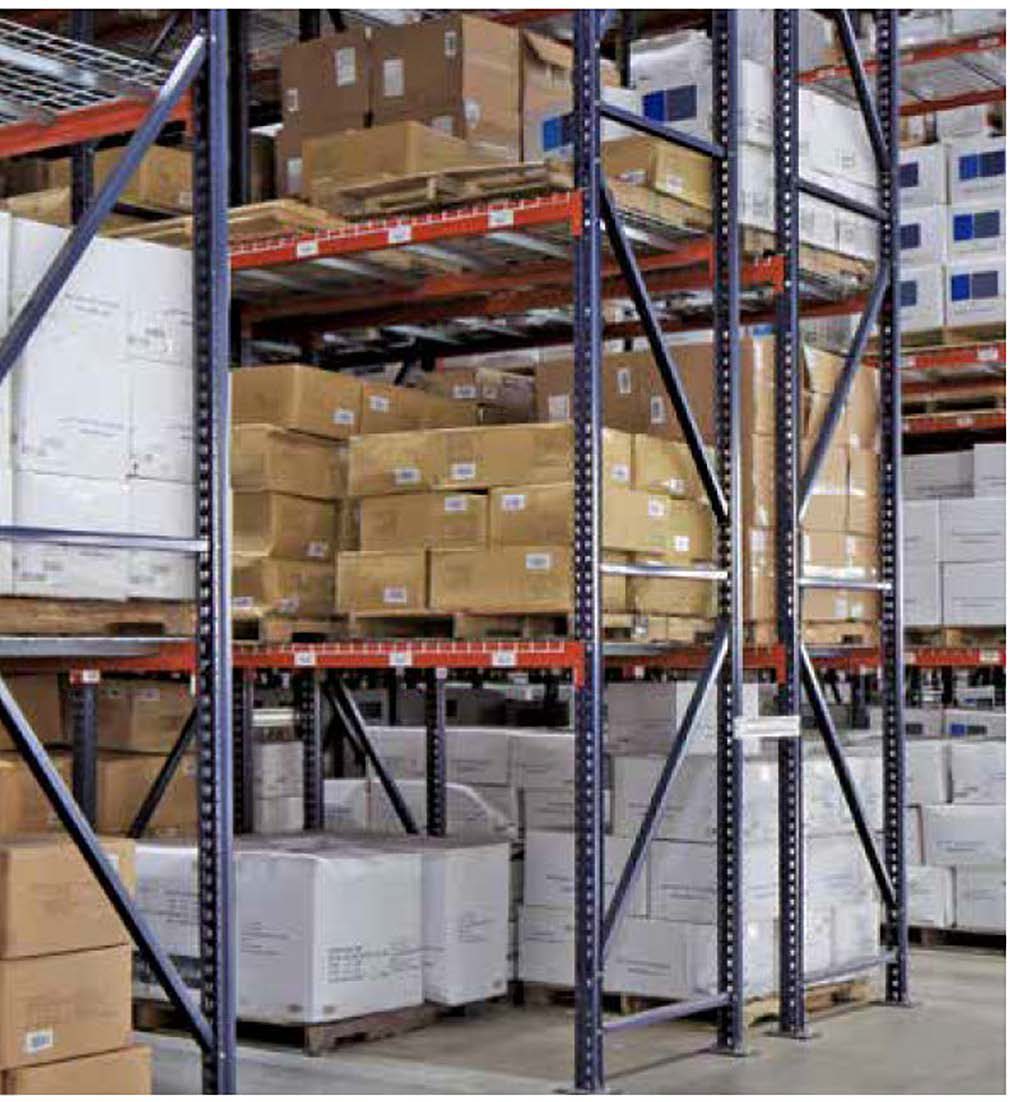
Teardrop pallet rack for roll and palletized flooring
Our teardrop pallet rack is compatible with the major teardrop patterns — Interlake, Space Rack, USP, Lodi Metal-Tech, Steel King and Husky — so you can extend a row you already own instead of starting a second, incompatible system. Beams adjust on 2″ centers, which matters when roll diameters change and every level has to be re-pitched.
Bolt-together construction means a damaged column or beam is replaced as a component. That is the difference between an hour of downtime and taking a whole row out of service.
| Component | Specification | Why it matters for roll storage |
|---|---|---|
| Uprights — regular duty | 16-gauge steel, 16,100 lb capacity per upright frame | Roll storage with lighter rolls and hand-stacked accessories |
| Uprights — heavy duty | 14-gauge steel, 23,300 lb capacity per upright frame | Dense roll storage, tall bays and seismic-designed rows |
| Columns & base plates | 3″ × 3″ column with 5″ × 8″ seismic base plates | Anchored rows in Utah and other seismic design categories |
| Beams | Adjustable on 2″ centers; 3.5″, 4″ and 5″ beams use 3-pin connectors, 6″ beams use 4-pin connectors | Re-pitching beam levels as roll diameters change |
| Decking | Wire mesh decking, or steel safety supports across the beam pair | Wire mesh keeps sprinkler water and light moving and stops small items falling |
| Accessories | Bay dividers, frame guards, adhesive and magnetic label holders | Separating roll families and labeling each pick location |
| Finish & shipping | Light green uprights, orange beams; assembled or knocked down (K.D.) | Fast identification on the floor and lower freight on large orders |
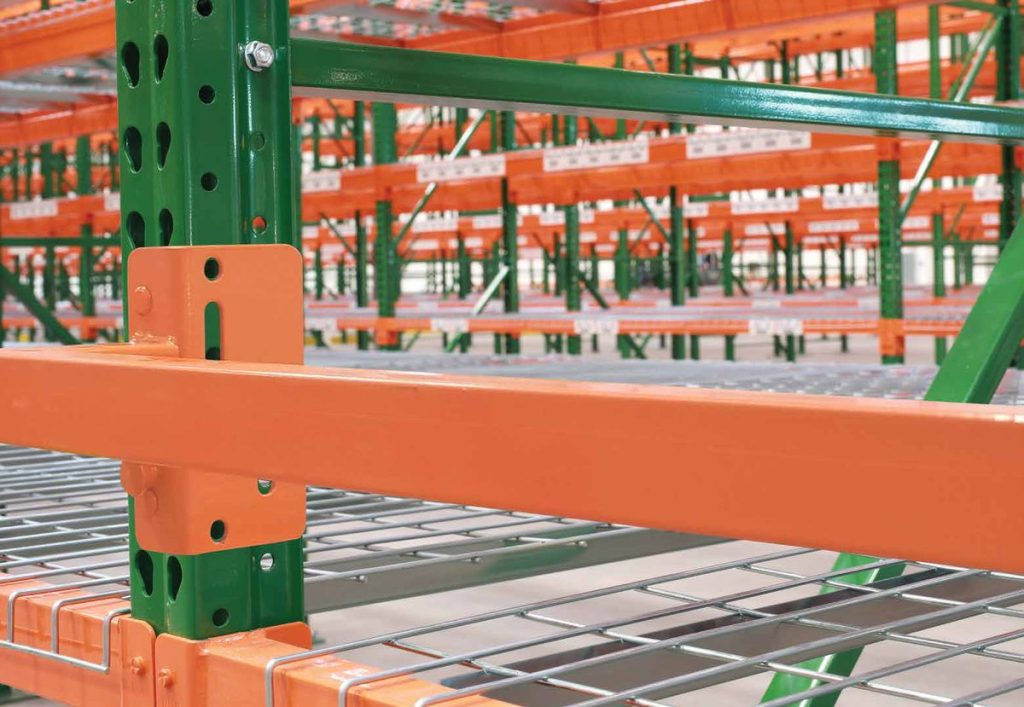
Decking is not optional under rolls
A roll laid straight across two beams bears on two narrow lines of steel. Under its own weight that becomes a pressure mark, and on a soft-backed product it becomes a customer complaint. Wire mesh decking or steel safety supports spread the load across the full width of the roll, and wire mesh also lets sprinkler water through and keeps light moving in the aisle.
Where you cannot deck a level, a plywood sheet or protective mat under the roll is the minimum. Plan this at quote time — retrofitting decking after a row is loaded means unloading the row.
Need capacities in writing for a permit or insurer?
We provide load ratings, seismic base plate details and stamped drawings where a building department or insurance carrier needs them — including Utah seismic permitting.
Request a Quote Open the Pallet Rack Configurator Call (800) 326-4403
Automated Carpet & Roll Storage: Vidir Vertical Carousels

When floor space is selling space — a flooring showroom, a design center, a cut-order counter — steel racking is the wrong trade. A Vidir vertical carpet carousel stores rolls vertically on powered carriers and delivers the roll you select down to working height. Vidir reports up to 70% less floor space than managing the same inventory flat, which is why the format shows up in large flooring retailers.
Because the roll comes to the operator, one person handles a retrieval with no forklift and no carpet pole swinging through the aisle. Vidir also builds flooring cutters that integrate with the carousel, so a cut order can be measured, cut and rolled up at the machine.
Material Handling USA is a Vidir dealer. See the wider Vidir vertical storage range and the textile and rolled goods carousel for non-carpet roll goods.
Standard carpet carousel package
| Specification | Standard package |
|---|---|
| Overall capacity | 13,000 lb chain rating |
| Carrier capacity | 1,000 lb per carrier |
| Off-balance allowance | 15% off-balance load capacity |
| Retrieval speed | 21′ (6,400 mm) per minute |
| Controls | Forward/reverse push buttons with security keypad and E-stop |
| Electrical | 208V/230V 15 amp or 460V/480V 10 amp, 60 Hz, 3-phase |
| Standard colors | White panels and structure, gray carriers and mesh |
| Approvals & warranty | cCSAus mark; 2-year manufacturer’s warranty |
Representative carpet carousel models (6 ft rolls, 12″ diameter)
A sample of Vidir’s published model range. Longer roll and larger diameter duties are available; height is normally set by your clear building height less service clearance.
| Model | Height | Width | Depth | Carriers | Roll length | Roll diameter |
|---|---|---|---|---|---|---|
| R24102-1414-06 | 8′ 8″ | 8′ 9″ | 38″ | 14 | 6 ft | 12″ |
| R24130-1814-06 | 11′ 1″ | 8′ 9″ | 38″ | 18 | 6 ft | 12″ |
| R24158-2214-06 | 13′ 4″ | 8′ 9″ | 47″ | 22 | 6 ft | 12″ |
| R24200-2814-06 | 16′ 10″ | 8′ 9″ | 47″ | 28 | 6 ft | 12″ |
| R24242-3414-06 | 20′ 4″ | 8′ 9″ | 47″ | 34 | 6 ft | 12″ |
| R24270-3814-06 | 22′ 8″ | 8′ 9″ | 47″ | 38 | 6 ft | 12″ |
Check three things before you specify a carousel
Clear height under obstructions and sprinklers, available 3-phase power (208/230V 15 amp or 460/480V 10 amp, 60 Hz), and slab condition at the unit footprint. Those three answers decide the model far more than the roll count does.
Handling, Protection & Rack Safety
Use a carpet pole, not forks
A carpet pole (or carpet ram) is a long steel spike mounted to the forklift carriage that slides through the hollow core of the roll. Standard forks mark and crush rolls and cannot hold them securely. Confirm the attachment is properly secured to the carriage, lift the roll a few inches and watch for swing before travelling, and remember the attachment shifts the load center and derates the truck. Roll clamps are the alternative where the core is unusable.
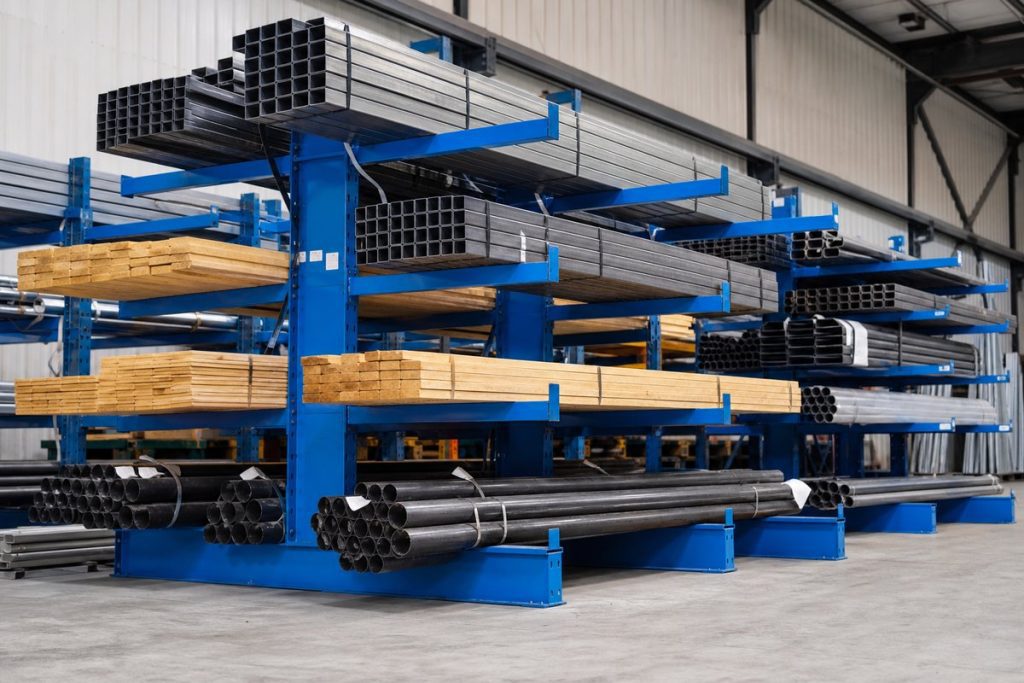
Load the arms the way they were rated
Cantilever arm ratings assume a uniformly distributed load across the arm. Two rolls concentrated at the tip of a 60″ arm is a different structure than a rating sheet describes. Spread rolls along the level, keep the heaviest rolls on the lowest arms, and never load a level above the plaque.
The arms slope 3/4″ over 12″ toward the column, so rolls settle inward. That slope is a safety feature, not a tolerance — do not shim it out.
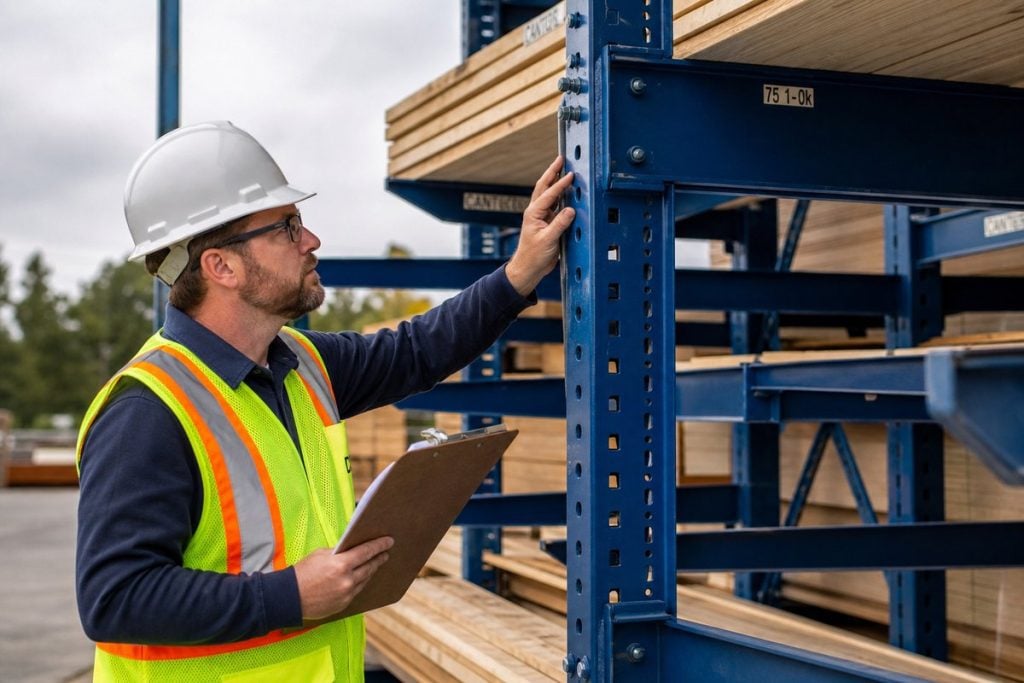
Anchoring, bracing and inspection
Ridg-U-Rak requires all cantilever to be anchored to concrete, with vertical x-brace panels in each end bay of a row and in alternate interior bays, plus horizontal bracing per the bracing pattern. Base length must equal or exceed arm length. None of this is optional and none of it is a field decision.
Inspect columns, arms, welds, base anchors and beam connectors on a schedule and immediately after any impact. Replace bent components — a straightened member has already lost capacity. Add column protectors at every bay a carpet pole swings into; in a roll operation that is most of them.
- Measure real roll lengths, diameters and weights — not the catalog values
- Set arm or beam levels from roll diameter, then re-check after the first season
- Deck or fully support every level a roll sits on
- Match the forklift attachment (carpet pole or clamp) to the roll core before buying rack
- Anchor every column and install the required bracing pattern
- Label every arm level and bay position so rolls are picked by location
- Guard columns and end-of-row positions against attachment impact
- Inspect on a set schedule and after every strike, and replace damaged parts
Who We Build Roll Storage For
The same steel behaves differently depending on how often a roll moves and who moves it.
 Flooring Distributors & WholesalersHundreds of active rolls, constant cut-order activity and dozens of remnant SKUs. Cantilever rows for full rolls, medium-duty cantilever for remnants, and a cut station positioned so a roll is handled once.
 Retail Flooring ShowroomsWhere floor space is sales space, a vertical carousel puts 20–30 rolls in the footprint of two or three and lets a salesperson show samples without a forklift — the reason big-box flooring departments use them.
 3PLs & Fulfillment OperationsRolls arriving from multiple clients need discrete, scannable locations. Label every arm level and bay position so a roll is found by location, not by memory, and cycle counts actually close.
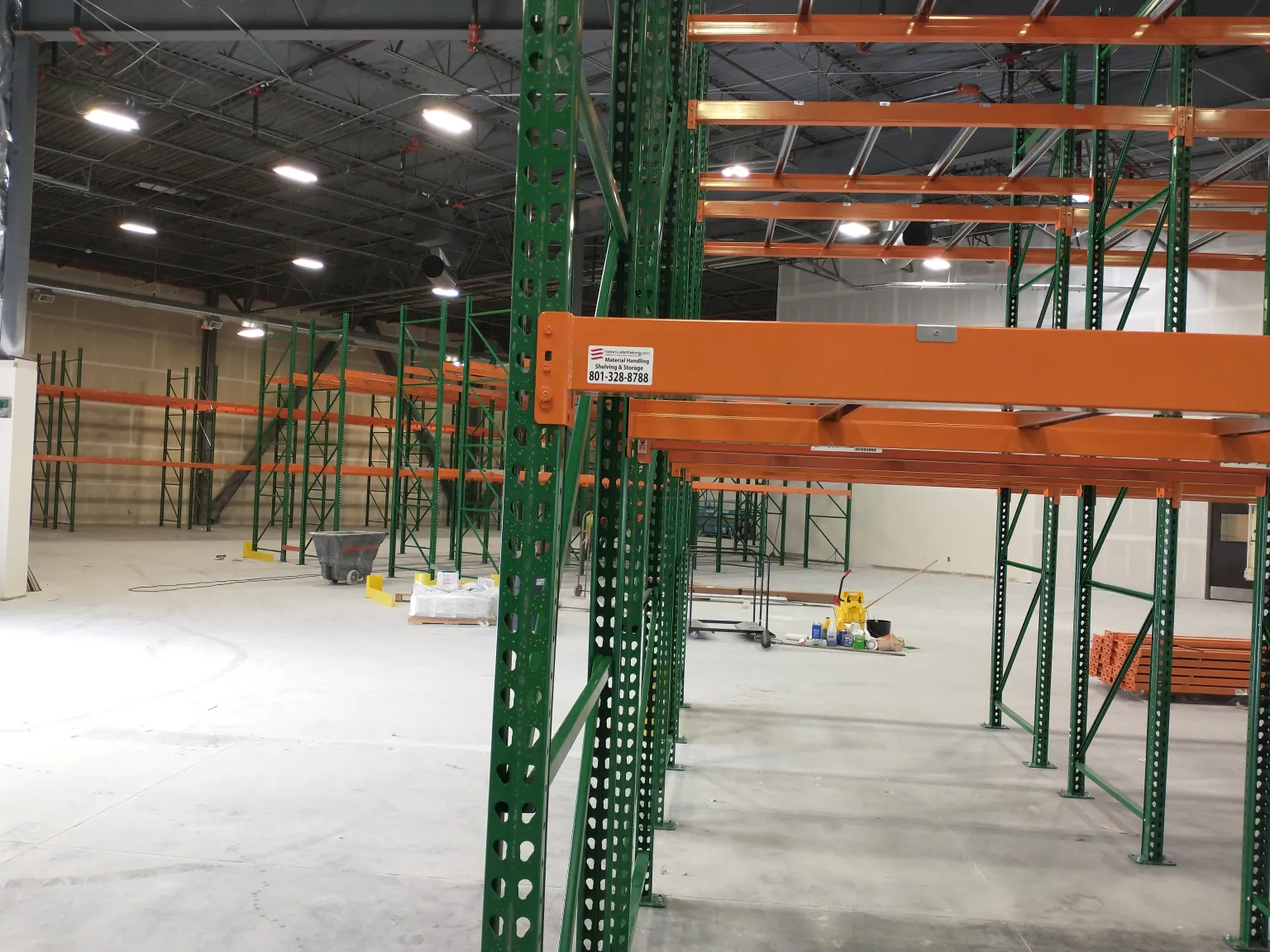 New Warehouse Fit-OutsA greenfield building is the cheapest time to solve roll storage. We start from the roll lengths, diameters and forklift attachment, then set bay depth, aisle width and column spacing around them.
The Rest of the Roll Storage Building
Roll storage rarely stands alone. These are the three pieces we end up designing alongside it most often.
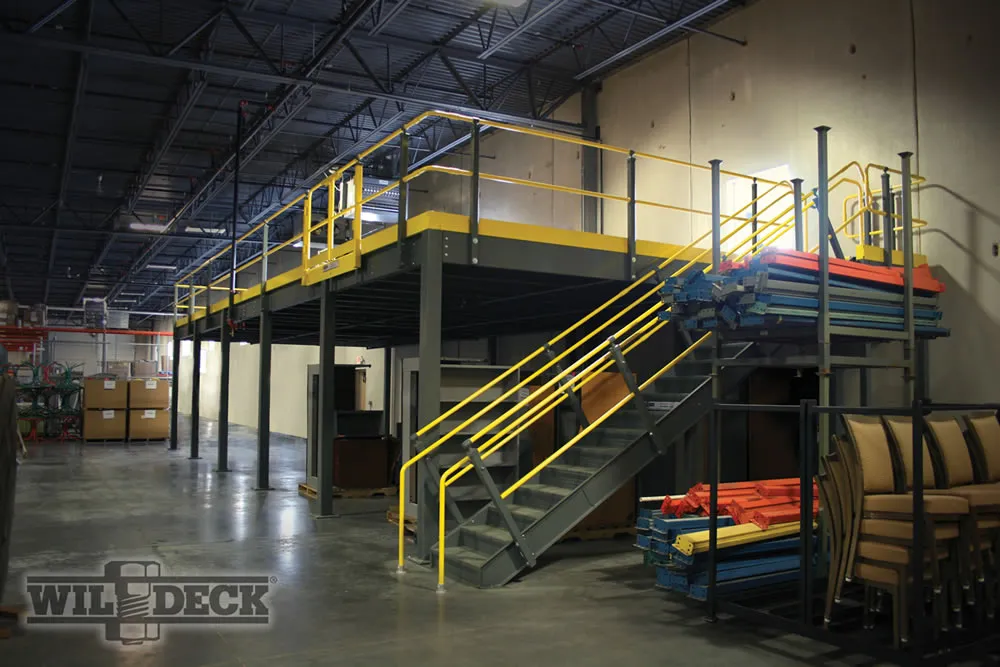 Mezzanines for Remnants & Slow MoversA free-standing mezzanine over the cut-and-pack area gives you a second level for remnants, pad and accessories without extending the building.
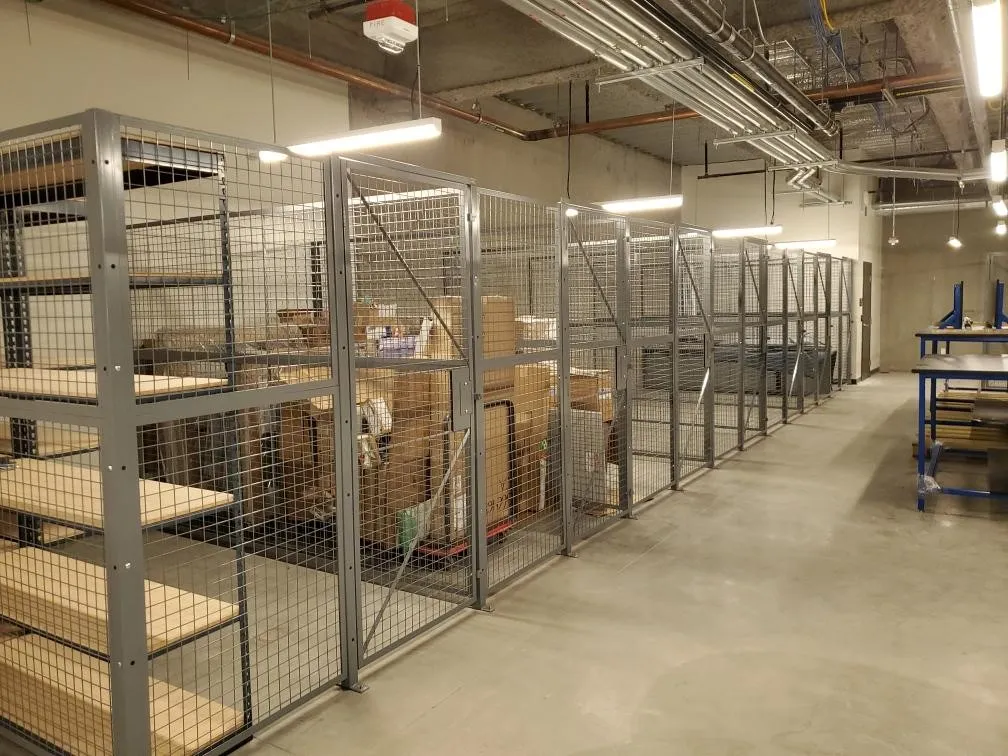 Security Cages for High-Value GoodsDesigner goods, custom orders and customer-owned material stored in a wire mesh enclosure with boltless shelving, so accountability does not depend on trust.
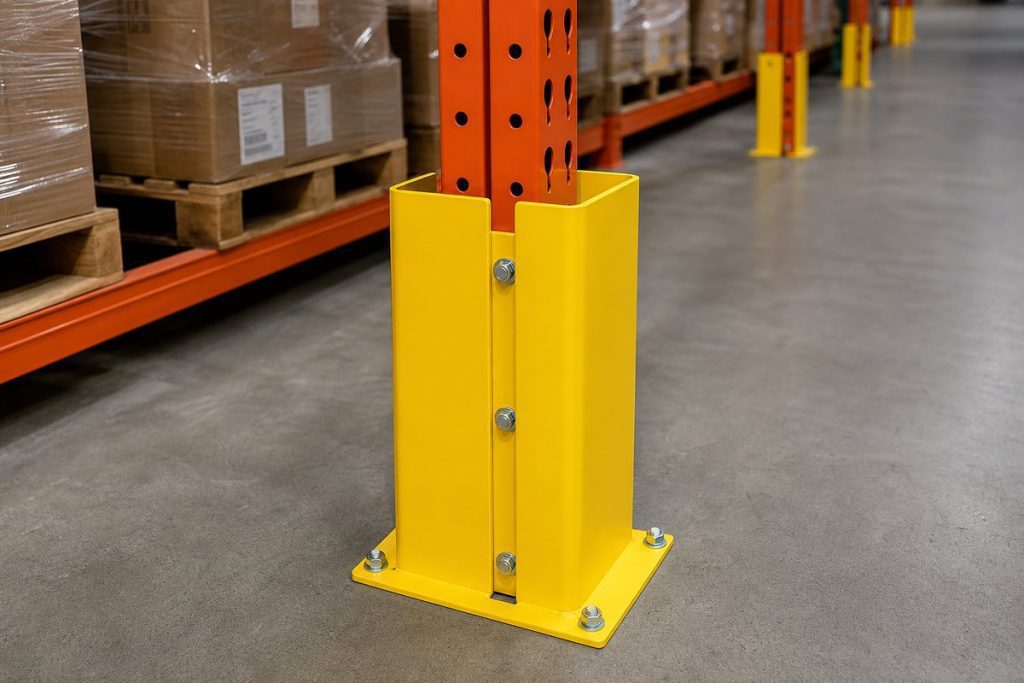 Rack Protection at Every Roll BayRoll handling means long attachments swinging in tight aisles. Column protectors, end-of-row guards and floor anchors are the cheapest insurance in the building.
How a Roll Storage Project Runs
Inventory review
We start with roll lengths, diameters, weights, SKU count and turn rate, plus your clear height, column grid, aisle widths and sprinkler layout.
Layout and capacity
We lay out cantilever rows, roll-beam bays and any carousel position, then calculate arm, beam and column capacities against your real loads.
Quote, drawings and permits
You get an itemized quote with the protection and decking included, plus stamped drawings and seismic anchoring details where the jurisdiction requires them.
Installation and handover
Our crews install and anchor the system, label the locations, and walk the inspection and load-limit plaques with your team before we leave.
Carpet Roll Storage FAQs
What is a carpet roll storage rack?
Is standard pallet rack strong enough for rolls of carpet?
Cantilever rack or pallet rack for carpet rolls?
How much weight can cantilever arms hold?
How do you load a carpet roll into a rack?
How much floor space does an automated carpet carousel save?
Do carpet racks need to be anchored and inspected?
Can these racks store vinyl, turf, fabric or other roll goods?
How do I protect the rolls themselves from damage?
Can Material Handling USA design and install the whole layout?
Related Products & Resources
 Cantilever Pallet RackingColumns, bases and arms for long, awkward and rolled loads — sizing, bracing and installation.
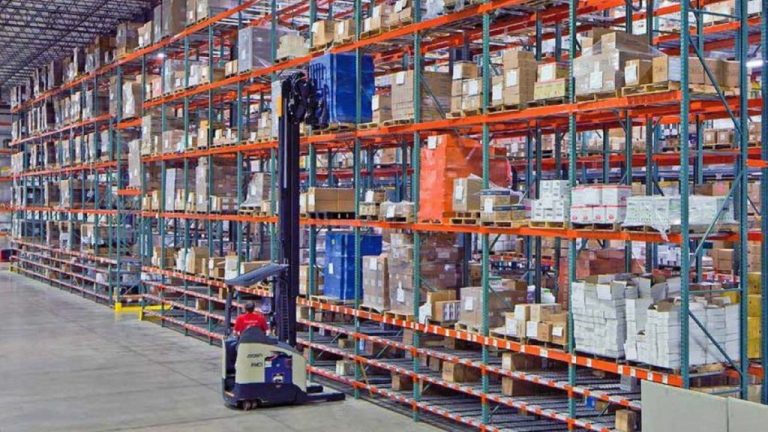 Pallet Rack SystemsThe full pallet rack range, with the specifications and accessories behind every bay.
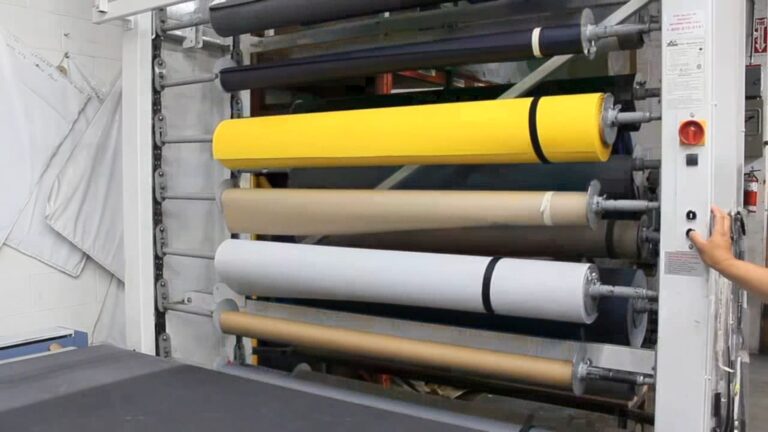 Vidir Textile CarouselAutomated vertical storage for textile, vinyl and technical fabric rolls.
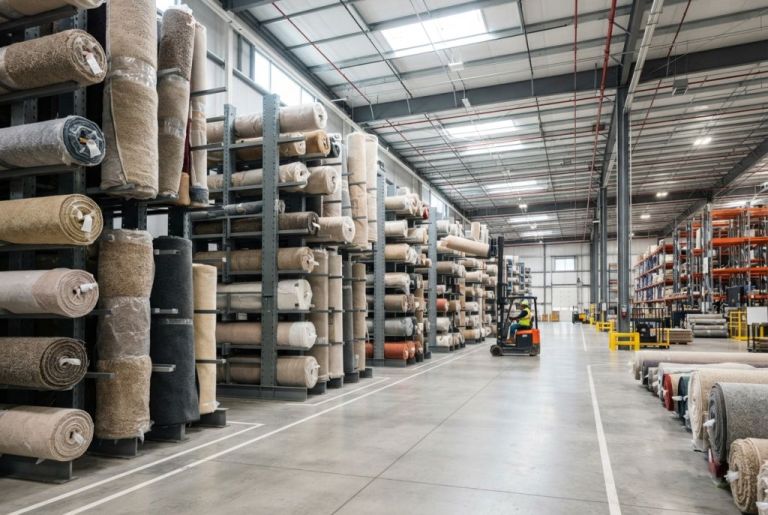 Carpet Roll Storage GuideHow to choose between vertical, horizontal and automated roll storage for your building.
 Is Pallet Rack Strong Enough for Carpet Rolls?Beam capacities, load distribution and where standard pallet rack stops being the right answer.
 Forklift & Rack ProtectionColumn protectors, end-of-row guards and anchoring that keep roll bays out of the repair budget.
Shop Online at MaterialHandling-USA.com
Need labels, protective film, edge protectors or packaging for cut orders? Our e-commerce store stocks shipping and warehouse supplies with published pricing.
Get Your Carpet Rolls Off the Floor
Send us your roll lengths, diameters, weights and building height. We will design the roll storage, calculate the capacities, handle the permitting and install it — and tell you honestly when roll beams are enough and when you need cantilever.