
Fastener & Webbing Manufacturer Warehouse Racking: Velcro USA
A fastener and webbing manufacturer’s raw material comes on large, heavy rolls, and its finished goods ship as small parts — two very different storage problems under one roof.
2024
Year we worked with Velcro USA
Fastener / webbing manufacturing
Client sector
Pallet rack
Product category supplied
Raw material rolls & finished small parts
Application
Plan your layout before you buy
Configure upright height, beam width, bay count, and load levels in our free 3D Pallet Rack Configurator, then get an instant bill of materials and request a quote.
The project
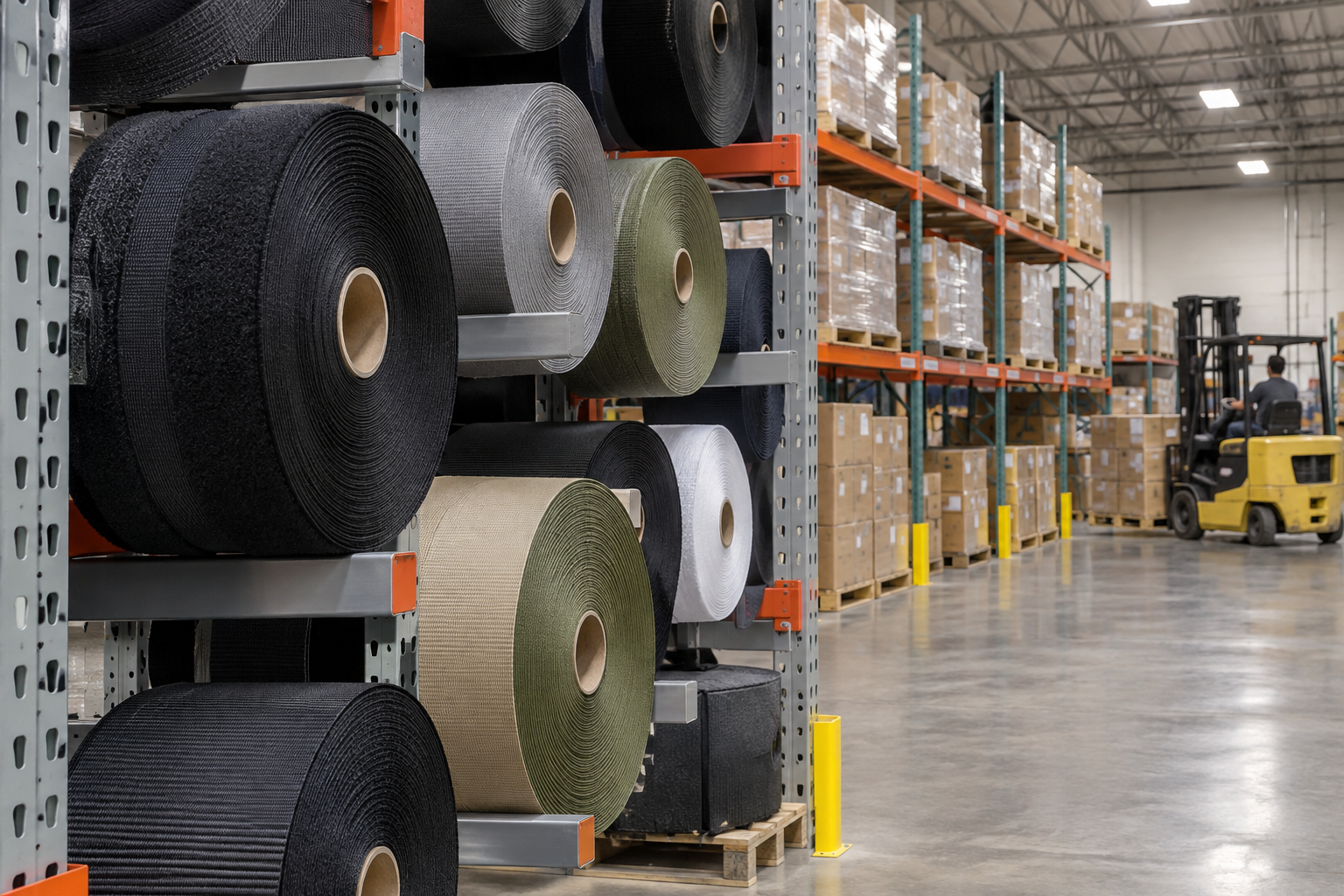
Velcro USA is an industrial manufacturer of hook-and-loop fastener tape, webbing and related roll goods used across apparel, industrial and consumer applications. Material Handling USA supplied pallet rack systems for the company’s raw material and finished-goods warehouse.
A textile-based manufacturer’s storage challenge splits cleanly in two: bulk raw material arrives and gets stored as large, heavy rolls of nylon webbing or fastener tape, while finished goods often ship as small, numerous parts — cut lengths, packaged tape rolls, hardware components. That’s a different mix than the metal and mineral raw materials we cover in our metal service center crane-bay racking case study, where the material itself is heavy plate and coil rather than a rolled textile product, though the underlying lesson — that raw material and finished goods often need entirely different rack types in the same building — carries over.
Why a fastener manufacturer’s storage problem is split in two
Raw material rolls are large, heavy and round. Bulk webbing and fastener tape comes on jumbo rolls that can weigh hundreds of pounds each and don’t stack the way a boxed product does — they need a rack built around the roll, not a shelf.
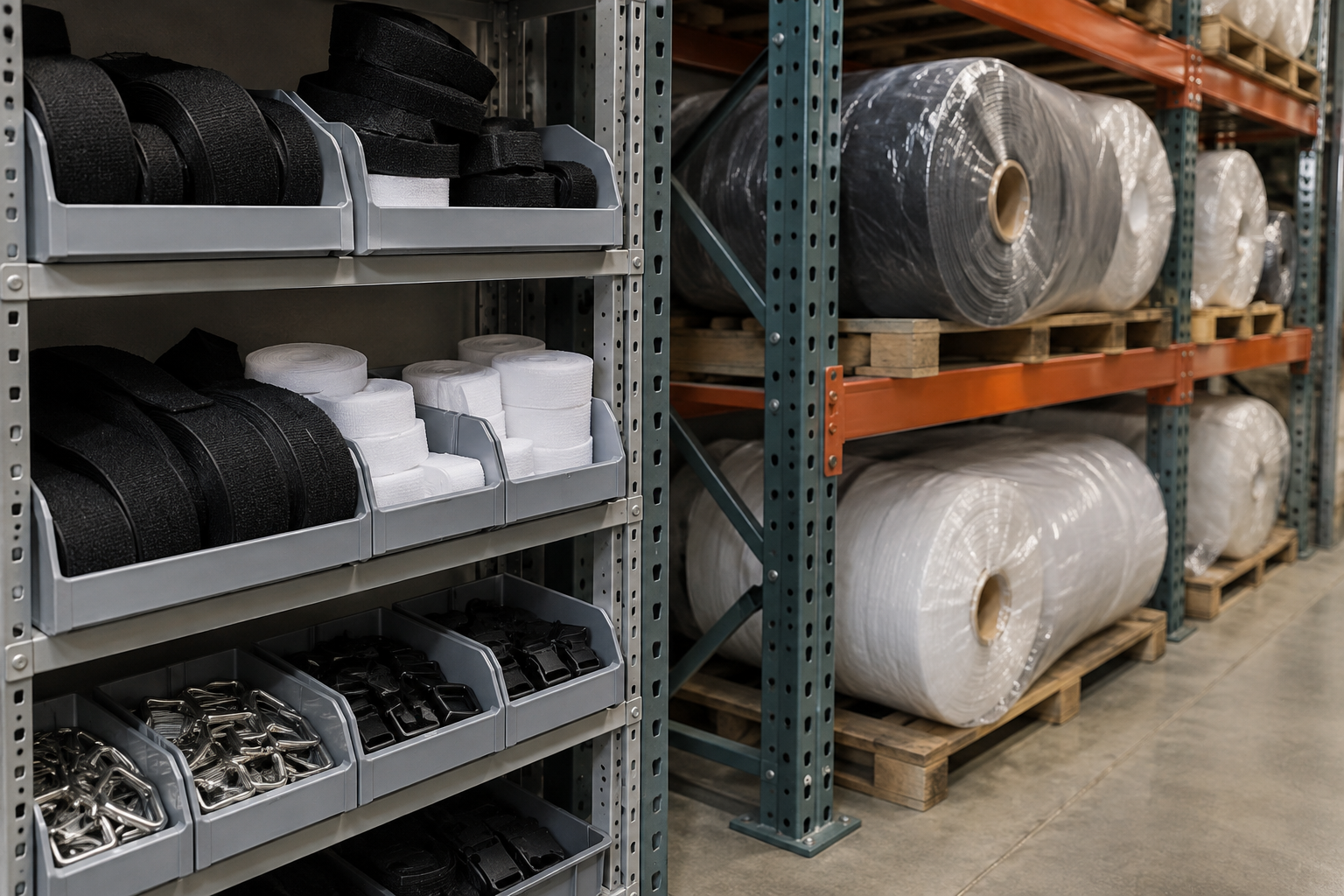
Finished goods are small and numerous. Cut lengths, packaged tape and small hardware components (buckles, clips, adhesive backing) ship in high SKU counts and low unit weight — the opposite storage profile from the raw material feeding the same production line.
Production needs a steady raw-material feed, not just bulk storage. Manufacturing lines pull from a controlled staging area near the line, separate from bulk warehouse storage, so production doesn’t stop waiting on a forklift trip to a distant rack row.
Quality and lot tracking matter. Roll goods are typically tracked by lot or batch for quality control, which favors a rack layout with clear, fixed, labeled locations over loose floor stacking.
What a fastener/webbing manufacturer stores
Sorting by physical form — roll, box, or bin — rather than by production stage is what makes the layout work.
| Group | Examples | Storage that suits it |
|---|---|---|
| Bulk raw material rolls | Jumbo rolls of nylon webbing, hook-and-loop fastener tape stock | Cantilever rack with arms sized to roll diameter and length, keeping rolls off the floor and supported along their axis |
| Work-in-process roll goods | Partially processed rolls staged between production steps | A dedicated WIP rack section near the production line, separate from bulk raw material |
| Packaged finished tape and webbing | Cut lengths and packaged retail or industrial rolls ready to ship | Selective pallet rack with wire decking for cartoned finished product |
| Small hardware components | Buckles, clips, adhesive backing, connector hardware | Boltless or bin shelving near a pick/pack area for fast, small-quantity handling |
| Quality hold and lot-tracked material | Rolls or lots pending quality release | A clearly labeled, physically separate rack section so hold material can’t be mistaken for released stock |
Rack choices for rolled material and small parts
The right storage for a fastener or webbing manufacturer separates raw material handling from finished-goods handling — trying to force both onto one rack type usually compromises both.
- Cantilever rack for bulk raw material rolls. Open arms sized to roll length and diameter support jumbo webbing and fastener tape rolls without forcing them into a box-shaped opening.
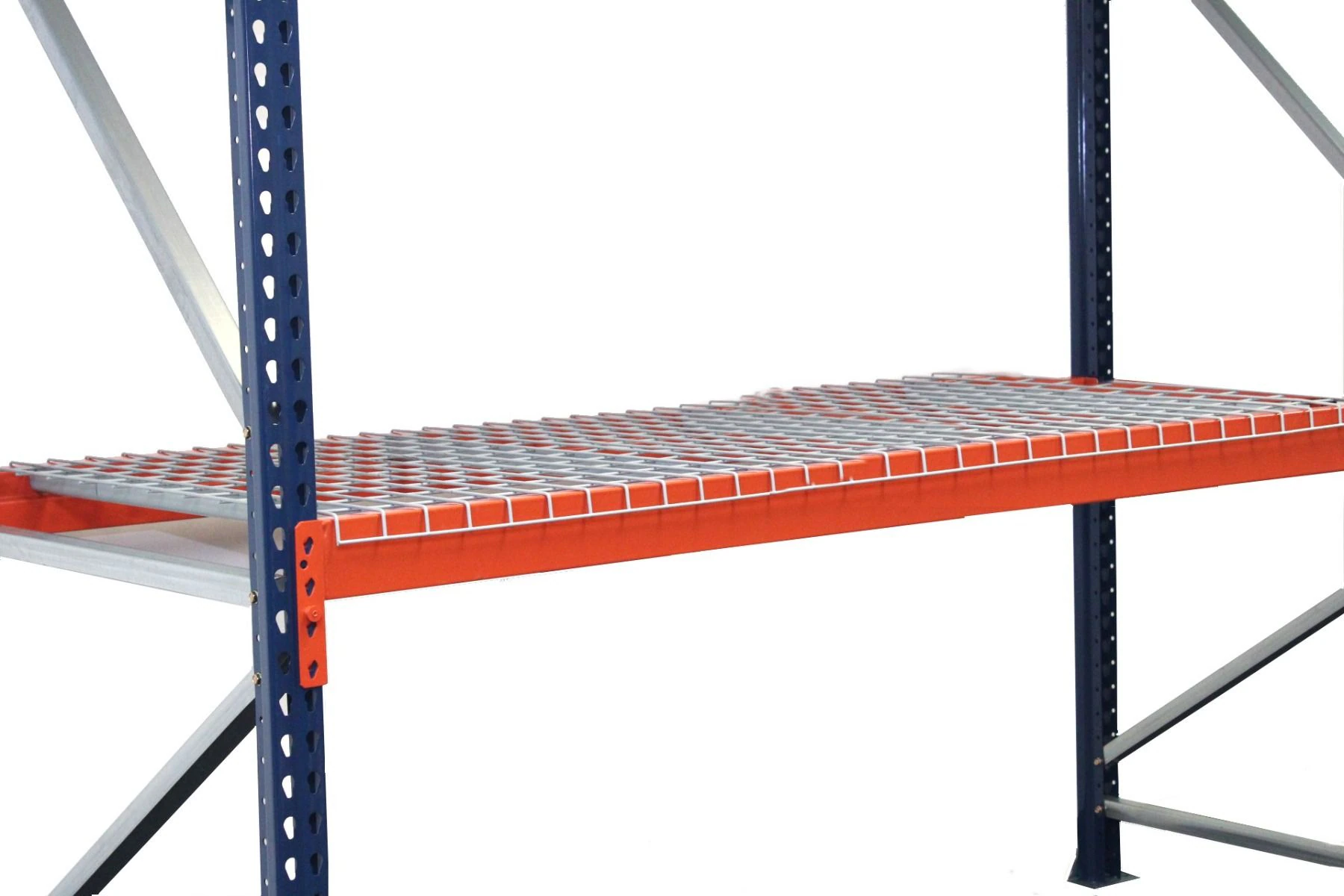
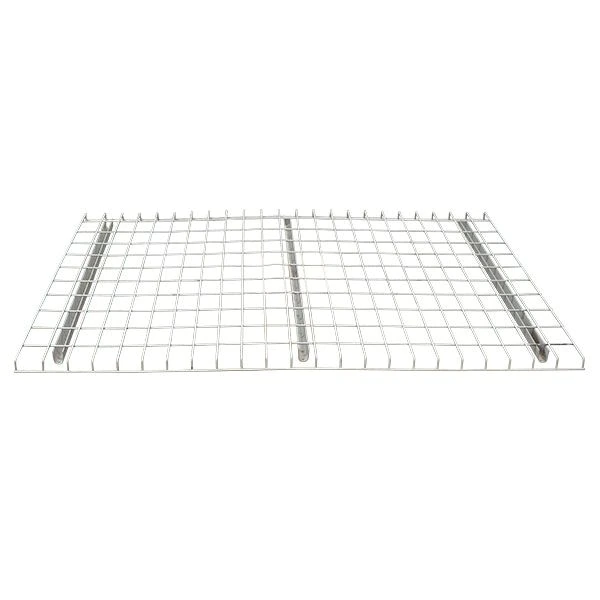
- Selective pallet rack with wire decking for cartoned finished goods. Packaged, palletized finished product stores efficiently on standard selective rack once it leaves roll form.
- Boltless shelving for small hardware and components. High-SKU, low-weight items like buckles and connector hardware move faster off open shelving than off a full pallet position.
- A separated, labeled quality-hold section within either rack type, so material pending release is never adjacent to released stock in a way that invites a mix-up.
Model roll dimensions, arm spacing and bay counts against your actual product mix in our 3D pallet rack configurator before ordering.
Staging raw material for production
A manufacturer’s warehouse isn’t just storage — it’s the buffer that keeps a production line running, so the layout has to support a steady, predictable material feed.
- Keep a defined staging quantity near the line, refilled from bulk rack. A small buffer of raw material rolls at the point of use, refilled on a schedule from bulk cantilever storage, avoids both stockouts and clutter on the production floor.
- Route WIP material through its own rack section, not general storage. Partially processed rolls waiting for a downstream step need clear identification so they aren’t mistaken for raw stock or finished product.
- Track roll lots to a fixed rack location. Pairing lot or batch numbers with a specific bay and level makes quality traceability and inventory counts far faster than tracking lots without a location system.
- Plan aisle widths for the equipment that actually moves rolls. A jumbo roll often needs a roll clamp or specialized attachment rather than standard forks — size aisles for that equipment’s turning radius, not a generic forklift spec.
Installation and safety
A fastener or textile manufacturer’s racking gets the same structural standards as any other pallet rack installation, with extra attention to roll weight.
- Design cantilever arm capacity for actual roll weight, not an assumed average — see pallet rack weight capacity guidance, since jumbo material rolls can weigh far more than they look.
- Protect end-of-aisle uprights with column protectors and end guards in an active production and material-handling area.
- Inspect racking on a defined cycle and after any impact — see rack inspection and repair.
- Anchor and install to the ANSI/RMI MH16.1 standard — see our rack installation guidance.
ANSI/RMI MH16.1 is published by the Rack Manufacturers Institute. We design, supply and install racking for textile, fastener and other roll-goods manufacturers across the region — see Utah pallet rack, our related plating and finishing plant warehouse racking case study, and our carpet roll storage racks guide for another closely related roll-format product.
Shop Pallet Rack Products Online
Buy select items directly from our online store, or request a quote for volume, custom sizes and freight-rated orders.
Frequently asked questions
What storage suits a fastener or webbing manufacturer’s warehouse?
Why can’t raw material rolls go on standard pallet rack shelving?
How is this different from a metal service center’s raw material storage?
Why does a manufacturer need a separate quality-hold storage section?
What’s the design standard for the racking itself?
Planning storage for a manufacturer that handles both raw material rolls and finished goods?
We design pallet rack, cantilever rack and shelving layouts for textile, fastener and other manufacturers with mixed raw-material and finished-goods handling needs. Free design consultation.