
Metal Finishing Plant Racking: Pioneer Metal Finishing
A plating and finishing plant asks racking to do something unusual: hold dense metal parts for years in an atmosphere designed to attack metal. A fastener and webbing manufacturer’s storage splits the same way, between bulk raw material and finished small parts — see our fastener and webbing manufacturer warehouse racking case study.
2022
Year Pioneer Metal Finishing worked with us on rack
Metal finishing
Plating, coating and surface finishing
Pallet Rack
Product category we supplied
Environment-led
Finish and coating selection drive the specification
Plan your layout before you buy
Configure upright height, beam width, bay count, and load levels in our free 3D Pallet Rack Configurator, then get an instant bill of materials and request a quote.
The project
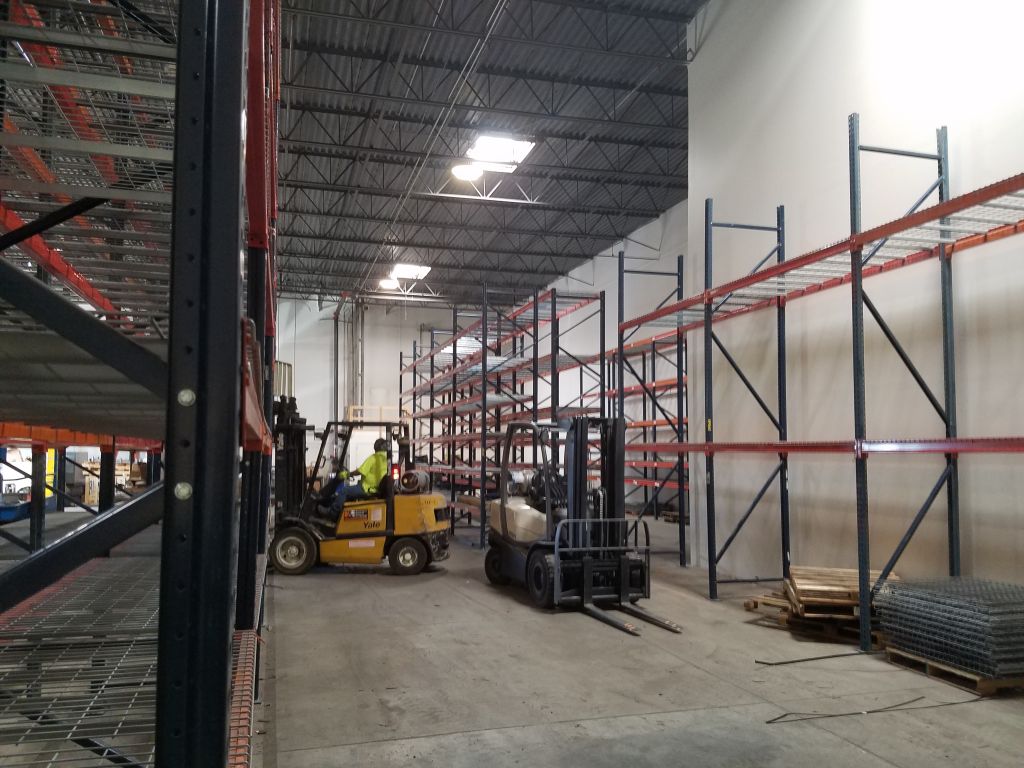
Pioneer Metal Finishing provides plating, coating and surface finishing services for manufactured components. Material Handling USA supplied pallet rack for the company in 2022. The client, that year and the product category supplied are the only project details we publish.
Surface finishing plants are one of the few industrial settings where the specification of pallet rack systems is driven as much by chemistry and humidity as by load and cube. What follows is the engineering behind racking for a finishing operation: what the environment does to steel, which finishes actually survive it, and how to lay out storage around a process line.
What a finishing plant does to ordinary racking
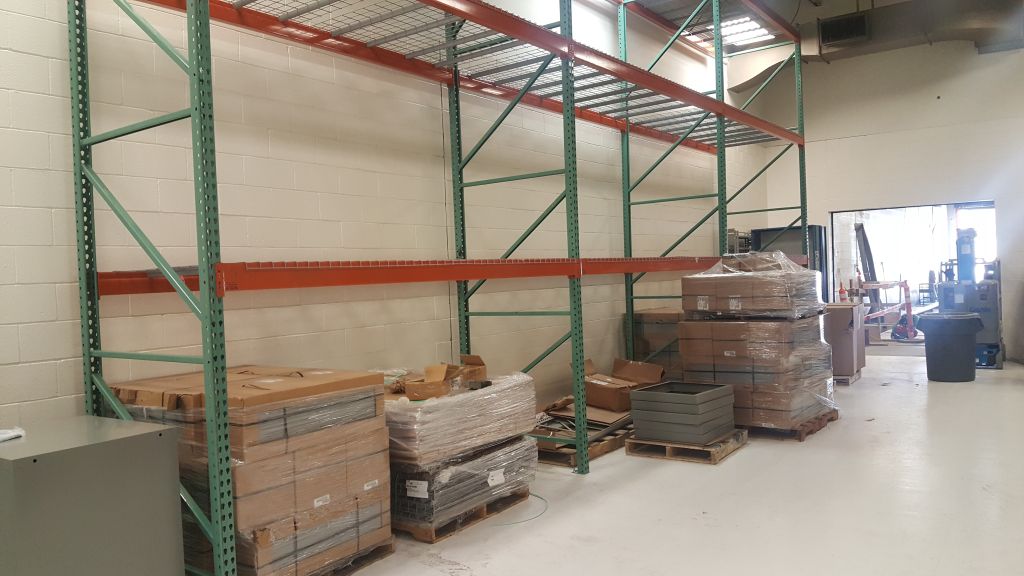
Plating, anodizing, phosphating, passivating and painting all involve wet chemistry, heat and ventilation. Even a well-run plant produces conditions that shorten the life of standard roll-formed, powder-coated racking in specific and predictable ways.
Humidity and condensation. Warm, wet process air condenses on cool steel, most often on the base plates and lower columns where air movement is lowest. Corrosion starts at the floor and works up, which is exactly where the structural demand is highest.
Airborne chemistry. Acid and alkaline mist migrates well beyond the tank line. It attacks paint edges, weld seams, bolt threads and the cut edges of decking — the places a coating is thinnest.
Drips and drag-out. Parts coming off the line carry solution. Racked totes and baskets drip onto the level below, then onto the base plates, then onto the slab.
Wash-down. Housekeeping in a finishing plant involves water. Racking that cannot be hosed becomes racking that is never cleaned.
The result is not sudden failure. It is a slow loss of section at the base of the columns, invisible under a loaded pallet, on a structure whose capacity depends on those columns being intact.
Design assumption to make explicit
In a finishing plant, assume the racking will be inspected less often than it should be and will be cleaned with water. Specify for that reality: corrosion-resistant finish, protected base details, and levels that can be wiped down.
Finish and coating options, and where each one belongs
The finish is the specification decision that matters most here, and it is the one most often decided by price alone.
| Finish | Where it belongs | Limitations to understand |
|---|---|---|
| Standard powder coat / painted | Dry storage areas remote from the process line | Coating is thin at cut edges, bolt holes and welds; the first corrosion appears there |
| Heavy-duty or epoxy powder coat | General plant areas with humidity but little chemical mist | Better film build, still a coating — damage exposes bare steel |
| Hot-dip galvanized | Wet areas, wash-down zones, near tank lines, outdoor yards | Higher cost and longer lead time; heavier components; requires design for the process |
| Pre-galvanized components | Moderate humidity, indoor, where full hot-dip is not justified | Cut edges are not coated the way hot-dip covers them |
| Stainless or specialty alloy | Very aggressive local zones and specific critical components | Rarely justified for a whole rack structure; used selectively |
| Structural (hot-rolled) components | Anywhere impact and point load are severe, regardless of finish | Heavier section resists both damage and section loss, but still needs the right coating |
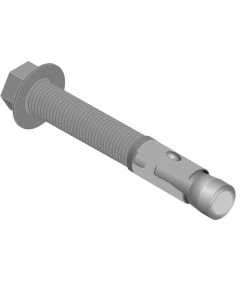
The practical answer in most finishing plants is zoning: galvanized racking in and around the wet process areas, standard coated racking in the dry warehouse, and structural pallet rack anywhere heavy baskets and tow tractors share space. Base plates and anchors deserve their own attention — the base is the wettest part of the structure and the part carrying the load. Our page on anchor bolts and base plates covers the hardware options.
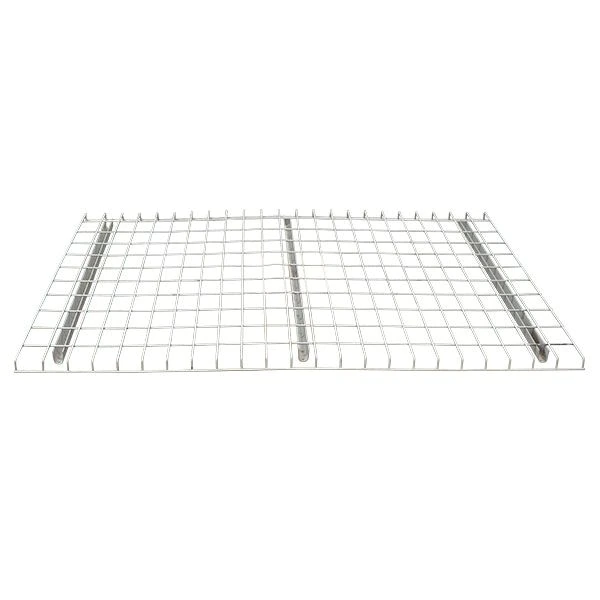
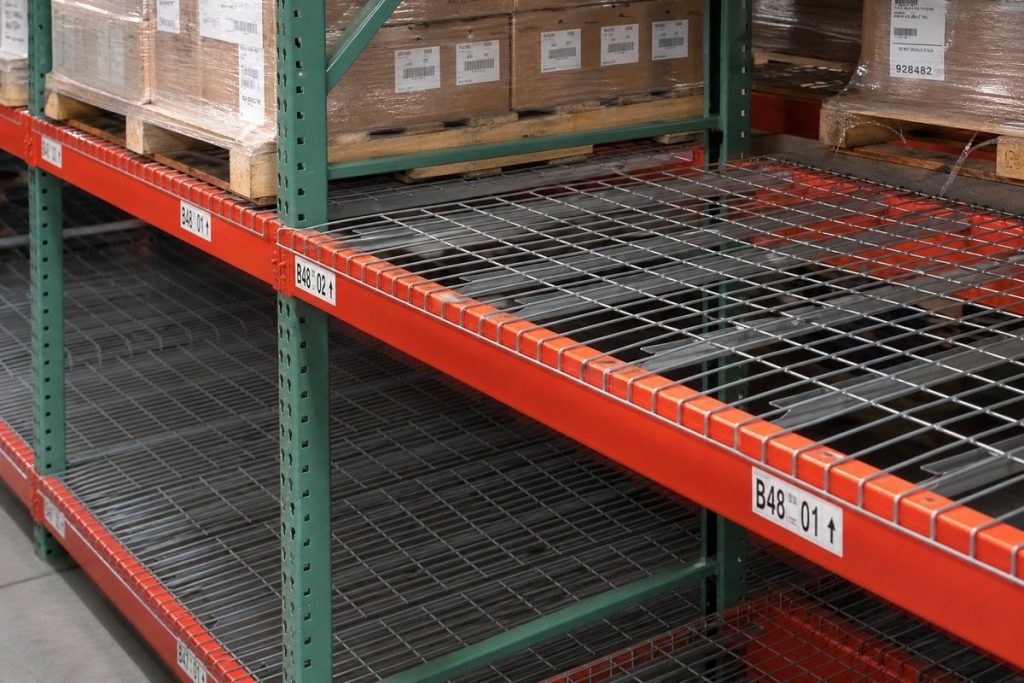
Decking follows the same logic. Wire decking drains and dries, which is usually an advantage here; solid panels hold liquid unless they are specified with drainage. Where drips are routine, decking that lets liquid pass to a contained floor is better than decking that ponds it on level two.
Racking for a wet or corrosive plant?
We specify galvanized and structural rack for wash-down and chemical environments, and we will say when a coating is not enough. See manufacturing pallet rack.
Storing baskets, part racks and totes
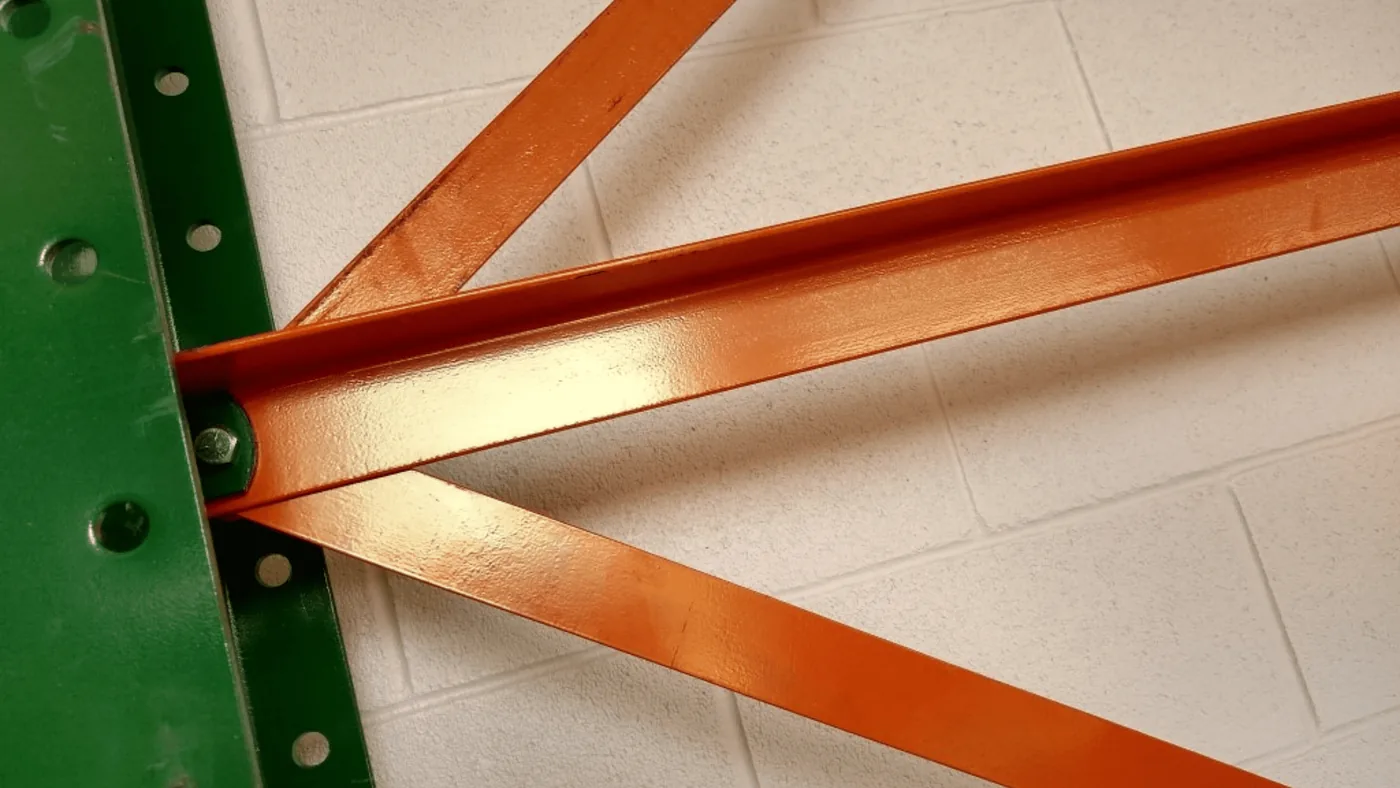
A finishing plant’s inventory is not tidy pallets of cartons. It is customer parts in baskets, barrels, plating racks, wire trays and returnable totes, moving in and out several times a week.
Store by container, not by product. Standardise on a small number of container footprints and pitch the beam levels to those footprints. A plant with five container types and one beam elevation wastes most of its cube.
Separate incoming, in-process and finished. Customer parts awaiting processing, parts between operations and finished parts awaiting shipment must not share bays. Mixing them is how unfinished work ships and how finished work gets re-processed.
Never nest finished parts under drips. Finished, coated parts should never be stored below in-process containers. That single rule eliminates a large share of rework in finishing plants.
Protect the finish. Beam-level surfaces, deck edges and load stops all touch finished parts. Smooth, undamaged decking and dividers matter more here than in a warehouse full of cartons.
Keep plating racks and fixtures off the floor. Fixtures are heavy, awkward, easily damaged and expensive. They belong on dedicated, load-rated levels or on cantilever arms, not leaning against a wall.
Process chemicals and containment
Finishing plants store concentrates, acids, caustics, solvents and waste. That storage sits under a different set of rules from the parts warehouse, and the racking has to enable compliance rather than obstruct it.
- Segregate by compatibility, physically. Acids, caustics, oxidizers and flammables get separate bays or runs — never vertically adjacent levels in the same bay, and never a shared containment sump or drainage path.
- Bulk containers stay low. Drums and IBC totes belong at floor level or on the lowest beam level, on containment pallets sized for the container above them.
- Containment before efficiency. If the largest container in a location failed, the liquid must land somewhere designed to hold it. See spill control and secondary containment.
- Keep waste separate and labelled, with its own containment and its own location addresses, so hazardous waste accumulation is auditable.
- Coordinate with fire protection. Storage height, flue spaces and sprinkler clearance are part of the rack layout, and changes to storage arrangement can change the fire protection basis for the room.
Hazard communication, labelling and safety data sheet availability are OSHA obligations regardless of the rack; environmental containment and waste handling are driven by EPA and state rules; the fire code adopted locally governs quantities and arrangement. The authority having jurisdiction decides — the racking’s job is to make the compliant arrangement the convenient one.
Capacity and layout around a process line
Two design constraints dominate a finishing plant layout, and neither appears in a general warehouse guide.
Design capacity from the densest container
A basket of small steel parts is one of the heaviest unit loads in any industry. Weigh a full one. Then check the manufacturer’s load table for the exact beam span and level spacing, remembering that beam ratings assume a uniformly distributed load and that frame capacity changes when levels are added or moved.
Keep the line clear
Storage placed for cube efficiency often blocks tank-line access, hoist paths, ventilation and emergency egress. Rack runs should be laid out from the process and safety requirements first, then optimised for capacity within what is left.
Short travel for heavy, wet loads
The heaviest and wettest movements should be the shortest. Racking for in-process containers belongs adjacent to the line, not across the building.
Leave room for inspection and cleaning
Base plates need to be visible and reachable. A rack run tight against a wall in a wet plant is a run whose corrosion nobody will see until it matters.
Our guide to pallet racking weight capacity covers how beam, frame and deck ratings interact, and pallet rack uprights explains why column gauge and bracing pattern, not beam size, usually set the ceiling.

Protection, code and inspection
Impact protection. Finishing plants run counterbalance trucks, tow tractors and carts through wet, sometimes slippery aisles. Column protectors, end-of-aisle guards, row spacers and bollards at corners and doorways are the cheapest insurance available: pallet rack guards and column protectors.
Anchoring and seismic design. Industrial steel storage racks are designed to ANSI MH16.1, published by the Rack Manufacturers Institute, and treated as non-building structures by the International Building Code. In seismic regions the base detail is governed by the seismic demand, and the anchors are part of the engineered design — see pallet rack seismic compliance. Corrosion at the base plate is therefore a seismic issue, not only a cosmetic one.
Inspection. A finishing plant needs a corrosion-specific inspection routine on top of the normal damage checks: base plates and anchors, the bottom 18 inches of every column, deck edges and bolted connections. Any loss of section at a base is a stop-work condition for that bay until it is assessed. Rack repair and inspection covers the method and the documentation.
Installation. Retrofitting racking into a live plant means working around tank lines, ventilation and hoists; installations are phased and each section is anchored and released before it is loaded. See pallet rack installation services.
Shop Pallet Rack Accessories Online
Protect and finish your pallet rack installation with these in-stock accessories, or request a quote for custom-sized rack, freight and volume pricing.

Metal finishing plant racking FAQs
Do you need galvanized pallet rack in a plating or finishing plant?
Where does corrosion attack racking first?
Is wire decking or solid decking better in a wet plant?
How should process chemicals be stored on rack?
Can corroded racking be repaired?
Does racking in a plant need engineering documentation?
Related pages
 Manufacturing Pallet RackRaw material, WIP and finished goods storage inside production plants.
 Anchor Bolts & Base PlatesBase plate and anchor selection, including seismic detailing.
 Wire DeckingDrainage, ratings and where solid panels are the wrong choice.
Utah pallet rack project: This case study supports our Utah pallet rack design and installation guide and, at the top level, our main pallet rack systems hub.
Racking for a wet, chemical or wash-down plant?
Tell us what your process atmosphere looks like and we will specify a structure that survives it.