
Pegasus Medical Storage Solutions
Plan Pegasus Medical storage around the supplies, people and replenishment routes in your healthcare facility. Compare modular baskets, storage racks, transport carts and workflow options with Material Handling USA.
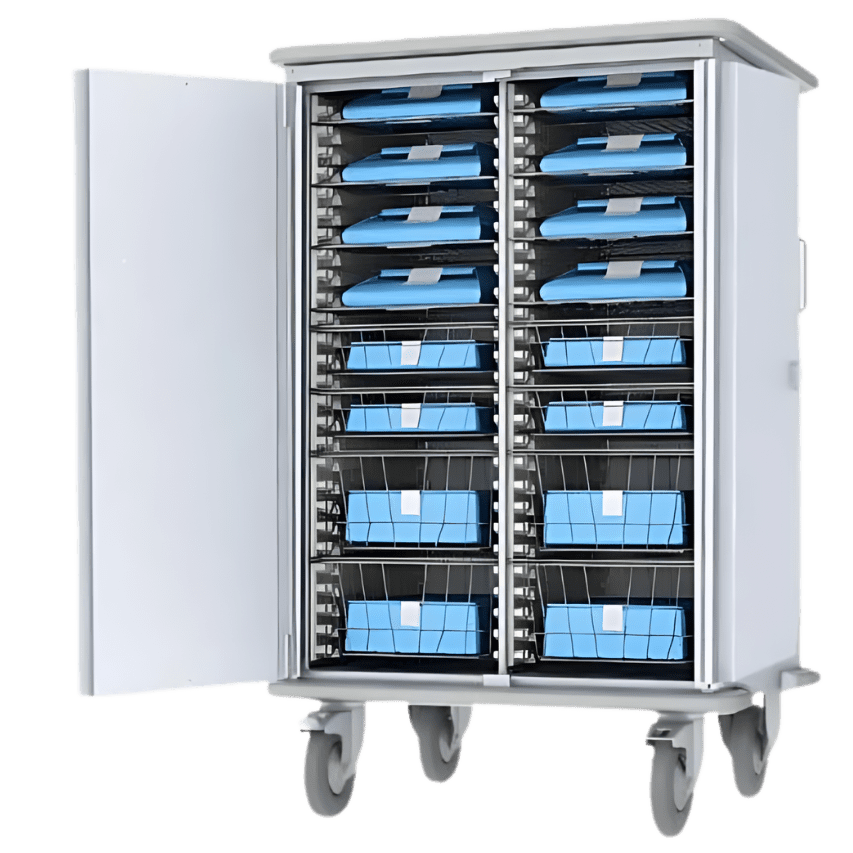
Start with the work the storage must support
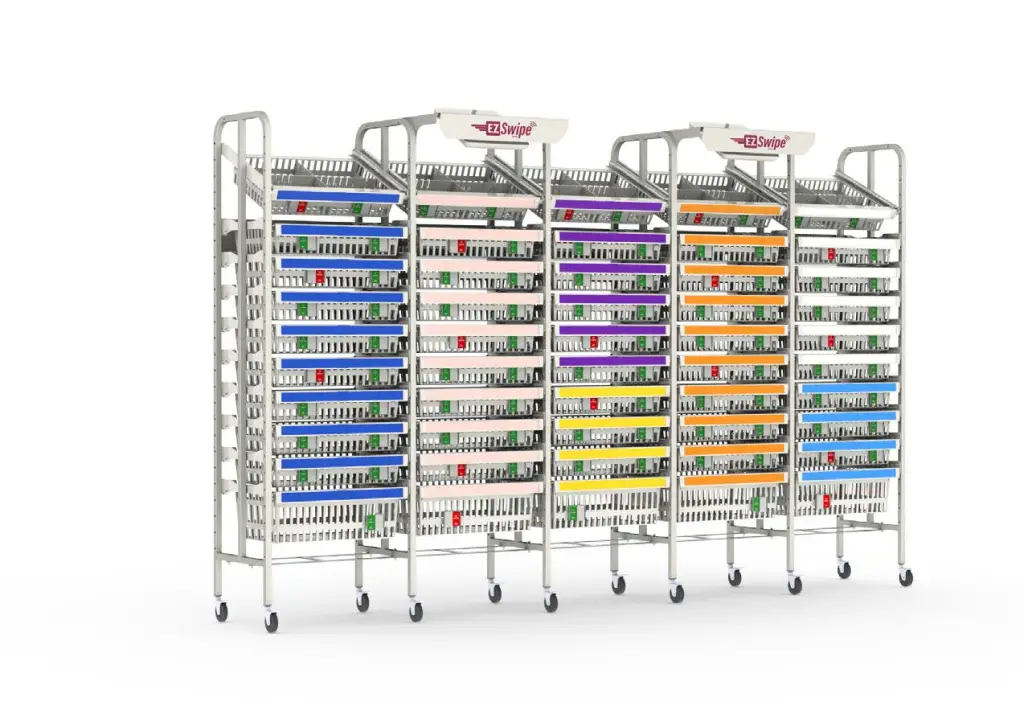
Pegasus Medical storage solutions combine equipment selection with a way to organize supplies. A room can contain plenty of shelves and still be difficult to use when packages lack consistent locations, reserve stock hides behind active stock, or replenishment staff cannot tell what needs attention. The starting point is the movement of material through the department.
Map where supplies arrive, where they wait, who retrieves them and how an empty location is reported. Separate bulk reserve storage from the supplies used during a normal shift. Identify items that need controlled access or a facility-approved handling process. These distinctions help determine whether a rack, cabinet or cart belongs at each point.
Material Handling USA can help frame the equipment request around those requirements. Bring the supply-chain team and the people using the room into the same discussion so that the proposed storage reflects both stocking and retrieval.
Use modular trays and baskets deliberately
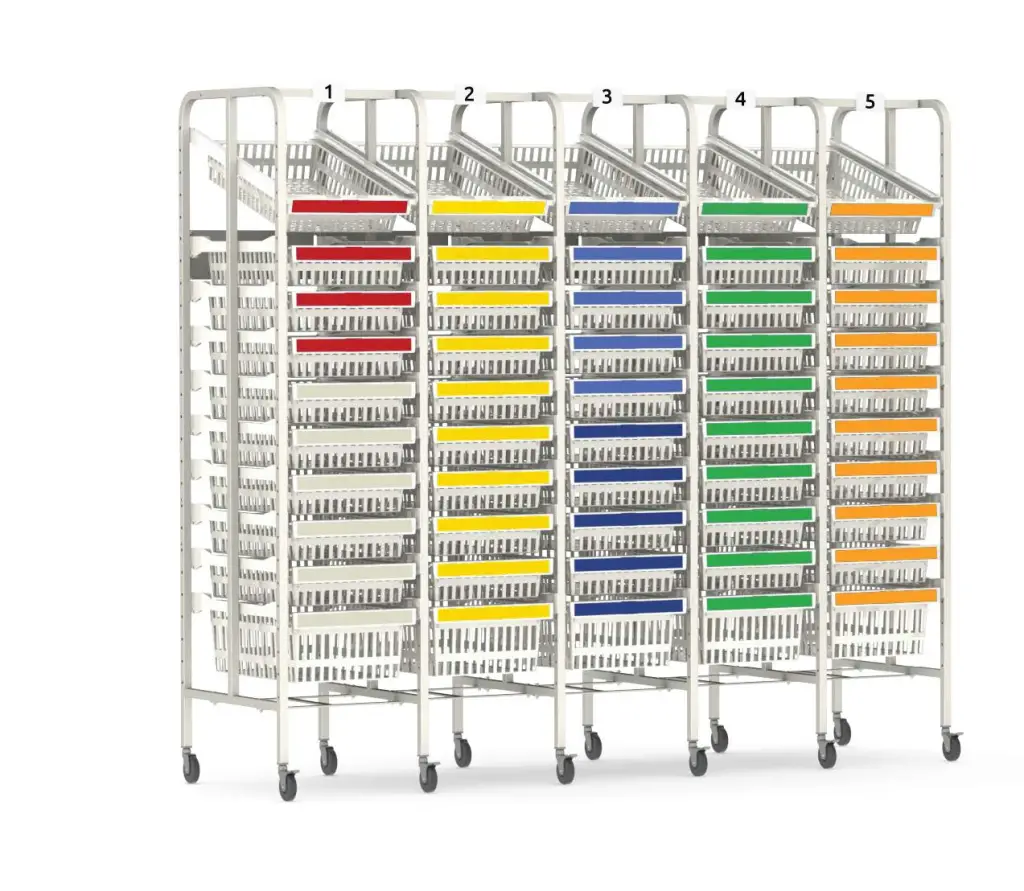
Pegasus offers an ISO 6040 modular system of trays and baskets. Its published range includes 60 × 40 cm and 30 × 40 cm formats in several heights. Solid trays and ventilated baskets serve different arrangements; divider compatibility depends on the selected module. Confirm the exact module and supporting hardware together.
Start with representative packages instead of allocating one identical bin to every item. A small, frequently used consumable may need a divided location. A large wrapped item may need an unobstructed tray. Check the space needed to grasp a package without bending its contents or disturbing neighboring stock.
- Record package dimensions and the quantity intended for each location.
- Identify items that cannot be stacked or compressed.
- Allow room for identification that remains readable when the bin is full.
- Check how staff will remove the module for restocking or cleaning.
Keep the resulting module schedule with the room layout. It becomes a useful reference when comparing proposals and receiving the equipment.
Choose open storage and enclosed storage by location
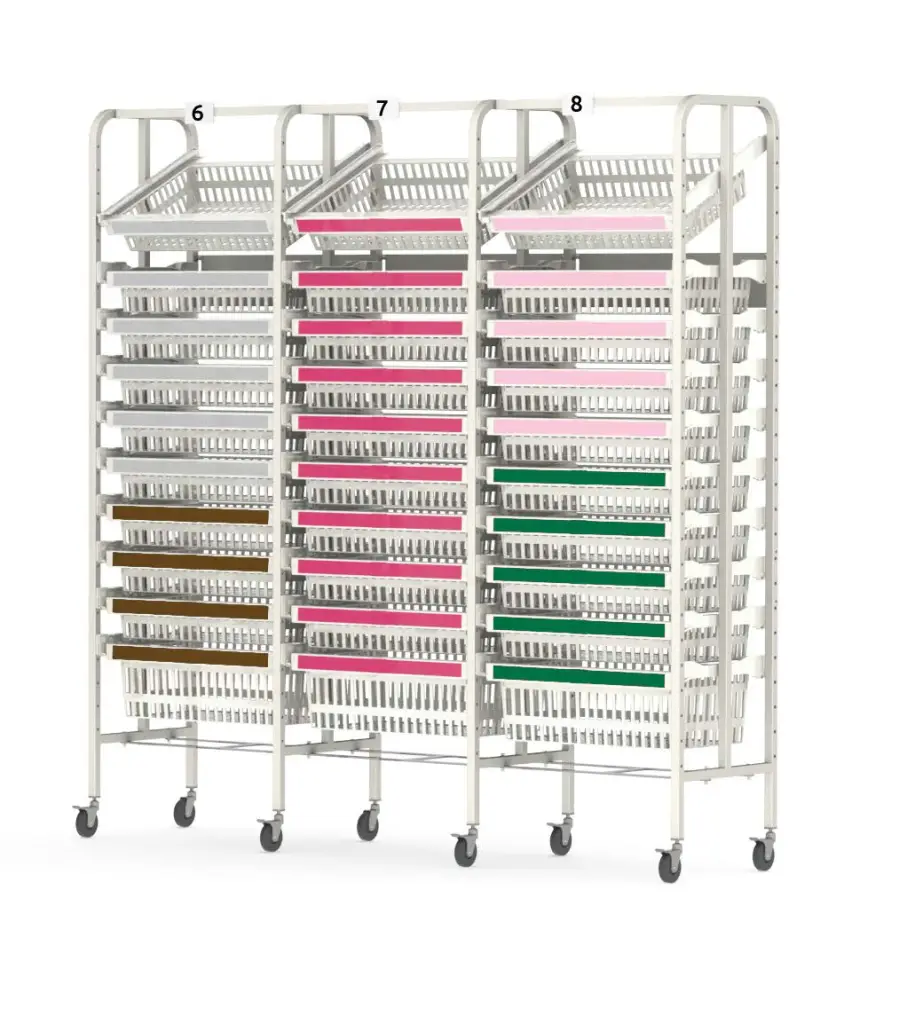
Open racks give staff a direct view of the stored material. An enclosed arrangement introduces doors or other closures that affect access, parking and the handling sequence. Neither approach is automatically correct for every healthcare space. The facility should determine where each arrangement is appropriate for its contents and procedures.
Review the location during a busy period. Note whether people queue at one rack, whether a supply cart blocks another user, and whether high-use items require repeated bending or reaching. These observations are more useful than selecting storage solely from its nominal capacity.
Point-of-use stock
Prioritize clear identification and convenient retrieval of routinely needed packages.
Reserve storage
Plan replenishment quantities, stock rotation and space for incoming deliveries.
Controlled locations
Define access responsibilities and have the facility review the proposed enclosure.
Plan transport carts as part of the route
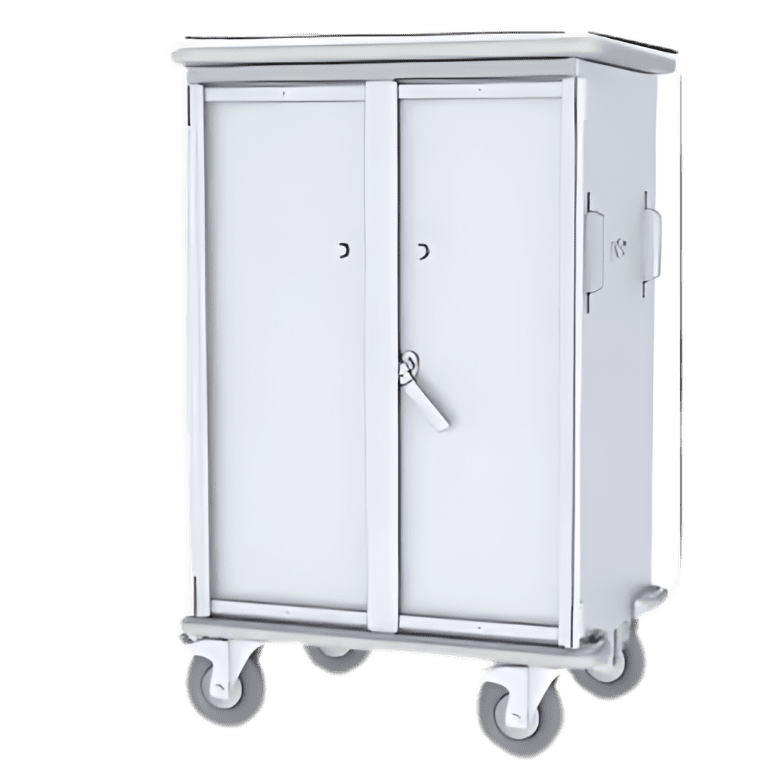
A cart is a moving workstation within the supply process. Measure the complete route, including doors, turns, elevators and the place where the cart waits while staff unload it. A cart that fits inside the supply room may still be difficult to maneuver through the approach corridor.
Describe what travels on each trip and whether the load changes during the day. Include package size, total intended load and the need for separate locations within the cart. Ask the supplier to identify the suitable cart, caster arrangement and applicable loading instructions. A photograph does not establish a capacity or a compatible accessory package.
Decide where empty carts return and who prepares them for reuse. Parking, cleaning and charging requirements, if powered accessories are specified, should be included in the layout. Keep the route clear of required exits and facility equipment. Discuss a route-specific equipment plan through our project inquiry form or call (800) 326-4403.
Understand the No-Touch handling concept
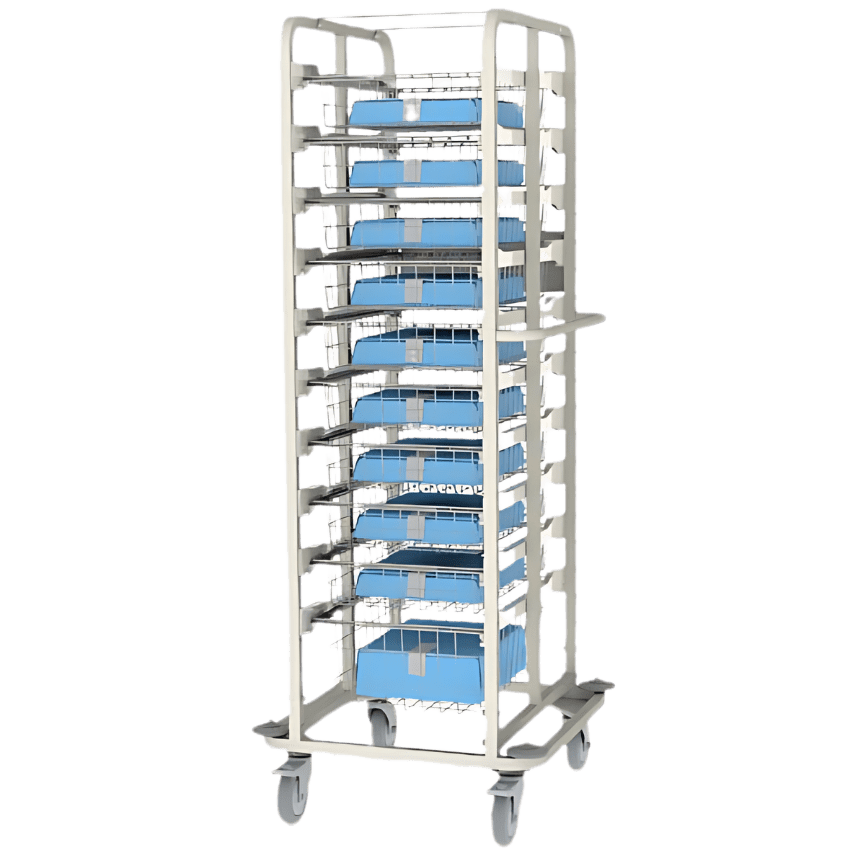
Pegasus describes No-Touch as a method using handled shelves or baskets to carry wrapped instrument packs through processing, storage and transport. Staff handle the carrier rather than repeatedly lifting the wrapped pack itself. The concept concerns package handling; it does not eliminate human work or guarantee sterility.
Have sterile-processing personnel review the complete intended sequence before selecting components. Identify the point where a pack enters its carrier, the equipment it passes through, its storage location and how it is presented for use. Confirm compatibility with the facility’s validated processes and the instructions for the actual instruments, packaging and carrier.
Ask users to review a representative arrangement. They should be able to identify contents and handle the carrier without forcing a pack into an unsuitable space. Document the approved procedure and the responsibility for checking damaged packaging. Storage furniture is one element of that procedure, not a replacement for it.
Coordinate cleaning and material selection
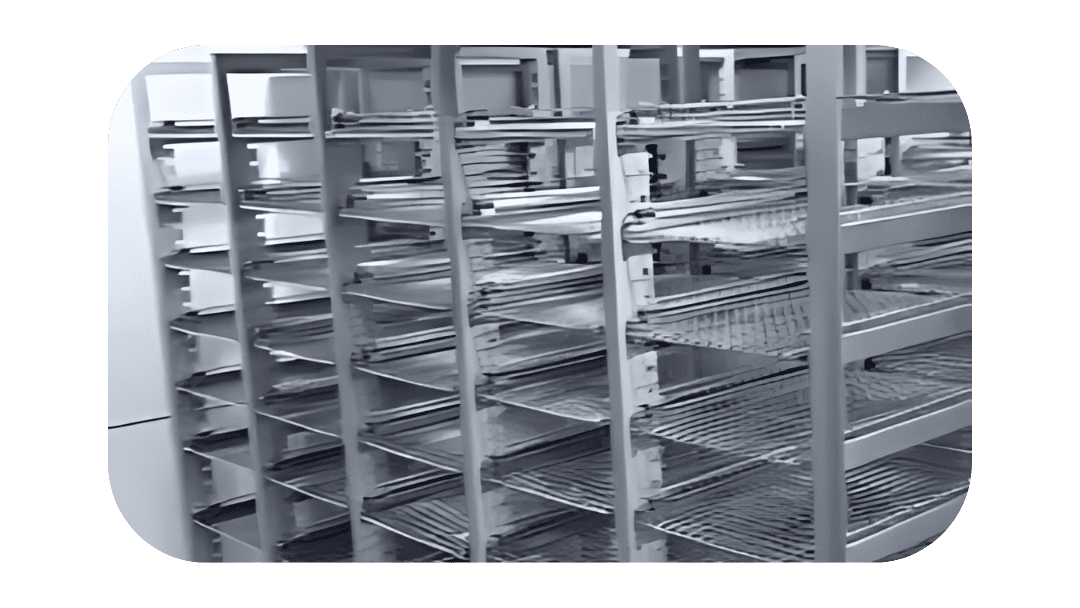
Different components can have different cleaning limitations. A basket, divider, caster, label holder and cabinet surface should not be assumed to tolerate the same chemicals or processing conditions. Request instructions for the specific items being quoted and have the facility’s responsible team check them against the intended procedure.
Also consider how the equipment will be accessed for cleaning. A tightly packed room can make an otherwise straightforward task difficult. Decide where supplies will be held while a rack is being serviced and how cleaned equipment returns to its assigned location.
Maintain a component record rather than relying on a general product-family description. Include the module material, accessories, replacement parts and manufacturer instructions. If the facility changes its cleaning process later, this record makes it easier to check compatibility before exposing the equipment to a new product or cycle.
Make replenishment signals actionable

EZSwipe is Pegasus Medical’s RFID Kanban replenishment approach. In the described two-bin workflow, users take stock from the front bin. The person taking its last item moves a slider to signal replenishment while reserve stock remains behind. The supply technician rotates remaining stock forward, restocks the rear and resets the signal.
The installation still needs an operating plan. Decide who receives the signal, how an unresolved request is escalated and how staff report a mismatch between the label and the contents. A signal has value only when someone is responsible for responding.
Set quantities using the facility’s demand and replenishment experience. Review supply interruptions, unusual usage and the time required to deliver replacement stock. Do not assume that an RFID replenishment signal provides item-level counting, expiration monitoring or a guarantee against stockouts. For a more detailed planning discussion, see our RFID medical inventory alert system guide.
Build a location map that staff can maintain
Give each location a stable identity before filling the room. The map should connect the physical position to the approved item and stocking quantity. Use color as an additional cue rather than the only source of information; people still need to distinguish similar packages and identify a location when colors are difficult to interpret.
Establish a controlled way to change the map. A temporary substitution can become a persistent error when a new item is placed behind an old label. Assign responsibility for updating the physical location and any associated inventory record together.
During the first weeks, collect practical feedback. Look for locations that repeatedly empty early, bins that remain overfilled and items staff cannot find. Investigate the cause before adding more storage. The problem may be a stocking quantity, delivery schedule or item-assignment issue.
Prepare an equipment schedule and installation scope
A useful quotation separates the storage equipment from the work needed to make it operational. Provide the same scope to everyone reviewing the project so that omitted accessories or installation tasks do not distort the comparison.
| Provide | Ask the proposal to identify |
|---|---|
| Room and route measurements | Equipment footprints and operating clearances |
| Representative supplies and quantities | Modules, dividers and location capacities |
| Access and cleaning requirements | Applicable materials, closures and instructions |
| Replenishment workflow | Included hardware, software scope and support responsibilities |
Confirm delivery access, assembly responsibilities and the sequence for moving existing supplies. Keep old and new location maps available during the transition. Schedule the move with the department so that active supplies remain accessible and temporary storage has an identified owner.
Test the arrangement before expanding it
A pilot can reveal issues that a drawing misses. Select representative supplies, including awkward packages and frequently retrieved items. Ask regular users to stock, retrieve and return them using the proposed arrangement. Observe how the process works rather than only asking whether the furniture looks appropriate.
- Compare the delivered components with the approved equipment schedule.
- Check package fit, label visibility and access to each intended location.
- Demonstrate cart operation and the applicable manufacturer instructions.
- Run a replenishment request through the agreed response process.
- Record corrections and assign responsibility before extending the layout.
Measure the pilot against the specific problem that prompted the project. That might be unclear stock locations, congested replenishment access or inconsistent reserve quantities. Avoid promising a universal time saving before the facility has evidence from its own workflow.
Account for shared rooms and different shifts
A supply location may serve more than one team. Ask each shift to describe when it enters the room, what it carries and which locations it uses most often. A layout reviewed only during a quiet daytime period can miss a delivery arriving during a shift change or a cart parked overnight.
Agree on shared responsibilities before the move. Identify who reports a damaged bin, who approves a new item location and who resolves an unfilled replenishment request. Keep those responsibilities with the room’s operating instructions. Consistent ownership helps the storage arrangement remain usable as staff, schedules and supply selections change.
Frequently asked questions
What can Pegasus Medical storage be used for?
The product family supports organized healthcare supply storage and transport through modular trays, baskets, racks and carts. Selection depends on the contents, the room and the facility’s handling requirements. Describe the application before choosing individual components.
Are all ISO baskets interchangeable?
Do not assume complete interchangeability from the ISO name alone. Confirm the module dimensions, runners, stops, dividers and other accessories with the selected equipment. Use the quoted component schedule to check what is actually included.
Does No-Touch guarantee that instrument packs remain sterile?
No storage or transport arrangement alone establishes sterility. No-Touch addresses handling through carriers for wrapped packs. The facility must review compatibility with its validated processing and handling procedures and follow the relevant instructions.
Is EZSwipe a disinfecting system?
No. EZSwipe is an RFID Kanban replenishment system. Its slider signals a need to replenish a supply location within a defined workflow. Cleaning and disinfection remain separate facility processes.
How should we set the quantity in each bin?
Use the facility’s consumption and replenishment experience, including delivery time and reserve requirements. Review those quantities after a pilot. Package size, shelf life and substitution rules also affect the practical stocking arrangement.
Can we reuse existing racks or carts?
Possibly, but compatibility must be checked rather than assumed. Provide the existing manufacturer, model, dimensions and photographs. Ask the supplier to identify which components can be retained and where a replacement is necessary.
What information is needed for a quote?
Send room dimensions, transport routes, representative supplies, quantities and any access or cleaning requirements. Include the intended replenishment process and installation timing. Call (800) 326-4403 to discuss the scope with Material Handling USA.
Plan storage that supports your supply workflow
Share your room plan, representative supplies and replenishment requirements. We can help turn them into a clear Pegasus Medical equipment inquiry.