High-density mobile shelving has been reported at about $2.30 per square foot, compared with $1.13 for open stationary shelving and $12.20 for mechanized vertical storage. If you're trying to decide whether an Aurora system fits your space, that gap matters more than the catalog price alone.
Facility teams usually run into this question when a room is already full, a renovation is on the calendar, or a new space has to be fitted out without wasting square footage. The core issue is not just what the system costs, but what it does to the footprint, the install scope, and the long-term value of the room.
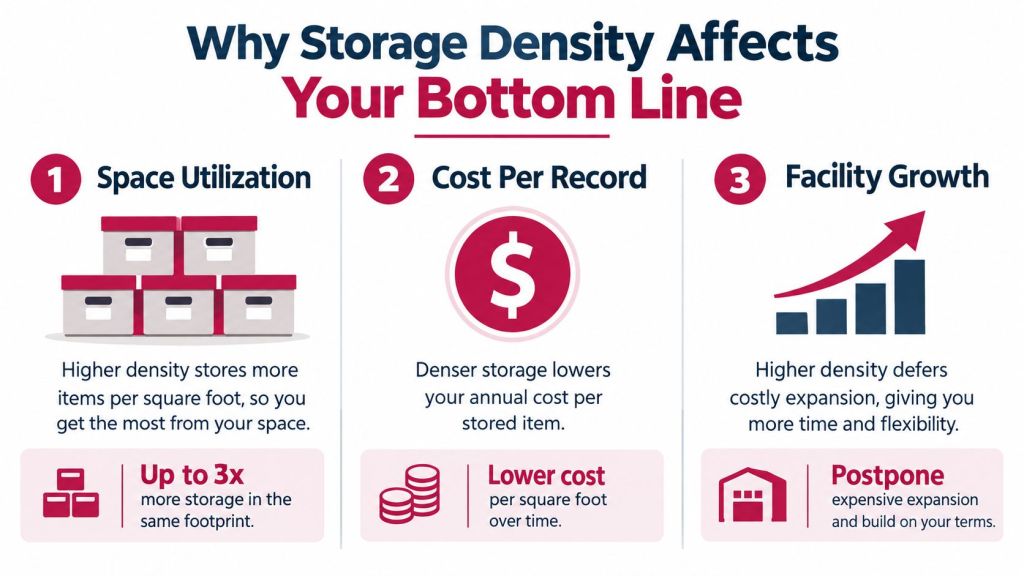
Understanding Why Storage Density Affects Your Bottom Line
A move into a larger space sounds simple until the numbers show up in the budget. A lab manager, stockroom lead, or warehouse planner may compare shelving quotes and see a modest price spread, then realize the difference becomes much larger once the room, aisles, and installation work are all counted together.
Cost per square foot only works if the footprint is used well
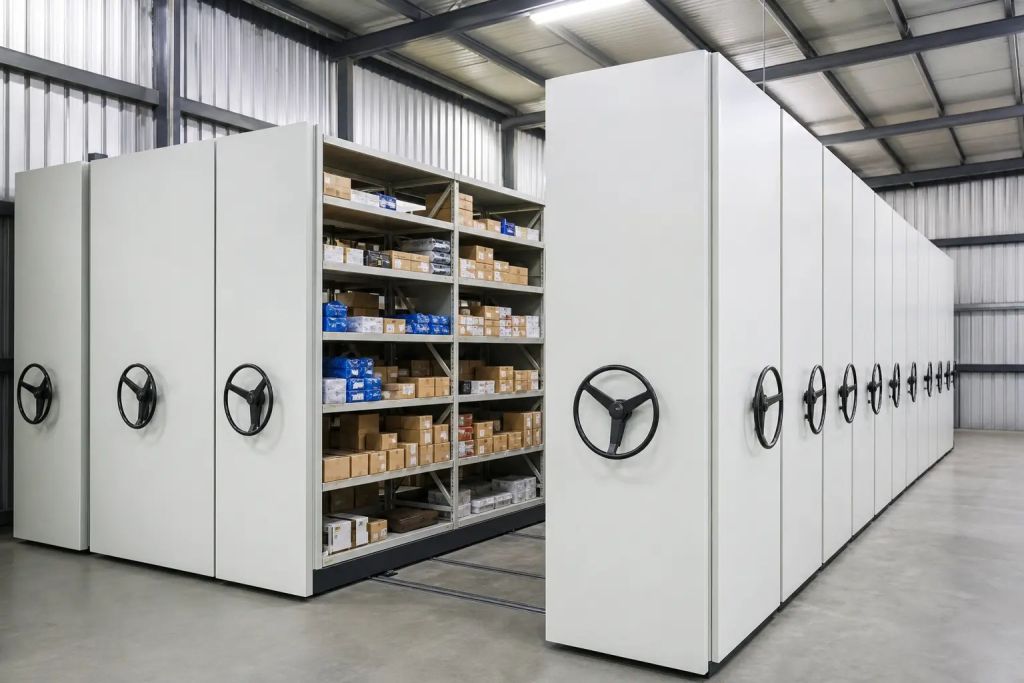
That is why cost per square foot is useful, even though it does not tell the whole story. Mobile shelving changes the math by compacting storage into a tighter footprint and reducing fixed aisle space, which can make one room function like a much larger one. In published comparisons, high-density mobile shelving sits in the middle of the storage-cost spectrum, above basic shelving but far below advanced vertical automation Southwest Solutions and Bradford Systems.
For buyers, that matters most when the current room is close to capacity. Instead of adding square footage, teams often try to recover more usable storage from the space they already pay for. The value shows up in avoided expansion, cleaner layout planning, and fewer compromises in the rest of the facility.
Practical rule: the cheapest rack quote is not always the cheapest room to operate. If the system leaves too much dead space, you may pay for floor area you never really use.
Why the metric matters during a real project
A project team rarely buys shelving in isolation. The room has columns, doors, power, clearances, and workflow paths that all shape what can be installed. That is why mobile shelving pricing gets more useful when it is tied to the room, not just the catalog.
Published guidance often discusses mobile shelving budgets in linear-foot or per-square-foot terms, but those figures swing widely with carriage count, rail runs, shelving type, floor preparation and installation scope, so treat any published range as a starting point rather than a quote. Our mobile shelving cost and budget drivers guide walks through what actually moves the number, and the mobile shelving overview explains how the systems work. The point is simple: a mobile system can be a lot easier to justify when it helps avoid new floor area.
How Aurora Mobile Shelving Pricing Compares to Other Systems
A facility team pricing Aurora mobile shelving often starts with the equipment quote and then discovers the comparison is broader. The room layout, carriage count, hardware, power, and installation work all shape the final number, and they shape the value too.
Where mobile shelving sits in the cost stack
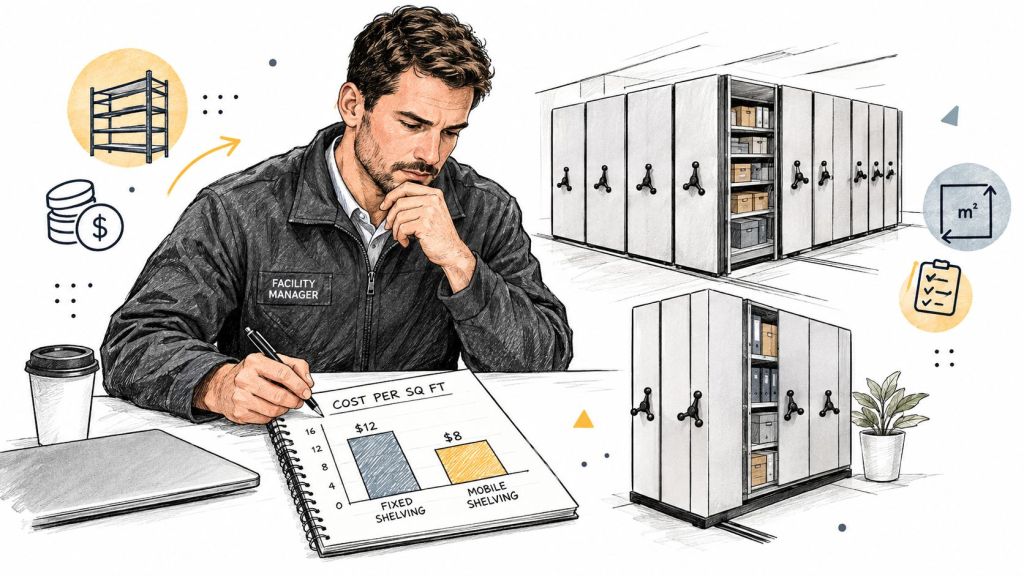
Published comparison data places high-density mobile storage at $2.30 per square foot, compared with $1.13 for open stationary shelving, $2.93 for sliding shelf units, and $12.20 for mechanized vertical storage Southwest Solutions. Another comparison lists high-density mobile storage at $2.30, sliding shelf units at $2.93, rotary storage at $6.44, and 4-drawer vertical files at $5.61 per square foot Bradford Systems.
That puts mobile shelving in the middle of the field. It costs more than basic static shelving, yet it often stays well below automated alternatives. For buyers, that usually means the question is not which system has the lowest sticker price, but which one gives the room the best usable density.
Why pricing is quoted in different ways
Suppliers do not all price the same way. Some lead with square feet, others with linear feet, because carriage length, shelf count, and install scope often drive the quote more than raw room area. That is also why a manufacturer example for a 10 by 12 room shows pricing at $23,332.40 and $27,789.44 for a 750 lb load per foot low-profile configuration Aurora Storage 10 by 12 room example.
For planning, the room-level math matters. A useful check is to compare the shelving quote against tenant improvement cost benchmarks so the fit-out work, labor, and space constraints are not treated as afterthoughts.
What the published ranges really tell you
Aurora pricing only makes sense when the quote shows what is included. Equipment alone can make the per-square-foot number look attractive, while engineering, electrical work, controls, or security features raise the installed cost. Those additions can still be justified if they solve access, workflow, or protection issues a simpler setup would leave unresolved.
For buyers who want to review the product details directly, the Aurora mobile shelving specifications help frame the pricing discussion around the actual system being installed.
In practice, buyers get the best comparison when they ask one question: what does this system do to the usable room, not just the invoice?
Mobile Shelving Configuration Options and Their Cost Implications
| Configuration Factor | Impact on Cost | Typical Range | Considerations |
|---|---|---|---|
| Drive type | Manual systems usually keep upfront cost lower, powered systems add hardware and controls | Mechanical systems at about $35 to $40 per cubic foot, powered systems at about $45 to $60 per cubic foot | Choose based on how often users move carriages and how much effort the team can tolerate |
| Carriage count | More carriages raise project complexity and installation scope | Project specific | Room size, aisle layout, and access needs decide how many are practical |
| Load rating | Higher load ratings usually increase equipment strength and cost | Project specific | Match the rating to the heaviest stored items, not the average item |
| Controls and security | Adds to equipment and integration cost | Project specific | Useful where access control, auditability, or safety features matter |
| Installation complexity | Can change the total installed price more than the base rack hardware | Project specific | Floor prep, power, and site conditions can shift the final number quickly |
What changes the per-square-foot result
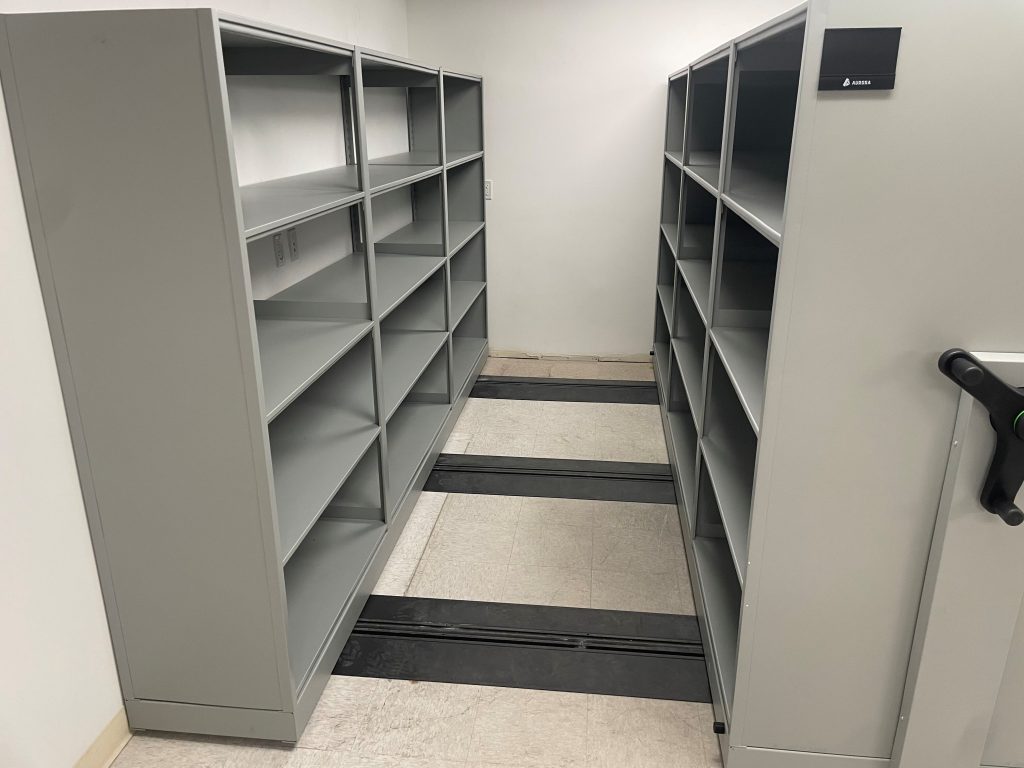
Mobile shelving removes fixed aisles, and that is the source of its economic value. Industry guidance says the same footprint can typically recover about 40% to 50% of usable floor area when fixed aisles disappear DSI Direct. That means the cost per stored item often improves as density increases, even if the upfront quote is higher than basic shelving.
Smaller system quotes can look tempting, but they don't always reflect the job properly. A manufacturer list-price example in another pricing guide shows complete mobile systems ranging from about $3,900 for a small rivet-rack mobile system to about $14,500 for a large one, while broader deployments often land around $50,000 to $150,000 Reynolds Business Systems. That spread reflects the practical decisions buyers face, not a single shelf price.
The project is usually cheaper when the design fits the room the first time. Rework, electrical changes, and structural surprises are what push a good concept into a costly change order.
Five Essential Factors for Evaluating Mobile Storage Value
1. Available space
The room sets the ceiling on what the system can do. Measure wall length, clear height, doorway access, floor conditions, and any fixed obstacles before comparing products. A system that looks attractive on paper can fail if the room cannot support the carriage layout or the access path.
2. Budget
Budget is not just the purchase number. It also includes installation, site prep, controls, and any added work the facility needs before the system can go in. The most useful budget discussion is a total project discussion, not a rack-only comparison.
3. Required capacity or throughput
A lab that needs controlled access moves differently than a warehouse picking high-turn items. If people need to open the same section all day, a dense system that slows access can become frustrating. If the goal is long-term archiving or overflow stock, density usually matters more than speed.
4. Compliance requirements
Storage rules can be driven by records retention, security, safety, or environmental needs. For some facilities, that means access control matters more than raw cost. For others, cleanability or document handling takes priority.
5. Future flexibility
A system that works today but can't adapt later may create a second project sooner than expected. If the facility may change product mix, staffing, or room use, ask how easy it is to reconfigure the layout. That question matters just as much as the initial price.
For buyers comparing room types, it can help to think about how storage for business assets and data is handled in other commercial settings. The planning habit is the same, match access, protection, and density to what the business stores.
Material Handling USA also provides planning support through its mobile shelving budget drivers guide, which is useful when you're sorting out which project variables are likely to move the price.
A simple ranking method
- Rank the space problem first. If floor area is tight, density becomes the top goal.
- Rank the access problem second. If the team needs fast daily access, ease of use matters more.
- Rank compliance third. If the space holds sensitive items, security and control move up.
- Rank flexibility fourth. If the space is likely to change, design for reconfiguration.
- Rank price last. It still matters, but only after the operating requirements are clear.
Common Misconceptions About Mobile Shelving Costs
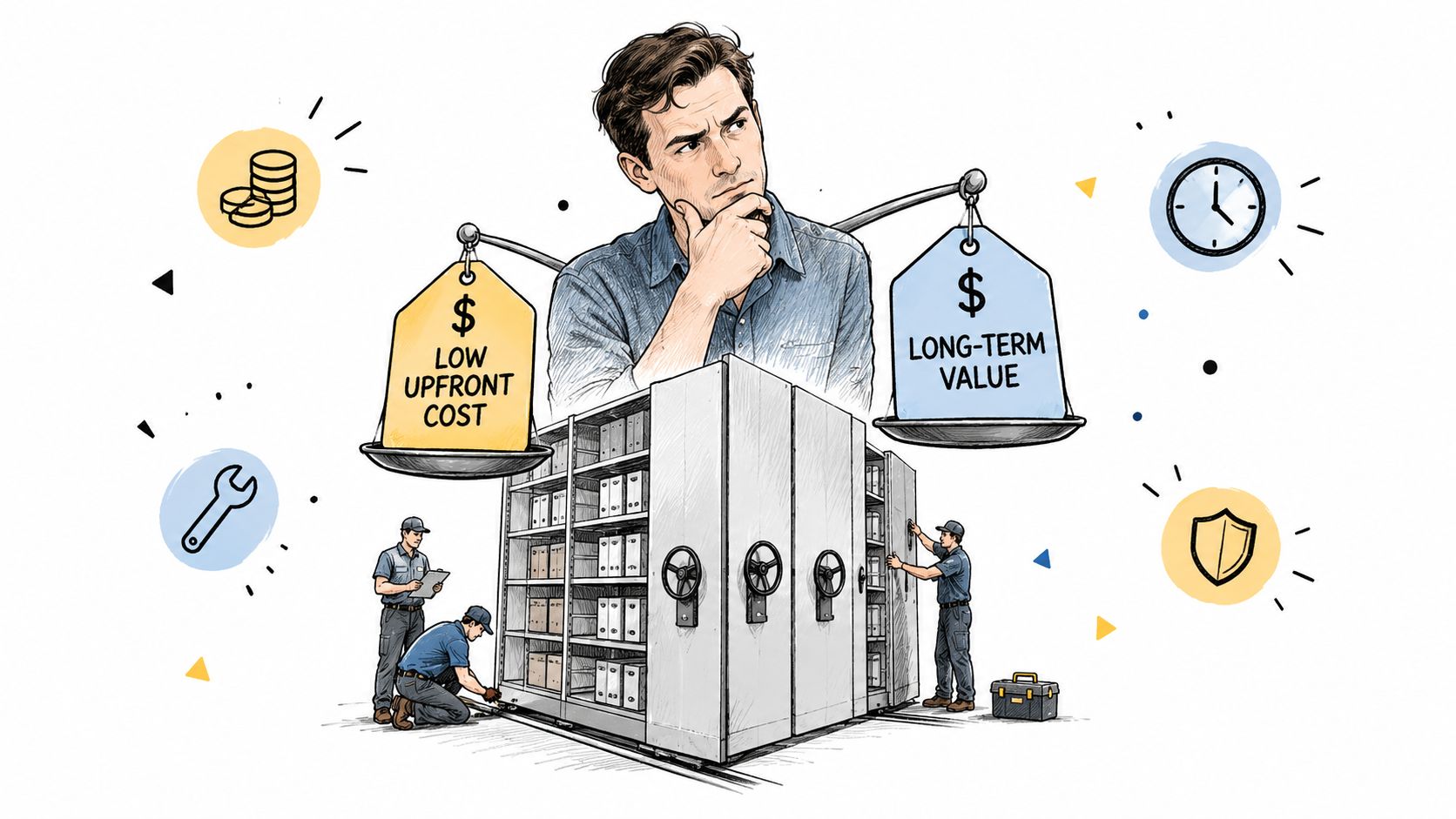
A low upfront quote can be misleading. Buyers often compare equipment prices and miss the actual cost drivers, such as installation complexity, floor work, electrical needs, and the effort required to keep the system usable over time.
The cheapest system is not always the least expensive
A basic system can win on invoice price and lose on everything else. If it needs more aisle space, causes workflow friction, or creates maintenance headaches, the true cost rises after install. That is why a slightly higher-cost system can end up cheaper over the life of the room.
Hidden costs usually show up in the site work
Some of the biggest surprises are not in the rack itself. They show up in the floor, the power, the clearance issues, or the coordination needed to get the system installed without disrupting operations. Once those items are added, the actual project number often looks different from the first quote.
A stronger vendor conversation focuses on service life, not just delivery day. Warranty coverage, support availability, and reconfiguration help all affect what the system costs over time. Buyers who ask those questions early usually avoid the kind of budget drift that leads to late project stress.
Planning Your Aurora Mobile Shelving Investment
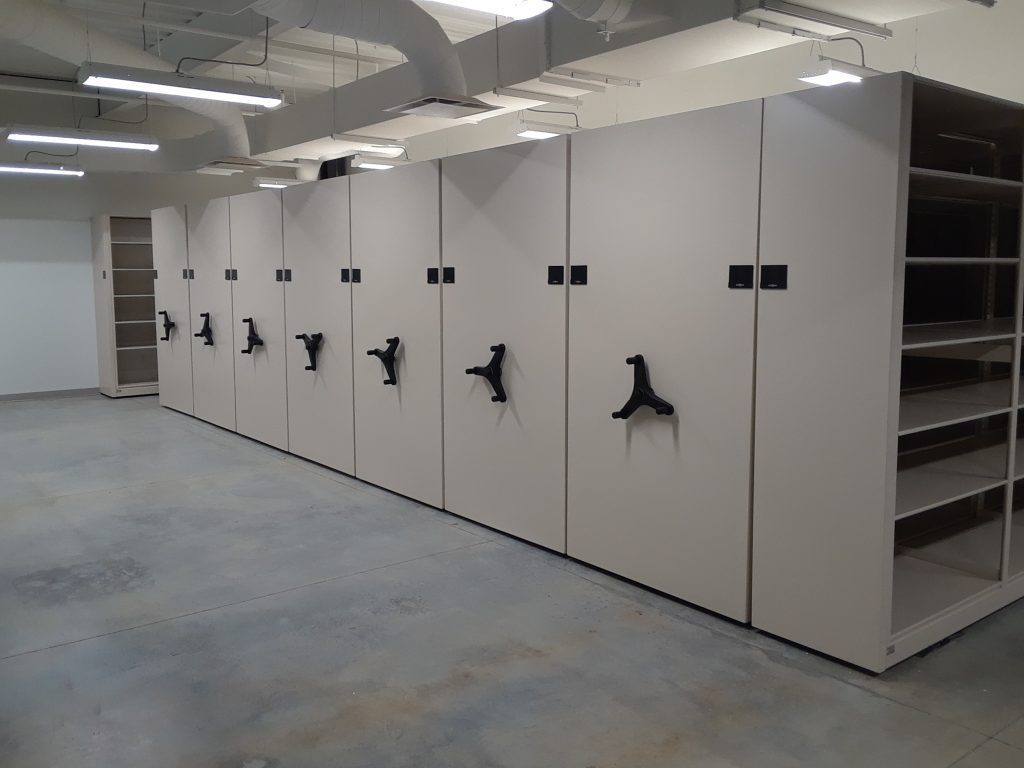
A solid purchase starts with a clean room sketch, not a catalog page. Gather the room dimensions, ceiling height, door locations, floor limits, load needs, and any compliance requirements before asking for pricing. That lets vendors quote a system that matches the space instead of guessing at it.
What to bring to the first vendor conversation
- Room measurements: include usable length, width, and any fixed obstructions.
- Storage profile: note what the system will hold, how often it's accessed, and how heavy the stored material is.
- Operational priorities: decide whether density, speed, security, or flexibility matters most.
- Installation constraints: identify anything that could affect the schedule, such as building access or site work.
- Future needs: mention whether the room may change later so the layout can account for that.
If you want help turning those inputs into a layout, the mobile shelving planner is a practical starting point for organizing a project before you request quotes.
What good planning changes
Good planning reduces the risk of expensive revisions later. It also makes it easier to compare Aurora with other storage options on the same basis, because each quote is tied to the same room, the same access pattern, and the same storage goal. That is where buyers usually find the best balance of price and performance.
For many teams, the most valuable part of the process is seeing how the layout will work before anything is ordered. Material Handling USA can provide free layouts and designs with no obligation, which helps buyers judge density, access, and install scope before they commit to a direction.
Frequently Asked Questions About Aurora Mobile Shelving Cost
What does Aurora mobile shelving cost per square foot?
Published comparisons put high-density mobile shelving at about $2.30 per square foot, compared with $1.13 for open stationary shelving and $12.20 for mechanized vertical storage. Your actual number depends on drive type, load rating, controls, and installation scope, so treat the per-square-foot figure as a starting reference, not a final quote.
Is mobile shelving cheaper than adding square footage to a building?
It often is, because the comparison is not equipment against equipment, it is equipment against construction. Commercial construction is commonly estimated at $100 to $200 per square foot in published guidance, so recovering usable storage from an existing room can cost less than building or leasing more space.
What is the difference between manual and powered Aurora systems in cost?
Manual mechanical systems typically run about $35 to $40 per cubic foot, while powered systems run about $45 to $60 per cubic foot because of the added hardware and controls. The right choice depends on how often the carriages move and how much effort your team can tolerate, not just the price gap.
Does the quoted price include installation?
Not always, and that is the most common source of budget surprises. Ask any vendor to break the quote into equipment, delivery, and installation, and to call out floor prep, electrical work, and controls separately so you can compare quotes on the same basis.
How much floor space can mobile shelving actually recover?
Industry guidance suggests the same footprint can typically recover about 40% to 50% of usable floor area once fixed aisles are removed. The real number for your room depends on the current aisle layout and how the carriages are sized to fit it.
What besides the equipment price changes the total project cost?
Site work is usually the bigger variable. Floor leveling, electrical runs for powered systems, security or access controls, and any structural changes can move the installed price more than the base rack hardware does.
How do I get an accurate quote instead of a rough estimate?
Bring room measurements, a description of what you are storing, how often it needs to be accessed, and any compliance requirements to the first conversation. The mobile shelving planner is a practical way to organize those inputs before you request pricing.
Is a lower-priced system always the better deal?
Not necessarily. A basic system with a lower invoice price can cost more over time if it needs extra aisle space, slows down daily access, or creates maintenance issues. Compare systems on total cost of ownership, not just the sticker price.
Material Handling USA helps buyers compare Aurora mobile shelving against other storage options with practical layout guidance, free quotes, and design support for real facilities. If you're evaluating Aurora mobile shelving cost per square foot, visit Material Handling USA, request a quote, or call (800) 326-4403 to start a layout review that fits your room and your budget.
Design it yourself, then get a quote
Use our free online design tools to configure exactly what this article describes, then send the configuration to our team for pricing: