
Museum Stanchions and Gallery Barriers for Exhibits, Admissions and Events
A museum barrier has two jobs that pull in different directions: keep visitors a safe distance from objects that cannot be replaced, and stay quiet enough that nobody notices it in front of the art. This guide covers low display barriers for paintings and objects, post and rope for period rooms, admissions and special-exhibit queues, signs and after-hours events, with Visiontron equipment and live prices.
Gallery, exhibit and admissions layouts · sales@mh-usa.com
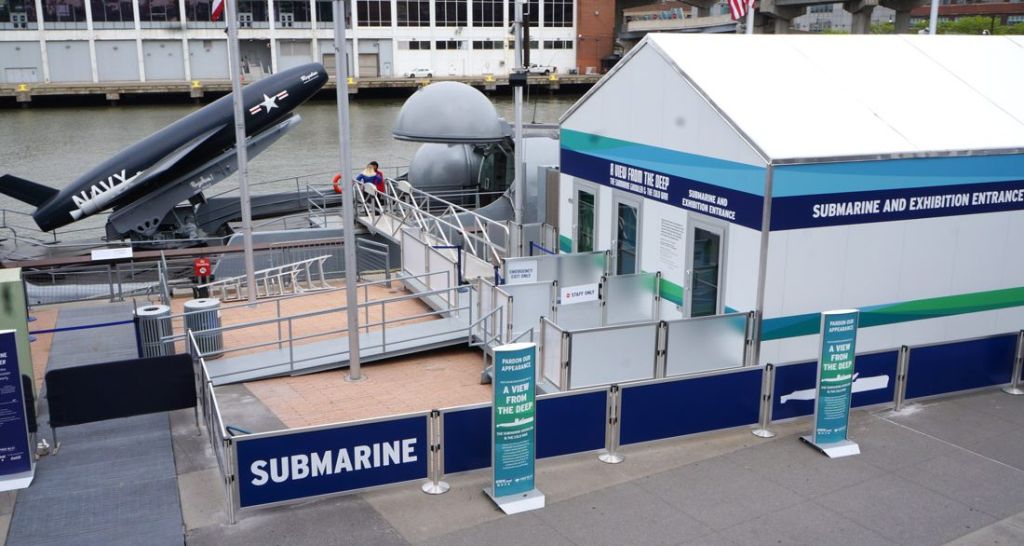
23 in
Mini Display museum post height
2–3 ft
Typical set-back from a wall of art
5 zones
Galleries, rooms, admissions, cafés, events
Rope or belt
Match the look of the room
Shop Museum and Gallery Stanchions
The 23 in Mini Display museum post for low barriers in front of art, a PRIME urn-top post and rope set for period rooms and entrances, the ST400 urn-top rope post for formal galleries and the 300 Series stainless belt post for admissions lines. Request a quote for a whole building, custom rope colors or printed belts.


Five Places a Museum Needs Barriers
Each area of a museum asks something different of a barrier, so most buildings end up with two or three types, not one.
| Area | What the barrier must do | Barrier that fits | Look |
|---|---|---|---|
| Galleries (paintings, objects on plinths) | Set a polite distance without blocking the view | Low belt posts or short rope posts | Minimal, low, dark or brushed finish |
| Period rooms & historic houses | Keep visitors on a walkway through a furnished room | Classic post and rope, rope wall plates | Traditional: urn or ball tops, velour rope |
| Admissions, tickets & coat check | Form an orderly line at peak hours | Retractable belt posts in a switchback | Clean stainless or black |
| Special-exhibit entrances | Hold timed-entry groups and separate ticket types | Belt posts, panels, sign frames | Branded belts and printed panels |
| Cafés, shops & event spaces | Queue at counters; close areas after hours | Belt posts, wall mounts, panels | Match the space; portable |
Plan barriers room by room rather than buying one style for the whole building. A gallery wants the least visible barrier that still stops a visitor stepping up to a canvas; a ticket hall wants a sturdy line that survives a school-group rush; a historic house wants a rope that looks like it belongs in the room. Keeping to one or two finishes across all of them makes posts easy to move between areas as exhibitions change. To compare every barrier type and series, start with our crowd control barriers guide.
Barriers in Front of Paintings and Objects
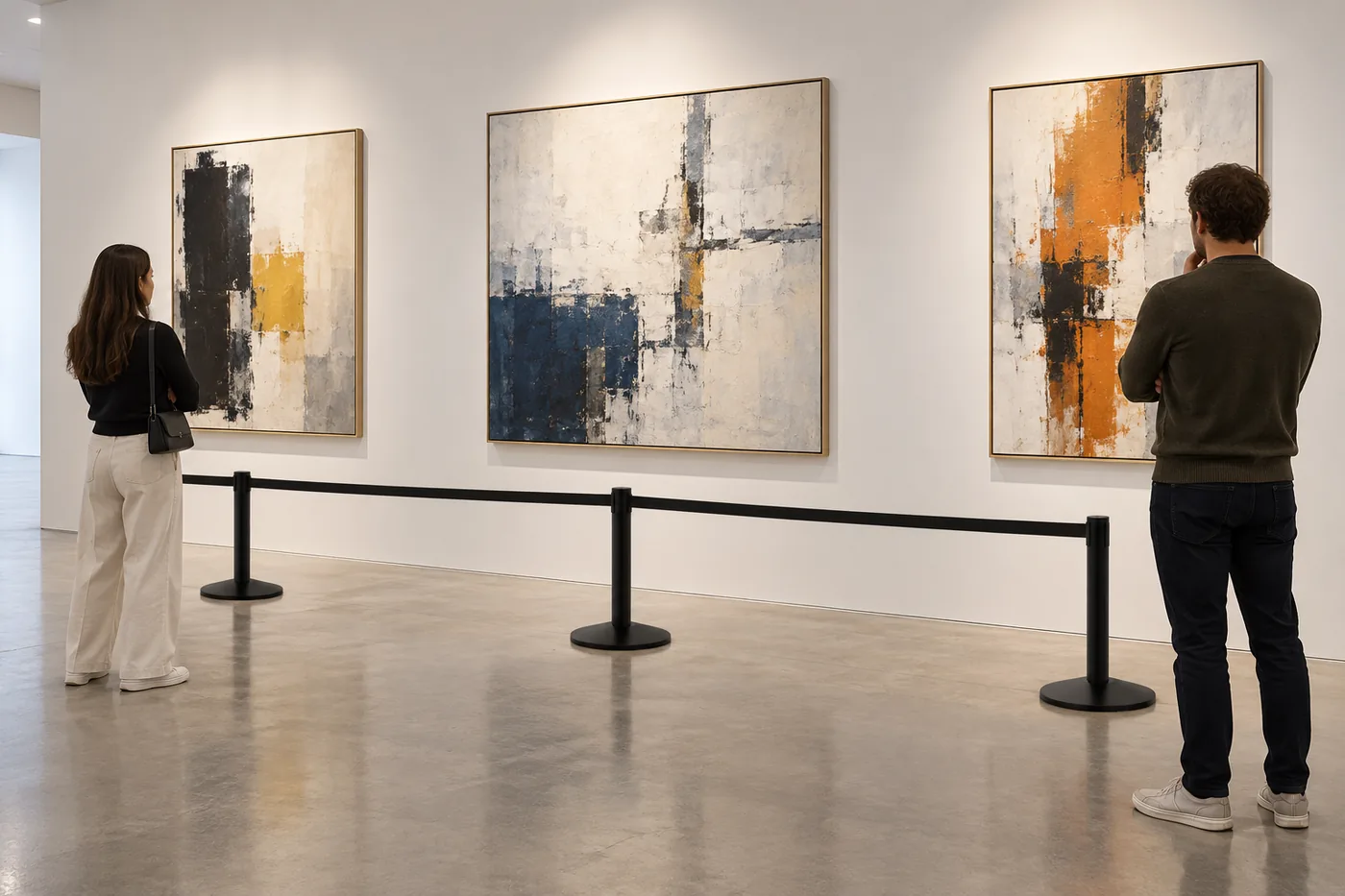
In a gallery the barrier is a reminder, not a wall. A full-height queue post at waist level draws the eye away from the art and can block the view of a low-hung work or a child’s line of sight. Short posts set a boundary at shin to knee height, so the eye passes over them. Visiontron’s Mini Display museum stanchion stands 23 inches tall with a 10 ft retractable belt, in black, polished aluminum or satin stainless.
Set-back: many galleries place the line 2 to 3 ft in front of a wall of paintings and give free-standing objects room on every side, enough that an outstretched arm or a backpack swing cannot reach. Confirm the distance with your registrar or conservator for each work; fragile, unglazed and touch-tempting pieces need more.
Choose the finish for the room. Black disappears against dark floors and modern white-wall galleries; satin stainless and polished aluminum suit glass, stone and contemporary architecture. Keep the belt color plain — black is the usual choice — and save colored or printed belts for queues. A retractable belt also stores itself inside the post, so the barrier can be reset between rooms in seconds and nothing hangs loose on the floor when a section closes.
For a single sculpture or a case in the middle of a room, a ring of four short posts around it works; for a long wall, space posts so the belt runs straight without sagging and leave openings only where staff need to pass. Low barriers are a boundary, not security: valuable objects still need cases, mounts and guards.
 Visiontron Mini Display 23″ Tall Retractable Belt Museum Polished Aluminum Stanchion, 10′ Belt – VI-300DP-2Mini Display 23 in museum post, polished aluminum, 10 ft belt: low barrier for contemporary galleries.$243.80 · View product →
 Visiontron Mini Display 23″ Tall Retractable Belt Museum Satin Stainless Steel Stanchion, 10′ Belt – VI-300DP-3Mini Display 23 in museum post, satin stainless: brushed finish for stone and glass interiors.$303.43 · View product →
 Visiontron Prime Flat Top Rope Stanchion – VI-CP60SPRIME flat-top rope post in black: classic look for galleries that prefer rope.$60.00 · View product →
 Visiontron ST600 Series Flat Top Rope Stanchion – VI-ST600ST600 flat-top rope post: heavier post for busy galleries and lobbies.$193.99 · View product →
Period Rooms and Historic Houses
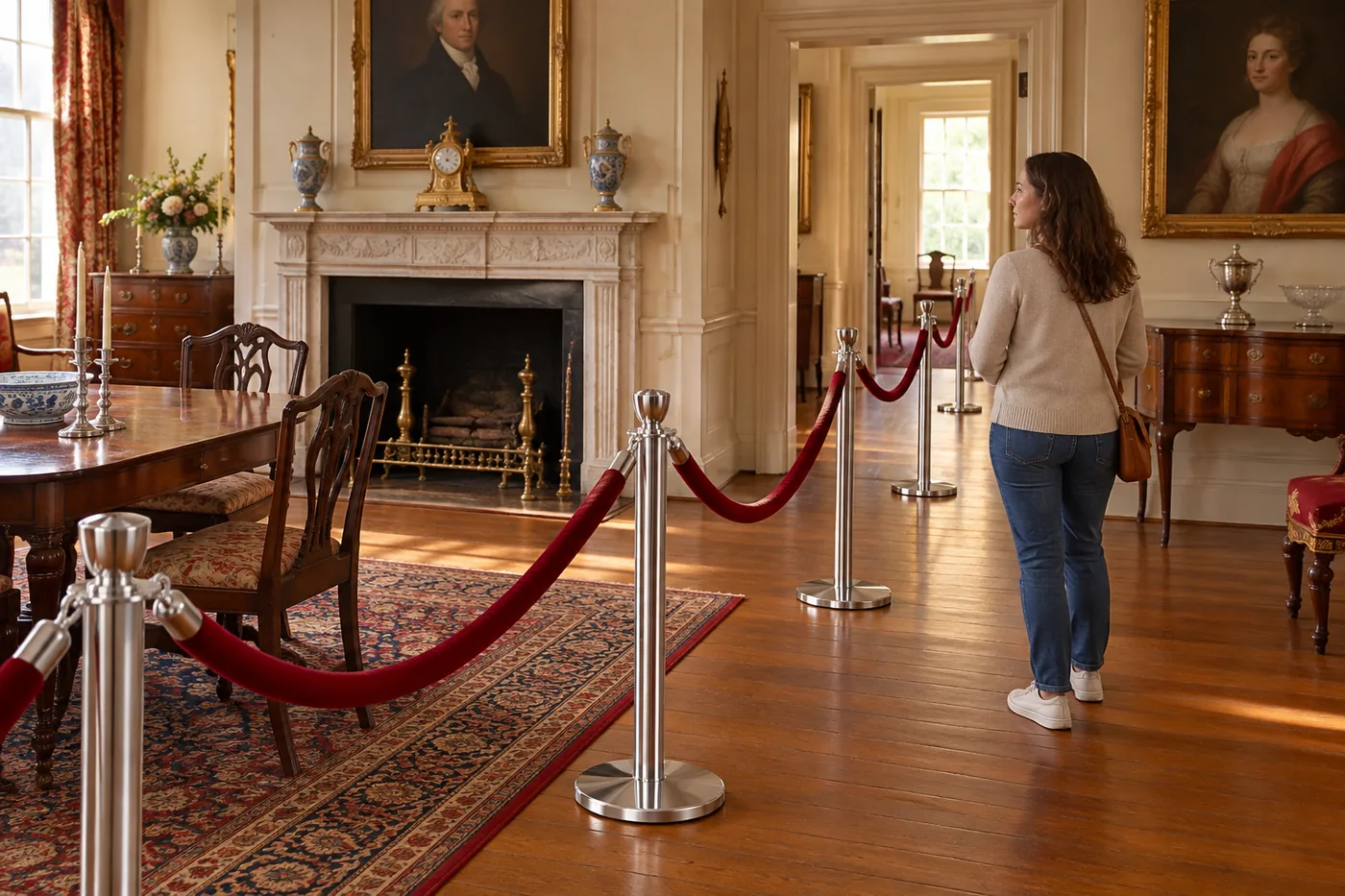
A furnished historic room is viewed from a walkway: visitors walk a set path past the doorway or along one wall while the furniture, rugs and objects stay out of reach. Classic post and rope suits these rooms better than belts because it looks like part of the period setting. Urn and ball tops in polished or satin finishes, with velour or naugahyde ropes, match most interiors.
Use rope wall plates to start and end a rope run at the door frame or wall without a post, which saves floor space in narrow rooms. A magnetic breakaway joins two ropes so the line parts if someone falls against it or the room needs to empty fast. Put felt or rubber-bottomed bases on historic floors, and check that heavy bases will not mark soft wood or stone.
 Visiontron ST500 Series Ball Top Rope Stanchion – VI-ST500ST500 ball-top rope post for formal rooms and entrances.$222.60 · View product →
 Visiontron Prime Urn Top Rope Stanchion – VI-CP40SPRIME urn-top rope post: economical traditional post.$73.00 · View product →
 Visiontron Velour Rope for Stanchion Posts – VI-841Velour rope with metal snap ends: the classic museum rope.$124.01 · View product →
 Visiontron Naugahyde Rope for Stanchion Posts – VI-842Naugahyde rope: wipe-clean option for high-touch areas.$124.01 · View product →
 Visiontron Microfiber Rope for Stanchion Posts – VI-845Microfiber rope for a softer, modern look.$138.33 · View product →
 Visiontron Rope Wall Plate for Stanchion Hanging RopeRope wall plate to start a rope run at a wall or door frame.$23.86 · View product →
 Visiontron Magnetic Breakaway for Stanchion RopeMagnetic breakaway: rope parts under pressure for safe exit.$52.47 · View product →
Admissions, Ticketing and Coat Check
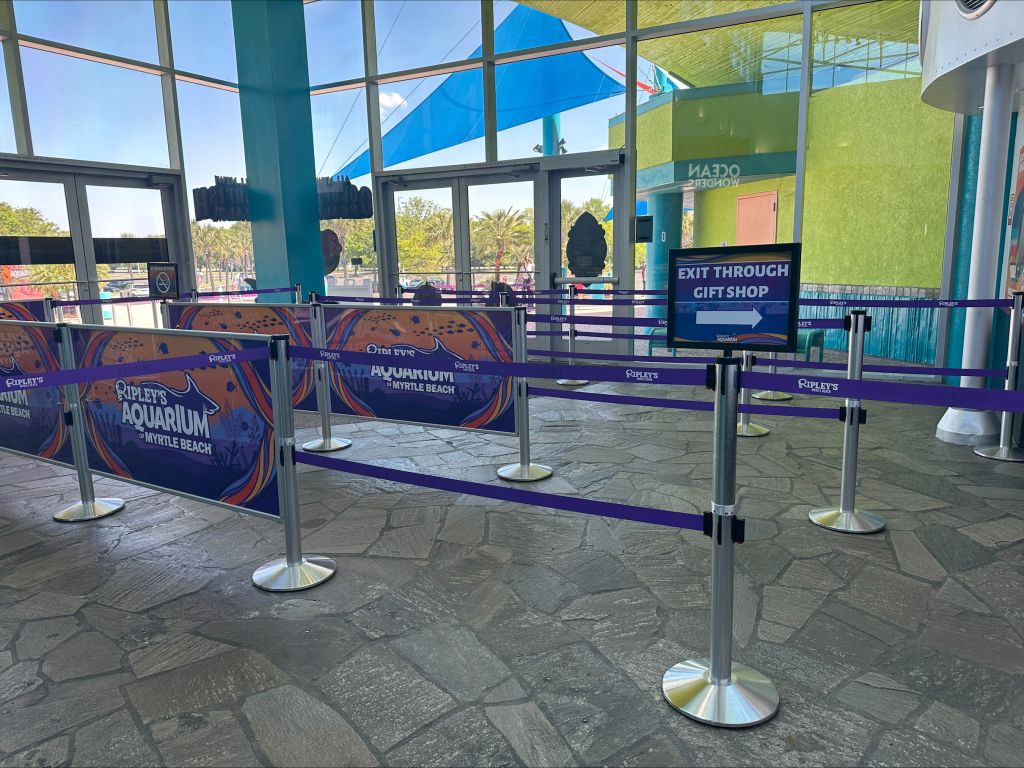
Admissions lines are short most of the day and long for an hour: opening time on a weekend, free days, school groups and the first days of a blockbuster show. Build a switchback from retractable belt posts that feeds the ticket desks, with one lane for members and pre-booked tickets and one for walk-up sales so a quick scan does not wait behind a family buying memberships.
Keep lanes at least 36 in wide and wider where strollers and wheelchairs are common, land the line a few feet back from the desk, and keep the line away from the main entrance door, the exit route and the gift-shop doorway. Coat check and bag check need a separate short lane so the ticket line never blocks them. For sizing a switchback, see How Much Floor Space Does a Queue Need?
 Visiontron Slim Post Retractable Belt Polished Chrome Barrier, 10′ Belt – VI-390-2Slim Post polished chrome belt post: lighter look for elegant lobbies.$250.43 · View product →
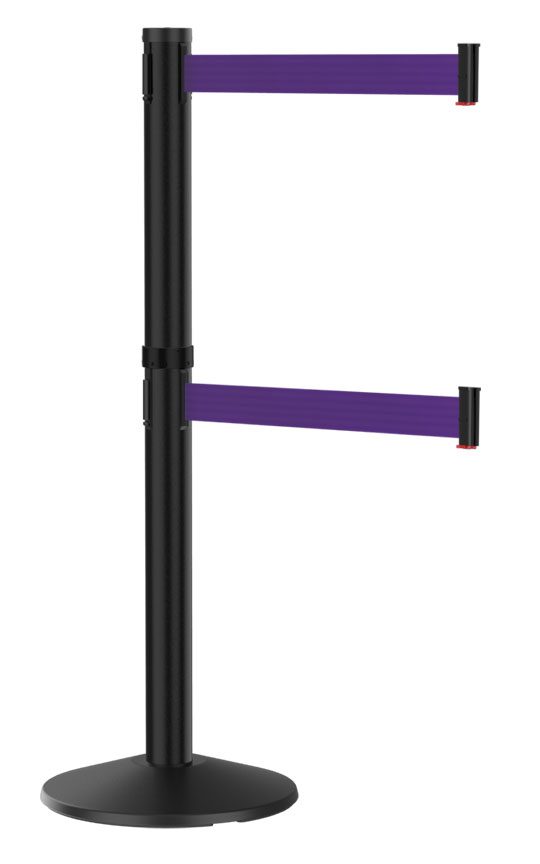 Visiontron Dual Line 300 Series Crowd Control Black Post, 10′ Belt – VI-300D-1Dual-line 300 Series post: a second, lower belt cane users can detect.$299.46 · View product →
 Visiontron Magnetic WM412 Series Wall Mounted Barrier, 15′ Belt – VI-WM412M-15Magnetic WM412 wall mount, 15 ft: closes a lobby section from steel surfaces.$152.39 · View product →
 Visiontron WM700 Series Retractable Wall Mount Barrier, 10′ Belt – VI-WM700WM700 wall mount, 10 ft: closes a desk, cloakroom or gallery doorway.$86.13 · View product →
Special Exhibitions and Timed Entry
Ticketed exhibitions usually run on timed entry: visitors with a 2:00 ticket wait at the gallery door until their slot opens. Give that wait its own small holding pen beside the exhibit entrance, with a sign for the current entry time, and keep it separate from the general admissions line. When the exhibit is popular, a second lane for members or accessibility entry saves arguments at the door.
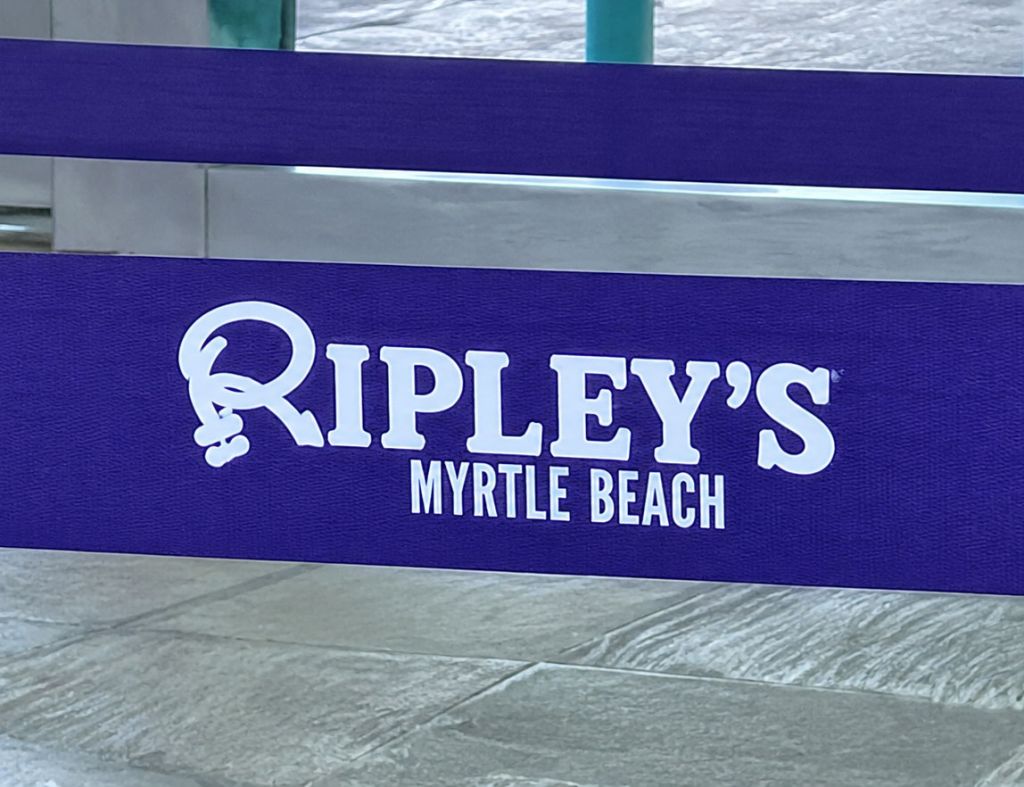
Exhibit entrances are also where branding pays off. Printed belts and printed panels carry the exhibition title or sponsor and turn the line into part of the show. Plan them early: printed belts and custom panels are made to order and take longer than stock posts.
Printed belts repeat a name or logo along the whole run of the queue. They are made to order on the same retractable belt posts, so standard and printed cassettes can swap between exhibitions.
Exit routes: plan where people leave the exhibit as carefully as where they enter. A one-way route through the show, out through the shop or back to the main hall, keeps exiting visitors from walking against the queue. Belt posts and panels set that route for the length of the run and pack away afterward.
Cafés, Food Courts and Museum Shops
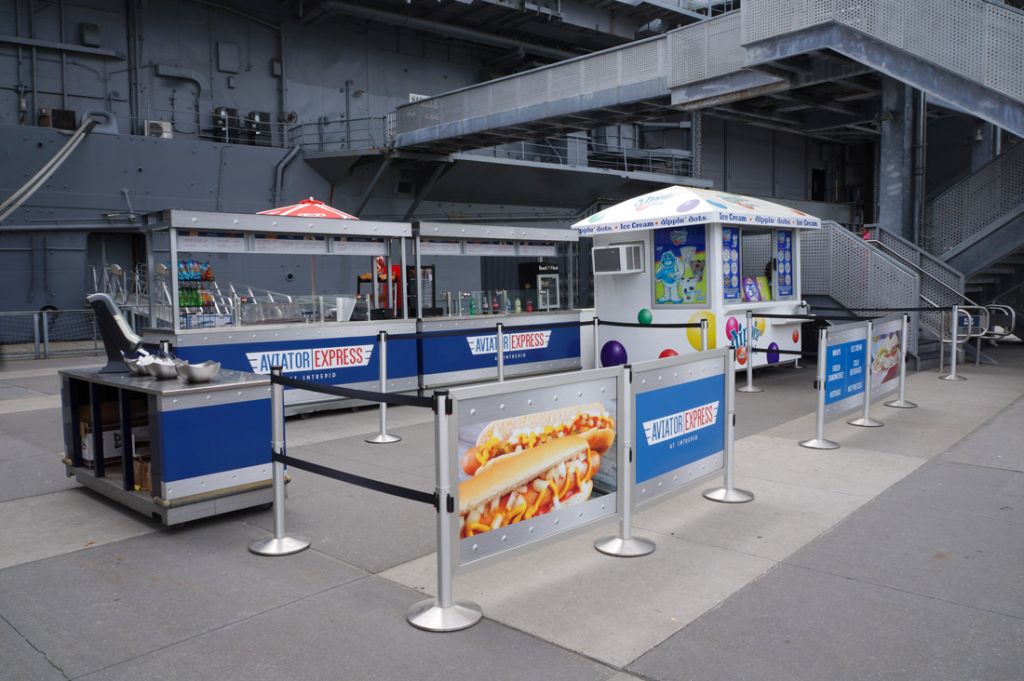
Museum cafés and food courts get the same rush as admissions, only at lunchtime. A short belt or panel line at the order counter, with a clear pickup spot beside it, keeps the queue from spilling into the gallery route or the seating. Panels add a solid edge where the line runs beside tables, and a sign frame on the first post shows the menu or a CASH / CARD lane split.
Museum shops need little queue hardware most days: a few posts at the till for busy weekends and a wall-mounted belt to close the shop entrance when the museum closes but the galleries stay open for an event.
Signs: Do Not Touch, Tickets and Wayfinding
Museums use three kinds of sign on barriers. Behavior signs — PLEASE DO NOT TOUCH, NO FLASH, PLEASE STAY BEHIND THE LINE — sit on a post-top frame at the ends of a gallery barrier where visitors arrive. Queue signs — TICKETS, MEMBERS, TIMED ENTRY 2:00 — sit at each lane entrance. Wayfinding — exhibit names, arrows, closed-gallery notices — sits on freestanding sign posts in halls and at stair landings. Keep gallery signs small and low so they do not compete with labels and wall text, and use changeable inserts for anything that changes with the exhibition. More on sign placement: planning for signage in queues.
 Designer Series Visiontron Sign Frame Holder 8.5 x 11 with Adapter – VI-FRDS-8×11Designer Series 8.5 × 11 in frame for post tops: clean edge for galleries.$113.96 · View product →
 Visiontron Slide In Sign Frame, Multiple Sizes and Finishes – VI-FRDSRSlide-in sign frame, several sizes and finishes, for exhibit names.$152.39 · View product →
 Visiontron Versa-Stand Sign PostVERSA-STAND freestanding sign post for halls and landings.$351.13 · View product →
 Visiontron Sign Bracket with ColorCore Sign Insert – VI-PSBSign bracket with engraved ColorCore insert for permanent messages.$71.56 · View product →
Evening Events, Galas and Auditoriums
Many museums earn income from evening rentals, galas, lectures and screenings. For those nights the barriers change job: close the galleries that stay shut, mark the route from the door to the event hall, hold a red-carpet or check-in line, and keep guests off the stage edge in the auditorium. Post and rope looks right for formal events; belts and wall mounts close side galleries quickly.
Store event posts and ropes on a storage cart so the set-up crew can roll them out and back in one trip, and so posts are not stacked against walls in a building full of objects. Panels screen catering and back-of-house areas from guests.
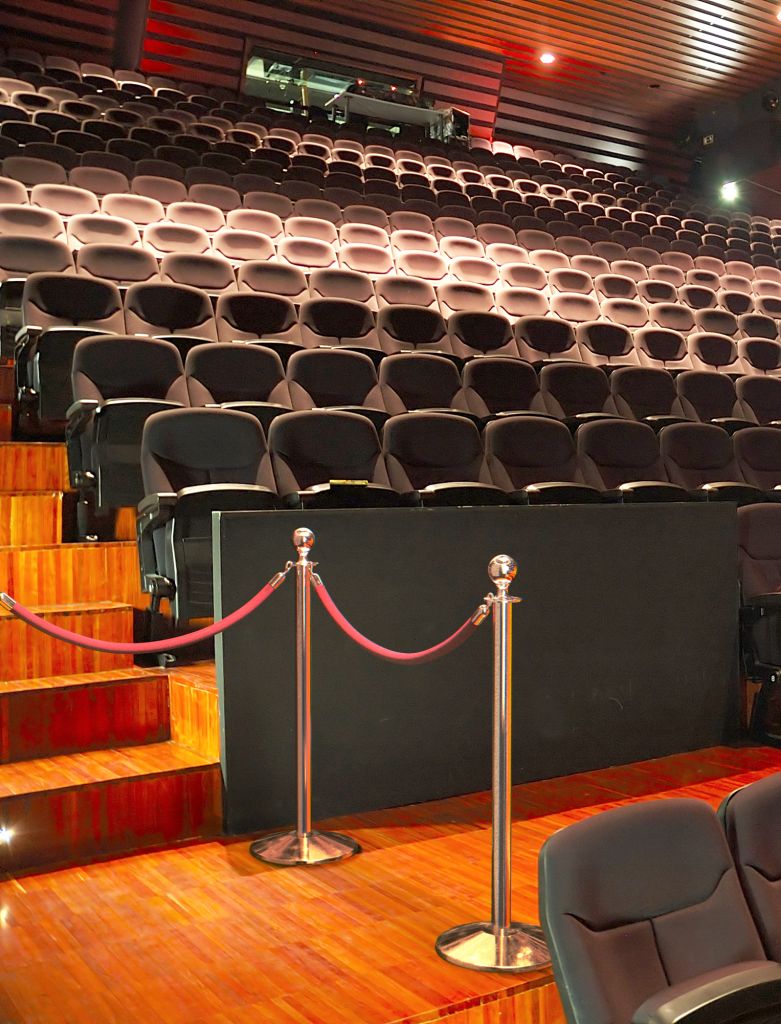
 Visiontron Designer Series Panel System – VI-PNLDSDesigner Series panel system to screen catering and back-of-house areas.$306.09 · View product →
 Visiontron Horizontal Post Stanchion Storage CartHorizontal storage cart: moves posts between storage and event space.$673.10 · View product →
Accessibility in Galleries and Lines
Low gallery barriers and long queues both need to work for visitors who use a wheelchair, a cane or a stroller. In queues, keep at least 36 in of clear width and more at turns, and use dual-line posts on the outer edge so a cane finds the barrier. In galleries, a low belt or rope can be a trip hazard for a visitor with low vision: put barriers where people already expect them (along walls and around plinths), keep them out of main walking routes, choose a belt or rope color that contrasts with the floor, and light them well. Make sure a wheelchair user can still see a work from behind the barrier. Our ADA-compliant queue guide covers widths and turning space; confirm your layout with your accessibility reviewer and fire marshal.
- Main routes through galleries stay clear of barriers and bases
- Barrier color contrasts with the floor and is well lit
- Queues are at least 36 in wide, wider at turns
- Dual-line posts or panels on queue edges for cane detection
- Exits and emergency routes never blocked; breakaways where a rope crosses a route
Choosing Museum Barrier Hardware
| If you need to… | Choose | Why |
|---|---|---|
| Keep visitors back from paintings or objects | Mini Display 23 in museum posts | Low boundary that does not block the view |
| Guide a walkway through a period room | Classic post and rope, velour rope, wall plates | Looks at home in a historic interior |
| Run admissions or coat-check lines | 300 Series or Slim Post belt posts | Sturdy bases, 10 ft belts, quick resets |
| Hold timed-entry groups at an exhibit | Belt posts, panels, post-top sign frames | Separate pen with the entry time posted |
| Close a gallery, shop or desk | WM700 or magnetic WM412 wall mounts | No post on the floor; one pull closes it |
| Set up evening events | Post and rope, panels, storage cart | Formal look; rolls out and back in one trip |
Belts or rope? Retractable belts reset faster, never sag, and store inside the post, which suits galleries and queues that change daily. Rope looks more traditional and suits historic rooms and formal events, but each length is fixed, so plan post spacing to the rope length. Many museums use both: belts in galleries and lines, rope in period rooms and for events.
Some common items are in stock at the manufacturer, subject to confirmation; printed belts, custom panels and special finishes are made to order. Prices shown were read from our online store when this page was built.
Get a free quote
Tell us what you are storing, the room size and your timeline. A project specialist will follow up with layout options and pricing. Prefer to talk? Call (800) 326-4403.
Museum Stanchion FAQs
What are stanchions used for in a museum?
How tall are museum stanchions?
How far from a painting should a museum barrier be?
Should a gallery use rope or retractable belt stanchions?
How do you set up stanchions in a gallery?
Are museum stanchions accessible?
Where can I buy museum stanchions?
Related Guides and Product Families
Get a Museum Barrier Plan and Quote
Send a floor plan or photos of the galleries, ticket hall or event space and tell us what needs protecting. We return a layout, a parts list with finishes, ropes and signs, and freight to the building.