
Laboratory Solutions / Premium Fume Hoods
Premium Laboratory Fume Hoods: Safety, Containment & Energy Efficiency
Ducted, high-performance low-flow, walk-in, filtered ductless, snorkel and canopy hoods — specified, installed, commissioned and serviced by Material Handling USA. Sized to your chemistry, your EHS policy and the exhaust capacity your building actually has.
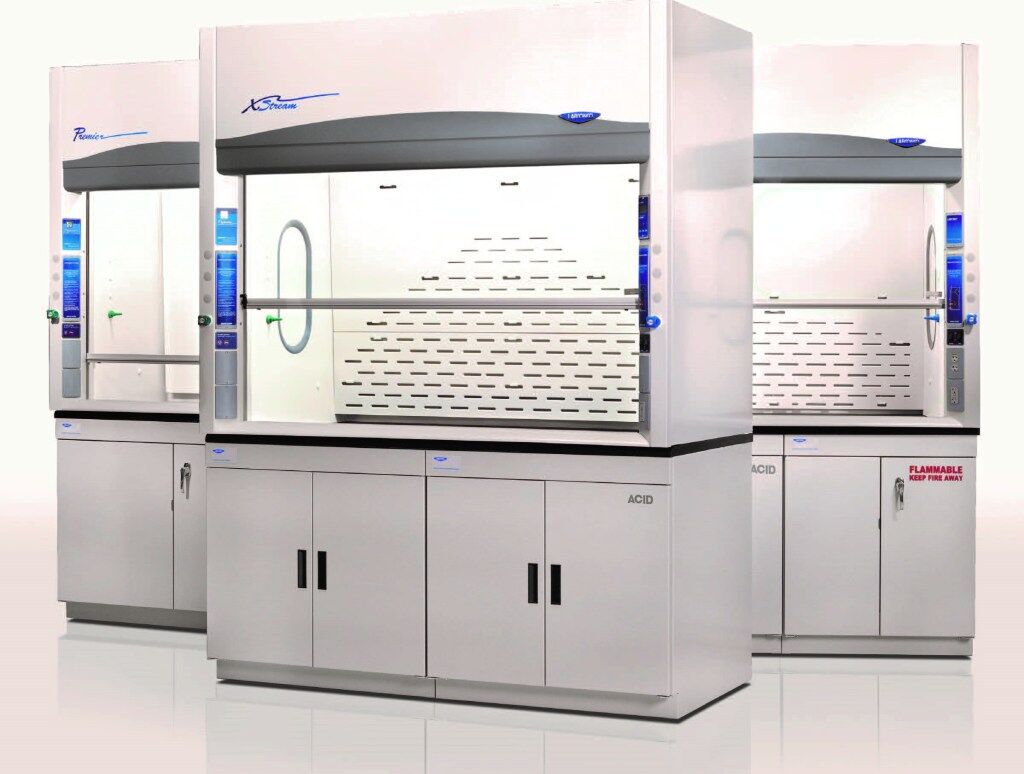
60 fpm
High-performance containment
4′–8′
Standard hood widths
690 CFM
6′ hood at 60 fpm, sash open
30+ yrs
Lab projects in the Mountain West
The Hood Is Only as Good as the System Around It
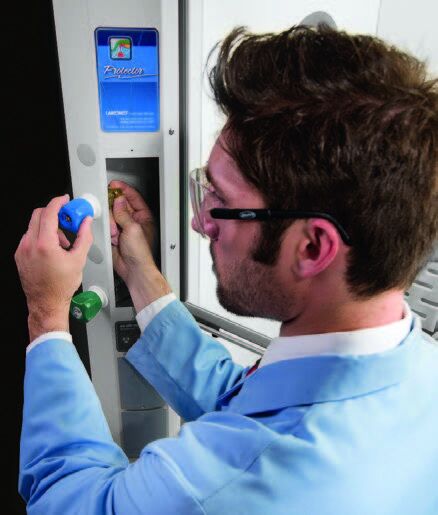
A laboratory fume hood is the single most important piece of engineering control in a chemistry lab. It is also the most expensive box of air in the building: a hood pulls conditioned air out of your lab every hour it runs, and a badly specified one manages to be both a safety problem and an energy problem at the same time.
Material Handling USA specifies, supplies, installs and services laboratory fume hoods across Utah and the Mountain West — bench-top ducted hoods, high-performance low-flow hoods, floor-mounted walk-ins, filtered ductless hoods, snorkel extraction arms and canopy hoods, plus the work surfaces, base cabinets, service fixtures, airflow monitors, safety storage cabinets and emergency equipment that make a hood usable. We work from manufacturers who publish real ASHRAE 110 containment data, and we size hoods against your chemistry and your EHS policy rather than against a catalog page.
Three questions decide almost every fume hood purchase: what is being handled inside it, how tall the apparatus is, and how much exhaust volume the building can give you. Get those right and the rest — liner material, sash system, fixtures, monitor — follows quickly.
Types of Laboratory Fume Hood We Supply
Six families cover nearly every laboratory ventilation problem. The wrong family is a far more expensive mistake than the wrong width.
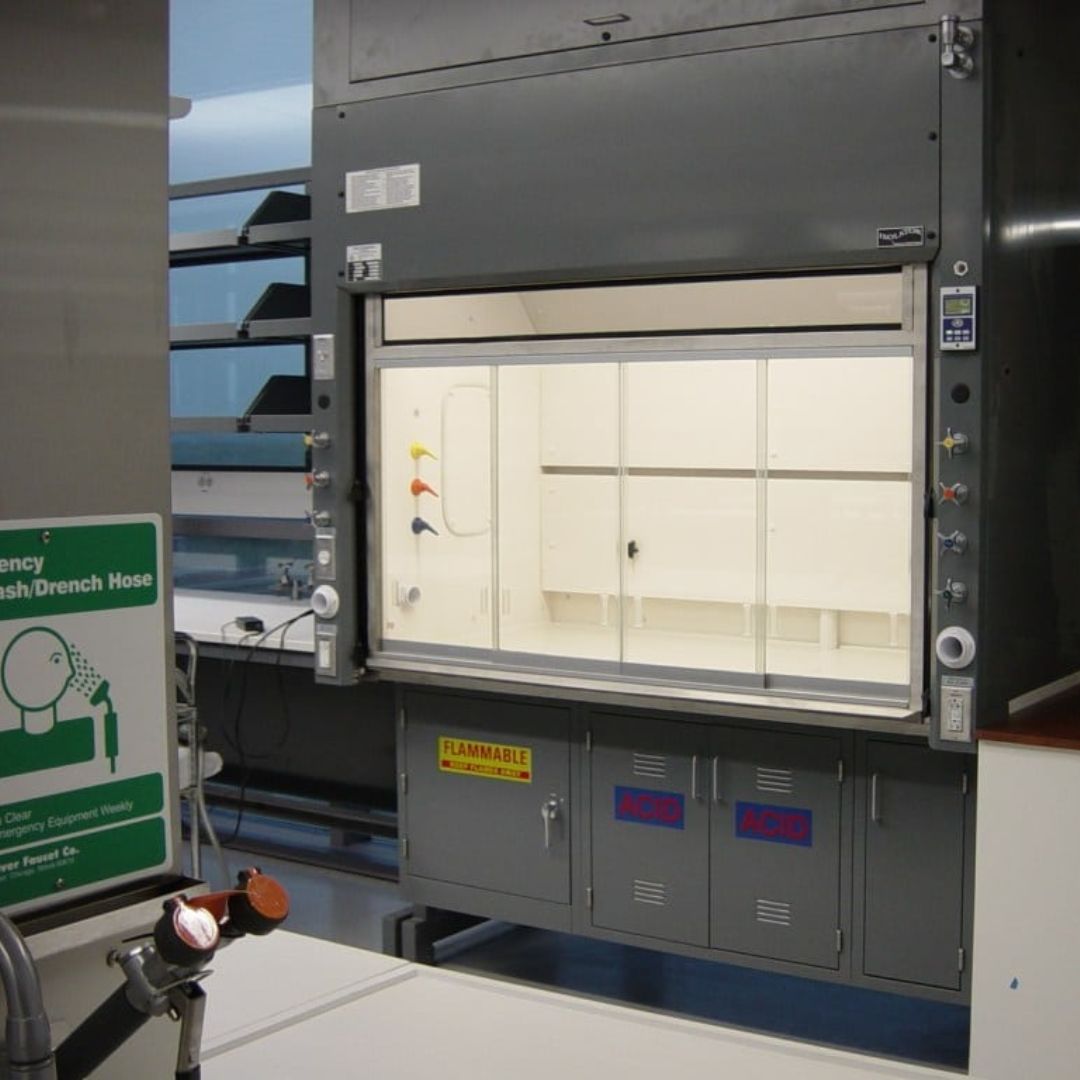 Bench-Top Ducted Chemistry HoodsThe workhorse of most labs: a hood that sits on a work surface or base cabinet and exhausts to the roof. Stocked in 4′, 5′, 6′ and 8′ nominal widths with vertical-rising sashes, chemical- and heat-resistant liners, LED lighting sealed behind ¼″ safety glass, and up to four remote-control service fixtures per side. Chosen for general chemistry, QC, teaching and sample prep.
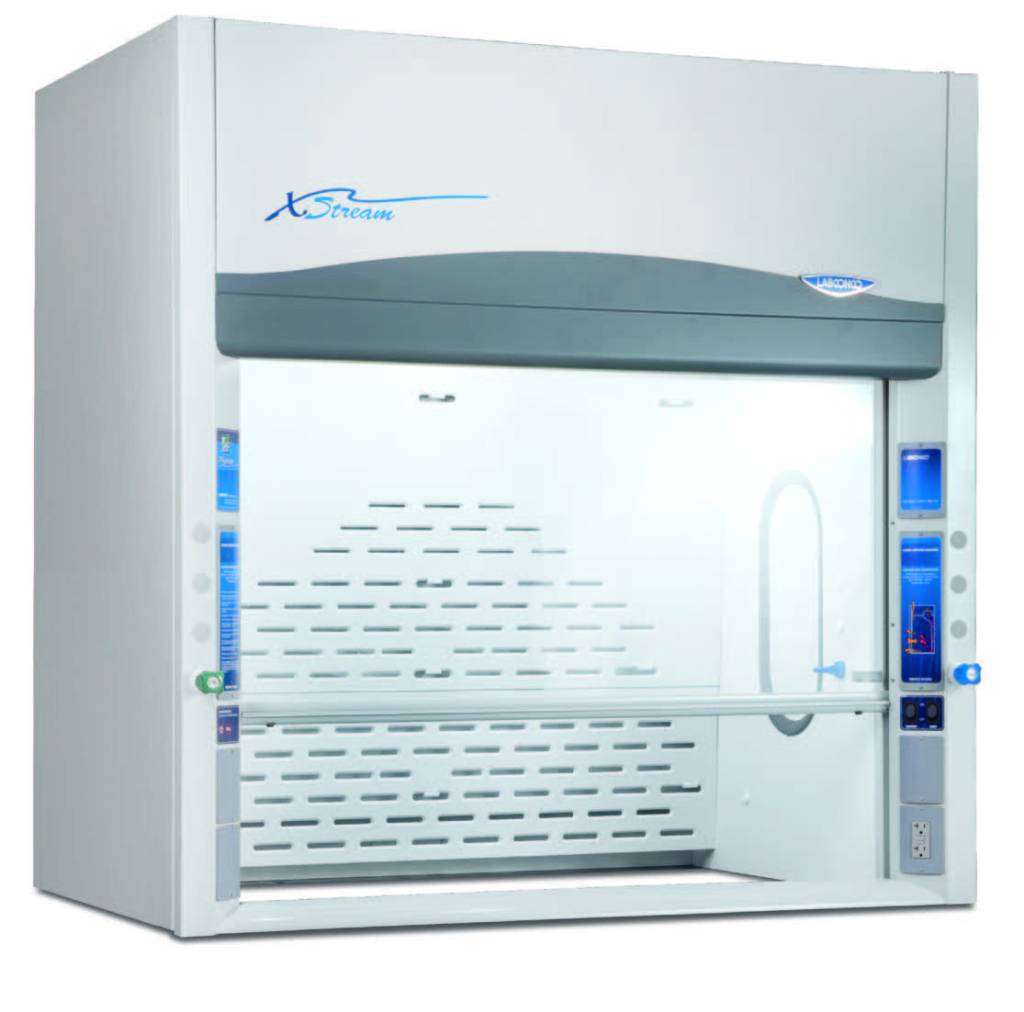 High-Performance Low-Flow HoodsHoods that meet the SEFA 1 definition of a high-performance hood — containment at 60 fpm or less face velocity at maximum sash opening, tested per ANSI/ASHRAE 110 with the mannequin 3″ from the sash plane and the detector in the breathing zone. A 6′ Labconco Protector XStream needs only 690 CFM at 60 fpm with the sash fully open, against 1,250 CFM for a traditional by-pass hood at 100 fpm.
 Floor-Mounted (Walk-In) HoodsFull-height enclosures for distillation racks, reactors, gas cylinders and carts that will not fit under a bench sash. Vertical-rising-sash models are high-performance units that may be operated as low as 60 fpm; horizontal-sliding-sash models run from 80 fpm and give a 73.5″ loading height. A 12′ horizontal-sash walk-in draws about 1,330 CFM at 80 fpm.
 Filtered (Ductless) Fume HoodsWhere ductwork is impossible or a bench has to move, a filtered hood recirculates through molecular carbon filtration instead of a stack — available in 4′ to 8′ widths with real-time filter and airflow monitoring. Suitable only for defined, low-volume chemistry: ANSI/ASSP Z9.5-2022 limits ductless hoods to work that could be performed safely on an open bench, and we will tell you when your chemical list rules one out.
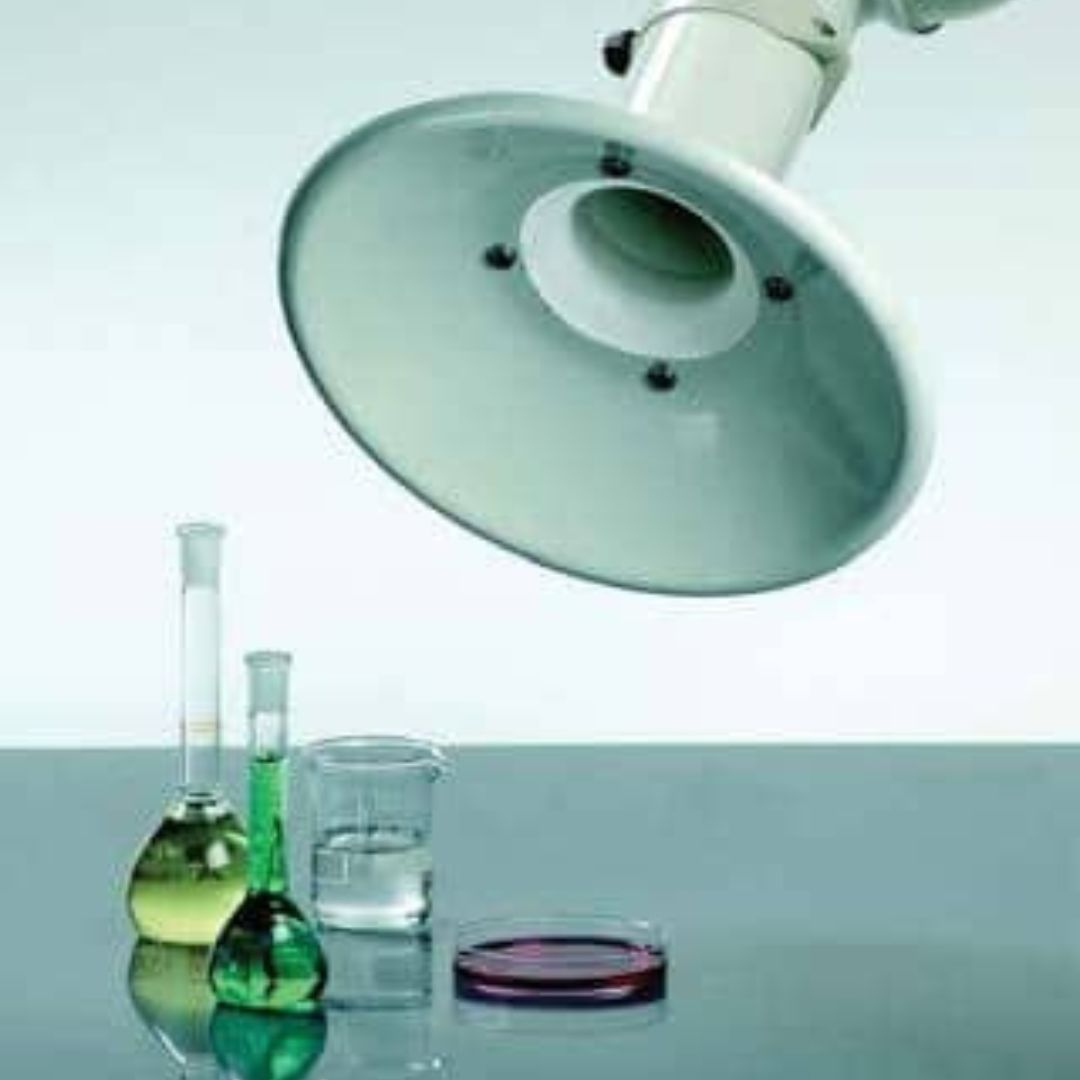 Exhaust Snorkels & Extraction ArmsArticulated arms in anodized aluminum or corrosion-resistant coated steel that capture at the source — over an instrument port, a small heat block, a soldering station or a balance. Wall-, bench- or ceiling-mounted, with a painted metal or clear capture hood. They supplement a hood, they do not replace one for open handling of volatile chemicals.
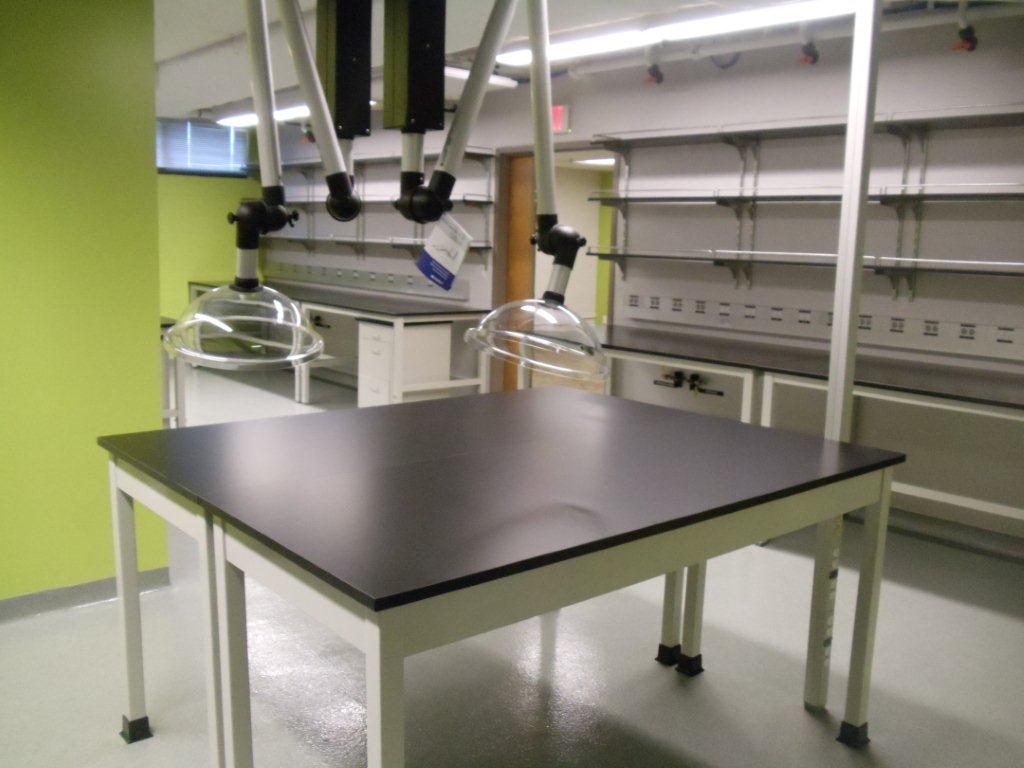 Canopy Hoods & Overhead CaptureOpen canopies over autoclaves, ovens, glassware washers and steam-generating equipment. They handle heat, steam and nuisance odor where there is no need for containment of toxic vapors at a sash plane — the cheapest correct answer for a whole class of ventilation complaints.
Not sure which hood family fits your chemistry?
Send us the chemical list, the tallest piece of apparatus and a photo of the wall. We will come back with a hood type, a width, an exhaust volume and an installed price — and we will say plainly if a filtered hood is not appropriate for what you are doing.
Request a Fume Hood Quote Call (800) 326-4403 Call (800) 326-4403
How a High-Performance Hood Contains Fumes
In a traditional by-pass hood, smoke tests show contaminants generated inside the hood rolling forward and concentrating behind the sash — exactly where the user’s breathing zone is. High-performance hoods attack that with aerodynamics rather than brute-force airflow, which is why they contain at a lower face velocity and exhaust less conditioned air.

The four features that do the work
- Aerodynamic air foil. A curved foil with openings that pull inflow air from underneath and sweep the work surface in non-turbulent streams. Labconco publishes a 7–10% energy reduction for its Eco-Foil design against a flat air foil, and the curve is comfortable to rest your arms on.
- Low-profile sash handle. Air is directed above and below the handle instead of tumbling over it, so contaminated air is less likely to spill into the breathing zone.
- Upper dilution air supply. A continuous slot at the top bathes the hood interior with clean air, breaking up the stagnant pocket that forms behind the sash in a conventional hood.
- Slotted rear baffle. A primary baffle pulls air into the baffle in a single pass; a secondary baffle counteracts upward streams that would form a vortex. The slot pattern deliberately runs higher velocity in the middle and at the work surface and lower at the corners, which flattens the face-velocity profile and is what allows a lower average set point. (Labconco Opti-Zone baffle, US Patent 6,461,233.)
Face velocity is a symptom, not the goal
Containment is the goal. Independent ASHRAE 110 testing of the Protector XStream at 40 fpm with the sash fully open, under 50 fpm cross drafts and the NIH protocol, reported 0.00 ppm average tracer gas outside the hood. That is test-stand performance — your set point is still your safety officer’s call, and it still has to be verified as-installed in your room.
Sizes, Exhaust Volume & Static Pressure
Total exhaust CFM and static pressure (inches of water) for a high-performance bench-top chemistry hood at three face velocities and two sash positions. Figures are Labconco’s published Protector XStream data — use them for early duct and fan sizing, and confirm the final selection against the current catalog before ordering.
| Operating point | 4′ hood | 5′ hood | 6′ hood | 8′ hood |
|---|---|---|---|---|
| 100 fpm — sash full open (28″) | 705 / 0.26 | 930 / 0.32 | 1,150 / 0.41 | 1,600 / 0.29 |
| 80 fpm — sash full open | 565 / 0.17 | 745 / 0.20 | 920 / 0.26 | 1,280 / 0.19 |
| 60 fpm — sash full open | 425 / 0.09 | 560 / 0.12 | 690 / 0.15 | 960 / 0.10 |
| 100 fpm — sash at 18″ (62.5% open) | 440 / 0.10 | 580 / 0.12 | 720 / 0.16 | 1,000 / 0.11 |
| 80 fpm — sash at 18″ | 350 / 0.06 | 465 / 0.08 | 575 / 0.10 | 800 / 0.07 |
| 60 fpm — sash at 18″ | 265 / 0.04 | 350 / 0.05 | 430 / 0.06 | 600 / 0.04 |
Dimensions and duct connections
| Nominal width | Overall exterior width | Interior working width | Exhaust connection |
|---|---|---|---|
| 4′ hood | 48.0″ (121.9 cm) | 38.1″ (96.8 cm) | One 12.8″ ID |
| 5′ hood | 60.0″ (152.4 cm) | 50.1″ (127.3 cm) | One 12.8″ ID |
| 6′ hood | 72.0″ (182.9 cm) | 62.1″ (157.7 cm) | One 12.8″ ID |
| 8′ hood | 96.0″ (243.8 cm) | 86.1″ (218.7 cm) | Two 12.8″ ID |
Bench-top hoods full-open at a 28″ sash with a stop at 18″ for normal work. Floor-mounted walk-ins are a different animal: vertical-rising-sash models are high-performance units that can run as low as 60 fpm, horizontal-sliding-sash models start at 80 fpm and give a 73.5″ loading height, and a 12′ horizontal-sash walk-in needs roughly 1,330 CFM at 80 fpm.
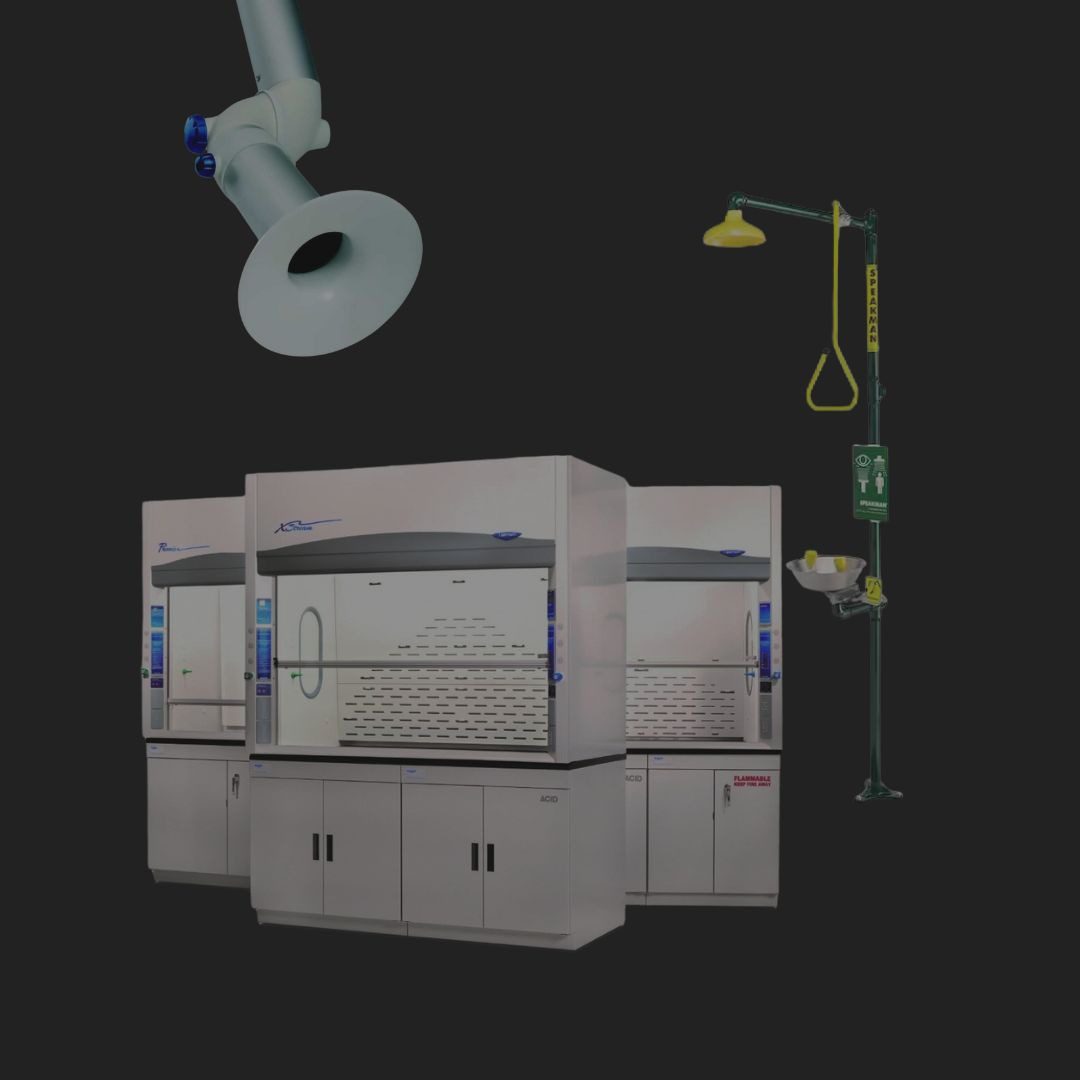
Choosing between the families
This is the comparison we walk through on almost every project. The last column is the one that matters — every hood type has a limit, and the limit is where accidents happen.
| Hood type | Typical face velocity | Best for | Limits |
|---|---|---|---|
| Bench-top ducted | 60–100 fpm at the design sash height | General chemistry, QC, teaching, sample prep | Needs duct, roof fan and make-up air |
| High-performance low-flow | Contains at 60 fpm or less at maximum sash opening | New builds and retrofits where energy cost matters | Requires correct commissioning and a monitored set point |
| Floor-mounted walk-in | 60 fpm vertical sash / 80 fpm horizontal sash | Distillation racks, reactors, carts, gas cylinders | Large exhaust volume and floor area |
| Filtered (ductless) | Manufacturer-set inflow, filter-monitored | Fixed, low-volume chemistry; leased or mobile space | Chemical list and quantity limits; filter breakthrough and replacement cost |
| Snorkel / extraction arm | Source capture at the arm inlet | Instrument ports, heat blocks, soldering, balances | Not containment for open handling of volatile chemicals |
| Canopy hood | Thermal capture, no sash plane | Autoclaves, ovens, glassware washers, steam | No protection against toxic vapor release |
Energy, VAV and What a Hood Really Costs to Run
Face velocity gets the attention, but exhaust volume pays the bill. Every CFM you pull out of a lab is conditioned air you paid for once and now have to replace. That is why a hood that contains at 60 fpm instead of 100 fpm is an energy project as much as a safety upgrade — and why closing the sash is the cheapest control in the building.
| Configuration (6′ hood) | Exhaust CFM | Energy cost per year | 15-year savings vs. traditional hood |
|---|---|---|---|
| Traditional 6′ by-pass hood @ 100 fpm, full-open sash, constant volume | 1,250 | $8,750 | — |
| 6′ high-performance hood @ 100 fpm, full-open sash, constant volume | 1,150 | $8,050 | $10,500 |
| 6′ high-performance hood @ 60 fpm, full-open sash, constant volume | 690 | $4,830 | $58,800 |
| 6′ high-performance hood @ 60 fpm, sash at 18″, constant volume | 430 | $3,010 | $86,100 |
| 6′ high-performance hood @ 60 fpm with VAV controls | 250 | $1,750 | $105,000 |
| 6′ high-performance hood @ 60 fpm, VAV plus automatic sash control | 190 | $1,330 | $111,300 |
How these numbers were built
Labconco’s published comparison: $7.00 average annual dollars per CFM (their stated range is $5.00–$12.00 depending on location), a hood running 24 hours a day 5 days a week (6,240 hours a year), and a 15-year life. The VAV rows assume the sash open 8 hours a day (3 hours for the sash-intelligence row) with closed-sash volume held at the ANSI Z9.5 minimum air-change basis. Ask us to re-run it with your utility rate — Utah energy costs sit toward the low end of that range, so treat the dollars as a method, not a promise.
Where the savings actually come from
- Containment at a lower face velocity, verified by ASHRAE 110 data rather than assumed
- A sash stop at 18″ so normal work happens at 62.5% open instead of full open
- VAV controls that reduce exhaust as the sash closes instead of running design flow around the clock
- Automatic sash systems that close the hood when nobody is standing at it — the largest single line in the table above
- Correctly sized ductwork and a fan that can actually ride the turndown, which is a building question, not a hood question
Planning a lab build or renovation?
Lay the room out first and the ventilation gets easier. Use our free lab layout and bench design tools to place hoods, benches and casework, then send the plan to our team for a ventilation review.
Open the Lab Layout Configurator Lab Bench Configurator Call (800) 326-4403
Standards, Codes & Who Decides What
Nobody can sell you compliance. What we can do is specify equipment that is built and tested to the standards your reviewers will cite, and hand you the documentation. Final acceptance always belongs to your EHS group and the authority having jurisdiction.
| Standard or regulation | What it governs |
|---|---|
| ANSI/AIHA/ASSP Z9.5 — Laboratory Ventilation | The document nearly every US EHS program cites. The 2022 edition is performance-based: the average face velocity must be sufficient to capture and contain the emissions the hood was selected for, and face velocity alone is not the only acceptance criterion. Earlier language specifying 80–120 fpm with no reading more than 20% off the average is still widely written into institutional specs. |
| ANSI/ASHRAE 110 — Method of Testing Performance of Laboratory Fume Hoods | The tracer-gas containment test: face-velocity traverse, smoke visualization and SF6 release with a mannequin at the sash and the detector in the breathing zone. This is the test that produces ratings such as 4.0 AM 0.05 (4.0 lpm release, as-manufactured, 0.05 ppm control level). |
| SEFA 1 — Laboratory Fume Hoods | Defines construction and performance for laboratory hoods, including the high-performance / low-velocity classification: containment at 60 fpm or less at maximum sash opening (25″ minimum) when tested per ANSI/ASHRAE 110. |
| NFPA 45 — Fire Protection for Laboratories Using Chemicals | Requires a measuring device on each chemical fume hood to indicate that airflow remains within safe design limits, and governs hood construction, ducting and flammable-liquid quantities in a lab unit. |
| OSHA 29 CFR 1910.1450, Appendix A | Non-mandatory guidance adopting the National Research Council’s Prudent Practices, which puts typical hood face velocity in the 60–100 fpm range and recommends a continuous monitoring device so users can confirm performance before work begins. |
| NFPA 30 / OSHA 1910.106 — flammable liquid storage | The basis for the listed flammable safety cabinets we supply with hood installations: double-wall welded construction with a 1½″ air space, a 2″ leak-tight sump, three-point latching and self-latching or manual doors. |
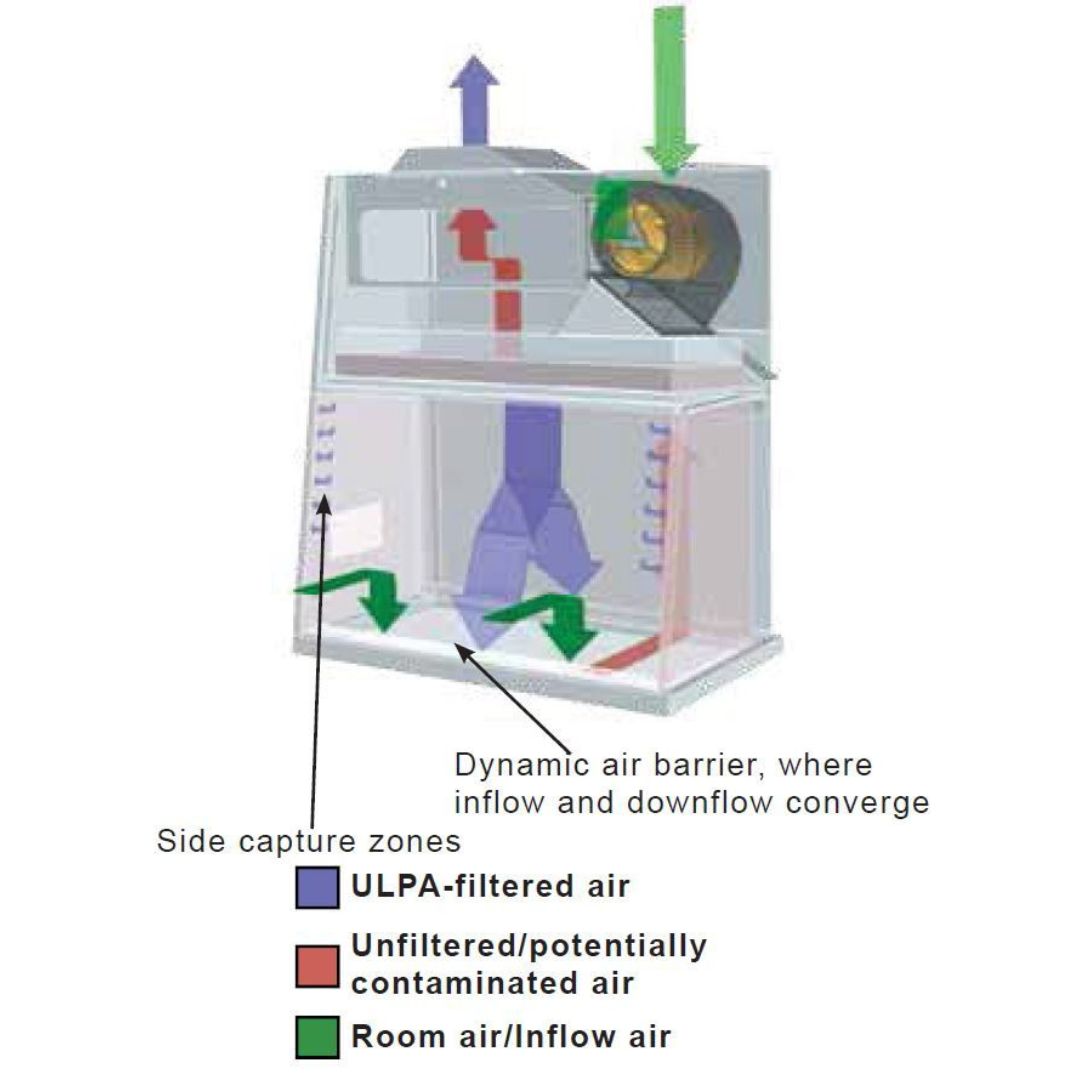
Ducted versus filtered: the honest version
Filtered ductless hoods are genuinely useful. They install in a day, cost nothing in exhaust air, and let a leased suite or an upper floor have local capture where a stack was never going to happen. Modern molecular filtration handles a wider chemical range than the old charcoal pads, and filter and airflow monitoring can be reported to a phone.
They are also the easiest way to build a false sense of safety. Filters saturate; high-volume, highly volatile solvents can break through; spills release far more vapor than a filter is rated to hold; and some chemistries — perchloric acid, radioisotopes, certain reactive work — require a specific hood design regardless of cost. Z9.5-2022 is explicit that ductless hoods belong on work a user could safely perform on an open bench, and the NIH review notes their limited ability to trap high vapor concentrations before breakthrough. If you tell us the chemical list, we will tell you which side of that line you are on.
Airflow Monitoring, Controls & Exhaust Treatment
A hood with no indicator is a hood nobody can trust. These are the three sub-systems we quote alongside almost every installation.
 Airflow Monitors & AlarmsNFPA 45 calls for a measuring device on every chemical fume hood showing that airflow stays within safe design limits, with audible and visual alarm on failure. Monitors mount at the sash where the user can see them before starting work, and where an audible alarm would compromise the work we specify an alternative indication.
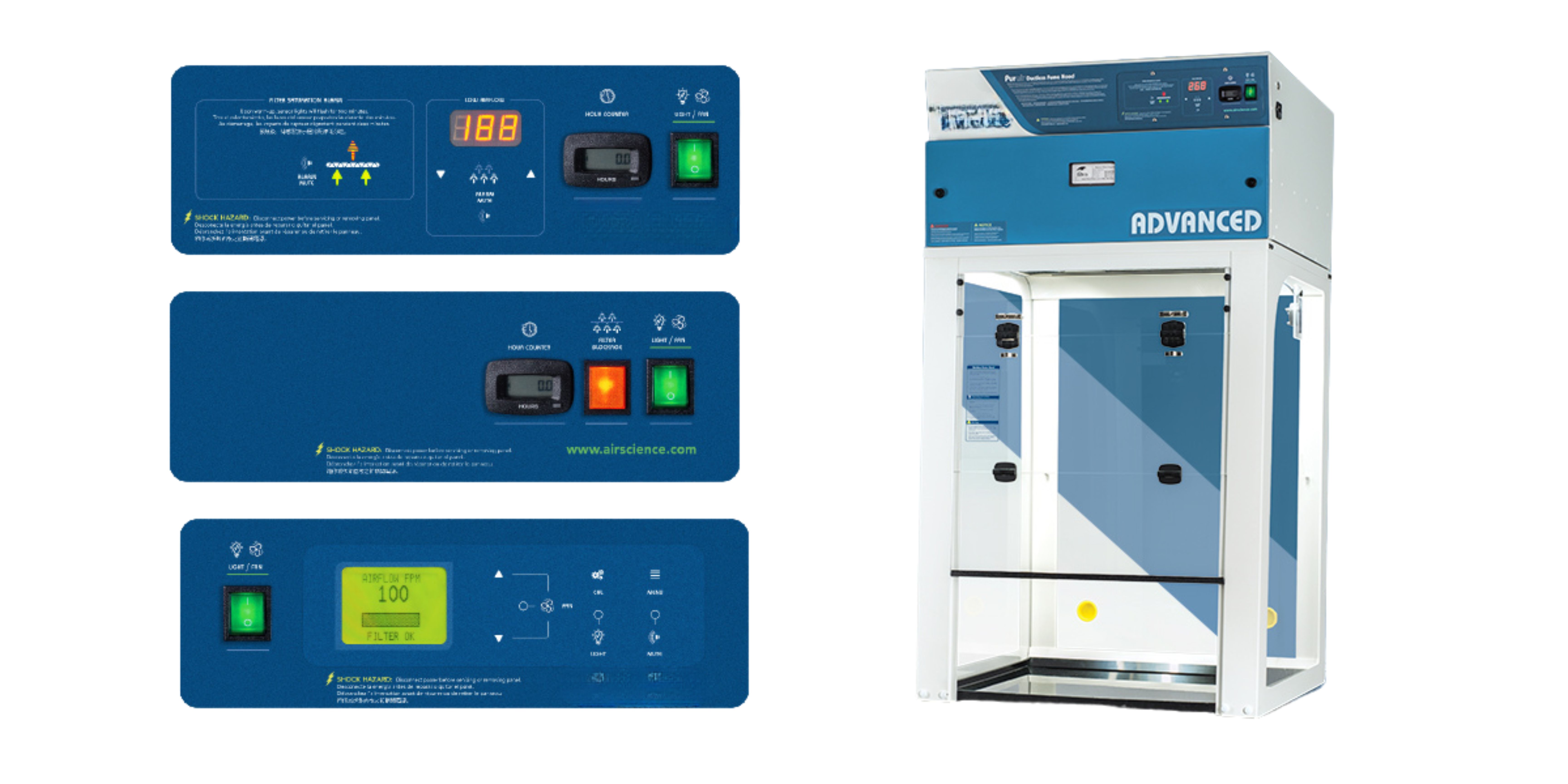 Sash, Light & Blower ControlsADA-compliant light and blower switches, sash stops at 18″, chain-and-sprocket and auto-return sash systems that pull the sash back to its 18″ working height, and occupancy-sensing automatic sash systems for maximum energy savings on a VAV hood.
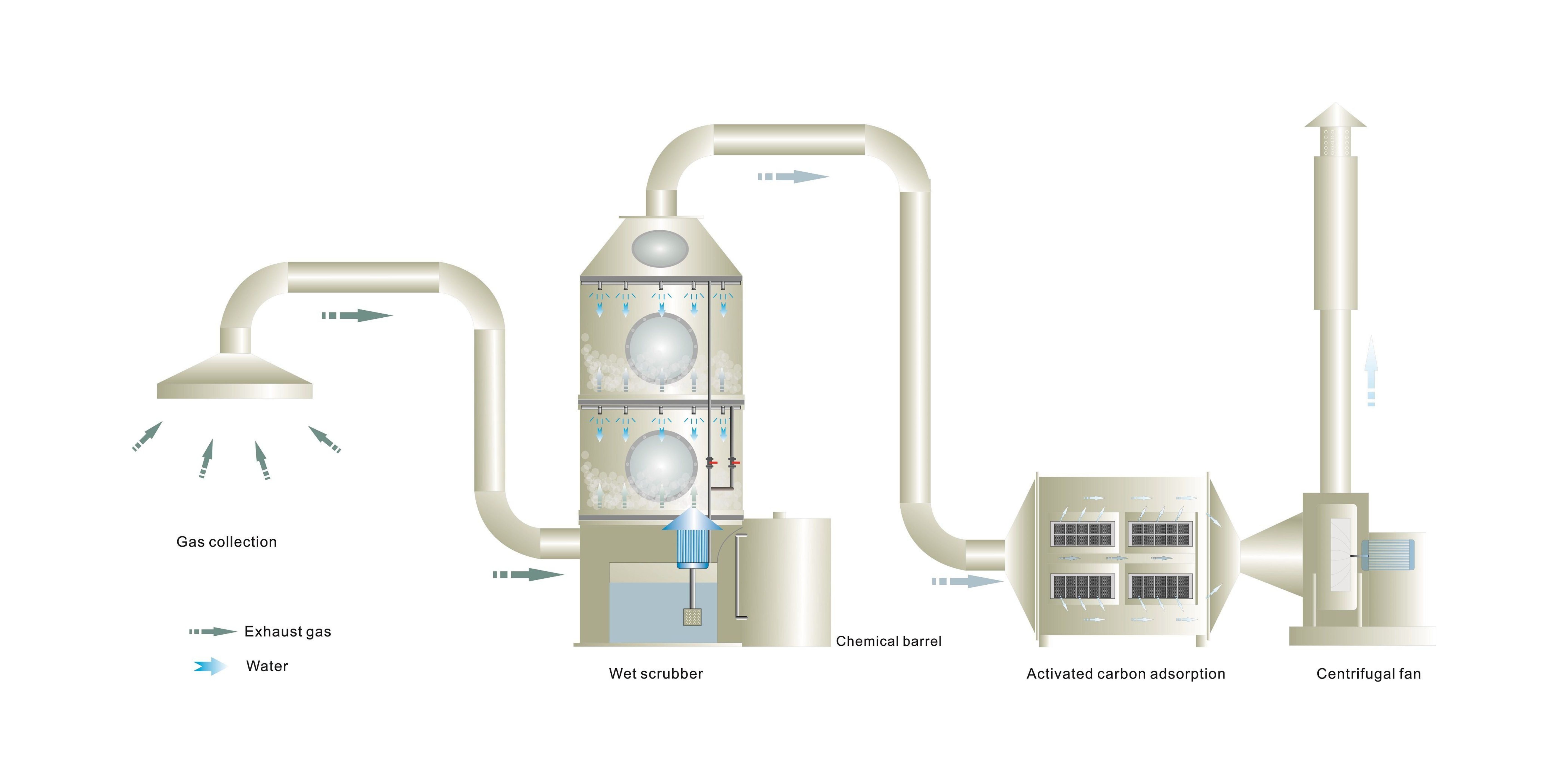 Exhaust Treatment & ScrubbingWhere the discharge itself has to be treated — acid gas, odor, permit conditions — wet scrubbers and carbon adsorption stages ahead of the exhaust fan. Specified with your mechanical engineer against the actual chemical loading, not a generic package.
Safety Storage Cabinets for the Chemicals Around the Hood
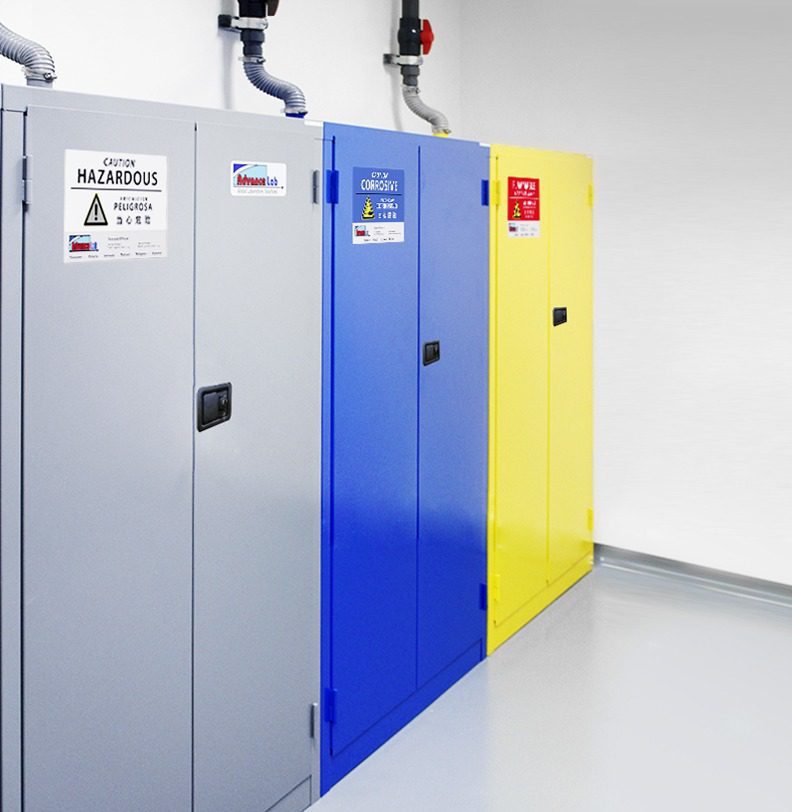
Most labs fail an inspection at the cabinet, not the hood. Flammables and corrosives stored loose under a bench are the finding that comes up again and again, and the fix is listed cabinets sized to the quantities your lab unit is allowed to hold under NFPA 45 and NFPA 30. We supply them as part of the hood package, including cabinets built into the hood base so acid and solvent storage sits directly under the work.
Flammable liquid cabinets — 18-gauge all-welded double-wall construction with a 1½″ insulating air space, a 2″ leak-tight sump, double-walled doors (14-gauge outer, 18-gauge inner) with three-point latching and radiused edges, twin 2″ flame-arrester vents, a flush lockable handle with two keys, grounding connector, leveling feet, adjustable galvanized shelves on 3″ centers, and a high-visibility yellow finish with reflective labels.
Acid and corrosive cabinets — the same welded double-wall shell and sump with corrosion-resistant interior finish and shelving, vented for connection to lab exhaust where your chemistry requires it, and labeled for corrosives so nothing gets stored in the wrong box.
Emergency Eyewash & Drench Showers
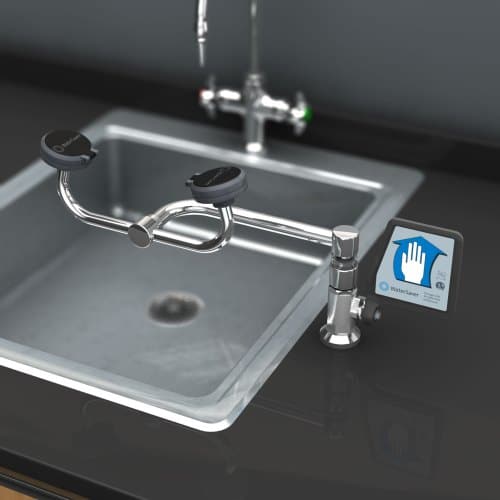
The hood contains the fumes; the eyewash handles the moment containment fails. Both have to be within reach of the work, unobstructed, and tested on a schedule — a drench shower behind a stack of boxes is the most common lab safety finding after chemical storage.
Bench-mounted eyewash for installation next to the hood sink: swivels 90 degrees out of the way when the sink is in use, a flag handle that starts water flow in one motion, flip dust covers over each spray head, and chrome-plated brass construction that survives a wet lab bench.
Free-standing combination drench shower and eyewash for the aisle: orange ABS plastic, roughly 80″ overall height, a ball valve operated by a rigid pull rod with an easy-grip handle, and a stainless steel eyewash bowl with four gentle spray heads that operates independently of the shower head.
We locate these with the hood layout rather than after it, so the travel path stays clear and the plumbing is roughed in once.
Who We Build Fume Hood Projects For
The hood changes with the hazard and the building, not with the industry name on the door — but these are the rooms we are in most often.
How a Fume Hood Project Runs
Walk the lab
We measure the space, look at the existing duct routing and make-up air, and list the chemistry and apparatus that will actually go in the hood.
Specify the hood
Hood type, width, liner, sash system, work surface, base cabinet, fixtures and monitor — sized against your EHS face-velocity policy and the exhaust volume your building can support.
Install & commission
Delivery, setting, duct and utility connection, then as-installed airflow and containment testing with a report you can hand to your safety committee.
Service & recertify
Annual certification, filter changes on filtered hoods, sash and monitor repairs, and parts support for the life of the hood.

Service, certification and the parts nobody plans for
A hood is a 15- to 20-year asset with moving parts. Sash cables stretch, monitors drift, liners get etched, filters on ductless hoods reach the end of their life, and every year somebody has to certify that the hood still performs. We keep that on a schedule instead of letting it become an emergency.
Because a hood is only certified as-installed, we also handle the awkward cases: a hood that passes on the test stand but fails in a room with a supply diffuser blowing across the sash, a bank of hoods that starve each other when three sashes open at once, or a retrofit where the existing fan cannot deliver the volume the new hood needs. Those are diagnosed on site with airflow measurements, not over email.
Need an existing hood tested, repaired or recertified?
We service hoods we did not sell. Tell us the make, the width and what is going wrong — airflow alarm, sash, lighting, liner damage or a failed certification — and we will schedule a site visit.
Request Service or a Quote Call (800) 326-4403 Call (800) 326-4403
Fume Hoods Are Part of a Lab, Not a Standalone Purchase

The hood sets the plan. Duct risers dictate where the wall of hoods can go, hood exhaust dictates make-up air, and make-up air dictates room pressurization — which then dictates where the balances, the incubators and the analytical instruments can live without being disturbed by air movement. Deciding hood locations late is the most expensive way to design a lab.
We work the whole room: chemical-resistant benchtops, casework and base cabinets, full laboratory design and build-out, snorkel arm ventilation for source capture at instruments, and storage for everything that does not belong on an open bench. If you want to sketch it yourself first, our lab layout configurator and lab bench configurator are free to use, and the output comes straight to our team.
Laboratory Fume Hood FAQs
What face velocity should a laboratory fume hood run at?
How much can a high-performance hood actually save?
Ducted or ductless — which one do I need?
What size hood should I buy?
Do I need an airflow monitor on every hood?
Can you convert our constant-volume hoods to VAV?
Are the hoods certified when they are installed?
What else do you supply with a fume hood project?
Related Products & Resources
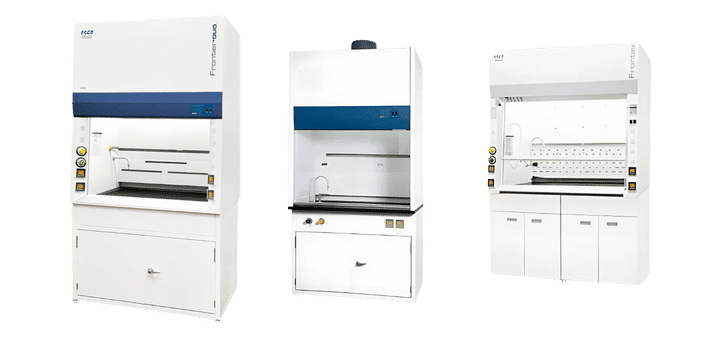 Fume Hoods & Lab VentilationOur full fume hood and ventilation catalog: hood models, airflow monitoring, controls and exhaust treatment options.
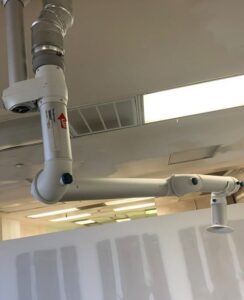 Laboratory Snorkel Arm VentilationArticulated source-capture arms for instruments, heat blocks and benchtop work that does not need a full hood.
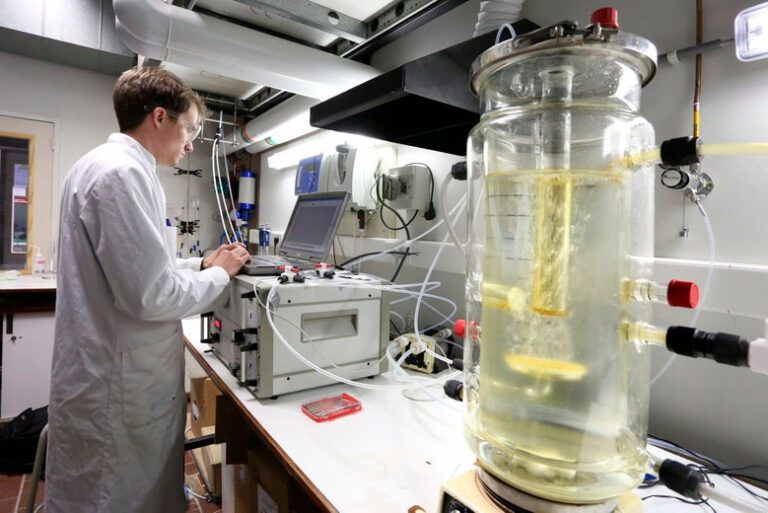 Comprehensive Laboratory DesignFull lab design and build-out: layout, casework, ventilation, utilities and storage planned as one project.
 Laboratory BenchtopsEpoxy resin, phenolic resin and stainless work surfaces — how to pick the right top for your chemistry.
 Lab Layout ConfiguratorFree browser tool: place hoods, benches and casework, then send the layout to our team for a ventilation review.
Shop Online at MaterialHandling-USA.com
Need lab consumables, storage and safety supplies you can buy online today? Our e-commerce store stocks lab carts, shelving, gloves and PPE with published pricing.
Specify Your Fume Hood With Someone Who Will Ask the Right Questions
Send us the chemistry, the apparatus and a photo of the space. We will come back with a hood type, a width, the exhaust volume your building has to supply, and an installed price — plus what your EHS reviewer will ask for.